Yes, fish water genuinely helps plants grow, and it's not gardening folklore. The water from a healthy, established aquarium contains real, plant-available nitrogen (mostly as nitrate and ammonium), along with trace minerals and organic matter that soil microbes love. Used correctly, it functions as a mild liquid fertilizer. Potato water may also help a bit, but it is not as reliable as a true nutrient source for plant growth mild liquid fertilizer. The catch is that the word 'correctly' does a lot of work here, because fish tank water can also carry ammonia spikes, chemical treatments, and salt buildup that will do the opposite of help.
Does Fish Water Help Plants Grow? Safe How to Use It

Marcus Holloway
7 May 2026
How fish waste actually becomes plant food
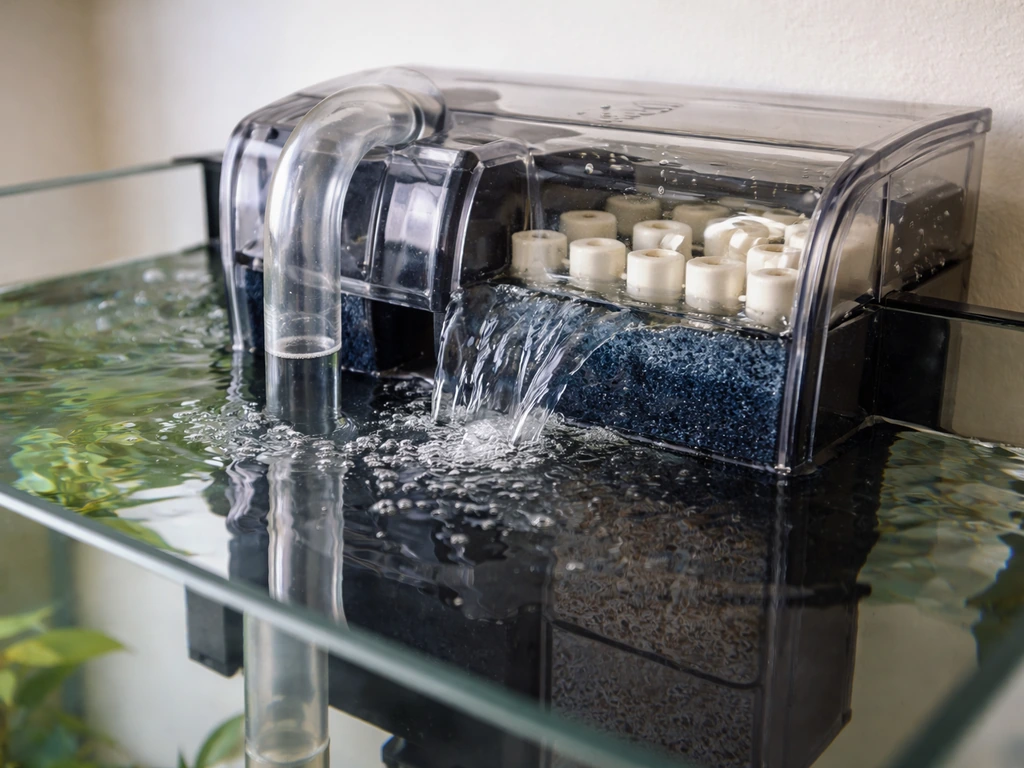
Fish excrete ammonia (NH3) and ammonium (NH4+) as metabolic waste. In a well-cycled aquarium, two groups of nitrifying bacteria (Nitrosomonas and Nitrobacter) convert that ammonia through a two-step process: first to nitrite (NO2-), then to nitrate (NO3-). Nitrite is the toxic middle step that's bad for fish but transient in a healthy tank. Nitrate is the stable end product, and it's exactly what plants prefer to take up through their roots.
Plants primarily absorb nitrogen in two forms: nitrate and ammonium. In a well-cycled aquarium the water is rich in nitrate, which is why aquarium owners do regular water changes in the first place. That 'waste' water isn't useless. In established aquaponics systems, researchers track nitrate levels around 60-70 ppm as a workable range for both plant nutrition and bacterial activity. A typical home aquarium water change isn't going to hit those concentrations, but it's still a meaningful nutrient source compared to plain tap water. Tap water can work for basic hydration, but it usually lacks the concentrated nitrogen and minerals fish tank water provides.
Fish waste also contributes phosphorus, potassium, and various micronutrients through uneaten food breakdown and fish excretion. Uneaten food decays into organic compounds that soil bacteria further mineralize into plant-available forms. So when you pour aquarium water on your garden, you're delivering a dilute but genuinely complex nutrient package, not just nitrogen.
The conditions that determine whether it actually works
Soil type makes a big difference
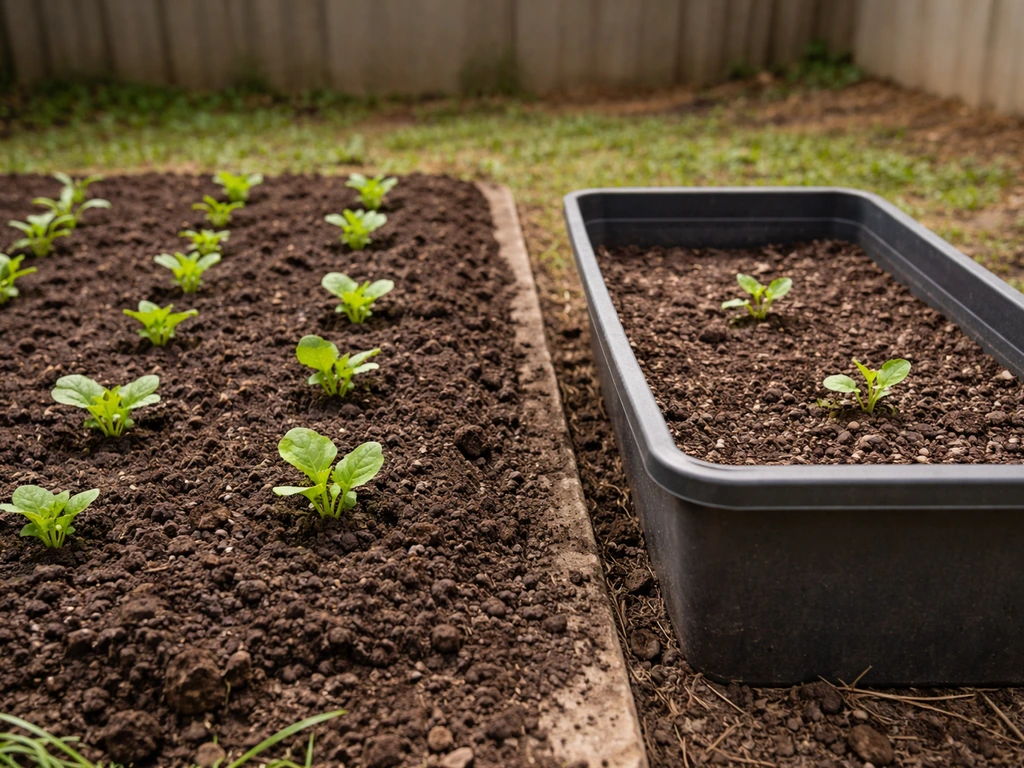
Fish water works best in biologically active soil because the microbes that finish breaking down organic compounds are already present. Loamy garden beds with decent organic content will process the nutrients efficiently. Sandy soils drain fast and may not hold the nutrients long enough for roots to capture them. Heavy clay soils can become waterlogged, which creates anaerobic conditions that shut down the nitrifying bacteria doing the conversion work. If your soil is sandy, work in compost first to improve retention.
Containers vs. garden beds
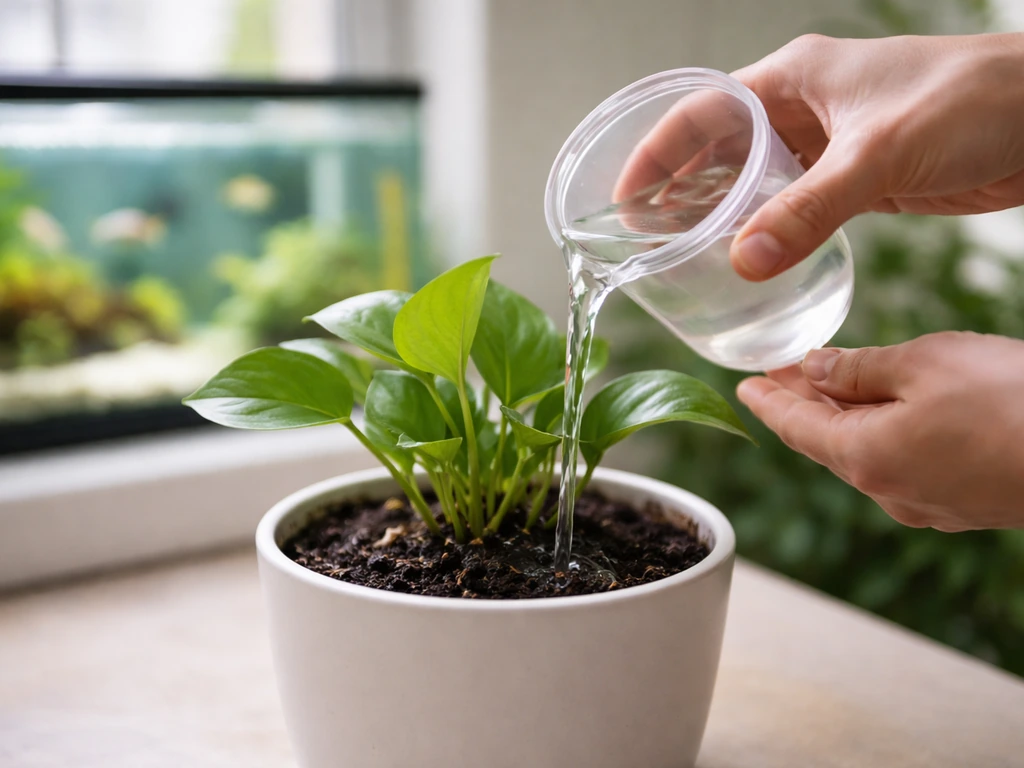
Container plants respond well to fish tank water because you have direct control over how much they receive. Garden beds dilute and distribute the nutrients more broadly, which is fine but means you need to apply more volume to see a real effect. For indoor container plants, fish tank water can replace one or two regular waterings per week. For raised beds or in-ground gardens, treat it like a supplemental liquid feed and apply it during the growing season when plants are actively taking up nutrients.
Dilution: the most underrated factor
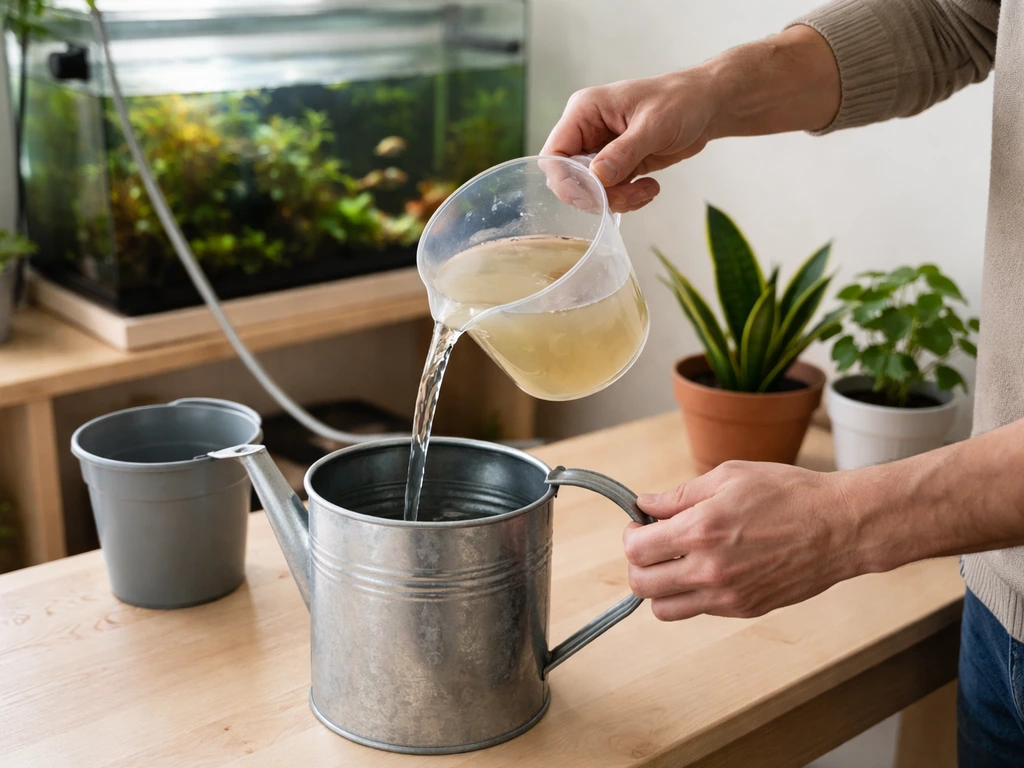
Fresh, undiluted water from a heavily stocked or uncycled tank can carry ammonia levels that will burn roots. Even in a well-cycled tank, direct application of undiluted water to seedlings or young plants is risky. A safe starting ratio for most plants is 1 part tank water to 5 parts plain water for seedlings, and you can use it more directly (up to full-strength) on established outdoor plants during a regular watering. Observe how your plants respond over a week before increasing concentration.
How to actually use fish water on your plants
- Check your tank first: Is it a well-cycled, healthy freshwater tank? If it's been recently treated with medication, copper-based treatments, or dechlorinators, skip this water change for plant use (more on that below).
- Collect the water during routine water changes. Use the siphon water directly from the gravel vacuum, as this pulls the most nutrient-dense water from the substrate where fish waste accumulates.
- Let it sit for 30-60 minutes if you want to let any off-gassing occur, but this step is optional for healthy, well-cycled tanks.
- Dilute before applying to seedlings or sensitive plants: mix 1 part tank water with 4-5 parts tap water (let the tap water sit out overnight first to dechlorinate if your tap is heavily chlorinated).
- Apply as a soil drench directly to the root zone, not as a foliar spray. Pouring it on leaves risks fungal issues and doesn't help nutrient uptake anyway.
- Apply in the morning so soil has time to process the nutrients before evening temperatures drop.
- Use it every 1-2 weeks during the active growing season. Don't replace all watering with it.
If you want to go one step further, you can mix the water into a compost pile or age it in a bucket with some compost for 24-48 hours. This encourages additional microbial activity and ensures any residual ammonia is further converted. It's a good approach if your tank isn't fully cycled or if you're using it on seedlings.
What can go wrong (and how to avoid it)
Ammonia and root burn
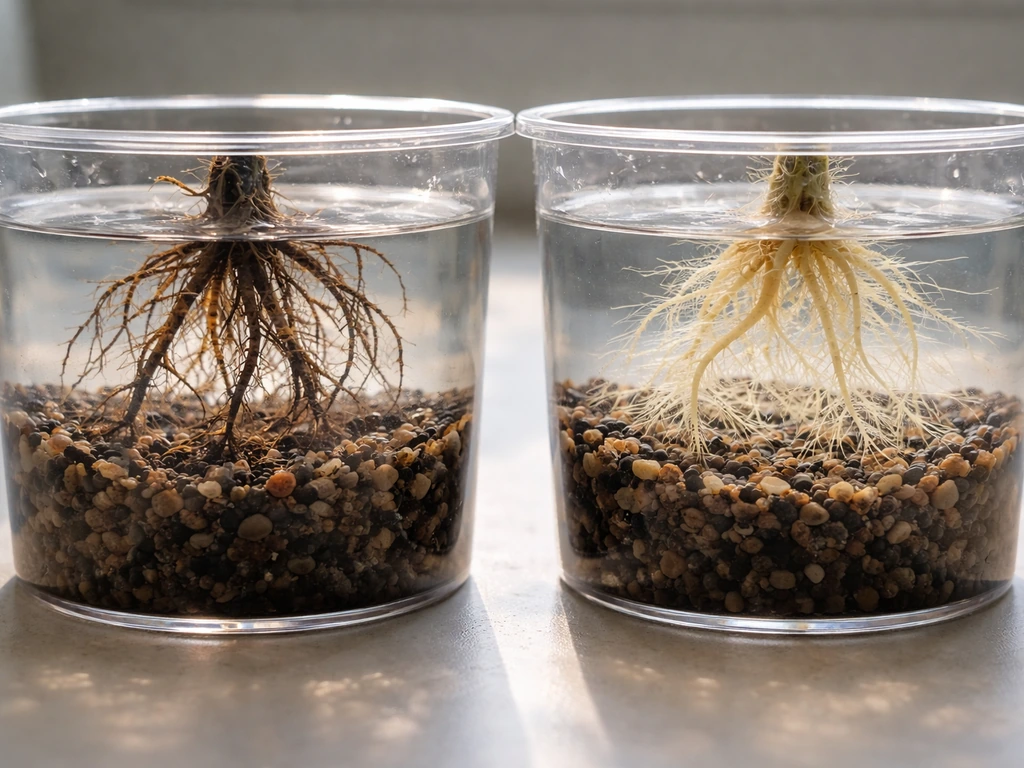
In a new or uncycled tank, ammonia can spike to levels that will literally burn plant roots. NH3 (free ammonia) is the most toxic form and becomes more prevalent at higher pH. If your tank is still cycling, or if you've just added new fish, don't use that water on your plants. Wait until the tank is established, ammonia reads at zero, and nitrate is climbing. That's your signal the biology is working and the water is safe.
Chemical treatments and medications
This is the big one people miss. If you've treated your tank for ich, fungal infections, or parasites, that water can contain copper sulfate, formalin, malachite green, or antibiotic compounds. Copper is particularly problematic: it binds to substrate and can be released again when pH shifts, and it's acutely toxic to roots at low concentrations. Medications like Cupramine are designed for aquarium use only and come with strict handling warnings for good reason. Never use water from a tank that's been medicated in the past 4-6 weeks, and when in doubt, skip it entirely.
Salt accumulation
Some freshwater hobbyists add aquarium salt as a treatment. Regular application of salty water to potted plants or garden beds causes salt buildup in the soil over time, which eventually draws moisture out of roots through osmotic stress. Excess salt in soil can reduce plant-available water and cause water stress through osmotic effects, because salt makes it harder for roots to access water salt buildup in the soil eventually draws moisture out of roots through osmotic stress. If you use salt in your tank at all, that water should not go on your plants. Brackish or saltwater tanks are obviously off the table entirely.
Algae and odor
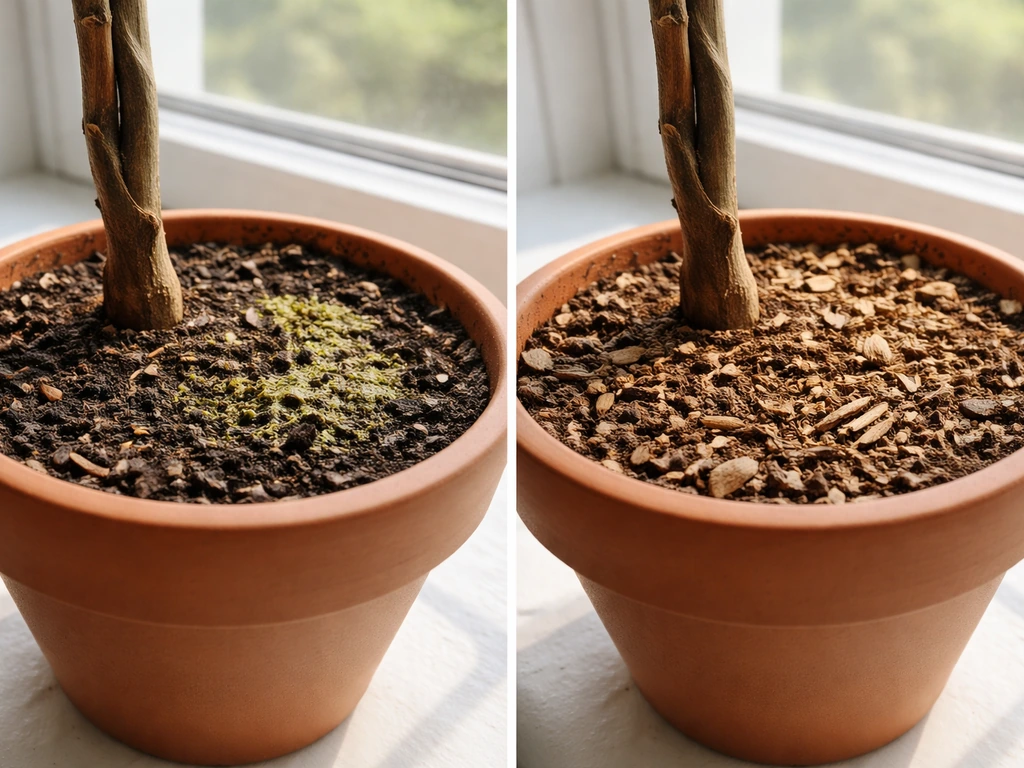
Tank water often contains algae spores. Outdoors this is rarely an issue since soil biology and UV exposure keep algae from becoming a problem. Indoors, applying fish water to potted plants repeatedly can contribute to green algae growth on the soil surface or along pot edges. It's mostly cosmetic but can look alarming. Letting the top layer of soil dry between waterings keeps this in check. The water can also smell a bit fishy, especially if the tank isn't well-maintained. This fades quickly once it's in the soil.
Pest attraction
Organic-rich water can attract fungus gnats when used repeatedly on indoor container plants. The larvae feed on organic matter in moist soil. Again, letting soil dry a bit between applications solves most of this. Outdoors, the organic material can attract slugs if applied in the evening, so morning application is better.
How fish water compares to other water types
| Water Type | Nutrients Available | Key Risk | Best Use |
|---|---|---|---|
| Fish tank water (healthy, cycled) | Nitrate, ammonium, phosphorus, trace minerals | Ammonia in uncycled tanks; chemical residues if treated | Established plants, garden beds, containers |
| Rainwater | Minimal nutrients, very low dissolved salts | Almost none | Universal, ideal for all plants |
| Tap water | Negligible nutrients | Chlorine, chloramine, fluoride in some municipalities | Fine with dechlorination or overnight sitting |
| Potato cooking water (cooled) | Starch, some potassium | Overwatering if used as sole water source | Occasional supplement for outdoor beds |
| Fish emulsion fertilizer | High nitrogen, phosphorus, consistent NPK | Over-application odor; some salt content | Reliable, measured supplementation |
Rainwater is in a class of its own for gentleness and plant compatibility, which is worth understanding if you've ever wondered why plants respond so well to it. Because milk and water behave very differently as plant inputs, it's better to stick with predictable options like rainwater or properly diluted fertilizer instead of experimenting with milk Rainwater is in a class of its own. Like rainwater, fish tank water can support plant growth because it supplies dissolved nutrients in a form plants can use. Fish tank water slots in as a genuine, low-cost fertilizer supplement, but it's less predictable than processed options.
If fish water isn't practical, here's what actually delivers reliable results
Not everyone has an aquarium, and even aquarium owners won't always generate enough water change volume to meaningfully feed a garden. Here are the alternatives that deliver consistent, measurable results without the variables.
- Fish emulsion fertilizer (bottled): This is made from processed fish waste and is standardized for NPK content. Studies in sandy soil and peat-based substrates have shown it performs comparably to inorganic fertilizer for plant growth. It smells worse than tank water but is far more consistent.
- Balanced liquid fertilizer (e.g., 10-10-10 or a bloom-specific formula): This gives you precise control over what your plants receive, which matters when you're troubleshooting a specific deficiency.
- Compost tea: Brew compost in water for 24-48 hours and apply as a soil drench. Similar microbial benefits to aged fish water but without the chemical risks.
- Worm castings liquid: Steep worm castings in water for 12-24 hours and apply. Excellent microbial diversity and gentle nutrient delivery.
- Aged compost worked into soil: The most reliable long-term fertility strategy. It feeds the soil food web that makes all other nutrients more available.
The bottom line is that fish tank water is a real fertilizer, not a gardening myth. If your tank is healthy, freshwater, medication-free, and well-cycled, that water change is worth pouring on your plants instead of down the drain. Just dilute it, apply it to the root zone, and don't overdo it. Where it gets into trouble is when people skip the 'is this tank actually safe?' check. Treat it like any other organic liquid feed: useful, worth using, but not a replacement for understanding what your specific plants actually need.
FAQ
Can I use fish tank water from the same day I do a water change, or should I age it first?
Yes, but only if you know it came from a healthy, fully cycled freshwater tank. If your tank tests show ammonia at 0 ppm and nitrate is present (even low), you can usually use the water after dilution, start around 1 part tank water to 5 parts plain water, and apply to the root zone, not onto leaves.
How can I tell if my fish tank water is safe to use on plants?
If it smells strongly of ammonia or your fish are showing stress, do not use it. Also avoid water from a tank that recently had a die-off, filter disruption, or an unusually high feeding period, because those events can raise ammonia before the bacteria catch up.
Can I store fish water change water before using it on plants?
If you have leftover water change water, you can store it briefly in a sealed, clean container out of direct sunlight. Use it within a day or two for best results, and if you see cloudy breakdown, strong odor, or sediment buildup that is getting worse, discard it instead of using it.
How often should I apply fish water to my plants?
For most setups, think of it as a supplemental feed, not a daily irrigation. Indoors, many growers do 1 watering per week or even less, then watch new growth. If leaves look dark green with weak growth, ease off, because the nitrogen boost can be out of balance with other nutrients.
Should I stop or reduce other fertilizer when I start using fish tank water?
Measure first if you can. If you routinely add diluted fish water and you also fertilize, you may overdo nitrogen and trigger nutrient imbalance. A simple approach is to pause commercial fertilizer for a couple of weeks while you evaluate plant color and growth.
Is fish water better as a soil drench or can I spray it on leaves?
Yes, but apply it as a soil drench for containers to keep algae and odors down. For in-ground beds, water the root zone evenly and avoid soaking foliage, because repeated wetting of leaves can encourage fungal issues and makes it harder to control how much nutrient actually reaches roots.
Can I use fish water on seedlings or cuttings?
Seedlings and cuttings are higher risk than mature plants. Stick to a stronger dilution for any young growth (often more than 1:5 if your tank is even slightly questionable), and never use undiluted water. If you can, test with a plant-safe approach by applying diluted water to a small section first.
What if my aquarium was medicated a few weeks ago, can I still use the water for plants?
You should not use aquarium water that had medications recently, especially copper-based treatments, because residues can persist in the tank system and become available again under pH changes. If you are unsure whether anything was used, treat the entire tank water source as off-limits.
Can I use fish water from a tank that used aquarium salt for a while?
Usually yes, but only for freshwater fish water. Avoid any tank with salt added, and do not use brackish or saltwater tank water. Even low salinity treatments can accumulate salts in potting mixes and eventually stress roots.
What should I do if I start seeing algae or fungus gnats after using fish water?
If your plants are in pots, watch for algae on the soil surface and for gnats indoors. Let the top layer dry between applications, and consider watering from the bottom or using less frequent dosing, because repeated organic-rich water tends to make both algae and fungus gnat conditions worse.
What happens if I use too much fish water, and how do I fix it?
If you accidentally overapply and the soil smells stronger, reduce frequency and rely on normal plain-water irrigations to flush gradually. Give it time, because salts and ammonium products can continue to change in the soil; drastic flushing all at once can also stress roots.
Is fish tank water as reliable as fertilizer, or should I treat it differently?
It can help, but it is usually less consistent than rainwater or measured liquid fertilizer because nutrient levels vary with tank stocking, feeding, and how far along the tank is in cycling. If you want more predictability, use fish water occasionally as a supplement rather than your only feeding source.
Next Articles
How Do Microorganisms Help Plants Grow: Practical Guide
Learn how microbes in the rhizosphere fix nitrogen, boost phosphorus, aid roots, suppress disease, and how to grow them.
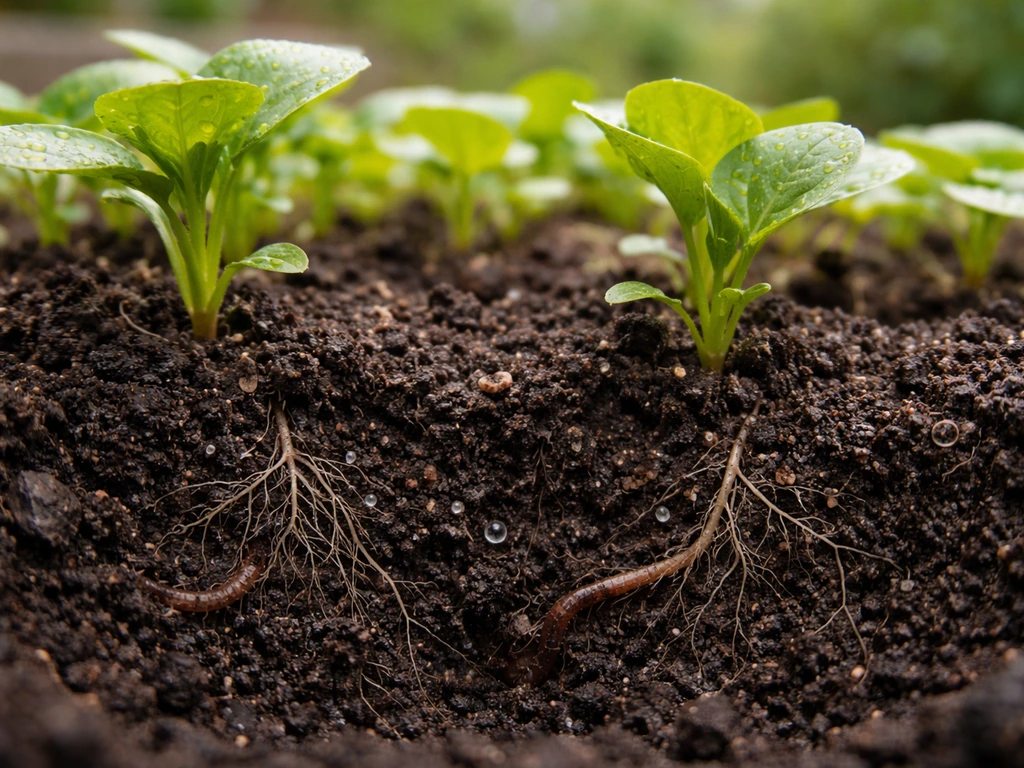
How Does Yeast Help Plants Grow? Safe, Practical Guide
Learn how yeast boosts plant growth via soil microbes, safe dilution and timing, plus myths, limits, and troubleshooting
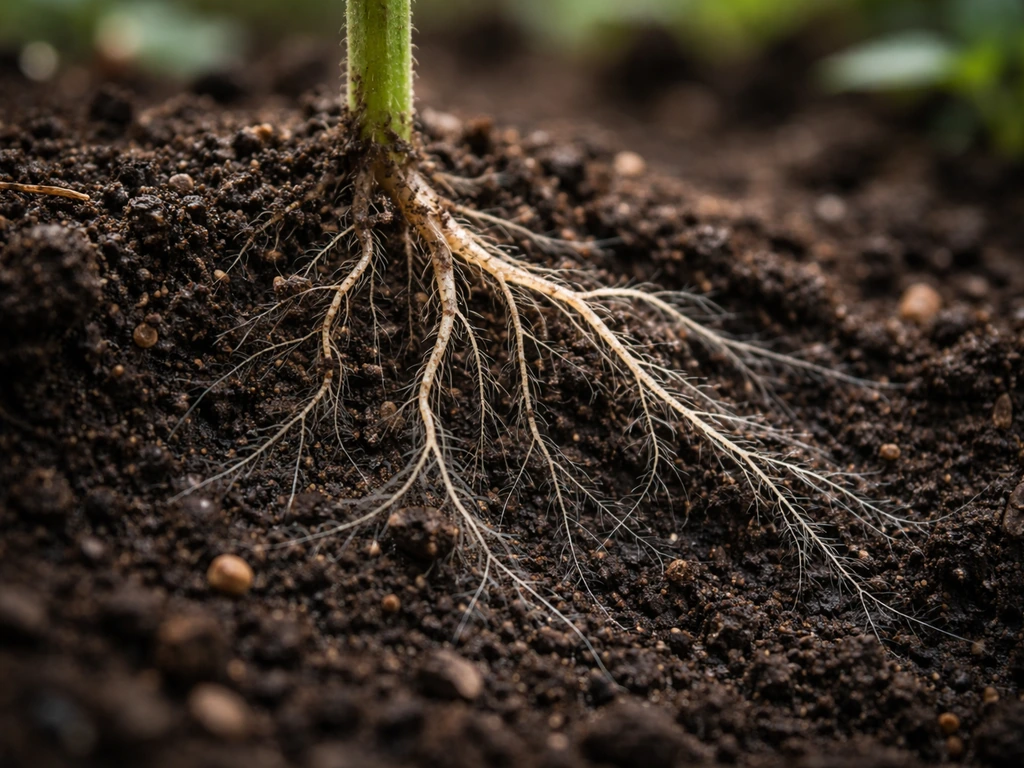
Do Mushrooms Help Plants Grow? Science and How to Use
Science-backed answer on whether mushrooms help plants grow, plus how to use mycorrhiza, compost, and test results.