Mirrors can give your plants a modest light boost indoors, but only if your current lighting is already reasonably adequate. They reflect existing light back toward leaves, which can improve coverage in dim corners and reduce one-sided stretching. What they cannot do is create light. If your grow space is genuinely dark, a mirror is not going to save your plants. Think of it as a light-distribution tool, not a light source.
Do Mirrors Help Plants Grow? Indoor Guide and Best Practices

Marcus Holloway
2 May 2026
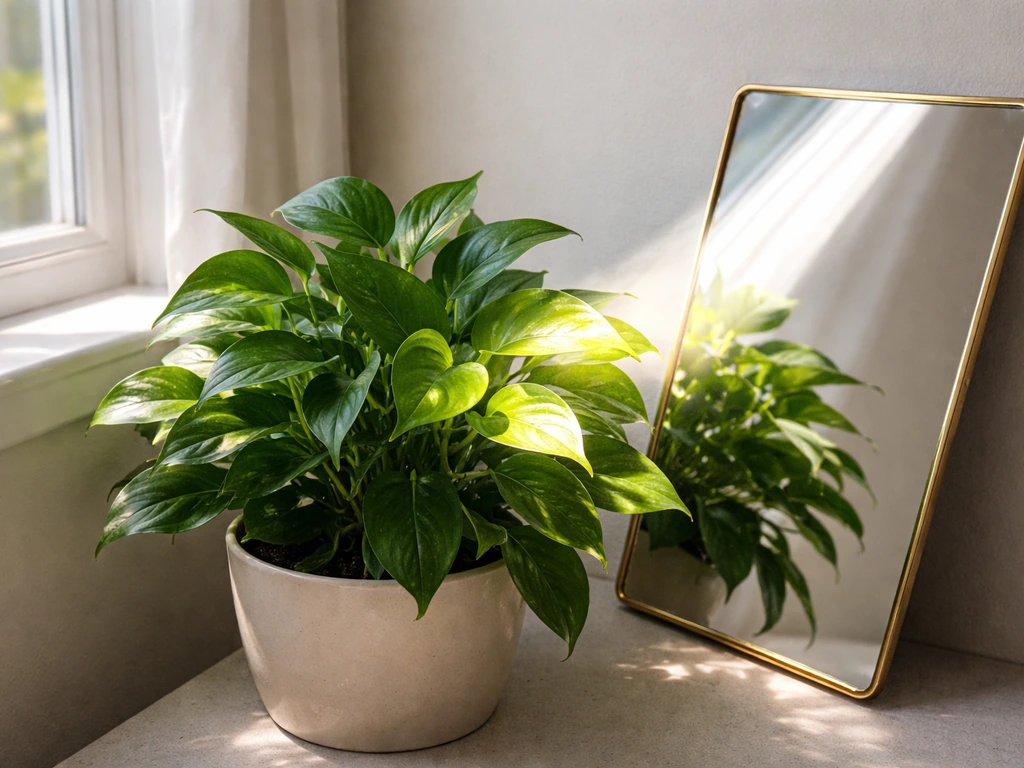
What mirrors actually do (and don't do) for plants
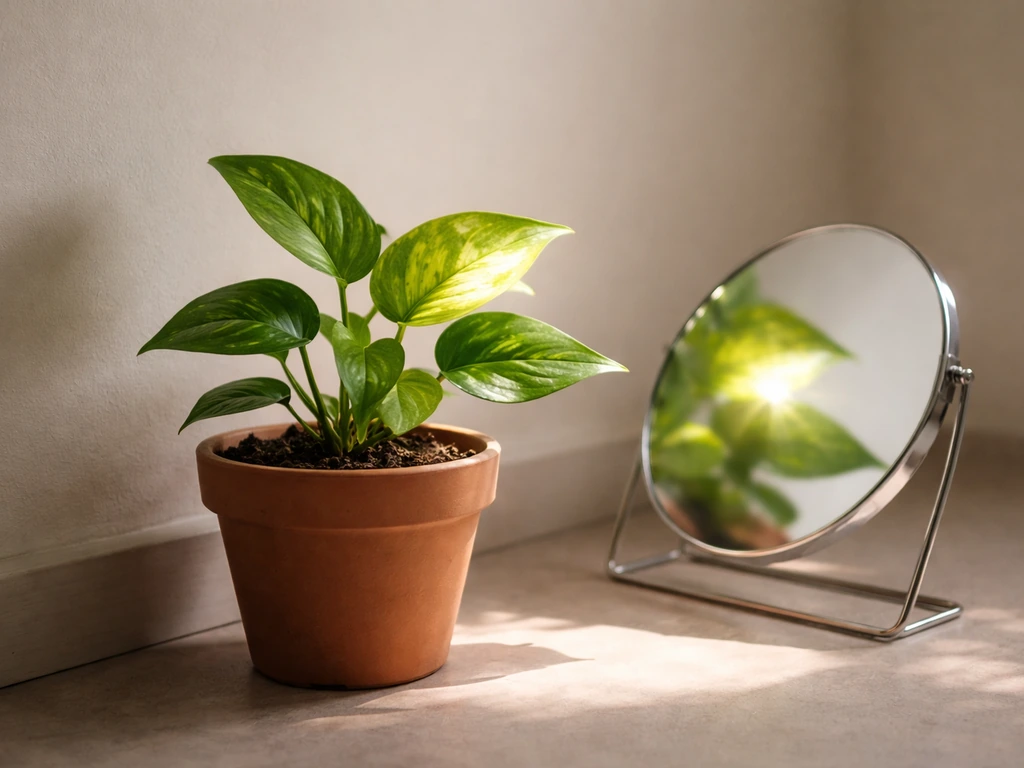
The mechanism is simple: mirrors redirect photons that would otherwise hit a wall, the floor, or disappear into a corner. When those redirected photons land on leaves, the plant can use them for photosynthesis. In many cases, that redirected extra light can support photosynthesis, which helps plants grow better. Research on reflective groundcovers under apple trees confirmed that blank" rel="noopener noreferrer">aluminized foil measurably increased the amount of photosynthetically active radiation (PAR) reaching shaded lower canopy regions. That same study found the extra reflected PAR also raised net all-wave radiation absorption, so the effect is real and measurable, not just theoretical.
There is also an interesting layer of plant biology at play. A study on Arabidopsis found that plants actually respond to the direction reflected light comes from, not just the total quantity. When light arrives from a reflected angle, phototropins in the leaves trigger blade flattening and positional adjustments, and the same research showed increased biomass under those reflected-light conditions. So redirecting light is not just about lumens. It can genuinely shift how a plant develops its leaves and, ultimately, how much it grows.
The critical limit is that mirrors amplify whatever light is already present. Place a mirror in a room lit only by a single weak bulb, and you will get a slightly better-distributed weak light. The math does not magically change. A good benchmark to keep in mind: most houseplants need at least 100 to 200 micromoles of PAR per square meter per second (PPFD) to grow healthily, and flowering or fruiting plants often want 400 to 600 PPFD or more. If your base lighting cannot hit those numbers, a mirror is not the fix.
Indoor placement: angles, heights, and positioning that actually work
The goal with mirror placement is to catch light that has already passed your plant and bounce it back at a useful angle. Here are the setups that tend to work best in real indoor growing situations.
- Place a mirror on the side of the plant opposite your main light source. If your grow light or bright window is to the north, put the mirror to the south. This directly counteracts the natural tendency of plants to lean toward the single strongest light source.
- Angle the mirror slightly toward the lower canopy rather than straight-on. Lower leaves are almost always the most light-starved, and tilting the mirror 10 to 20 degrees downward from vertical directs more reflected light underneath the upper canopy.
- Keep the mirror close enough to matter but not so close it creates a heat focal point. In most indoor setups, 30 to 60 centimeters (about 12 to 24 inches) from the plant is a reasonable starting distance.
- Height matters: position the reflective surface roughly at mid-canopy level, not above or below the whole plant. This maximizes the overlap between reflected light and the leaves that need it most.
- If you are growing in a tent or enclosed space, lining the walls with reflective material is far more effective than a single standing mirror because you capture stray light from all directions simultaneously.
The real benefits you might see, and the situations where nothing happens
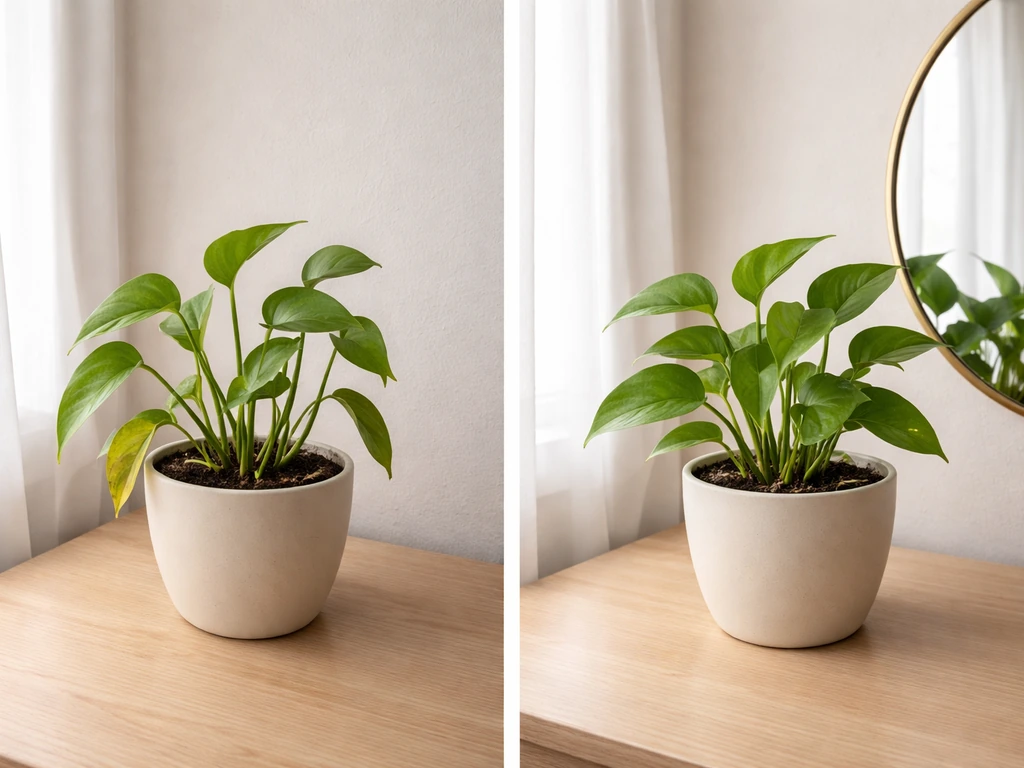
When mirrors genuinely help, you will notice it within a few weeks. Stems that were stretching toward the window start growing more upright. Lower leaves stop yellowing as fast. The overall plant looks more symmetrical and bushier rather than lopsided. In some cases, especially with young seedlings or plants in corners, you might see a noticeable uptick in overall leaf area. Research on reflective mulches for outdoor crops found that benefits are most pronounced during early growth stages, before the canopy gets dense enough to block incoming reflected light. In ISHS proceedings on reflective ground covers, reflective materials increased yields of target fruit such as apple and pear under the described orchard conditions blank" rel="noopener noreferrer">reflective mulches for outdoor crops found that benefits are most pronounced during early growth stages. The same logic applies indoors: small plants in bright-ish rooms benefit most.
On the other hand, mirrors make no practical difference in two common situations. First, if your plant is already getting plenty of light from all sides (a bright south-facing window in summer, or a well-positioned grow light), the mirror is just adding light the plant does not particularly need and cannot store. Second, if the space is too dark overall, the reflected fraction of a small amount of light is still a small amount of light. You will not see meaningful growth improvement, and you would be better off addressing the root lighting problem with a proper grow light.
Risks worth knowing before you set up a mirror
Mirrors are not a neutral tool. A few real downsides can actually harm your plants or make your growing space unpleasant.
- Heat concentration: If you are using a high-intensity grow light (HID, CMH, or even a powerful LED), a mirror placed too close or at the wrong angle can focus heat onto a section of the canopy. This causes leaf scorch, tip burn, or stress bleaching that looks similar to nutrient deficiency. Glass mirrors concentrate radiant heat more than diffuse reflective materials.
- Glare and eye strain: A mirror reflecting grow-light output directly toward your face at head height is genuinely uncomfortable and potentially harmful with UV-emitting lights. Position mirrors below eye level and angle them downward toward the plant canopy.
- Topple risk: A large standing mirror near plants that get watered regularly is a stability hazard. Moisture on floors, or a pet or child bumping the setup, can send it down onto your plants or worse. Secure mirrors to walls or use lightweight reflective panels instead.
- Dust buildup reduces effectiveness: A dusty or dirty mirror can lose a significant portion of its reflectivity. Research on reflective groundcovers found that contamination and soiling measurably reduced PAR reflectance. Clean the mirror surface regularly with a damp cloth to keep it performing well.
- Concentrated light can also trigger plant stress responses: Plants sense light direction, and a very intense focused reflection can create localized photoinhibition where light intensity exceeds what the leaf can use for photosynthesis. This shows up as pale or bleached patches directly where the reflection hits.
Better reflective options and when to skip mirrors entirely
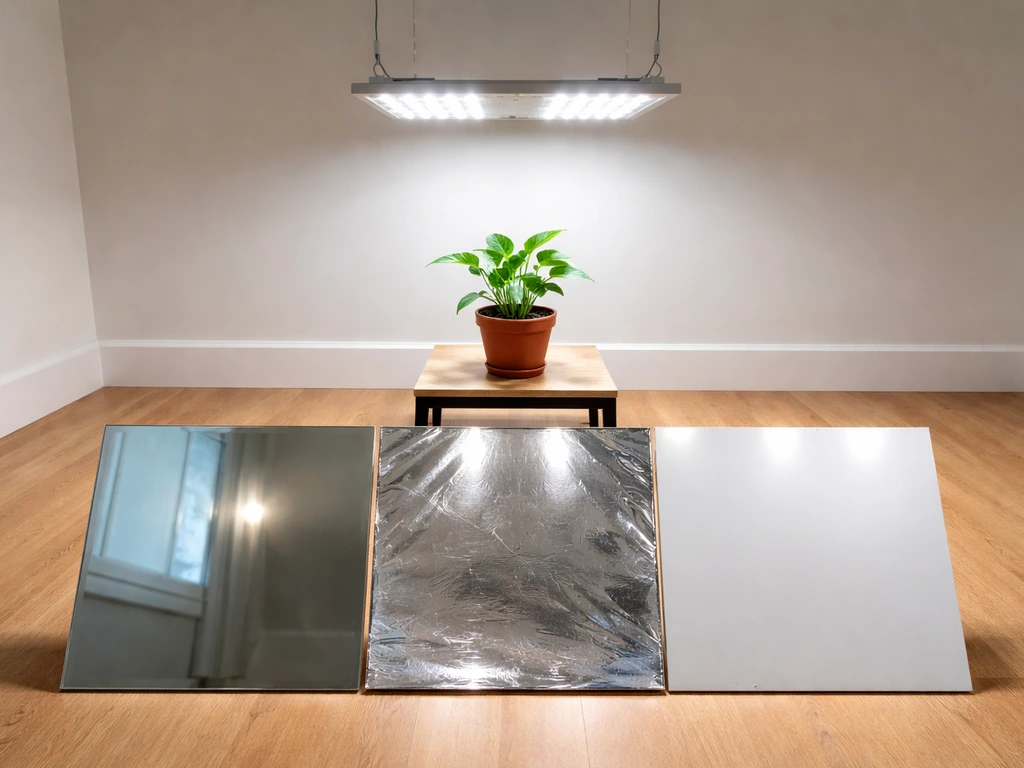
Standard glass mirrors are actually not the best reflective material for plant setups. They look good, but they reflect selectively and can cause more heat issues than lighter-weight alternatives. Here is how the main options stack up.
| Material | Reflectivity | Heat Risk | Cost | Best Use |
|---|---|---|---|---|
| Glass mirror | High (~80–90%) | Higher (focuses radiant heat) | Medium to high | Occasional use, kept at distance, angled downward |
| Mylar film | Very high (~95%+) | Lower (diffuses reflection) | Low | Lining grow tent walls or building custom reflectors |
| Aluminum foil | High (~85–90%) | Low to medium | Very low | DIY reflectors, temporary setups, small-scale use |
| White painted wall | Moderate (~75–85%) | Very low | Low (one-time) | Permanent grow rooms, enclosed spaces |
| Flat white foam board | Moderate (~70–80%) | Very low | Very low | Quick adjustable reflectors, seedling trays |
For most indoor growers, Mylar or flat white foam board panels beat a glass mirror on almost every practical measure. Mylar is the material used inside commercial grow tents for a reason: it reflects nearly all usable wavelengths without creating hot spots. UC IPM guidance for home gardeners also recommends aluminum foil over cardboard or spray-painted reflective fabric as a DIY reflective surface, noting it works, but is delicate and needs careful handling. If you want a tidy, longer-lasting option, a sheet of foam board painted flat white is easy to move, cheap, and surprisingly effective.
The moment when you should skip reflectors entirely and upgrade your lighting is when your base light levels are simply too low. No amount of reflection fixes a genuinely dark room. A decent LED grow light in the 200 to 400 watt range for a 1 to 2 square meter grow area will do more for your plants than any arrangement of mirrors. If you are wondering whether magnets can help plants grow, the key takeaway is that magnets do not replace light and nutrients upgrade your lighting. Light intensity, spectrum, and photoperiod are the variables that actually drive plant growth. Mirrors and reflective surfaces are, at best, a way to use your existing light more efficiently.
A quick test you can run today
If you want to know whether a mirror or reflector is actually helping your specific setup, here is a straightforward way to find out without buying expensive equipment.
- Baseline observation first: Before adding any mirror, photograph your plant from all sides and note the current leaf orientation, any stem lean or stretching, and the color of lower leaves. Do this today so you have a real comparison point.
- Set up the mirror on the side opposite your main light source, angled slightly downward toward the lower and middle canopy. Keep it at least 30 cm away from the plant.
- Check for hot spots immediately: Hold your hand at the plant canopy level and feel whether the reflected light creates any noticeable warmth on your skin. If it feels warm, move the mirror further away or tilt it more downward.
- Wait two to three weeks. Check for changes in stem direction (less leaning toward the window), lower leaf color (less yellowing or pale green), and overall symmetry. These are the most reliable visual indicators that reflected light is reaching underserved parts of the plant.
- Optional but ideal: If you have a PAR meter or can borrow one, measure the PPFD at canopy level with the mirror in place versus without it. A meaningful improvement is typically 50 PPFD or more at the previously darkest part of the canopy. If the number barely moves, the mirror is not doing much for this setup.
- If you see no improvement after three weeks, look at your base lighting first. Consider whether a grow light upgrade or repositioning the existing light would have more impact than any reflective surface.
Where mirrors fit in the bigger picture of plant health
It is worth keeping mirrors in perspective. Plant growth is driven by light intensity and spectrum, water, nutrients, root health, and environmental conditions like temperature and humidity. If you have also wondered whether talking nicely to plants helps them grow, the more important focus is still providing the right light and care for healthy growth does talking nicely to plants help them grow. Mirrors touch only one part of one variable: light distribution. They cannot compensate for poor soil, inconsistent watering, or a light source with the wrong spectrum for your plants. Questions like whether talking nicely to plants, playing them music, or using magnets actually help growth are in a similar category: interesting to explore, but firmly secondary to getting the fundamentals right. If your plants are struggling and you are considering mirrors as the fix, check your soil quality, feeding schedule, and light intensity first. Then, if those are solid, a reflective surface is a sensible, low-cost optimization worth trying.
Mirrors do help plants grow in the right conditions. They are not magic, and they are not a substitute for good lighting or good growing practice. But used correctly, a reflective surface in an indoor setup is a legitimate, science-backed way to get more out of the light you already have. For a science fair project, test whether improved light distribution from a mirror changes plant growth compared to a control group without a reflector.
FAQ
How do I tell if my mirror is actually improving growth, not just changing leaf position?
Track simple, measurable outcomes over 2 to 4 weeks, such as stem angle (how upright it becomes), leaf yellowing rate, and new leaf size. Also compare plants in the same room using a control spot that gets similar distance from the light, since mirrors mostly change distribution, not total light.
What is the best mirror placement if my plants are in front of a window?
Place the reflective surface so it bounces light back onto the shaded side of the canopy, not directly into the leaves. Aim the mirror at a plant height just below the leaf level to reduce glare and keep reflected rays arriving from a useful angle, which can influence leaf orientation.
Can a mirror cause leaf burn or overheating?
It can, especially if the mirror increases intensity onto a small spot near the leaves, or if sunlight is being concentrated. If you notice hot, curled, or crispy patches on parts of the plant closest to the reflection, reduce the mirror angle, increase distance, or switch to a diffuser like flat white foam board.
Do mirrors matter more for seedlings than for mature plants?
Yes, generally. Smaller plants and early growth stages benefit more because the canopy is less dense, so reflected light reaches a larger portion of leaves and improves coverage. Once plants are fully canopied, additional reflection often becomes less noticeable.
Should I expect the same benefit from a mirror under artificial LEDs as I would under a window?
Not always. With grow lights, many systems already provide fairly even coverage, so a mirror may add little unless you have a corner or side that is clearly dim. Mirrors help most when your baseline lighting is directional or fails to reach one side.
What reflective material is safest to use around houseplants?
Mylar or flat white foam board usually works better than a standard glass mirror, because it is more uniformly reflective and less likely to create hot spots. If using aluminum foil, keep it smooth, replace it if it creases, and avoid sharp edges that can interfere with leaves or be a handling hazard.
Will a mirror replace my need for a grow light if I do not meet PPFD targets?
No. If your current light cannot reach typical needs (for many houseplants roughly 100 to 200 PPFD, and often more for flowering or fruiting), a mirror can only redistribute the limited light you already have. In that case, upgrading the light is the higher-impact fix.
How close should the reflective panel be to the plants?
There is no one perfect distance, but closer is usually better up to the point where glare or concentrated hotspots appear. Start with a position that keeps reflected light landing across leaf height, then adjust by observing leaf response and reducing the reflection angle if you see stress.
Can mirrors change how plants grow even if total light seems unchanged?
Yes. Plants can respond to the direction of incoming light, not only total amount, which can alter how leaves orient and position. That means you might see more symmetrical growth or changes in posture even when your room’s overall brightness stays the same.
What are common mistakes people make when using mirrors for indoor plants?
Using a mirror that reflects too directly into leaves causing glare, placing it so the bounce goes to the floor or wall instead of the canopy, and assuming any reflection fixes low-light conditions. Another common error is testing it on the wrong plant, then concluding it “does nothing,” without a control plant in the same spot.
How can I run a simple at-home test without buying a PPFD meter?
Use a control-and-treatment setup: two similar plants, same watering and feeding schedule, same distance from the light source. Put the reflector in one location and leave the other unchanged, then compare growth rate, leaf color, and symmetry over several weeks under identical temperature and humidity.
Next Articles
How Do Microorganisms Help Plants Grow: Practical Guide
Learn how microbes in the rhizosphere fix nitrogen, boost phosphorus, aid roots, suppress disease, and how to grow them.
How Does Yeast Help Plants Grow? Safe, Practical Guide
Learn how yeast boosts plant growth via soil microbes, safe dilution and timing, plus myths, limits, and troubleshooting
Do Mushrooms Help Plants Grow? Science and How to Use
Science-backed answer on whether mushrooms help plants grow, plus how to use mycorrhiza, compost, and test results.