The household items that genuinely help plants grow fall into four categories: things that improve light, things that fix watering and humidity, things that improve soil structure, and a small handful of kitchen scraps that offer mild nutrient value. Reflective materials like aluminum foil or white cardboard redirect natural light onto plant leaves. Gravel, sand, and activated charcoal improve pot drainage. Used coffee grounds can add a little organic matter to soil.
What Household Items Help Plants Grow: Safe, Practical Tips
Marcus Holloway
28 Apr 2026
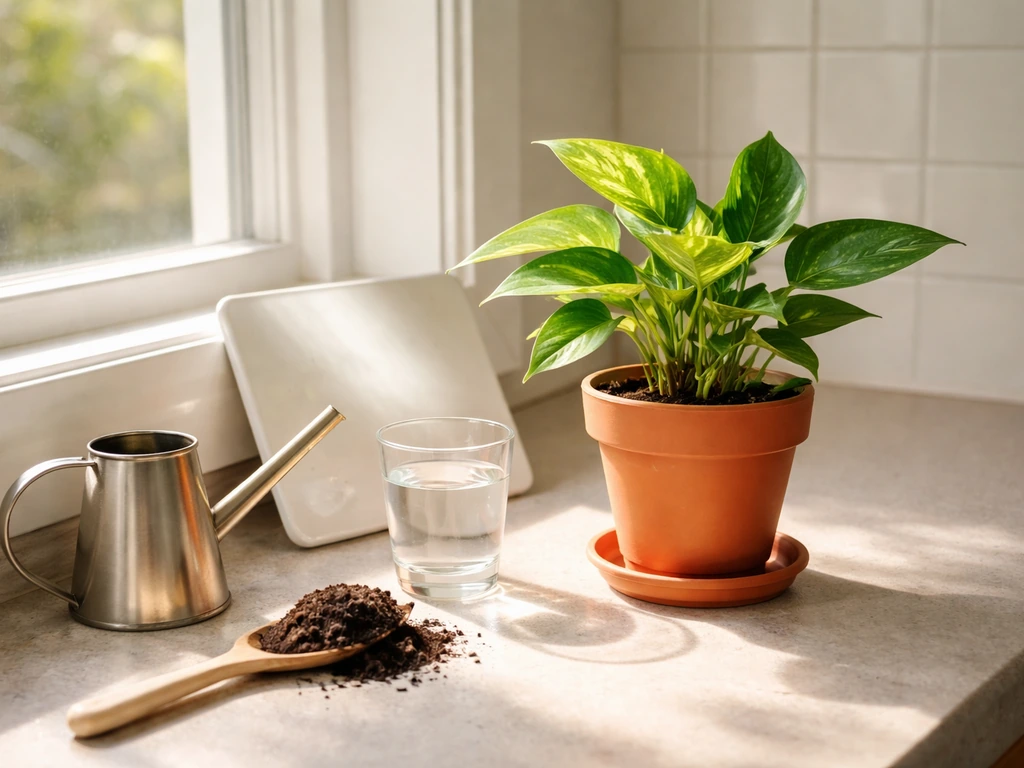
And simple humidity trays made from pebbles and water can keep tropical houseplants from drying out in winter. Most other popular "plant hacks" you've seen online, from crushed aspirin to milk to banana peels jammed into pots, either don't work the way people think or actively cause problems. Some insects, like beneficial bugs, can also support plant growth by helping control pests and pollinating flowers what bugs help plants grow. Here's how to use what actually works, and how to avoid the stuff that doesn't.
Household items that genuinely improve light
Light is the single most important variable you can adjust at home, and the good news is you don't need to buy anything fancy to improve it. The first move is always to get your plants closer to the window. Most people underestimate how fast light intensity drops with distance. Moving a plant from six feet away from a south-facing window to right on the sill can dramatically increase the brightness it receives, sometimes doubling or tripling the effective foot-candles hitting the leaves.
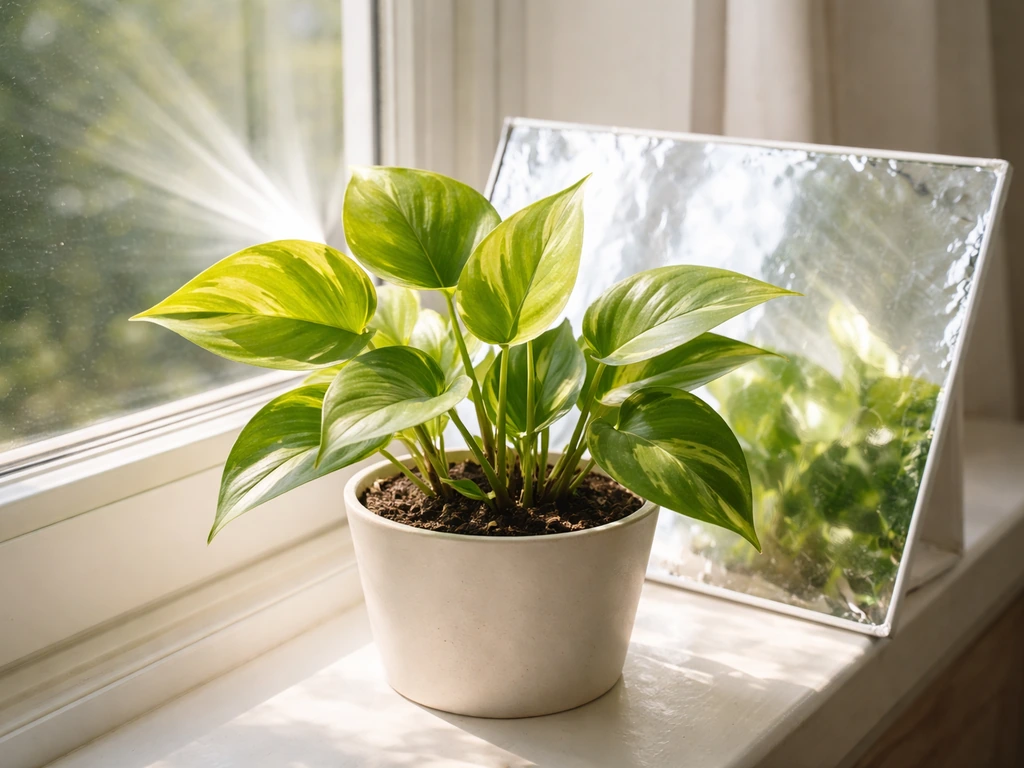
The second easy trick is to place something reflective behind or beside the plant to bounce ambient light back onto leaves that would otherwise sit in shadow. A sheet of white cardboard, a piece of aluminum foil taped to cardboard, or even a white-painted wall does this well. The goal isn't to amplify light beyond what your window provides, just to redirect it so more of the plant gets exposure. Reflective Mylar sheeting works similarly if you have it lying around. Don't wrap a plant in a foil tent thinking you're multiplying light energy, because you're not generating any new light, you're just redistributing what's already there.
If natural light genuinely isn't enough (north-facing rooms, basement growing, winter at high latitudes), a simple LED desk lamp positioned 6 to 12 inches above the plant can substitute. The key parameters: aim for 12 to 14 hours of supplemental light per day for foliage plants, and cap it at 16 hours maximum. Plants need a dark rest period, and running lights around the clock stresses them rather than boosting growth. A basic outlet timer from a hardware store is the most useful $10 investment you can make if you're using any kind of grow lamp.
- Move plants to within 12–24 inches of the brightest window in your home before trying anything else
- Place white cardboard or aluminum foil on a board beside the plant to reflect light onto shaded leaves
- Use an LED desk lamp 6–12 inches above the plant if natural light is insufficient, set to 12–14 hours per day on a timer
- Never exceed 16 hours of light per day, plants need darkness to complete their metabolic cycle
- Clean dusty leaves with a damp cloth so the leaf surface can actually absorb the light available to it
Water and humidity: simple household fixes that help roots
Getting watering right is where most indoor plant problems start and end. Overwatering is far more common than underwatering, and it's the primary driver of two of the most frustrating houseplant problems: root rot and fungus gnats. The fix isn't a special product, it's a behavior change. Let the top 1 to 2 inches of soil dry out completely before you water again. Stick your finger in the pot. If the soil at that depth feels damp, wait. University of Minnesota Extension specifically recommends this test for reducing fungus gnat populations, and it works because fungus gnats lay eggs in moist topsoil, eliminate the moisture and you eliminate most of the problem.
For plants that like humidity (most tropicals, ferns, calatheas), winter heating and air conditioning can drop indoor relative humidity to uncomfortably low levels. Penn State Extension cites ASHRAE guidance that indoor humidity should stay between 30% and 60% for human comfort and plant health. CDC health-care environmental guidance cites a comfort range of [30% to 60% relative humidity](https://www. cdc.
gov/infection-control/hcp/environmental-control/air. html) for most areas within facilities. If your home gets dry in winter, the simplest no-cost fix is a pebble tray: fill a shallow tray or saucer with pebbles, add water to just below the top of the pebbles, and set the pot on top. As the water evaporates, it raises humidity immediately around the plant.
The pot should never sit in the water itself, that brings you right back to overwatering problems.
Grouping plants together also raises local humidity as they transpire. A bathroom or kitchen windowsill naturally has higher ambient humidity than a living room, so putting moisture-loving plants there is a free upgrade. And if you mist plants, know that it provides very brief humidity spikes rather than sustained improvement, and can encourage fungal leaf spots on some plants if leaves don't dry quickly. It's not harmful in moderate amounts, but it's overrated as a humidity strategy.
Soil and pot upgrades from things you already have
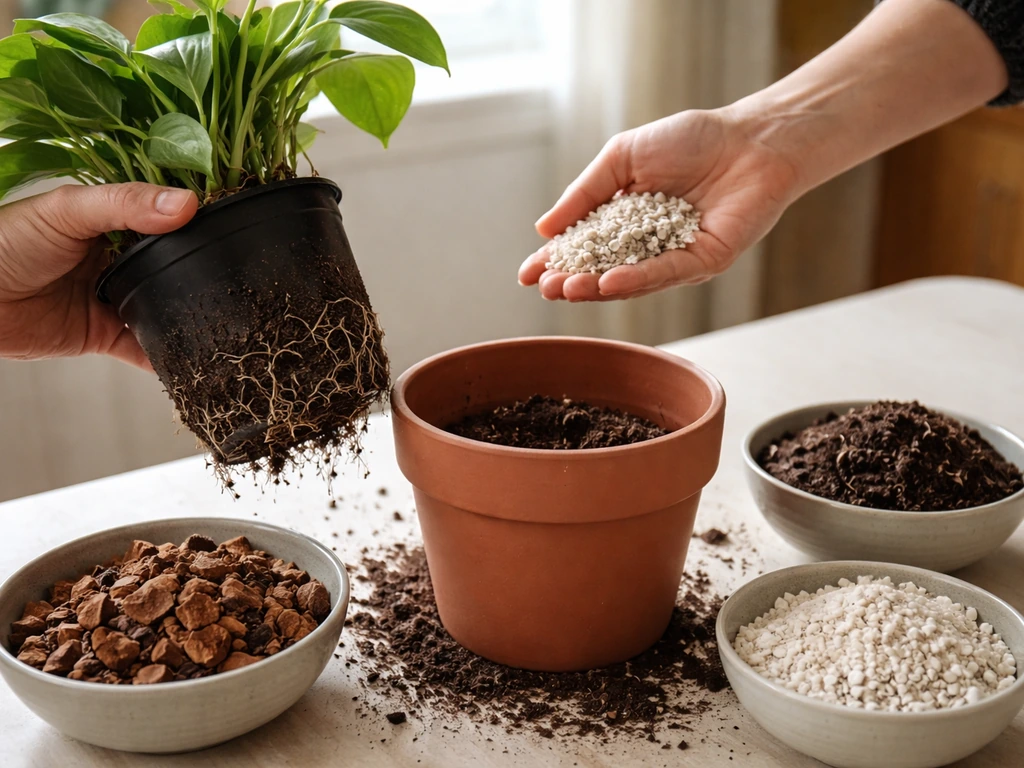
Good soil structure is about drainage and aeration, not just fertility. Many common potting mixes compact over time, suffocating roots. If you're repotting and don't have perlite on hand, coarse builder's sand (not fine beach sand) mixed into potting soil improves drainage noticeably. A rough guideline from Illinois Extension for many houseplants is one-third soil, one-third peat moss or coconut coir, and one-third perlite or coarse sand. If you only have two of those three components, a 50/50 mix of potting soil and coarse sand still beats dense straight potting mix for root health.
Never use garden soil for indoor plants. This isn't just a preference issue: outdoor soil contains organisms, weed seeds, and compaction characteristics that make it genuinely unsuitable for containers. Nebraska Extension explicitly cautions against it, and I've watched plants slowly decline in garden soil indoors every time someone tries it.
For drainage in the pot itself, a thin layer of gravel or broken clay pot pieces over the drainage hole prevents soil from washing out without blocking water flow. The old advice of adding a thick gravel layer at the bottom of a pot to "improve drainage" is a myth that actually creates a perched water table and keeps roots wetter, not drier. A thin layer just to cover the hole is fine; a deep drainage layer is counterproductive.
Repurposing containers is completely valid as long as you drill or punch drainage holes. Yogurt containers, tin cans, wooden crates lined with plastic (with holes), and colanders all work. The non-negotiable is drainage: no hole means waterlogged roots, which means dead plants.
Nutrients from everyday items: what actually helps vs. what causes harm
This is where gardening folklore runs wild, so let's be honest about what kitchen scraps actually deliver to your plants and what they don't.
Coffee grounds
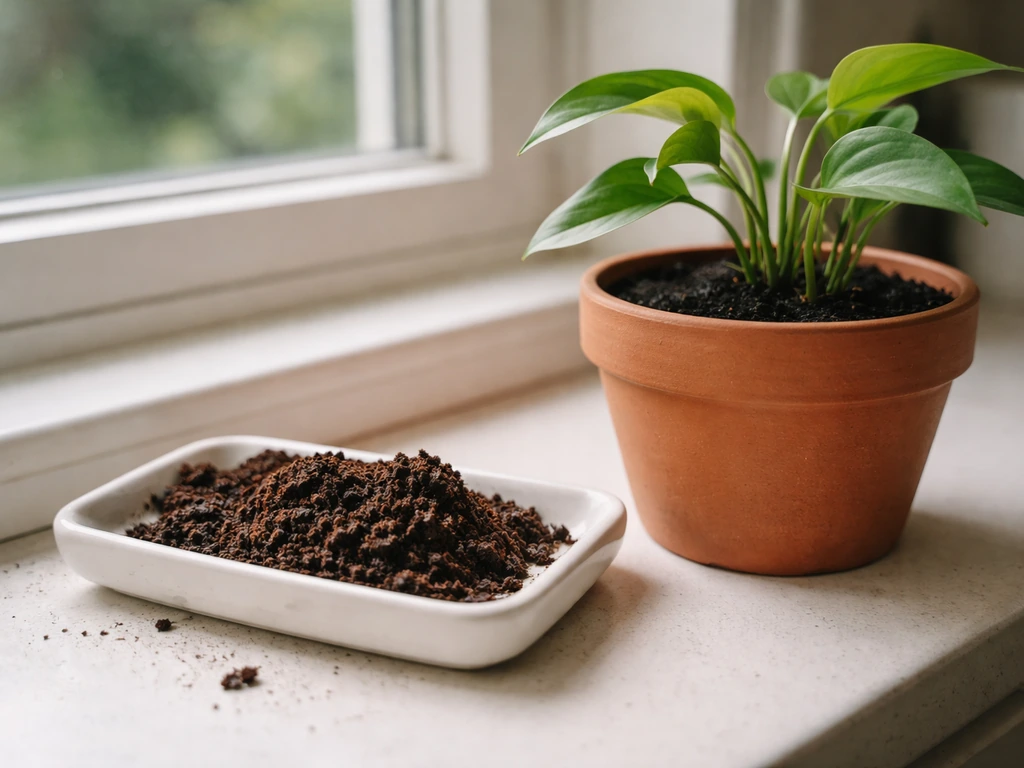
Used coffee grounds are plant-based organic matter and do contribute to soil structure over time as they break down. Nebraska Extension and University of Arizona Extension both confirm they can be used as a soil amendment. What they won't reliably do is lower soil pH in a predictable way: the acidity fluctuates over time and varies depending on the soil they're added to. Use them sparingly mixed into the top inch of soil, or add them to a compost pile if you have one. Don't dump a thick layer on top of a pot because they can form a water-repelling crust.
Eggshells
Eggshells contain calcium carbonate, which is real and useful to plants. The problem is that whole or crushed eggshells in an indoor pot break down so slowly they're essentially inert for the plant's practical lifetime in that pot. Mississippi State Extension explains that blossom end rot in tomatoes (the most common justification for adding eggshells) is actually caused by uneven watering that prevents calcium uptake, not a soil calcium shortage. Adding eggshells doesn't fix a water transport problem. They may also attract pests or mold as organic matter sitting in a moist pot. Skip them in indoor pots; compost them instead.
Diluted cooking water
Cooled water from boiling vegetables (unsalted, obviously) contains small amounts of leached minerals and is completely fine to use for watering. It's not a fertilizer replacement, but it's not harmful and puts trace minerals to use rather than dumping them down the drain.
Aquarium water
This one genuinely works. Water from a freshwater fish tank contains diluted fish waste, which is nitrogen-rich. If you have an aquarium and do regular water changes, use that water on your plants instead of tap water. It's a mild, balanced fertilizer that plants respond well to. Saltwater aquarium water is not appropriate for this.
Fertilizer dilution and safety
If you have any commercial liquid fertilizer at home, Oklahoma State University Extension notes you can fertilize at every watering using a very dilute dose, or at a slightly higher concentration every third or fourth watering. The safest approach for indoor plants is always less than label rate rather than more. If you've over-applied and see leaf tip burn or crusty white deposits on soil, flush the pot thoroughly with plain water several times to leach excess salts, a technique Penn State Extension specifically recommends.
DIY plant hacks to skip (and why they fail)
The internet's list of supposed household plant boosters is long and mostly wrong. Here's a direct breakdown of the most common ones.
| Household Item | The Claim | The Reality |
|---|---|---|
| Epsom salt | Adds magnesium and makes plants grow faster | Only helps if you have a confirmed magnesium deficiency. Overuse causes salt buildup and nutrient imbalance. Avoid without a soil test. |
| Aspirin water | Triggers plant immune response | Salicylic acid does exist in plant biology, but dissolving aspirin tablets adds uncontrolled doses and inactive binders. No reliable benefit for indoor plants. |
| Milk | Adds calcium and fights fungal disease | Creates bacterial rot and odor in soil quickly. The calcium is essentially unavailable. Not recommended. |
| Vinegar | Lowers soil pH for acid-loving plants | Acetic acid burns roots at almost any realistic concentration. pH effect is temporary and unpredictable. Use sulfur or acidic potting mixes instead. |
| Banana peels | Adds potassium | Fresh peels attract pests and mold indoors. Composted banana material is fine but raw peels directly in pots are not. |
| Talking or music | Vibrations stimulate growth | Lab studies exist but effects are minor, inconsistent, and not replicable at home scale. More likely to help the gardener's mood than the plant's growth. |
| Baking soda | Prevents fungal disease | Can temporarily raise surface pH to inhibit some powdery mildew spores but also damages leaf surfaces and soil biology with repeated use. |
The pattern with almost every failed hack is the same: the mechanism has some grain of truth, but the application method, concentration, or timeline doesn't match how plant biology actually works. Illinois Extension's myth-busting resources consistently bring nutrient and remedy questions back to the same root causes: water management problems that look like nutrient deficiencies, or organic inputs that don't break down fast enough to do anything useful in an indoor container.
Quick troubleshooting: matching symptoms to the right household fix
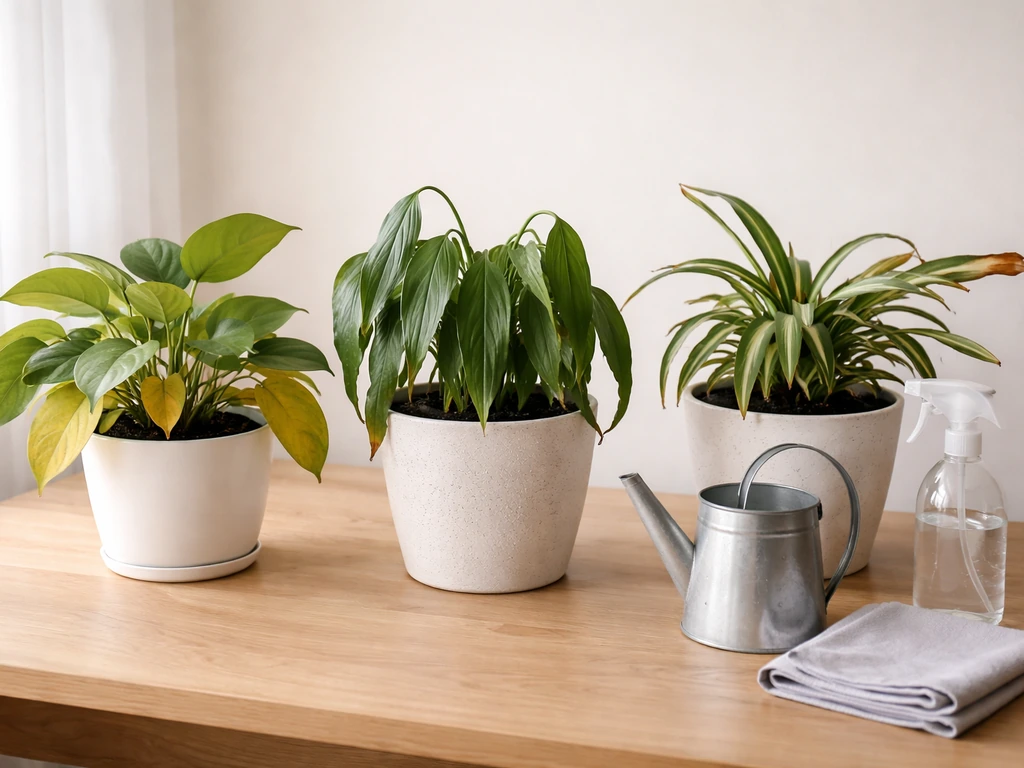
If you can describe what your plant looks like right now, you can usually identify the core problem and find a household-level solution. Here's how to read the symptoms.
| Symptom | Most Likely Cause | Household Fix |
|---|---|---|
| Yellowing lower leaves | Overwatering or nitrogen deficiency | Let soil dry out more between waterings. Check drainage. If soil is fine, a diluted fertilizer application can help. |
| Leggy, stretched stems reaching toward light | Insufficient light | Move plant closer to window or add a desk lamp at 12–14 hours per day. Place reflective white cardboard on the opposite side. |
| Brown leaf tips or edges | Low humidity, salt buildup, or inconsistent watering | Add a pebble humidity tray, flush pot with plain water if you've been fertilizing, and check watering consistency. |
| Drooping despite moist soil | Root rot from overwatering | Stop watering immediately. Unpot and check roots. Trim black/mushy roots, repot in fresh dry mix with added coarse sand or perlite. |
| Tiny flies hovering around soil | Fungus gnats from overly moist topsoil | Let top 1–2 inches dry completely before each watering. Improve drainage. The life cycle breaks without moist topsoil to lay eggs in. |
| Pale, washed-out leaf color | Too much direct light causing bleaching, or low nutrients | Move slightly away from intense direct sun. If light isn't the issue, a diluted balanced fertilizer helps restore color over several weeks. |
| No new growth for months | Insufficient light, wrong season, or rootbound pot | Check light first (most common cause). If growing season is active, move to brighter spot or repot into a slightly larger container with fresh soil. |
| White crusty deposits on soil surface | Fertilizer salt or mineral buildup from tap water | Flush the pot deeply with plain water 3–4 times. Switch to filtered water or allow tap water to sit overnight before using. |
Most plant problems trace back to light, water, or soil, and in that order of frequency. Before reaching for any household additive, check whether the plant is getting enough light and whether your watering schedule is actually letting soil dry appropriately between waterings. Those two adjustments, both completely free, will solve the majority of houseplant decline cases.
If you want more, focus on the basics of light, watering, soil structure, and nutrients, then adjust one variable at a time how to help plants grow. The household items that actually help are the ones that support those fundamentals: reflective surfaces that extend light, drainage materials that protect roots, and very mild organic inputs like aquarium water or diluted vegetable cooking water that feed without burning.
Beneficial animals can also support plant growth by improving pollination, spreading seeds, and helping manage pests reflective surfaces that extend light. If you want to know what help plants grow most reliably, focus on light, water, drainage, and small, safe nutrient inputs. If you’re wondering what bugs help plants grow, the answer is that certain beneficial insects can improve pollination and protect plants from harmful pests.
If you're curious about what else supports plant growth beyond household items, the same principles apply to soil amendments, beneficial insects, and outdoor growing conditions. If you focus on the real plant growth factors, you will know which household items actually help plants grow and which ones are just myths. Understanding the actual growth factors (light quality, water availability, soil aeration, and nutrient balance) makes every gardening decision clearer, whether you're improvising at home or shopping for specific inputs.
FAQ
Can I add a thick layer of gravel or stones at the bottom of a pot to help drainage?
Yes, but do it in a way that does not trap extra moisture. Use only a thin gravel cover over the drainage hole (or none if your mix drains well), and make sure the container has a real drainage opening. The goal is to keep soil from clogging the hole, not to create a wetter “reservoir” at the bottom.
If household items help plants grow, how do I know which one to try first without risking damage?
Start with the least risky, most reversible option. For mild nutrient “boosts,” use a very small amount (or dilute) and stop if you see salt crusts or leaf tip burn. If you suspect a problem is nutrient related, first confirm light and watering depth are correct, because nutrient-looking symptoms often come from inconsistent drying or insufficient light.
Is it safe to water plants with leftover cooking water or aquarium water long-term?
Generally, no. Plain tap water is not harmful in most homes, but if you routinely use aquarium water, remove any solids from the tank water and avoid using water from medicated or saltwater systems. For vegetable-cooking water, use only unsalted, cooled water, and use it sparingly so minerals do not build up in the pot.
What’s the best way to use used coffee grounds, and can I just sprinkle them on top of the soil?
You can, but it depends on your plant’s moisture tolerance and your potting mix. Coffee grounds should be mixed into the top inch in small amounts, then left to compost further. Do not put a thick layer on top, because it can form a crust that sheds water and creates uneven wet and dry zones.
Do pebble trays or misting work better for humidity-loving houseplants?
If your humidity is low, focus on the environment around the plant rather than frequent misting. Pebble trays, plant grouping, and placing moisture-loving plants in naturally more humid rooms usually help more consistently. Misting can also raise the risk of fungal leaf spots on plants with dense foliage if leaves stay wet too long.
What if my plant looks pale or leggy, can household items fix it without changing the plant’s location?
Usually, moving a plant closer to the brightest window plus a small reflective surface behind it is safer than adding kitchen inputs. If you add reflective material, keep it upright and stable so it does not block airflow or cause the plant to overheat near the glass. For low-light corners, a small LED on a timer is often the more reliable fix.
Will grouping plants together increase humidity enough to change my watering schedule?
Yes, but only if you do not defeat the drying cycle. Grouping plants can raise local humidity, yet overwatering still causes root rot if the soil stays wet too long. Keep using the “top 1 to 2 inches dry” check for each pot, because different pots dry at different rates.
What’s wrong with using garden soil in indoor containers if it seems to work at first?
Avoid them, especially indoors. Garden soil can carry organisms, compaction, and poor container drainage behavior. If you want a DIY mix, stick to potting soil plus a drainage component like coarse sand or perlite, and aim for aeration-focused ratios rather than loading more soil.
Can I use household hacks in a pot without a drainage hole?
If the pot has no drainage hole, household “fixes” will not solve the core issue. Without drainage, water and any added materials like coffee grounds can stay wet too long, which increases root rot risk. Drill a hole or switch to a container that drains, then choose a supportive soil mix.
How can I tell if I’m overdoing household amendments like coffee grounds, and what should I do then?
Freshness matters. Coffee grounds and cooking-water minerals can accumulate, especially with repeated small additions, which may lead to crusting or nutrient imbalance. If you are frequently adding any household amendment, do a periodic plain-water flush when you see salt deposits or slow drainage behavior.
Next Articles
How to Help Plants Grow: Light, Water, Soil, and Nutrients
Learn how to help plants grow with the right light, watering, soil, nutrients, and troubleshooting for better health.
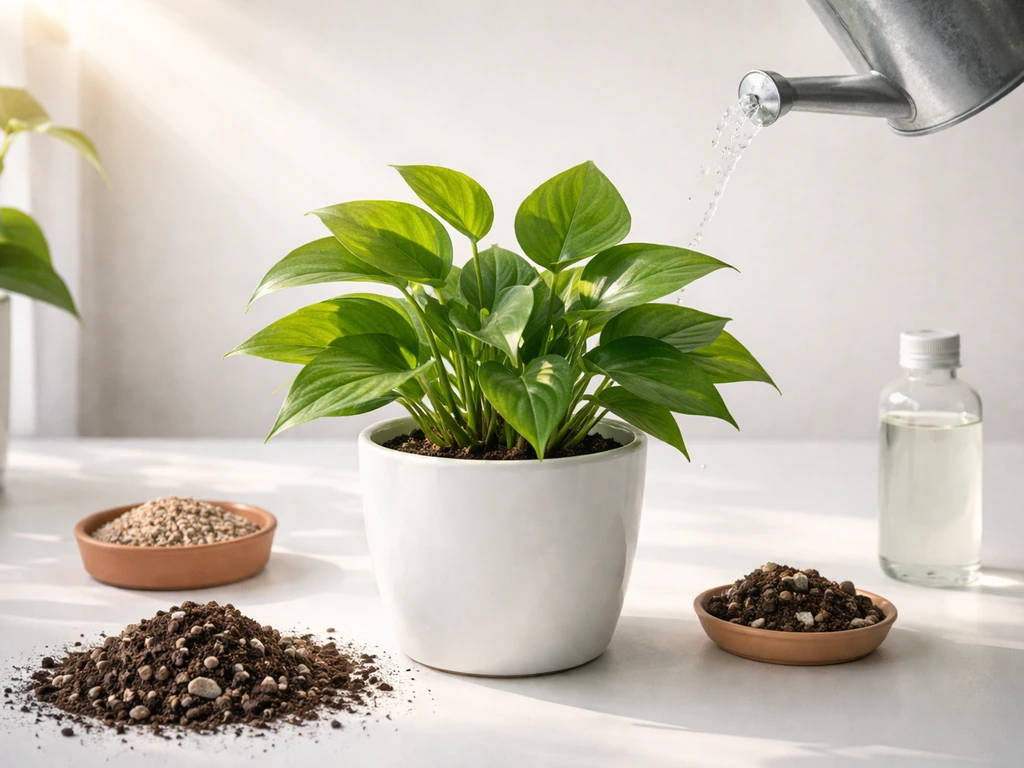
What Helps Plants Grow: Light, Water, Soil, and Food
Get better growth with the real inputs: light, water, soil drainage, airflow, and fertilizer plus a symptom-based limite
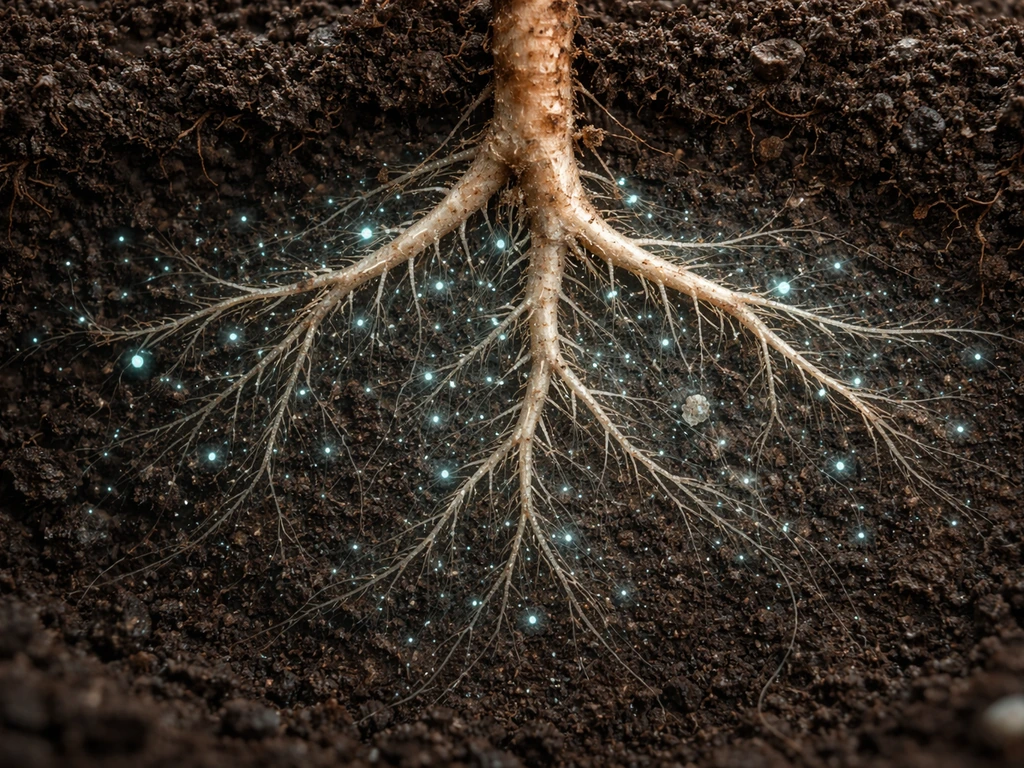
How Do Microorganisms Help Plants Grow: Practical Guide
Learn how microbes in the rhizosphere fix nitrogen, boost phosphorus, aid roots, suppress disease, and how to grow them.