Plain water is the most important liquid for plant growth, full stop. After that, a balanced liquid fertilizer dissolved in water is the next best thing you can give most plants, especially container plants that have exhausted the nutrients in their potting mix. Everything else, including Epsom salt solutions, banana peel tea, compost tea, and similar folk remedies, ranges from occasionally useful (only when a specific deficiency is confirmed) to genuinely a waste of time.
What Liquids Help Plants Grow Best: A Practical Guide

Marcus Holloway
28 Apr 2026
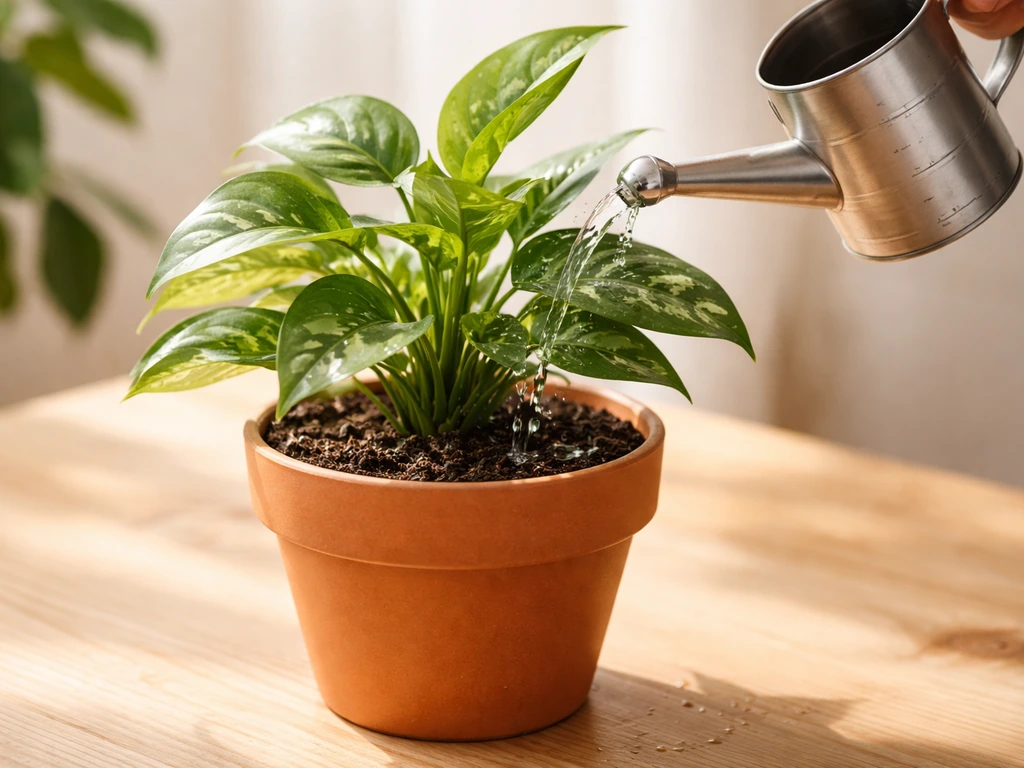
Plain water vs nutrient 'plant drinks'
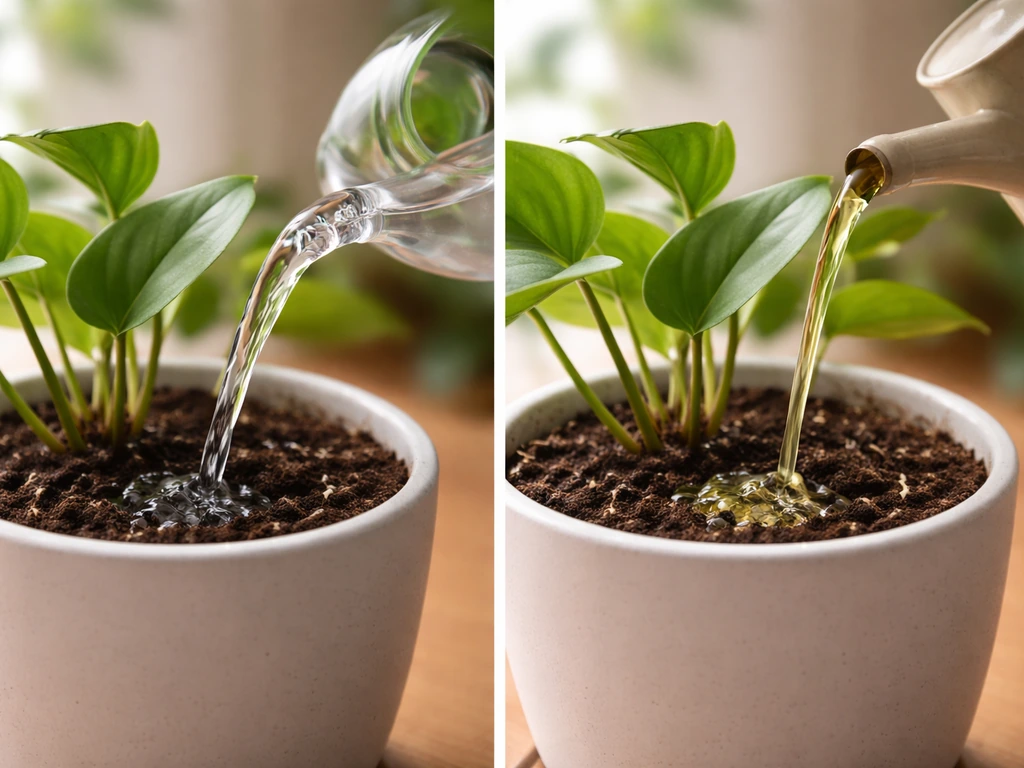
Water is the baseline. Plants use it for photosynthesis, nutrient transport, cell structure, and pretty much every biological process they run. Without it, nothing else matters. Iowa State Extension puts it plainly: watering is the first requirement for plant growth, and fertilizer is an addition you layer on top when plants need it, not a replacement for consistent watering.
Liquid fertilizer, meaning soluble nutrients dissolved in water, is genuinely useful but plays a different role. It supplements what's already in your soil or growing media. Here's the part most people miss: the plant doesn't actually care whether nutrients arrived as a liquid feed, granular slow-release fertilizer, or decomposed compost. According to UMN Extension, plants take up nutrients in ionic form regardless of the original source. Liquid just delivers those ions faster and with more precise control, which makes it especially valuable in containers and hydroponics where there's no soil reservoir to draw from.
So when you see products marketed as special 'plant growth drinks' or proprietary liquid tonics, the real question is always: what nutrients are actually in it, at what concentration, and does your plant need them right now? If the answer is vague, you're probably looking at a marketing claim rather than a botanical benefit.
Best liquid for most plants (and when to use it)
For the vast majority of garden and container plants, here's what actually works: water them consistently with good-quality water, and once the growing media starts running low on nutrients (typically 2 to 6 weeks after planting for containers, per UMN Extension), introduce a water-soluble balanced fertilizer at the label rate or lower. If you want plants to grow, the most important “put in” is a balanced, water-soluble fertilizer added only after they start running low on nutrients.
The 'best liquid' isn't a single product, it's a combination. Consistent, appropriate watering keeps plants alive and metabolically active. A properly diluted liquid fertilizer with a balanced N-P-K ratio supplies the macronutrients that drive growth, green tissue, root development, and flowering. University of Delaware Extension recommends 100% water-soluble greenhouse-grade fertilizer formulations for liquid feeding of transplants, applied in stages as plants establish. That's a practical model for home gardeners too.
If you grow in the ground in decent garden soil and you're watering regularly, you may not need liquid fertilizer at all until you see signs of deficiency or you're pushing high-output crops like tomatoes and peppers through fruiting. In-ground plants have a much larger soil reservoir to draw from than a container sitting on a balcony.
Choosing a liquid feed by plant type and growth stage
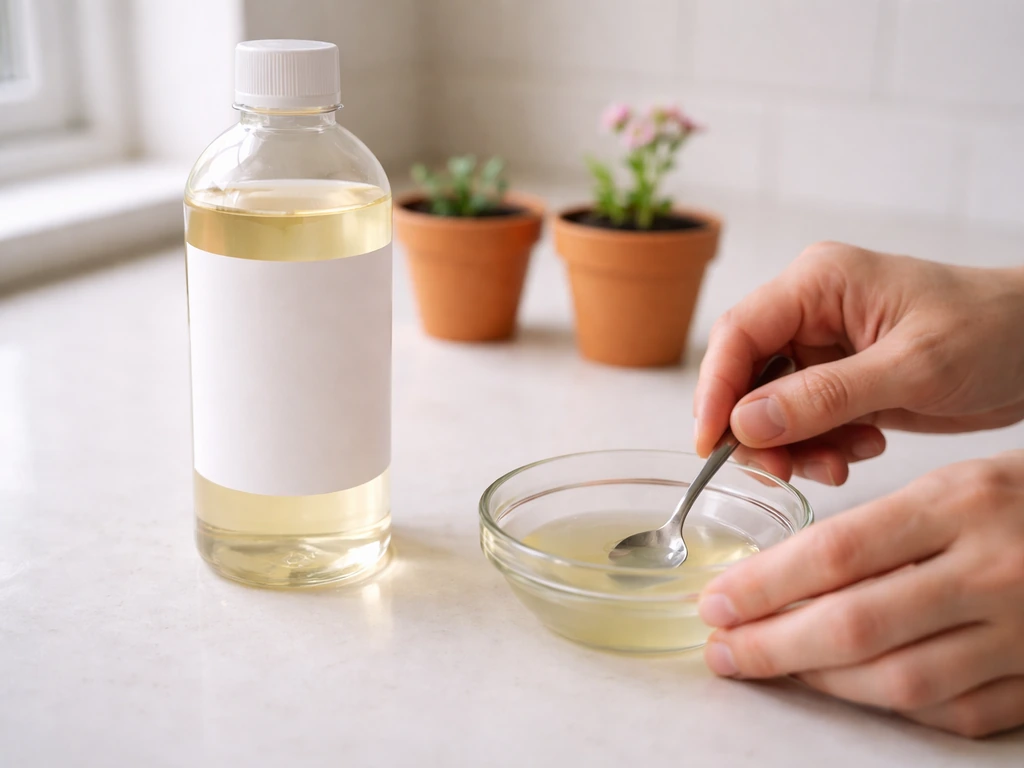
Not all fertilizer ratios suit every plant or every moment in the growth cycle. The three numbers on any fertilizer label represent the percentage by weight of nitrogen (N), phosphorus (as P2O5), and potassium (as K2O), according to University of Maryland Extension. Once you know what those numbers mean, you can match them to what your plant is trying to do at a given moment.
| Growth Stage / Plant Type | What the Plant Needs | Suggested N-P-K Ratio | Notes |
|---|---|---|---|
| Seedlings and new transplants | Root development, early establishment | 1:2:2 or 1:2:1 | UMN Extension recommends these ratios for transplants; apply at half strength to avoid burn |
| Leafy greens and foliage plants | Vigorous leaf and stem growth | Higher N ratio (e.g., 3:1:2) | Nitrogen drives green growth; avoid overdoing P and K |
| Flowering plants (early bud stage) | Transition from vegetative to reproductive | Balanced or slightly lower N (e.g., 1:1:1) | Reduce N slightly to avoid excessive leafy growth at expense of flowers |
| Fruiting plants (tomatoes, peppers, squash) | Sustained fruit development and ripening | Lower N, higher K (e.g., 1:2:3) | UC IPM recommends tracking nutrient status from early flowering through full bloom for crops like tomatoes |
| Established perennials and shrubs | Maintenance nutrition | Balanced slow-release or dilute liquid as supplement | Soil test first; many established plants don't need frequent liquid feeding |
The takeaway here is that there's no single 'best' ratio for all plants all the time. A high-nitrogen liquid feed that makes your lettuce explode will push a tomato plant into dense leafy growth with few flowers. Matching the feed to the stage matters more than buying an expensive branded product.
How to mix and use liquid nutrients safely
This is where a lot of home gardeners run into trouble. The instinct is 'more is better,' but with liquid fertilizer, overdoing it causes as many problems as underdoing it, sometimes more. Salt buildup, root burn, and leaf scorch are all symptoms of too-strong solutions applied too often.
Concentration: start lower than you think
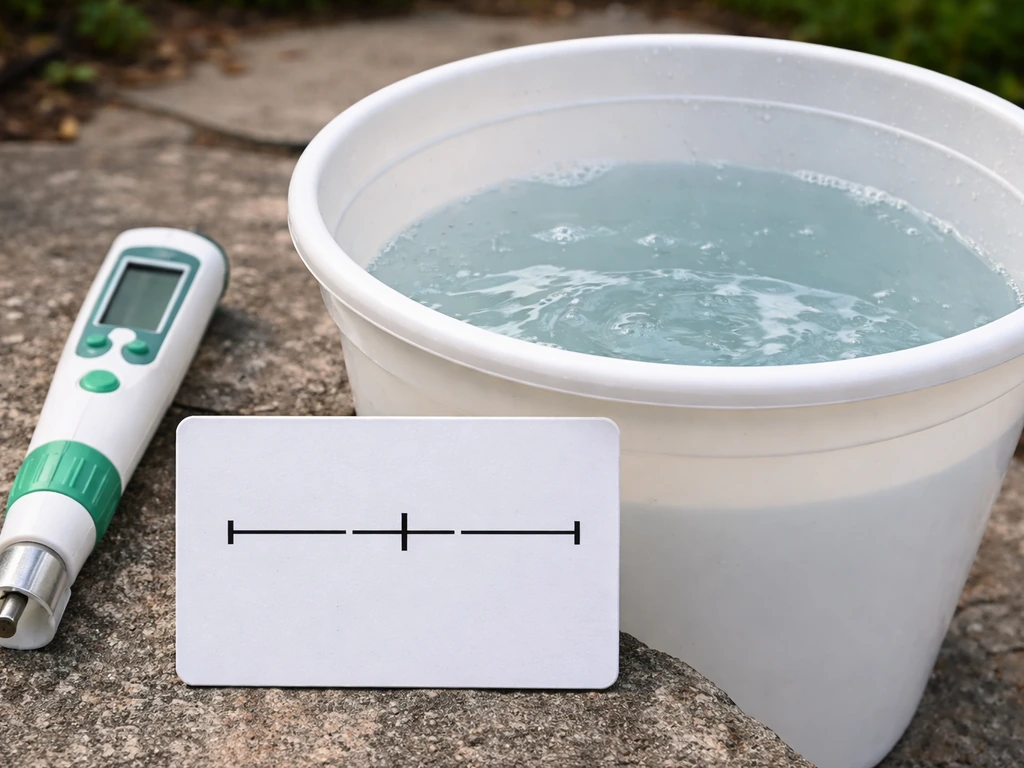
Penn State Extension reports that fertigation (fertilizer delivered through irrigation water) solutions generally run at an electrical conductivity (EC) of 1.5 to 2.5 mmhos/cm. EC is a direct measure of dissolved ion concentration in your solution, so it gives you a way to check feed strength rather than guessing. Oregon State University Extension provides a useful threshold framework: EC below 1.5 is generally safe, 1.5 to 3.0 is a caution zone for sensitive plants, and above 3.0 mmhos/cm represents a real hazard for ion stress. For most home gardeners without an EC meter, the practical rule is to start at half the label rate and watch how plants respond before increasing.
Frequency: don't fertilize on autopilot
UMN Extension recommends adjusting fertilizer frequency based on potting media, watering schedule, and growth rate, not just a fixed calendar. A plant in a fast-draining coir mix that you water daily needs more frequent feeding than one in a moisture-retentive peat mix watered twice a week. Watch the plant, not the calendar.
Runoff and salt management
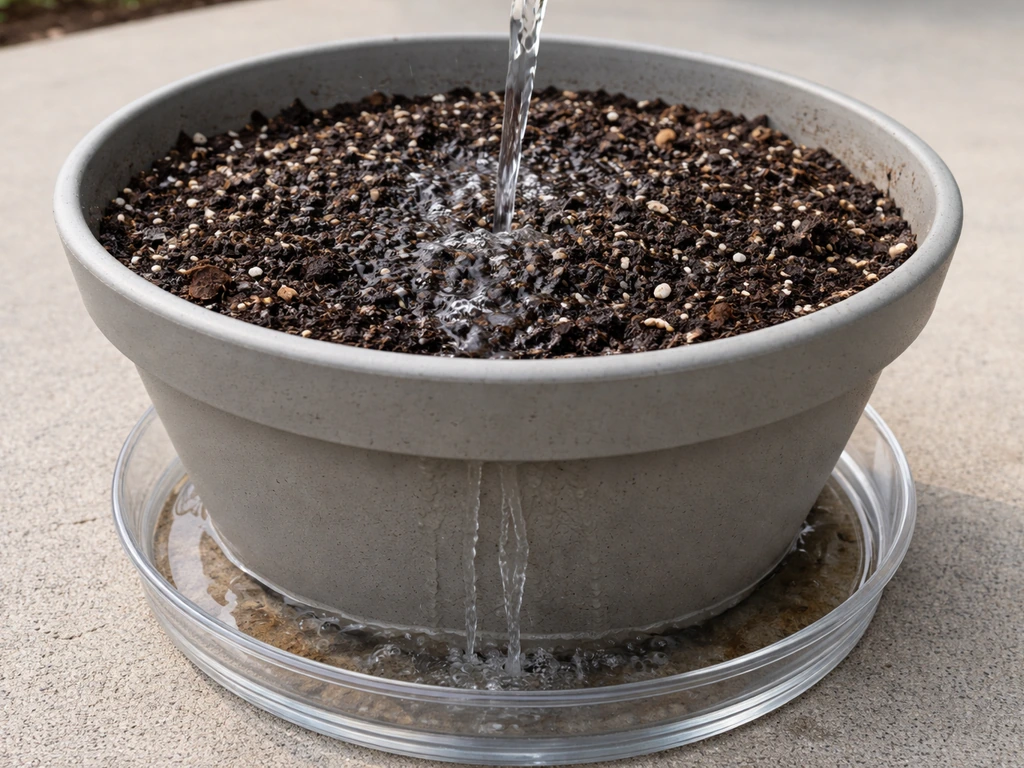
Every time you apply liquid fertilizer to a container, salts accumulate in the soil over time. The fix is simple: periodically flush the container with plain water until water runs freely from the drainage holes, which carries excess salts out. Do this every few weeks if you're feeding regularly. Also worth noting: UGA Cooperative Extension cautions that liquid fertilizers applied through hose-end sprayers or watering cans can be hard to apply evenly, so if you're covering a large area, consistency matters more than you might think.
Water quality basics that change your results
The quality of the water you use isn't glamorous, but it genuinely affects how well liquid feeding works and can even cause problems you'd blame on the wrong thing. Oregon State University Extension discusses sodium hazard in irrigation water quality using SAR (sodium adsorption ratio) as a relevant metric Irrigation and water quality.
- pH: Most plants prefer a root zone pH between 6.0 and 7.0. If your water is highly alkaline (above 7.5), it can push soil pH up over time, locking out iron, manganese, and other micronutrients even when they're present. If you're seeing unexplained yellowing despite regular feeding, check your water pH before adding more fertilizer.
- Hardness and dissolved minerals: Hard water contains calcium and magnesium carbonates that can accumulate in soil and interact with fertilizer salts. This isn't always bad (calcium and magnesium are plant nutrients), but very hard water in combination with a full-strength fertilizer solution can push EC into problematic territory.
- Chlorine and chloramine: Tap water chlorine dissipates if you let water sit in an open container for 24 hours. Chloramine, used in some municipal systems, does not dissipate on its own and can affect sensitive plants and beneficial soil organisms. A simple carbon filter handles both.
- Sodium: Penn State Extension flags sodium hazard (measured as sodium adsorption ratio, or SAR) as a key water quality concern. High-sodium water can degrade soil structure over time, reducing drainage and oxygen availability at the root zone.
- Boron: Penn State Extension also highlights boron as a water quality concern in some regions. Boron is needed in tiny amounts but becomes toxic at slightly higher concentrations, so if your water source naturally contains elevated boron, liquid feeding can compound the issue.
If you're watering with municipal tap water and your plants are growing well, you probably don't need to overthink water quality. But if growth is consistently poor despite correct watering and feeding, getting a basic water test done is a smart diagnostic step, especially for well water users.
Troubleshooting: yellowing, slow growth, wilting, and root issues
Liquid-related problems fall into a few recognizable patterns. Here's how to read what your plant is telling you.
Yellowing leaves
Yellowing is the most common complaint and also the most misdiagnosed. Before adding more liquid fertilizer, ask: is the yellowing starting on older lower leaves (likely nitrogen deficiency, common in containers that haven't been fed recently) or on young new growth (often an iron or manganese lockout caused by high pH, not a lack of feeding)? Adding more fertilizer when the problem is pH-related or salt-related will make things worse. Rutgers Extension notes that micronutrients are needed in small amounts and that both deficiency and toxicity are possible, so less is more when you're uncertain.
Slow or stalled growth
If a plant simply isn't growing, check light first, then watering consistency, then nutrients. Slow growth is often a water or light problem, not a nutrition problem. In general, the type of water that supports faster growth is the one your plants can use consistently, without salinity or hardness problems, so they can keep taking up nutrients efficiently type of water that helps plants grow faster.
If you've ruled those out, a soil test or a dilute application of balanced liquid fertilizer is a reasonable next step. Don't assume adding a more concentrated feed will speed things up faster. Don't assume a special liquid will speed growth, especially if the main issue is water, light, or general nutrient balance.
Wilting despite moist soil
Wilting when the soil is already wet almost always points to root problems, often from overwatering and root rot, or from salt burn caused by too-strong fertilizer solutions. If you've been feeding aggressively, flush the container with plain water, let it drain fully, and hold off on more feeding for a week or two. Check the roots if possible: healthy roots are white or light tan; rotted roots are brown, mushy, and often smell bad.
Tip burn and leaf edge scorch
Brown, crispy leaf edges are a classic salt stress symptom. This happens when EC in the root zone gets too high, either from over-feeding or from using hard water in combination with regular fertilizer without periodic flushing. The fix is to flush with plain water and reduce fertilizer concentration going forward.
Myths about special liquids vs what science actually supports
This is the section that saves you money. There are several 'special liquid' claims that circulate widely in gardening communities, and most of them range from overstated to outright ineffective.
Epsom salt solutions
Epsom salt (magnesium sulfate dissolved in water) is probably the most popular home-garden liquid tonic, and it's also one of the most oversold. Iowa State Extension is direct about this: Epsom salt is only useful when a plant actually has a confirmed magnesium deficiency or when you're dealing with intensive crop production in depleted soil.
In a Reddit discussion, commenters similarly suggest Epsom salts or magnesium supplementation is mainly appropriate when magnesium deficiency is verified, often via a soil test, and that containers can deplete nutrients faster Epsom salt is only useful when magnesium deficiency is confirmed. Applying it to plants that don't need magnesium doesn't make them grow faster, and it can throw off the calcium-to-magnesium balance in your soil over time.
Mississippi State Extension specifically calls out the Epsom salt myth in the context of hydrangeas. If you want to know whether your plants need magnesium, get a soil test.
Banana peel tea and fruit-based liquid tonics
Soaking banana peels in water and applying the liquid as a fertilizer sounds like a clever idea, but Ask Extension characterizes this practice as likely a waste of time rather than a reliable fertilizer approach. The nutrient content of banana peel water is low and inconsistent, and there's no meaningful evidence that it produces measurable growth improvements. If you want to return banana peels to the garden, composting them is far more effective.
Compost tea
Aerated compost tea is a step above banana water in the gardening world, but the science doesn't support it as a reliable growth booster either. Ask Extension notes they don't have strong data showing consistent benefits from compost tea applications. A peer-reviewed field experiment found no effects of fresh compost tea on soybean growth or yield. This doesn't mean compost itself is useless (it's excellent), but brewing it into a tea and applying it as a liquid doesn't reliably transfer those benefits.
What actually works
The science-backed hierarchy is this: consistent, appropriate watering with good-quality water first; balanced liquid fertilizer matched to growth stage and plant type second; soil amendments or targeted micronutrient corrections based on actual soil tests third. Everything else is optional at best. The gardeners who get the best results aren't the ones using the most exotic liquid treatments. They're the ones who get water quality, feeding consistency, and nutrient balance right, then leave their plants alone to grow. The best choice is the water your plants can use consistently without problems from salts or hardness, so water quality matters too which water is best for plants to grow.
If you want to go deeper on what specifically to put into your water or soil for better results, the related questions of what to add to water for plant growth, which water type works best, and how to build a stronger nutrient foundation through soil amendments all connect naturally to what you've just read.
But start here: water well, feed appropriately for the stage, check your water quality if results are poor, and skip the folk remedies unless you have a confirmed deficiency to address. If you want more than liquid feeding, the next step is adding soil amendments like compost or well-balanced nutrients based on a soil test.
If you want a broader starter plan for what's good for plants to grow, focus on consistent watering and then add a balanced water-soluble fertilizer only when the media starts running low. In other words, start with consistent watering, then use a balanced, water-soluble fertilizer at the label rate or lower so plants get the right nutrients without overdoing it what to put in plants to make them grow.
If you are wondering what to add to plants to help them grow, focus first on consistent watering and a balanced fertilizer matched to the growth stage, not random “tonics. A balanced liquid fertilizer matched to the plant's growth stage is usually what to add to plants to help them grow. If you are wondering what to put into water to help plants grow, the best starting point is consistent watering and a balanced, properly diluted fertilizer for the growth stage. ”.
FAQ
Can I use plain tap water and skip fertilizer entirely if my plants look green?
You can, especially for in-ground plants in decent soil. For containers, nutrition is usually the first limiting factor, so if growth slows or you see paler leaves, it typically means the potting mix has run low and you should add a balanced water-soluble fertilizer at a reduced rate rather than guessing with “tonics.”
Is there a best time of day to apply liquid fertilizer?
Apply when the plant can take up nutrients consistently, usually in the morning or late afternoon, and avoid feeding during intense mid-day heat. If you use hose-end products, check that the solution is mixed evenly first, since uneven strength can cause localized leaf burn
How do I prevent fertilizer burn if I accidentally mixed it too strong?
If leaves scorch, stop feeding immediately, flush the container thoroughly with plain water until runoff is freely draining, then wait about 1 to 2 weeks before restarting at half strength. Also check that the container drains well, because waterlogged roots make salt stress worse
Should I fertilize more often but with weaker solution, or less often with stronger solution?
For most home setups, weaker but more frequent feedings are safer and easier to match to plant uptake. Your article already points to starting at half the label rate and adjusting based on media and growth rate, so the decision aid is to feed to plant response, not to calendar frequency
What’s the simplest way to tell if a yellowing plant needs fertilizer or something else?
Look at where yellowing begins. Yellowing on older lower leaves usually points toward nitrogen deficiency, while yellowing on newer growth often suggests pH or micronutrient lockout rather than “more food.” If salts are suspected, flushing and reducing fertilizer strength is a better first move than increasing dosage
Do plants absorb nutrients in a liquid form differently than nutrients from compost or slow-release pellets?
Nutrients are taken up as ions, regardless of whether they arrived through dissolved fertilizer, granular products, or decomposed organic matter. The practical difference is timing and consistency, liquids act fast and can be controlled precisely, while solids release more gradually and can be harder to overcorrect
Do I need an EC meter to manage liquid feeds safely?
No, but it helps a lot for avoiding ion stress. If you do not have one, you can still manage risk by using half-strength at first, increasing only if new growth looks healthy, and performing periodic plain-water flushes in containers to limit salt buildup
How often should I flush container soil if I’m feeding with liquid fertilizer?
When you feed regularly, a practical approach is to flush every few weeks, or sooner if you notice crispy leaf edges, dry tips, or lingering stunting. The goal is to move excess dissolved salts below the root zone, runoff should be clearly free-flowing
Does Epsom salt work for all plants that look yellow?
No. It only helps when magnesium is actually deficient. If yellowing is from salt stress, poor pH conditions, or another nutrient imbalance, magnesium sulfate can make the imbalance worse, so the better step is either a soil test or a targeted correction based on symptoms
Are compost tea or banana-peel tea good substitutes for water-soluble fertilizer?
Usually not as reliable substitutes. Compost tea and similar brews can be inconsistent in nutrient content and often do not produce dependable growth results, banana peel water is typically too low and variable. If you want consistent performance, use a balanced water-soluble fertilizer when the growing media is depleted
What fertilizer ratio should I choose for flowering versus leafy growth?
Use the N-P-K numbers to match the plant’s current job. Leafy growth generally benefits from relatively more nitrogen, while flowering and fruiting often benefit from relatively more phosphorus and potassium, but avoid switching blindly, instead adjust based on plant type and stage
If my plant isn’t growing, how do I avoid the common mistake of fertilizing first?
Check light and watering consistency before adding more nutrients. Slow growth is often caused by inadequate light, inconsistent watering, or root issues, not by insufficient fertilizer. A helpful next step, after confirming light and watering are right, is a dilute balanced feed rather than jumping to a stronger solution
Why do some plants wilt even when the soil looks wet?
Wilting with wet soil often points to root problems such as overwatering, poor drainage, or root rot. It can also occur from fertilizer salt stress. If you have been feeding aggressively, flush, let excess drain fully, and pause feeding while checking roots if possible
How can water quality change the results of liquid fertilizer?
Hard water and high mineral content can raise the effective salt load and interfere with nutrient availability, which can lead to symptoms that look like deficiency. If feeding is correct but results are still poor, getting a basic water test (especially for well water) helps you decide whether you need to adjust fertilizer strength or flush more often
Should I change fertilizer frequency based on potting mix type?
Yes. Fast-draining mixes usually need more frequent feeding because nutrients wash through sooner, while moisture-retentive mixes need less frequent feeding. The decision rule is to adjust based on watering schedule, drainage, and growth rate, then observe plant response before increasing strength
Can liquid fertilizer be applied by spraying leaves instead of watering soil?
Some nutrients can be applied as foliar sprays, but that changes the risk profile and usually requires different product guidance. If you are using standard water-soluble fertilizers, the safest home-garden approach described in your article is soil feeding via irrigation, and focusing on even application to avoid localized burns
Next Articles
How Do Microorganisms Help Plants Grow: Practical Guide
Learn how microbes in the rhizosphere fix nitrogen, boost phosphorus, aid roots, suppress disease, and how to grow them.
How Does Yeast Help Plants Grow? Safe, Practical Guide
Learn how yeast boosts plant growth via soil microbes, safe dilution and timing, plus myths, limits, and troubleshooting
Do Mushrooms Help Plants Grow? Science and How to Use
Science-backed answer on whether mushrooms help plants grow, plus how to use mycorrhiza, compost, and test results.