Yes, fertilizer can make a plant grow bigger, but only when nutrients are actually the thing limiting its growth. If your soil already has adequate nitrogen, phosphorus, and potassium, adding more fertilizer often does nothing useful, and can actively harm the plant through salt buildup and nutrient burn. The real question isn't just 'does fertilizer work?' It's 'is my plant nutrient-limited right now, and how do I run a fair test to find out?' That framing matters whether you're doing a school science experiment or trying to get more out of your vegetable garden.
Does Fertilizer Make a Plant Grow Bigger? Test Setup
Marcus Holloway
20 May 2026
Independent vs. dependent variables in a fertilizer experiment
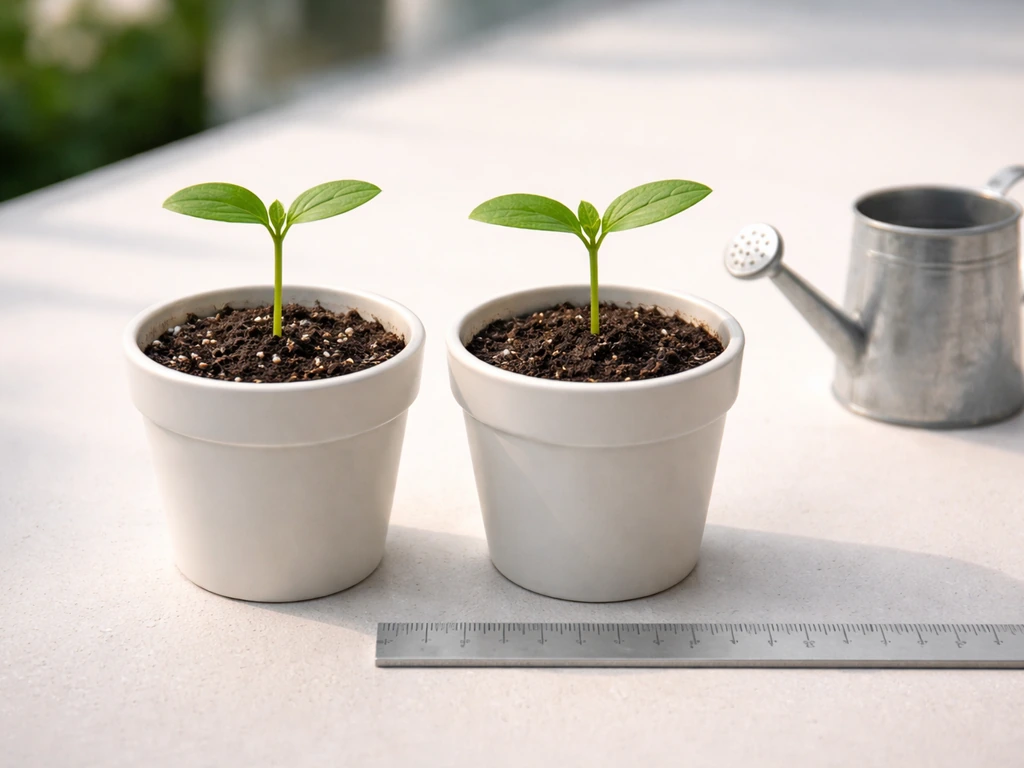
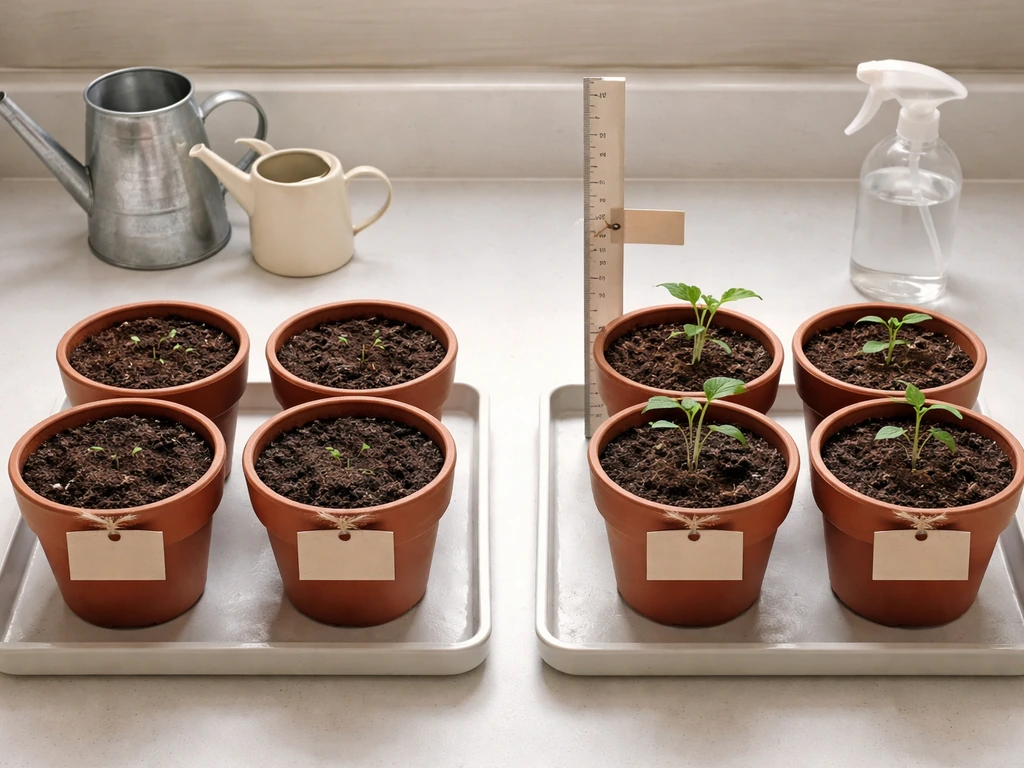
If you're setting this up as an experiment, fertilizer is your independent variable. That's the thing you deliberately change. But 'fertilizer' alone is too vague to be a useful independent variable. You need to pick one specific aspect of fertilization to manipulate: the type of fertilizer (granular vs. liquid, organic vs. synthetic), the dose or application rate (quarter-strength vs. full-strength vs. double), the timing (every week vs. every month), or the application method (broadcast vs. placed near roots vs. foliar spray). Changing more than one of those at a time ruins your ability to interpret results.
Plant size is your dependent variable, meaning the thing you're measuring to see if your manipulation had an effect. 'Bigger' is not a measurement. You need to define it before you start, because height, leaf count, stem diameter, fresh weight, dry biomass, and overall canopy spread can all tell different stories. A plant given high nitrogen might shoot up in height while staying thin-stemmed, which tells you something very different than a plant that stays the same height but produces twice the leaf mass. Decide which dimension of 'bigger' you care about before the first seed goes in the pot.
What 'fertilizer' and 'grow bigger' actually mean, and how to measure them
Fertilizers are products that supply one or more essential plant nutrients. Most conventional fertilizers focus on the three macronutrients listed on every bag as N-P-K: nitrogen (N), phosphorus (P), and potassium (K). Nitrogen drives leafy, vegetative growth and overall plant size most directly. Phosphorus supports root development and energy transfer. Potassium regulates water movement, stress tolerance, and enzyme activation. When you buy a bag labeled 10-10-10, those numbers are the percentages of N, P, and K by weight. A bag labeled 24-8-16 is nitrogen-heavy and will push vegetative growth more aggressively than a balanced formula.
For measuring 'grow bigger,' pick two or three of the following metrics and stick with them for the whole experiment. Record them on the same schedule, ideally weekly.
- Plant height: measure from soil surface to the tallest growing tip with a ruler or tape measure
- Leaf count: count all fully expanded leaves on the main stem
- Stem diameter: measure at a fixed point above the soil line using digital calipers
- Canopy spread: measure the widest point across the plant
- Fresh weight: weigh the whole plant (destructive, used at end of experiment only)
- Dry biomass: oven-dry the plant at low heat and weigh (most scientifically accurate, also destructive)
For a backyard or kitchen-table experiment, height plus leaf count is usually enough to see real trends without destroying your plants partway through.
How to set up a fair fertilizer experiment
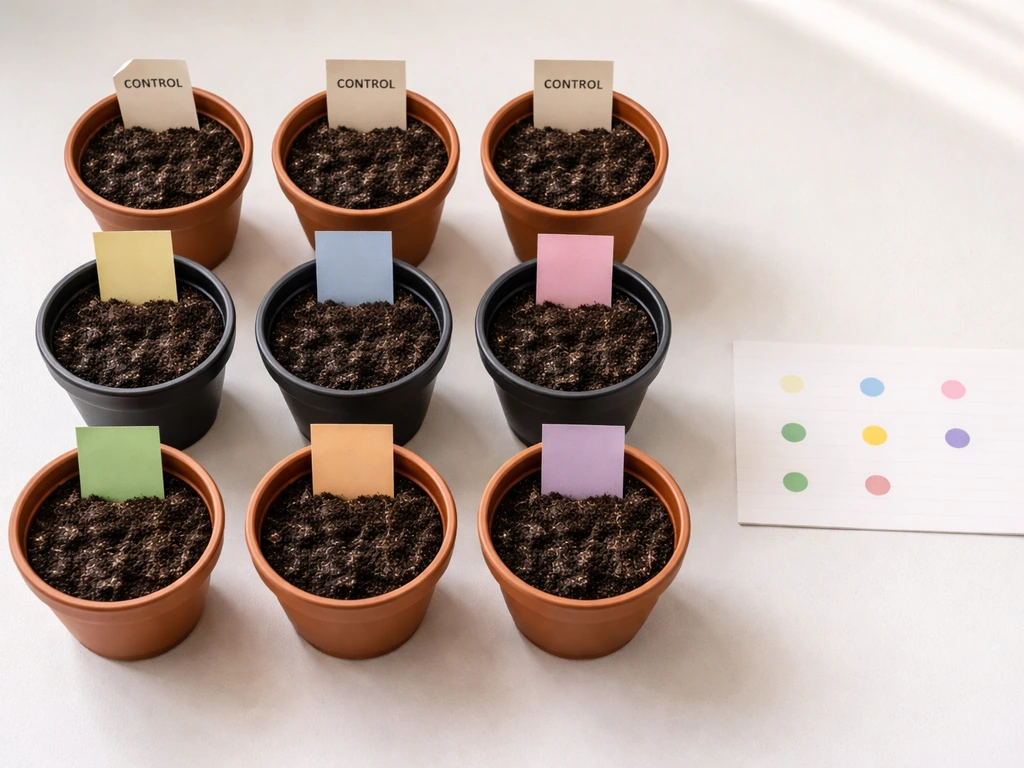
A fair experiment has three non-negotiable components: a control group, replication, and randomization. Skipping any one of these makes your results nearly impossible to interpret honestly.
Control group
Your control group gets no fertilizer. Everything else they receive, such as the same soil mix, the same pot size, the same amount of water, and the same light conditions, must be identical to your treatment groups. The control is your baseline. Without it, you have no way to know whether any growth you see is caused by the fertilizer or just by normal plant development.
Replication
Use at least three pots per group, ideally five or more. Individual plants vary naturally, and a single pot per treatment tells you almost nothing reliable. If one plant in your fertilized group grows faster, you can't tell if that's the fertilizer or just a genetically stronger seedling. With three to five replicates per group, individual variation averages out and real patterns become visible.
Randomization
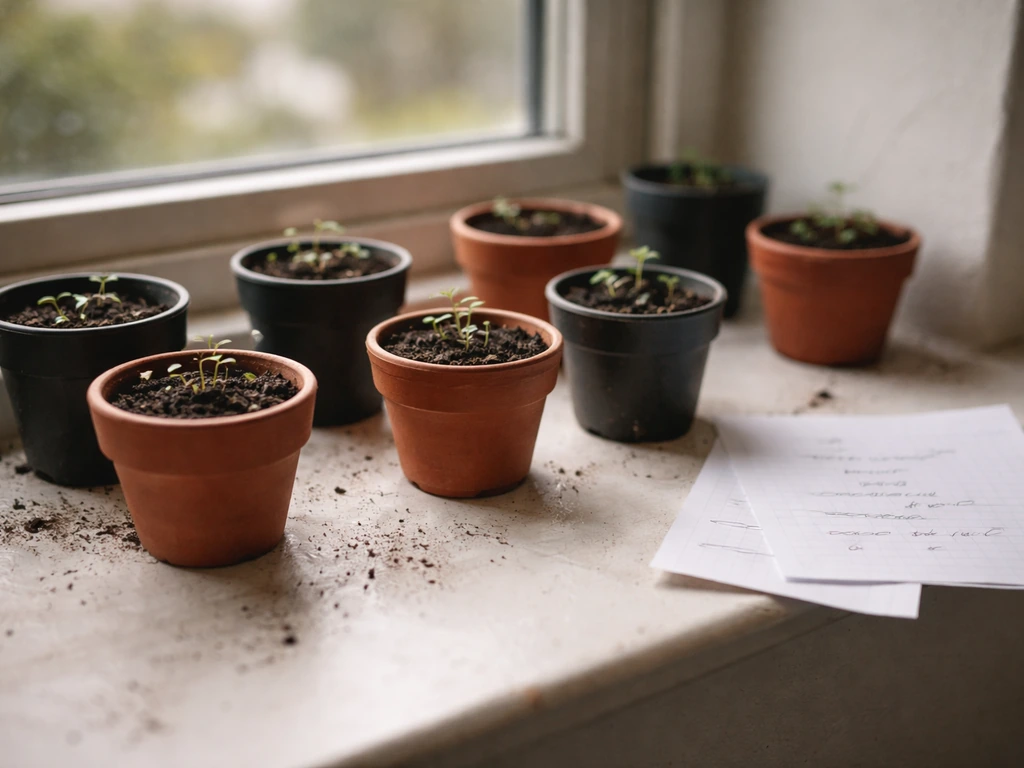
Don't put all your fertilized pots on the sunny side of a windowsill and all your controls in the corner. Arrange them randomly, or rotate their positions every few days. Light levels, airflow, and even subtle temperature differences across a shelf can create growth differences that have nothing to do with fertilizer.
A simple setup that actually works
- Choose a fast-growing plant with reliable germination: radishes, beans, basil, or marigolds all work well
- Use the same commercial potting mix for every pot and fill to the same level
- Use pots of identical size and type (the same brand, same volume, same material)
- Start seeds at the same time and thin to one seedling per pot once germinated
- Place all pots under the same grow light or in the same window, rotating positions every 2-3 days
- Water every pot with the same measured amount of water on the same schedule
- Apply fertilizer only to treatment pots, at the rate specified on the product label
- Measure height and leaf count on the same day each week for 4-8 weeks
- Record everything in a simple spreadsheet or notebook
Factors that can hide or fake a fertilizer effect
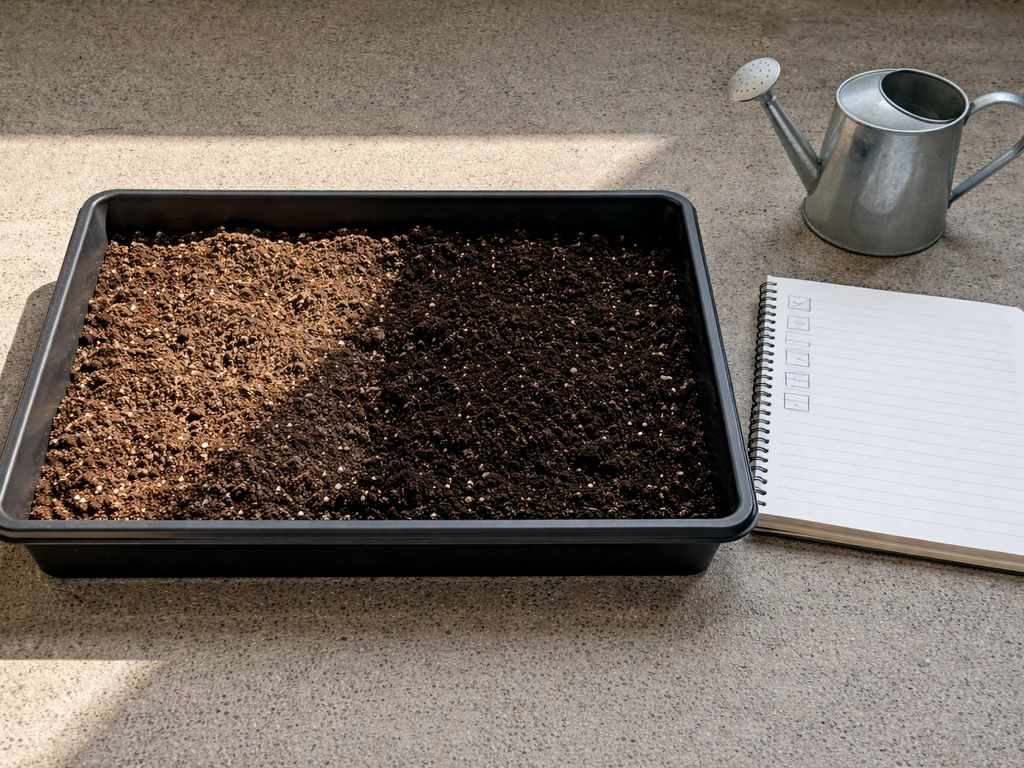
This is where a lot of home experiments go wrong, and where a lot of real-world gardeners fool themselves. Even if you apply fertilizer perfectly, these variables can mask the effect or create a false one.
| Variable | How it confounds results | How to control it |
|---|---|---|
| Light | Low light limits photosynthesis, so plants can't use extra nutrients for growth even if nutrients are abundant | Keep all pots at equal distance from the same light source; rotate positions regularly |
| Water | Drought stress shuts down nutrient uptake; overwatering leaches nutrients out of sandy potting mix | Weigh pots or use a moisture meter; water each pot the same measured volume |
| Soil or potting mix | Different mixes have different baseline fertility, pH, and drainage; a bag of 'potting mix' can vary between brands | Buy one bag from one brand and mix it thoroughly before filling all pots |
| Pot size | Larger pots hold more nutrient reserves and allow more root development; plants in bigger pots grow larger regardless of fertilizer | Use identical pots for every treatment |
| Starting plant size | Larger seedlings have a head start that can look like a fertilizer effect by week 2 | Thin to seedlings of similar size; record starting height before any fertilizer is applied |
| Temperature | Temperatures below 50°F or above 90°F slow nutrient uptake and growth independently of fertilizer supply | Keep all plants in the same temperature environment |
This is also why real-world gardeners sometimes swear fertilizer 'doesn't do anything.' If your plants are light-starved or drought-stressed, nutrients literally cannot fix that. As one extension resource from Oregon State puts it, nutrient deficiency can develop even when nutrients are present if the plant is already stressed by low light or extreme temperatures.
When fertilizer actually helps, and when it won't
Fertilizer has a measurable, sometimes dramatic effect on plant size when nutrients are the actual limiting factor for growth. Iowa State Extension describes nitrogen deficiency clearly: slow, weak growth and reduced overall size, with older lower leaves turning pale green to yellow first. If your plant looks like that and your soil is genuinely low in nitrogen, adding nitrogen-containing fertilizer will produce a visible size response within one to two weeks. That's a real effect, and it's reliably reproducible.
But if your soil already has adequate nitrogen, phosphorus, and potassium, adding more fertilizer won't make a bigger plant. The concept here is Liebig's Law of the Minimum: growth is controlled by whichever resource is in shortest supply. If light is the limiting factor, more nitrogen can't substitute for photons. MU Extension also explains that chlorophyll uses available light energy to make sugars, so nitrogen's ability to support growth depends on sufficient light for photosynthesis If light is the limiting factor, more nitrogen can't substitute for photons.. If water is limiting, extra potassium won't fix wilting. Fertilizer only 'works' when nutrients are actually what's holding the plant back.
Plant species also matter a lot. Heavy feeders like tomatoes, corn, and leafy greens show strong growth responses to nitrogen fertilization. For tomatoes specifically, nitrogen fertilization is often the nutrient choice that helps them grow faster when other conditions are adequate. Light feeders like herbs, many native perennials, and succulents often show little or no size response, and can be damaged by the same rates that help a tomato plant. This is also why the type of fertilizer matters for specific crops. Questions about fertilizer effects on flowering plants or taller growth in specific species deserve their own treatment because the relationship between nutrient type and growth form is different depending on what the plant is trying to do. If you're specifically wondering whether fertilizer affects flowering plants, remember that crop needs and nutrient-to-growth signals can differ by species fertilizer effects on flowering plants.
One more thing worth saying directly: soil pH can completely block fertilizer from working even when you apply it correctly. If your soil pH sits around 5.6 or lower, many nutrients become chemically unavailable to plant roots regardless of how much fertilizer you add. A Clemson Extension source makes this exact point: adding more fertilizer won't solve the problem if pH is limiting nutrient availability. This is why a soil test that includes pH alongside N, P, K, and organic matter is more useful than just buying more fertilizer.
Common fertilizer mistakes that hurt plants instead of helping
Overfeeding is the most common fertilizer mistake, especially with containerized plants. Every time you add fertilizer to a pot, you're also adding salts. As Penn State Extension explains, over-fertilization in containers leads to high soluble salt concentrations in the potting medium. When salt levels climb high enough, they make it harder for plant roots to extract water from the soil, essentially causing drought stress even when the pot is wet. The visible result, described by both University of Maryland and Texas A&M extension resources, is marginal leaf browning and scorch that progresses to necrosis of leaf tips and edges at toxic concentrations. Gardeners often see this and assume the plant needs more water or more fertilizer, which makes the problem worse.
In outdoor garden beds, the main over-fertilization risk is nutrient leaching. Sandy soils are particularly prone to this: water carries nitrogen and potassium below the root zone when watering is excessive, which wastes money and can pollute groundwater. Slow-release fertilizer formulations reduce this risk because they meter out nutrients over weeks or months rather than dumping a large soluble dose all at once. If you're using conventional fast-release fertilizers, you'll likely need multiple applications over the season, which also means more opportunities to over-apply.
- Never exceed the application rate on the fertilizer label; more is rarely better and often harmful
- For container plants showing salt damage, leach the pot by running extra water through it slowly until it drains freely from the bottom
- Avoid getting granular or liquid fertilizer directly on leaves; foliar contact with some fertilizers causes burns
- Don't fertilize a drought-stressed plant until it has been adequately watered; stressed roots can't uptake nutrients and the salts will concentrate
- Don't fertilize plants that are dormant or growing very slowly due to low light or cold temperatures, because unused nutrients just build up as salts
Practical next steps: choose, apply, and evaluate fertilizer in your garden
Before you buy anything, get a basic soil test. Clemson Extension notes that soil test reports show current nutrient levels and pH, and they also include recommendations for the amount and type of fertilizer (and/or lime) needed for optimum growth based on the plants you plan to grow soil test results. A good home garden test should cover nitrogen, phosphorus, potassium, organic matter, soluble salts, and pH at minimum. University extension labs (Montana State, Oregon State, University of Maryland, and others all offer this service) provide actual fertilizer rate recommendations based on your crop and soil results, not generic guesses. Store-bought at-home test kits give rough estimates that can differ significantly from lab results. If you're going to make fertilizer decisions based on data, a lab test costing $15-30 is worth it.
Once you have soil test results, they'll tell you which nutrients are low, medium, or high, and give you a specific fertilizer recommendation in pounds per thousand square feet (or grams per pot for container growing). Follow that rate. The N-P-K fertilization rate for nitrogen is set based on plant response research; rates for phosphorus and potassium are based on what the soil test shows is already available. Applying extra of a nutrient that's already 'high' on your test is wasteful and potentially harmful.
For a typical vegetable garden with no soil test, a balanced granular fertilizer like 10-10-10 applied at label rates before planting, followed by a nitrogen side-dressing midseason for heavy feeders, is a reasonable starting point. For containers, a diluted liquid fertilizer applied every two to four weeks during active growth is more controllable than granulars, which can concentrate salts quickly in small volumes of potting mix.
To evaluate whether your fertilizer is actually working, track your measurements. In your experiment, calculate the average height and leaf count for each treatment group each week and compare them. In the garden, take photos on a fixed schedule and note observations like leaf color, growth rate, and any signs of deficiency or burn. Nitrogen deficiency shows up as pale, yellowish older leaves and stunted growth. Over-fertilization shows up as brown leaf margins and edges. If your fertilized plants are growing measurably faster than your controls and showing no burn symptoms, the fertilizer is doing its job. If there's no difference, something else, usually light, water, or pH, is the real limiting factor, and that's the problem worth solving next. If your weed plants are not growing better, check whether light, water, or soil pH is limiting instead of adding more fertilizer.
FAQ
Does fertilizer make a plant grow bigger even if the plant has enough nutrients?
Usually no. If nitrogen, phosphorus, and potassium are already adequate, fertilizer will not increase size much and can still reduce growth by causing salt buildup, nutrient imbalance, or root stress. In that situation, limiting factors are often light, water, temperature, or (commonly overlooked) soil pH blocking nutrient availability.
If I want to test “does fertilizer make a plant grow bigger,” what should I treat as the independent variable besides “fertilizer”?
Pick one fertilization factor to change, such as application rate (quarter vs full strength), nutrient source type (liquid vs granular), or timing (weekly vs monthly). Keep everything else identical, including potting mix, water schedule, and light. Changing multiple fertilization variables at once makes it impossible to tell what caused any size difference.
Why do some experiments show no difference between fertilized and control plants?
Common reasons include missing a true control, too few replicates (one plant per treatment is especially misleading), uneven light exposure, or using the wrong metric for “bigger.” Also, if your soil mix or pH limits nutrient uptake, added fertilizer may be present but chemically unavailable, producing no growth response.
What “bigger” measurement is best if I care about yield, not just size?
Use a plant-dimension metric tied to your goal. For leafy plants, leaf count or leaf area is more informative than height. For fruiting crops, also track time to flowering and number of fruits. Measuring only height can miss cases where fertilizer increases leaves or stem thickness without making plants taller.
How can I tell if fertilizer is helping because nutrients are limiting, not because something else changed?
Look for a pattern: fertilized plants grow faster than controls while showing no signs of burn, and the difference is consistent across replicates. If fertilized plants do grow, but many show leaf scorch or browning edges, the effect may be stress from over-application rather than improved nutrition.
Can overwatering combined with fertilizer make symptoms look like “nutrient deficiency”?
Yes. High salt levels from over-fertilization can reduce a plant’s ability to extract water, which can mimic drought stress even when the soil looks wet. The visual pattern often includes marginal browning or tip burn. In containers, this is one of the most common misdiagnoses.
Is soil pH really a deal-breaker for fertilizer?
It can be. When pH is too low (or too high), key nutrients become chemically unavailable even if you add them. That means a fertilizer-heavy treatment can fail to improve growth while a properly pH-adjusted approach would. A soil test that includes pH is the quickest way to prevent wasted fertilizer.
How many plants or pots do I need for a home experiment to be meaningful?
At least three per group is a practical minimum, and five or more is better. Randomly assign positions and rotate if you use windowsill light. With fewer than three, natural genetic and seedling variation can easily overwhelm any real fertilizer effect.
Does fertilizer affect flowering plants differently than vegetative plants?
Often yes. Nutrients can shift growth form, but flowering responses depend on the crop’s nutrient needs and how the plant allocates resources to reproductive growth. A fertilizer that increases vegetative size may not increase flowers, so if you care about flowering, define and measure flowering-specific outcomes.
What’s the fastest way to avoid wasting money on fertilizer when you’re unsure?
Run a basic soil test (ideally including N, P, K, organic matter, soluble salts, and pH). Then apply rates based on your results rather than guessing. Lab recommendations are typically expressed in pounds per 1,000 square feet (or grams per pot), which helps you apply the correct amount.
For containers, should I use granular or liquid fertilizer?
Liquid fertilizer is often easier to control because you can dilute and apply more frequently, reducing the chance of salt concentration spikes in a small pot. Granulars can be fine, but in small volumes they can concentrate soluble salts quickly, increasing the risk of burn if you over-apply.
Next Articles
Which Type of Fertilizer Helps Tomatoes Grow Fastest?
Learn which tomato fertilizer type speeds growth, plus how to fertilize by stage, set pH, and avoid burn for fast result
How Do Microorganisms Help Plants Grow: Practical Guide
Learn how microbes in the rhizosphere fix nitrogen, boost phosphorus, aid roots, suppress disease, and how to grow them.
How Does Yeast Help Plants Grow? Safe, Practical Guide
Learn how yeast boosts plant growth via soil microbes, safe dilution and timing, plus myths, limits, and troubleshooting