Vinegar does not help most plants grow. In very specific soil conditions, a dilute application can nudge pH slightly downward, which might indirectly improve nutrient availability for acid-loving plants. Wine is not a plant food either, and it generally will not help plants grow beyond what the plant already needs from soil, water, and nutrients does wine help plants grow. But in almost every real-world scenario, pouring vinegar on or around your plants does more damage than good. Acetic acid is a contact herbicide, not a fertilizer, and using it as a growth hack is one of those garden myths that sounds plausible but falls apart the moment you look at what it actually does to soil and roots.
Does Vinegar Help Plants Grow? Science, Risks, and Fixes

Marcus Holloway
30 Apr 2026
Why vinegar keeps getting recommended in the first place
The logic behind the vinegar-for-plants idea usually goes like this: vinegar is acidic, some plants love acidic soil, so vinegar must help those plants. It's a reasonable chain of thinking on the surface. Household white vinegar contains roughly 5% acetic acid, which does register as quite acidic on the pH scale. And yes, soil pH genuinely matters, it affects how well plants can absorb iron, manganese, phosphorus, and a long list of other nutrients. So the underlying premise, that soil acidity matters for plant health, is completely correct. The conclusion, that vinegar is a good way to manage it, is where things go wrong.
People also see vinegar used as a weed killer and think, if it kills weeds, it must be doing something powerful to the soil. What it's actually doing is burning plant tissue on contact, which is a very different thing from amending soil chemistry. The same property that scorches weeds will damage the roots and foliage of the plants you're trying to help.
What vinegar actually does to soil and plants
The pH effect is unreliable and short-lived
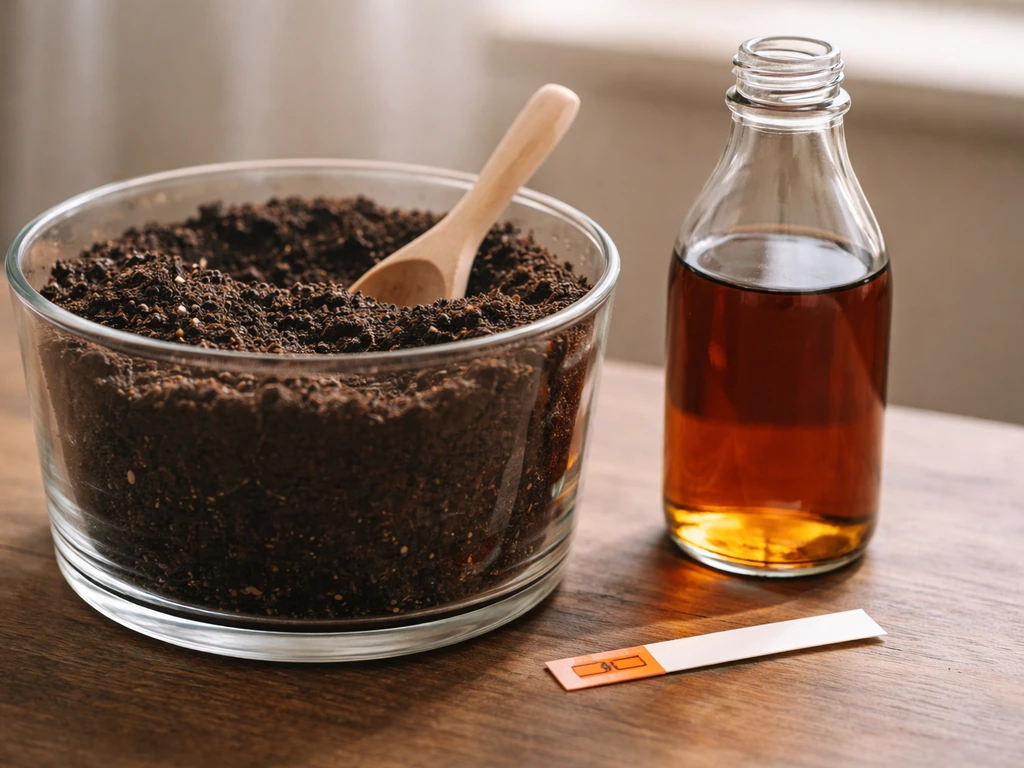
Whether vinegar even changes your soil's pH depends almost entirely on your soil's chemistry, not on how much you pour. University of Florida/IFAS research describes a simple field test where you pour vinegar on a soil sample: if it fizzes, the soil contains carbonates (free lime), and the vinegar is reacting with and neutralizing those carbonates. That reaction is the vinegar's pH effect. In a heavily calcareous (high-carbonate) soil, vinegar can produce a temporary local drop in pH.
But soil has buffering capacity, meaning it resists pH changes and tends to rebound. One application of dilute acetic acid doesn't create a lasting correction. It's more like a fizz of activity that the soil chemistry quickly absorbs.
For any meaningful, durable shift in pH, extension programs at Iowa State, West Virginia University, and the University of Wisconsin all point to the same set of tools: elemental sulfur for gradual acidification, or sulfur-containing fertilizers like ammonium sulfate, applied based on a soil test.
Acetic acid burns roots and disrupts soil biology
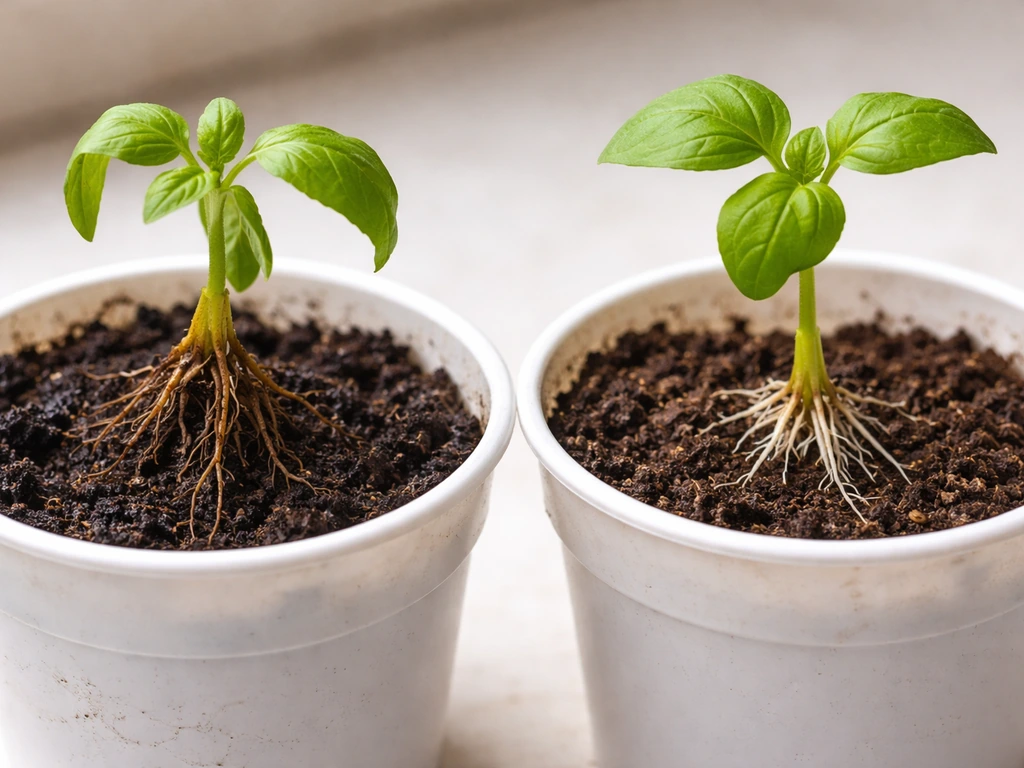
University of Maryland Extension is direct about this: acetic acid at 5-10% can kill small young weeds on contact, and at concentrations of 11% or higher it can cause severe skin burns and eye injury, including blindness. This isn't a fertilizer, it's a non-selective contact herbicide. When you water it into the root zone, you're exposing fine root hairs to the same burn-down mechanism that kills weed tops. Soil microbial communities, which drive nutrient cycling and support root health, are also sensitive to pH spikes and direct acid exposure. You can damage the living ecosystem in your soil with repeated vinegar applications, making growth conditions worse rather than better.
The rare case where there might be some logic to it
There is published research showing that acetic acid plays physiological roles in plants under abiotic stress, and that weak organic acids can influence phosphorus availability in soil through microbial and chemical mechanisms. But that science describes processes happening inside plant cells and in the complex chemistry of rhizosphere biology, not what happens when you splash pantry vinegar around a blueberry bush. Household vinegar is a blunt, inconsistent tool for those mechanisms. If you're growing acid-loving plants like blueberries, azaleas, or gardenias in genuinely alkaline soil, there are far more reliable ways to actually move the needle.
Benefits vs. harms at a glance
| Claimed benefit | What actually happens | Verdict |
|---|---|---|
| Lowers soil pH for acid-loving plants | Temporary, shallow reaction, soil buffers rebound quickly; only works if carbonates are present | Unreliable, not durable |
| Improves nutrient availability (iron, phosphorus) | pH effect is too inconsistent and short-lived to reliably unlock nutrients | Weak, safer alternatives exist |
| Kills harmful soil pathogens | Also kills beneficial microbes and damages root tissue | Net harm |
| Works as a fertilizer or growth booster | Acetic acid provides no plant nutrition (no nitrogen, phosphorus, potassium, or micronutrients) | False claim entirely |
| Safe natural alternative to chemicals | At 5% it burns tissue; at 11%+ it's a hazardous pesticide ingredient | Not inherently safer |
Is your plant problem actually about pH? Here's how to tell
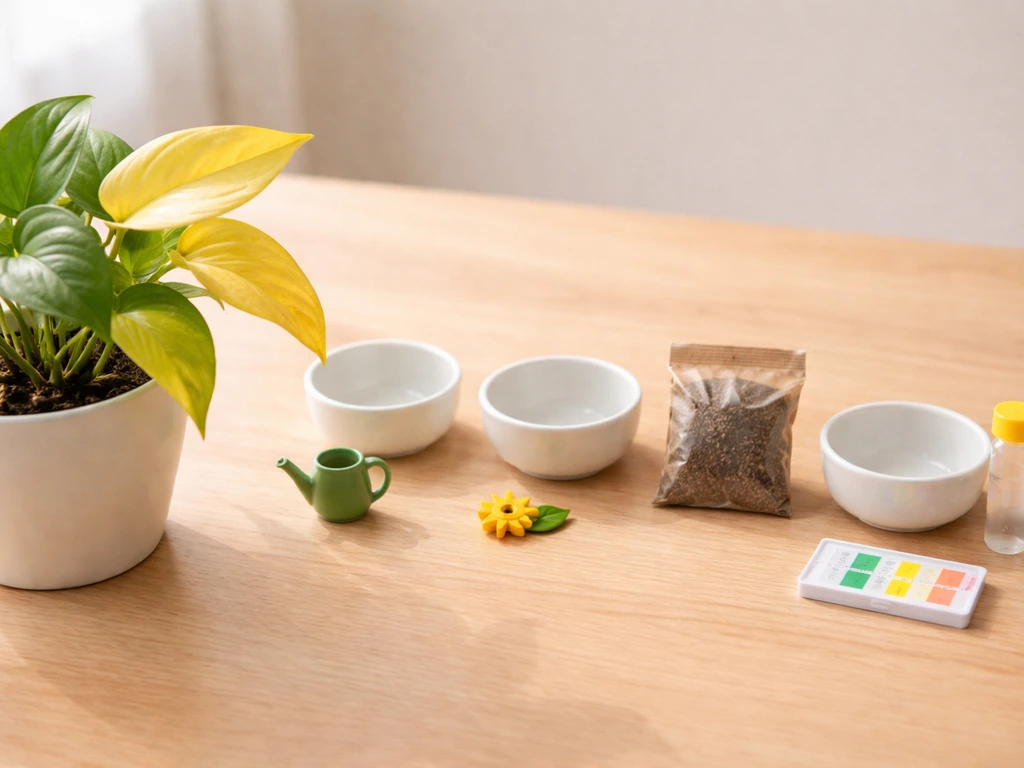
Before reaching for any soil amendment, including vinegar, it's worth figuring out whether pH is even the problem. Most plant struggles come down to one of four categories: watering issues, light problems, nutrient deficiencies, or pests and disease. pH is a relatively uncommon culprit unless you're growing something with very specific acid preferences and you've never amended your soil.
- pH-related symptoms: Yellowing leaves (chlorosis) that starts on younger, newer growth, particularly on acid-lovers like blueberries or azaleas in alkaline soils. University of Illinois Extension notes iron becomes increasingly unavailable as soil pH rises above roughly 6.5 to 6.7, so yellowing new leaves on these plants in high-pH soil is a classic sign.
- Nutrient deficiency (not pH): Yellowing that follows a pattern linked to specific nutrients (older leaves first for mobile nutrients like nitrogen, newer leaves first for immobile ones like iron or manganese). A soil test will distinguish between a pH-locked nutrient and one that's simply absent.
- Watering issues: Wilting, yellowing, or browning that appears after you've changed your watering frequency. Overwatering looks almost identical to underwatering in many plants. Check soil moisture 2-3 inches down before assuming a chemistry problem.
- Light problems: Leggy, pale, or slow-growing plants with no obvious discoloration pattern. If the plant is stretching toward a window or dropping lower leaves, light is almost certainly the issue, not soil chemistry.
- Pests or disease: Look for physical evidence: spots, webbing, sticky residue, distorted new growth, or visible insects. No soil amendment helps a plant that has spider mites or root rot.
The single most useful thing you can do before amending anything is a soil test. OSU Extension and Mississippi State Extension both emphasize that soil test interpretation depends on pH, and that recommendations for nutrients and amendments only make sense in the context of your actual soil chemistry. Most cooperative extension offices offer low-cost tests, and the $15-20 investment tells you whether you actually have a pH problem, a nutrient shortage, or nothing wrong with your soil at all.
What actually helps plants grow
If you want to genuinely improve plant performance, the evidence-based levers are well established. These aren't exciting hacks, but they're the ones that consistently work. Lemon juice also does not meaningfully improve plant growth the way real soil and nutrient fixes do lemon juice help plants grow.
Soil quality and pH correction
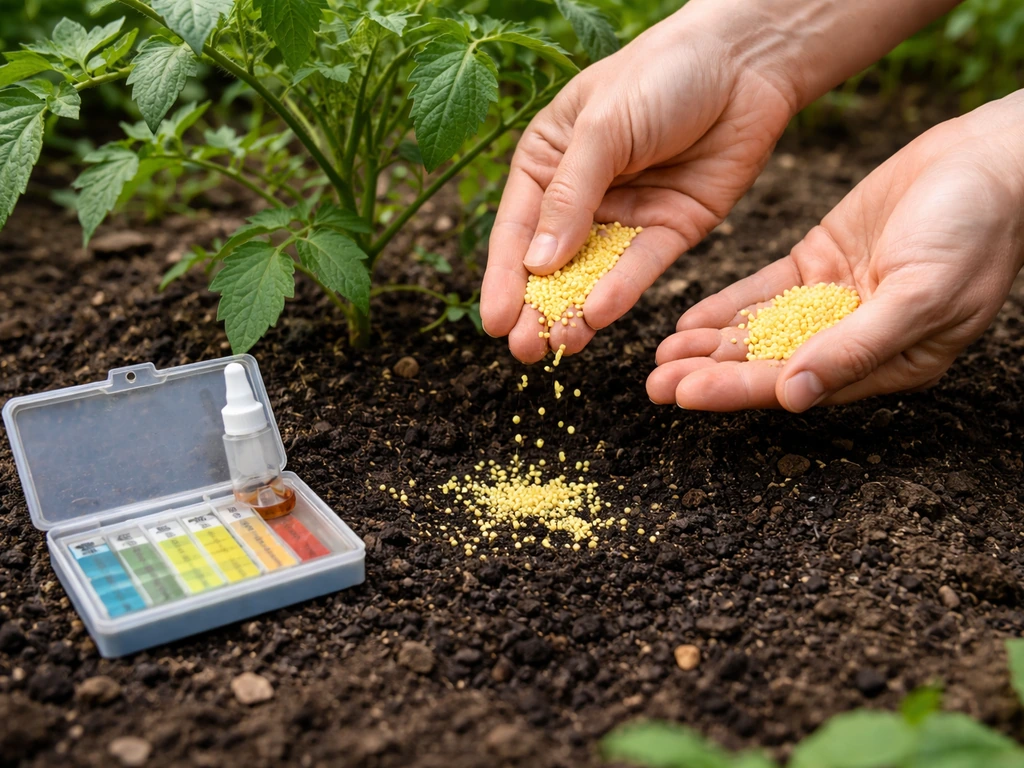
For lowering pH in genuinely alkaline soil, elemental sulfur is what Iowa State Extension calls the safest and most reliable option for long-term acidification. It works through microbial oxidation, which takes weeks to months, but the effect is durable. For a faster result, aluminum sulfate acts more quickly, though West Virginia University Extension notes it can accumulate to toxic levels if overused. Either way, apply based on a soil test result and target rate, not guesswork. Organic matter (compost) also improves soil structure, water retention, and microbial diversity in ways that vinegar simply cannot.
Fertilization matched to your plant's actual needs
Plants need nitrogen, phosphorus, and potassium in the right ratios, plus a range of micronutrients. For acid-loving plants showing iron chlorosis in high-pH soil, chelated iron fertilizers deliver iron directly in a form plants can absorb regardless of pH. University of Illinois IPM notes that iron becomes unavailable for uptake and utilization when soil pH is above roughly 6. 5 to 6.
7 iron chlorosis in high-pH soil. That's a much more targeted fix than trying to change the soil pH with vinegar.
That is much more targeted than trying to get growth benefits from vitamins or supplements. For general growth improvement, a balanced slow-release fertilizer applied at the correct rate for the plant type and season will do more for you than any pantry experiment. This isn't unlike the way that other popular home remedies, like using beer, wine, or Gatorade on plants, promise shortcuts but miss the point of giving plants what they actually need in usable form.
Even though some home remedies mention wine, it does not provide nutrients or a reliable pH shift that helps plants grow. Even though some home remedies mention beer, it does not reliably provide the nutrients or conditions plants need to grow. If you’re looking for better results, skip food-based shortcuts like beer and focus on balanced fertilization matched to your plant and soil needs.
Watering consistency
Inconsistent watering is probably the most common real cause of poor plant performance. Most plants do best with deep, infrequent watering that encourages roots to grow down, rather than shallow frequent watering that keeps the top inch wet. Water deeply, let the soil partially dry between waterings (checking at 2-3 inches depth for most plants), and make sure drainage is adequate. Root rot from overwatering kills more houseplants than almost any other single cause.
Light optimization
Light drives photosynthesis, which drives growth. A plant in inadequate light will grow slowly or not at all regardless of what you add to the soil. If you've addressed watering and soil and still see slow or leggy growth, moving the plant closer to a light source or adding a grow light is often the single highest-impact change you can make. No soil amendment or DIY hack compensates for a plant that's light-starved.
If you're set on trying vinegar anyway
If you want to experiment, here's how to minimize harm. Use only standard household white vinegar at 5% acetic acid concentration. Never use horticultural-strength vinegar (10% or higher), cleaning vinegar, or pickling vinegar on plants you care about. These higher concentrations are where real burn damage, to both foliage and soil biology, becomes serious.
- Do a soil test first. If your soil pH is already in the correct range for your plant, stop here. There's nothing to correct and no benefit to be had.
- Mix a very dilute solution: no more than 1 tablespoon of 5% white vinegar per gallon of water. This is well below concentrations that cause direct burn damage, and far below what's used as a herbicide.
- Apply to soil only, not foliage. Keep it away from stem bases and drench only the outer root zone, not the crown of the plant.
- Apply once and wait at least 2 weeks before doing anything else. Observe whether you see any improvement or any signs of stress.
- Test soil pH before and after. If you don't see a measurable change in pH, you've confirmed that vinegar isn't doing what you hoped in your specific soil conditions.
- Never apply vinegar near seedlings, newly transplanted plants, or plants already showing stress. These are the most vulnerable situations for root burn.
Even following all of these precautions, the honest expectation is that you probably won't see a meaningful growth improvement. The point of this approach is harm minimization if you're curious, not a real growth strategy.
Signs your plant is stressed and what to do next
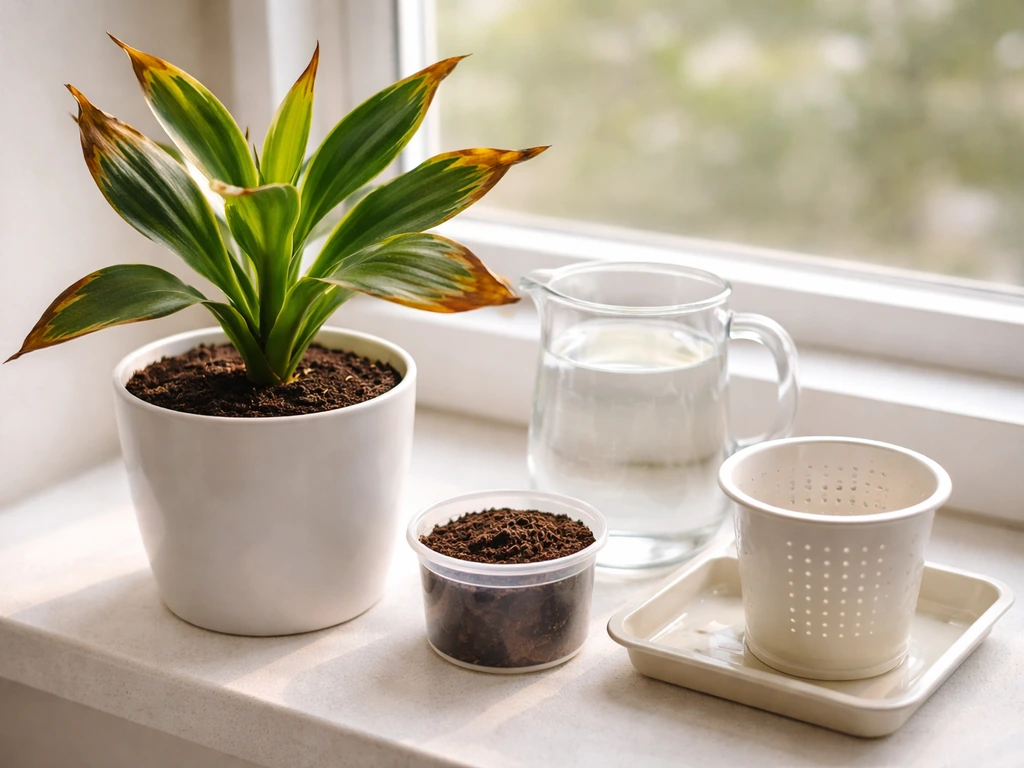
If you've applied vinegar and your plant starts looking worse, trust what you're seeing. Here are the warning signs that mean you should stop immediately and shift to recovery mode.
- Leaf edges turning brown or crispy within 24-48 hours of application: this is contact burn from acetic acid. Flush the soil with plain water to dilute the acid concentration.
- Wilting that wasn't present before: root damage can cause rapid wilting even when soil moisture is adequate. Water normally and hold off on all amendments for at least 3-4 weeks.
- Yellowing that spreads rapidly after treatment: this can indicate root system disruption. Stop all treatment and assess whether the plant needs to be repotted into fresh, neutral soil.
- No change at all after 2 weeks: this is actually the most common outcome. It means vinegar isn't doing anything useful in your soil conditions. Move on to a soil test and appropriate amendment.
Recovery steps after vinegar stress: flush the root zone with 2-3 times the pot volume in plain water to dilute and remove excess acidity, hold off on any further amendments for at least a month, and focus on consistent watering and appropriate light while the plant stabilizes. If the plant is in a container, fresh potting mix with the correct pH for the species (noted on most bags or easily found for specific plants) is often the fastest reset you can give it.
The bottom line is that vinegar belongs in salad dressing and as an occasional weed spot-treatment, not in a plant growth routine. The handful of conditions where it could have any real benefit are narrow and better served by targeted soil amendments that actually last. Spend your energy on a $15 soil test, a bag of the right fertilizer, and getting your watering dialed in. Those three things will do more for your plants than any amount of pantry chemistry.
FAQ
Can I use vinegar to lower soil pH for blueberries or azaleas without harming the plant?
Only if you confirm the soil is truly too alkaline with a soil test, because vinegar usually creates a brief, local pH change that the soil buffering quickly reverses. If you need lasting acidification, elemental sulfur or a targeted sulfur-containing fertilizer, applied to the soil test rate, is more reliable and less likely to injure roots or soil microbes.
What’s the safest way to test whether vinegar is reacting with my soil?
Try the soil sample fizz test described in extension guidance: if vinegar fizzes, carbonates are present and the acid will neutralize them. A positive fizz response tells you vinegar is being consumed, not that it will sustainably lower pH in your bed or container.
How long does vinegar’s pH effect last after you apply it?
For most soils, any pH shift from a single dilute application is short-lived because buffering neutralizes and absorbs the acid. To get a durable change, treatments that act over time (like elemental sulfur) are designed for weeks to months, not days.
If vinegar can kill weeds on contact, will it sterilize soil and prevent future problems?
Vinegar is a contact burn, not a soil sterilant you can rely on. It can damage fine roots and disrupt soil microbial activity, which can make plant stress worse and may not stop weed regrowth.
Does spraying vinegar leaves instead of pouring soil make it safer for plants?
It’s still risky. Acetic acid can burn foliage and create uneven exposure, especially on young growth. If your goal is plant health, focus on the real limiting factor (light, water, nutrients, pests) rather than acidifying surfaces.
Will vinegar help with iron chlorosis in high-pH soil better than chelated iron?
Chelated iron is usually the more dependable fix because it delivers iron in a form that remains available to the plant across a wider pH range. Vinegar is inconsistent, because it rarely provides a sustained pH correction, and it may stress roots or soil life.
How should I react if my plant starts yellowing or wilting after a vinegar experiment?
Stop further vinegar use immediately. Flush the root zone with enough plain water to dilute the acidity (2 to 3 times the pot volume for container plants), pause amendments for about a month, and switch to consistent deep watering and appropriate light to help the plant recover.
Can vinegar be used in hydroponics or with houseplant soil mixes?
It’s generally a bad idea. Hydroponic systems have much less buffering than soil, so small dosing errors can swing pH quickly, stressing roots. If you need pH correction in hydroponics, use calibrated pH adjusters and measure with reliable test strips or a meter.
Is there any situation where vinegar is actually harmless or helpful?
Occasional weed spot-treatment is the main scenario where it makes sense, because you’re targeting weeds rather than building a plant nutrition plan. For improving growth, the article’s evidence points to soil amendments based on soil test results, not pantry vinegar.
What common mistake causes people to think vinegar “worked” even when it didn’t?
They attribute short-term changes to vinegar when the real driver was something else, like improved watering timing, a seasonal nutrient flush, or better light. Another common mistake is applying vinegar without testing, so they cannot distinguish between a genuine nutrient deficiency and a pH or drainage issue.
If I want to try an acidifying option faster than elemental sulfur, what’s the caution?
Aluminum sulfate can act more quickly, but the risk is overcorrection, aluminum buildup, and toxicity if misapplied. The key decision aid is still a soil test, and you should follow target rates based on your specific soil results.
Next Articles
Does Beer Help Plants Grow? Benefits, Risks, and Better Alternatives
Find out if beer helps plants grow, the real risks, and safer alternatives like compost, proper nutrients, and watering.
How Do Microorganisms Help Plants Grow: Practical Guide
Learn how microbes in the rhizosphere fix nitrogen, boost phosphorus, aid roots, suppress disease, and how to grow them.
How Does Yeast Help Plants Grow? Safe, Practical Guide
Learn how yeast boosts plant growth via soil microbes, safe dilution and timing, plus myths, limits, and troubleshooting