Beer does not meaningfully help plants grow. There are a handful of components in beer (water, trace minerals, yeast residue, sugars) that sound appealing on paper, but in practice the alcohol, sugar load, and soil chemistry disruption cause far more harm than good. I've tested a lot of gardening folk wisdom over the years, and this one consistently fails the reality check. Here's exactly why, what the science says, and what you should do instead.
Does Beer Help Plants Grow? Benefits, Risks, and Better Alternatives

Marcus Holloway
22 Apr 2026
What people actually mean when they say beer helps plants
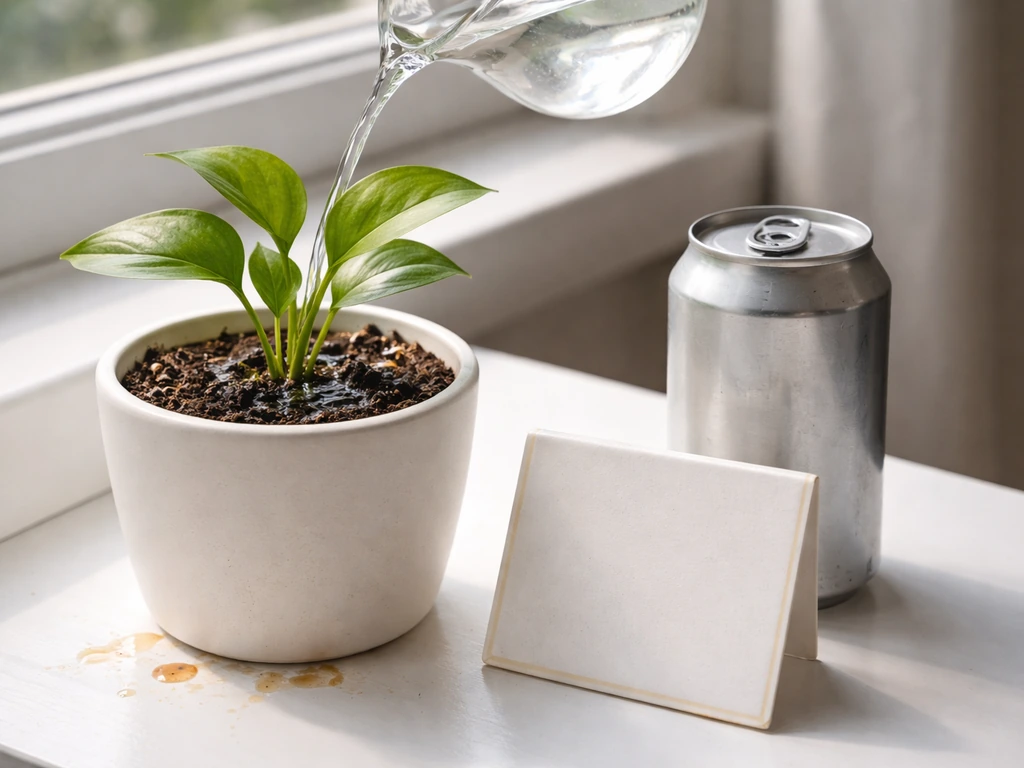
The claim usually shows up in one of two forms. The first is that beer, poured into soil or sprayed on leaves, acts as a fertilizer or growth booster because it contains yeast, sugars, and trace minerals. The second is that beer does something positive for soil microbes, either feeding beneficial bacteria or somehow improving soil biology. Both ideas have a kernel of plausibility, which is exactly why they keep circulating in gardening circles.
There's also a third, legitimate use that sometimes gets conflated with the fertilizer idea: using beer as a slug and snail trap. In a r/gardening thread, commenters discuss using beer-filled shallow containers for slugs and compare what seemed to work versus what failed slug and snail trap. University extension programs at institutions like UNH and Iowa State have documented this pest-control application, where shallow saucers of beer attract and trap slugs. That actually works. But it has nothing to do with feeding plants, and mixing the two ideas together is where the myth gets legs.
The appeal is also psychological. Beer is fermented, fermentation involves microbes, soil needs microbes, therefore beer must be good for soil. The logic chain feels intuitive but breaks down quickly once you look at what beer actually delivers to a root zone versus what a plant root zone actually needs.
What beer might technically contribute (and why it's not enough)
Let's be fair to the idea before dismantling it. Beer does contain some things that matter in plant biology. There's water, obviously. There are small amounts of potassium, magnesium, phosphorus, and calcium from the grain and hops. There's yeast residue, which contributes trace B vitamins and amino acids. If you're wondering whether vitamins help plants grow, the answer is usually yes in specific situations, but plain vitamin additives are not a reliable fertilizer do vitamins help plants grow. And there are fermentable sugars, which can influence microbial activity in soil.
Research on brewery-derived byproducts does show some interesting results. A 2022 study published in ScienceDirect found that irrigating lettuce with brewery wastewater improved plant height and boosted leaf mineral content including calcium, magnesium, potassium, iron, and zinc compared to untreated controls. A ScienceDirect study on drip irrigation with untreated or reclaimed wastewater also reports measurable changes in soil properties and fecal indicators during lettuce and leek growth cycles drip irrigation with brewery wastewater sources changed soil properties and fecal indicators over lettuce and leek growth cycles. A separate Springer-published study on brewery sludge found it could enrich soil with micronutrients. But here's the critical distinction: brewery wastewater and brewery sludge are processed, diluted, and stripped of most of the alcohol. They're fundamentally different from pouring a can of lager into your potting mix.
Yeast-based foliar applications have also been studied in controlled research settings. A SpringerOpen paper tested dry yeast applied to sweet pepper plants in soilless conditions and found measurable effects on growth and yield depending on application rate. Again, that's a formulated, measured yeast input, not leftover beer sitting on a shelf.
The bottom line on the potential upside: the beneficial components in beer are real but present in concentrations far too low to matter, and they come bundled with components (especially ethanol and sugars) that actively work against plant health.
The real risks: what beer actually does to your plants and soil
Alcohol is genuinely toxic to plants
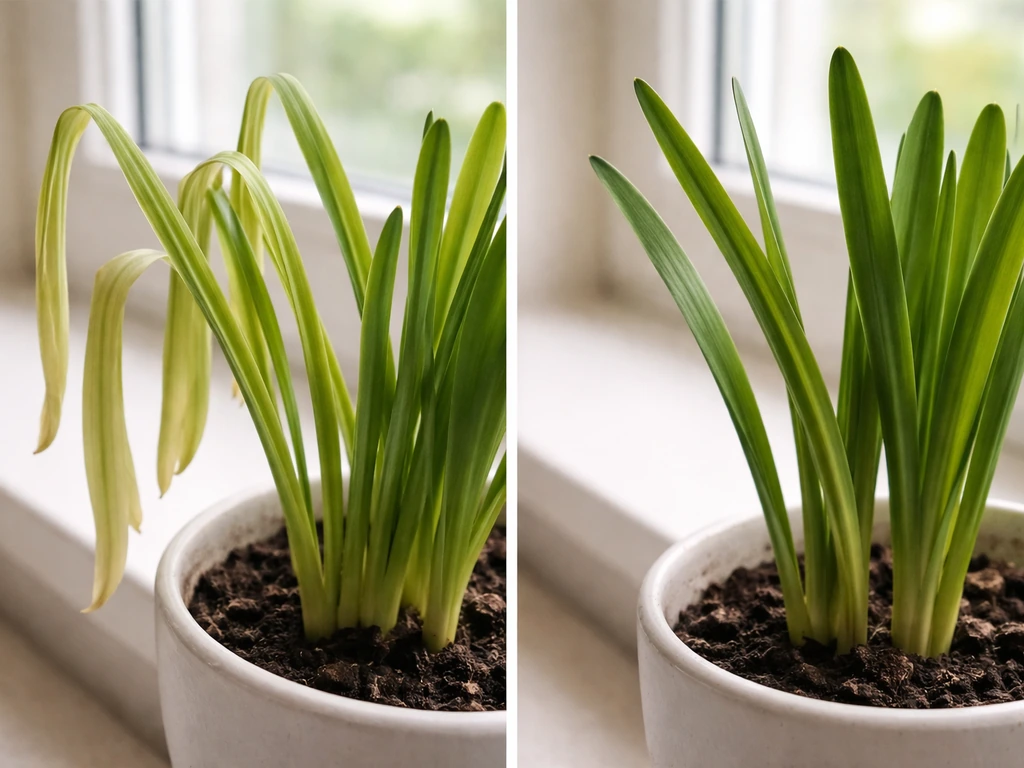
Ethanol is not a plant tonic. A well-known experiment at Cornell involved giving paperwhites dilute alcohol solutions to control their height. When wine or beer was used instead of a precise dilute hard-liquor solution, the plants were effectively killed. The problem is the ethanol concentration in any commercial beer (typically 4 to 8 percent ABV) is far above the threshold that starts causing plant cell damage. Ethanol disrupts membrane integrity in root cells and interferes with water and nutrient uptake. Even at lower concentrations it's stressful; at beer strength applied directly, it's often lethal to roots.
Sugars drive the wrong microbial activity
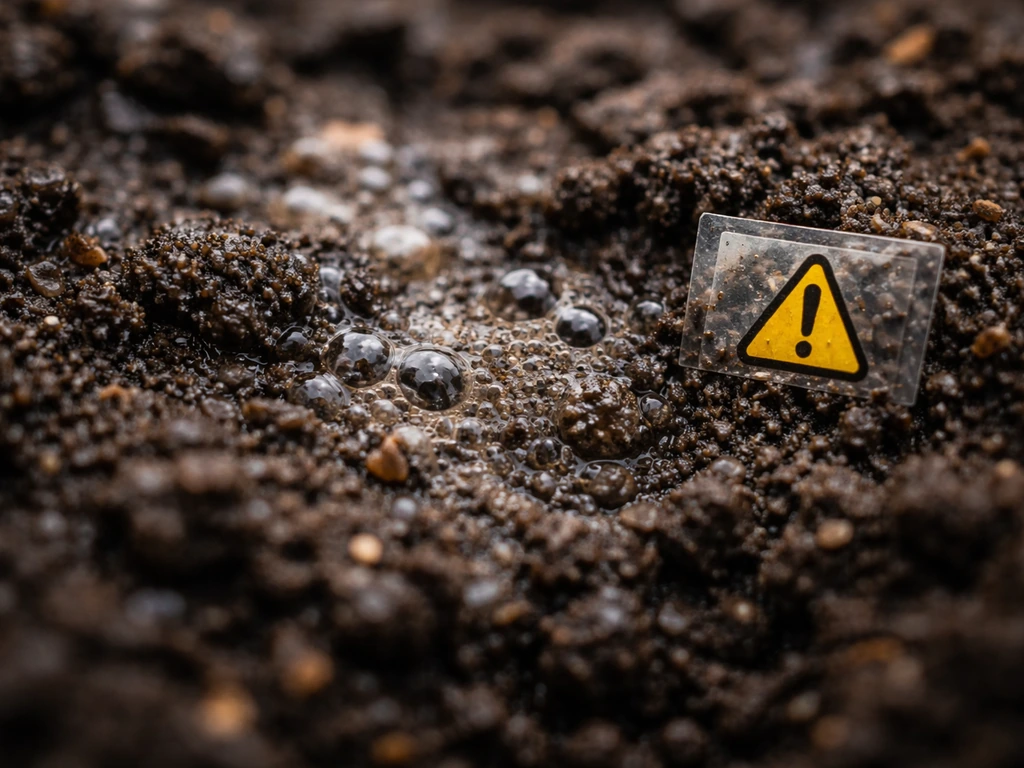
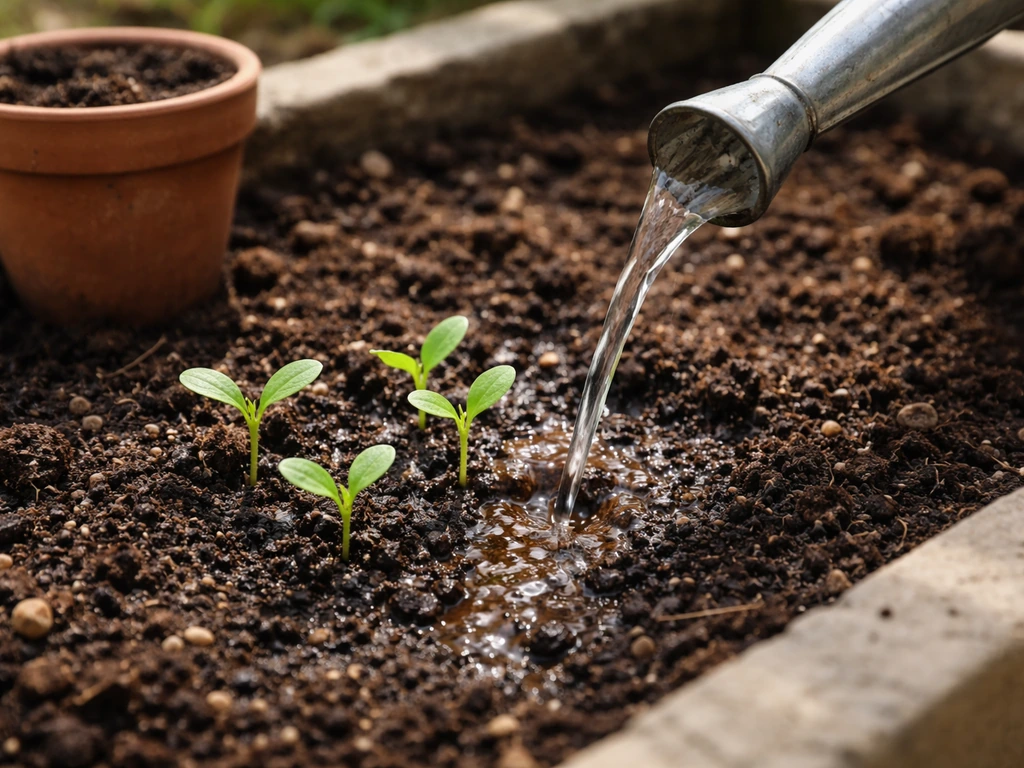
Beer's fermentable sugars sound like a soil amendment, but in an uncontrolled application they trigger a rapid microbial feeding frenzy that depletes soil oxygen. Peer-reviewed research on high-labile-carbon soil inputs found that readily available sugars caused soil oxygen levels to drop to around 3 percent within four days. Normal healthy soil oxygen sits much higher. When that oxygen disappears, soil microbes shift to anaerobic pathways, and plant roots face hypoxic stress. University of Florida IFAS extension work confirms that hypoxic soil conditions lead to the accumulation of toxic fermentation byproducts in plant tissues, including ethanol produced by the plant's own anaerobic respiration. So you can create a double ethanol problem: the ethanol you poured on plus the ethanol the stressed plant starts producing internally.
Nitrogen gets locked up, not released
High-sugar, high-carbon inputs to soil also shift nitrogen dynamics in the wrong direction. When microbial populations explode on readily available carbon, they consume mineral nitrogen from the soil to fuel their own growth, immobilizing it and making it unavailable to plant roots. Penn State Extension describes this mechanism clearly: inputs with a high carbon-to-nitrogen ratio (above 30:1) tend to immobilize rather than mineralize nitrogen. Most beers are essentially all carbon and no nitrogen, so applying beer to soil is a good way to temporarily starve your plants of the nitrogen they need, on top of everything else.
You'll attract pests, not just slugs
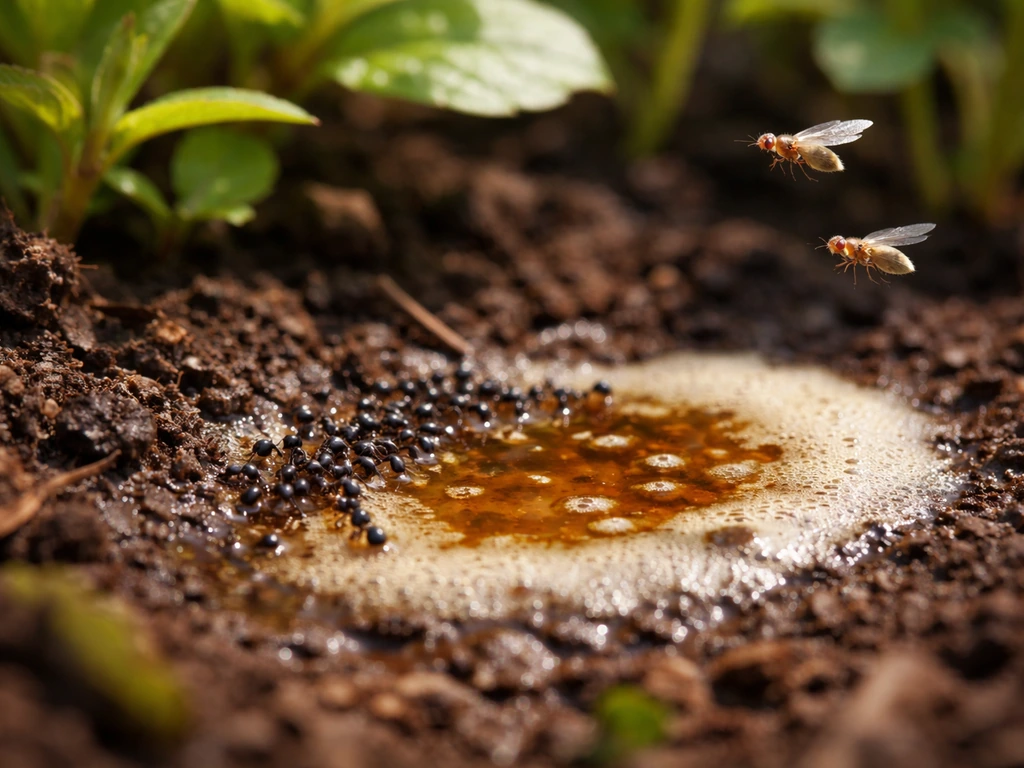
Beer's sugars and fermentation odors attract more than slugs. You'll draw ants, fruit flies, gnats, wasps, and potentially larger scavengers depending on your garden. If you're using beer as a slug trap in a controlled saucer that you can remove, that's intentional and useful. If you're pouring it around plant bases or into pots, you're essentially baiting your garden with a broad-spectrum pest attractant.
What actually improves plant growth (and what you should spend your energy on)
If your plants aren't thriving, there are four levers that almost always explain it: soil quality, light, water balance, and nutrients. These aren't exciting compared to pouring beer on your tomatoes, but they work consistently and predictably.
Soil quality is the foundation. Rutgers Cooperative Extension describes how organic matter improves soil from multiple directions simultaneously: it improves tilth and structure, increases porosity and water infiltration, reduces surface crusting, raises water-holding capacity, and improves nutrient-holding capacity (cation exchange capacity). Adding good compost does more for plant growth than almost any other single intervention. It's not glamorous, but it's consistently effective.
Nutrients should be matched to your actual soil test results, not guessed at. Most extension services offer soil testing for a small fee, and the results tell you exactly which nutrients are deficient and what to add. Balanced slow-release fertilizers or well-composted organic matter provide nitrogen, phosphorus, and potassium in plant-available forms without the risks of immobilization or anaerobic chemistry.
Water management matters more than most gardeners realize. Overwatering creates the exact hypoxic soil conditions described above, even without any beer in the picture. UC ANR guidance on organic soil amendments notes that over-irrigation creates low-oxygen microsites where denitrification (nitrogen loss) occurs. Getting your watering frequency and volume calibrated to your soil type is one of the highest-leverage changes you can make.
If you're interested in boosting soil microbial life specifically, compost is the most reliable route. Compost tea has generated a lot of enthusiasm, but an MDPI study on containerized urban tree nursery trials found no evident benefits to tree growth or mycorrhizal colonization from a single compost tea application. The evidence base for compost itself is much stronger than for any fermented or liquid microbial product.
| Input | What it does | Risk level | Worth using? |
|---|---|---|---|
| Good compost | Improves soil structure, CEC, water retention, microbial diversity | Very low | Yes, consistently |
| Balanced fertilizer (NPK) | Delivers plant-available macro and micronutrients | Low if used correctly | Yes, with soil test |
| Beer (direct application) | Adds water, trace minerals, sugars, and alcohol | High (ethanol toxicity, O2 depletion, N immobilization, pests) | No |
| Brewery wastewater (diluted) | Can improve mineral content in some crops | Moderate (not sterile, variable) | Only in research contexts |
| Dry yeast (formulated input) | Can influence growth at controlled rates | Low to moderate | In controlled application only |
| Compost tea | Intended microbial inoculant | Low, but evidence is mixed | Optional, limited benefit |
If you really want to try beer anyway: how to minimize the damage
I get it. Sometimes curiosity wins, and that's fine. If you're going to experiment with beer in the garden, there are ways to reduce the risk of harming your plants.
- Use flat, stale beer, not fresh. Let it sit uncapped overnight or longer to allow as much CO2 and some alcohol to off-gas before using it. This won't eliminate the ethanol, but it reduces it somewhat.
- Dilute heavily. At minimum, mix one part beer with ten parts water before applying to soil. This brings the ethanol concentration down to a range where it's less immediately toxic, though it also means the nutrient contribution is negligible.
- Apply to soil only, never as a foliar spray. Spraying ethanol-containing liquid directly onto leaves causes surface cell damage and can mimic herbicide phytotoxicity symptoms. Roots have more tolerance than leaf tissue, though not a lot.
- Do it once, not repeatedly. A single heavily diluted application is unlikely to cause lasting harm to an established plant. Repeated applications will compound the oxygen depletion, nitrogen immobilization, and alcohol exposure effects.
- Only try this on established, healthy plants in ground soil. Potted plants, seedlings, and stressed plants are far more vulnerable to the osmotic and chemical effects of alcohol and sugar inputs.
- Monitor for at least two weeks. Watch for the stress symptoms described below before trying it again or concluding it worked.
It's also worth knowing where beer genuinely helps: slug and snail control. If you're dealing with a slug problem, pour beer into a shallow container (a tuna can works well) sunk to soil level so the rim is flush with the ground surface. The slugs are attracted to the fermentation odor, fall in, and drown. Replace it every day or two. This is a legitimate, extension-service-backed use of beer in the garden, and it indirectly helps plants by reducing pest pressure.
One sibling comparison worth noting: if you're curious about other household liquids and plants, the pattern holds up consistently. Wine applied directly to plants carries the same alcohol toxicity risk as beer. Vinegar and lemon juice are acidic enough to damage roots and leaf tissue at concentrations above trace levels. Vinegar and lemon juice are acidic enough to damage roots and leaf tissue at concentrations above trace levels, so you should not expect Does lemon juice help plants grow to be true either. Gatorade and similar electrolyte drinks deliver salts and sugars that can cause osmotic stress. Gatorade and similar electrolyte drinks are not a plant fertilizer, and the salts and sugars are more likely to stress roots than help growth. Most of these are solutions looking for a problem that's better solved by conventional, well-understood methods.
How to tell it's not working (and how to recover)
If you've already applied beer to your plants and something looks off, here's how to read the symptoms and respond.
Signs your plant is stressed from beer application
- Leaf tips browning or scorching within 24 to 72 hours of application (especially after foliar contact)
- Wilting that doesn't respond to watering, or wilting in well-watered soil (sign of root damage or anaerobic conditions)
- Yellow leaves appearing within a week, especially on lower or newer growth (nitrogen immobilization)
- Soil surface smells sour or fermented longer than two days after application
- Increased gnat, ant, or fruit fly activity around the plant base
- Stunted new growth or failure to put out new leaves in a plant that was actively growing
Recovery steps
- Flush the soil immediately with plain water. For potted plants, water thoroughly until it drains freely from the bottom three to four times in succession to dilute alcohol and sugar concentrations. For in-ground plants, give a deep, slow watering to push the residue down below the root zone.
- Improve aeration. For pots, gently loosen the top inch of soil with a chopstick or skewer to help oxygen reenter the soil profile. For in-ground plants in heavy soil, avoid any compaction and let the soil surface dry slightly between waterings.
- Hold off on fertilizing for at least a week. The microbial disruption from sugar inputs takes time to stabilize. Adding more nutrients during that window can worsen nitrogen dynamics.
- After a week to ten days, apply a light balanced liquid fertilizer at half strength to help replace any nitrogen that was immobilized.
- Trim any visibly dead or scorched leaf tissue with clean scissors. This won't heal the damage but helps the plant redirect energy to healthy tissue.
- Give the plant four to six weeks to show full recovery before concluding it's permanently damaged. Most established plants with healthy root systems can recover from a single moderate exposure.
The deeper lesson here is that most gardening myths persist because plants are resilient enough to survive a lot of well-intentioned interference, and sometimes they even thrive in spite of it. When someone pours beer on their roses and the roses look fine next week, they remember the beer and not the compost they added last month. That's how folklore outlasts the evidence. The things that actually drive plant growth, healthy living soil, appropriate nutrients in available forms, matched light and water, are less exciting than kitchen experiments but far more reliable. Spend your time and curiosity there.
FAQ
What should I do if I already poured beer into my plant pot or garden bed?
If it was a slug-trap saucer, you are fine as long as you kept it shallow and removed it to avoid turning it into a pest-attracting puddle. If it was poured into pots, plant bases, or sprayed on leaves, stop using beer immediately and rinse foliage with plain water (only if leaves are sticky or coated), then give the soil a normal watering schedule so it can re-aerate. Avoid adding any additional compost tea, fertilizers, or sugar-based inputs for at least 1 to 2 weeks so you do not compound the oxygen and nitrogen stress.
Can I reuse leftover beer for plant treatment or repeated slug traps?
You typically should not reuse the same beer from a previous trap to feed plants or as a soil treatment. Even if you think “it is mostly water now,” the ethanol, sugars, and microbial activity remain, and the mix can also be contaminated with pests and bacteria from the garden. For slug control, replace daily or every couple of days as the odor and attraction fade and debris builds up.
If I want to “try yeast,” what is a safer alternative to using leftover beer?
For most gardens, beer is best viewed as a pest-management tool only. If you want a safe experiment that does not risk root damage, use formulated products you can measure, such as properly labeled yeast inoculants for plants (if available in your region), and always follow the application rate. Random leftover beer is not standardized, so “what concentration am I actually applying” is impossible to control.
Why might my plants look okay at first after beer, but still be harmed?
A common mistake is using beer because plants “seem fine” right away. Ethanol and oxygen stress can show up later, and the nitrogen immobilization effect can lag as microbial growth accelerates and then starves roots. Recheck for pale older leaves (nitrogen deficiency), slowed growth, wilting in otherwise adequate moisture, and a sour or fermented smell from the soil, which suggests anaerobic conditions.
Does beer count as a fertilizer because it contains minerals?
Do not assume “trace minerals” mean you are fertilizing. The mineral content in beer is small and inconsistent, and the bigger effects come from ethanol and readily available sugars that change soil oxygen and nitrogen availability. If you want minerals, match additions to a soil test, then use compost or a balanced slow-release fertilizer that supplies nutrients in predictable, plant-available forms.
What are the risks of spraying beer on leaves?
Leaf spraying is not a solution. Beer on foliage can increase sugar residue and cause leaf surface stress, and any that drips to the soil still delivers the same ethanol and carbon effects. If you ever need to spray something, use products designed for foliar feeding or pest control, and rinse after treatment only if the product label instructs or if residue is known to clog stomata.
How can I boost soil microbes without using beer or other fermented liquids?
If the goal is microbial activity, compost is the most reliable lever mentioned. Compost tea results are inconsistent, especially from single applications in containers, and it can also create waterlogged or low-oxygen conditions if overused. If you want to improve soil biology, focus on adding finished compost, improving aeration, and adjusting watering rather than adding a high-sugar fermented liquid.
What is the correct way to use beer as a slug trap so it does not harm plants?
If slugs are your issue, use beer only in a controlled trap container sunk at soil level with the rim flush so you are not flooding the root zone. Keep it away from plant stems to minimize accidental contact, and replace the trap frequently. The trap may reduce pest pressure, but it is not a substitute for improving the garden environment (mulch management, barriers, and nighttime monitoring).
If beer harmed my plants, how long will it take to recover, and how can I tell if recovery is unlikely?
Yes, but it depends on the plant’s sensitivity and the severity of the initial stress. If leaves are only slightly wilted and soil is not smelling fermented, recovery is often possible by restoring normal watering and switching to compost or a tested fertilizer plan. If roots are damaged, you may see persistent stunting or yellowing and the plant may take weeks to recover, especially in pots where oxygen levels swing more quickly.
Next Articles
How Do Microorganisms Help Plants Grow: Practical Guide
Learn how microbes in the rhizosphere fix nitrogen, boost phosphorus, aid roots, suppress disease, and how to grow them.
How Does Yeast Help Plants Grow? Safe, Practical Guide
Learn how yeast boosts plant growth via soil microbes, safe dilution and timing, plus myths, limits, and troubleshooting
Do Mushrooms Help Plants Grow? Science and How to Use
Science-backed answer on whether mushrooms help plants grow, plus how to use mycorrhiza, compost, and test results.