Bacteria help plants grow mainly by breaking down organic matter and releasing nutrients the plant can actually absorb, and by colonizing the zone right around plant roots where they trade growth-boosting compounds for the sugars plants leak out. Those two things alone explain why a shovelful of rich, living soil produces better plants than the same dirt without any biological activity. The science is solid, the practical steps are simple, and once you understand the mechanisms, you stop wasting money on soil products that don't actually work.
How Do Bacteria Help Plants Grow: Decomposers to Root Partners

Marcus Holloway
26 Apr 2026
What bacteria actually do for your plants (the big picture)
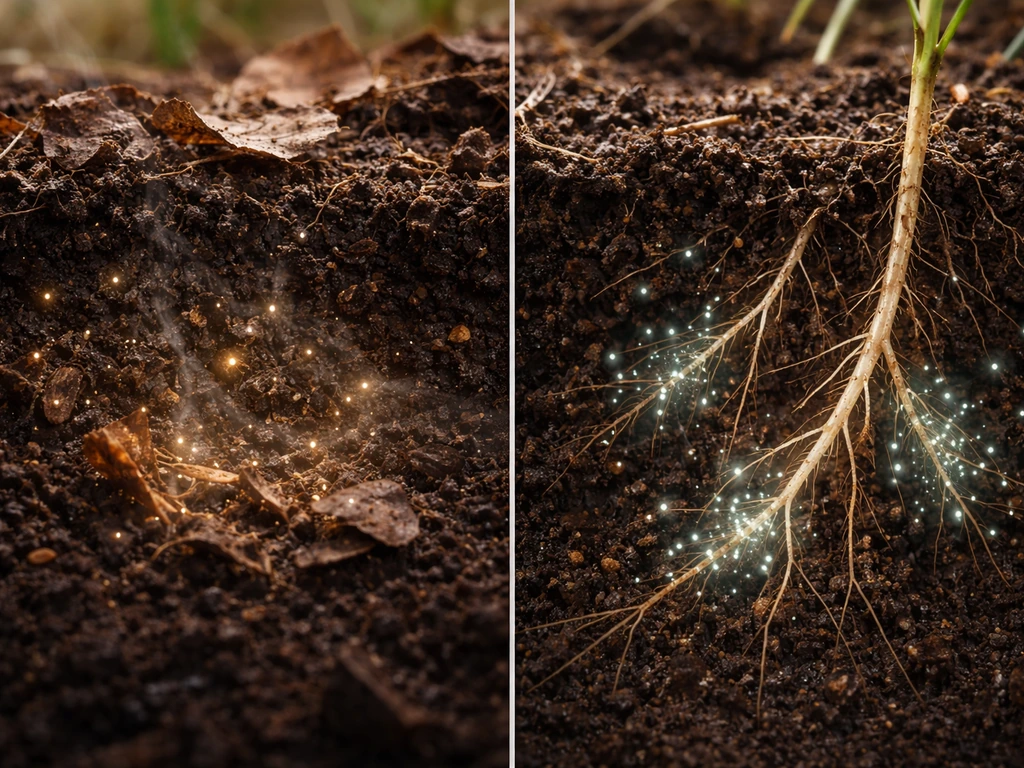
Think of soil bacteria as a two-part support crew. One group, the decomposers, works at the organic matter level, chewing through dead leaves, compost, and old roots and converting locked-up nutrients into forms plants can pull through their roots. The other group, plant growth-promoting rhizobacteria (PGPR or PGPB), sets up shop right in the rhizosphere, the thin zone of soil immediately surrounding plant roots. These rhizosphere specialists fix nitrogen from the air, dissolve bound-up phosphorus, produce iron-chelating compounds called siderophores, and even secrete hormones that stimulate root branching. Together they do things no fertilizer application fully replicates, because they respond dynamically to what the plant and soil actually need at a given moment.
Bacteria aren't the only microbes involved in this story. Fungi, including the mycorrhizal networks that orchids and most other plants rely on heavily, play enormous roles too, and yeast and other microorganisms contribute their own pieces to soil health. Fungi can also support plant growth by forming networks like mycorrhizae that help plants take up water and nutrients more effectively fungi help plants grow. Mycorrhizal fungi form partnerships that help orchids capture water and nutrients more effectively, which is why fungi matter for orchid growth mycorrhizal networks that orchids. But bacteria are uniquely important because of their sheer numbers and metabolic diversity, and because they operate at every stage of the nutrient cycle, from fresh organic debris all the way to plant-available mineral ions.
Decomposers: the bacteria that turn dead stuff into plant food
When you add compost, mulch, or any organic material to your garden, bacteria are the first responders. They secrete enzymes that break down complex carbon molecules and, critically, release nitrogen, phosphorus, and other nutrients from organic compounds into mineral forms the plant root can actually absorb. This process is called mineralization, and it's the reason gardeners who build organic matter consistently see better results than those who rely only on synthetic fertilizers.
The speed and efficiency of that decomposition depends heavily on conditions. The carbon-to-nitrogen ratio of your organic matter matters a lot: a starting ratio around 30:1 C:N is considered close to ideal for active decomposition. When that ratio drops below roughly 20:1, the process tips toward mineralization, meaning more plant-available nitrogen gets released into the soil rather than staying locked in microbial biomass. Moisture, oxygen, and temperature are the other big levers. Active aerobic decomposition can hit 131 to 160 degrees Fahrenheit inside a hot compost pile, which is also what kills weed seeds and pathogens. Push the pile too wet, though, and you displace the oxygen aerobic bacteria need, the process slows, and you start getting the sour or sulfurous smell that signals anaerobic conditions have taken over.
The practical takeaway here is that when you improve your compost inputs and conditions, you're directly improving how efficiently bacteria can generate plant-available nutrients. It's not magic. It's stoichiometry and oxygen.
Rhizosphere partnerships: beneficial bacteria that live at the root zone
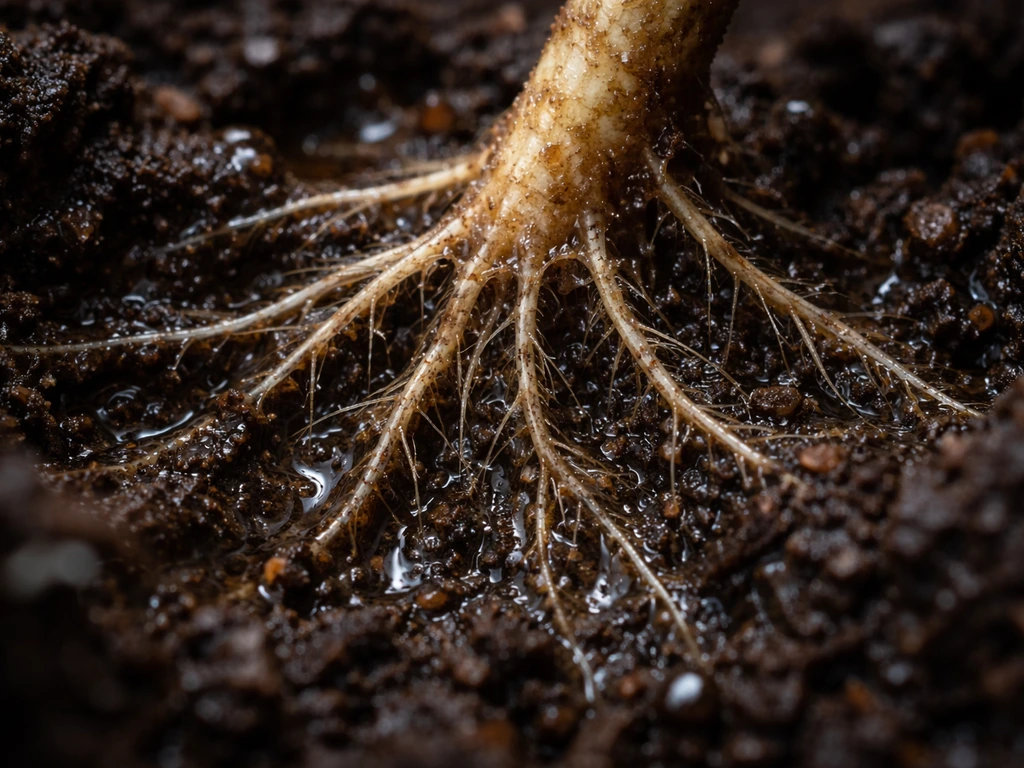
Plant roots aren't passive. They actively leak sugars, amino acids, and other organic compounds into the surrounding soil, and that leakage is intentional. It recruits specific bacteria that the plant benefits from. This recruiting process, driven by root exudates, shapes the entire microbial community around the root zone. Bacteria that can metabolize those exudate compounds colonize the root surface, form biofilms, and in return provide services that help the plant grow. These beneficial bacteria are also one of the main ways microorganisms help plants grow.
What those root-zone bacteria actually deliver
- Nitrogen fixation: Rhizobia bacteria (including Rhizobium species) form nodules on legume roots and use an enzyme called nitrogenase to convert atmospheric nitrogen gas into ammonia the plant can use directly. This is where legumes get their reputation as soil-builders.
- Phosphate solubilization: Genera like Rhizobium, Pseudomonas, and Bacillus produce acids and enzymes that dissolve phosphate compounds bound to soil particles, making phosphorus accessible to roots that couldn't reach it otherwise.
- Siderophore production: When iron is scarce, certain bacteria produce siderophores, compounds that grab iron from the soil and make it available to the plant. Low-iron stress is more common than many gardeners realize, especially in high-pH soils.
- Phytohormone secretion: PGPR produce compounds like auxins and cytokinins that stimulate root hair proliferation and branching, giving the plant a larger root surface area to absorb water and nutrients.
- Pathogen suppression: Many rhizosphere bacteria compete with or directly inhibit soil pathogens, and they can trigger a state of induced systemic resistance in the plant itself, essentially priming the plant's immune system.
- Ethylene regulation: Some bacteria produce ACC deaminase, an enzyme that reduces ethylene levels in plant roots. Ethylene in excess is a stress signal that stunts growth, so keeping it in check under difficult conditions helps the plant stay productive.
The colonization process isn't passive on the bacteria's side either. Beneficial rhizobacteria like Pseudomonas and Bacillus strains use chemotaxis to navigate toward root exudates, attach to root surfaces, and form structured biofilms. The better your soil conditions support that process, the more effectively these bacteria can colonize and stay put. This is why simply spraying a bacterial inoculant on a compacted, low-organic-matter soil often produces disappointing results. The bacteria can't outcompete established microbes or maintain colonization without the right substrate to work with.
What bacteria can't do (and where people go wrong)
Here's where I want to be direct, because there's a lot of marketing-driven hype around soil microbes right now. Bacteria are genuinely powerful, but they work within a system, and they can't compensate for everything.
Bacteria cannot replace light, and they cannot override poor drainage. A plant sitting in waterlogged, oxygen-depleted soil will struggle no matter how many beneficial microbes you introduce, because aerobic bacteria, the beneficial ones, need oxygen to function. Saturated soil favors anaerobic bacteria, which are much less helpful and often actively harmful. Similarly, a plant in deep shade with inadequate photosynthesis produces fewer root exudates, which means it recruits a weaker microbial community, which in turn gives it less support. The biology is downstream of the basics.
Compost tea is a product category worth addressing directly. Despite its popularity, the evidence that compost tea reliably establishes new bacteria or changes rhizosphere community structure is weak. One well-controlled study found no significant changes in rhizosphere bacterial community structure and no effect on soybean growth or yield after compost tea application. The colonization science explains why: introduced bacteria have to compete against an already-established soil community, and without the right niche conditions, they don't stick around. On top of that, if you add nutrient supplements to compost tea to boost bacterial counts, you risk amplifying pathogens alongside beneficial microbes, a concern documented by USDA research, especially if you're growing edible crops.
Broad-spectrum fungicides and some pesticides are another real limitation. These products can reduce soil microbial biomass, shift community composition, and suppress key decomposer groups. If you're applying systemic fungicides regularly while also wondering why your soil biology seems weak, there's a good chance those two things are related.
Finally, bacteria alone don't build great soil structure. Aggregation, drainage, and aeration involve a combination of organic matter, fungal hyphae, root activity, and physical management. Microbes support all of that over time, but they're not a quick fix for mechanically compacted or structurally poor soil.
How to actually encourage helpful bacteria in your garden today
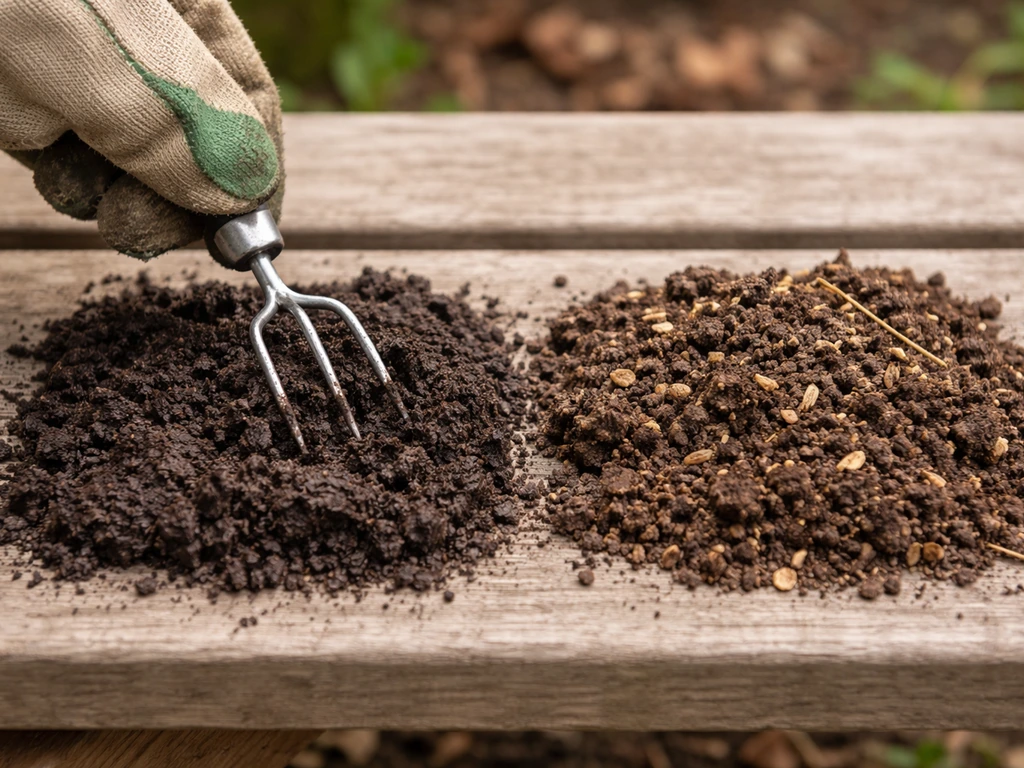
The most effective things you can do are mostly about creating the right conditions rather than adding products. Bacteria respond to their environment; give them what they need and they'll proliferate. Try to introduce them into a hostile environment and they'll die off.
- Add finished compost regularly. Compost is the single best way to feed decomposer bacteria and introduce a diverse microbial community. Aim for 1 to 3 inches worked into beds annually, or used as a top dressing around established plants.
- Keep soil covered. Bare soil loses moisture and temperature stability, both of which bacteria need. Mulch with wood chips, straw, or shredded leaves to maintain conditions decomposers like.
- Stop tilling as much as possible. Frequent deep tillage disrupts biofilm formation and breaks up the fungal-bacterial networks that take time to establish. Minimal disturbance allows beneficial communities to build density near roots.
- Balance your organic matter inputs. Mix high-carbon materials (wood chips, straw, cardboard) with high-nitrogen inputs (fresh grass clippings, kitchen scraps, manure) to keep your C:N ratio in the productive range. A 25:1 to 30:1 mix is a reasonable target.
- Water consistently, not excessively. Aerobic bacteria need moisture but they also need oxygen. Soggy soil drives out the beneficial aerobic populations. Aim for soil that's moist like a wrung-out sponge, not saturated.
- Use rhizobia inoculants when planting legumes. This is one of the few inoculant applications with consistently strong evidence behind it. Coat pea, bean, or clover seeds with the appropriate Rhizobium inoculant before planting, especially if you haven't grown legumes in that bed recently.
- Reduce or eliminate broad-spectrum pesticide use in beds where you're trying to build biology. If disease pressure requires fungicide use, try to target applications away from soil contact where possible.
- Feed the soil with diverse organic inputs. Different bacterial communities thrive on different substrates. Compost, leaf litter, cover crop residue, and aged manure together support more microbial diversity than any single input alone.
Signs your soil biology is struggling and what to do about it
Sometimes the clues are right in front of you. Here's what to look for and what each signal means in practical terms.
| Sign you're seeing | What it likely means | What to do about it |
|---|---|---|
| Soil smells sour, sulfurous, or like rotten eggs | Anaerobic conditions: waterlogging has displaced oxygen and aerobic bacteria | Improve drainage, reduce watering frequency, aerate compacted areas, add coarse compost to improve structure |
| Organic matter isn't breaking down, mulch sits unchanged for a season | Biological activity is suppressed: too dry, too cold, too compact, or pesticide impact | Check moisture levels, add a nitrogen source to kickstart decomposition, review recent pesticide use |
| Plants look pale or yellow despite fertilizing | Nutrients may be locked up due to poor mineralization or high soil pH limiting nutrient availability | Add compost, check soil pH (target 6.0 to 7.0 for most plants), consider sulfur to lower pH if needed |
| Poor plant response after adding commercial microbial inoculants | Introduced bacteria aren't surviving or colonizing: hostile soil conditions or no organic substrate to support them | Build organic matter first, reduce compaction, then try inoculants again with appropriate legume pairing |
| Soil feels hard and clumpy, doesn't absorb water well | Low organic matter and disrupted aggregate structure limiting both biology and root penetration | Add 2 to 3 inches of compost, mulch heavily, stop tilling, consider cover crops to build structure over time |
| Strong ammonia smell from soil or compost | Too much nitrogen relative to carbon (C:N ratio too low), causing nitrogen loss rather than capture | Add high-carbon materials like straw, wood chips, or shredded cardboard to balance the ratio |
One underused diagnostic is the jar test for soil respiration. Pack a small sample of your soil into a jar, moisten it, seal it for 24 hours, then open it. Biologically active soil has a distinct earthy smell from microbial respiration. Soil that smells flat, chemical, or like nothing at all is likely low in biological activity. It won't tell you exactly what's wrong, but it's a fast, free way to know whether you have a living soil or an inert growing medium.
The broader point is that troubleshooting poor plant growth often starts with fixing the conditions bacteria need, not adding more products. Fix the drainage, add organic matter, stop killing the microbes you already have, and the biology usually follows. Bacteria are opportunists in the best sense: give them the right environment and they will colonize, multiply, and start working for your plants with very little additional input from you.
FAQ
If I already fertilize, do bacteria still help plants grow?
Yes, but fertilizer alone often misses the “timing and form” bacteria provide. Decomposers convert fresh organic matter into mineral nutrients gradually, and rhizobacteria can make nutrients more available where roots are actively feeding. If you want both, prioritize adding organic matter and maintaining aeration so microbes can run their nutrient cycling alongside your fertilizer.
How can I tell whether my soil has enough beneficial bacteria, not just nutrients?
Use practical signals like soil respiration (jar test) and stable soil smell, plus plant response to organic inputs. If adding compost improves growth, nutrient uptake, and soil structure over repeated cycles, you likely have active biology. If you see nutrients but no improvement and the soil remains flat-smelling or compacted, microbial activity is probably too low.
What’s the most common mistake people make when they try inoculants or “living soil” products?
Applying them to conditions that bacteria cannot colonize. The article notes that compacted, low-organic-matter soil often prevents introduced bacteria from competing and sticking. Fix drainage, aeration, and organic inputs first, then inoculate if you still want an extra push.
Can I overdo compost or manure and still get the bacteria benefits?
Too much fresh organic matter can shift oxygen and nutrient dynamics, slowing aerobic decomposition. If piles or top-dressed material stay wet, you can encourage anaerobic conditions, which usually reduce the plant-available nutrient benefits and can create odors. A safer approach is smaller, repeated additions that keep the soil aerated.
Do bacteria help in hydroponics or soilless media?
Some do, but the benefit depends on whether the system supports microbial colonization. In many soilless setups, there is limited organic debris and oxygen conditions can be tightly managed, so bacteria may not build a stable rhizosphere community. If you try a bacterial approach, focus on the medium’s aeration, carbon availability (from safe, consistent inputs), and how effectively microbes can persist near roots.
Why do compost tea products sometimes fail even when they smell ‘microbial’?
Even if compost tea contains live microbes, they still need to compete and establish in your existing soil niche. The article highlights weak evidence for consistent rhizosphere community shifts, and it also warns about pathogen amplification risk if you fortify tea with nutrients. If your goal is nutrition for plants, compost and proper soil aeration usually outperform “microbe delivery” teas.
Should I stop fungicides or pesticides completely if I want bacteria to help?
Not always, but you should treat them as a soil-biology variable. Broad-spectrum fungicides can reduce microbial biomass and shift decomposer groups, which can indirectly limit nutrient cycling. If you must use them, consider applying them only when needed, rotating modes, and reinforcing with organic matter and good drainage to rebuild biology over time.
What role do oxygen and drainage play compared with adding more compost?
Oxygen controls whether aerobic decomposers and many beneficial rhizobacteria can do their work. The article notes that wet, saturated soil displaces oxygen and favors anaerobic bacteria that are often less helpful. If growth is poor, drainage and aeration fixes often matter more than increasing organic inputs, because microbes cannot function well without oxygen.
Will bacteria compensate for deep shade or poor light?
Usually no, because root exudates depend on photosynthesis. The article explains that inadequate light reduces the sugars and compounds roots leak, recruiting a weaker microbial community. If you improve lighting first, you often get a stronger bacterial response because there is more “food” for microbes to colonize and support nutrient uptake.
Do beneficial bacteria replace mycorrhizal fungi?
No. Bacteria and mycorrhizal fungi can support plants in different ways, and fungi often extend nutrient and water access through hyphal networks. If you rely only on bacterial approaches, you can miss benefits related to phosphorus uptake and drought tolerance that fungi provide. A practical strategy is to support the whole microbiome by maintaining organic matter, aeration, and minimal unnecessary chemical disruption.
Next Articles
Does Pink Light Help Plants Grow? How to Choose LED Grow Bulbs
Learn if pink, red blue LEDs boost plant growth and how to choose the right spectrum, intensity, distance, and timing.
What Color Light Makes Plants Grow Faster? Complete Guide
Learn which light color speeds plant growth, why red, blue and full spectrum work, and how to set LED distance and timin
Does Green Light Help Plants Grow? What Actually Works
Explains whether green light boosts plant growth, when it helps versus red and blue, and how to choose LEDs and set inte