Bees help plants grow by moving pollen between flowers, triggering fertilization so that plants can produce fruit, seeds, and the next generation. Bees help fruit grow by transferring pollen between flowers, which triggers fertilization and leads to fruit and seed development how do bees help fruit grow. Without that transfer, many plants either produce no fruit at all or give you small, misshapen, unmarketable results. Bees don't replace good soil, adequate light, or proper watering, but for any flowering plant that needs cross-pollination, they are the single most important living factor in whether that plant actually reproduces and completes its life cycle.
How Do Bees Help Plants Grow and Increase Yields
Marcus Holloway
23 Apr 2026
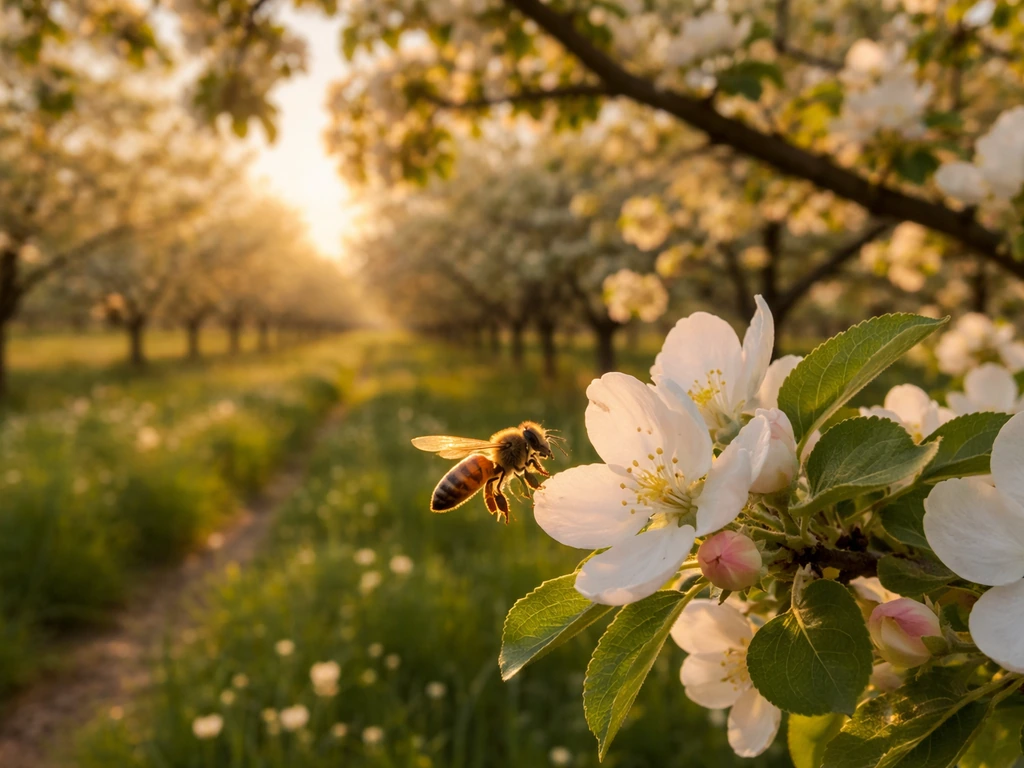
How pollination links bees to plant growth
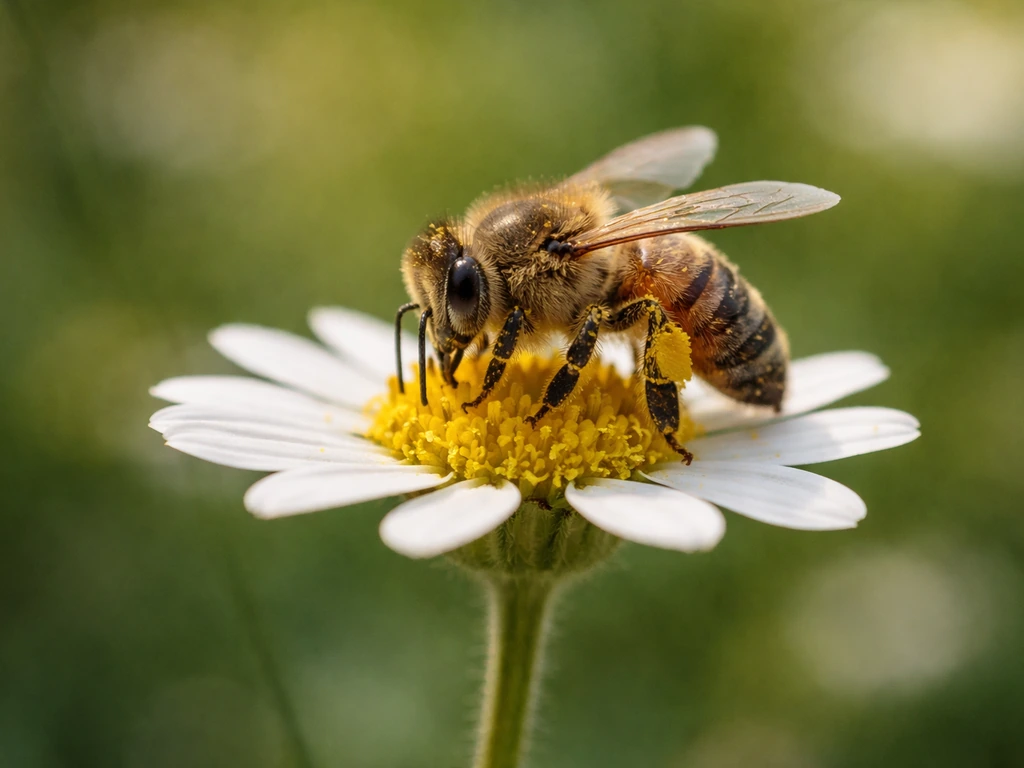
When a bee visits a flower, it's hunting for nectar and pollen as food. In the process, pollen grains from the flower's anthers stick to the bee's body, and when the bee moves to the next flower, some of that pollen lands on the stigma. That contact starts fertilization, which is what actually drives fruit and seed development. Without it, the flower drops. The ovary never swells into a tomato, cucumber, or apple. The plant physically cannot make a seed.
The mechanism matters because it tells you exactly what bees are doing: they're not feeding the plant, boosting its roots, or improving its soil. They're completing a reproductive step the plant cannot complete on its own if it requires cross-pollination. Research comparing hand-pollinated flowers to open-pollinated ones found hand-pollinated fruit set was roughly five times more likely than open pollination under the same field conditions. That gap represents what reliable pollen transfer is worth in real growing outcomes.
Different crops rely on pollinators to different degrees. Cucumbers, squash, pumpkins, watermelons, and most tree fruits need bees. Tomatoes and peppers are largely self-fertile but benefit from buzz pollination, where bees vibrate the flower at the right frequency to release pollen. Leafy greens and root vegetables you harvest before flowering don't need bees at all. Leafy greens and root vegetables you harvest before flowering don't need bees at all, but if you are growing crops like cucumbers and tomatoes, do bees help vegetables grow is a practical question to check alongside your light and watering needs. Knowing which category your plants fall into tells you how much bee activity actually matters for your specific garden.
Bees help plants survive: better fruit set, seeds, and resilience
Beyond a single harvest, pollination shapes whether plant populations survive over time. A study on the endangered perennial Silene spaldingii showed that excluding pollinators significantly reduced the proportion of fruits that matured, seeds per fruit, seedling germination rates, and seedling survival. That cascade from fewer bee visits all the way to fewer surviving seedlings is exactly why ecologists treat pollinator loss as an existential threat for many wild plant species, not just an inconvenience for gardeners.
A global synthesis published in Nature Ecology & Evolution in 2024 confirmed that reduced pollinator diversity consistently lowers seed set, fruit set, and fruit weight across both wild and cultivated plants. A separate large-scale dataset analysis concluded that pollinator declines put most animal-pollinated flowering plants at risk of population-level decline. In practical terms: if bees disappear from your garden long-term, plants that depend on them don't just produce less, they eventually stop reproducing and die out locally.
Soil moisture interacts with this too. Research on squash showed that seed set responded to soil moisture conditions, and that interaction played out differently depending on whether bee pollination was adequate. This reinforces the point that bees and good growing conditions aren't competing priorities. They work together. A water-stressed plant under good pollination still struggles; a well-watered plant with no pollinators still fails to fruit. You need both.
Bees and crops: what gardeners get in practice
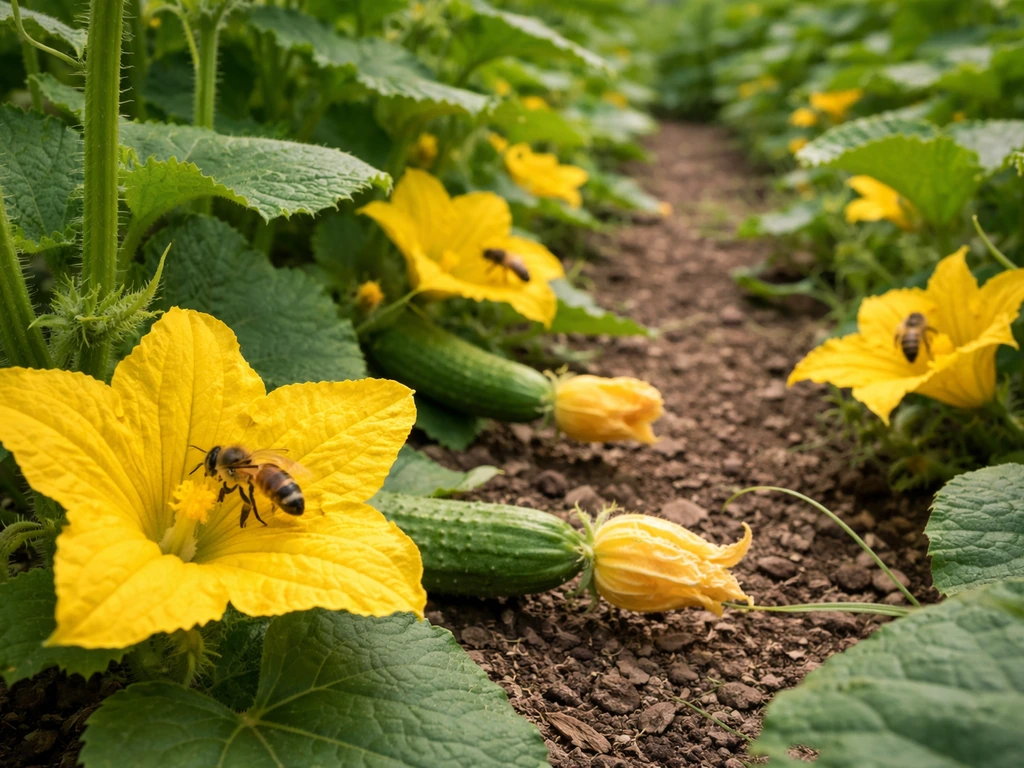
In a home garden or small farm, the practical payoff from healthy bee populations shows up as fuller harvests, more seeds for saving, and fruit that actually looks right. UMN Extension spells it out plainly: insufficient pollination means either no fruit or small, deformed fruit that's not worth eating. University of Maryland Extension research found that wild bee visitation enhanced fruit set roughly twice as much as an equivalent increase in honey bee visitation, which is a strong argument for supporting native bees alongside any managed hives nearby.
Cucurbits, including cucumbers, squash, pumpkins, and melons, are among the most pollinator-dependent crops most gardeners grow. Penn State Extension notes that pollination needs differ across cucurbit crops and that the right mix of pollinator species matters, not just total bee numbers. Watermelon research comparing managed bumble bee hives to other treatments found measurable differences in stigma pollen deposition and resulting fruit set. For apples, orchard studies have quantified contributions from honey bees, bumblebees, solitary bees, and even hoverflies, showing that pollinator diversity translates directly into better fruit and seed outcomes.
It's worth noting that results aren't always dramatic in every context. One Connecticut study on pumpkin and winter squash found that supplemental honey bee pollination didn't significantly increase fruit set under their specific field conditions, likely because wild bee populations were already doing an adequate job. That's actually good news: it means a healthy, diverse local bee community can be enough without hiring managed hives, as long as you're supporting those wild bees.
What bees need to thrive so your plants benefit
Bees need three things near your garden: food (flowers across a long blooming season), nesting habitat, and water. Get these right and bee populations build up naturally close to where your plants are flowering.
Food: flowers with overlapping bloom times
Native bees are specialists of timing. If your garden only blooms for three weeks in June, you'll see bees for three weeks. Plant species with staggered bloom times from early spring through fall so bees have a reason to stay in your area all season. Clump plantings in groups rather than scattering single plants, because bees forage more efficiently and stay longer when flower density is high. Aim for at least three species blooming at any given time.
Nesting habitat
About 70% of North American native bee species nest in the ground, according to Xerces Society research. That means bare or lightly mulched soil patches in your yard are more valuable bee habitat than most people realize. Leave a few open, sunny soil areas undisturbed. The USDA Forest Service also recommends leaving dead wood, dead stems, and snags because cavity-nesting bees use them. On bee hotels: NC State Extension has raised legitimate concerns that poorly designed or unmaintained bee hotels can do more harm than good, so if you use one, clean it annually and replace tubes regularly.
Water
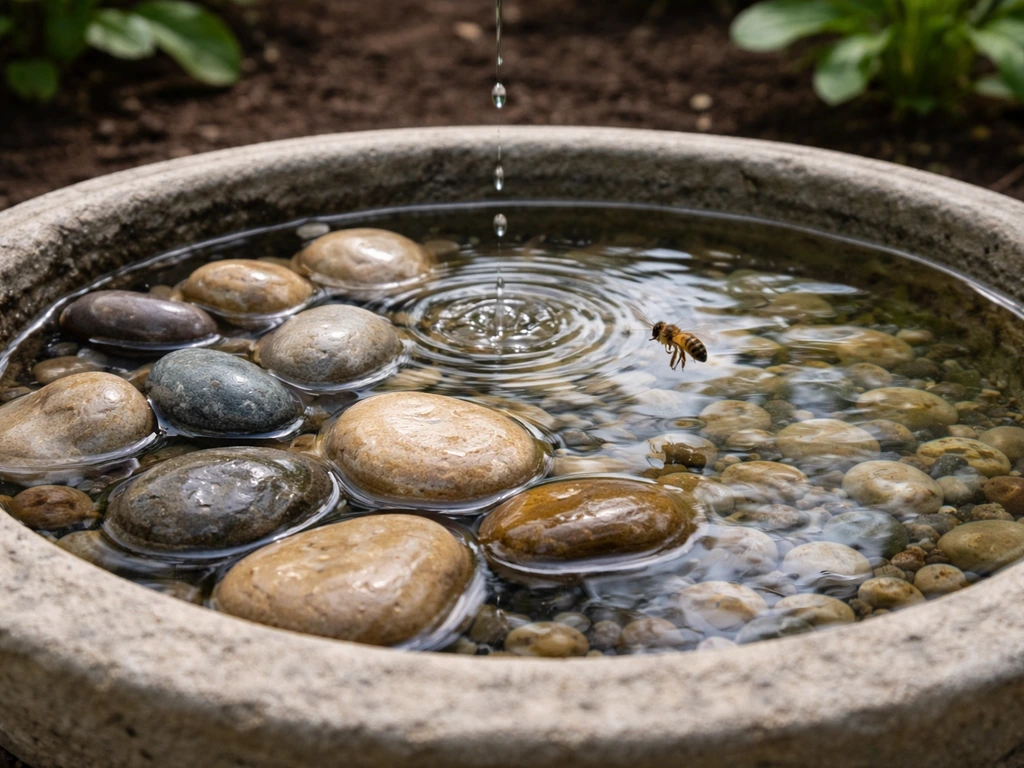
A shallow water source with landing spots, like a drip irrigation line dripping onto bare soil or a bird bath with pebbles, gives bees what they need without requiring any extra effort on your part. Position it near your pollinator plants, not across the yard.
How to tell if you have a pollination problem (vs soil/light/water)
This is where a lot of gardeners waste time fixing the wrong thing. Pollination problems look different from nutrient, light, or water problems, and confusing them leads to pointless fertilizing or watering when what's actually missing is a bee.
| Symptom | Likely cause | What to check |
|---|---|---|
| Deformed or misshapen fruit (cucumber, squash, melon) | Poor pollination | Look for bees visiting flowers; count male vs female flowers open at same time |
| Flowers open but drop off without fruiting | Poor pollination or heat stress | Check for bee activity; check daytime temps above 90°F |
| Fruit set, but small and tasteless across whole plant | Soil nutrients or water deficit | Soil test, watering schedule |
| Yellowing leaves, stunted growth, no flowering | Soil, light, or water problem, not pollination | Check soil pH, fertilization, sun hours |
| Tomatoes with dry or rough set | Inadequate buzz pollination | Look for bumblebees or hand-vibrate flowers |
| Some fruit fine, some misshapen on same plant | Uneven pollination visits | Increase native bee habitat near garden |
| Seedlings dying before establishing | Could be cascading from poor seed quality due to pollination deficit | Check parent plant pollination conditions; check seedling watering and light |
UMN Extension's diagnostic guidance specifically lists poor pollination as a primary cause of misshapen cucumber fruit, and University of Maryland Extension confirms that undeveloped cucurbit fruits will drop with the bloom shortly after if pollination didn't happen. If you're seeing those symptoms and your soil tests fine, look up and watch your flowers for 15 minutes mid-morning. If you see no bees, that's your answer.
One trap to avoid: assuming that because you see some bees, pollination is happening effectively. Watch for actual flower visits. A bee flying past isn't the same as a bee working your squash blossoms. Also check that male and female flowers (on cucurbits) are open at the same time, because poor timing between them will tank fruit set even with plenty of bees around.
Bee-friendly steps you can do today
You don't need a managed hive or a complete garden redesign to improve bee activity near your plants. A few targeted changes make a real difference.
- Plant native flowering species with overlapping bloom times, grouped in clumps of at least three to five plants per species. This is the single highest-leverage thing you can do.
- Stop using insecticides during bloom periods, or shift any necessary applications to evening or early morning (roughly 7 p.m. to 6 a.m.) when bees are not actively foraging. Read pesticide labels carefully: the EPA's bee advisory box on neonicotinoid labels exists for a reason, and "natural" or "organic" products can still harm bees during direct spray contact.
- Leave patches of bare, undisturbed soil in a sunny spot. Rake away heavy mulch from one or two small areas so ground-nesting bees can establish.
- Put a shallow water source with pebbles or stones near your garden so bees have somewhere to land and drink without drowning.
- Leave hollow stems and dead wood in a corner of your yard rather than cutting everything to the ground in fall. Many native cavity-nesting bees overwinter and nest in these materials.
- If bee numbers are genuinely low in your area, focus first on habitat and pesticide reduction before adding bee hotels, and if you do use a hotel, commit to annual cleaning and tube replacement to avoid disease buildup.
If you're specifically growing crops that depend heavily on pollinators, like cucumbers, squash, pumpkins, melons, or tree fruits, it's worth timing your native plantings so something is in bloom from early spring through late fall. Bees that have food and habitat nearby all season will be working your vegetable patch when it counts. This connects directly to the broader question of what helps flowers grow: the answer isn't just soil and water, it's the whole ecosystem those flowers are embedded in, including the animals that serve them. Supporting local pollinators helps explain what helps flowers grow faster, because better pollen transfer can speed up fruit and seed development. Bees also help explain the broader question of how butterflies help plants grow, since both kinds of pollinators enable pollen transfer that leads to fertilization and seed development. Supporting local pollinators is one of the most direct ways to help flowers grow well, because fertilization depends on that pollen transfer what helps flowers grow.
The bottom line is straightforward. Bees are not a growth supplement, a fertilizer, or a cure for bad soil. If you are also wondering about feeding the soil, you may want to know does compost help flowers grow and how it compares to other care like watering and sunlight. If you're also thinking about feeding plants directly, you may want to know does honey help plants grow and how it compares to other care like watering and sunlight. They are the delivery mechanism for fertilization in a huge proportion of the plants we grow and depend on. Get the fundamentals right: good soil, appropriate light, consistent water. Then support your local bees, and let them handle the job evolution built them for.
FAQ
If I see bees around my garden, does that automatically mean they are pollinating well enough to help plants grow?
Usually, yes. If bees are foraging, they can increase fruit set and seed development for plants that require cross-pollination. But the practical test is whether you see bees actively working the flowers during peak bloom (not just flying by), and whether the crop is in the pollinator-dependent category.
Are honey bees always enough, or do native bees matter too for how bees help plants grow?
Not necessarily. Honey bee activity helps, but many crops respond more strongly to a diverse mix of native pollinators because different species visit at different times and perform different pollen transfer behaviors. If you rely only on honey bees, you can still get gaps in timing or coverage.
How does weather affect how bees help plants grow and produce fruit?
In cool, cloudy, or rainy weather bees may fly less, which reduces pollen transfer even if the plants are healthy. Plan to check for bee visits on calm, mid-morning days when flowers are open, and expect lower set if weather keeps bees away during the brief window when pollination matters most.
What if my plant is “self-fertile,” do bees still help it grow?
Yes, and it can also be crop-specific. Many self-fertile plants set well without bees, but buzz pollination can improve seed quality or yield consistency for crops like tomatoes and peppers. Even then, extreme stress from heat, drought, or nutrient imbalance can limit fruiting regardless of bee visits.
How can I tell whether my crop problem is pollination versus fertilizer, drought, or sunlight?
Yes. A lack of pollination often shows up as poor fruit formation, misshapen fruit, or flowers dropping soon after blooming. Overfertilizing nitrogen, low potassium, inconsistent watering, or lack of sunlight can also reduce yield, so if symptoms persist after you confirm bee activity is low, recheck light and watering before concluding pollination is the only issue.
Do I need continuous blooms all season, or just when my plants are flowering?
Definitely. Timing and flower density matter because bees need a steady supply of blooms to keep visiting. If cucurbits or orchard trees bloom while the rest of the garden has little nectar and pollen, bee activity may drop right when pollination is needed.
How much does soil disturbance (tilling or heavy mulch) affect how bees help plants grow?
For ground-nesting species, yes. Lightly mulched or intact sunny soil patches support nesting, and frequent tilling or repeated disturbance can remove nests and reduce local bee populations over time. Keep any soil disturbance near beds minimal during the flowering period.
Are bee hotels a good way to support pollinators for better plant growth?
It can. Poorly designed or neglected “bee hotels” may trap pests or reduce survival. If you use one, treat it like equipment, not habitat, meaning you keep it clean, replace worn parts, and do not assume it offsets the value of real nesting areas like bare soil and dead stems.
Should I add fertilizer if my plants aren’t setting fruit, or could bees be the missing factor?
Not usually as a routine. Bees generally help flowering plants that require pollen transfer, but foliar fertilizing will not substitute for fertilization. If you suspect low bee visitation, focus on flower habitat and timing first, then support plant nutrition and watering so the plant is capable of turning fertilized flowers into mature fruit.
If I want to help bees without bringing a hive, what are the most effective next steps in a backyard?
You can. If you want to boost pollination without a hive, add more nectar and pollen sources near the crop, reduce pesticide use around flowering, and ensure water access with safe landing spots. If you do watch the crop, spend a few minutes observing which flowers bees land on, and whether visits happen throughout the day when your crop’s flowers are receptive.
Next Articles
Does Red Light Help Plants Grow? Setup Guide and Why
Learn if red LED light helps plants grow, why it works, and how to set wavelength, distance, and schedule.
What Color Light Helps Plants Grow Best (LED Guide)
Learn which light colors boost plant growth fastest using LEDs, plus science on red, blue, far-red and setup tips.
Do Coffee Grounds Help Plants Grow? Benefits and How to Use
Do coffee grounds help plants grow? Learn real benefits, limits, and how to use used grounds safely in garden soil.