Corn grows fastest when you nail four things from the start: warm soil (at least 50°F at planting depth, ideally 60°F), consistent moisture at the seed zone, good seed-to-soil contact, and a steady nitrogen supply timed to the plant's actual demand. Get those right, and most sweet corn varieties will go from seed to harvest in 60–90 days. Skip any one of them, and you'll spend the whole season chasing problems instead of eating corn.
What Helps Corn Grow Faster: Practical Steps for Healthy Growth

Marcus Holloway
29 Apr 2026
Planting window and variety selection for fast growth
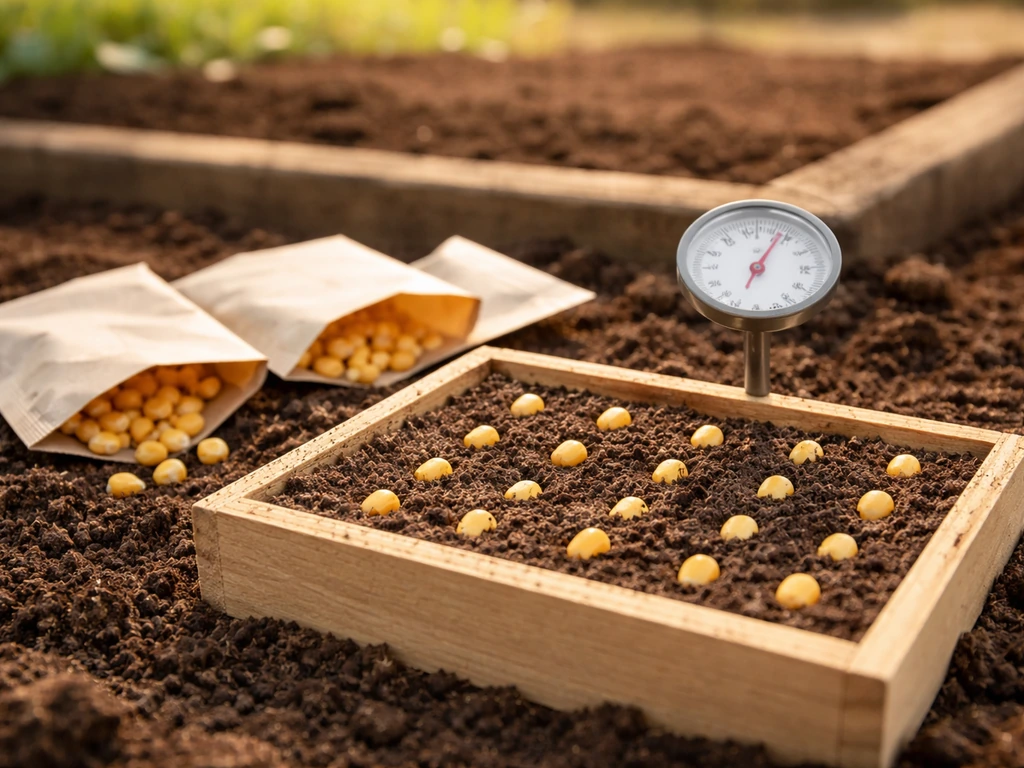
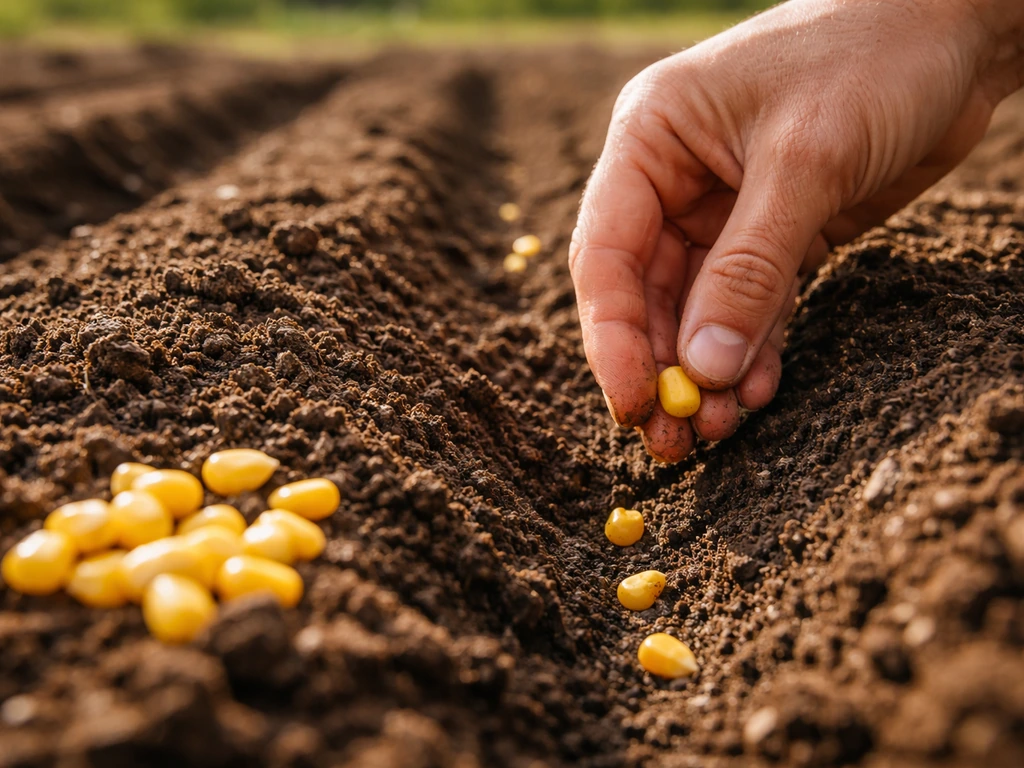
The single biggest lever you have on corn growth speed is when you plant. Corn isn't shy about telling you it wants warmth: the soil at planting depth needs to be at least 50°F for germination to happen at all, and Purdue's rule of thumb is to target a daily average soil temperature around 60°F for faster, more reliable emergence. Utah State Extension puts it plainly: planting below 60°F risks seed rot, not just slow sprouting. So before you drop a single seed, grab a soil thermometer and check the temp at 1.5–2 inches deep. A week of warm forecasts after planting matters as much as the day you plant.
Variety selection is the other side of this equation. Sweet corn matures in roughly 60–90 days depending on the type, but that number hides a lot of variation. Early-season varieties will get you ears faster, though they tend to produce smaller ears with slightly less sweetness than mid- or full-season types. If you're working with a short growing season, an early variety is almost always the right call.
For those interested in the mechanics: corn maturity is also tracked in growing degree days (GDD), a measurement of accumulated heat. It is also worth knowing the related concept of growing degree days, since that heat accumulation helps explain why warm conditions lead to faster crop growth growing degree days (GDD). A 95-day relative maturity (RM) hybrid, for example, needs roughly 2,350–2,400 GDD to reach maturity, and every extra day of RM adds around 22 more GDD.
Matching your hybrid's GDD requirement to your local heat budget is the most precise way to pick a variety that will actually finish in your season.
One practical note: plant in blocks, not single long rows. Corn is wind-pollinated, and a single row has a much harder time getting pollen to silks reliably. At least three to four short rows side by side gives you far better pollination and more uniform ear fill.
Light, spacing, and planting depth basics
Corn is a full-sun crop, no compromises. It needs at least 8 hours of direct sun daily to photosynthesize at the rate it needs to hit those 60–90 day maturity windows. Shaded corn doesn't just grow slower, it puts on less leaf area, takes up fewer nutrients, and almost always produces poor ears. Site your corn in the sunniest spot you have, and orient rows north to south if possible so the plants don't shade each other as they grow tall.
For spacing, the standard home-garden guidance from UGA and Purdue converges on rows about 30–36 inches apart with seeds 8–12 inches apart in the row. UGA’s Georgia corn production guide also shows how to estimate plant population using row-spacing and within-row spacing for seeds-per-acre calculations rows about 30–36 inches apart with seeds 8–12 inches apart in the row. This keeps plant populations in the practical range of around 15,000–21,000 plants per acre, which balances competition for light and nutrients against the pollination benefits of density. Don't crowd corn thinking it'll push growth: tighter spacing leads to competition for nutrients and light, not faster development.
Planting depth is worth getting precise about. The standard recommendation is 1.5–2 inches deep under normal conditions. Planting shallower might seem like it would speed emergence by reducing the distance the shoot travels, but shallow seeds sit in the drier, more temperature-variable surface layer, which leads to uneven germination. Research from Pioneer shows that planting at least 2 inches deep actually improves emergence uniformity because the seeds land in a more consistent seedbed with better seed-to-soil contact. In dry conditions, going slightly deeper (up to 2.5 inches) to reach moisture is worth it.
Soil readiness: testing, pH, fertility, and seed-to-soil contact
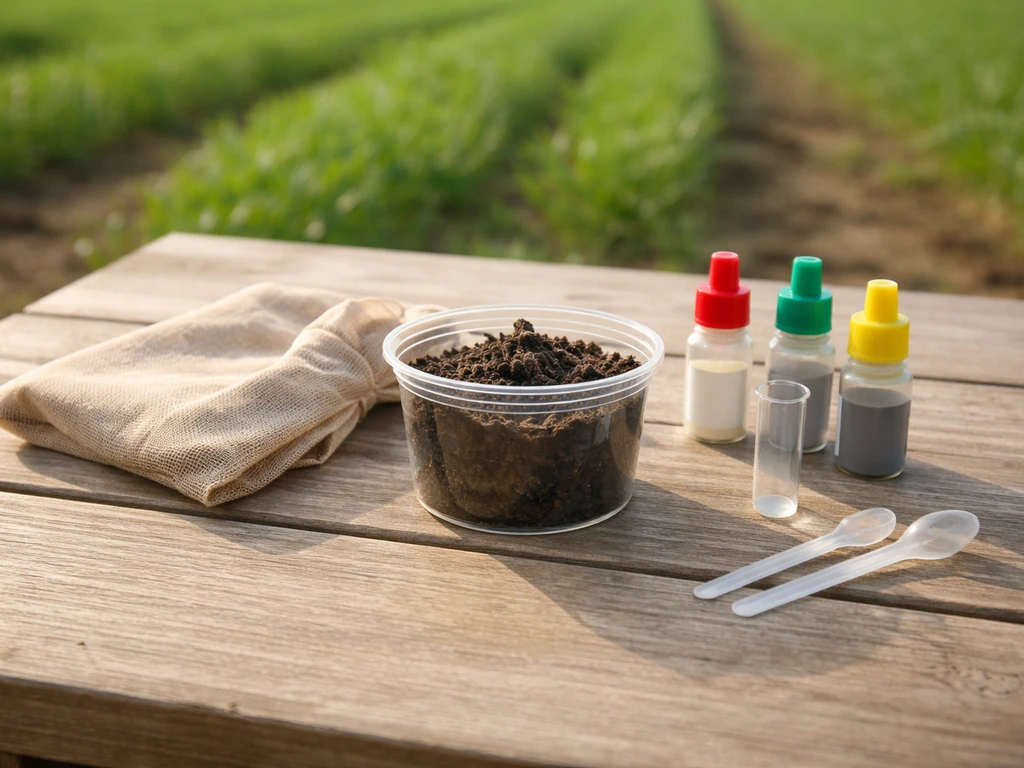
Healthy corn starts with a soil test, not a guess. For pH, corn performs best in the 6.0–7.0 range. Below 6.0, phosphorus availability drops sharply and micronutrients like iron and manganese can become a problem. Above 7.0, micronutrient uptake also suffers. Oregon State Extension sets the workable range at 5.8–6.8, but Bayer's fertility planning data puts the sweet spot squarely at 6.0–7.0. If your pH is off, no amount of fertilizer will compensate efficiently, because the nutrients you apply just won't be available to the plant in the ratios it needs.
Beyond pH, a soil test tells you what your baseline fertility looks like. Add compost or well-rotted organic matter to improve both nutrient availability and soil structure. Good soil structure matters more than most gardeners realize: it affects drainage, oxygen availability at the root zone, and how evenly moisture is distributed. All of those factors directly affect germination speed and early root development.
Seed-to-soil contact is one of those details that sounds boring until you lose half your stand to it. Seeds sitting in air gaps or fluffy, uncompacted soil can't pull in moisture through capillary action, so they germinate slowly or not at all. After planting, firm the soil lightly over the seed row. Purdue's garden guidance specifically calls out raking and firming the seedbed as part of good corn establishment practice. This is especially important if you've recently added compost or tilled deeply and left the soil too loose.
Watering correctly: moisture targets and avoiding stress
Corn needs consistent moisture throughout its life, but the stakes are highest right at and just after planting. The first 24–48 hours after planting are when seeds need to pull in enough water to trigger germination. Purdue specifically flags that window as critical. But there's a real balance to strike here: too little moisture and seeds won't germinate, too much and you waterlog the seed zone, cut off oxygen, and invite rot and fungal problems.
A useful benchmark from UMN Extension: 1 inch of water wets sandy soil to about 10 inches depth and heavy clay to about 6 inches. Use that to calibrate your irrigation. For germination, you want moisture reaching the seed depth (1.5–2 inches) without saturating the soil below it. Once plants are established, corn generally needs about 1–1.5 inches of water per week, ramping up during the ear development and silking stages. Early-season drought stress, even if plants appear to recover visually, can stunt leaf area and plant height in ways that don't fully reverse. Consistent watering early is far better than trying to compensate later.
If your soil stays saturated for extended periods, root development slows dramatically. Waterlogged roots can't take up nutrients efficiently and the plant stalls. Good drainage is not optional for fast-growing corn. If your garden beds are prone to puddling, raised beds or ridged planting rows can make a meaningful difference.
Nutrients that speed corn: nitrogen timing plus other key elements
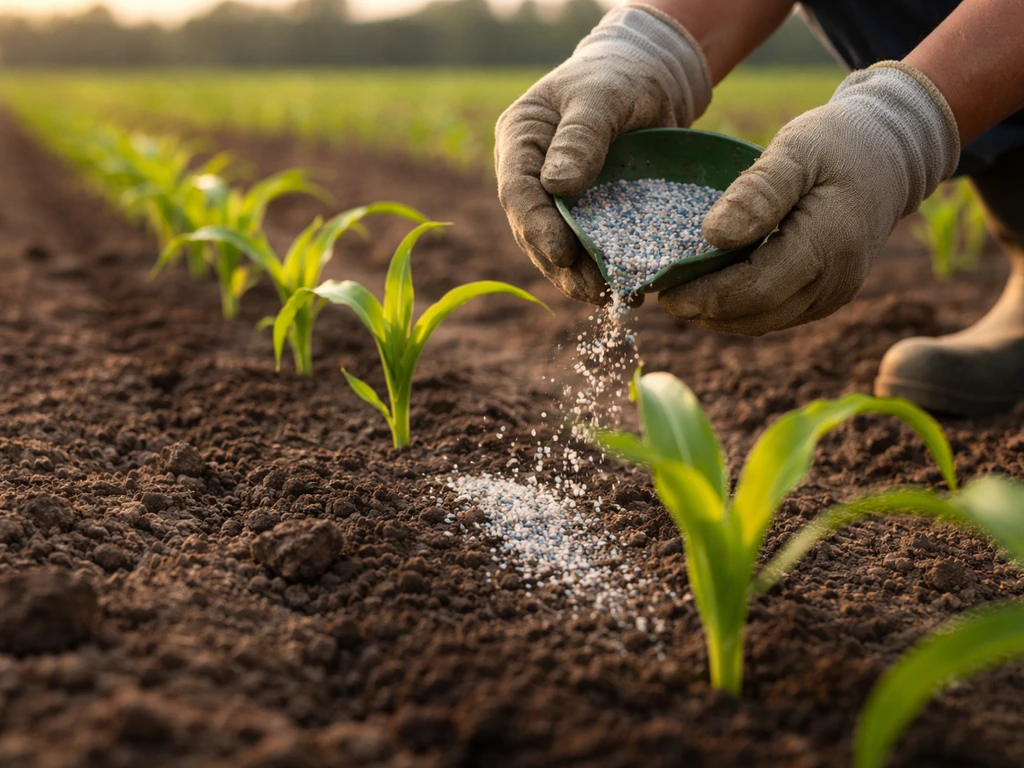
Nitrogen is the headline nutrient for corn, but timing matters more than total quantity. Young corn plants don't need huge amounts of nitrogen at planting because their demand is relatively low in the first few weeks. What they do need is phosphorus for root development and early cell division. Phosphorus is one nutrient that helps roots grow strong early so young plants can establish faster. A starter fertilizer with phosphorus at planting can meaningfully speed early establishment. When using starter fertilizer, keep it placed at least 2 inches away from the seed row to avoid salt injury to germinating seeds; the standard recommendation is to band it 2–3 inches to the side and 2–3 inches below the seed.
Nitrogen becomes the main growth driver as plants develop. The plant's nitrogen uptake ramps up significantly between the 6-leaf and 12-leaf stages. The practical sidedress window, when you apply additional nitrogen alongside established plants, is before the 8-leaf stage, with most of your N applied before the 10-leaf stage. Utah State Extension recommends sidedressing when plants have 8–10 leaves, and again near silking for a second boost. UGA's garden-scale guidance suggests ammonium nitrate (34-0-0) at about 3–5 pounds per 100 feet of row as a sidedress rate. Don't overdo starter nitrogen at planting: high N rates near the seed can generate free ammonia that burns roots and slows the establishment you're trying to accelerate.
Watch for phosphorus deficiency if your plants are young and you're in a cool, wet spring: it shows up as a purplish tint on leaf margins and tips, often starting in late April or early May. This can be a pH problem as much as a fertility problem, so check your soil pH before reflexively applying more phosphorus fertilizer. Potassium deficiency shows up later, typically between the 15-inch stage and tasseling, with yellowing and necrotic edges on older leaves. A proper soil test before the season heads off both of these.
| Nutrient | Primary role in corn growth | When to apply | Deficiency symptom |
|---|---|---|---|
| Nitrogen (N) | Leaf and stalk growth, photosynthesis | Starter at planting + sidedress at 8–10 leaf stage and near silking | Yellowing from leaf tip, V-shaped pattern on older leaves |
| Phosphorus (P) | Root development, early cell energy | At planting (starter fertilizer) | Purple/red coloration on leaf margins and tips in young plants |
| Potassium (K) | Water regulation, disease resistance | Pre-plant based on soil test | Yellowing and necrosis on outer edges of older leaves, 15-inch stage to tassel |
Temperature and early-season protection
Cold soil is the enemy of fast corn establishment, and it can cause damage that goes well beyond just slow sprouting. Bayer's crop science research documents that seed-zone temperatures below 50°F, combined with wide temperature swings, can cause abnormal seedling development underground, including corkscrewed shoots and rotted mesocotyls. These plants either die before emerging or come up so weakened they never catch up with normal plants. The result is the uneven, patchy stands that frustrate so many home gardeners.
The practical takeaway: don't rush planting. Waiting an extra 7–10 days for soil to warm to 60°F consistently is almost always faster than replanting a failed stand. If you do plant early and a cold snap is forecast, you can use row covers or black plastic mulch over the row to hold soil heat. Black plastic mulch is particularly effective at raising seed-zone temperatures in early spring, and it also conserves moisture and suppresses weeds.
On the hot end, growth also stalls when temperatures get extreme. University of Maryland Extension notes that corn growth slows or stops in very high heat conditions. For most home gardens this is a midsummer concern rather than a spring problem, but it reinforces why matching your variety's GDD requirements to your local climate matters. An early-season variety that can finish before peak summer heat in your region will often outperform a longer-season type that gets slowed by heat stress at critical growth stages.
Troubleshooting slow growth and uneven emergence
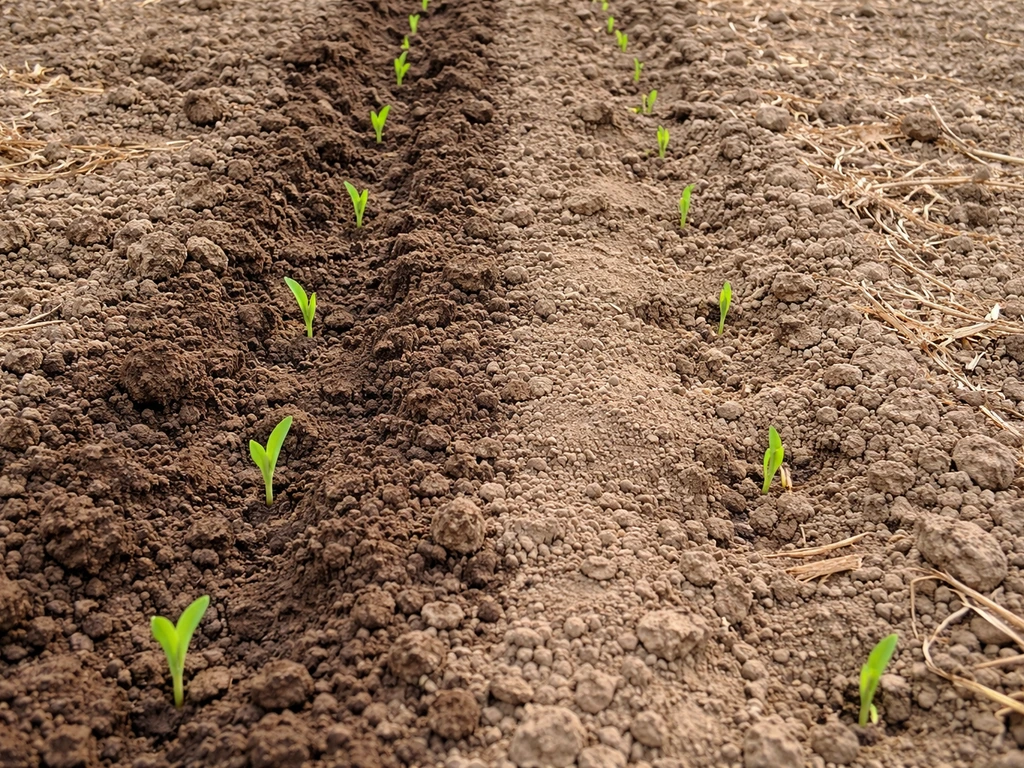
If your corn is up but uneven, the most common causes are variable seed-zone moisture (some seeds got enough water, others didn't), inconsistent planting depth, or a soil temperature that was on the edge of the acceptable range when you planted. Purdue Extension also notes that uneven germination and emergence can come from a combination of adequate soil temperature, inadequate or variable soil moisture around 2 inches, and little or no rainfall expected after planting [variable seed-zone moisture](https://extension. entm. purdue.
edu/newsletters/pestandcrop/article/soil-moisture-corn-seed-depth/). Purdue's germination research ties uneven emergence directly to those two factors: seeds that land in spots that are a bit drier, a bit cooler, or a bit shallower than others will lag behind by days or even a week. That lag matters because corn that emerges even 5–7 days later than its neighbors will be outcompeted for light and struggle all season.
Here's how to diagnose and respond to the most common early problems:
- Slow or no germination after 10+ days: Check soil temperature at planting depth. If it's below 50°F, the seed is likely sitting dormant or rotting. Dig up a few seeds and look for discoloration or soft texture. If seeds are sound, wait for warmer conditions. If they're rotted, you'll need to replant into warmer soil.
- Purple leaves on young plants: Classic phosphorus deficiency, often triggered by cool, wet conditions even if phosphorus is present in the soil. Confirm with a soil pH check. If pH is below 6.0, phosphorus is being locked up. Adjust pH and consider a light phosphorus foliar application as a short-term fix.
- Yellow streaking or V-shaped yellowing on older leaves: Nitrogen deficiency. Sidedress with a nitrogen source like ammonium nitrate if plants are at or past the 6-leaf stage.
- Stunted plants with twisted or corkscrewed shoots: This is chilling injury from cold-soil exposure during germination. Affected plants often won't recover fully. If the damage is severe, replanting into warm soil is faster than waiting on stressed plants.
- Uneven stand with random gaps: Variable seed-to-soil contact or planting depth. Fill gaps by hand-planting single seeds into those spots within the first week or two, using primed/pre-soaked seed to help them catch up slightly. Gaps appearing after 2 weeks probably won't catch up enough to be worth filling.
What to monitor daily and weekly
Fast-growing corn rewards daily observation in the first two weeks and weekly check-ins after that. Here's a simple monitoring routine that catches problems before they compound:
- Days 1–7 after planting: Check soil moisture at planting depth every day. The seed zone should feel moist but not wet. If the surface crust is forming and sealing moisture in, break it gently so seedlings can push through.
- Days 7–14: Watch for emergence. In soil above 60°F, seedlings should appear within 7–10 days. Uneven emergence showing up at this stage means you need to diagnose the causes listed above.
- Weeks 3–5 (V3–V6 stage): Look at leaf color. Dark green is what you want. Pale green, yellow, or purple are all signals to check pH and nutrient status. This is also when you should be planning your first sidedress nitrogen application.
- Weeks 6–10: Monitor water stress. Corn leaves that are rolling inward during the day are telling you the plant is water-stressed. Irrigate deeply enough to wet the full root zone rather than sprinkling frequently.
- Near silking: Apply a second nitrogen sidedress if you didn't at the 10-leaf stage, and make sure irrigation is consistent. Moisture stress at silking directly reduces kernel set and ear fill.
Folklore vs. science: what doesn't actually help corn grow faster
A few things that circulate in gardening communities deserve an honest look. Talking to your corn, playing music near it, and other plant-communication ideas are popular online but the science is thin. Penn State's research notes that the proposed mechanisms (things like CO2 from breath or gene responses to sound vibrations) are not well established, and that human speech would need to be sustained for extremely long periods to make a plausible difference through CO2 enrichment alone.
The honest answer is that the time you'd spend talking to corn is better spent checking soil moisture or monitoring for nitrogen deficiency. do spore blossoms help crops grow. If you are wondering what early farmers did, a lot of their success came from using practices like timely planting, good soil contact, and consistent moisture to help crops get established what did early farmers do to help their crops grow.
Foliar fertilizer sprays are another popular shortcut that rarely deliver on the promise for corn. Iowa State's Integrated Crop Management research found that late-season foliar fertilizer applications generally don't improve yield, and early-season benefits are inconsistent across trials. Foliar feeding can't substitute for healthy root-zone fertility. If your soil pH is wrong, if your nitrogen sidedress timing is off, or if your plants are waterlogged, spraying something on the leaves is not going to fix the underlying problem. Pesticides also help protect crops from insect damage and reduce disease pressure, which helps plants keep growing spraying something on the leaves.
The things that genuinely help corn grow faster aren't exciting or mystical. Those same restoration principles apply in forests too, where healthy ecosystems and good growing conditions support regrowth after disturbance forest ecosystems. Warm soil, good seed-to-soil contact, consistent moisture, the right pH, and well-timed nitrogen are the drivers. Every shortcut that works does so because it improves one of those five things. Pesticides can also help plants grow by reducing insect pests and diseases that would otherwise slow growth or damage leaves and roots how do pesticides help crops grow. Everything else is noise.
FAQ
What should I measure to know if the soil is warm enough for corn?
Use a soil thermometer and measure at the planting depth (about 1.5 to 2 inches for most home corn). If you cannot maintain warm conditions for a few days, wait rather than planting into 50°F or cooler soil, because cold plus big day-night swings can lead to poor, uneven stands.
How do I improve seed-to-soil contact without compacting the ground?
After sowing, lightly firming over the row is most important when the soil is loose from tilling or you added compost. If you see crusting or very compacted clods, soften the surface before planting, because overly hard crusts can also delay emergence by slowing shoot emergence.
How wet should the seedbed be, and when do I stop frequent watering?
Aim for moisture at seed depth without turning the seed zone into a swamp. A good rule is to keep the topsoil consistently moist for germination, then shift to weekly watering (roughly 1 to 1.5 inches per week) once plants are established, increasing during ear development and silking.
My young corn has purplish leaf color, should I just add more phosphorus?
If your spring is wet and cool, check pH before adding phosphorus. Corn can show purplish leaf tips or margins in cool conditions, but an incorrect pH can limit nutrient availability, so extra fertilizer may not correct the issue.
What’s the correct way to use starter fertilizer so it doesn’t burn seeds?
If you are applying a starter fertilizer, keep it separated from the seed row by placing it to the side and below, typically a couple of inches. Salt injury is most likely when fertilizer granules contact or concentrate right next to the seed.
When is the best time to sidedress nitrogen for faster corn growth?
Topdress or sidedress nitrogen when the plants are big enough to use it, commonly around the 8 to 10 leaf stage, and again near silking for many sweet corn programs. Delaying too long means the plants may grow past peak uptake timing, reducing speed and ear quality.
My corn came up unevenly, what usually causes that?
Watch for uneven emergence, not just weak plants. Patchy stands usually point to variable soil moisture, inconsistent planting depth, or soil temperature hovering near the lower germination threshold, so your next attempt should standardize depth and timing rather than add more fertilizer immediately.
What should I do if my garden stays waterlogged after rain?
In small gardens, a raised bed or ridged planting row helps reduce waterlogging. Drainage matters most right after planting, but continuing soggy conditions can slow roots and nutrient uptake, making later nitrogen less effective even if the plants look alive.
Should I replant failed corn or wait for recovery?
If your corn is not coming up and the soil is still below the target temperature, waiting is often faster than replanting. A common decision aid is to wait until average soil temperature at planting depth approaches about 60°F consistently, then replant only the gaps if needed.
Does planting in blocks change how I should space corn?
Row blocks improve pollination, but spacing still matters for light and nutrient access. Use at least three to four short rows side by side, and keep plants at the recommended within-row spacing so you do not trade pollination benefits for severe competition.
How can I tell nitrogen issues from potassium deficiency in corn?
If your leaves are yellowing later in the season with dead or scorched edges on older leaves, consider potassium deficiency, but confirm with a soil test rather than guessing. Potassium issues show up later than nitrogen problems, so rushing a nitrogen correction can waste money and still not fix the symptom.
Why didn’t foliar feeding help my corn?
Foliar sprays are unlikely to replace root-zone fertility. If growth is slow, the more common limiting factors are cold soil, poor moisture at seed depth, low or poorly timed nitrogen uptake, or pH out of range, so diagnose those first before spending on sprays.
How do I prevent corn growth from stalling in midsummer heat?
For hot-season problems, choose a variety that can reach maturity before your region’s peak heat, and be prepared for slower growth if tasseling and ear development align with extreme temperatures. Variety selection via growing degree days is the most reliable way to reduce heat-related stalling.
Next Articles
What Farmers Sow to Make Plants Grow: A Practical Guide
What farmers sow to grow plants: seeds, transplants, cover crops, and inputs plus soil, light, water, timing tips.
How Do Microorganisms Help Plants Grow: Practical Guide
Learn how microbes in the rhizosphere fix nitrogen, boost phosphorus, aid roots, suppress disease, and how to grow them.
How Does Yeast Help Plants Grow? Safe, Practical Guide
Learn how yeast boosts plant growth via soil microbes, safe dilution and timing, plus myths, limits, and troubleshooting