
Yes, CO₂ genuinely helps plants grow, and it's not folklore. Carbon dioxide is one of the raw materials plants use to build themselves, so giving them more of it can meaningfully speed up growth. The catch is that more CO₂ only works when the rest of the plant's environment is already dialed in: enough light, the right temperature, and adequate water and nutrients. Without those, extra CO₂ just sits there unused. Get those factors right, and CO₂ enrichment can boost photosynthesis by 40% or more.
Does CO2 Help Plants Grow Faster? Practical Guide

Marcus Holloway
27 Apr 2026
How CO₂ actually helps: the photosynthesis connection

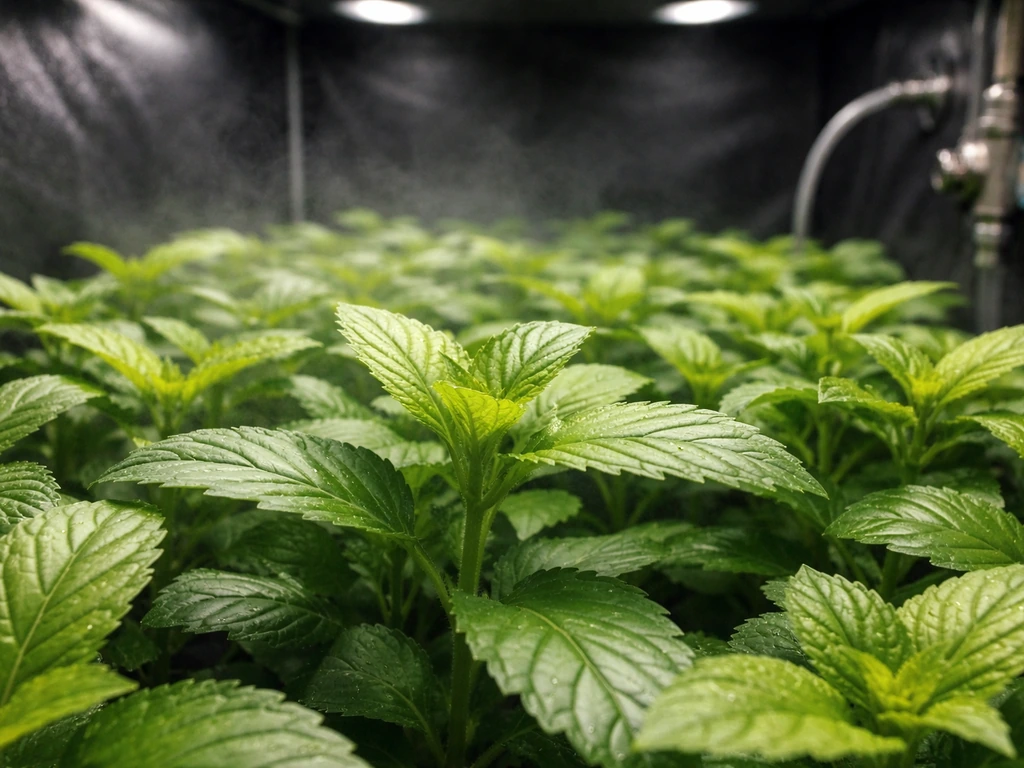
Plants pull CO₂ out of the air through tiny pores called stomata and combine it with water using light energy. That process, photosynthesis, produces glucose, which is basically the plant's building material and fuel. The more carbon a plant can fix, the faster it can build leaves, stems, roots, and fruit. Most of the plants you grow in a garden or indoor tent are C3 plants, meaning their photosynthetic pathway is not saturated at the CO₂ level that's normally in outdoor air (around 420 parts per million today). That means if you raise the CO₂ concentration, the plant can run its carbon-fixing machinery faster, as long as everything else keeps up.
One well-studied example is Cannabis sativa, a classic C3 plant. In controlled research, raising CO₂ from ambient levels (390 µmol/mol) to 700 µmol/mol increased the photosynthetic rate by roughly 44%. That's not a small nudge. But here's the nuance: CO₂ also triggers the stomata to partially close, which reduces water loss and improves water-use efficiency. That's usually a benefit, but it also means the plant is regulating itself in response to the extra CO₂, so the real-world growth gains can be somewhat smaller than what the raw photosynthesis numbers suggest.
Does more CO₂ make plants grow faster?
More CO₂ can make plants grow faster, but only up to the point where something else becomes the limiting factor. Think of it like a chain: plant growth is only as fast as the weakest link. CO₂ is one link. Light intensity is another. Temperature, water, and nutrients are others. If your light is weak or your plants are cold, the plant's photosynthetic machinery is already running slowly, and adding CO₂ won't speed it up because the machinery isn't limited by carbon supply in the first place.
There's also a longer-term effect worth knowing about. Over time, plants grown in elevated CO₂ can show what researchers call photosynthetic down-regulation: the plant adjusts its internal chemistry, sometimes reducing the nitrogen content in leaves and changing its carbohydrate balance, which partially dampens the growth response. This has been documented in crops like soybean. It doesn't eliminate the benefit, but it does mean you can't just pump in CO₂ and walk away. You need to keep nutrients, especially nitrogen, at sufficient levels to maintain the response.
What actually controls the growth speed
- Light intensity: CO₂ supplementation only pays off above roughly 400–600 µmol/m²/s of photosynthetically active radiation (PAR). Below that, light is the bottleneck.
- Temperature: Most plants photosynthesize most efficiently between 20–30°C (68–86°F). Cold or heat stress slows growth regardless of CO₂.
- Nutrients: Nitrogen especially, since it's part of the photosynthetic enzymes. If nitrogen is limiting, the plant can't build more chlorophyll to use the extra CO₂.
- Water: CO₂ does improve water-use efficiency, but the plant still needs adequate water to stay turgid and transport nutrients.
- CO₂ concentration: The sweet spot for most indoor grows is 1,000–1,500 ppm. Going above 1,500 ppm rarely adds more benefit and can be harmful to humans in enclosed spaces.
Outdoors vs. indoors and greenhouses: where CO₂ actually matters
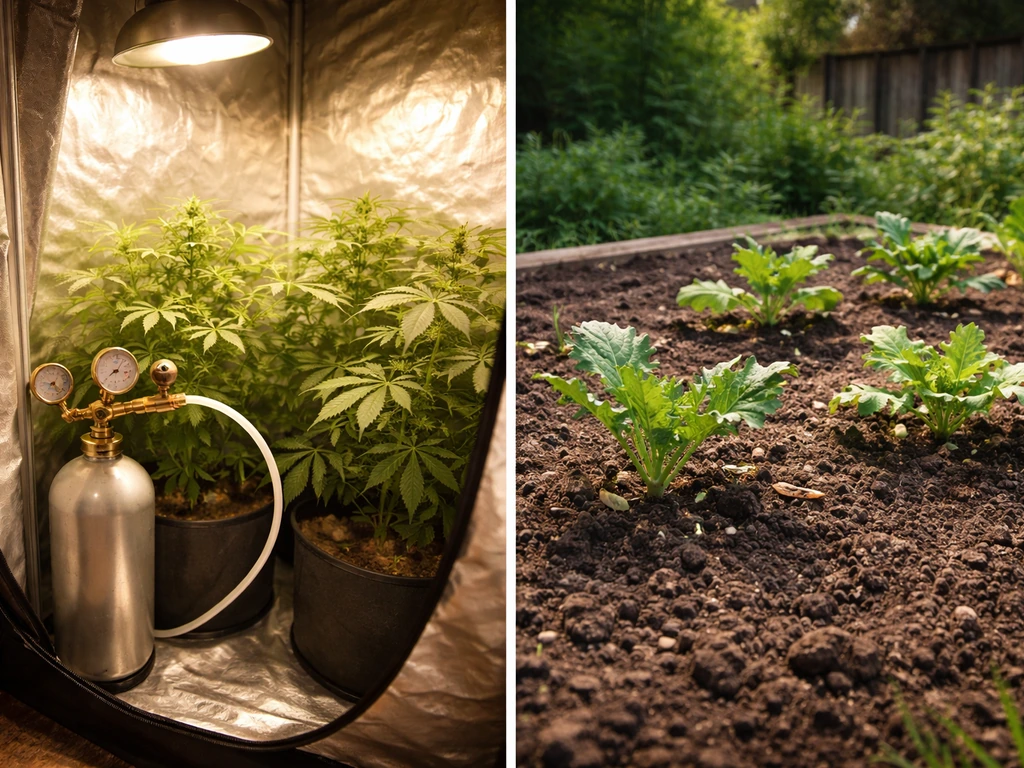
Outdoors, CO₂ supplementation is essentially pointless for home gardeners. The atmosphere is well-mixed, CO₂ concentrations are relatively stable around 420 ppm, and any CO₂ you release near your plants disperses immediately into the open air. The global rise in atmospheric CO₂ over recent decades does produce a mild fertilization effect for crops and vegetation at scale, but that's not something you can replicate or enhance in your backyard with a CO₂ tank or dry ice.
That said, CO₂ enrichment can help plants grow when it is delivered in a controlled indoor setup rather than outdoors. Carbonated water provides CO₂ and other dissolved minerals, but it is not a reliable way to raise the air CO₂ plants need for faster growth.
Indoors and in sealed or semi-sealed greenhouses is a completely different story. In a closed grow tent or a greenhouse with minimal ventilation, CO₂ can drop well below ambient as plants consume it during the day, sometimes falling to 200 ppm or lower. At those levels, growth actually slows down compared to what the plant could do at normal atmospheric concentration.
Supplementing CO₂ in that environment first brings plants back up to baseline, then enriching above 420 ppm to somewhere around 1,000–1,500 ppm gives a real growth boost, provided your lighting is strong enough. Charcoal is sometimes suggested as a way to add or hold carbon, but it generally does not raise CO₂ levels enough to measurably improve plant growth compared with proper CO₂ supplementation growth boost.
| Setting | Is CO₂ supplementation useful? | Why |
|---|---|---|
| Outdoor garden | No | CO₂ disperses immediately; atmospheric levels are consistent and uncontrollable |
| Sealed grow tent | Yes, highly useful | CO₂ depletes during the day; supplementing can boost photosynthesis significantly |
| Vented greenhouse | Depends | Useful if venting is minimal; pointless if air exchange is high |
| Indoor room grow (open) | Marginal | Ventilation usually prevents meaningful CO₂ buildup or supplementation |
Does CO₂ help weed growth too?
If by 'weed' you mean fast-growing cultivated plants like cannabis, the answer is yes, and it's one of the most studied cases. Cannabis sativa is a C3 plant that responds well to CO₂ enrichment when lighting and nutrients are strong, which is exactly why indoor cannabis growers are among the most enthusiastic users of CO₂ supplementation. The 44% photosynthesis increase mentioned earlier comes directly from cannabis research.
If you mean garden weeds, the answer is also yes, and it's an honest downside of CO₂ enrichment. Weeds are plants too, and if they're C3 species (many broadleaf weeds are), they'll benefit from higher CO₂ just like your vegetables. Some C4 weeds like crabgrass are less responsive because their photosynthesis pathway is already more efficient at ambient CO₂. In a sealed grow environment, weeds are rarely present, so this isn't usually a practical concern. In a greenhouse where weeds can creep in, CO₂ enrichment means you need to stay on top of weeding.
Practical ways to use CO₂ safely and effectively
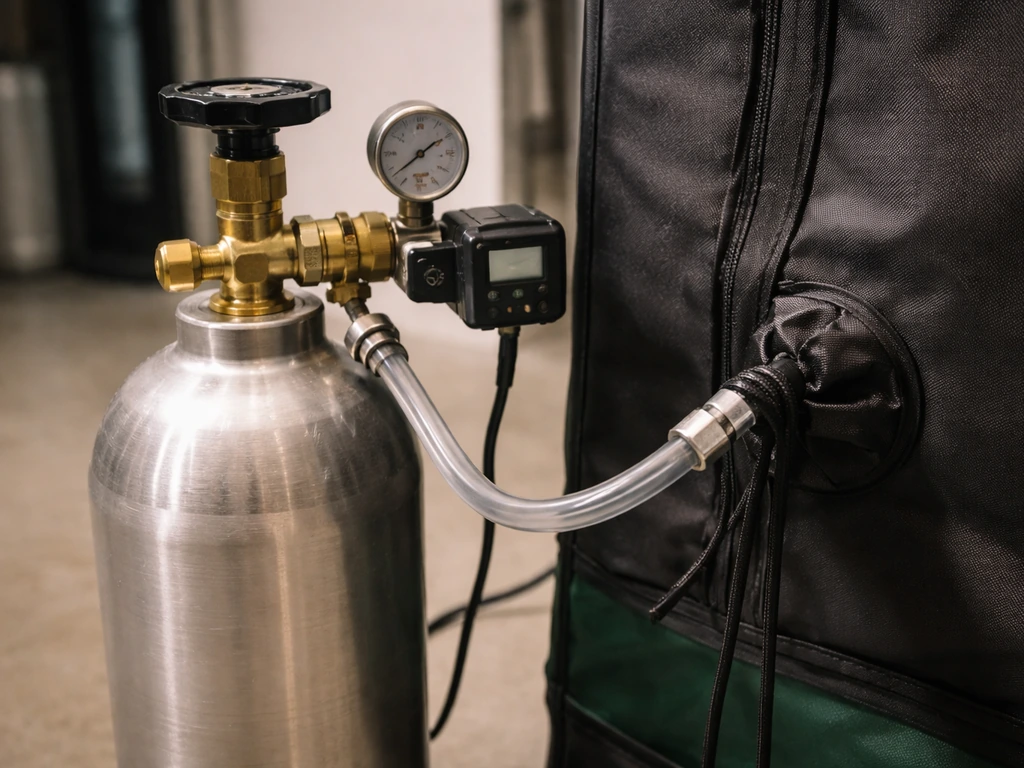
For indoor growers, especially those using a sealed grow tent with powerful LED or HID lighting, CO₂ supplementation is genuinely worth considering. There are a few common approaches, each with trade-offs.
- Compressed CO₂ tanks with a regulator and timer: The most controllable method. A tank feeds CO₂ into the grow space at a set rate during the light period. You'll need a CO₂ monitor (also called a CO₂ controller or ppm meter) to dial in the concentration accurately.
- CO₂ generators (propane or natural gas burners): Produce CO₂ by combustion. Effective for larger spaces and greenhouses, but they also produce heat and require good safety precautions. Not ideal for small tents.
- CO₂ bags and DIY fermentation setups: These produce CO₂ naturally but are inconsistent and generally too low-output to meaningfully enrich a grow space above ambient. They're fine for very small setups but don't expect dramatic results.
- Carbonated water as a CO₂ source: The CO₂ dissolved in carbonated water is released when it contacts soil, but the volume is tiny compared to what the air around a plant contains. It's not a meaningful supplementation method, though carbonated water may offer minor benefits through other mechanisms.
The key measurement tool is a CO₂ ppm monitor. Without one, you're guessing. Target 1,000–1,500 ppm during the light cycle only. Plants don't photosynthesize in the dark, so running CO₂ at night wastes gas and in enclosed spaces can build to unsafe levels for anyone working in the room. Keep the space well-ventilated when you're in it, and never work in a CO₂-enriched grow space without checking air quality first.
Common mistakes and how to tell if CO₂ is actually working
The biggest mistake growers make is adding CO₂ to a setup where light is too weak. If your grow light is a modest LED producing under 400 µmol/m²/s of PAR, the plants are already light-limited, and extra CO₂ does very little. You'll spend money on CO₂ and see almost no difference in growth rate. Fix your lighting first. CO₂ supplementation is a tool for optimizing a high-performance grow, not for rescuing a mediocre one.
Another common error is running CO₂ in a space with too much air exchange. If your exhaust fan is pulling fresh air through constantly, you're venting out the enriched air almost as fast as you add it. For CO₂ supplementation to work, the space needs to be reasonably sealed, or you need to time CO₂ injection to periods when exhaust fans are off.
Finally, watch for the long-term down-regulation effect. If you're running elevated CO₂ through a full grow cycle, keep nitrogen feeding strong. Plants growing fast under elevated CO₂ need more nutrients to keep up, and a deficiency (especially visible as pale or yellowing leaves) is a sign the CO₂ boost is being capped by nutrient limits, not a reason to back off the CO₂.
To know if CO₂ is actually working, measure growth rate directly: track plant height, node development, or canopy spread over one to two weeks with and without supplementation at the same light and nutrient levels. A CO₂ monitor showing stable levels at your target concentration (1,000–1,500 ppm) confirms the gas is present. ACGIH’s TLV overview lists a TLV-TWA of 5,000 ppm for carbon dioxide (documentation available via membership/login). Faster, denser growth confirms the plant is actually using it. If you're not seeing a measurable difference within two weeks under otherwise good conditions, the bottleneck is somewhere else, and that's where your attention should go.
FAQ
Will CO2 help plants grow faster in a typical outdoor garden if I release CO2 near the plants?
Not much. Outdoors, CO2 disperses quickly into the open air, so the concentration around leaves usually stays close to normal ambient levels. If you want to test impact, you would need to measure local CO2 ppm at canopy height, because guessing by proximity to the source is unreliable.
Do I need to use CO2 enrichment for every plant type, or only certain ones?
It helps most for plants that respond to CO2 because their photosynthesis is not already saturated at ambient CO2, often C3 species. C4 plants (like crabgrass) usually show smaller gains. If you are unsure what you’re growing, use the plant type as a guide, but still confirm with a ppm monitor and growth measurements.
What CO2 level should I target indoors, and does it differ for the light cycle versus nighttime?
During the light cycle, many indoor setups aim around 1,000 to 1,500 ppm. At night, photosynthesis slows down, so running CO2 then mainly wastes gas and can raise concentrations more than you intend, especially in sealed spaces. Use a controller tied to your light schedule, or at least stop injection when lights go off.
Can CO2 enrichment still work if my plants get weaker light late in the day or during cloudy periods?
Usually no, because light becomes the limiting factor. If clouds, distance from the lamp, or dim periods drop effective light intensity, extra CO2 cannot compensate. The practical approach is to treat CO2 as an optimizer for high light, not a rescue for inconsistent or underpowered lighting.
How do I avoid wasting CO2 when my grow tent exhaust fan is running?
CO2 struggles if fresh air exchange is high. Either keep the tent reasonably sealed during injection periods, or coordinate dosing with exhaust timing (for example, inject while exhaust is off and then vent to maintain safe air when you resume work). The key check is a monitor that confirms CO2 actually stays near your target during the light cycle.
What’s the safest way to check air quality if I’m working in a room with CO2 injection?
Use a calibrated CO2 ppm monitor and treat it as a safety tool, not just a growth tool. Set alerts if your monitor supports them, keep ventilation adequate for human comfort, and avoid being in the space during peak injection if the system can spike levels. Never rely on tank size or injection rate alone.
Does CO2 supplementation increase nutrient demand, and how can I tell if nutrients are limiting?
Yes. Faster growth under elevated CO2 often increases the plant’s demand for nitrogen and other nutrients. A common sign that the CO2 boost is being capped is slower-than-expected growth plus pale or yellowing leaves, especially if pH and watering are otherwise stable. In that situation, raising nutrients at the same time you keep CO2 controlled is usually more effective than turning CO2 up further.
Will CO2 enrichment affect leaf nutrient content over a whole grow cycle?
It can. With prolonged elevated CO2, plants may adjust internal chemistry and reduce some leaf nitrogen content, which can partially dampen the growth response over time. This is one reason to monitor nutrient status across the cycle and not assume the early boost will automatically persist without adjustments.
Is carbonated water a practical substitute for CO2 enrichment in indoor growing?
No. Carbonated water mainly adds dissolved minerals and CO2 to the water, not to the air around the leaves at the concentrations needed for faster photosynthesis. If your goal is higher air CO2, you need a method that raises canopy air ppm, and you should verify it with a monitor.
How can I tell within days whether CO2 is actually helping my plants?
Measure growth directly with consistent conditions. Track something objective like height increase, node spacing, or canopy expansion over one to two weeks while keeping light and nutrients identical. If your ppm monitor shows stable target CO2 but growth does not improve within that window, you likely have another bottleneck such as light, temperature, or nutrient availability.
Will CO2 enrichment make weeds grow faster too?
Yes, for many weeds, especially C3 broadleaf species. If CO2 enrichment is used in a greenhouse where weeds can enter, weed pressure can increase, so regular weeding matters. If your environment is sealed, weeds are usually less of an issue, but they can still arrive on media, tools, or plants.
What’s the biggest practical mistake people make with CO2 supplementation besides lighting?
Another common mistake is ignoring timing and control, such as injecting continuously or letting CO2 levels drift because the space is not monitored. Without a ppm monitor, you cannot confirm you hit 1,000 to 1,500 ppm during the light cycle or that you are not spiking too high. Control and verification matter as much as the target number.
Next Articles

Does Carbon Dioxide Help Plants Grow? What Works
Learn if extra CO2 boosts plant growth, how it works in photosynthesis, and when light, water, and nutrients limit resul
How Do Microorganisms Help Plants Grow: Practical Guide
Learn how microbes in the rhizosphere fix nitrogen, boost phosphorus, aid roots, suppress disease, and how to grow them.
How Does Yeast Help Plants Grow? Safe, Practical Guide
Learn how yeast boosts plant growth via soil microbes, safe dilution and timing, plus myths, limits, and troubleshooting