Plants use air in three distinct ways: they pull carbon dioxide out of it to build sugars through photosynthesis, their roots breathe oxygen from the air pockets in soil, and airflow helps them manage temperature, move water and nutrients, and stay dry enough to resist disease. Get any one of those three wrong and growth stalls, even if your soil, light, and watering are perfect.
How Does Air Help Plants Grow? Oxygen, CO2, and Airflow Tips

Marcus Holloway
1 May 2026
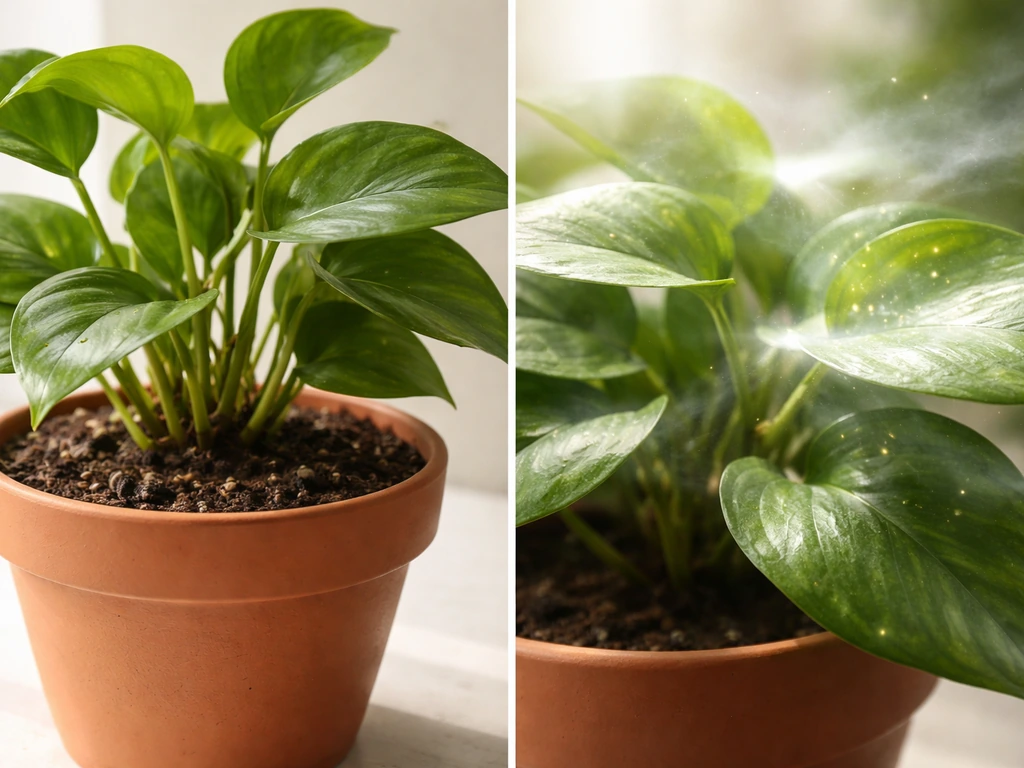
The three parts of air that actually matter to plants
When people ask how air helps plants grow, they usually think of one thing: CO2 for photosynthesis. That is real and important, but it is only one piece. The three components of air that a plant actually works with are oxygen (O2), carbon dioxide (CO2), and water vapor (humidity). Each one does a completely different job, and each one can become a limiting factor in the right circumstances.
- Oxygen (about 21% of air): used directly by plant roots and soil microbes for cellular respiration. Roots need O2 the same way you do. Without it, they cannot take up water or nutrients properly.
- Carbon dioxide (about 0.04% of air, or roughly 420 ppm today): the raw carbon feedstock for photosynthesis. Plants convert CO2 plus water into sugars, releasing oxygen as a byproduct.
- Water vapor (humidity): controls how easily water moves out of leaves through stomata. Too little humidity and plants lose water faster than roots can supply it. Too much humidity with poor airflow and disease pressure spikes.
Why roots need oxygen and why soggy soil kills them
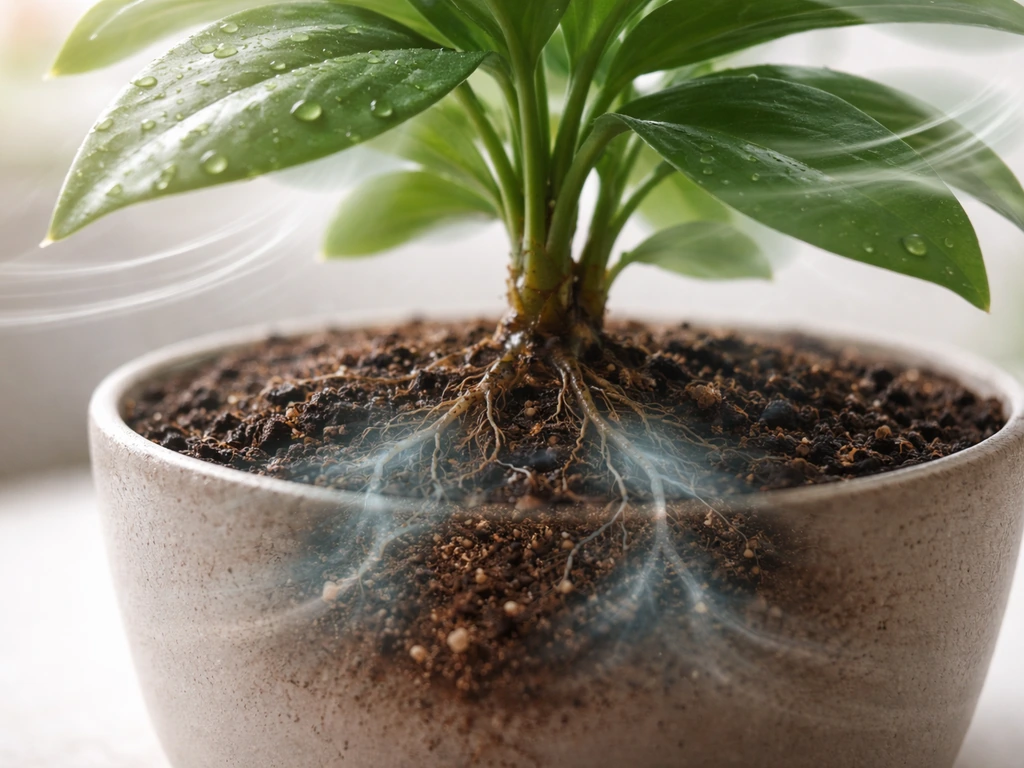
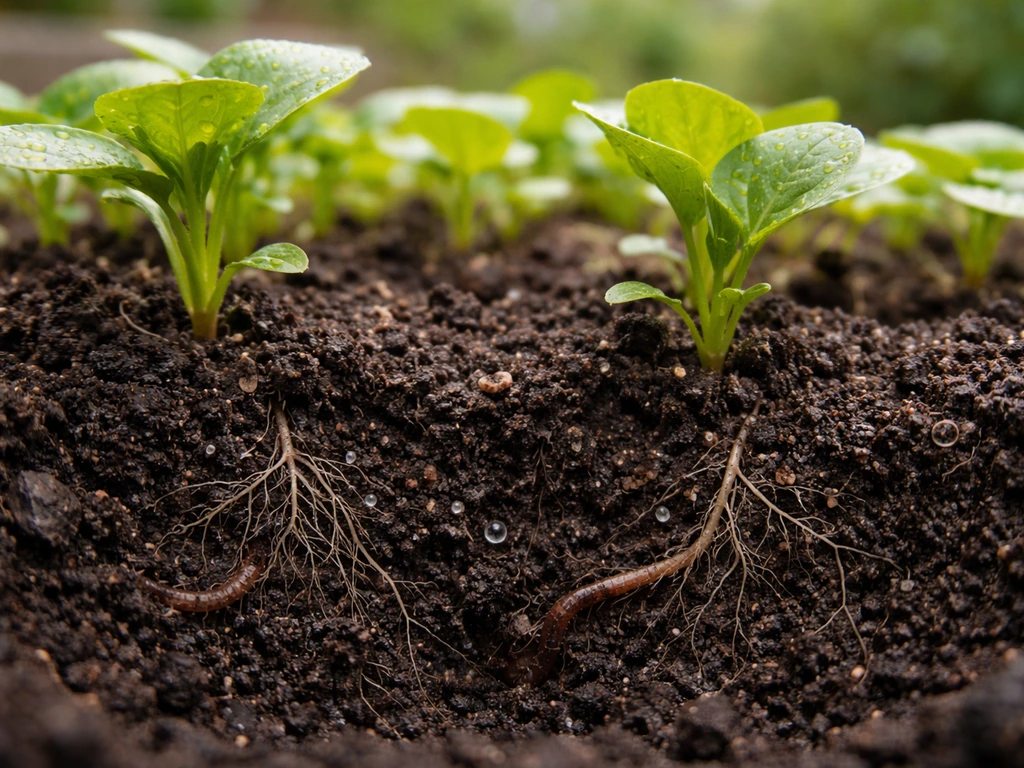
This is the one most gardeners overlook. Soil is not just dirt, it is a porous medium that holds a mixture of water and air. In a healthy, well-drained soil, roughly 50% of those pores are filled with water and the other 50% hold air. Research from USDA NRCS shows that microbial activity peaks around that 50 to 60% water-filled pore space mark, and once soil approaches saturation, aerobic conditions break down fast. Soil oxygen levels under normal conditions are already slightly below the 21% you get in open air, because roots and microbes are continuously consuming it. Once waterlogging kicks in, that number can drop toward levels where root growth is measurably impaired.
When roots run out of oxygen, the whole plant suffers in a cascade. Purdue Extension spells it out clearly: waterlogged conditions cause oxygen loss in roots, allow ethylene gas to build up inside root tissue, and directly impair nutrient uptake. You can water a plant to death even when you think you are helping it. Purdue makes the point bluntly: oxygen is as crucial to plant health as water. Overwatering does not drown the plant in water so much as it suffocates the roots by pushing oxygen out of the soil.
Frequent, shallow watering makes this worse. UNL Extension notes that keeping a shallow layer of soil continuously wet reduces oxygen movement deeper into the profile. K-State Extension makes the same connection: shallow, frequent watering produces shallow root systems that are more vulnerable to both drought and oxygen stress. The fix is deep, infrequent watering that lets the top layer dry slightly between sessions, allowing air to recharge the pore spaces.
CO2, photosynthesis, and the air composition your plants actually see
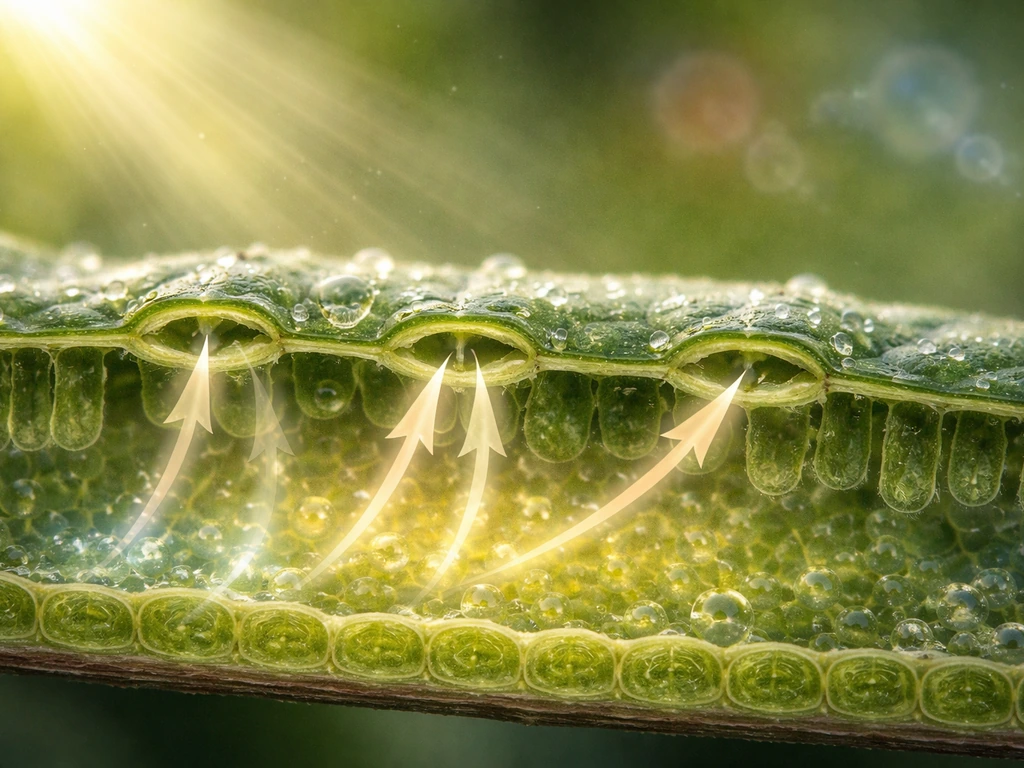
CO2 is the carbon source for every gram of biomass a plant builds. NOAA Climate.gov reports that blank" rel="noopener noreferrer">global average atmospheric carbon dioxide was 422.8 ppm in 2024, based on NOAA Global Monitoring Lab’s annual analysis. During photosynthesis, plants take CO2 through their stomata, combine it with water using light energy, and produce sugars. Because photosynthesis uses that carbon dioxide to make sugars, plants can convert it into new growth like leaves and stems photosynthesis uses carbon dioxide to make sugars. So in theory, more CO2 should mean faster growth, and to a point that is true. Commercial greenhouse operators routinely enrich CO2 to 800 to 1200 ppm and see real yield gains in crops like tomatoes and cucumbers.
But there is a catch that matters for home gardeners. Research shows that elevated CO2 often triggers photosynthetic down-regulation, especially when nitrogen is limited. When a plant is already nitrogen-starved, extra CO2 does not produce extra growth because the plant cannot build the enzymes and tissue that would use those additional sugars. External nitrogen supply can prevent this down-regulation, as demonstrated in alfalfa studies where well-fed plants maintained their photosynthetic rates under elevated CO2. The takeaway: at ambient outdoor CO2 levels, you are unlikely to be CO2-limited unless you have plants in a sealed, crowded indoor space with no ventilation. Your nutrients and light are almost always the real bottleneck first.
CO2 and stomatal behavior are also tightly linked. Intercellular CO2 concentration changes dynamically as stomata open and close, and as photosynthesis speeds up or slows down. When a plant is in bright light and photosynthesizing hard, it depletes the CO2 inside its leaves faster than stomata can replenish it. Good airflow around the leaf helps here by refreshing the CO2 near the leaf surface, which is why still indoor air can genuinely limit photosynthesis in fast-growing plants under strong lights.
Air movement, transpiration, and why leaves need to breathe freely
Every leaf is surrounded by a thin, still layer of air called the boundary layer. In calm conditions this layer is thicker, which slows the exchange of CO2 and water vapor between the leaf and the surrounding air. Wind and airflow thin that boundary layer and improve gas exchange, which is why even gentle air movement from a fan can noticeably improve growth rates in indoor plants.
Transpiration, the process of water moving up from roots and evaporating out through leaf stomata, is what drives nutrient transport through the plant. Humidity and airflow together control how fast that evaporation happens. Greenhouse managers use a metric called vapor pressure deficit (VPD) rather than simple relative humidity percentage, because VPD accounts for both temperature and humidity together to describe the actual drying power of air on a leaf. High VPD (dry, warm air) drives rapid transpiration, which can stress plants if roots cannot keep up. Low VPD (cool, humid air) slows transpiration, which sounds gentle but can also slow nutrient delivery and leave leaf surfaces wet.
Temperature and airflow interact in another important way. A 2025 Nature Communications meta-analysis found that as temperature rises, stomatal conductance, transpiration, and photosynthesis can become progressively decoupled. Essentially, in hot still air, a plant's cooling system (transpiration) and its growth engine (photosynthesis) stop working in sync. Moving air helps break that problem by improving the leaf's ability to shed heat, cooling it closer to ambient temperature.
What bad air looks like on your plants
The symptoms of air-related problems are easy to confuse with other issues, but once you know what to look for they become recognizable. Here is what each bad-air condition tends to produce.
Low oxygen in the root zone (soggy soil)
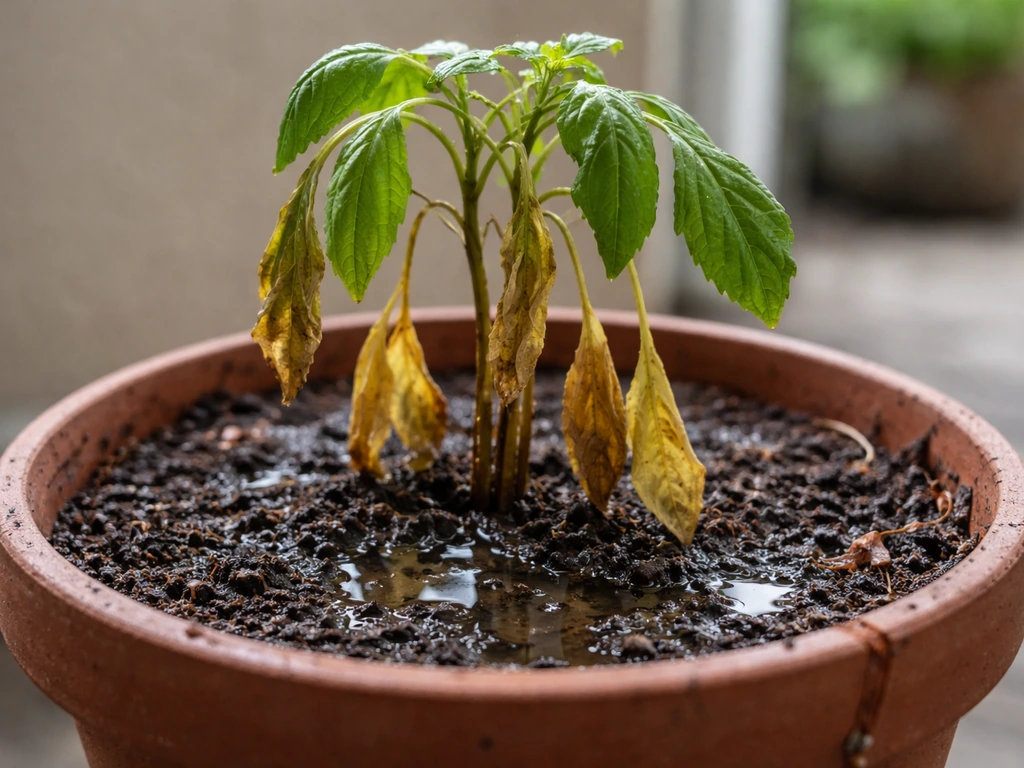
- Yellowing leaves starting with older, lower leaves (nitrogen deficiency symptoms triggered by impaired root uptake, not actual lack of nitrogen)
- Wilting even when soil is wet (roots cannot function, so the plant wilts regardless of available water)
- Brown, mushy, foul-smelling roots when you unpot or dig
- Stunted growth despite regular feeding
- Root rot pathogens moving in quickly once oxygen is depleted
Stagnant, high-humidity air
- Gray mold (Botrytis), powdery mildew, or downy mildew appearing on leaves and stems
- Fungal spotting especially where leaves overlap or touch
- Disease pressure spiking in cool, damp conditions — University of Kentucky Extension notes that RH at 90% or above with free moisture on leaf surfaces is the classic disease setup
- UNR Extension puts the risk threshold at 85% RH, so anything consistently above that in a still environment is asking for trouble
Hot, still air
- Leaf scorch or bleaching where leaf temperatures exceed air temperature because there is no airflow to carry heat away
- Flower drop and poor fruit set in heat-sensitive crops like tomatoes (blossoms abort when internal temperatures spike)
- Wilting during the hottest part of the day even in well-watered plants
- Slow recovery after heat events compared to plants with good airflow
Very dry air (low humidity indoors)
- Brown leaf tips and edges, especially on tropical houseplants accustomed to higher humidity
- Crispy new growth
- Rapid soil drying that requires very frequent watering
- Spider mite infestations, which thrive in hot, dry, still indoor air
How to fix air conditions starting today
Fix low-oxygen soil
The fastest intervention for compacted or waterlogged soil is to stop adding water and let it drain. For container plants, check that drainage holes are not blocked. For garden beds, core aeration or simply loosening the top few inches with a fork helps air re-enter the soil. Long term, raised beds are one of the most effective structural fixes. University of Maryland Extension notes that raised beds drain better than in-ground planting and have looser texture, both of which protect root-zone oxygen. UMN Extension recommends a mix of roughly two-thirds topsoil to one-third compost as a baseline that stays airy. Adding perlite or coarse grit to container mixes improves drainage without sacrificing moisture retention entirely.
Water deeply and less often
Switch from frequent, shallow watering to deep, infrequent cycles that let the top inch or two of soil dry before the next watering. This keeps deeper root zones moist while allowing the upper soil profile to recharge with air. For lawns and trees, UNL Extension specifically recommends deep, infrequent irrigation as the standard for building healthier root systems. For pots, lift them after watering: the pot should feel heavy, and you should wait until it feels significantly lighter before watering again.
Improve airflow around plants
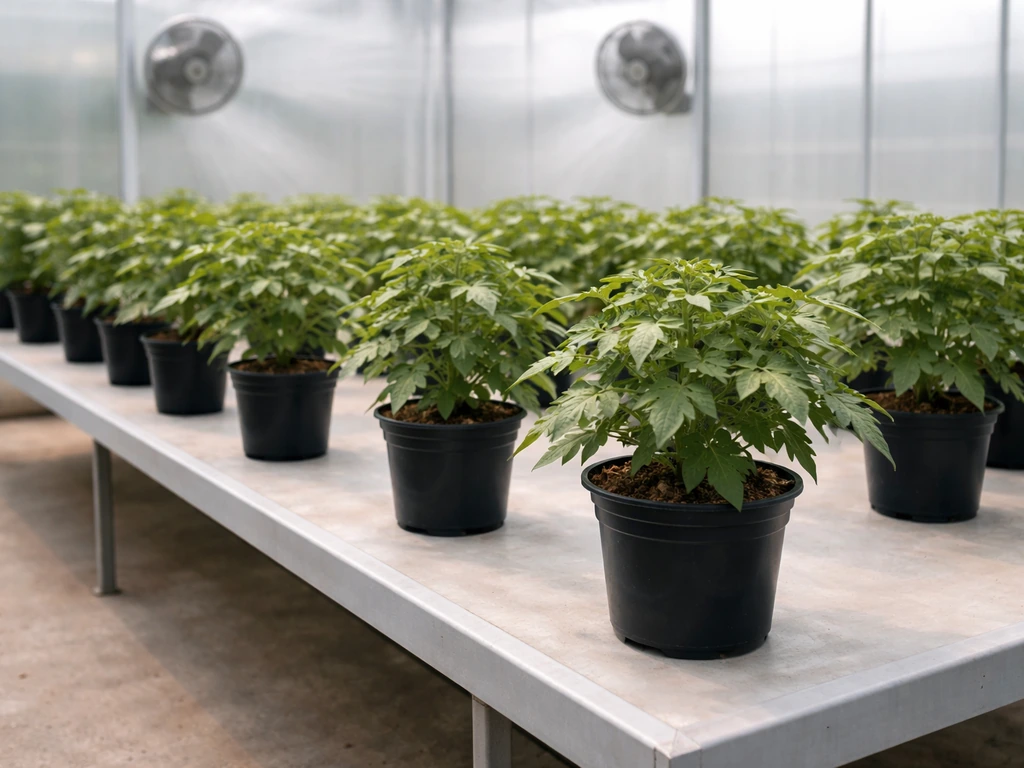
Outdoors, spacing plants at recommended distances is the most underrated piece of planting advice there is. Crowded plants create humid microclimates within the canopy where air stagnates, humidity builds, and disease spores find ideal conditions. Prune out crossing branches and dense interior growth on shrubs and fruiting plants to open up the canopy. Indoors, even a small oscillating fan running on low for a few hours a day dramatically reduces humidity at the leaf surface, thins the boundary layer, and mimics the gentle stem-strengthening effect that outdoor breezes provide.
Manage humidity in greenhouses and indoor spaces
ASHRAE recommends indoor RH between 30% and 60% for human comfort, and Penn State Extension notes that many tropical houseplants want to be on the higher end of that range, especially in dry winters. For greenhouses, ACES recommends aiming for roughly one complete air exchange per minute through ventilation to manage heat and humidity simultaneously. UAF Extension emphasizes continuous air movement to keep temperature uniform and reduce humidity at the canopy level.
Venting at night when outdoor temperatures drop is a practical way to flush warm, moist air from a greenhouse. Avoid misting as a humidity strategy indoors. Penn State points out that misting only raises humidity until the water evaporates, which is fast, while leaving leaf surfaces wet in the meantime, which invites fungal problems.
A note on smoke and extreme drafts
Smoke is essentially air loaded with particulates that block light, coat stomata, and deposit chemical residues on leaf surfaces. It is categorically bad air for plants. Similarly, harsh cold drafts through single-pane windows or near air-conditioning vents can chill leaves below their functional temperature range, causing the same wilting and tissue damage as heat stress but in reverse. Both extremes require physical barriers or relocation rather than any soil or watering fix.
Your air-check checklist
Run through these before assuming the problem is something else. Most air-related issues can be spotted and corrected in an afternoon.
- Soil drainage: Push a finger 2 inches into the soil. If it comes out wet and the plant has been wilting, overwatering and root oxygen deprivation are your first suspect.
- Pot drainage: Tip the pot and confirm water runs freely from the holes. If it does not, repot or drill additional holes.
- Airflow indoors: Hold a tissue near your plants. If it does not move at all, add a fan on low.
- Humidity: A $10 digital hygrometer placed near plants tells you exactly where you stand. Target 40 to 60% for most houseplants. If it reads above 70% with no airflow, that is your disease-risk window.
- Canopy density outdoors: Look through your plant from underneath. If you cannot see sky, it needs thinning.
- Watering frequency: If you are watering on a fixed schedule regardless of soil moisture, stop and start checking the soil first.
- Signs of fungal disease: Gray mold, white powder, or dark water-soaked leaf spots almost always point to high humidity plus poor airflow, not a nutrient problem.
When air is not the limiting factor
Air problems are real and fixable, but they are not always the bottleneck. If your drainage is good, airflow is adequate, and humidity is reasonable, look elsewhere before blaming air. Light is the most commonly underestimated limiting factor for indoor plants: a plant in genuinely insufficient light will grow slowly regardless of perfect soil aeration. Nutrients, particularly nitrogen, are the next most common cause of yellowing and stunted growth when overwatering is not involved.
Photosynthesis itself is limited by light intensity, CO2 availability, and enzyme capacity, and those three interact in ways that mean fixing just one rarely doubles your growth. The relationship between CO2 and photosynthesis is closely related to the broader story of what actually drives plant growth, and the same principle applies here: air is one input among several, not a silver bullet.
Adding hydrogen peroxide is sometimes suggested as a quick fix, but plant growth still depends on fundamentals like oxygen, drainage, light, and nutrients air is one input among several.
The practical rule is to fix the obvious problems first. If your soil drains well, you water deeply and infrequently, and your plants have space and airflow, you have almost certainly satisfied your plants' air requirements. At that point, look hard at your light levels, your soil fertility, and your watering volume before spending money on humidifiers, CO2 injectors, or any other air-related gadget. Good air management is foundational, but it is the floor, not the ceiling, of plant performance.
FAQ
How can I tell if my plant problem is from lack of air (oxygen) in the soil rather than something else?
Look for roots staying constantly dark, mushy, or stunted, and check whether the pot or bed takes a long time to drain after watering. If the soil surface stays wet for days, or the plant wilts soon after watering even though the soil is saturated, oxygen stress is likely. Yellowing alone is not diagnostic, because low nitrogen and low light can look similar.
Is it possible to be “too airy,” like adding so much perlite or using very fast-draining soil that plants still struggle?
Yes. Extremely fast drainage can leave roots without enough water, so transpiration and nutrient uptake fail even though oxygen is high. A practical test is whether the pot dries out so quickly that you have to water more than about once a day (for many houseplants) in normal conditions. If so, you may need more moisture-holding material, not less.
Do plants need “fresh” outdoor air, or is air movement alone enough indoors?
Air movement helps because it thins the boundary layer and reduces humidity pockets, but the plant still needs enough CO2 near the leaf surface and oxygen in the root zone. In most homes, ventilation matters mainly for CO2 and heat load, while a gentle oscillating fan is most important for leaf gas exchange and preventing stagnant humid microclimates.
Can I use a fan to improve growth without increasing disease risk?
Usually yes, but aim for airflow that moves leaves lightly without constantly wetting them. Fans reduce boundary layer humidity and speed drying, which generally lowers fungal risk. Avoid misting as a humidity strategy because it leaves leaf surfaces wet before the air can dry them.
How do I measure or target humidity correctly if I do not have VPD equipment?
If you only have relative humidity readings, use them as a rough guide and then watch plant behavior. If leaf edges crisp, droop occurs during bright hot periods, or soil dries too fast, air is likely too drying (high VPD). If leaves stay tacky, mold appears, or growth slows with consistently cool damp conditions, air is likely too humid. The article’s practical point is that VPD accounts for temperature, so combine your RH with temperature trends.
What is the fastest fix if my container plants are waterlogged?
Stop watering immediately and confirm drainage first. Make sure holes are open, then consider unpotting to inspect the root ball and removing any foul-smelling, brown, or collapsed roots. After drainage improves, resume with deep watering only after the pot lightens significantly, and do not “top off” small amounts daily.
Does watering schedule matter more than how much water I give at once?
Schedule matters because it controls how long soil pores stay filled with water versus air. Deep, infrequent watering lets oxygen recharge, while shallow frequent watering keeps the top profile persistently wet, reducing oxygen movement deeper and encouraging shallow, vulnerable roots. So two people giving the same total weekly amount can still get very different results based on timing.
Can enriching CO2 help houseplants if I have good lighting and nutrients?
It can, but it is rarely cost-effective for typical indoor spaces because outdoors CO2 is usually adequate and plants quickly become limited by light and nutrient availability first. The scenario where extra CO2 helps most is enclosed, crowded, high-light setups where ventilation is minimal. If you try it, ensure nitrogen is sufficient, or you may see little or no growth response.
Why does my plant wilt when conditions seem humid and I am not underwatering?
Wilting can be from root oxygen loss, not just drought. Overwatering can suffocate roots and also create ethylene buildup in root tissue, which impairs nutrient uptake and can make plants collapse even with moist soil. Check whether the soil has been wet for too long and whether drainage is slow.
How close should plants be to a fan or vent to get airflow benefits without chilling them?
Use air that moves around the plant without direct, cold blasting on leaves. If leaves sit near single-pane draft paths or strong AC vents, you can get cold-stress symptoms similar to heat stress but in reverse. A good rule is to position fans so they circulate air across the canopy rather than hitting one spot continuously.
If my plants have good air, what should I check next when growth is slow?
Start with light intensity, then nutrient sufficiency (especially nitrogen for leafy growth), and finally whether watering volume matches the plant’s needs. If soil oxygen, airflow, and humidity are already in a sensible range, those other factors usually explain stunting and yellowing more often than air tweaks like humidifiers or CO2 injectors.
Next Articles
How Does Photosynthesis Help Plants Grow and Thrive
Explains how photosynthesis creates sugars and growth, plus fixes for low light, CO2, water, and nutrients so plants thr
How Do Microorganisms Help Plants Grow: Practical Guide
Learn how microbes in the rhizosphere fix nitrogen, boost phosphorus, aid roots, suppress disease, and how to grow them.
How Does Yeast Help Plants Grow? Safe, Practical Guide
Learn how yeast boosts plant growth via soil microbes, safe dilution and timing, plus myths, limits, and troubleshooting