Photosynthesis is the engine that powers every inch of plant growth, full stop. Without it, there is no new root, no new leaf, no flower, no fruit. When people ask how photosynthesis helps plants grow, the honest answer is: it is not one factor among many. It is the foundation everything else builds on. Understanding that process, and what it actually needs to run well, is the most useful thing you can do as a gardener. USDA WEPS uses a defined “blank" rel="noopener noreferrer">optimum temperature for plant growth” value as a reference point for crop modeling and temperature-related guidance.
How Does Photosynthesis Help Plants Grow and Thrive

Marcus Holloway
21 Apr 2026
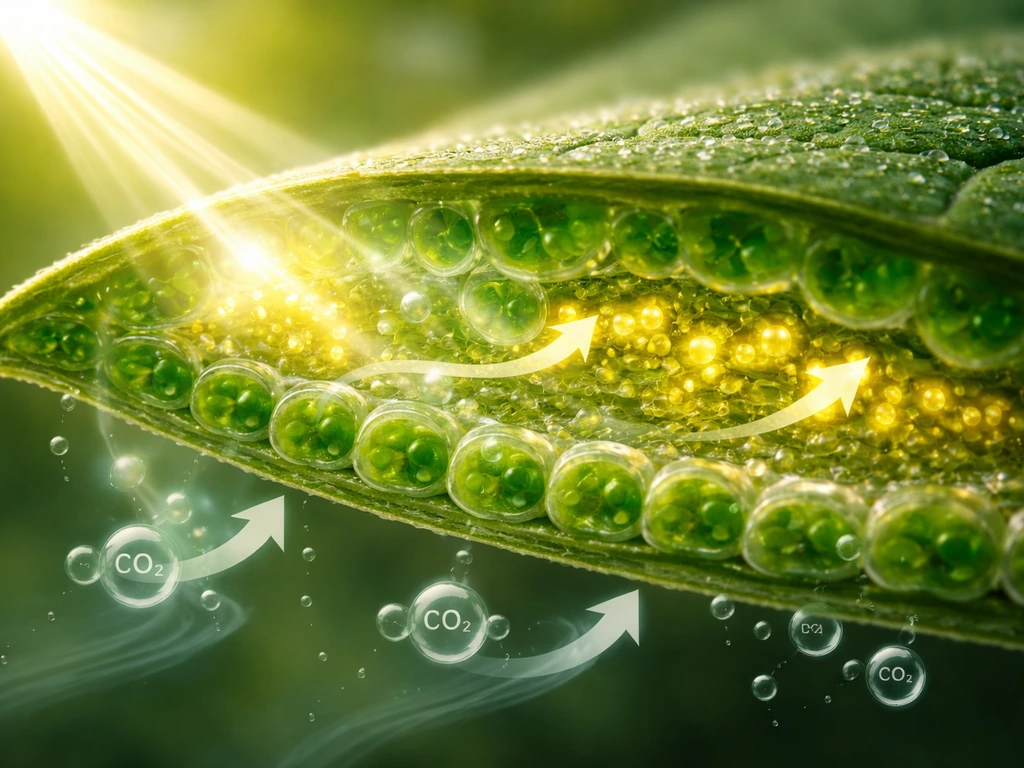
Photosynthesis in one simple picture: light turns into sugar
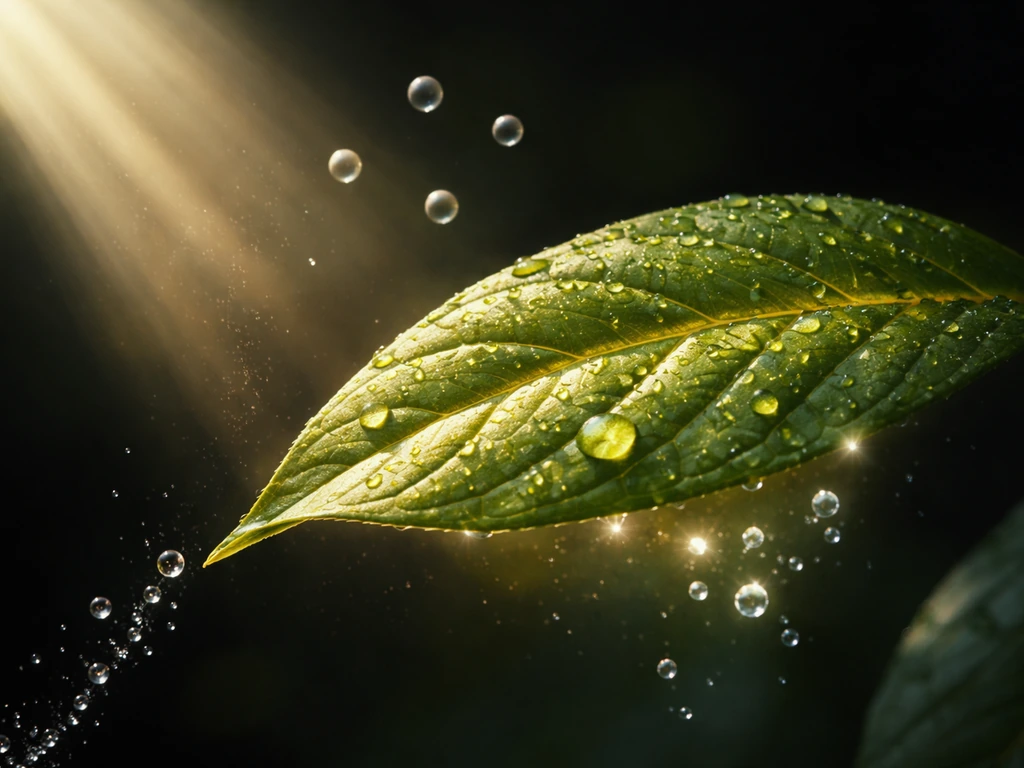
Here is the core idea, stripped to its essentials: a plant takes in light, carbon dioxide (CO₂), and water (H₂O), and uses that combination to manufacture sugars. Oxygen is released as a byproduct. That is it. The chemical energy your plant needs to build anything, from a new leaf to a root hair, comes from those sugars.
In plain terms, the equation looks like this: light + CO₂ + H₂O → sugars (stored chemical energy) + O₂ released into the air. During daylight, plants absorb CO₂ and release oxygen. At night, that largely reverses as plants respire: they consume oxygen and release CO₂. Both processes happen around the clock, but the net gain from photosynthesis during the day is what matters most for growth.
There is one nuance worth knowing early: what actually drives growth is net photosynthesis, which is the difference between how much photosynthesis is happening versus how much respiration is consuming those sugars simultaneously. If photosynthesis outpaces respiration, your plant builds biomass and grows visibly. If conditions are poor and respiration starts eating through more sugars than photosynthesis can produce, growth stalls or reverses. Everything practical in this article comes back to maximizing that net positive.
How sugars actually become roots, stems, leaves, and flowers
Once sugars are made in the leaves (the main photosynthetic factories), they do not just sit there. The plant loads them into a vascular highway called the phloem and ships them outward to wherever growth is happening. In plant biology, the leaves making sugars are called "source" tissues, and the parts consuming those sugars for growth are called "sink" tissues: growing root tips, developing flower buds, new stem nodes, forming fruit.
The main sugar being transported is sucrose. It does double duty: it is both the fuel that sink tissues metabolize to build new cells, and a signaling molecule that helps regulate how nutrients flow through the plant. Root growth, for instance, is directly supported by phloem-delivered sucrose from leaves. Cut off the light to those leaves and you cut off the sugar supply, and root development slows noticeably. This is why a plant that looks fine above ground can stop pushing new roots if it is consistently light-starved.
The practical takeaway here is that every organ on your plant competes for a share of that photosynthate. If your plant is flowering and fruiting simultaneously with putting out new vegetative growth, it is juggling a lot of sink demand. Keeping photosynthesis running efficiently is how you keep all of those systems adequately supplied.
What photosynthesis actually needs to run well
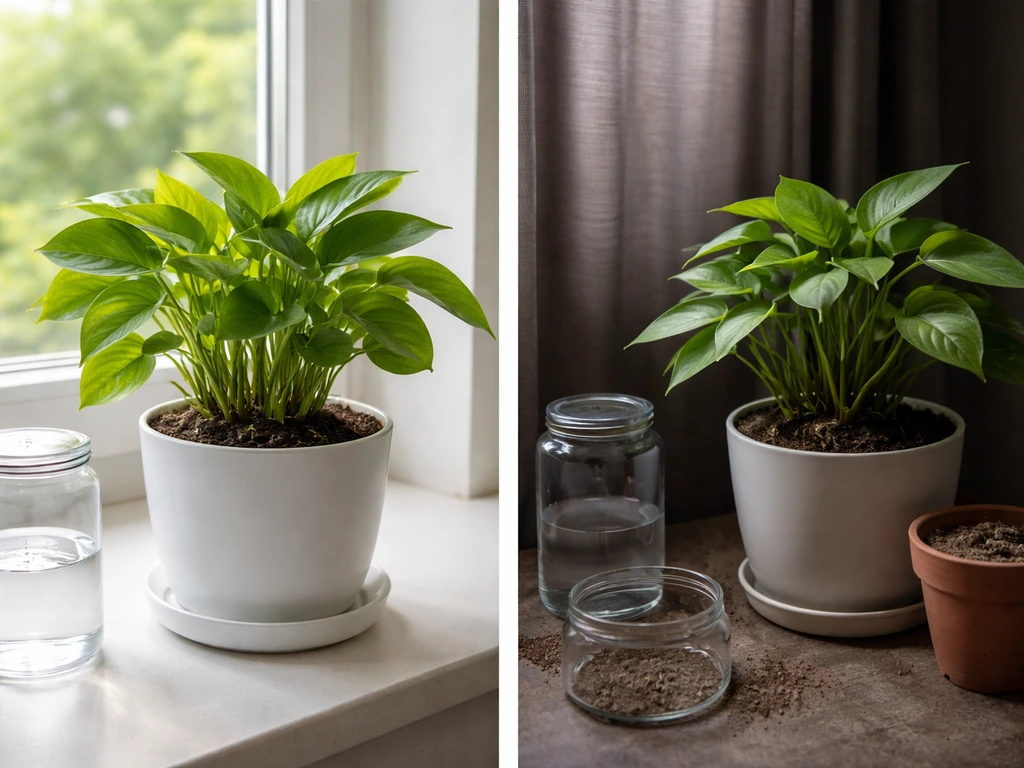
Think of photosynthesis as having four main inputs that can each become a bottleneck. Shortchange any one of them and the whole process slows down, regardless of how well-supplied the others are.
Light (the most controllable variable for gardeners)
Light is the energy source that drives the whole reaction. Not just any light, though: plants use the photosynthetically active radiation (PAR) range, roughly 400 to 700 nanometers. The relevant measure in serious horticulture is PPFD (photosynthetic photon flux density), which tells you how many usable photons are landing on the leaf surface per second. More useful still is the Daily Light Integral (DLI), which represents the total PAR photons a plant receives over a full day. DLI accounts for both intensity and duration, so it is a more honest measure of whether a plant is getting enough light overall.
Carbon dioxide (CO₂)
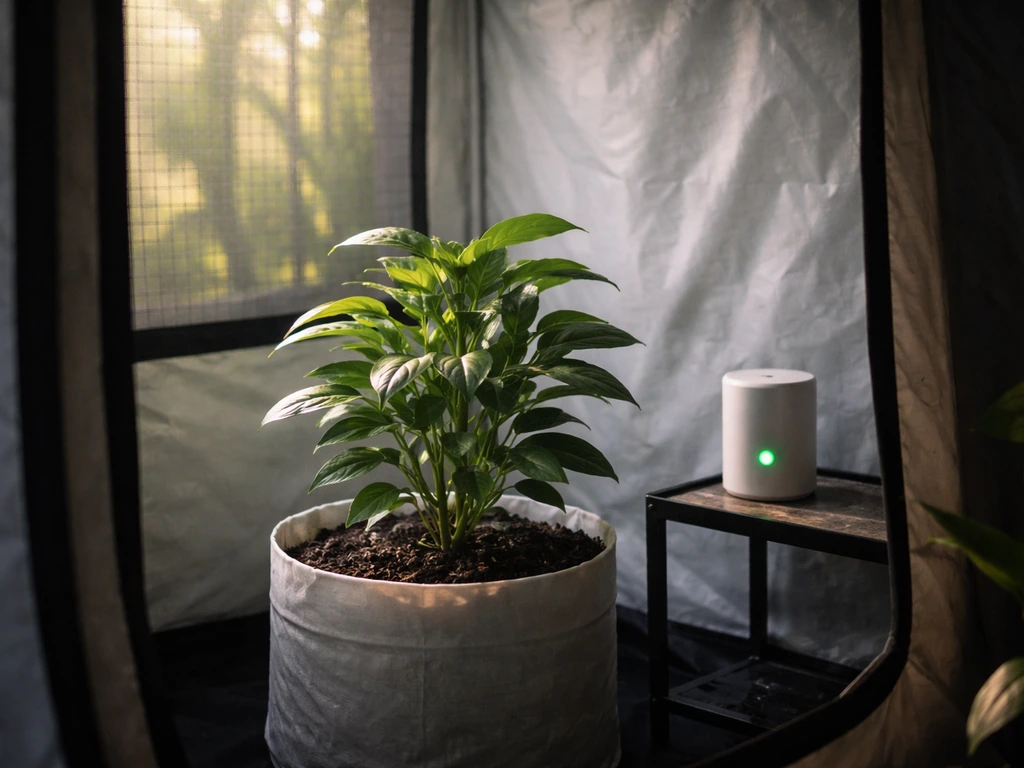
CO₂ is the carbon source the plant uses to build sugars. Outdoor air sits around 420 ppm CO₂ currently, which is generally adequate. In very tightly sealed indoor spaces, CO₂ can drop enough to marginally limit photosynthesis, especially if you have a lot of plants competing in an unventilated room. Simply cracking a window or improving air circulation is usually all that is needed indoors.
Water (H₂O)
Water is both a direct ingredient in photosynthesis and the mechanism by which plants keep their stomata open. Stomata are the tiny pores on leaves through which CO₂ enters. When a plant is water-stressed, those stomata close to conserve moisture, which immediately chokes off CO₂ supply and slows photosynthesis hard. Ironically, too much water is equally damaging: waterlogged soil suffocates roots, stomata close in response, and chlorophyll begins to degrade. Both extremes crush photosynthesis.
Nutrients (especially nitrogen and magnesium)
Chlorophyll, the molecule that actually captures light energy, requires nitrogen and magnesium to be built. Nitrogen deficiency is one of the most common reasons plants show pale, light-green leaves: the plant cannot build enough chlorophyll to run photosynthesis at full capacity. Magnesium deficiency shows up as interveinal chlorosis (the tissue between leaf veins goes yellow while the veins stay green) because magnesium sits at the center of every chlorophyll molecule. Potassium plays a supporting role too, helping move water, nutrients, and the resulting carbohydrates efficiently through the plant.
Practical light guidance for getting photosynthesis right
Outdoors: placement is everything
For outdoor plants, the biggest lever you have is placement. Most fruiting and flowering plants need 6 or more hours of direct sun per day. In the Northern Hemisphere, south-facing positions receive the most consistent light across seasons. Watch for overhanging structures, fences, or trees that create moving shade and reduce your effective light hours. Moving a container plant even a few feet can sometimes double its daily light intake.
Seasonal DLI swings dramatically at higher latitudes. A plant sitting in full sun in July might be getting less than a third of that DLI by November at the same location. If you are trying to keep summer vegetables going into fall, this matters: at some point the light budget simply cannot support the same growth rate, no matter what else you do.
Indoors: grow lights done practically
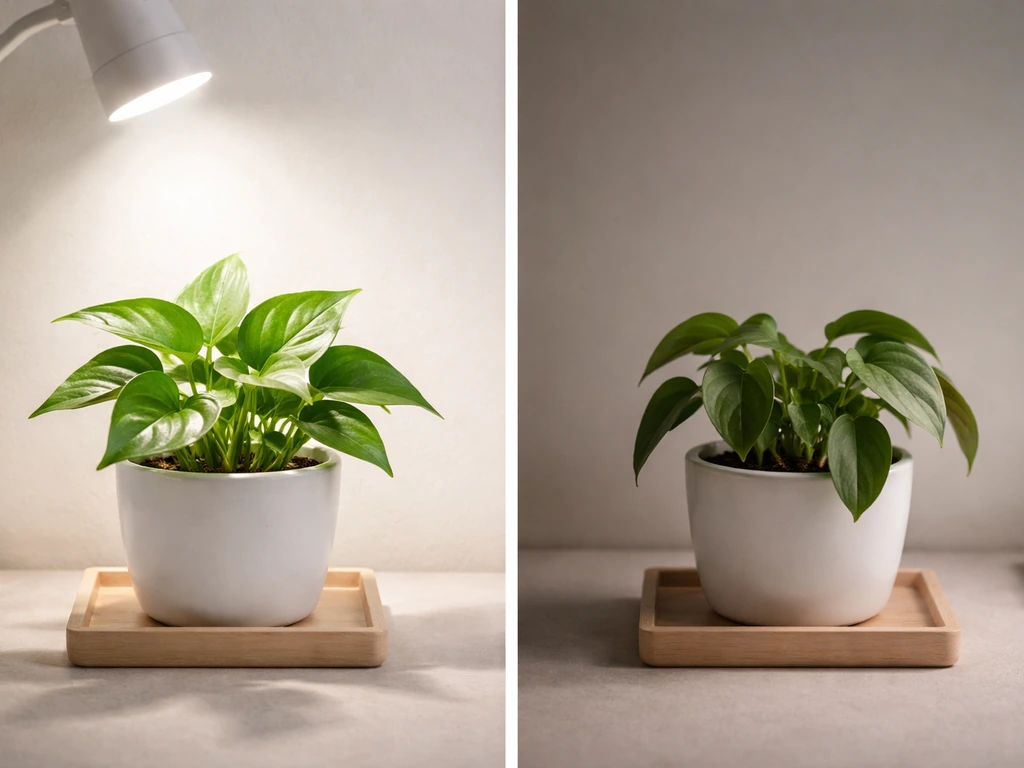
Insufficient light is by far the most common reason indoor plants underperform. A bright windowsill delivers far less PAR than most people assume, especially in winter or in rooms with north-facing windows. The first thing I check when someone shows me a struggling houseplant is where it is sitting relative to a light source.
If you are adding a grow light, there are two things that matter most: spectrum and distance. You want a full-spectrum LED in the PAR range (400 to 700 nm). Distance matters enormously because light intensity drops off quickly as you move the fixture away from the leaf canopy. Most manufacturer recommendations err on the side of caution, so experimenting to find the closest distance that does not bleach or heat-stress leaves is worthwhile. Running the light for 14 to 16 hours a day is a reasonable baseline for most houseplants and herbs, since that compensates for the lower PPFD you typically get from a home fixture compared to outdoor sun.
A rough DLI calculation: multiply your fixture's PPFD at leaf level (in µmol/m²/s) by the number of hours the light is on, then multiply by 3.6. That gives you your daily DLI in mol/m²/day. Most foliage houseplants need a DLI of around 4 to 8, while fruiting plants and herbs want 15 to 25 or higher. Knowing your number takes the guesswork out of whether your setup is actually adequate.
Water and nutrients: do not starve your photosynthesis engine
Watering correctly is less about a fixed schedule and more about understanding your soil's moisture level. The goal is to keep the root zone consistently moist but never saturated. Stick your finger an inch or two into the soil: if it is dry, water thoroughly until it drains from the bottom. If it is still damp, wait. Allowing soil to dry out completely between waterings is fine for drought-tolerant plants but actively limits photosynthesis in most vegetables, herbs, and flowering plants by triggering that stomatal closure response.
Waterlogging is the mistake I see most often with container plants. Pots without drainage holes, or dense soils that do not drain well, create anaerobic root zones that damage roots and cause stomata to close. The plant looks thirsty (wilting, yellowing) even though the soil is soaked. If roots are rotting, no amount of watering will fix photosynthesis until the drainage issue is resolved first.
On the nutrient side, prioritize nitrogen during vegetative growth phases. A balanced fertilizer (look for equal or slightly higher nitrogen ratios) applied at the manufacturer's recommended rate keeps chlorophyll production supported. Do not over-fertilize: salt buildup in soil interferes with water uptake and can create its own form of stress. For plants showing interveinal chlorosis specifically, check whether your soil pH is in range. Iron, manganese, and magnesium all become harder for plants to absorb as pH rises. Most garden plants prefer a pH between 6.0 and 7.0, and a cheap pH meter will tell you quickly if that is your issue.
Why your plant still is not growing even though photosynthesis is happening
This is where a lot of gardeners get stuck. The plant has some light, you are watering it, you fertilized it. Why is it not growing? The answer is usually that one of these variables is off enough to keep net photosynthesis low, or that the sugars being made are not translating into growth for a separate reason. Here is a diagnostic checklist to work through:
- Check light quantity and spectrum first. Is the plant actually receiving adequate PAR? A north-facing window in winter is often not enough for anything other than low-light tolerant species. Weak, elongated (etiolated) stems reaching toward the light source are a clear sign.
- Check watering. Lift the pot if it is a container plant: bone-light means underwatered; surprisingly heavy for its size means overwatered. Check roots for soft, brown, mushy texture that signals rot.
- Check for temperature extremes. Photosynthetic enzymes slow significantly below 50°F (10°C) and above about 95°F (35°C). A plant sitting on a cold windowsill in January can have frozen-out root function even if the air temp feels okay.
- Check for nutrient deficiency by reading the leaf symptoms. Uniform yellowing from older leaves inward points to nitrogen. Yellowing between the veins of newer leaves suggests magnesium or iron. Test your soil pH if you suspect a mineral deficiency and have been fertilizing regularly.
- Check for pests. Spider mites, aphids, and scale insects damage leaf tissue and reduce the effective photosynthetic area. Flip leaves over and look for stippling, webbing, or visible insects.
- Check for disease. Fungal and bacterial infections can destroy chlorophyll-containing tissue, effectively shrinking the plant's solar panel array. Spots, lesions, or powdery coatings on leaves are the signs to look for.
- Check CO₂ availability indoors. If you have a large collection in a small, sealed room, ventilating the space can remove a subtle bottleneck.
- Check whether the plant is recently repotted or root-bound. A severely root-bound plant has compromised water and nutrient uptake, which limits the inputs feeding into photosynthesis even if light is perfect.
Work through this list systematically rather than throwing solutions at the plant randomly. In my experience, most cases resolve at step one or two.
What does not actually boost photosynthesis (the myth-busting part)
Since this site spends a lot of time separating gardening folklore from actual plant science, let me be direct about a few popular claims.
Talking to your plants
The idea here is usually that breathing CO₂ on your plants while you talk gives them extra carbon to photosynthesize. Research from Penn State and others has looked at this, and the honest conclusion is: no, it does not meaningfully help. You would need to talk to a single plant for hours every day to deliver a photosynthetically significant amount of CO₂, and even then the effect would be marginal compared to just opening a window. There is some research suggesting plants respond to vibrations in interesting ways, but none of it translates into the kind of growth improvement you would actually notice in your garden. Your time is better spent adjusting light positioning.
Playing music
Music for plants falls into the same category. Some studies show acoustic vibrations can affect germination rates or stomatal behavior under very specific controlled conditions, but there is no reliable, repeatable evidence that putting on classical music in your grow room boosts photosynthesis or translates to faster, healthier growth in any practical way. If your plants are not thriving, music is not the answer.
Hydrogen peroxide as a photosynthesis booster
Hydrogen peroxide gets promoted as a garden hack for oxygenating roots and killing pathogens. Smoke may seem like it would add carbon, but it does not meaningfully help plants grow the way real inputs like light, water, CO₂, and nutrients do Hydrogen peroxide. It does have some legitimate niche uses, but boosting photosynthesis is not among them. Hydrogen peroxide is often promoted as a growth booster, but it does not help plants grow the way light, water, CO₂, and nutrients do hydrogen peroxide help plants grow. Research on hydroponic systems has found that hydrogen peroxide products can actually inhibit plant productivity and photosynthesis at concentrations that are commonly suggested online. It is not a photosynthesis hack, and at higher concentrations it is actively damaging.
A quick comparison: what actually moves the needle vs. what does not
| Factor | Effect on Photosynthesis | Worth Your Time? |
|---|---|---|
| Increasing light (placement or grow lights) | Direct, major positive effect | Yes, highest priority |
| Correcting watering (avoiding drought and waterlogging) | Direct, significant positive effect | Yes |
| Nitrogen and magnesium fertilization | Supports chlorophyll production directly | Yes |
| Improving indoor CO₂ via ventilation | Minor positive effect in sealed spaces | Easy win, low effort |
| Talking to plants | No measurable effect on photosynthesis | No |
| Playing music | No reliable evidence of growth improvement | No |
| Hydrogen peroxide as a booster | Can inhibit photosynthesis at common doses | No (risk of harm) |
| Adjusting soil pH to improve nutrient availability | Indirect but meaningful for chlorophyll precursors | Yes, if deficiency symptoms are present |
Where to go from here
If you take one thing from this article, make it this: photosynthesis is not a passive background process you can assume is happening adequately. It is an active system with real input requirements, and any one of those inputs can become the constraint that limits everything else. Light is almost always the first thing to examine, especially indoors. Water management is the second. Nutrients come third, because even a well-lit, well-watered plant cannot build chlorophyll without the right minerals in its soil.
Air is also part of the picture in ways that go beyond just CO₂: good airflow around leaves affects temperature regulation and disease pressure, both of which feed back into how efficiently your plants can photosynthesize. Wind and air movement have their own effects on plant development worth understanding if you want to go deeper into the environmental side of this equation.
Once you have the fundamentals running well, plants are pretty good at growing. The biology is elegant and robust when its basic needs are met. Give it the light, water, CO₂, and nutrients it needs, skip the folklore, and you will see the difference.
FAQ
How can I tell whether my plant is limited by photosynthesis versus something else like pests or root damage?
If new growth is stalling while leaves gradually pale or lose vigor, that points toward low net photosynthesis. If growth stops suddenly but leaves look otherwise normal, check roots for rot, inspect for chewing/sap-sucking pests, and confirm temperatures are in a healthy range, since stress can prevent sugars from translating into growth even when photosynthesis is happening.
Does photosynthesis stop completely at night, or can plants still grow after dark?
Photosynthesis does not run at night because it requires light, but plants still grow in many cases. At night they shift into respiration and use stored sugars from daytime production. Growth continues only if the plant’s overnight sugar balance remains favorable, and warm, bright nights can increase respiration so stored sugars get consumed faster.
Why do some plants grow tall but not bushy even if they seem to get light?
When light is too weak or too distant, plants often stretch (internodes lengthen) to reach more photons. That usually means net photosynthesis is low, and the plant prioritizes survival and leaf exposure over building dense structure. Raising light intensity, shortening distance, and increasing daily light integral typically helps more than simply adding hours.
Is more fertilizer always better for boosting photosynthesis and growth?
No. Extra nitrogen can support chlorophyll, but over-fertilizing increases salt buildup, can disrupt water uptake, and can raise osmotic stress that makes stomata close. That reduces CO₂ entry and lowers net photosynthesis, so the plant can look “fed” but actually be constrained.
How do I know whether my light problem is caused by intensity or by too few hours?
Use your daily light integral idea: short photoperiods limit total photons, while low intensity limits photons per second. If your plant looks leggy, focus first on intensity and fixture distance. If it stays small but not stretched, you may mainly need longer duration to raise DLI, especially in winter.
Can CO₂ enrichment help if I already have adequate light and good watering?
It can, but only if CO₂ is the limiting input. Outdoor plants usually have sufficient ambient CO₂, so indoor gains are most likely in tightly sealed setups with strong light and many plants competing. If light is still the bottleneck, adding CO₂ usually wastes money because net photosynthesis won’t rise enough to change growth.
What happens if my plant is water-stressed for only a short time each day?
Even intermittent dryness can trigger stomatal closure, reducing CO₂ intake during parts of the day. A short water gap can noticeably cut daily carbon gain, especially for herbs and vegetables. Consistency in keeping the root zone evenly moist (not saturated) usually improves growth more than trying to “catch up” after long drying periods.
Why do my leaves sometimes yellow while the plant still gets enough light?
Yellowing can come from nutrient and uptake issues, not just light. Interveinal chlorosis often indicates magnesium deficiency, while widespread pale leaves can indicate nitrogen shortage. Also check soil pH, because higher pH can lock out iron and manganese, reducing chlorophyll production and lowering photosynthesis capacity.
Does “opening the window” at night improve growth by giving extra CO₂?
It may help slightly if your indoor air is unusually stale and CO₂ is reduced, but nighttime growth is not photosynthesis driven. Window opening is more valuable for temperature and oxygen balance and for preventing excessively warm or stagnant conditions. If indoor plants underperform, light and DLI still tend to be the biggest drivers.
Why does my indoor plant grow slowly even though it looks healthy and green?
Healthy green leaves can still mean net photosynthesis is not high enough to support new biomass. Common causes are insufficient DLI (especially with bright but indirect windows), light too far from the canopy, or respiration costs that are high due to warm temperatures or poor airflow. Measuring or estimating DLI and checking leaf temperature and airflow often reveals the constraint.
Is it normal for plants to release oxygen in the day, but still seem “stressed” in hot weather?
Oxygen release confirms photosynthesis is occurring, but heat can still reduce net gain by destabilizing enzymes and increasing respiration. If leaves are hot or curling, stomata may close to conserve water, limiting CO₂ and reducing net photosynthesis. Improving airflow and avoiding harsh midday leaf heating often restores growth.
Can I speed up growth by adding more light right away if a plant is not growing?
Sometimes, but jumping too fast can cause stress like bleaching or leaf scorching, which ultimately reduces photosynthesis capacity. A safer approach is to increase either distance (closer gradually), duration, or intensity in steps while watching for leaf color changes and signs of heat stress. This helps you find the constraint without damaging the photosynthetic machinery.
Next Articles
How Do Microorganisms Help Plants Grow: Practical Guide
Learn how microbes in the rhizosphere fix nitrogen, boost phosphorus, aid roots, suppress disease, and how to grow them.
How Does Yeast Help Plants Grow? Safe, Practical Guide
Learn how yeast boosts plant growth via soil microbes, safe dilution and timing, plus myths, limits, and troubleshooting
Do Mushrooms Help Plants Grow? Science and How to Use
Science-backed answer on whether mushrooms help plants grow, plus how to use mycorrhiza, compost, and test results.