The most impactful things you can add to help plants grow are the right nutrients (through compost, fertilizer, or well-rotted manure), improved soil structure (through organic matter, mulch, and aeration amendments like perlite), and appropriate water. Those three inputs cover the vast majority of real plant growth problems. Foliar sprays have a narrower, more specific role, mostly for fixing micronutrient deficiencies fast.
What to Add to Plants to Help Them Grow: Fertilizer, Soil

Marcus Holloway
12 May 2026
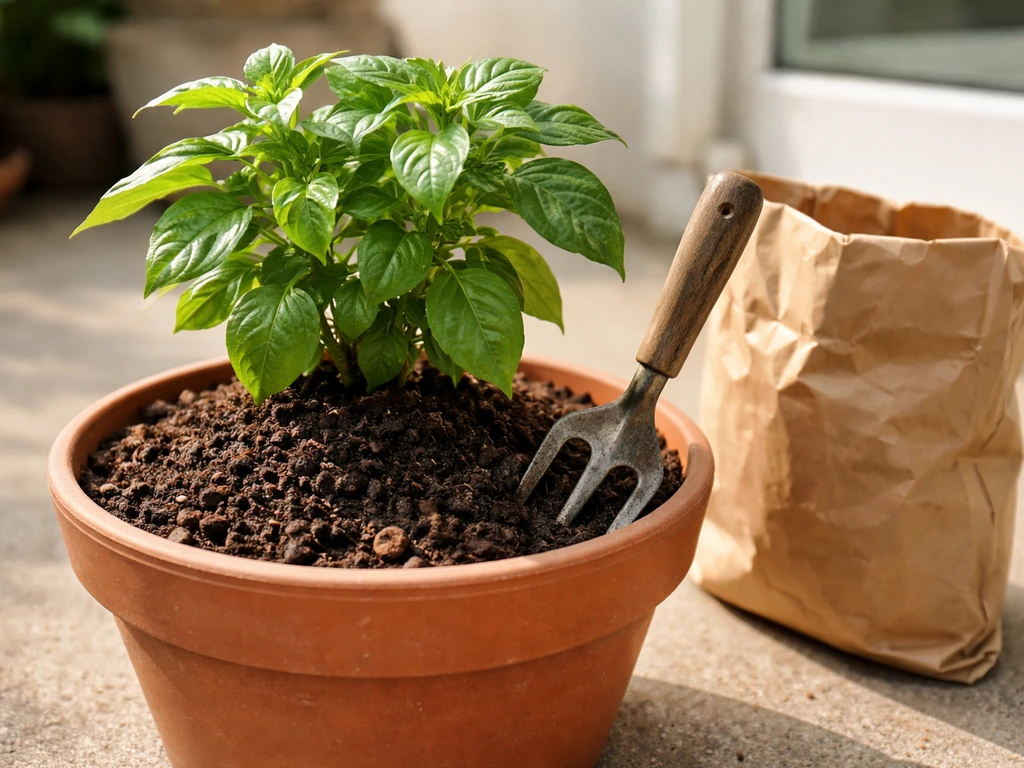
Everything else, from Epsom salts to coffee grounds to sugar water, ranges from mildly helpful in very specific situations to actively counterproductive. If you want to know what’s good for plants to grow, start with the basics: matching light, water, and nutrients to your plant and your soil what's good for plants to grow. For the best plant growth, use clean, properly diluted water and avoid additives unless you have a clear nutrient need sugar water.
Start here: is it nutrients, light, or water?
Before you add anything, you need to know what you're actually trying to fix. A yellowing plant, slow growth, or pale leaves can mean a dozen different things, and fertilizing blindly is one of the most common mistakes gardeners make. University of Missouri Extension makes the point clearly: those symptoms can just as easily come from poor light or overwatering as from a nutrient deficiency. Adding fertilizer on top of a waterlogged root system doesn't help, it makes things worse.
The honest starting question is: does the plant have enough light, are you watering correctly, and is the soil draining properly? If the answer to any of those is no, no fertilizer in the world will compensate. Light drives photosynthesis, which is how the plant produces the energy it actually uses. Nutrients are the building blocks, but without the energy to use them, they just sit there. Get the basics right first, then think about what to add.
Once you've ruled out light and water issues, nitrogen, phosphorus, and potassium are the three nutrients most often limiting plant growth, according to South Dakota State University Extension. A soil test, which typically costs $15 to $30 through a university extension lab, is the most reliable way to find out what your soil actually needs. Without one, you're guessing, and guessing wrong over several seasons leads to nutrient imbalances that are harder to correct than the original deficiency.
The best nutrients to add: compost, manure, and fertilizer
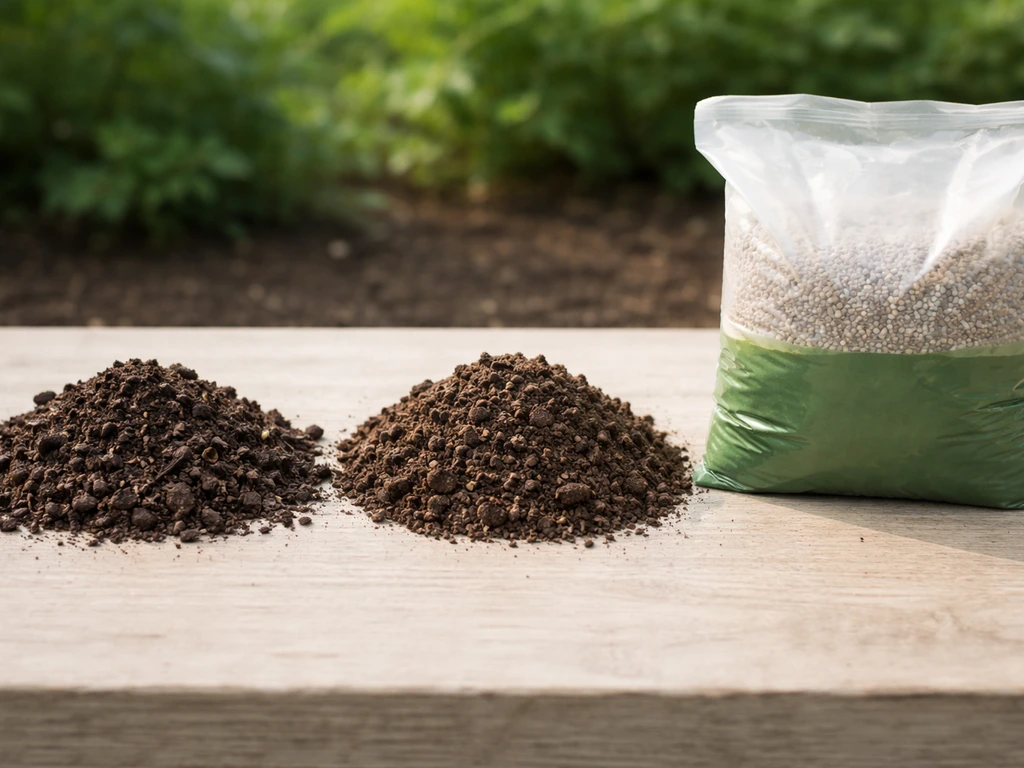
Compost
Finished compost is the single most versatile addition for most home gardens. It improves soil structure, feeds soil biology, and provides a slow, steady release of nutrients. Oregon State University Extension notes that compost with total nitrogen exceeding 2% can replace a portion of your typical nitrogen fertilizer input. That said, compost is not a complete fertilizer and shouldn't be treated as one. It's naturally high in phosphorus and potassium, so if you add heavy quantities every year, those elements can accumulate. Utah State University Extension specifically recommends testing soil before adding compost or manure for this reason.
Well-rotted manure
Manure is a powerful soil amendment, but it has to be well-composted before you use it around food plants. Fresh manure carries pathogen risk and can burn roots with excess ammonia. The nutrient content in manure varies widely depending on the animal, diet, and storage conditions, as UMass Amherst extension research notes, which is why testing manure and soil together gives you a much cleaner picture of what you're actually adding. Like compost, manure tends to be high in phosphorus and potassium but can be lower in plant-available nitrogen than expected.
Balanced and targeted fertilizers
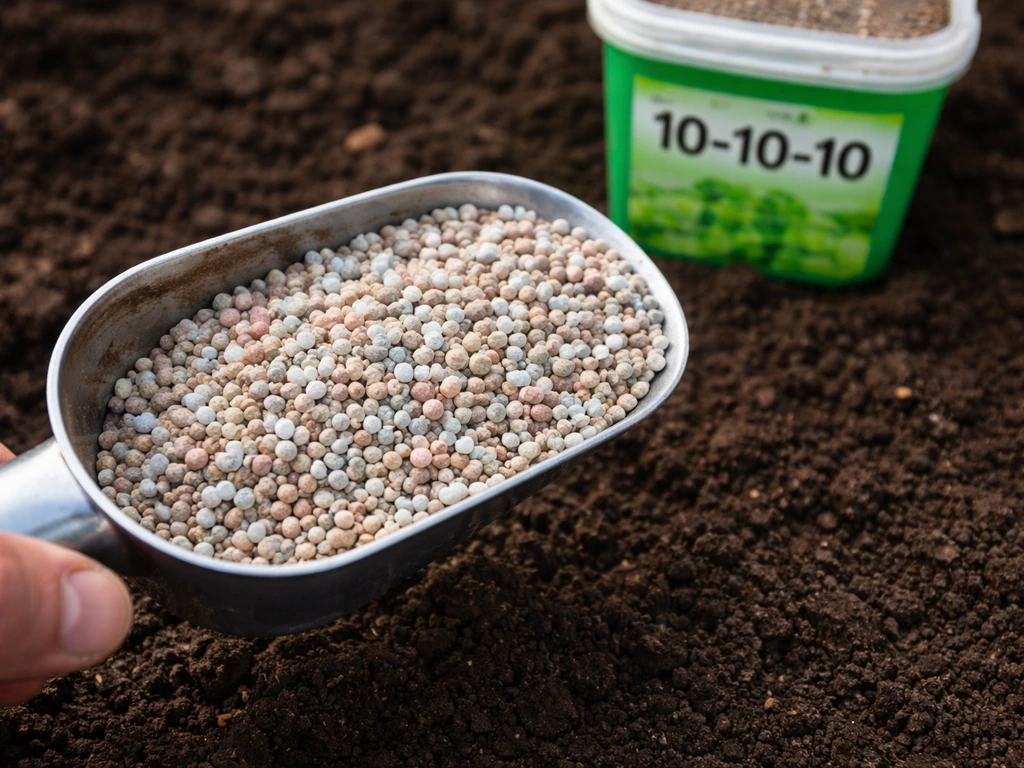
When you know what your soil needs, a correctly matched fertilizer is the most efficient way to fill the gap. Fertilizers are labeled with an N-P-K ratio, and University of Minnesota Extension gives a useful example: if your soil test recommends a 15-5-20 ratio, you look for a product that matches that profile. Using a fertilizer with the wrong ratio means you'll either over-apply phosphorus or under-deliver potassium, even though you think you're doing everything right.
For timing and convenience, the choice between controlled-release and quick-release fertilizer matters. Controlled-release fertilizers use polymer coatings to deliver nutrients gradually over weeks or months, regardless of microbial activity. Slow-release fertilizers depend on microbial breakdown, which makes them more variable. University of Florida IFAS notes that slow-release can occasionally pose a leaching risk during unusual conditions. Quick-release nitrogen, meanwhile, is more prone to leaching in sandy soils during heavy rain or overwatering, according to Penn State Extension. For most home gardeners, a controlled-release granular fertilizer applied at the start of the growing season, topped up with occasional liquid feeding during peak growth, is a reliable and manageable system.
Soil boosters that actually work
Mulch
Mulch doesn't directly feed plants, but it improves the conditions for root growth and nutrient uptake in ways that matter a lot in practice. University of Minnesota Extension explains that a 2 to 4 inch layer of organic mulch moderates soil moisture by reducing evaporation, suppresses weeds that compete for nutrients, and supports healthy root development. One catch: University of Wisconsin horticulture guidance notes that applying organic mulch too early in spring can keep soil cold longer and slow plant growth. Wait until the soil has had a chance to warm before mulching in spring.
Aeration amendments
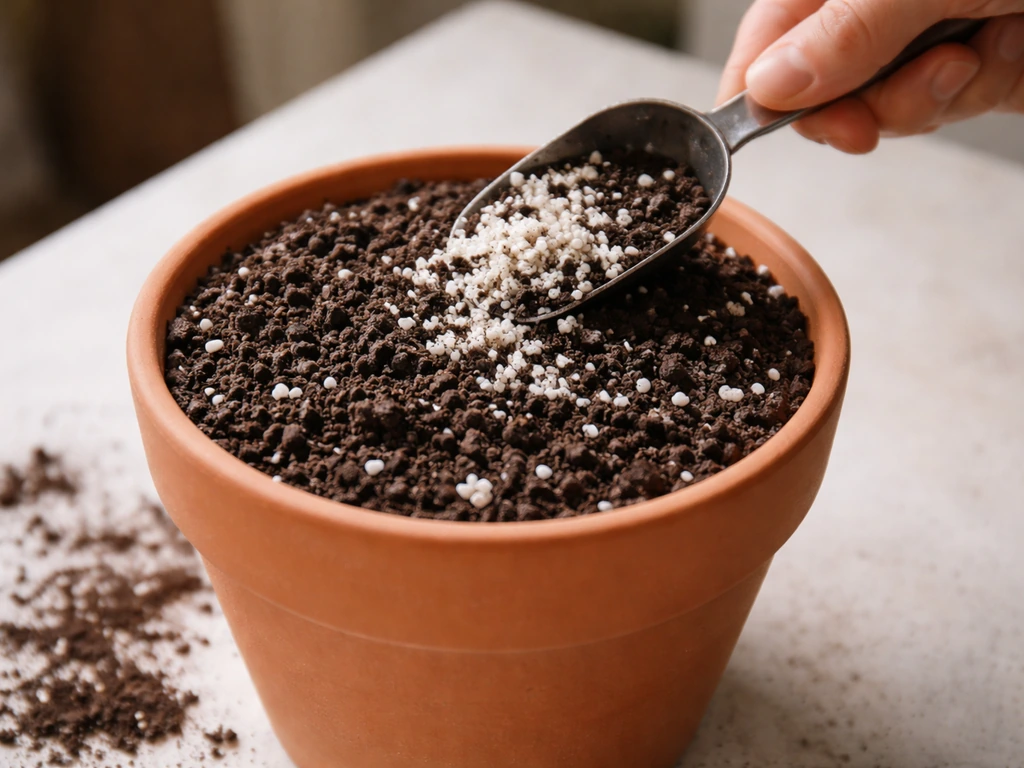
For containers and heavy clay soils, physical structure matters as much as chemistry. Perlite, pumice, vermiculite, and coarse sand act as spacers that increase porosity and keep roots from sitting in waterlogged media. Oregon State University Extension describes these inorganic amendments as primarily improving aeration rather than feeding plants directly, but that improved aeration has downstream benefits for root function and nutrient uptake. Adding perlite to a dense potting mix or worked into clay garden beds is one of the easiest, most reliable moves you can make for struggling plants.
Biochar and gypsum: conditional tools
Biochar is worth mentioning because it's had a lot of attention in the last few years. USDA research notes it can improve drainage, aeration, and water retention, but biochar made from manure should be used with caution in already saline soils. It's not a universal fix. Gypsum is sometimes marketed as a soil improver, but University of Nevada, Reno Extension is clear that gypsum helps specifically with sodium-affected soils and does not lower soil pH, despite what you might read online. If your problem isn't sodium accumulation, gypsum won't do much.
Foliar feeding: useful tool, narrow window
Foliar fertilization means spraying diluted nutrients directly onto plant leaves. Penn State Extension is direct about this: the major route for nutrient uptake is through roots, not leaves. Foliar sprays are genuinely useful for correcting specific micronutrient deficiencies quickly, particularly iron, zinc, and manganese, where root uptake can be blocked by soil pH or competing elements. University of Minnesota Extension notes they're also used for phosphorus and potassium delivery in early spring when cool soil temperatures slow root absorption. But as a general growth strategy, foliar feeding isn't particularly efficient and carries real burn risk if done wrong.
A classic example is iron chlorosis, where leaves yellow because iron is bound up in the soil and unavailable to roots. Utah State University Extension recommends spraying with ferrous sulfate or chelated iron in the evening or on a cool, cloudy day to reduce burn risk. Alabama Cooperative Extension adds a useful temperature rule for all foliar applications: avoid spraying when air temperatures exceed 85°F, as burn risk rises sharply above that threshold. Always apply foliar sprays in the morning or evening under calm conditions, and make sure you've actually confirmed a micronutrient deficiency before going this route. Penn State Extension recommends tissue analysis for confirmation before starting foliar programs.
How to choose the right addition for your plant
The right addition depends on three things: what kind of plant you're growing, what growth stage it's in, and what symptoms (if any) you're seeing. Here's a practical framework:
| Situation | Best addition | Notes |
|---|---|---|
| New garden bed, no soil test yet | Compost worked into the top 6–8 inches | Test soil before adding manure or fertilizer to avoid P buildup |
| Established vegetable garden, mid-season | Balanced liquid fertilizer or slow-release granular matched to soil test ratio | Water plant before applying; apply to moist soil |
| Container plant growing slowly in spring/summer | Balanced controlled-release fertilizer or half-strength liquid feed every 2–4 weeks | Don't fertilize in winter when growth slows (Nov–March for houseplants) |
| Yellowing leaves (suspected iron deficiency) | Foliar spray with chelated iron | Confirm with tissue test; spray in evening, below 85°F |
| Heavy clay soil, poor drainage | Perlite, pumice, or organic matter worked in | Improves aeration and root function before nutrient amendments help |
| Tomatoes or peppers with blossom end rot | Consistent watering and correct calcium levels, not Epsom salt | Blossom end rot is a calcium issue, not magnesium |
Growth stage also matters. Plants in active vegetative growth need more nitrogen. As they shift toward flowering and fruiting, phosphorus and potassium become more important. Fertilizing heavily in late autumn or winter for most temperate-climate plants is wasteful at best: Oregon State University Extension specifically notes that houseplants don't need fertilizer from November through March when growth naturally slows.
How to apply additions safely
Timing, dosage, and method determine whether what you're adding actually helps or causes damage. Follow these principles:
- Water before you fertilize. Applying fertilizer to dry soil or dry roots concentrates salts and dramatically increases burn risk. MU Extension advises watering the plant first and applying fertilizer once the soil has recovered some moisture.
- Match the product to the soil test recommendation. If your test calls for 15-5-20 and you apply a 10-10-10, you'll oversupply phosphorus. University of Minnesota Extension is specific about this: using the wrong ratio creates new imbalances.
- Start with the lower end of the recommended dose and observe. You can always add more. You can't un-apply excess fertilizer.
- For granular fertilizers near foliage, sweep or blow granules off leaves immediately and water in. University of Maryland Extension notes that granular fertilizer left on leaves causes scorch, especially in heat.
- For foliar sprays, apply early morning or evening, below 85°F, under calm dry conditions. Avoid spraying stressed, drought-affected, or recently transplanted plants.
- Test soil every two to three years. West Virginia University Extension recommends this as a standard practice to catch nutrient accumulation before it becomes a problem.
Signs you're under-feeding vs over-feeding
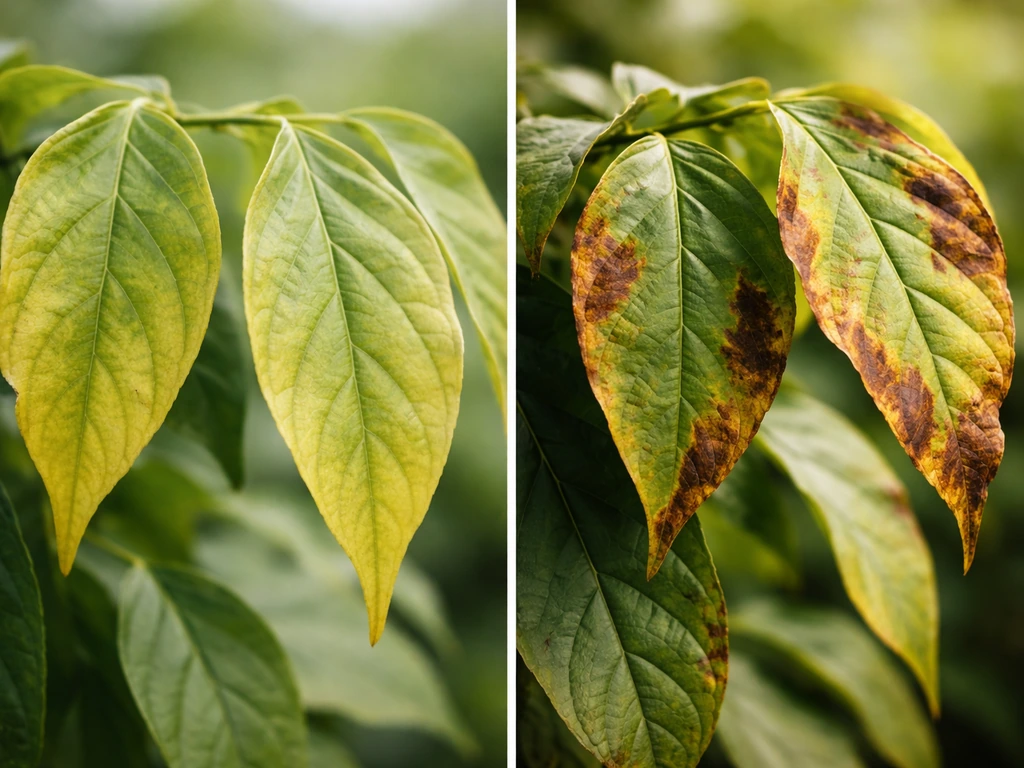
Under-feeding tends to show up as slow growth, pale or yellowing older leaves (nitrogen deficiency moves from the bottom up), and delayed flowering. Over-feeding shows up as burned leaf edges, leaf scorch, crusty salt deposits on the soil surface of containers, or a sudden collapse in a plant that seemed fine. WVU Extension notes that different nutrient deficiencies produce characteristic patterns, so it's worth looking carefully rather than just adding more of everything. A soil or tissue test removes the guesswork.
Common myths worth skipping
A few popular "additions" get heavy promotion online but don't hold up well under scrutiny.
- Epsom salt for tomatoes: This one is persistent. Epsom salt is magnesium sulfate. Blossom end rot, which is what most people are trying to fix, is caused by calcium deficiency, not magnesium. North Dakota State University Extension explains that adding Epsom salt can actually worsen the problem because excess magnesium competes with calcium uptake. Save it for a confirmed magnesium deficiency, not as a general tonic.
- Coffee grounds as fertilizer: University of Missouri Extension notes that research on spent coffee grounds is mixed and that adding fresh grounds can actually tie up nitrogen as soil microbes work to decompose them. SDSU Extension adds that the polyphenols, tannins, and caffeine in grounds may be harmful to some plants and soil organisms. If you want to compost them, fine. Dumping them directly around plants as a nitrogen boost isn't reliable.
- Sugar water for growth: Plants make their own glucose through photosynthesis. University of Minnesota Extension is clear that sugar is not a fertilizer substitute. Soil microbes will eat the sugar, mostly consuming carbon, and the net effect on plant nutrition is minimal to zero.
- Talking to plants or playing music: These make great conversation but the honest answer is that CO2 from your breath near plants has a negligible effect at home-gardening scale, and there's no robust body of evidence showing music frequency or conversation produces meaningful, repeatable growth improvements in typical garden conditions. Light, water, and nutrients do the work.
The pattern with most of these myths is that they either address a very narrow, specific situation and get overgeneralized, or they're rooted in a partial truth that gets stretched beyond what the science actually supports. The fundamentals, correct nutrients matched to a soil test, good soil structure, appropriate water, and adequate light, are genuinely less exciting but they're what actually moves the needle. Getting those right will do more for your plants than any supplement, trick, or hack.
If you're exploring related questions, what specific liquids feed plants best, what to mix into your water, or which soil amendments make the biggest structural difference, those are all worth digging into separately because the details change depending on your setup. If you're wondering what to put in water to help plants grow, start by focusing on proper watering practices and only add nutrients when a deficiency is confirmed. Start with the basics, because the best liquids for plants depend on what nutrients you are actually missing what liquids help plants grow best. But the core principle stays the same: diagnose before you treat, and test before you guess.
FAQ
Can I add fertilizer even if I’m already using compost or manure?
Not always. If you already have nutrient-rich compost, adding more fertilizer can push nutrients too high and cause leaf burn or salt buildup in containers. Use a soil test (or at least check the product label rates) and only “top up” with fertilizer after you confirm what nutrient is actually limiting.
How do I avoid overdoing compost long-term?
Yes, but do it strategically. Compost typically releases nutrients slowly, so frequent heavy doses can accumulate phosphorus and potassium over time, especially in gardens that rely on compost every year. Track what you add, and re-test soil every few years to prevent buildup.
Why do my plants look yellow even though I fertilized? (What else should I check?)
Start with the symptoms and then verify. Yellowing can come from low nitrogen, but it can also be caused by root stress from poor drainage, incorrect pH, or inconsistent watering. For container plants, also check the pot drainage holes and whether the mix has become compacted and waterlogged.
What should I change if I keep feeding but nutrients seem to “disappear” in my yard?
Treat it as an entirely different “problem” from fertilizing. In sandy soils, quick-release nitrogen can leach after heavy rain or frequent watering, so plants may look underfed even though nutrients were applied. Switch to controlled-release for steadier delivery, and reduce the frequency of watering between feeds.
How can I tell if I’m over-fertilizing (especially in pots) and fix it?
Yes, especially on containers and indoors. Overfeeding often shows up first as crusty residues on the pot surface or burned leaf edges, and it can be worse when there is no leaching during watering. Periodically flush containers with clean water until it runs freely from the bottom, then resume at a lower rate.
Are coffee grounds, sugar water, or Epsom salts ever worth adding?
If you’re not sure, don’t rely on popular home remedies. Coffee grounds, sugar water, and similar additions can either provide tiny nutrient amounts that are not in the right form, or they can disrupt soil conditions and microbes. The safer step is to test soil (and pH) and then choose an amendment matched to the gap.
When is foliar fertilizing actually the right tool, and when is it a bad idea?
Use foliar feeding only as a targeted rescue, and only after confirming a micronutrient issue (like iron chlorosis). Spray during cool conditions and avoid high heat, windy conditions, or strong sun. Also, remember foliar nutrients do not replace the plant’s root-based nutrition needs.
Should I use perlite, biochar, or gypsum if my plant is struggling?
Yes, but choose based on what you’re growing and what you’re trying to improve. For drainage and aeration problems, coarse particles like perlite or pumice help. For correcting sodium-related issues, gypsum can help specifically with sodium-affected soils, but it will not lower pH when pH is the main limitation.
How do I know whether biochar will help my soil instead of making it worse?
Not without context. Biochar can improve water retention and aeration, but it is not automatically “fertilizer,” and biochar made from manure may be a poor fit in already saline soils. If you try biochar, start small, mix it into the soil, and monitor plant response over weeks rather than days.
What’s the simplest decision rule for when I should add nutrients versus adjust light and watering?
It depends on what your plant needs and your growing conditions, but the most reliable approach is to diagnose first. If growth is slow because of low light or poor watering, nutrients will not fix it. If light and watering are correct, then use a soil test to pick the right N-P-K ratio and application timing.
Why do I sometimes see little improvement after fertilizing early in the season?
Many plants respond fastest to proper fertilization when soil temperature and root activity are adequate. If the soil is cold, roots may absorb nutrients slowly, so foliar micronutrient correction can be useful in specific cases, but for general feeding you’ll usually get better results by waiting until the plant is actively growing.
Next Articles
What Liquids Help Plants Grow Best: A Practical Guide
Learn which liquids best boost plant growth: water quality, nutrient solutions, fertilizer dosing, and fixes for stalled
How Do Microorganisms Help Plants Grow: Practical Guide
Learn how microbes in the rhizosphere fix nitrogen, boost phosphorus, aid roots, suppress disease, and how to grow them.
How Does Yeast Help Plants Grow? Safe, Practical Guide
Learn how yeast boosts plant growth via soil microbes, safe dilution and timing, plus myths, limits, and troubleshooting