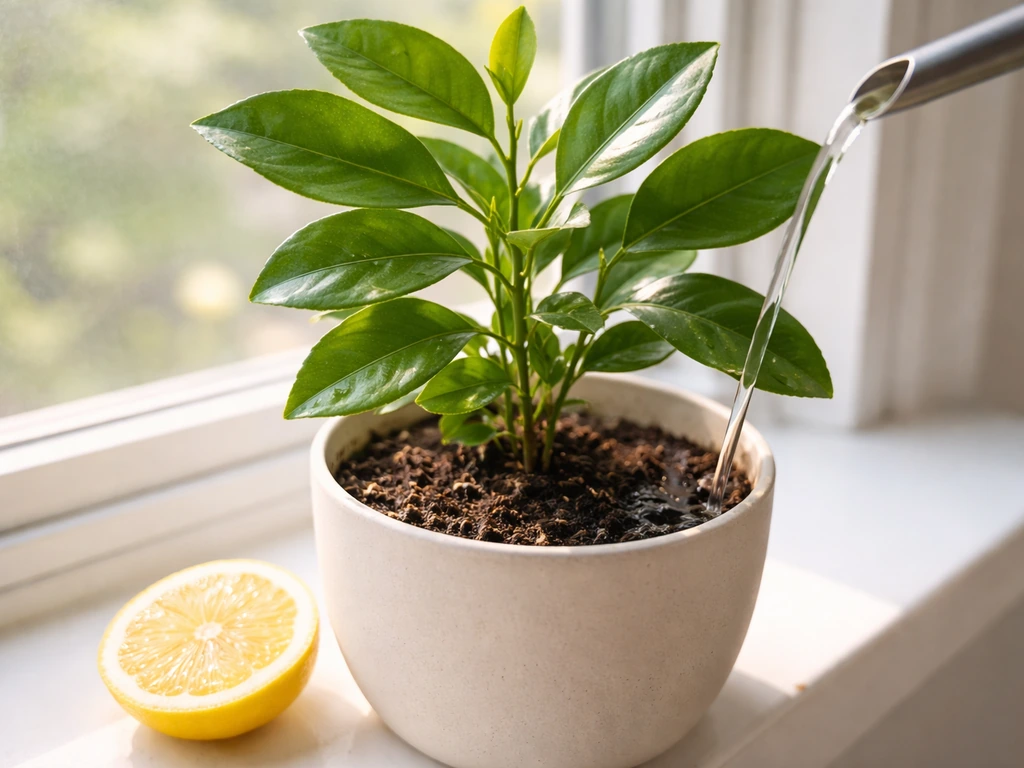
Lemon juice does not help plants grow in any meaningful way. It is not a fertilizer, it does not provide nutrients in useful quantities, and squeezing it into your watering can is not a shortcut to healthier plants. In very specific situations, the citric acid in lemon juice can nudge soil pH slightly downward, which might benefit a plant already struggling in overly alkaline soil. But that benefit is narrow, short-lived, and far better achieved with a proper soil amendment. For most plants, regular lemon juice applications will cause more harm than good.
Does Lemon Juice Help Plants Grow? Science and Safe Use

Marcus Holloway
2 May 2026
What lemon juice actually does to soil and plants
Lemon juice is acidic, sitting around pH 2 to 3, and it contains citric acid as its main active compound. A PubMed-indexed study quantified citric acid concentrations in lemon juice and other fruit juices to compare citric acid levels across products [citric acid in lemon juice is its main active compound](https://pubmed. ncbi. nlm.
nih. gov/18290732/). When you add it to soil or water, the most immediate effect is a small, temporary drop in soil pH. The keyword there is temporary.
Soil has something called buffering capacity, which is its natural ability to resist pH changes. Most garden soils, especially those with clay or organic matter, will absorb the acid and bounce back toward their baseline pH within days. In calcareous (lime-rich) soils, the buffering effect is even stronger, and lemon juice has almost no lasting impact at all.
Citric acid is also an organic acid, and there is genuine science showing that organic acids released by plant roots in the rhizosphere can help mobilize phosphorus, zinc, iron, and other nutrients in calcareous soils. A 2023/2024 PMC review discusses organic acid concentration thresholds and mechanisms for how these rhizosphere acids mobilize phosphorus under dryland soil conditions [organic acids released by plant roots in the rhizosphere can help mobilize phosphorus in calcareous soils](https://pmc. ncbi. nlm.
nih. gov/articles/PMC12804238/). That is a real mechanism. But the key word is concentration.
Controlled greenhouse research uses precise molar concentrations like 0. 1 mM citric acid in carefully managed conditions. Pouring lemon juice from a bottle is nothing like that. You have no idea what concentration you are applying, and the delivery is not targeted to where roots can actually use it.
Beyond pH effects, lemon juice adds soluble salts to the root zone. Over repeated applications, salt accumulation raises the electrical conductivity (EC) of the soil, which creates a drought-like stress for roots even when the soil is wet. That is the opposite of growth. You can also damage foliage directly if any juice contacts leaves, causing surface burn.
When acidity helps and when it harms
Soil pH matters enormously because it controls whether nutrients are chemically available to roots or locked up in forms plants cannot absorb. Most vegetables and flowers do best between pH 6.0 and 7.0. Acid-loving plants like blueberries, azaleas, gardenias, and rhododendrons prefer a pH between 4.5 and 5.5. If your soil tests significantly above those ranges, acidification can genuinely help by unlocking iron, manganese, and other micronutrients that become unavailable at high pH.
Here is where lemon juice sounds tempting. If you have a blueberry bush going yellow in alkaline soil, and you pour lemon water on it, you might see a brief improvement. But that improvement comes from a fleeting pH dip, not from lemon juice doing anything uniquely beneficial. And if you keep applying it thinking more is better, you will start accumulating salts and organic acids at concentrations that stress roots rather than help them. The dose absolutely determines whether the effect is helpful or harmful.
For plants growing in already-appropriate or slightly acidic soil, adding lemon juice is pointless at best and damaging at worst. Pushing pH lower than a plant's tolerance range triggers different nutrient lockouts (aluminum and manganese can become toxic at very low pH) and causes the same visible symptoms you were trying to fix: yellowing, stunted growth, and poor vigor.
The nutrient reality: lemon juice is not plant food

People sometimes assume lemon juice acts like a liquid fertilizer because it comes from a plant and contains minerals. Here is what lemon juice actually contains per 100 grams: roughly 144 to 160 mg of potassium, 15 to 21 mg of phosphorus, and trace amounts of iron and other micronutrients. Compare that to a standard balanced fertilizer, which delivers nutrients in gram-level quantities per application and is formulated in ratios that match plant uptake needs.
| Nutrient | Lemon juice (per 100 g) | Typical fertilizer dose (per application) |
|---|---|---|
| Potassium (K) | ~144–160 mg | Hundreds to thousands of mg, depending on product |
| Phosphorus (P) | ~15–21 mg | Hundreds of mg in balanced NPK |
| Nitrogen (N) | Negligible | Primary macronutrient in all plant fertilizers |
| Iron (Fe) | Trace only | Chelated iron products deliver targeted amounts |
| Salt load added | Yes (increases EC) | Formulated to minimize excess salt accumulation |
Nitrogen, the macronutrient plants need most for leaf and stem growth, is essentially absent from lemon juice. Without nitrogen, phosphorus, and potassium in the right ratios, you cannot drive meaningful plant growth no matter how much lemon juice you add. Any perceived improvement after using lemon water is almost certainly from the extra watering itself, from a slight pH shift that unlocked an existing nutrient, or simply from placebo-level observation bias. Lemon juice is not plant food.
If you insist on using citrus: safer ways and dilution guidance
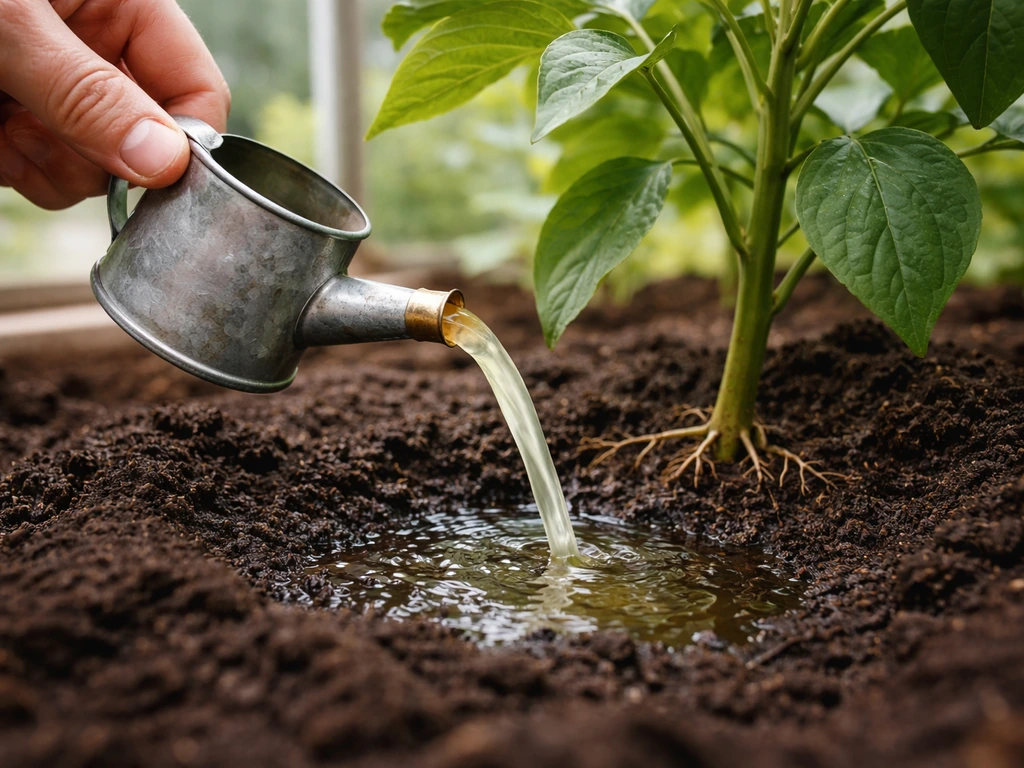
If you want to experiment anyway, and you have confirmed through a soil test that your soil is genuinely too alkaline for the plant you are growing, here is how to minimize the risk. Use fresh lemon juice diluted heavily in water: no more than one teaspoon of lemon juice per gallon of water. Apply it to the soil only, never to foliage, and do it no more than once every two to three weeks. Check the soil pH with a meter or strips after a couple of weeks to see if there is any change. If your soil has high buffering capacity or is calcareous, you likely will not see any measurable difference at all.
Do not use lemon juice on seedlings, in hydroponic systems, or on any plant already showing stress symptoms. Stressed roots have less tolerance for acid swings and salt load. And do not combine lemon juice with fertilizer in the same application, because the interaction can alter nutrient availability in unpredictable ways.
Honestly, if your goal is to lower soil pH, lemon juice is a poor tool for the job compared to what is actually available. It is similar to the situation with vinegar, which has a comparable acidity but also fails to produce lasting pH change in buffered soils. Vinegar can also change soil pH only temporarily, and it can leave behind salts that stress roots. Elemental sulfur worked into the soil is the most reliable long-term option for acidifying.
It works slowly (weeks to months) but produces a durable shift because soil bacteria convert it into sulfuric acid over time. For faster results, sulfur-based fertilizers or iron sulfate can help, particularly for container plants or raised beds where buffering capacity is lower.
What actually helps plants grow
If you are trying to get real growth results today, spending your energy on lemon juice is the wrong move. The factors that genuinely drive plant growth are well understood, measurable, and actionable.
- Soil pH in the right range for your specific plant: test first with an inexpensive pH meter or strip kit, then amend with sulfur (to lower) or lime (to raise) based on the result.
- Balanced fertilizer with nitrogen, phosphorus, and potassium: a standard 10-10-10 or species-appropriate NPK product gives plants the macronutrients lemon juice cannot.
- Consistent, appropriate watering: overwatering and underwatering are the most common causes of poor plant performance, not lack of citrus.
- Adequate light: most indoor plants are chronically underlit. Growth-spectrum LED panels or simply moving a plant closer to a bright window can produce dramatic improvements.
- Healthy soil structure: compost and organic matter improve drainage, nutrient retention, and microbial activity, all of which benefit root growth more than any household liquid additive.
- Correct potting or garden soil: container plants in old, compacted, or depleted mix will struggle regardless of what you add to the water.
It is worth noting that this same logic applies to other household liquids people experiment with: beer, wine, Gatorade, and vitamins all get floated as plant growth boosters, and they all share the same core problem. They are not formulated for plant nutrition, they introduce sugars or salts or compounds at the wrong concentrations, and any apparent benefit is almost always explained by improved watering habits or coincidence. Do vitamins help plants grow by providing nutrients, but most people are using them in ways that do not match how plants actually take up nitrogen, phosphorus, and potassium plant growth.
Troubleshooting: signs lemon juice harmed your plant and how to recover
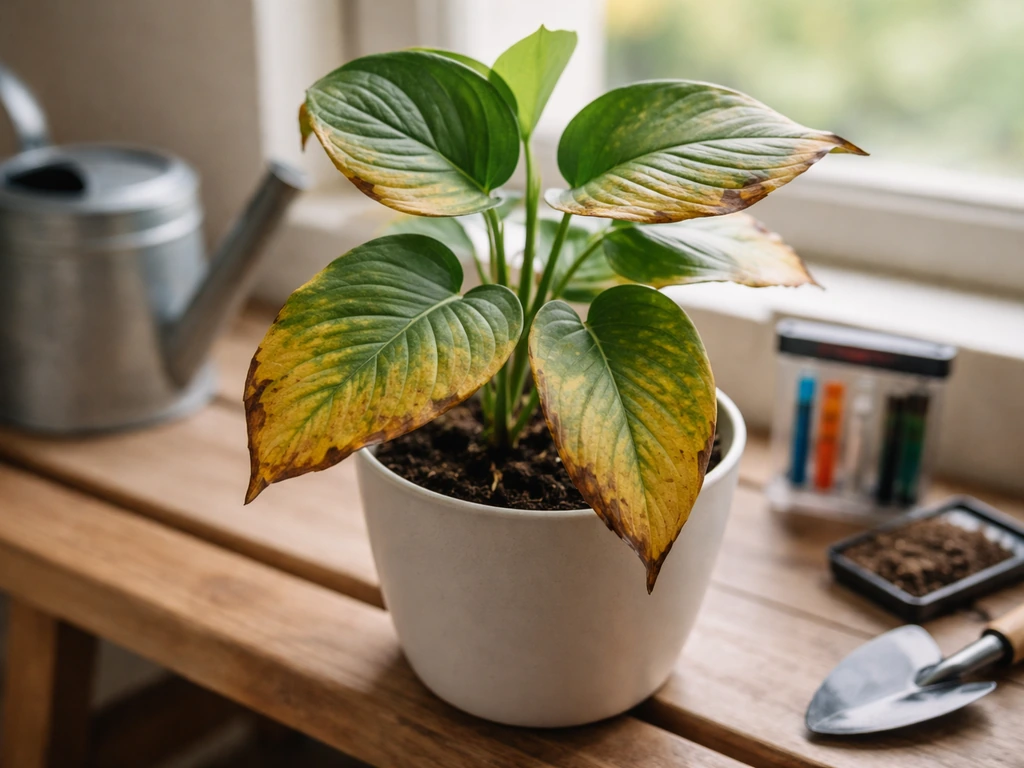
If you have already been using lemon juice on your plants and something looks off, here is how to read the symptoms and what to do.
| Symptom | Likely cause | What to do |
|---|---|---|
| Yellowing leaves (interveinal chlorosis) | Nutrient lockout from pH imbalance or salt stress | Test soil pH. Flush with plain water. Apply chelated iron or balanced fertilizer if needed. |
| Wilting despite moist soil | Salt accumulation raising EC, creating root stress | Flush the root zone with plain water 2–3 times to leach excess salts. Reduce or stop lemon applications. |
| Brown leaf edges or tips | Foliage contact with acid or salt burn at roots | Remove damaged leaves. Water with plain water. Keep future watering at soil level only. |
| Stunted or no new growth | Acid or salt stress inhibiting root function | Stop all lemon juice. Do a soil test. Resume a proper fertilizer routine once the plant stabilizes. |
| Soil smells sour or fermented | Organic acid buildup and possible anaerobic conditions | Allow soil to dry slightly between waterings. Aerate if in a container. Repot if necessary. |
Recovery from lemon juice overuse is usually straightforward if you catch it early. Flush the soil thoroughly with plain, pH-neutral water (aiming for a pH around 6.5 to 7.0 from the tap). Let the plant stabilize for a week or two before introducing any fertilizer. Then build a proper care routine: right light, right watering frequency, and a balanced fertilizer appropriate for your plant type. That combination will do more for your plant in one month than any amount of lemon juice ever could.
The persistent appeal of lemon juice as a plant booster is understandable. It is natural, cheap, and it feels like you are doing something active for your plants. But the science consistently points in the same direction: soil testing and targeted amendments beat household acid experiments every time. Wine is not a reliable way to improve plant growth, and any effect is usually explained by changes in the soil rather than nutrients from the wine itself. Test your pH, match your care to what your specific plant actually needs, and save the lemons for better uses.
FAQ
How often would I need to use lemon juice to see real plant growth, not just a brief pH change?
For most soils, you would not see meaningful growth from lemon juice at any reasonable frequency. The pH effect is short-lived because soil buffering brings pH back within days, while repeated dosing adds salts and acids that can stress roots. If you need a lasting change, use soil amendments made for pH adjustment and confirm with a soil test afterward.
Can I use lemon juice on alkaline soil to fix yellow leaves on houseplants?
Sometimes the symptoms can improve briefly if the problem is nutrient lockout from high pH, but lemon juice is an unreliable and potentially harmful way to do it. Yellowing can also come from watering issues, root damage, nitrogen deficiency, or pests. The safer step is to test soil or growing media pH, confirm the plant’s preferred range, then address the actual limiting factor.
Is diluted lemon water safer than straight lemon juice?
Dilution reduces salt and acid load, but it does not make lemon juice a safe “plant food” or a reliable pH treatment. Even diluted applications can accumulate salts over time and still cause leaf burn if it contacts foliage. If you experiment, keep it soil-only and limit frequency, then stop if you see worsening growth or increasing stress.
Does lemon juice work in hydroponics, or is it only a soil issue?
It generally does not work well in hydroponics because there is little buffering compared with soil, so pH and salt levels can swing quickly and unpredictably. Citric acid and other components can also interfere with nutrient balance and uptake. Hydroponic systems typically require measured pH control solutions and nutrient formulations designed for recirculating water.
What pH should I aim for when correcting with acid, and when is it going too far?
Match the target to the plant, commonly about pH 6.0 to 7.0 for many vegetables and flowers, and roughly 4.5 to 5.5 for acid-loving plants like blueberries and azaleas. If you push below a plant’s tolerance, you can trigger new problems like micronutrient toxicity and different nutrient lockouts. Re-test after changes and stop further acidification if you overshoot.
How can I tell if lemon juice is causing salt buildup or root stress?
Look for reduced vigor, persistent wilting even when soil looks wet, slower growth than expected, and in containers, a crust or residue on the soil surface. Measuring electrical conductivity (EC) in pots can confirm salt accumulation. If you suspect buildup, flush with plain water and pause any acidic additives.
Can I combine lemon juice with fertilizer to help plants recover faster?
It’s best not to combine them in the same application. Changing acidity and adding salts can alter nutrient availability, making deficiencies or toxicities more likely. Wait until you have stabilized the plant, then use a balanced fertilizer appropriate for the plant type.
Is there any situation where lemon juice is actually a good idea?
Only narrow cases where you have verified via testing that soil is too alkaline for a specific plant, and you are trying a very limited, soil-only pH nudge with careful monitoring. Even then, a controlled product or proper amendment (like sulfur-based options) is usually more predictable and safer for long-term results.
What should I do if I already applied lemon juice and my plant looks worse?
Stop adding lemon juice, then flush the media thoroughly with pH-neutral water to remove excess acid and salts. Give the plant time to stabilize, then resume a normal care routine. After stabilization, use a fertilizer that fits the plant’s needs rather than continuing household acid experiments.
Could lemon juice prevent fertilizer problems or help plants absorb nutrients better automatically?
Not reliably. Nutrient uptake depends on the full nutrient form and the overall nutrient solution balance, not just acidity. Lemon juice provides no meaningful nitrogen and delivers only small amounts of other nutrients, so it cannot replace proper fertilization or targeted corrections based on soil or media testing.
Next Articles
Does Vinegar Help Plants Grow? Science, Risks, and Fixes
Learn if vinegar helps plants grow, why it can harm roots, and safer fixes for pH, nutrients, and watering.
Does Beer Help Plants Grow? Benefits, Risks, and Better Alternatives
Find out if beer helps plants grow, the real risks, and safer alternatives like compost, proper nutrients, and watering.
How Do Microorganisms Help Plants Grow: Practical Guide
Learn how microbes in the rhizosphere fix nitrogen, boost phosphorus, aid roots, suppress disease, and how to grow them.