Daylight bulbs can help plants grow, but with a big caveat: most standard household daylight LED bulbs don't put out nearly enough intensity to do serious work, and the label 'daylight' on the packaging tells you almost nothing useful about whether the bulb will actually support photosynthesis. That said, for low-light tolerant houseplants placed very close to the bulb, a decent daylight LED can absolutely make a difference. The question is whether your specific setup has enough of what plants actually need: the right spectrum, enough intensity, and enough hours per day.
Do Daylight Bulbs Help Plants Grow? What to Know
Marcus Holloway
18 May 2026
What 'daylight bulb' really means for plant growth
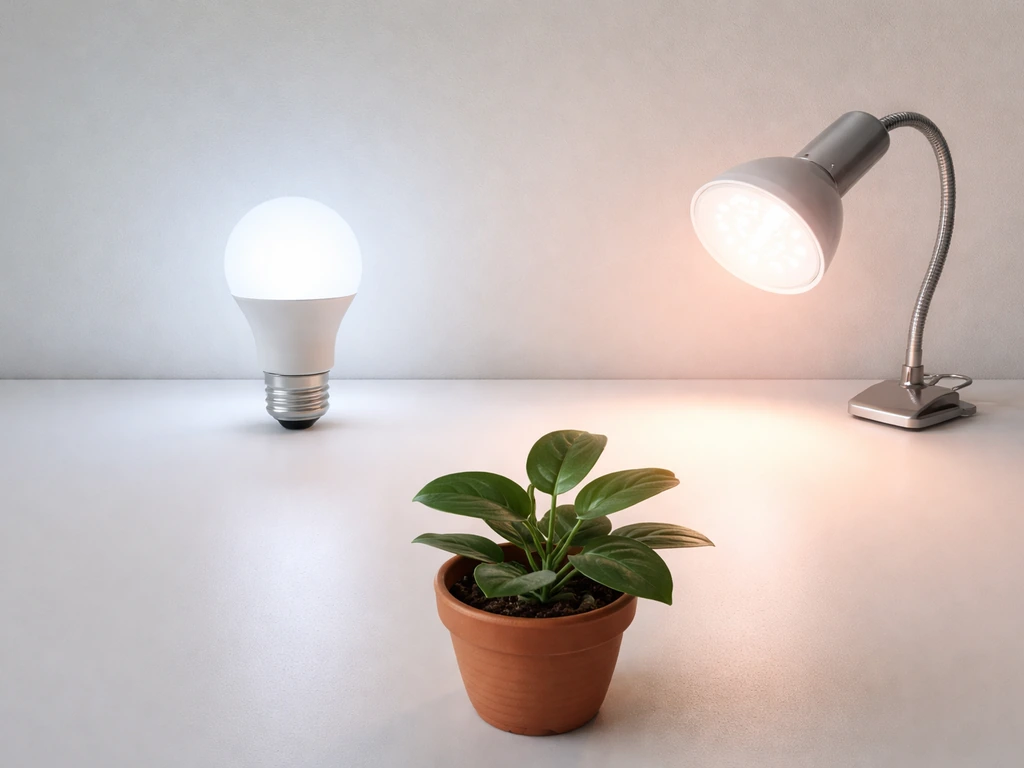
When a bulb is labeled 'daylight,' it refers to its color temperature, usually around 5000K to 6500K on the Kelvin scale. That number tells you the bulb produces a cool, bluish-white light that resembles midday sunlight. Compared to a 'warm white' bulb at 2700K, a daylight bulb does emit more light in the blue part of the spectrum, which plants use heavily during vegetative growth. So the label isn't meaningless. But here's the myth-busting part: 'daylight' on the box is a marketing term describing how the light looks to human eyes, not a certification that the bulb delivers the wavelengths or intensity that plants need to thrive.
A 5000K daylight bulb and a purpose-built grow light can both look bright to you, but the grow light may deliver three to five times more usable plant energy at the same distance. The name on the packaging doesn't change the physics. What actually matters for plants is PAR (photosynthetically active radiation), measured in a unit called PPFD (micromoles per square meter per second, or µmol·m⁻²·s⁻¹). Lumens, which appear on every bulb box, measure brightness for human vision. They're a rough proxy at best, and often misleading when you're trying to grow plants.
How plants use light: spectrum, intensity (PAR), and duration
Plants absorb light in the 400 to 700 nanometer range, which is the full visible spectrum from violet through red. This range is what scientists call PAR, and the intensity of light within this range at a surface is measured as PPFD. Different wavelengths do different jobs: blue light (around 400 to 500nm) drives compact, leafy vegetative growth, and red light (around 600 to 700nm) is critical for flowering and fruiting. A daylight bulb skews blue-heavy, which is actually useful for seedlings and foliage plants. It's genuinely short on the red end, which matters more if you're trying to get a plant to flower or fruit indoors.
Intensity is just as important as spectrum, and this is where most household bulbs fall short. Low-light houseplants like pothos or snake plants can survive on PPFD values of 50 to 150 µmol·m⁻²·s⁻¹. Herbs and vegetables want 200 to 400 µmol·m⁻²·s⁻¹ or more. A typical 60-watt-equivalent LED bulb placed 12 inches above a plant might deliver 50 to 100 µmol·m⁻²·s⁻¹ on a good day. Move it to 24 inches and that number drops dramatically because light intensity falls off with the square of distance.
Duration matters too. University of Minnesota Extension recommends 12 to 16 hours of artificial light daily for indoor plant starting, and the University of Maine Cooperative Extension pushes that even higher, to 16 to 18 hours per day for plants grown entirely under lights. Most houseplants sitting near a window with a supplemental bulb do fine at 12 to 14 hours. The photoperiod (the daily light/dark cycle) also signals plants about seasons, so giving them a consistent dark period each night is worth keeping in mind.
Can regular vs daylight vs LED daylight bulbs grow plants? Real-world expectations
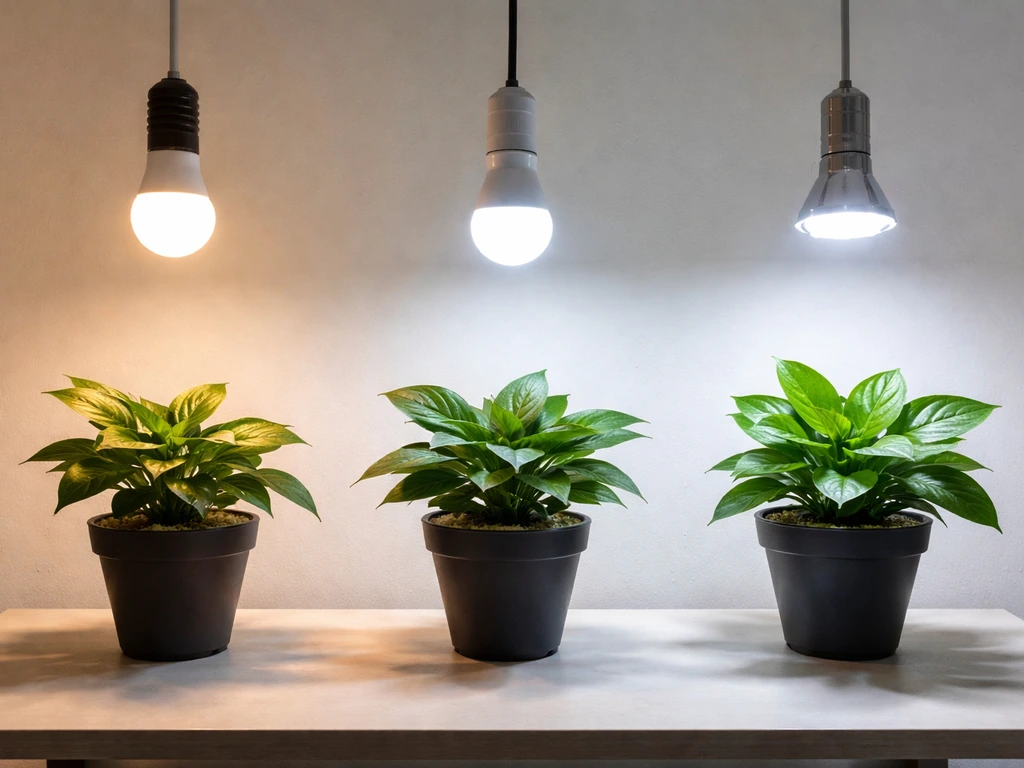
Let's be direct about what each type of common bulb can realistically do for plants indoors.
| Bulb Type | Color Temp | Spectrum Usefulness | Realistic PPFD at 12in | Best for Plants |
|---|---|---|---|---|
| Warm white LED (2700K) | Warm yellow-orange | Low: heavy red, weak blue | 30–80 µmol·m⁻²·s⁻¹ | Minimal; only very low-light plants |
| Daylight LED (5000–6500K) | Cool white/blue-white | Moderate: good blue, less red | 50–120 µmol·m⁻²·s⁻¹ | Low-light houseplants, seedling supplements |
| High-output daylight LED (20W+, 5000K+) | Cool white | Moderate-good: stronger blue | 100–200 µmol·m⁻²·s⁻¹ | Herbs, leafy greens, seedlings at close range |
| Full-spectrum grow light LED | Varies (often 3000–5000K) | Best: balanced red + blue | 200–600+ µmol·m⁻²·s⁻¹ | Herbs, vegetables, flowering plants |
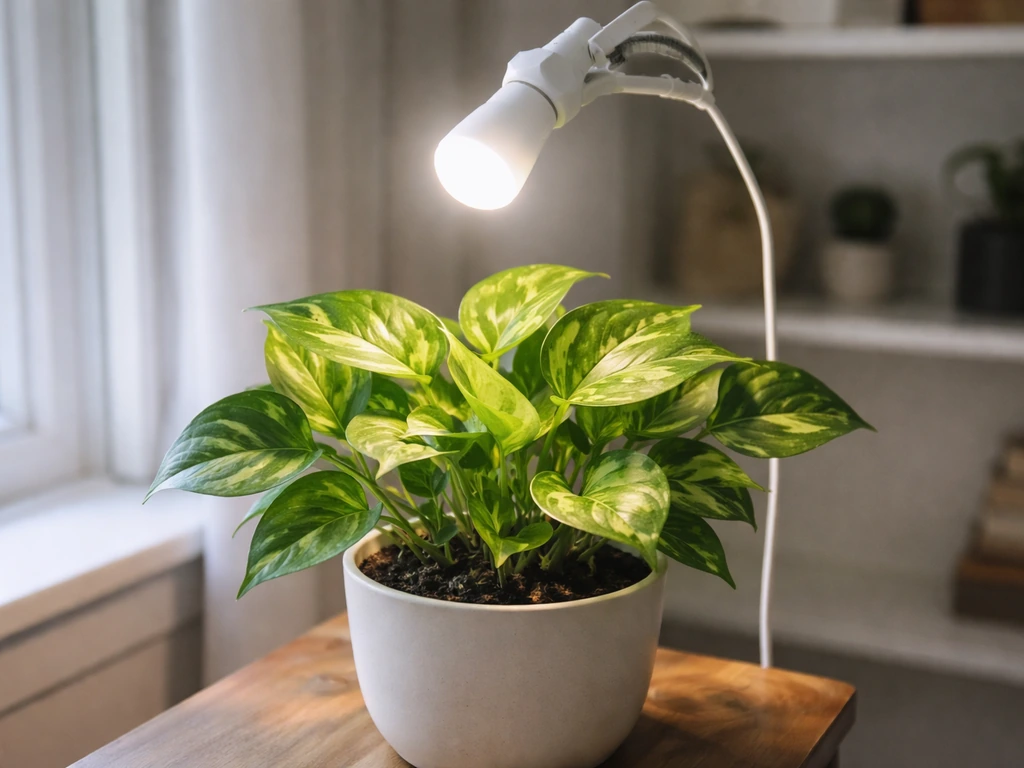
A standard 10-watt daylight LED bulb in a regular lamp socket is not going to grow tomatoes or make your basil thrive without a window nearby. But that same bulb positioned 6 to 8 inches above a pothos, fern, or peace lily can genuinely prevent the decline you'd see in a dark corner and support slow but real growth. The more light-hungry the plant, the more a basic household bulb is going to disappoint you regardless of what it says on the box.
How to set up bulb lighting today: placement, distance, and hours per day
Getting your setup right comes down to three things: getting the bulb close enough, running it long enough, and aiming it well. Here's how to do all three without overcomplicating it.
Distance from plant to bulb
This is the single most common mistake. Most people hang a lamp at ceiling height or place a floor lamp several feet from a plant and wonder why nothing improves. Light intensity drops off fast with distance. For a standard daylight LED bulb, you want the light source 6 to 12 inches above the plant canopy for meaningful results. For a higher-output bulb (20 watts or more), 12 to 18 inches is workable. If you're using a clip-on or adjustable desk lamp, position it so the bulb is directly above or very close to the plant, not at an angle from across the room.
Hours per day
Run your daylight bulb for 12 to 16 hours a day for plants that get no other natural light. For most indoor plants with limited natural light, the frequency of light you provide is usually best thought of as the number of hours per day you run the bulb, not as a higher or lower “frequency” setting. If the plant is near a window with some daylight exposure, 10 to 12 hours of supplemental light from a bulb is usually enough. A simple plug-in outlet timer costs a few dollars and removes the guesswork entirely. Set it, forget it, and let it run the same schedule every day. Consistency matters more than perfection.
Bulb type, wattage, and positioning tips
- Use a 5000K to 6500K daylight LED rated at 15 watts or higher for better output
- A reflector or clip-on gooseneck lamp directs more light toward the plant instead of wasting it on the ceiling
- Multiple bulbs aimed at one area add up: two 15W bulbs close together can outperform one 40W bulb from twice the distance
- Rotate your plants every few days so all sides get even light exposure
- Avoid placing bulbs more than 18 inches from the plant canopy if using standard household bulbs
How to tell if your bulb is working: quick checks and troubleshooting
You don't need expensive equipment to tell whether your lighting setup is doing its job. Plants give pretty clear signals if you know what to look for.
Signs the light is insufficient
The most obvious warning sign is etiolation: long, stretched, pale stems reaching toward the light source. University of Minnesota Extension points to this leggy growth as a classic symptom of insufficient light. Other signs include pale or yellowing foliage, slow or no new growth, and leaves that are smaller than normal. If your plant is doing all of these things despite being under your daylight bulb, the setup isn't delivering enough intensity. The fix is almost always to move the bulb closer, add more bulbs, or switch to a stronger light source.
Signs things are working
- Compact, upright new growth without stretching toward the light
- Deep green foliage color consistent with the plant's normal appearance
- New leaves emerging at a reasonable pace (every 1 to 3 weeks for most houseplants)
- Root growth visible through the pot's drainage holes, indicating active plant metabolism
- No wilting or pale coloration despite being far from a window
Quick light intensity check
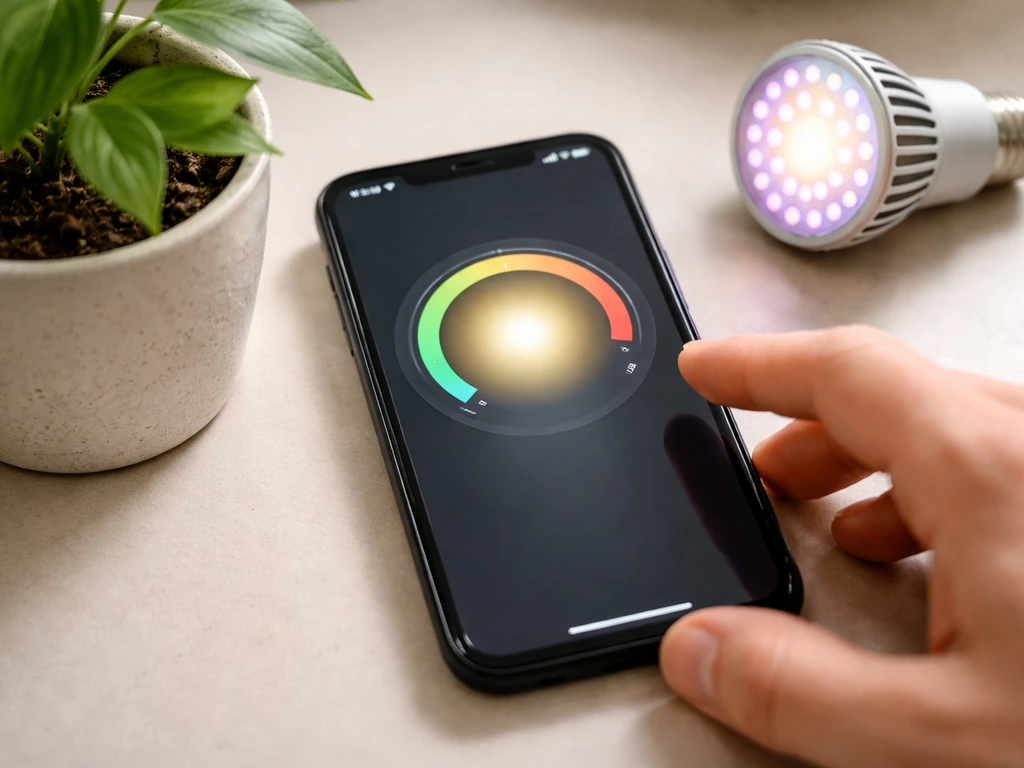
If you want a rough measurement without buying a PAR meter, a free lux meter app on your phone (using the front camera) can give you a ballpark lux reading. It's not precise for PAR, but as a rule of thumb, 2000 to 3000 lux at the leaf surface is roughly adequate for low-light plants, and 5000 lux or more is better for herbs and seedlings. A proper PAR meter (which reads PPFD in µmol·m⁻²·s⁻¹) gives you the most accurate picture, and entry-level models are available for around $30 to $60. Full-spectrum quantum sensors are the gold standard but not necessary for most home setups.
Best options when bulbs won't cut it: when to switch to true grow lights
If you've moved the bulb close, you're running it 14 to 16 hours a day, and the plant still looks stretched and pale, it's time to acknowledge that a household daylight bulb isn't the right tool for the job. If your daylight bulb still seems to fall short, it may be worth comparing it with a true grow light approach that delivers the light levels plants need. This isn't a failure of effort; it's a limitation of the equipment. Certain plants and goals simply need more than a standard bulb can deliver.
Plants that genuinely need grow lights
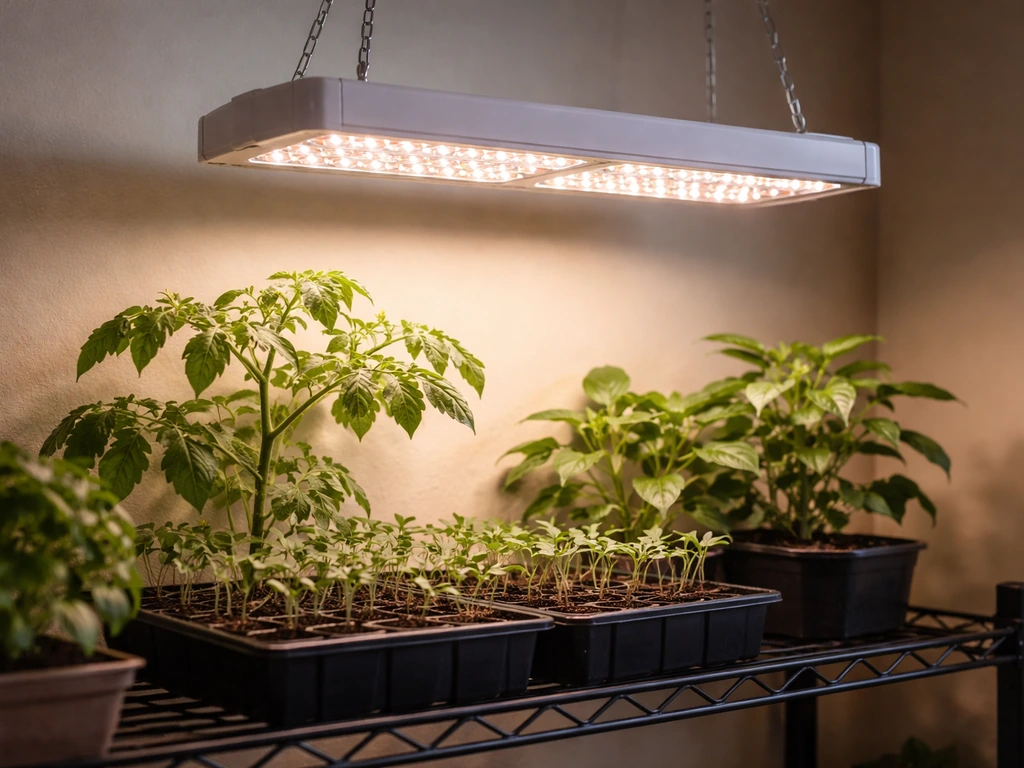
- Tomatoes, peppers, cucumbers, and other fruiting vegetables
- Herbs grown for heavy production (basil, cilantro, dill)
- Seedlings being started for outdoor transplant
- Succulents and cacti that need high-intensity light to maintain compact form
- Orchids and other flowering tropicals that need red-spectrum light to bloom
What to look for in a real grow light
A purpose-built LED grow light gives you a full-spectrum output with both the blue and red wavelengths plants need, at intensities that household bulbs can't match. Look for a light that lists actual PPFD values at specified distances, not just wattage. A quality 45-watt LED grow panel can deliver 300 to 500 µmol·m⁻²·s⁻¹ at 18 inches, which is several times what a comparable daylight bulb produces. Bar-style LED grow lights have become more affordable and give even, wide coverage across a shelf or grow tent. If you're investing time into growing plants indoors, a dedicated grow light is worth the jump.
One note worth making: the question of whether a bulb helps plants grow is fundamentally about light energy reaching the plant. This is a different conversation from other environmental factors like soil nutrition, watering rhythm, and temperature, which all matter too. And it's very different from the kinds of unconventional inputs that come up elsewhere, like whether sound frequencies or electrical stimulation influence plant growth. Those are interesting questions in their own right, but a plant suffering under a dim bulb needs more photons first, not more stimulation of other kinds.
The bottom line: daylight LED bulbs are a legitimate, practical tool for supporting low-light houseplants and supplementing window light. They're not magic, and the word 'daylight' on the box isn't a promise. But with the right placement, duration, and plant match, they genuinely work. When they don't, a real grow light is the honest next step.
FAQ
Can I use a daylight bulb to make herbs or vegetables actually produce indoors?
Sometimes, but not reliably. A daylight bulb can support leaves on plants that tolerate lower light, yet it usually lacks enough red intensity and overall PPFD to sustain flowering or fruiting. If your goal is blooms, check whether the bulb provides a high-output PPFD at your target distance, or plan on switching to a grow light designed for flowering.
Do daylight LED bulbs work because they are “bright” like a 60W bulb?
No. The “equal watt” or “60-watt equivalent” number is for how bright the bulb is to people, not how much photosynthetically useful light reaches the plant. For plant growth, you need enough PPFD at the leaf surface, which is why distance and beam spread often matter more than the marketing wattage.
What should I trust more, lumens or the Kelvin temperature (5000K to 6500K)?
Avoid relying on lumen ratings alone. Lumens weight the spectrum toward what humans see, so a cool daylight bulb may show high lumens but still deliver weak PAR. Use PPFD or, if you must estimate, measure lux at the leaf surface as a rough sanity check and then adjust distance.
If I use a desk lamp or clamp light with a daylight bulb, will it work the same way?
Yes, but placement should follow the same rule: keep the bulb close enough that the leaf surface receives the needed intensity. A clamp or desk lamp can work well if it positions the emitter 6 to 12 inches above the canopy. If you point it from the side or leave it near ceiling height, the intensity drops too much.
How many hours per day should I run a daylight bulb for my houseplants?
It depends on the plant and whether it gets window light. As a general approach, if the plant is near a window, supplemental lighting often only needs around 10 to 12 hours. Fully lit by artificial light typically needs longer, commonly 16 to 18 hours for growth under lights, with a consistent dark period each day.
At what point should I stop troubleshooting and buy a grow light?
If the plant stays leggy and pale after you move the bulb closer and run it long enough, the issue is likely insufficient PPFD or an inappropriate spectrum for your plant’s growth goal. At that point, adding more distance changes (moving closer, adding another lamp) may help, but you may still need a dedicated grow light.
Are phone lux meter apps accurate enough to decide if my bulb is strong enough?
A lux meter app can help you catch major problems, but it is not a substitute for PPFD. Apps read visible light in a way that depends on the phone camera and lighting spectrum, so convert your measurements into a trend: compare “before vs after” when you adjust distance or add another bulb.
If I adjust the bulb schedule today, when will I see changes in growth?
Try it as a short diagnostic, but expect the symptoms to take time. Etiolation and slow growth usually develop over weeks, not days. Make one change at a time (like distance or hours), keep the schedule consistent with a timer, and observe new growth at the top for the next couple of growth cycles.
Do plants need a real dark period, or can I leave the daylight bulb on all the time?
Yes. Too little dark time or inconsistent on-off cycles can stress some plants and disrupt normal growth rhythms. Use a plug-in timer so the photoperiod stays steady, and avoid leaving the light on overnight in a way that eliminates a predictable dark period.
Can I combine multiple daylight bulbs instead of buying one stronger setup?
You can, as long as the added bulbs actually raise PPFD at the canopy. If you place multiple bulbs far apart and at different angles, you may still end up with uneven intensity. Aim for even coverage over the leaves, and prefer adding closer or more directional sources over increasing distance.
Next Articles
What Frequency Helps Plants Grow: Water, Fertilizer, Light
Find the right watering, feeding, and light timing to help plants grow, with signs to fix an off schedule.
Does Fungi Help Plants Grow? How to Boost Health and Size
Yes. Learn how mycorrhizal fungi boost plant size and health by improving nutrients, drought tolerance, and resilience,
How Can Fungi Help an Orchid Grow: A Practical Guide
Learn which mycorrhizal fungi help orchids root, access nutrients, resist stress, and how to apply them safely today.