Yes, blue light genuinely helps plants grow, but not in the way most people assume. It is not just "more light." Blue wavelengths (roughly 400 to 500 nm) trigger specific biological responses in plants: they drive photosynthesis, signal seedlings to develop properly, open stomata so gas exchange can happen, and shape how a plant physically grows. That said, blue light alone is rarely enough to grow a thriving plant. It works best paired with red light, at the right intensity, and for the right duration. Blue light can support growth, but the key is the right spectrum and enough intensity rather than just turning a light to green does green light help plants grow. If you are shopping for a grow light or troubleshooting slow indoor plant growth, this is what you actually need to know.
Does Blue Light Help Plants Grow? Practical LED Guidance

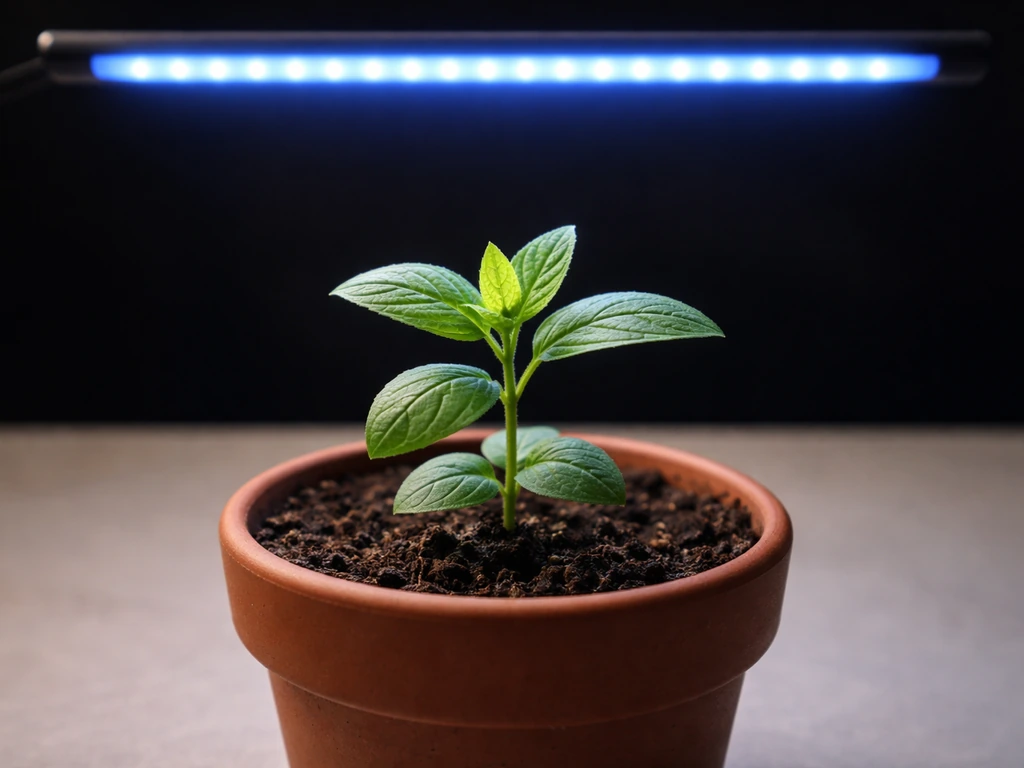
What blue light actually does for plants
Plants do not just absorb light passively. They have dedicated light-sensing proteins that detect specific wavelengths and trigger very different responses depending on what they detect. Blue light is picked up primarily by two families of photoreceptors: cryptochromes (CRY1 and CRY2) and phototropins (phot1 and phot2). Each one handles a different job.
Phototropins handle short-term, rapid responses. When blue light hits phototropins, the plant bends toward the light source (phototropism), and guard cells in the leaf surface open up the stomata, the tiny pores through which CO2 enters and oxygen exits. Open stomata means active gas exchange, which means active photosynthesis. This is not a minor side effect. Stomatal opening is a critical bottleneck in a plant's ability to fix carbon and grow. Blue light essentially unlocks that bottleneck.
Cryptochromes take a broader, slower role. They regulate gene transcription, connecting blue light perception to the plant's overall developmental program. One of their most important jobs is de-etiolation, pulling a seedling out of its dark-grown, pale, spindly state and into healthy, compact, green growth. Seedlings grown without blue light tend to stretch abnormally, produce pale leaves, and develop poorly. Blue light, perceived by cryptochromes, is what tells the plant to start developing like a mature, photosynthesizing organism rather than a seedling groping around in the dark.
In practical terms, blue light promotes compact, sturdy growth with well-developed leaves, and it keeps stomata open so the plant can actually use whatever light it is receiving. A plant without adequate blue light tends to be leggy, weak-stemmed, and less efficient at photosynthesis, even if the overall light level looks bright.
What "blue LED light" means in practice
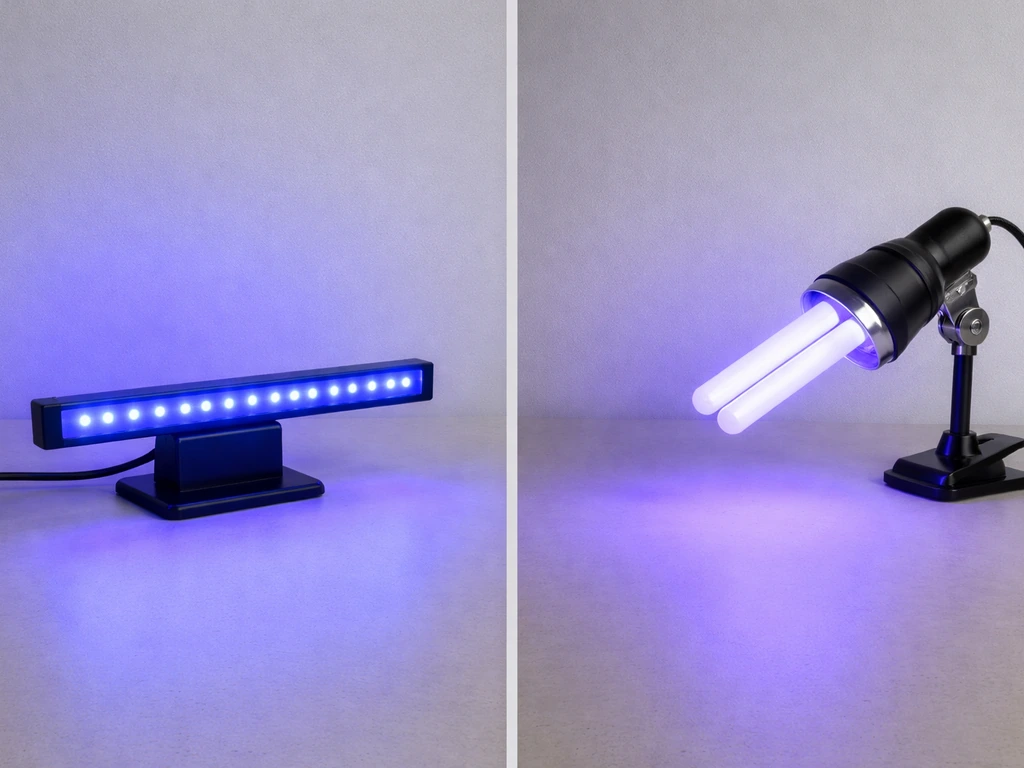
When people search for blue LED grow lights, there are a few different things they might encounter. It helps to know what you are actually buying before you spend money on it.
True blue LEDs emit in the 430 to 470 nm range, which sits squarely in the blue spectrum that activates phototropins and cryptochromes. Some grow lights are marketed as "blue" but actually emit a broader peak that extends into violet or cyan, which still provides useful blue-range energy. Then there are "blurple" grow lights, the classic purple-colored LED panels that combine blue and red LEDs without much green or white. These were popular a few years ago and they do work, but they produce an unpleasant purple glow and make it hard to visually assess plant health.
Full-spectrum LED grow lights are now the more practical choice for most growers. Full-spectrum LED grow lights often include white, blue, and red wavelengths, which can help answer whether white light helps plants grow does white light help plants grow. They include blue wavelengths (often in the 450 nm range), red wavelengths (usually around 660 nm), and varying amounts of green and white light. Some also include far-red (730 nm) to extend the Emerson enhancement effect. A full-spectrum light gives you blue's developmental and stomatal benefits alongside red's photosynthetic efficiency, all in one unit that looks normal under regular lighting.
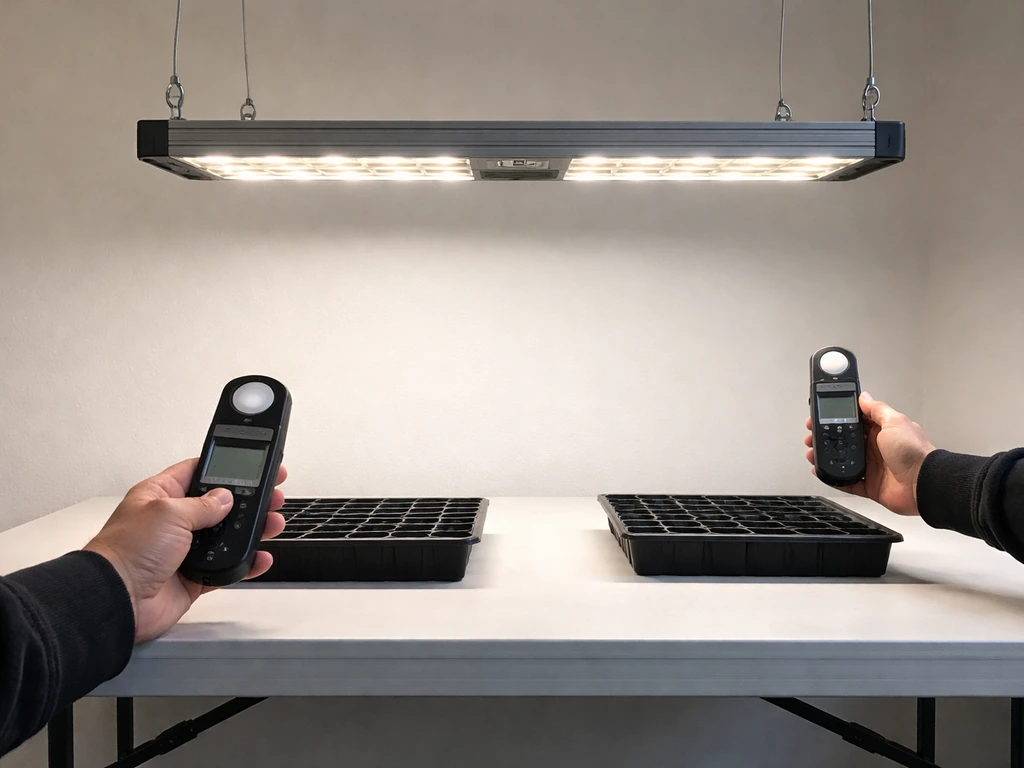
If you see a grow light spec sheet, look for a PPFD value (micromoles per square meter per second) rather than just wattage. Wattage tells you electricity consumption, not how much usable light reaches the plant. A well-designed LED panel with 200 PPFD at canopy level will outperform a cheap 1000W panel that barely delivers 100 PPFD at that same distance.
When blue light helps indoor and garden plants most
Blue light is most important during three specific situations: seedling development, vegetative growth, and any scenario where plants are growing under supplemental indoor lighting.
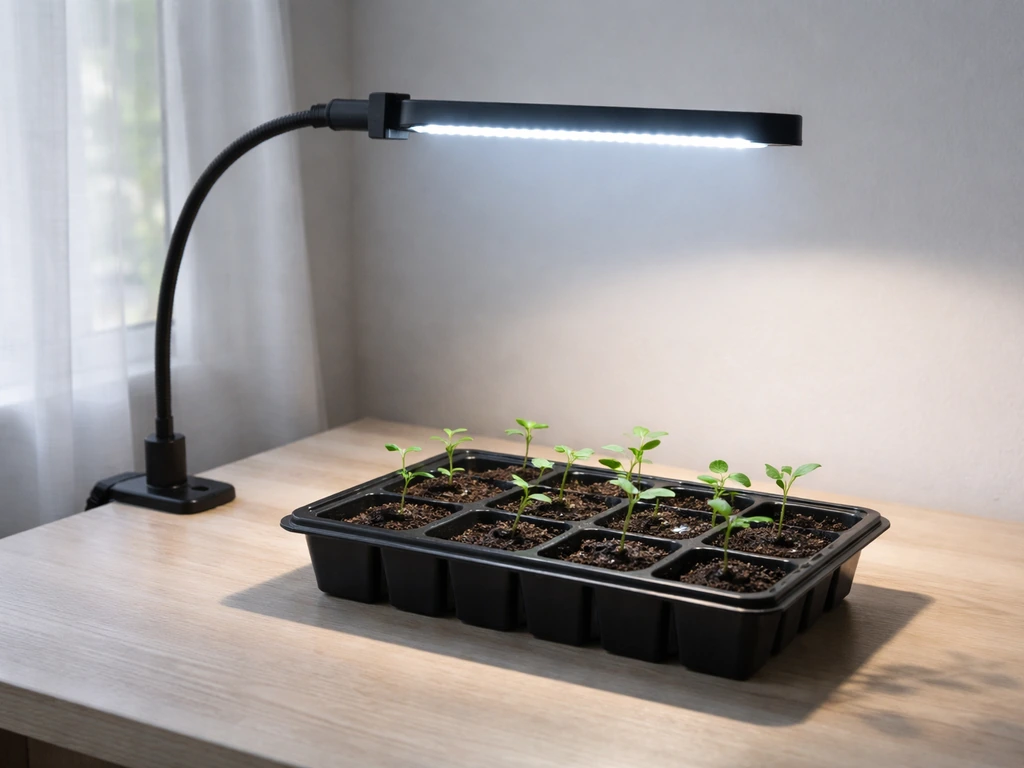
For seedlings, blue light is arguably the single most critical spectral component. Without it, seedlings etiolate, stretching pale and leggy as they search for light. A blue-rich spectrum during the first few weeks after germination produces compact, sturdy seedlings with properly developed leaves. This is why inexpensive blue-dominant T5 fluorescent lights have been used successfully in seed-starting setups for decades, even before LED technology matured.
For vegetative growth, blue light encourages leafy, compact development. Plants like lettuce, herbs, and other leafy greens respond well to blue-rich lighting because compact, densely leafed growth is exactly what you want from them. Growers often increase the blue ratio during vegetative stages and then shift toward more red light when transitioning to flowering or fruiting, since red light is more efficient at driving the photosynthetic output needed for reproductive growth.
For garden plants grown under natural sunlight, supplemental blue LEDs are rarely necessary unless you are extending day length or growing in a very low-light environment (like a north-facing room or a basement). Outdoor plants get plenty of blue from the sun. Where blue LEDs genuinely earn their keep is in indoor growing setups, grow tents, commercial vertical farms, and any situation where natural sunlight is absent or insufficient.
Does blue light help aquarium plants grow?
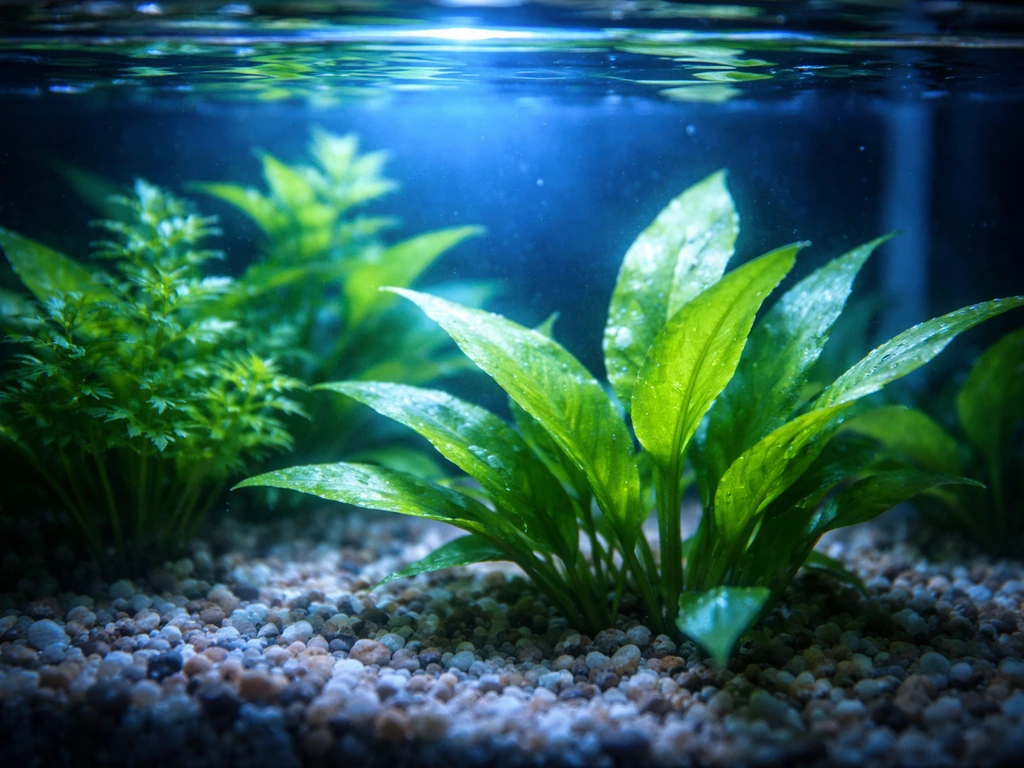
This is where the context shifts significantly. Aquarium plants do respond to blue light, but the typical blue-dominant aquarium lights sold for fish tanks are usually not designed with plant photosynthesis as the primary goal.
Most blue aquarium lights, especially the deep blue actinic bulbs used in reef tanks, emit in the 420 to 460 nm range. That wavelength range is actually useful for photosynthesis, and aquatic plants do use it. The problem is intensity and spectrum balance. Actinic lighting is designed to make corals and fish colors pop visually, not to deliver the PPFD levels that aquatic plants need to photosynthesize effectively. Many aquarium setups running only blue lights have beautiful-looking tanks with plants that are slowly declining because total light energy is insufficient.
For planted aquariums, you need a light that delivers meaningful PAR (photosynthetically active radiation) across both blue and red wavelengths, plus adequate intensity for your tank depth. Shallow tanks (under 12 inches) can get away with moderate-output lights. Deeper tanks (24 inches or more) need high-output fixtures. Full-spectrum planted tank LEDs from brands targeting aquatic horticulture are a much better investment than generic blue fish tank lights.
There is also the CO2 factor, which does not apply to indoor houseplants in the same way. Aquarium plants are often CO2-limited, meaning that adding more light without also addressing CO2 availability just causes algae problems. Blue light does help aquarium plants, but it is one piece of a system that also needs adequate CO2, nutrients (especially nitrogen, phosphorus, and iron), and water quality. If your aquarium plants are struggling, upgrading to a blue LED alone probably will not solve it.
How to use blue light effectively
The most important practical rule: do not use blue light alone for long-term plant growth. Blue without red means you are missing the wavelengths that drive peak photosynthetic efficiency. Chlorophyll a and b absorb strongly in both the blue (around 430 to 450 nm) and red (around 640 to 680 nm) ranges. A light that only covers blue will leave a significant photosynthetic gap.
Mixing blue with other wavelengths
The classic recommendation in grow lighting is a blue-to-red ratio roughly between 1:3 and 1:5 during vegetative growth, shifting toward more red during flowering and fruiting. If you are using a programmable LED fixture, try starting with about 20 to 30 percent blue and 60 to 70 percent red, then adjust based on what you observe. Compact, dark green growth with no stretching usually means you have the right balance. Stretching and pale color suggests more blue. Stunted growth without stretching might suggest insufficient overall intensity rather than a spectrum issue.
Intensity and distance
Light intensity drops off rapidly with distance. A grow light that delivers 400 PPFD at 12 inches might only deliver 150 PPFD at 24 inches. For seedlings and low-light plants, 100 to 200 PPFD is often sufficient. Herbs and vegetable starts want 200 to 400 PPFD. High-light plants in vegetative growth may need 400 to 600 PPFD or more. Start with the manufacturer's recommended hanging distance and adjust based on plant response over one to two weeks.
Photoperiod (how long to run the light)
Most vegetative indoor plants do well with 14 to 16 hours of light per day. Do not try to compensate for low-intensity light by running the light 24 hours. Plants need a dark period for respiration and some developmental processes. Running lights continuously can actually stress certain species, especially those with photoperiod sensitivity. A basic timer set to 16 hours on and 8 hours off is a reliable starting point for most indoor plant setups.
When blue light won't fix your slow growth problem
Blue light gets a lot of attention in plant forums, and that sometimes leads people to assume it is the magic variable they are missing. More often, slow or poor plant growth comes down to something else entirely. Here are the most common culprits worth checking before you buy another light.
- Total light intensity is too low: Blue light cannot compensate for insufficient PPFD. If your plant is not getting enough total photons, changing the color balance will not help much. Check your PPFD with an affordable quantum PAR meter or a smartphone app like Photone.
- Overwatering or underwatering: These two problems cause more indoor plant failures than inadequate lighting. Soggy roots cannot uptake nutrients effectively, and chronically dry soil shuts down metabolism. Check soil moisture before adjusting the light.
- Nutrient deficiencies: Yellowing, stunted growth, and leaf deformities are often nutrient issues, not light spectrum issues. A balanced liquid fertilizer applied at the right rate resolves most common deficiencies in actively growing plants.
- Temperature and humidity: Plants growing in very warm, dry air (common near heat vents in winter) will struggle regardless of light quality. Most houseplants prefer 60 to 75 degrees Fahrenheit and moderate humidity.
- For aquarium plants specifically: CO2 deficiency and poor water circulation are frequent culprits. Adding a pressurized CO2 system or even liquid carbon supplementation often produces more dramatic improvement than changing lights.
- Wrong plant for the light level: Low-light plants like pothos and ZZ plants will not benefit from high-intensity blue LEDs and may actually show stress. Match your light intensity to what the specific species actually needs.
A quick troubleshooting check: if your plant is stretching toward the light, it wants more intensity or more blue. If it has yellow or pale leaves despite adequate watering, suspect nutrients or total light. If it looks generally unhappy with no clear pattern, check temperature, humidity, and root health before touching the lighting setup.
Quick recommendations based on your plant type
Here is a straightforward guide depending on what you are actually trying to grow.
| Plant Type | Blue Light Role | Best Light Setup |
|---|---|---|
| Seedlings (any species) | Critical: prevents etiolation, drives de-etiolation | Blue-dominant full-spectrum LED or T5; 14-16 hrs/day |
| Leafy greens and herbs (indoor) | Very important: promotes compact leafy growth | Full-spectrum LED with strong blue component; 200-400 PPFD at canopy |
| Fruiting/flowering vegetables (tomato, pepper) | Useful in veg stage; less critical during flowering | Full-spectrum LED; shift toward more red at flowering |
| Tropical houseplants (pothos, philodendron) | Moderate: helps stomatal function and leaf development | Full-spectrum LED or bright indirect natural light; 100-250 PPFD |
| Succulents and cacti | Important: keeps growth compact and prevents stretching | High-intensity full-spectrum LED with strong blue; keep light close |
| Aquarium plants (low tech) | Helpful but not sufficient alone: needs full-spectrum planted tank light | Full-spectrum planted aquarium LED; adequate PAR for tank depth |
| Aquarium plants (high tech) | Important piece of the system alongside CO2 and nutrients | High-output full-spectrum LED plus pressurized CO2 and liquid fertilizers |
If you are buying a grow light right now, skip the single-color blue panels and go straight for a quality full-spectrum LED from a reputable brand. Look for one that publishes actual PPFD data at multiple hanging distances, not just wattage. For most home growers with one to four plants, a mid-range full-spectrum LED in the 50 to 100 true watt range covers a 2x2 to 3x3 foot area well and delivers meaningful blue wavelengths alongside everything else the plant needs.
Blue light is real plant science, not folklore. It triggers measurable biological responses through phototropins and cryptochromes that directly blank" rel="noopener noreferrer">affect stomatal opening, seedling development, and plant morphology. But it is one color in a spectrum that plants use as a whole. For the fastest growth, you typically want a balanced spectrum that includes the right blend of blue and red, not blue alone one color in a spectrum. If you are curious how it compares to red light, which handles a different but equally critical part of photosynthesis, or how purple, white, green, and pink grow lights fit into the picture, those comparisons are worth exploring because the full story of plant lighting is about balance, not any single wavelength. If you are wondering how pink light stacks up against the blue and red spectrum basics, see does pink light help plants grow. Red light helps drive the photosynthetic efficiency that plants need to convert light into growth If you are curious how it compares to red light.
FAQ
Can I use a blue grow light at night to keep plants from stretching?
For most plants, no. Blue helps regulate compact growth, but plants still need a daily dark period for normal development and respiration. If you want tighter growth, use the right blue to red balance during the light phase, then keep a consistent off period (for example, 8 hours dark) using a timer rather than running blue overnight.
Does “blue” on a label guarantee the right wavelength for plant growth?
Not always. Look for emission peaks or spectral plots (or at least a true wavelength range like roughly 430 to 470 nm). Marketing terms like “blue,” “violet,” or “cool” can include wavelengths that are visually blue but not concentrated where photoreceptors respond best, and the intensity may be too low for growth.
Is more blue always better if my plants look leggy?
Usually not. Leggy growth can come from insufficient total PPFD, excessive distance from the light, or an overall spectrum imbalance. Increase intensity and verify canopy PPFD first, then fine-tune blue percentage. If plants stretch while leaves are still dark green, suspect intensity before spectrum.
How do I tell whether my blue light is too weak versus too “blue-heavy”?
Weak light typically causes slow growth, pale color, and weak stems. A blue-heavy spectrum often changes morphology, you may see compactness with unusual firmness, and you can still hit a photosynthesis ceiling if red is insufficient. The practical test is to compare performance after adjusting intensity and then adjust blue to red ratio (for example, move toward a 1:3 to 1:5 blue to red during vegetative growth).
What PPFD should I target when using mostly blue, even with some red?
Use PPFD at the canopy, not at the fixture. As a starting point from common indoor vegetable ranges, aim roughly 100 to 200 PPFD for seedling starts, 200 to 400 PPFD for herbs and leafy starts, and higher (often 400 to 600 PPFD) for high-light vegetative plants. If your spectrum is blue-leaning, you still need the same PPFD targets to avoid underfeeding photosynthesis.
Will blue light alone work for short-term rescue of weak seedlings?
It can help, but it is rarely a complete solution. For a brief period, extra blue may improve morphology and stomatal behavior, but without enough red the plant usually cannot sustain peak photosynthesis long-term. If seedlings are failing, address both spectrum balance and intensity, and keep exposure limited by your light schedule (avoid 24/7).
Do photoperiod-sensitive plants respond differently to blue light?
Yes. Some species regulate flowering and other development using day length, so changing blue content can coincide with problems if your light schedule is also off. Keep the same daily photoperiod your plant needs (commonly around 14 to 16 hours for many houseplants), and adjust spectrum within the light window rather than altering hours unpredictably.
Are LED panels that look very “bright” under room lighting enough for plants?
Often they are not. Human-visible brightness does not equal plant-usable PPFD. Always check published PPFD data or use a PPFD meter at canopy height. A panel can look bright to you yet deliver far less usable light to the leaves, especially if it is placed too far away.
What about using blue light in aquariums, can I copy the same setup as houseplants?
No. Aquarium “blue actinic” lights usually prioritize visual effect and may not deliver enough PAR at useful intensity for plants. For planted tanks, pick a fixture designed for aquatic horticulture (enough PAR across blue and red, plus suitable output for tank depth). Also consider CO2 and nutrient availability, since blue alone can worsen algae if other inputs are mismatched.
If my plant improves after adding blue, should I keep increasing blue percentage?
Stop once you see stable compact growth and healthy leaf color at an adequate PPFD. Over-increasing blue can make plants look “fine” while limiting photosynthesis if red is too low, leading to slower overall growth. Use observation plus a gradual spectrum adjustment, keeping blue to red in a practical vegetative range before making bigger changes.
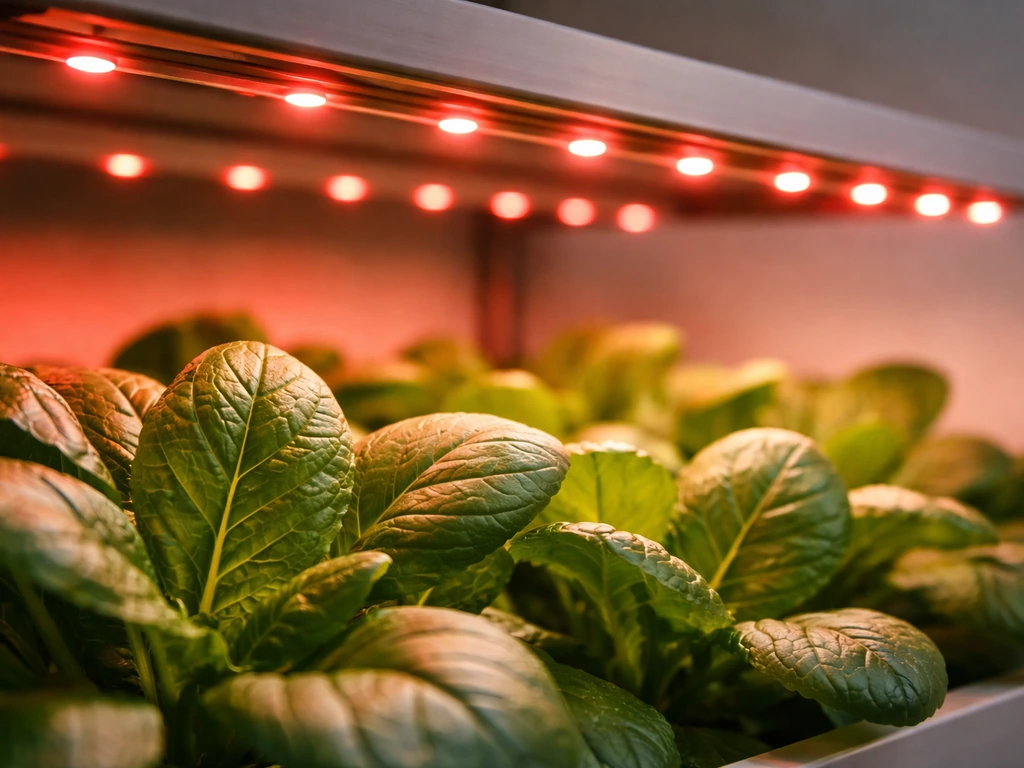
Learn if red LED light helps plants grow, why it works, and how to set wavelength, distance, and schedule.
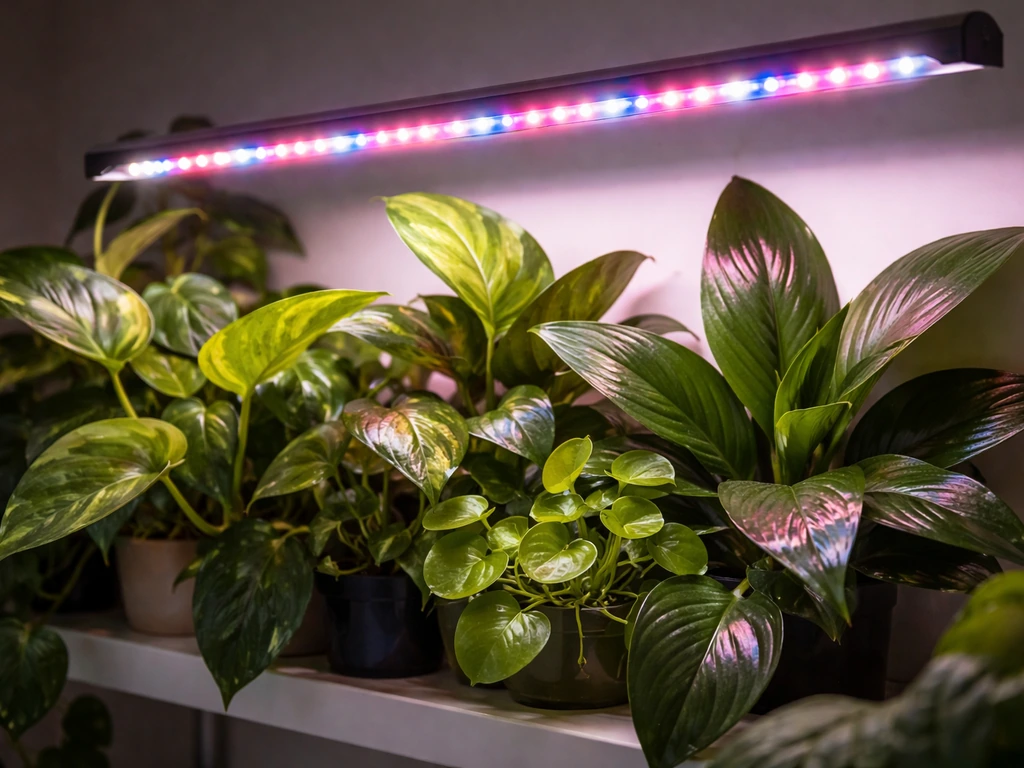
Learn which light colors boost plant growth fastest using LEDs, plus science on red, blue, far-red and setup tips.
Learn how microbes in the rhizosphere fix nitrogen, boost phosphorus, aid roots, suppress disease, and how to grow them.