Quick verdict: does singing to plants help them grow?
Probably not in any meaningful, reliable way. Singing to your plants is not going to hurt them, but there is no solid evidence that a few verses of your favorite song will make your monstera push out new leaves or your tomatoes produce bigger fruit. The honest answer is that the science on plants and sound is genuinely interesting, but it does not support the folk wisdom that serenading your houseplants is a growth strategy worth your time. If your plant is struggling, singing is almost certainly not the fix, and there are a handful of real, controllable factors that almost definitely are.
What science says about plants and sound (and why it's limited)
Plants can respond to vibrations. That much is true and well-documented. Research has shown that when caterpillars chew on leaves, the vibrations they produce trigger defense responses in the plant. A separate study found that flowers exposed to the sound of a flying bee produced sweeter nectar within about three minutes, which is genuinely remarkable. Controlled experiments have shown that specific audible sound treatments can alter mung bean germination timing, and frequency-specific signals have affected maize seed germination. So the headline that "plants respond to sound" is not wrong.
Here is where things fall apart for the singing hypothesis, though. Every meaningful study in this field involves very specific, controlled conditions: particular frequencies, measured intensities, defined distances, precise treatment durations, and in some cases engineered ultrasonic fields running at frequencies like 45 kHz at constant temperatures. These are nothing like humming a tune in your living room. Researchers in plant bioacoustics are careful to point out that what actually matters is whether a mechanical vibration physically reaches plant tissue in a relevant way, and that the effects observed in labs are highly dependent on those exact conditions. Treatment times matter too: research shows that too short or too long an exposure may produce no effect or even a negative one. The idea that casually playing music or singing near a plant will reliably push growth in a positive direction is not something the science supports.
Extension horticulturists who have reviewed the popular claims about specific music genres (classical vs. rock, for example) making plants grow faster have consistently found the evidence to be weak or misused. Different plant species also respond differently to the same vibrations, because a leaf's physical properties affect how it mechanically couples with incoming sound waves. There is no universal "this frequency makes plants bigger" result, and the idea that your singing voice, at whatever pitch and volume you happen to produce, lands in the magic zone for your particular plant is a stretch.
Possible indirect effects: routine, attention, and changing care
Here is where I will give the singing-to-plants crowd a little credit, and it has nothing to do with acoustics. The gardeners who sing or talk to their plants regularly tend to be the ones who are paying close attention to them. You notice the yellowing leaf, the dry soil, the new pest, or the leggy stem reaching desperately toward the window precisely because you are spending time up close with the plant. That kind of consistent observation is genuinely valuable, even if the singing itself is doing nothing botanical.
There is also the routine angle. If singing to your plants is part of a daily or weekly ritual that also involves checking the soil moisture, rotating the pot, wiping dust off the leaves, or moving the plant to a better light spot, then that routine is helping growth. The singing is just the habit anchor. Similarly, if you are wondering about the relationship between talking to plants and growth, the indirect attention effect is the same story, which we explore more in that dedicated piece.
One genuine indirect concern worth mentioning: running loud music near outdoor garden beds could actually disrupt pollinators and beneficial insects. Research and wildlife experts both note that loud sound at certain frequencies and durations can interfere with beneficial insect behavior. This is a real downside that has nothing to do with direct plant physiology but could affect pollination and pest control in your garden. Keep any outdoor "music for plants" experiments at reasonable volumes.
If you want to try it: is singing harmless for houseplants and garden plants?
For houseplants, yes, singing is essentially harmless. A normal conversational or singing voice is not going to stress your plants. The CO2 you exhale when talking or singing close to a plant is a negligible bonus at best. The main thing to watch is that you are not overwatering out of anxiety while you are tending to them (this is the number one way well-meaning plant parents accidentally kill their plants), and that you are not moving the plant around constantly to a less favorable position just to sing to it in better lighting for yourself.
For outdoor garden plants, keep it reasonable. Singing at normal volumes near the garden is fine. Setting up loud speakers at high volume for extended periods is worth avoiding, both for the wildlife reasons mentioned above and because research on vibration effects suggests that some types of sound exposure at high intensity can be neutral or negative depending on the stimulus.
If singing to your plants makes you happy and keeps you engaged with your garden, that is a real benefit. Just do not let it substitute for actually checking whether your plant has what it needs to grow. And if you are curious about music more broadly, whether playing it near plants does anything measurable, that is a topic worth looking into separately, since the research around music and plant growth has its own nuances.
The real drivers of growth: light, water, soil, nutrients, and environment
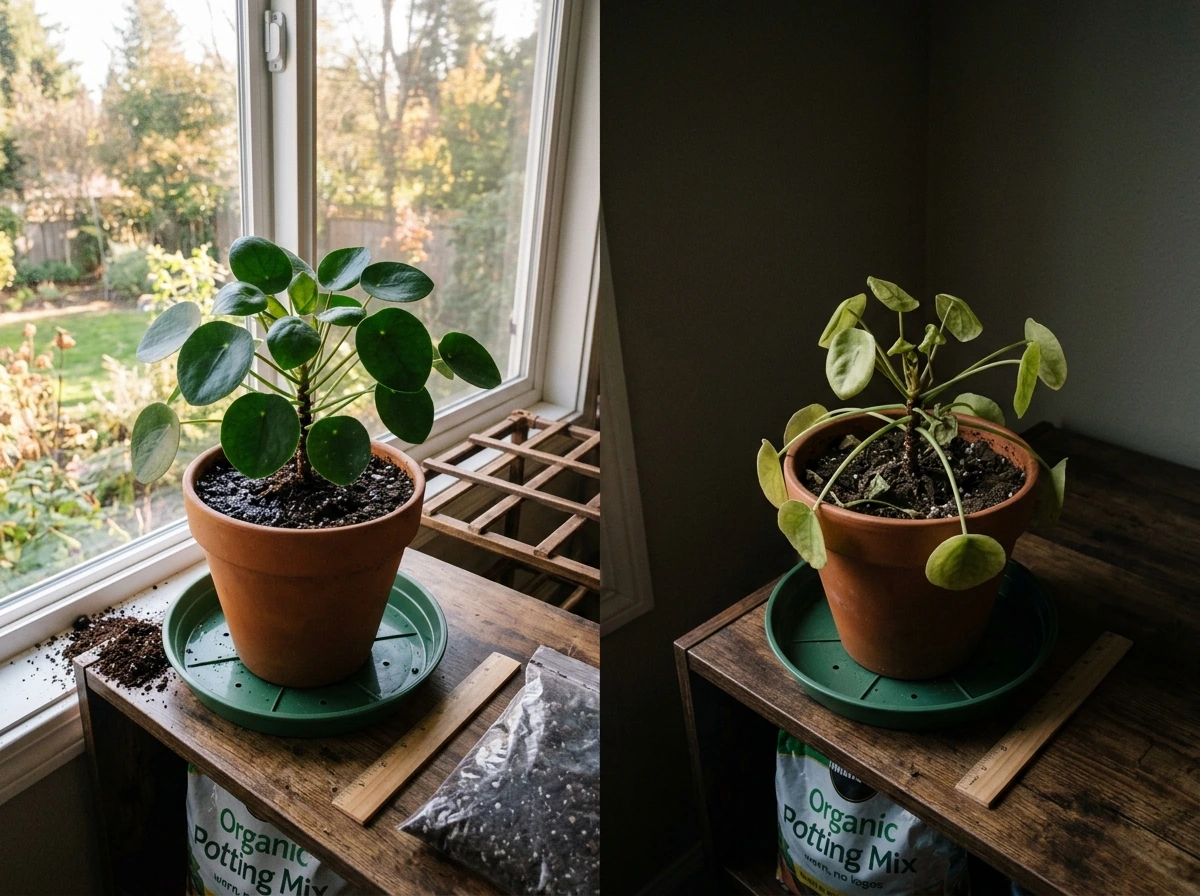
Every major horticultural extension program, from Iowa State to UC IPM to Missouri Extension, frames plant growth problems the same way: check light, check water, check soil, check nutrients, check temperature and humidity. Not a single one lists acoustics as a diagnostic variable. This is where your energy should go.
Light
Low light is the most common silent killer of houseplant growth. Plants kept in poor light develop spindly, reaching stems, yellow foliage, and little to no new growth. Outdoors, insufficient light (from shade, crowding, or wrong placement) produces the same results. Before anything else, honestly assess whether your plant is getting the light intensity it actually needs for its species, not just the light that happens to be available in your favorite corner of the room.
Water
Overwatering is the number one houseplant mistake, full stop. Too much water decreases oxygen around the roots and creates conditions that favor root rot disease, which can kill a plant while the soil still looks moist on top. Underwatering is also a problem but tends to be more obvious. The right approach is to water thoroughly when the soil is at the right dryness for your species (usually when the top inch or two is dry for most houseplants), then let excess water drain completely. When you do water, use enough that excess can flush out, which also helps push out accumulated fertilizer salts.
Soil and roots
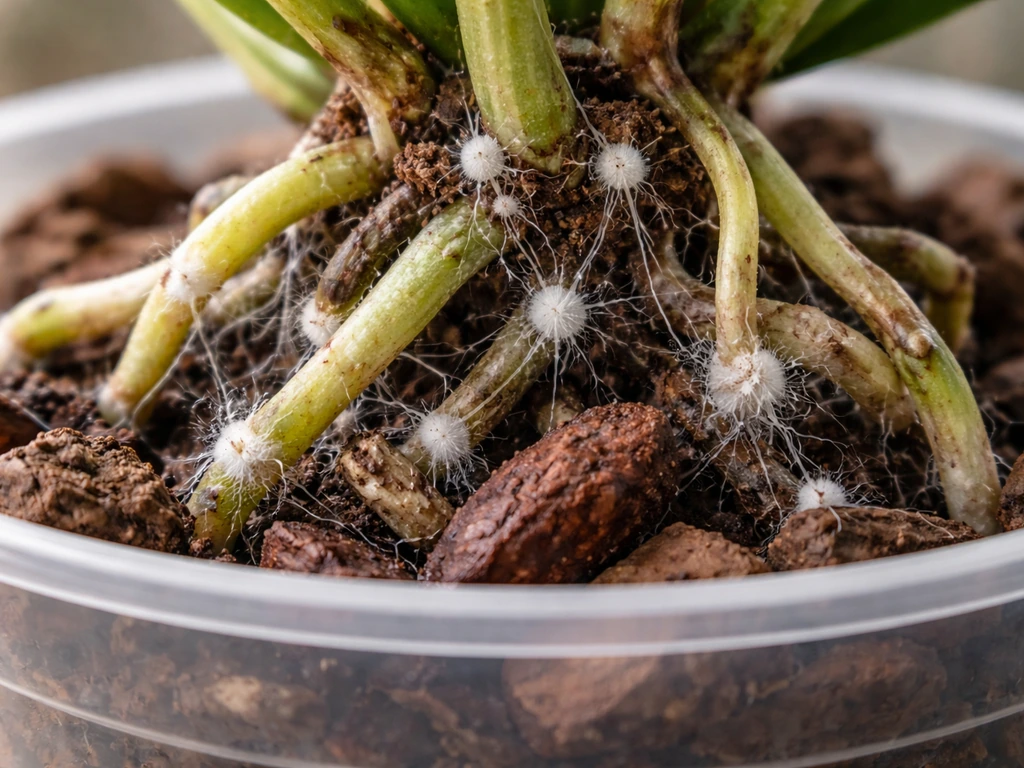
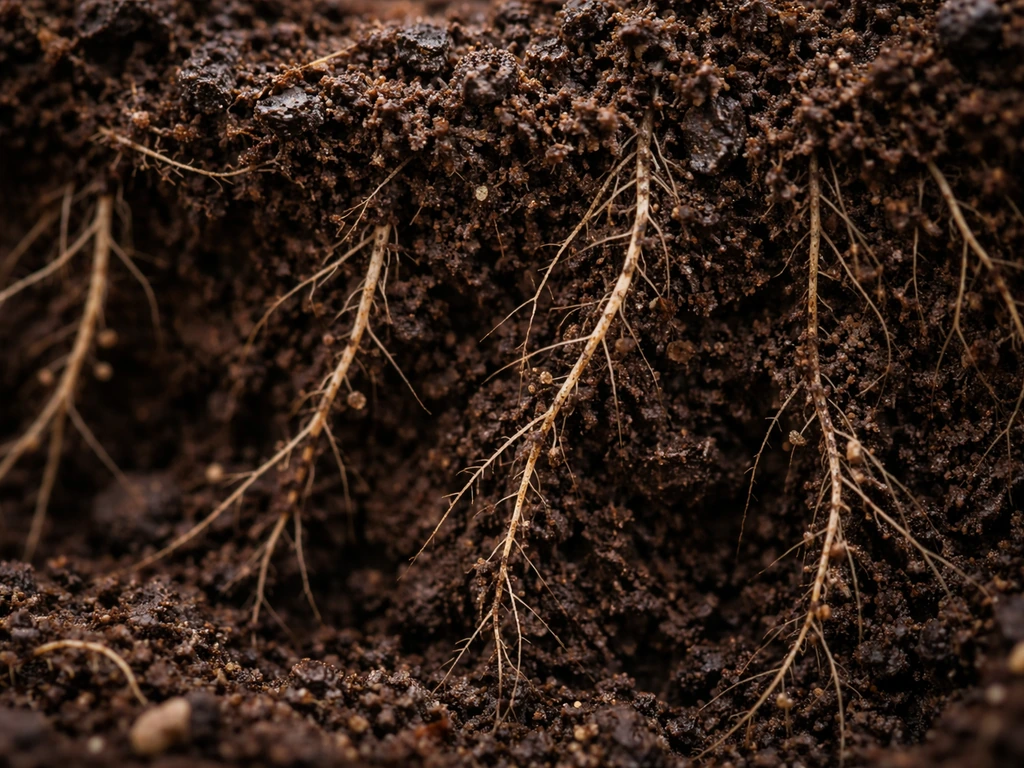
A rootbound plant (one that has outgrown its pot) will grow poorly and need watering far more frequently than it should. Compacted or old potting mix loses its structure over time, reducing drainage and aeration. If your plant has been in the same pot for more than a year or two, check whether the roots are circling the bottom or pushing out the drainage holes. Repotting into fresh, sterile mix appropriate for the species can make a dramatic difference.
Nutrients
Slow or stalled growth combined with pale or light-green leaves is often a sign of nitrogen deficiency. Plants in pots deplete the nutrients in their mix relatively quickly, and regular fertilization during the growing season matters. That said, Missouri Extension points out that poor light or watering is more often the cause of poor growth than nutritional issues, so fix the basics first before assuming fertilizer is the answer.
Temperature, humidity, and airflow
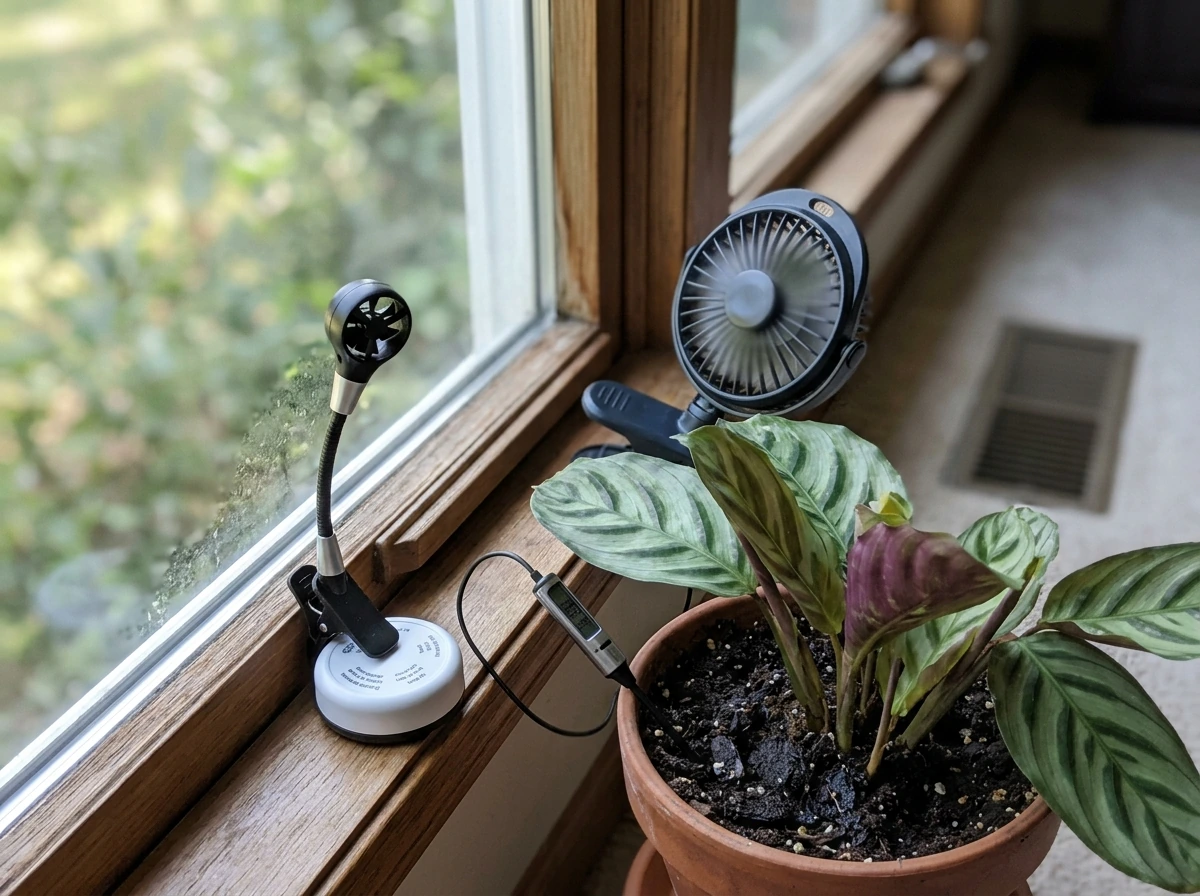
Many tropical houseplants struggle in low humidity, cold drafts, or near heating vents. Adequate airflow (but not drying wind directly on the plant) also matters for preventing fungal issues. These environmental conditions are easy to overlook and easy to fix once you identify them.
Pests and disease
Sap-sucking insects like spider mites, mealybugs, and scale can cause stunted, pale, or distorted growth that looks like a nutrition or light problem. Check the undersides of leaves and the soil surface regularly. Catching pests early is far more effective than treating a heavy infestation.
Do-this-now troubleshooting checklist when a plant won't grow
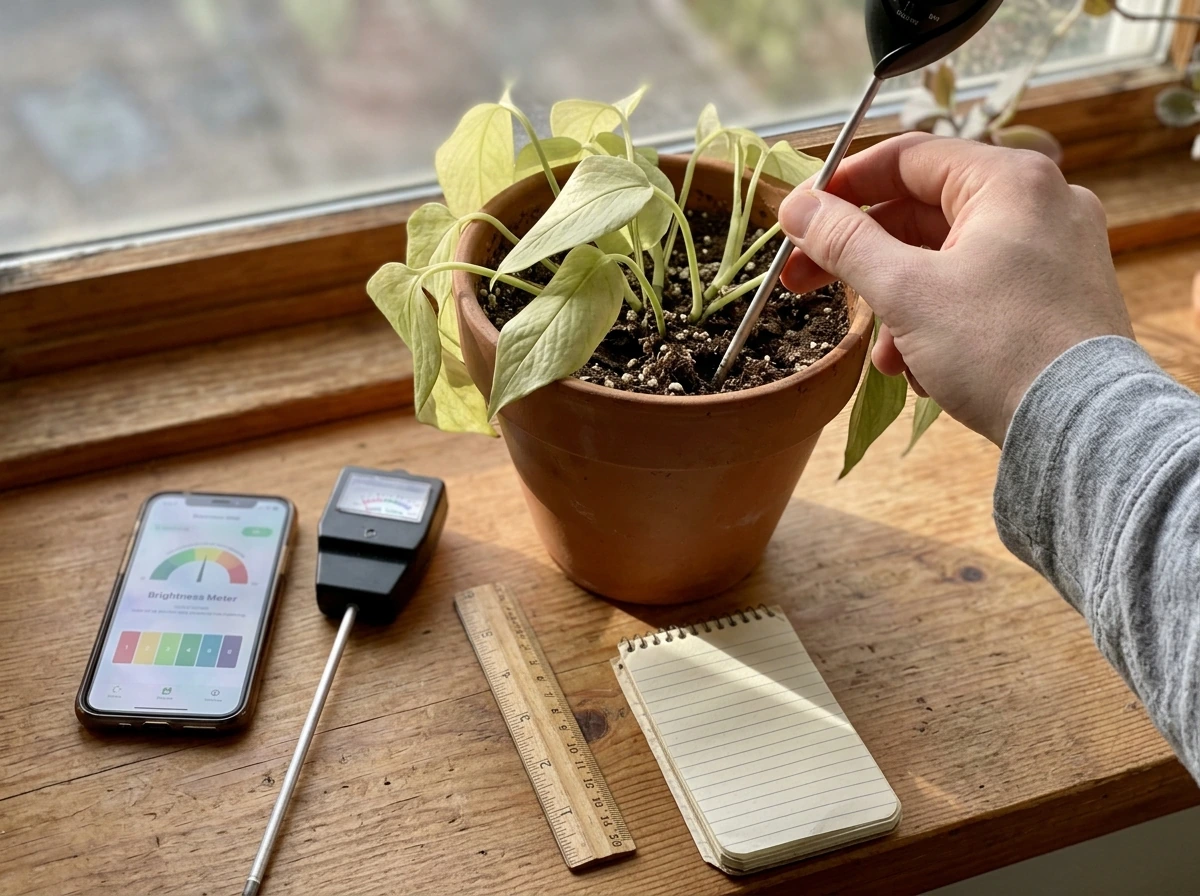
If your plant is sitting still and not producing new growth, work through this list in order. Most cases resolve at steps one through four.
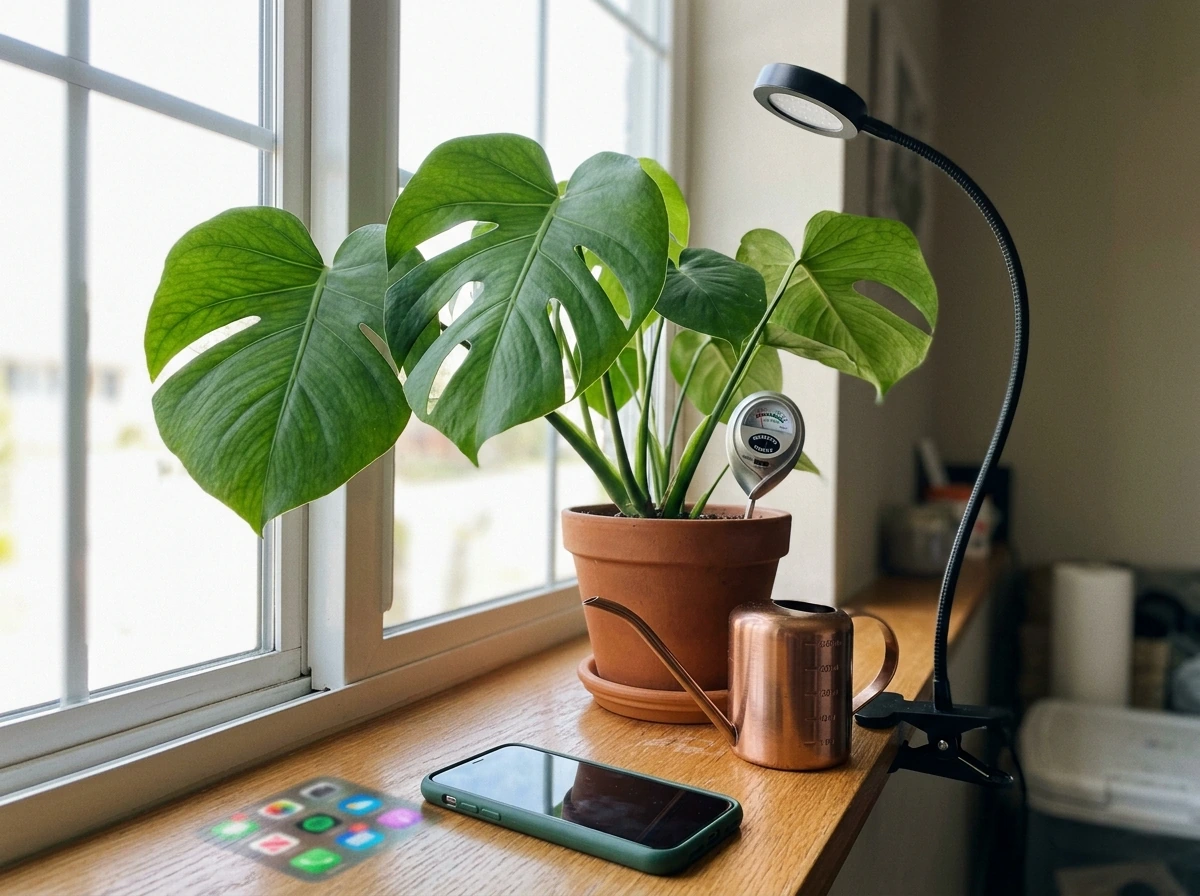
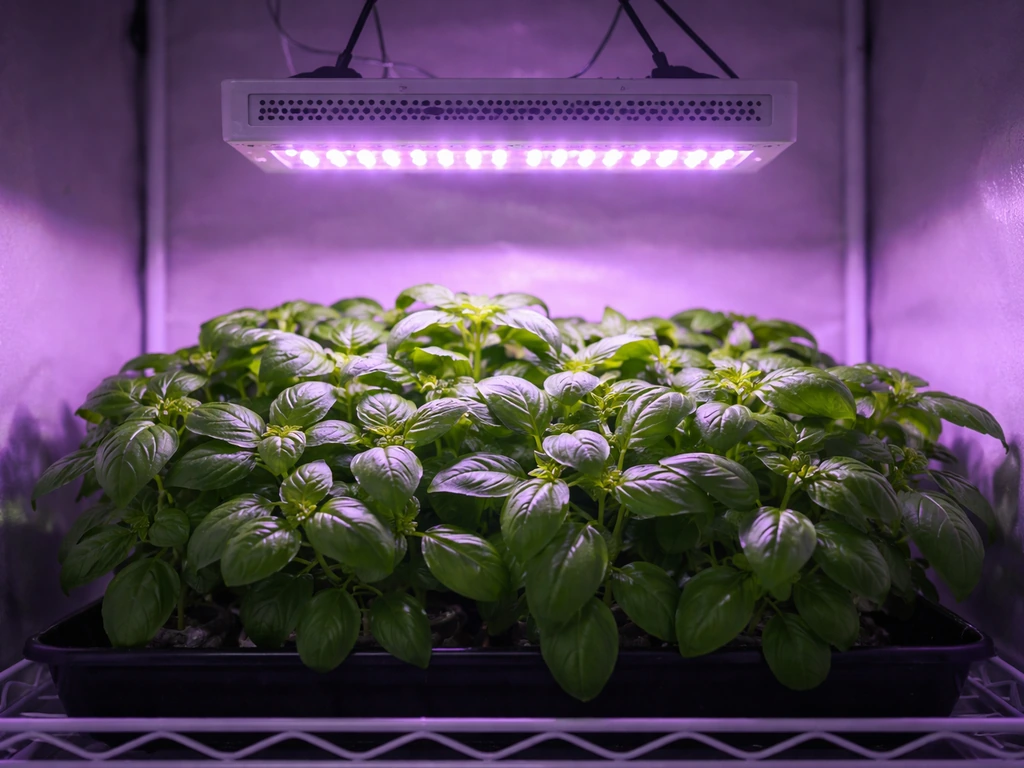
- Check light intensity honestly. Hold your hand about a foot above the plant in its current spot. If you barely see a shadow, the light is too low. Look up the light requirements for your specific species and compare them to where the plant is actually sitting. Move it closer to a window or add a grow light if needed.
- Assess your watering habit. Stick your finger an inch or two into the soil. Is it soggy or wet when it should be dry? You may be overwatering. Is it bone dry and pulling away from the pot edges? Underwatering. Adjust and be consistent.
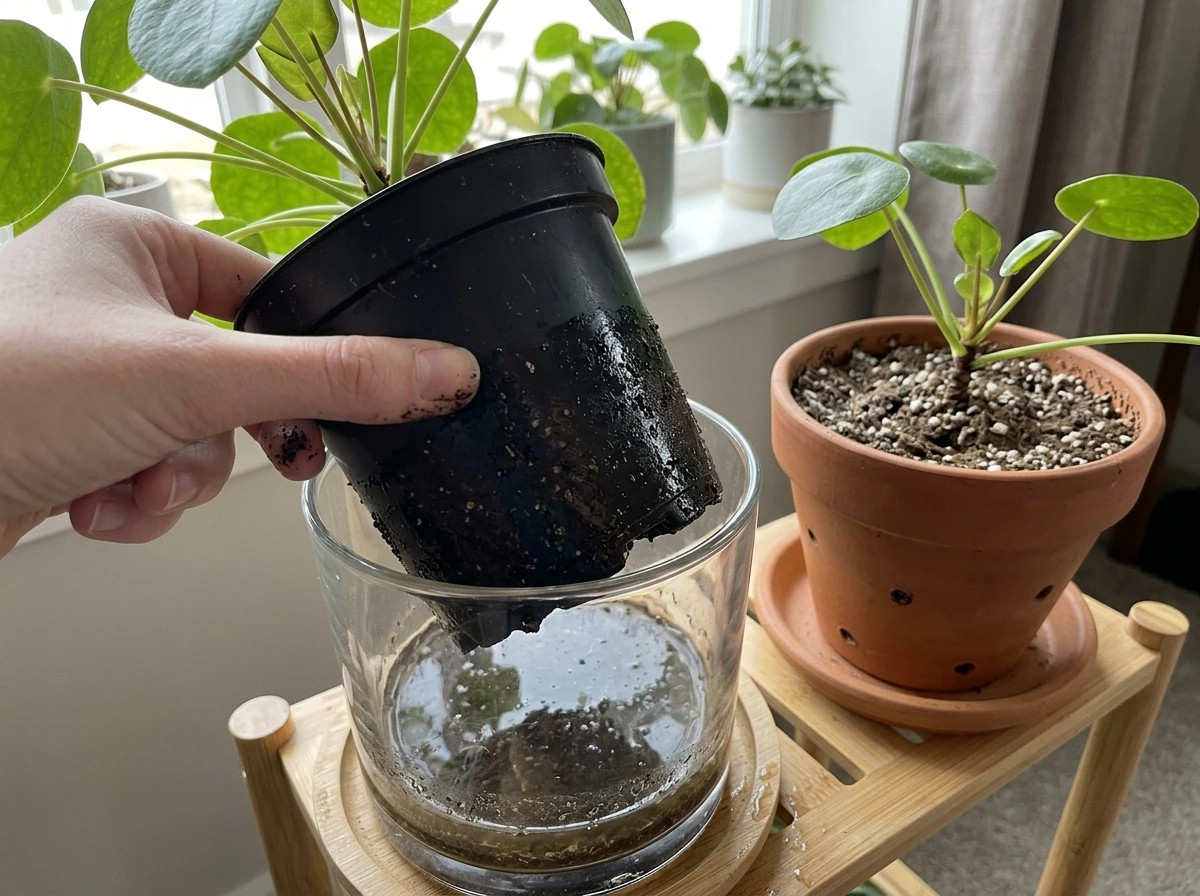
- Check the roots and pot size. Carefully slide the plant out of its pot. Are roots densely circling the bottom or bursting out of drainage holes? Repot into a container one size larger with fresh, well-draining mix.
- Look for pests. Examine the undersides of leaves, stems, and the soil surface carefully. Use a magnifying glass if you have one. Treat any infestation before addressing other factors.
- Evaluate the season and fertilization. Is it winter? Most houseplants slow dramatically or stop growing in low-light winter months, and that is normal. If it is the active growing season (spring through early fall), check whether you have fertilized recently. A balanced liquid fertilizer applied according to label directions can help if soil nutrients are depleted.
- Check temperature and humidity. Is the plant near a cold window, an air conditioning vent, or a dry heating source? Move it to a more stable environment. Tropical species often benefit from a humidity tray or a room humidifier nearby.
- Flush the soil if you fertilize regularly. Water thoroughly until water runs freely out the bottom to clear accumulated salt buildup, which can interfere with nutrient uptake.
- Inspect for root rot. If you find mushy, dark, or foul-smelling roots when you check the pot, trim the affected roots with clean scissors, let the root ball dry slightly, and repot into fresh sterile mix. Adjust watering going forward.
Running through these steps takes about ten minutes and will identify the real cause of a stalled plant in the vast majority of cases. The answer is almost never sound, and it is almost always one of the real drivers of growth like light, water, soil, nutrients, and environment. Singing to your plant is a charming habit, and I am not going to tell you to stop, but the science suggests that do birds chirping help plants grow is not a reliable way to speed up growth. But if you want your plant to actually grow, this checklist is where to put your energy.