Does music help plants grow? The short answer
Yes, music (and sound in general) can produce measurable biological changes in plants, but don't expect to swap your fertilizer routine for a Spotify playlist just yet. The honest picture is this: plants can detect and respond to sound vibrations, and controlled lab studies have reported effects on germination speed, stem and root length, chlorophyll content, and even stress-tolerance pathways.
But those effects depend heavily on the specific frequency, volume, and duration used, and they are nowhere near consistent or large enough to be called a reliable growth tool. A review also emphasizes that sound-wave effects on plants depend on acoustic parameters like frequency, sound pressure level, and exposure period, rather than there being a single universally beneficial “music” recipe specific frequency, volume, and duration.
Think of it less as a garden hack and more as an interesting area of emerging plant science, one worth understanding clearly before you start leaving NPR on for your tomatoes.
Does music make plants grow faster?
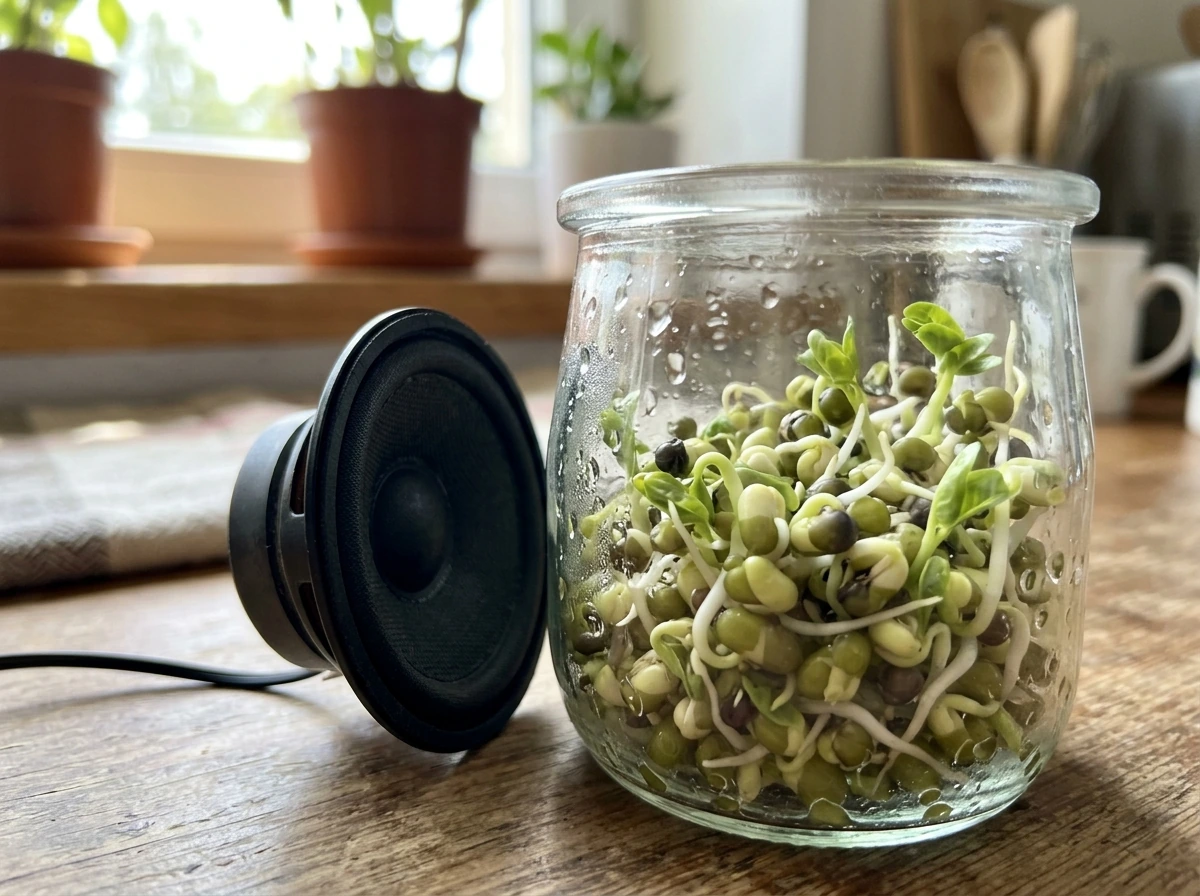
Some studies do report faster or larger growth under sound treatment. In blank" rel="noopener noreferrer">mung bean sprout experiments, audible sound at specific swept frequencies and sound pressure levels (in the roughly 80 to 100 dB range) produced measurable differences in stem length, root length, and germination time compared to untreated controls. A controlled study on lettuce found that daily scheduled exposure to audio using certain music types and acoustic generator settings was associated with changes in biomass yield and chlorophyll content. So the effect can be real and measurable under the right conditions, although you may also wonder whether do birds chirping help plants grow.
That said, those results are parameter-specific, meaning a different frequency, a higher or lower volume, or a longer exposure time can flip the result from positive to neutral or even negative. A garden pea study using pink noise played at just 12 dB above ambient, a very realistic household level, reported little to no meaningful effect on plant development. Multiple review papers across the last decade agree: beneficial acoustic effects exist at certain exposure windows, but there is no universal frequency or schedule that works reliably across species. The growth speed gain, when it shows up, is also smaller than what you get from simply improving light intensity or soil quality.
What type of music is actually best for plants?
This is where a lot of gardening content goes off the rails. When people ask 'what kind of music is best for plants,' they usually expect an answer like 'classical beats heavy metal.' And while some studies have tested different music genres, the genre itself is not really the variable that matters. What actually matters is the acoustic characteristics that different music produces, particularly frequency range, intensity (loudness in decibels), and exposure duration.
With that framing, here is what the research actually supports as practical guidance:
- Frequency range: Studies reporting positive effects have generally used frequencies in the audible range, often cited in the 100 Hz to 1,000 Hz band. This range overlaps with much of what classical, ambient, and acoustic music produces. Heavy bass-heavy or high-frequency electronic music moves outside the more studied ranges.
- Volume: Lab studies showing effects have often used SPL levels well above comfortable household listening, sometimes 80 to 100 dB in experimental setups. At normal room listening volume (around 50 to 60 dB), effects are likely much smaller or undetectable. Cranking music up close to plants is not a practical home recommendation.
- Duration: Controlled studies typically used scheduled daily exposure windows rather than continuous all-day playback. Continuous or very long exposure at high SPL may actually stress plants rather than help them.
- Genre as a proxy: If you want to follow the spirit of the research, calm instrumental music with a broad but not extreme frequency spread (think classical, ambient, or acoustic folk) sits closest to the acoustic profiles used in positive-outcome studies. Heavy distortion, very loud bass, or chaotic high-frequency content is less well-studied and potentially neutral or counterproductive.
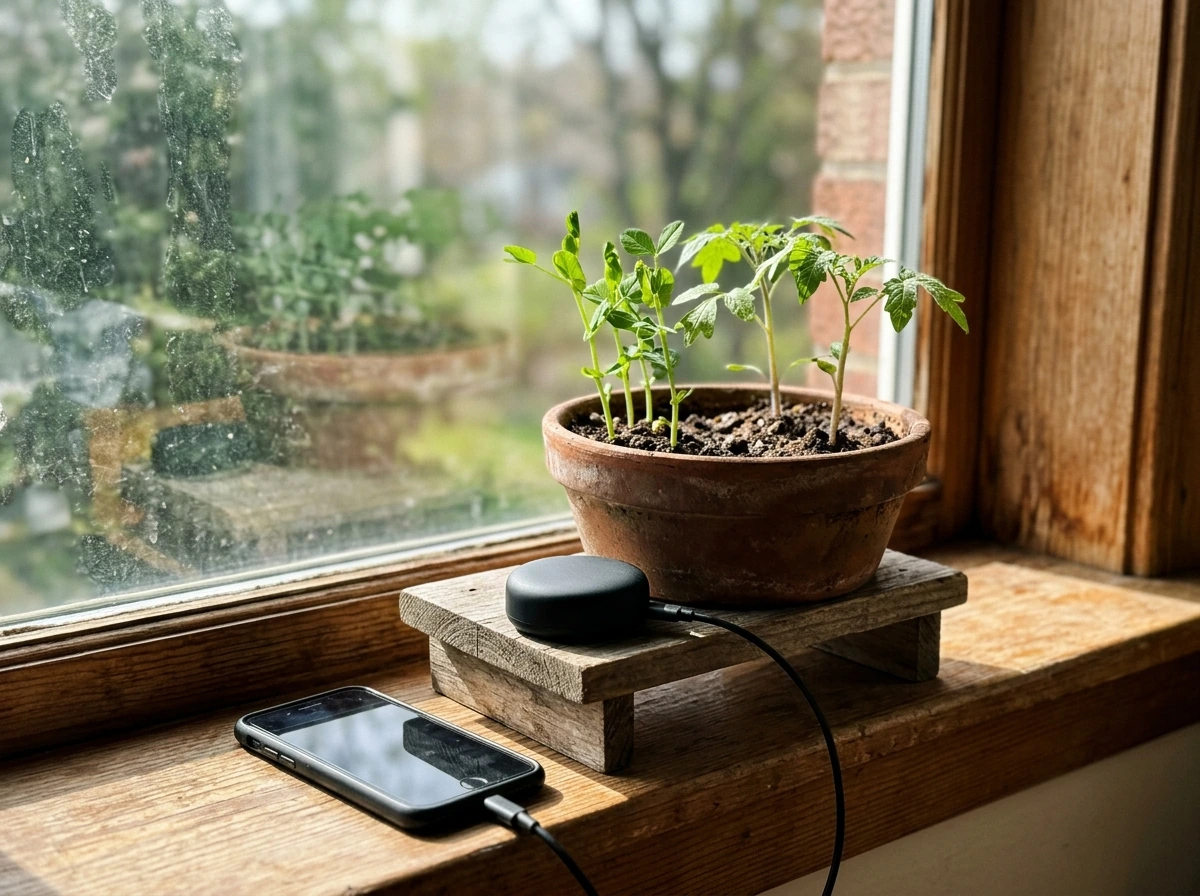
A reasonable home approach, if you want to experiment, is to play calm instrumental music for about 1 to 3 hours per day at moderate volume, keeping the speaker within a meter or two of the plants. This does not replicate lab conditions, but it also will not harm your plants and gives you a sensible baseline to test against.
How sound might actually affect a plant
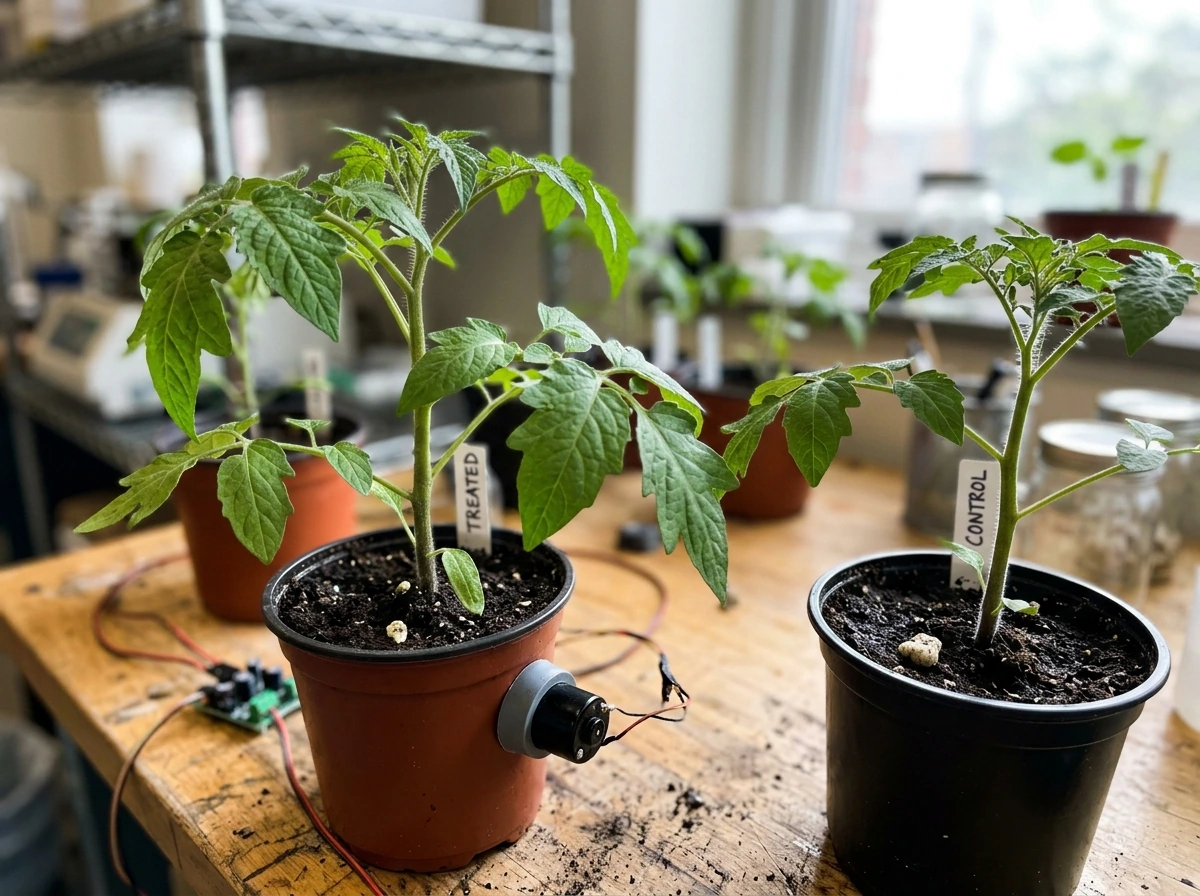
Plants do not have ears, obviously, but they are physical structures with cells, fluids, and membranes that can physically respond to vibration. Sound waves create pressure oscillations that move through air and surfaces, and at sufficient intensity those oscillations can be detected at the cellular level. Research on Arabidopsis (a standard lab plant) found that acoustic vibration produced real changes at the molecular level, including transcriptomic, proteomic, and hormonal shifts. Those are not minor effects. Pathways linked to carbohydrate metabolism and photosynthesis were altered.
Other proposed mechanisms include stomatal behavior (stomata are the pores that regulate gas exchange, and both duckweed studies and surface acoustic wave research have linked vibration to changes in stomatal opening and transpiration rates), and indirect effects through the soil. A 2024 study found that acoustic stimulation enhanced the activity of plant growth-promoting fungi in soil, suggesting that even if the plant tissue itself is not dramatically affected, sound could be improving the microbial environment around the roots. That is a genuinely interesting indirect pathway.
The concept of phonotropism, where plants alter their growth direction or behavior in response to sound stimuli, is also documented. So the biology is plausible and supported by multiple lines of evidence. The honest catch is that these are mechanisms, not guarantees. Demonstrating a molecular change in a lab plant is not the same as proving that your basil will be twice as lush because you played Mozart at it.
How to actually test this at home
If you want to run your own experiment, this is genuinely worth doing, not because the results will be dramatic, but because it teaches you to observe your plants carefully and to think like a scientist. Here is a simple setup that mirrors how controlled studies approach this.
- Set up at least two identical groups of plants (2 to 3 plants per group is a minimum, more is better). Use the same species, same seed batch or cuttings from the same parent plant, the same pot size, the same soil mix, and the same starting size.
- Keep all environmental variables identical: same location, same light source and duration, same watering schedule and volume, same fertilizer, same temperature. This is the hardest part and the most important. If any one of these differs between groups, your music result is meaningless.
- Expose one group to music for 1 to 3 hours per day at a consistent volume. Keep the speaker at a fixed distance (1 to 2 meters is reasonable). Leave the control group in silence or at normal ambient room noise.
- Measure from day one. Record plant height (from soil to tallest growing tip) every 3 to 4 days. Count leaves weekly. Photograph plants at the same time of day, from the same angle, under the same light. Note leaf color as a proxy for chlorophyll, since yellowing or deeper green is visible without lab equipment.
- Run the experiment for at least 4 to 6 weeks, longer for slower-growing species. Short-term visual impressions are unreliable. You need a growth curve, not a snapshot.
- Log everything: date, watering amount, any changes, observations about leaf health. At the end, compare height gain over time, total leaf count, and overall visual health between groups.
A few things to keep realistic expectations about: you are unlikely to see a dramatic difference. Any effect you do see, if your controls are solid, is a genuine finding worth noting. If you see nothing, that is also valuable information. The goal is honest observation, not confirmation of a belief.
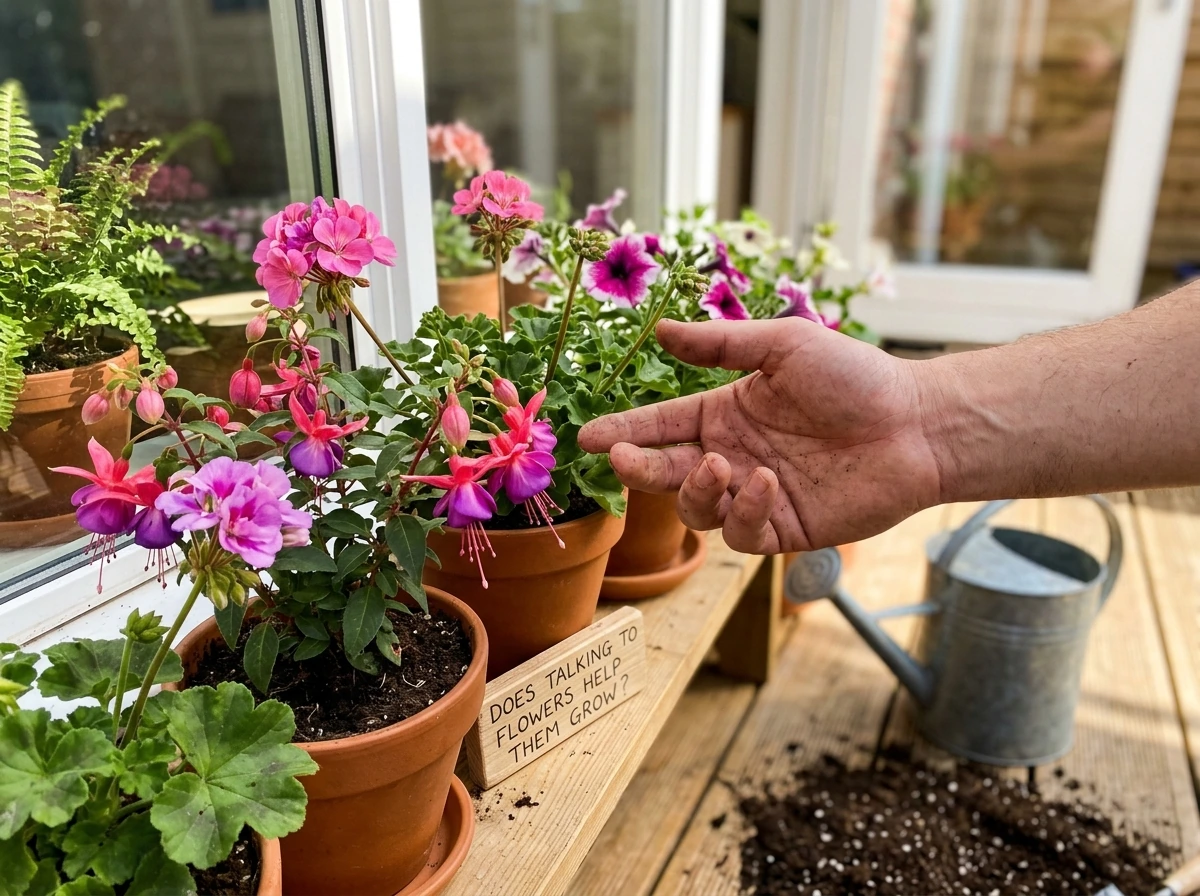
This same framework applies if you are curious about related questions like This same framework applies if you are curious about related questions like whether talking to flowers help them grow or singing to them makes a difference, topics that share a lot of the same underlying science.
Some people wonder the same thing about whether talking to plants help them grow, but the underlying idea is similar: sound effects are not guaranteed and tend to be small and context-dependent talking to flowers help them grow. does talking to flowers help them grow
What actually moves the needle on plant growth
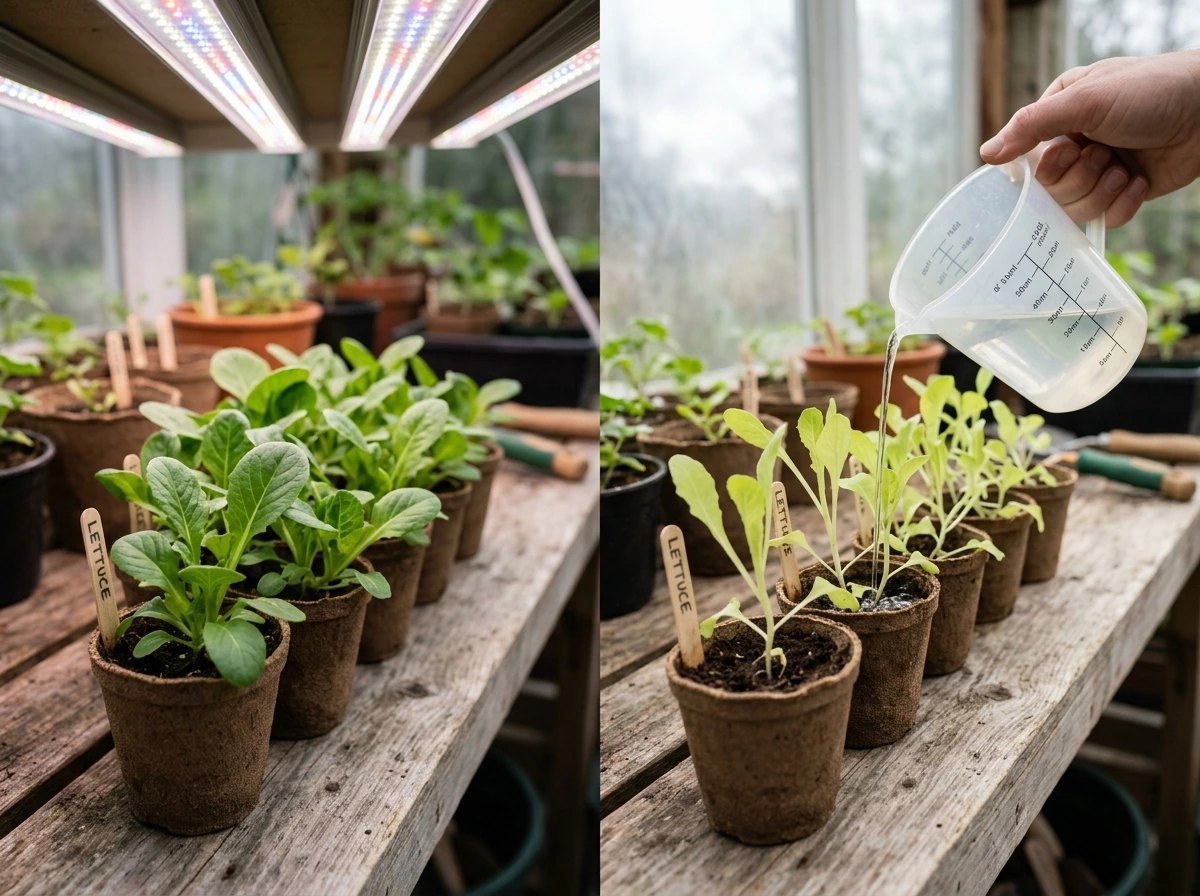
Here is the part that matters most for any gardener: even if music produces a measurable 5 to 10 percent improvement in some growth metric under ideal acoustic conditions, it is a rounding error compared to what getting the fundamentals right can do. Before you spend time optimizing your plant playlist, make sure these are dialed in.
Light spectrum and intensity
This is the single biggest lever for most indoor and greenhouse growers. Plants use specific wavelengths for photosynthesis, primarily red (around 630 to 680 nm) and blue (around 430 to 470 nm) light. A plant getting insufficient light or the wrong spectrum will underperform no matter what else you do. Moving a plant from a dim corner to a brighter window, or switching to a proper full-spectrum grow light, can double or triple growth rate. No sound treatment comes close to that.
Soil quality
Soil is where roots live, breathe, and feed. Compacted, depleted, or poorly draining soil stunts growth at the root level before any above-ground effect has a chance to show up. A good mix for most houseplants and vegetables balances drainage, aeration, and organic matter. Amending your soil or switching from garden dirt to a quality potting mix is one of the highest-return moves a home grower can make.
Water and nutrients
Overwatering is the most common plant killer in home growing, and nutrient deficiency (especially nitrogen, phosphorus, and potassium) is the most common cause of slow, pale, or stunted growth. Getting your watering frequency right for your specific plant and pot size, and using a balanced fertilizer on a consistent schedule during the growing season, will produce visibly better growth within weeks.
Temperature and humidity
Most tropical houseplants and warm-season vegetables have growth that slows noticeably below around 15 to 18 degrees Celsius. Humidity below 40 percent causes stress in many species. Cold drafts from windows or air conditioning vents directly suppress growth. Fixing environmental conditions that are outside a plant's preferred range will show faster results than any acoustic experiment.
How the fundamentals compare to music
| Factor | Potential growth impact | Reliability | Ease to optimize at home |
|---|
| Light spectrum and intensity | Very high (can double or triple growth rate) | Extremely consistent across species | Medium (grow lights, window placement) |
| Soil quality and structure | High (root health drives everything above ground) | Very consistent | Easy (potting mix, amendments) |
| Water and nutrient management | High (deficiency or overwatering stunt growth fast) | Very consistent | Easy (schedule, balanced fertilizer) |
| Temperature and humidity | Medium to high (cold or dry air suppresses growth) | Consistent within species ranges | Medium (placement, humidity tray) |
| Music and sound exposure | Low to modest (effects are parameter-dependent and small relative to above) | Inconsistent across species and setups | Difficult to replicate lab conditions at home |
The research on plant sound responses is genuinely interesting and the field is still developing. But right now, in 2026, the evidence puts music firmly in the 'plausible but minor' category. If your fundamentals are already solid and you want to run a music experiment out of curiosity, go for it. It will not hurt your plants at moderate volumes, and you might learn something. But if your plants are struggling, a better light source or a soil amendment will do far more than any playlist.