Foil can help plants grow, but only in specific, limited situations, and it is far from a reliable or universal fix. The conditions where it actually matters are narrow: reflecting extra light toward low-light plants, deterring certain flying pests like aphids and whiteflies during early crop growth, and subtly adjusting the thermal microclimate of the soil. Outside those conditions, kitchen foil sitting around your plants is mostly doing nothing, and in some cases it is actively working against you.
Does Foil Help Plants Grow? When It Works and Risks
Marcus Holloway
15 Jun 2026
When foil seems to help, and why that makes sense
The reason foil has stuck around as a gardening tip is that there are real, observable effects in the right setup. Light reflection is the obvious one. Aluminum foil bounces a significant portion of incoming light, and if you position it underneath or around a plant that is not getting quite enough, those reflected rays can reach leaves that would otherwise sit in shadow. In an indoor setup near a window, or a grow tent where your light source has uneven coverage, this is a legitimate trick.
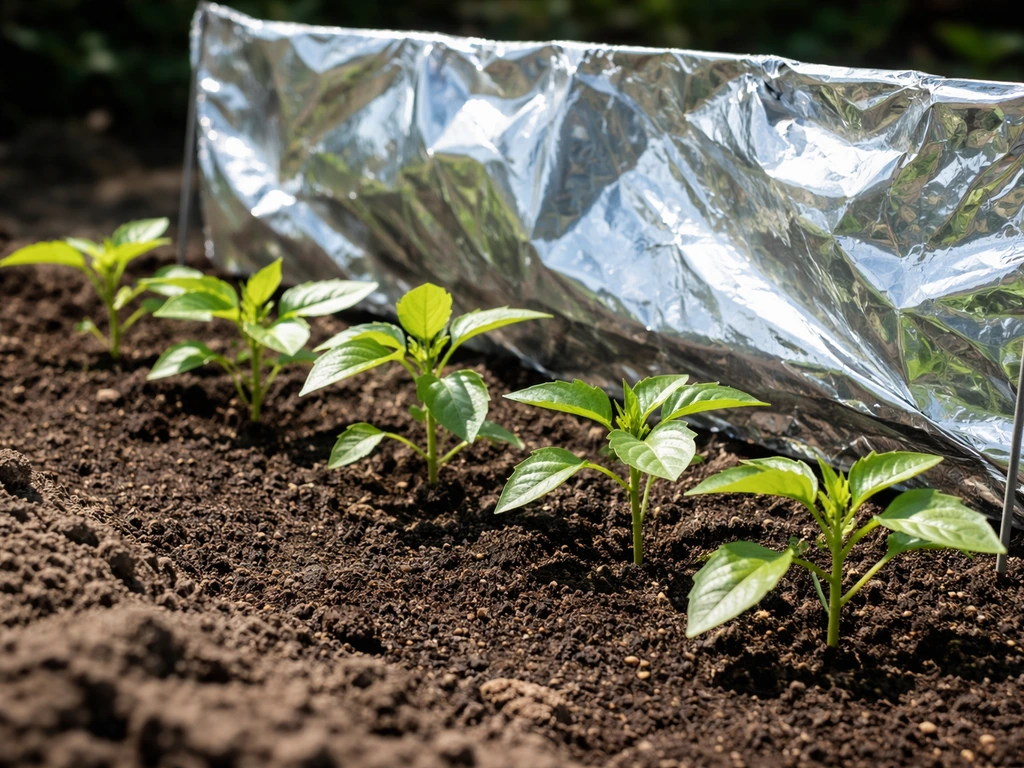
Pest deterrence is the other effect that has actual science behind it. Reflective materials, including aluminum foil used as a ground mulch, have been shown to dramatically reduce aphid colonization. One older entomology study found that foil-laminated mulch reduced catches of winged aphids in traps by 87 to 97 percent. UC IPM research confirms that reflective mulches reduce colonization by aphids, leafhoppers, thrips, and whiteflies by creating disorienting glare that interferes with how these insects find and land on plants. Fewer pests translates to less feeding damage and less virus spread, which means plants grow better. That is a real benefit, just an indirect one.
Foil also changes soil temperature, though not always in the direction you might expect. Studies on glasshouse tomatoes found that aluminum foil mulch kept soil significantly cooler than clear polyethylene mulch, especially in high light conditions. Under intense light, soil under foil ran about 11 degrees Celsius cooler than soil under clear poly mulch. That can be an advantage in hot climates, but it is a disadvantage if your soil is already cool and you need warmth for germination or root development.
Where foil actually works in the garden
There are a handful of scenarios where reaching for foil makes practical sense. They are specific and worth knowing so you do not misapply the tool.
- Early-season pest management: Lay reflective foil flat on the soil surface around young transplants before the canopy fills in. The glare confuses and deters aphids, whiteflies, and thrips. This works best when the foil remains visible, meaning before the canopy covers more than about 60 percent of the soil surface.
- Boosting light to low-light indoor plants: Prop a sheet of foil behind or alongside a plant near a dim window to redirect ambient light toward the leaves. This works for seedlings and compact plants where every extra lumen counts.
- Soil cooling in summer heat: In very hot climates, foil mulch can keep root zones cooler than bare soil or dark mulch, which is useful for cool-season crops like lettuce and spinach that bolt in heat.
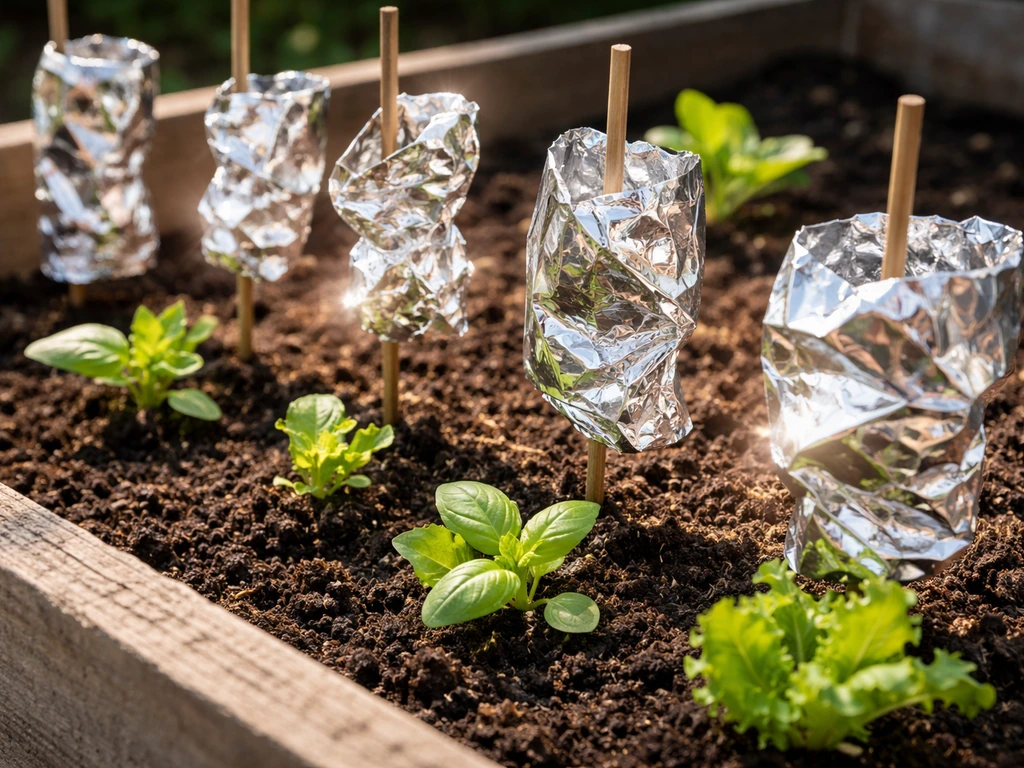
- Foil collars for physical pest barriers: Wrapping a loose collar of foil around the base of stems can deter cutworms and squash vine borers from reaching the plant, acting as a physical obstacle rather than a reflective one.
- Moisture retention as a secondary benefit: Reflective mulch, like most mulches, helps reduce moisture evaporation from the soil surface, which keeps watering more consistent.
The real risks of using foil around plants
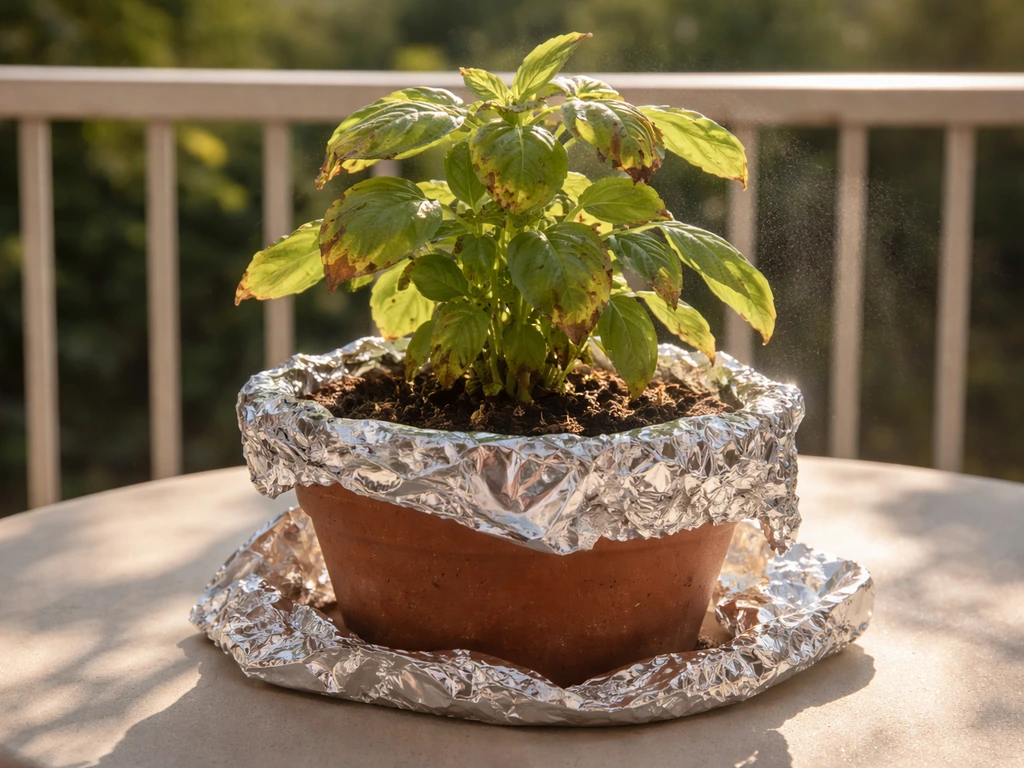
Here is where the gardening myths fall apart. A lot of people assume that more reflective surface equals more light equals more growth. That logic ignores heat concentration, light stress, and the fact that plants do not just want more light indiscriminately. Too much reflected light and heat at close range can scorch leaves and stress plants just as badly as too little.
Heat injury is a real risk, especially in warm weather. Reflective and plastic mulch materials can create significant temperature spikes near the plant base. University extension research on mulch covers notes that trapped heat can run 25 to 30 degrees Fahrenheit above ambient on warm sunny days. UC IPM explicitly advises removing reflective mulch when temperatures climb to avoid burning plants. If you are using foil in summer and your plant starts showing bleached, crispy edges at the lower leaves, the foil is almost certainly the culprit.
Placing foil too close to stems or in contact with leaves is another common mistake. Aluminum foil used in controlled plant experiments is specifically chosen to block light at the point of contact, which means wrapping it snugly around stems or pressing it against leaf tissue can deprive those tissues of the light they need. UNH Extension also warns that materials in direct contact with plant stems increase disease risk by trapping moisture and creating a hospitable environment for pathogens.
On a practical level, aluminum foil is also flimsy, sharp-edged when crinkled, and breaks down quickly outdoors. UC IPM describes it plainly as expensive, delicate to handle, and not economically practical at any real scale. In a garden bed with wind, rain, and foot traffic, foil tears, crumples, and either blows away or becomes a nuisance to remove without shredding into small pieces.
What actually works better: smarter swaps for light, heat, and pests
For almost every job foil gets used for in the garden, there is a more effective and easier-to-manage alternative. Here is an honest breakdown:
| Goal | Foil Approach | Better Alternative |
|---|---|---|
| Increase light to indoor plants | Propping foil near window | Proper grow light with full spectrum, or repositioning the plant closer to the light source |
| Repel aphids and whiteflies | Foil laid on soil surface | Purpose-built reflective plastic mulch film (more durable, same effect) |
| Cool soil in summer heat | Foil mulch | Light-colored organic mulch like straw or shredded leaves |
| Retain soil moisture | Foil ground cover | Organic mulch (2 to 4 inches of wood chips, straw, or compost) |
| Protect stems from pests | Foil collar around stem base | Cardboard or plastic collar, or copper tape for slugs |
| Boost plant growth generally | Foil placed around plant | Correct soil nutrition, proper watering, and matched light conditions |
For indoor growing and seedling setups, a properly positioned LED grow light with a balanced spectrum will do more for plant growth in a week than foil ever could. For reflective mulching in the vegetable garden, silver polyethylene reflective film is purpose-built for this job, lasts a season, and handles weather without disintegrating. For pest deterrence specifically, the reflective effect is the same whether you use kitchen foil or a proper reflective film, but the film stays intact and flat, maximizing coverage.
It is also worth stepping back and confirming your plant's actual limiting factor before solving for light. If growth is slow because of poor drainage, compacted soil, nutrient deficiency, or inconsistent watering, adding foil will not move the needle at all. Do pennies help plants grow? In most cases, they do not because what plants need is consistent light, nutrients, and good growing conditions rather than metal from coins. The basics of good soil structure, appropriate fertilization, and consistent moisture are the foundation that reflective tricks can only build on, not replace.
If you want to try it anyway: how to use foil safely
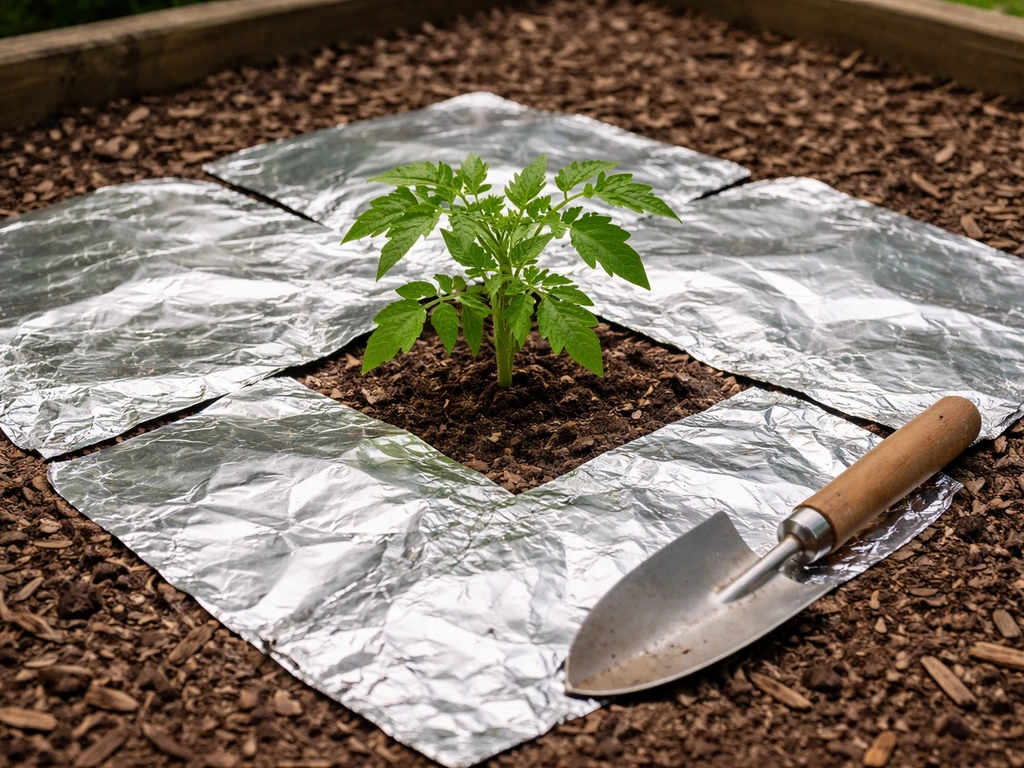
If you already have foil on hand and want to experiment, these guidelines will keep you from causing more harm than good.
- Use foil as ground-level mulch, not a wrap around the plant itself. Lay sheets flat on the soil surface around your plants, leaving a gap of at least 2 to 3 inches around the stem so foil never contacts the base.
- Anchor it properly. Use rocks, soil staples, or a thin layer of soil along the edges to keep foil from lifting and blowing around. Loose foil is a garden hazard.
- Start in early spring or early season. Foil mulch works best for pest deterrence before your plant canopy fills in. Once leaves and stems cover more than half the soil surface, the pest-deterrence benefit drops off significantly.
- Monitor temperature closely. On hot days above 85 to 90 degrees Fahrenheit, check whether the foil is concentrating heat at leaf level. If you see any yellowing, bleaching, or leaf curl near the foil, remove or reduce it immediately.
- For indoor light boosting, keep foil at least 12 inches from the plant and angle it to reflect ambient light toward the leaves rather than concentrating a direct beam.
- Plan to remove it. Foil is not a permanent garden addition. Pull it up before it tears into fragments, and dispose of it rather than leaving it to degrade in the soil.
The honest verdict is that foil sits in the same category as a lot of garden hacks: not useless, but overhyped and often misapplied. Even so, it does not reliably make plants grow better, and results depend heavily on the specific conditions overhyped and often misapplied. It works under the right narrow conditions, fails or harms plants when those conditions are not met, and is almost always outperformed by materials and techniques designed for the actual job. If you have been curious about similar DIY garden materials, the same skeptical lens applies to things like cardboard as a mulch layer or algae as a growth booster: the mechanism matters, and the conditions matter more than the material itself.
FAQ
If foil helps in low-light, how much light improvement should I actually expect?
Expect modest gains at best, because foil only redirects existing light. If your main problem is distance from the window, weak indoor intensity, or uneven grow light output, foil will not match the effect of relocating the light source or increasing hours of illumination.
Does it help seedlings outdoors or only during early pest pressure?
Both effects can matter, but they show up differently. Pest deterrence is most useful during the vulnerable early growth window when winged insects are colonizing, while the light-reflection effect depends on nearby shading and the foil's angle to the leaves.
Can I use foil around the whole plant like a cone or tent?
Only do it if it creates clean reflection without trapping heat. Enclosing the plant can raise local temperatures and increase leaf stress, so avoid fully surrounding foliage, especially in warm or sunny weather.
Where should foil be placed for light reflection, under the plant or beside it?
For low-light plants, placing foil under or along the side that faces the incoming light is usually more effective than placing it behind the plant. The key is that the reflective surface must “see” light and then “see” the shaded leaves.
Will foil work if my plants already get enough sun or light?
Usually no. If light is already sufficient, foil may add glare or heat stress rather than any growth benefit. In that case, the better move is checking watering consistency, soil structure, and nutrient balance.
What signs mean the foil is causing heat or light stress?
Look for bleached or crispy edges on lower leaves, sudden drooping on sunny days, or leaf tissue that looks sunburned near the plant base. If symptoms appear after adding foil, remove it and compare plant condition within 48 to 72 hours.
How close is too close, and should foil touch the plant?
Do not let foil press against stems or contact leaf tissue. Physical contact can block light at that exact point and can trap moisture against tissue, increasing disease risk.
Is foil safe for all plant types, including tropical houseplants and herbs?
Most plants tolerate brief, indirect changes, but heat sensitivity varies. Succulents, young seedlings, and heat-sensitive tropicals are more likely to show stress when reflective materials create a hotter microclimate near the base.
What is the best alternative if I want reflective mulch but not flimsy foil?
Use purpose-made reflective film designed for mulching (it stays intact, is easier to deploy, and keeps a consistent reflective surface). That matters because tearing and crumpling reduces coverage and can create hotspots.
If foil cools soil in studies, why do I still risk leaf scorching?
Soil temperature and leaf temperature are different. Even if soil under foil is cooler than under some alternatives, concentrated reflection near the plant can still overheat or overglare leaves, especially close to foliage on sunny days.
Does reflective mulch also reduce fungal disease?
It can indirectly help with pest pressure, but it does not replace good airflow and moisture management. If foil or reflective material creates moisture trapping or reduces drying around stems, it can worsen fungal problems rather than improve them.
Should I remove foil when temperatures rise?
Yes, if you see heat-stress symptoms or if your local days are hot and sunny. Reflective mulches are often most useful only within a temperature window, and some extension guidance recommends removing reflective materials during peak heat to prevent burning.
Will foil help if my plants are failing due to nutrients or watering, not light?
Foil cannot fix the limiting factor. If you have poor drainage, compacted soil, inconsistent watering, or nutrient deficiency, start there first, then consider reflective aids only after those fundamentals are stable.
Is there an easy way to test foil’s effect without overcommitting?
Compare on a small scale: place foil on one side or one row and leave a similar control area without foil. Track changes in leaf color, growth rate, and pest activity over one to two weeks, then decide whether to scale up or stop.
Next Articles

Does Cardboard Help Plants Grow? How to Use It Safely
Yes, cardboard can boost plant growth by suppressing weeds and improving soil moisture when used safely and properly.

Does Algae Help Plants Grow? When It Works and When It Hurts
Learn if algae boosts plant growth, when to use seaweed products or compost, and when it harms with risks.

Does Aluminum Foil Help Plants Grow? What Works and What Doesn’t
Find out if aluminum foil boosts plant growth or just placebo, plus safe ways to try it and better alternatives.