Yes, phosphorus genuinely helps plants grow, and it does so at a fundamental level that no other nutrient can replace. It's the backbone of ATP, the molecule every living cell uses to store and transfer energy, so without enough phosphorus, a plant literally cannot power its own metabolism. Root development, early seedling vigor, flowering, and fruiting are all tightly linked to phosphorus supply. That said, 'my plant needs phosphorus' is one of the most over-assumed diagnoses in home gardening. Getting it right means confirming the deficiency is real, understanding why your soil might not be delivering the phosphorus that's already there, and applying the right amount without creating a new problem.
Does Phosphorus Help Plants Grow? How to Fix Deficiency

Marcus Holloway
6 May 2026
What phosphorus actually does inside a plant
Phosphorus is the nutrient tied most directly to energy. Every time a plant converts sunlight into sugars during photosynthesis, or burns those sugars for growth, it does so using ATP (adenosine triphosphate). ATP is basically the plant's universal energy currency, and phosphorus is a required structural component of every ATP molecule. No phosphorus, no ATP, no energy transfer. The whole system stalls.
Beyond energy metabolism, phosphorus is a building block of DNA and RNA, which means it's involved in every cell division and every protein the plant builds. It's also part of phospholipids, which form cell membranes. This is why phosphorus deficiency hits early growth so hard: seedlings dividing rapidly need enormous amounts of phosphorus relative to their size, and a shortage during that window stunts them in ways they often can't fully recover from.
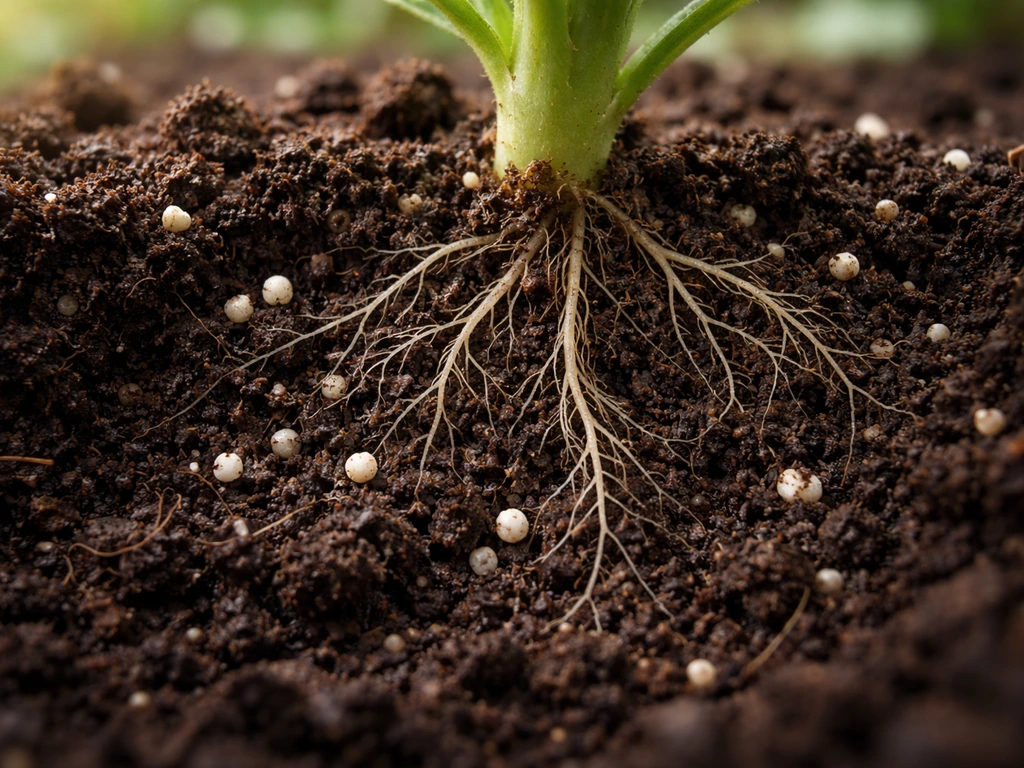
Roots are especially phosphorus-hungry. When phosphorus is limited, plants shift resources toward root growth at the expense of shoot development, increasing the root-to-shoot ratio as they 'forage' for more phosphorus in the soil. You'll often notice the top of the plant looking small and slow while the root system is actually working overtime. Flowering and fruiting are also directly affected: phosphorus deficiency delays flowering, which means less fruit, shorter harvest windows, and reduced seed set.
Signs your plants are running low on phosphorus
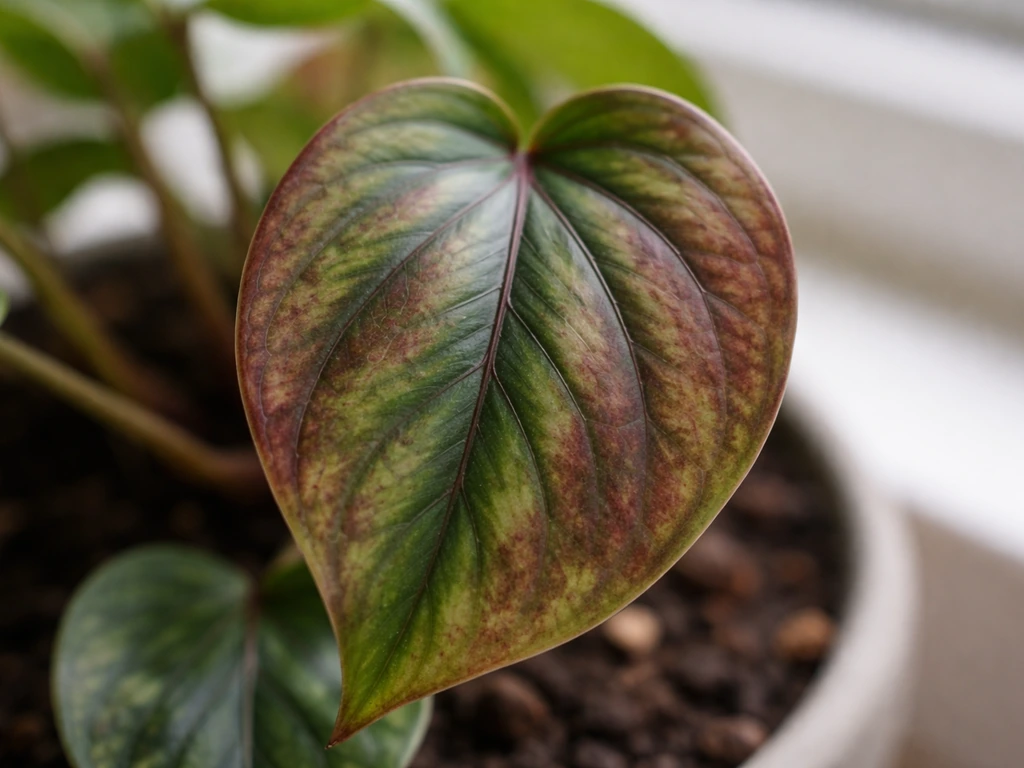
The classic visual symptom everyone mentions is purple or reddish coloring on the leaves, and it's real, but it's also one of the most misread signals in gardening. Here's what to actually look for and how to tell it apart from other causes.
Phosphorus is what plant scientists call a 'mobile' nutrient, meaning when the plant runs short, it pulls phosphorus out of older tissues and moves it to younger, actively growing areas. This is critical to understanding the symptom pattern: deficiency always shows up on older, lower leaves first. If you're seeing purple on new growth at the tips, that's likely something else.
- Purpling or bronzing on the undersides of older leaves, while upper surfaces stay dark green
- Leaves that are unusually small compared to what's normal for that plant
- Slow, stunted growth despite adequate water and light
- Older leaves yellowing early and dropping before they should (early senescence)
- Delayed or absent flowering, especially in annual flowers and fruiting vegetables
- In severe cases, lower leaf margins turn purple and the discoloration spreads across the whole leaf until the leaf dies
One important caveat: some herbicide damage, cold soil temperatures, and even certain genetics (like some tomato varieties in cool spring weather) can all cause purple coloring that looks identical to phosphorus deficiency. Before you buy fertilizer, check whether the purpling showed up after a cold snap or whether you're working with a plant that's been recently transplanted into cold soil. Cold roots simply can't absorb phosphorus efficiently regardless of how much is in the soil. A soil test will always give you a more reliable answer than visual symptoms alone.
How to apply phosphorus correctly
Understanding fertilizer labels first
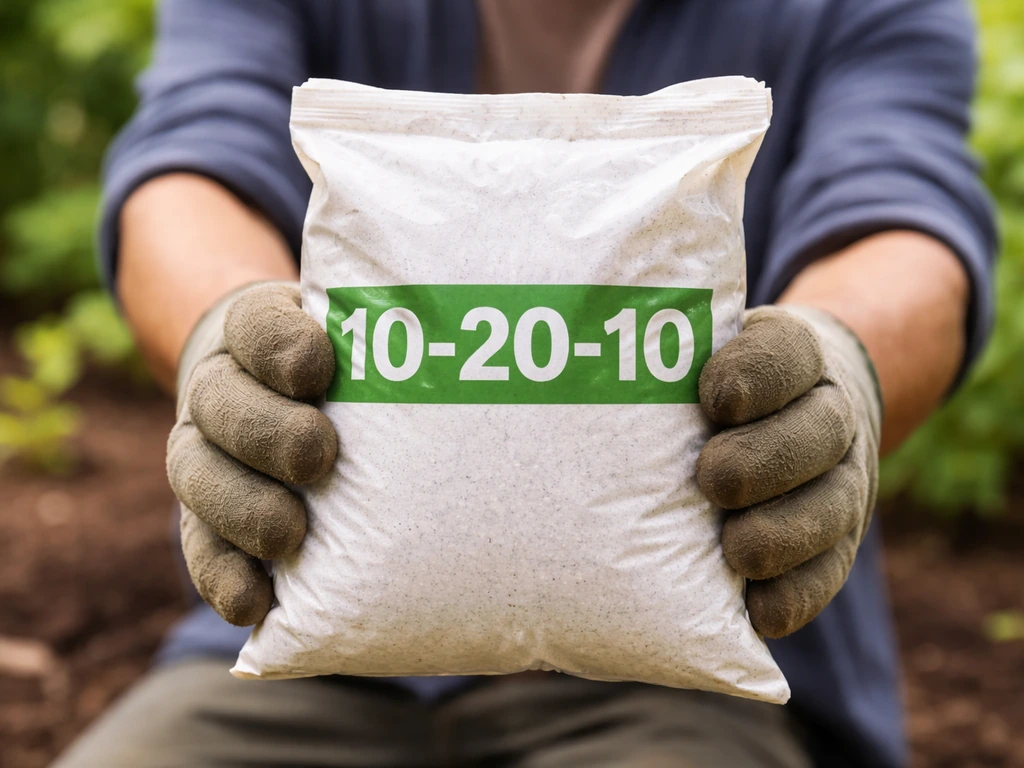
The middle number in any NPK fertilizer label (e.g., 10-20-10) represents phosphorus, but it's listed as P2O5, or phosphoric acid equivalent, not elemental phosphorus. This is a regulatory standard, and it means the number you see is not the raw amount of phosphorus in the bag. Elemental phosphorus content is roughly 44% of the P2O5 figure. So a 10-20-10 fertilizer contains about 8.8% actual elemental phosphorus, not 20%. This matters when you're comparing products or following a soil test recommendation that gives results in elemental P. The two are not interchangeable without conversion, and mixing them up leads to over- or under-application.
Fertilizer sources worth knowing
| Fertilizer Source | P2O5 Content (approx.) | Best Use Case | Notes |
|---|---|---|---|
| Superphosphate (single) | 18–20% | Broadcast before planting | Affordable, fast-acting, water-soluble fraction |
| Triple superphosphate (TSP) | 44–46% | Starter bands, pre-plant incorporation | Concentrated, cost-effective for deficient soils |
| Bone meal | 12–15% | Organic gardens, perennial beds | Slow release, also adds calcium |
| Rock phosphate | ~30% (mostly unavailable) | Long-term soil building | Very slow release, best in acidic soils with microbes |
| Diammonium phosphate (DAP) | 46% P2O5, 18% N | Starter fertilizer, pre-plant | Also adds nitrogen; watch total N if soil is already rich |
| Balanced NPK with P | Varies | General maintenance | Use only if soil test shows genuine deficiency |
Timing and placement
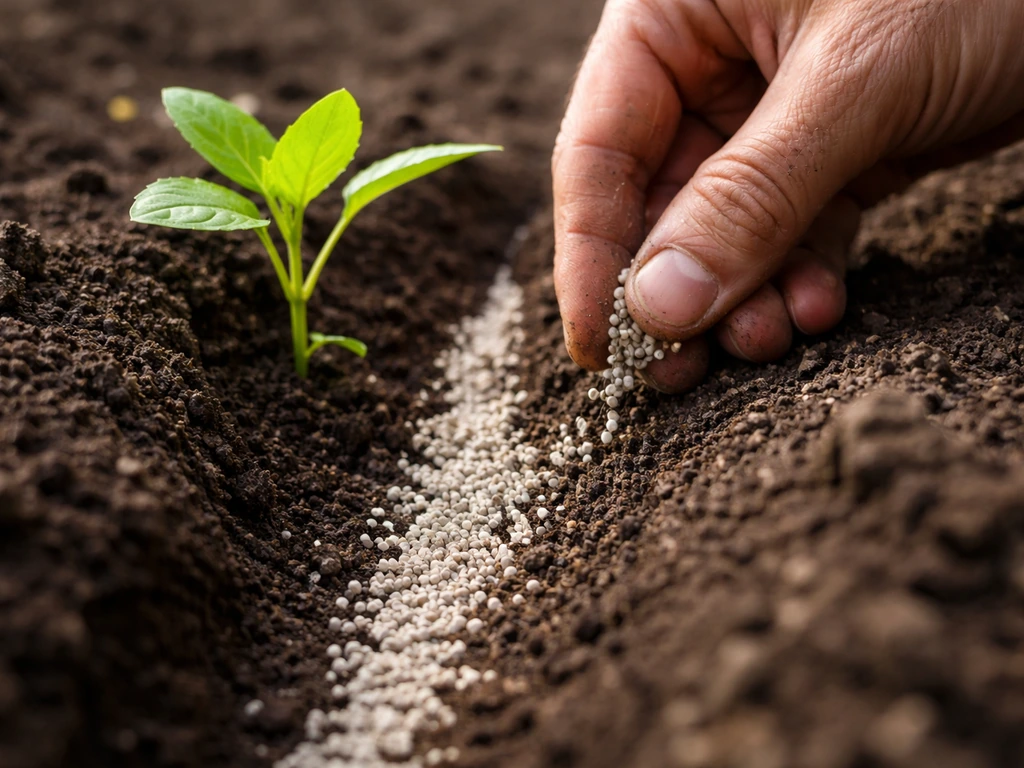
Phosphorus barely moves through soil on its own. Unlike nitrogen, which travels easily through water, phosphorus reaches plant roots almost entirely by diffusion, meaning it only moves a tiny distance toward roots. This makes placement critical. Broadcasting phosphorus on the surface and hoping it reaches the root zone is not an efficient strategy, especially in established beds. The most effective approach is incorporating it into the soil before planting, ideally mixed into the top 4 to 6 inches where roots actively feed.
For transplants and seedlings, a starter fertilizer with phosphorus placed in a band near (but not directly on) the roots gives early-season plants a significant advantage. Research consistently shows banded phosphorus is more efficient than broadcast application, especially in soils with adequate but not abundant P levels, because you're putting the nutrient right where roots can intercept it. Avoid applying phosphorus to frozen ground or surfaces where runoff is likely, as it will leave your garden and end up in waterways instead.
Why soil conditions decide whether phosphorus works at all
Soil pH: the single biggest lever
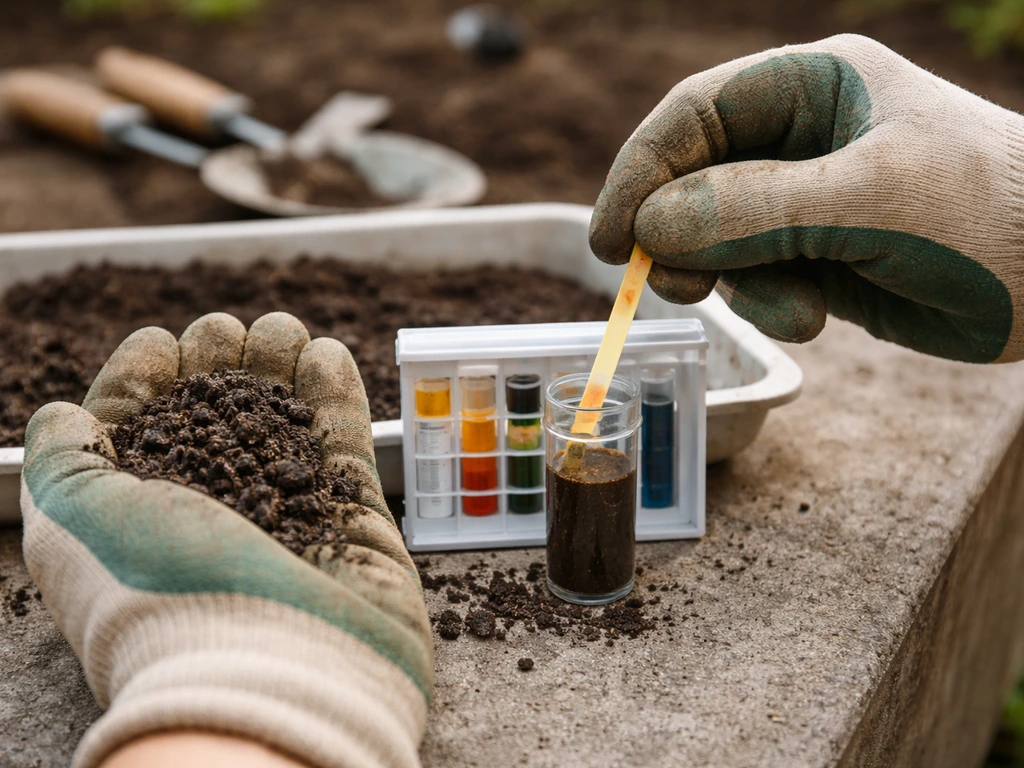
Phosphorus availability is more sensitive to soil pH than almost any other nutrient. The sweet spot is roughly pH 6.0 to 7.0. Below pH 5.5, iron, aluminum, and manganese react with phosphate and form insoluble compounds that roots cannot absorb. Above pH 7.0, excess calcium does the same thing, forming calcium phosphate compounds that tie up the nutrient. This is called phosphorus lock-up, and it's one of the most common reasons a gardener applies phosphorus fertilizer and sees no improvement. The phosphorus is in the soil; the plant just can't get to it. Testing and adjusting your soil pH (with lime to raise it or sulfur to lower it) can unlock existing phosphorus without adding any new fertilizer at all.
Soil biology and organic matter
Mycorrhizal fungi form partnerships with most plant root systems and dramatically extend the effective reach of roots for phosphorus uptake. Because phosphorus moves so slowly through soil, these fungal networks (which can explore a much larger soil volume than roots alone) are one of nature's primary solutions to phosphorus limitation. Soils with healthy microbial communities and decent organic matter levels support these partnerships. Heavily tilled soils, soils saturated with synthetic fertilizers, or soils with very low organic matter tend to have weaker mycorrhizal networks, which can limit phosphorus uptake even when soil levels look adequate.
Soil temperature and moisture
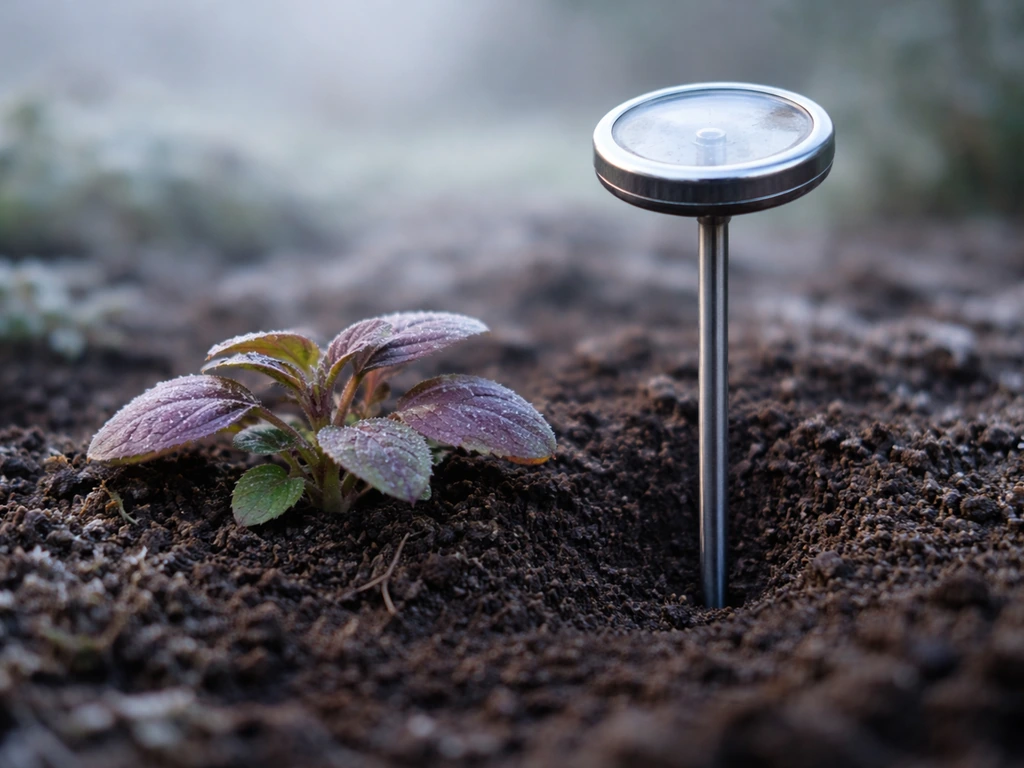
Cold soil is a direct antagonist to phosphorus uptake. Plant roots slow their metabolism in cold conditions, and the diffusion of phosphorus through the soil water slows as well. This is a very common situation in early spring when gardeners transplant seedlings into soil that hasn't warmed up yet. The plant turns purple, the gardener assumes phosphorus deficiency, applies fertilizer, and then nothing changes because the problem was cold soil all along. UC IPM’s phosphorus deficiency page notes diagnostic patterns on older foliage that can be consistent with phosphorus deficiency The plant turns purple, the gardener assumes phosphorus deficiency. Letting soil warm to at least 50 to 55°F before planting heat-loving crops largely solves this. Adequate (but not waterlogged) soil moisture also matters because phosphorus diffusion depends on a continuous water film in the soil.
How much phosphorus is enough (and when more becomes a problem)
This is where a lot of home gardeners go wrong. Because phosphorus is immobile in soil, it accumulates when you add more than plants use. Many established gardens and lawns already have more phosphorus than they need. Research from the University of Minnesota found that many garden soils test well above the threshold where additional phosphorus produces any measurable plant response. If your Bray P1 soil test comes back above about 25 ppm, or your Olsen test is above 18 ppm, adding more phosphorus fertilizer is unlikely to help your plants and will just build up in the soil.
The environmental consequence of excess phosphorus is real. Phosphorus that builds up in soil eventually moves into waterways through runoff and erosion, contributing to algae blooms that devastate aquatic ecosystems. This is not a theoretical concern: it's one of the primary water quality problems in agricultural regions. Always get a soil test before applying phosphorus, follow the rate recommendation on the test report, and resist the temptation to add extra 'just in case.' Following the lab's recommended rate and application method is genuinely better for your garden and for the watershed downstream.
When phosphorus still doesn't seem to help
You've tested your soil, pH is in range, you've applied phosphorus correctly, and the plants still look stunted or purple. Here's how to troubleshoot that scenario.
- Check soil temperature with a thermometer. If it's below 50°F at root depth, the plant cannot absorb phosphorus efficiently regardless of supply. Wait for soil to warm.
- Look at root health. Compacted soil, overwatering, root rot from fungal disease, or root damage from pests will all prevent phosphorus uptake even in perfect soil conditions. Dig up a small section and inspect the roots for browning, mushiness, or absence in the zone where you'd expect them.
- Re-examine your pH reading. A single pH test can be unreliable. Test multiple spots in the bed, use a calibrated meter or a fresh test kit, and consider sending a sample to a lab. Even half a pH unit outside the 6.0 to 7.0 range can cause significant lock-up.
- Consider iron and aluminum content. In highly weathered soils (common in the Southeast US) or soils with lots of clay, iron and aluminum oxides can bind phosphate tightly even at correct pH. These soils may need much higher phosphorus additions to achieve adequate availability, or benefit from practices that increase organic matter and mycorrhizal activity.
- Ask whether the real limitation is something else. Plants that look like they're phosphorus-deficient are sometimes actually nitrogen, sulfur, or zinc deficient. A full nutrient panel from a soil lab (not just a simple NPK test) will catch problems that a targeted phosphorus fix won't address.
- Check for herbicide damage. UC IPM specifically notes that certain herbicides cause leaf distortion and color changes that mimic nutrient deficiency. If symptoms appeared after a herbicide application, the phosphorus is not the culprit.
How phosphorus fits with nitrogen and potassium
Phosphorus doesn't work in isolation. In the same way, eggs are not a reliable way to help plants grow because phosphorus and nitrogen from any source still need to be available at the right levels in your soil Phosphorus doesn't work in isolation. Nitrogen (N) drives leaf and stem growth and is the nutrient most obviously tied to green, lush vegetation. Potassium (K) regulates water movement, enzyme activation, and stress tolerance. Potassium also supports plant growth by regulating water movement, enzyme activation, and stress tolerance Potassium (K). Phosphorus handles energy transfer and is the primary driver of root development and reproductive growth. Because phosphorus is essential for energy transfer and root growth, getting enough of it helps plants grow better. These three don't compete with each other so much as they cover different jobs, and a plant that's short on any one of them will underperform even if the other two are abundant.
The most common nutrient mistake in home gardens is applying too much nitrogen while ignoring phosphorus and potassium, or applying a high-phosphorus starter and then neglecting nitrogen mid-season. A vegetable plant with plenty of phosphorus but inadequate nitrogen will have decent roots and flower timing but weak, pale foliage and reduced photosynthesis. Flip the situation, and you get lush leaves but poor fruiting and root development. If you're comparing nutrients and wondering where to focus, think of it this way: nitrogen feeds the factory, phosphorus powers the machinery, and potassium keeps the whole system regulated. You need all three in balance, and a soil test is the only reliable way to know which one is actually limiting your plants.
If you've been exploring other nutrient questions alongside phosphorus, the same soil-test-first principle applies across the board. Whether you're looking at potassium, iron, or even minerals and organic amendments, the core approach doesn't change: confirm the deficiency with data before you apply anything. This matters because the way minerals support plant growth is always tied to whether your soil can deliver them in usable form minerals and organic amendments. Phosphorus is genuinely one of the most important nutrients in plant growth, but it's also one of the most misapplied. Getting the diagnosis right is more than half the job.
FAQ
If my leaves look normal now, does that mean phosphorus is definitely fine?
Not necessarily. Phosphorus deficiency often shows up first on older, lower leaves, and symptoms can be masked if cool conditions improve or if the plant temporarily reallocates resources. Check whether the affected leaves were older growth and whether purpling stops progressing after the soil warms. A soil test (Bray or Olsen) is the only way to confirm you are not just temporarily seeing an early-season response.
Can I fix suspected phosphorus issues by adding compost or manure instead of fertilizer?
Compost and manures can contribute phosphorus, but they may not raise plant-available phosphorus quickly enough, especially in cool, low-activity periods when roots cannot access it well. They also can raise soil pH slowly, which helps availability only if your pH is out of the optimal range. If your soil test is low in available P, a targeted phosphorus amendment or starter fertilizer is usually more reliable than compost alone.
What’s a safer way to apply phosphorus when I’m not sure the problem is deficiency?
Start with a soil test and follow the lab’s recommended rate and method. If you must act before results, use low-dose starter fertilizer near the roots rather than heavy broadcast applications, and avoid applying phosphorus to frozen ground or on top of soil that may wash away. The goal is to give early access without building excess phosphorus in the soil.
Does foliar spraying phosphorus work if the plant looks purple?
Usually not as a reliable fix. The core limitation in many cases is root access, soil chemistry (pH-related lock-up), or cold conditions, and foliar feeding cannot bypass the slow soil diffusion pathway where deficiency actually starts. If you suspect phosphorus lock-up or cold roots, address pH and soil temperature, and treat foliar applications as secondary, not the main strategy.
Why do some plants stay purple even after adding phosphorus?
Common reasons include cold soil slowing phosphorus uptake, phosphorus being tied up by too-low pH or too-high pH, and the presence of look-alike causes such as herbicide injury. Also check whether nitrogen or potassium is limiting, because phosphorus support can’t fully overcome a deficiency in those other essential roles. If soil P was already high, added phosphorus may not change anything.
If my soil test is high in phosphorus, should I stop worrying about phosphorus symptoms?
Yes, high test values often mean phosphorus is not the limiting factor, even if you see purpling. In that case, focus on the more likely causes: cold roots, pH-related availability problems despite total P, herbicide or transplant stress, or another nutrient limitation such as nitrogen. Adding more phosphorus when soil P is already above threshold is unlikely to help and increases environmental runoff risk.
How do I interpret NPK numbers, since phosphorus is listed as P2O5?
Use the conversion mentioned in the article: the label’s P2O5 number is not elemental phosphorus. If your soil test recommendations are in elemental P, you need to match units carefully before calculating application rate. If you do not know which unit your recommendation uses, contact the lab or follow their exact instructions to avoid underdosing or overdosing.
Does soil moisture level change phosphorus availability?
Yes. Phosphorus availability depends on diffusion through the soil water, so drought slows delivery to roots. However, waterlogged conditions can reduce root oxygen and limit uptake even if phosphorus is present. Aim for consistently moist but not saturated soil, especially during early establishment.
Do mycorrhizal fungi help in all soils, or are there limits?
They help most when soil conditions support active fungal networks, adequate organic matter, and reasonable pH. Highly tilled soils, very low organic matter, or repeated reliance on synthetic fertilizer without building soil life can reduce their effectiveness. If you are increasing phosphorus access, combining proper soil conditions with conditions that favor mycorrhizae is more effective than adding phosphorus alone.
If phosphorus doesn’t move, can I apply it in a small spot and still get results?
Yes, localized placement often works well because roots can only access phosphorus near where it is incorporated. For seedlings, banding fertilizer near the root zone is typically more efficient than broadcasting across the bed. In established beds, incorporate into the top several inches where roots actively forage, rather than leaving phosphorus on the surface.
Next Articles
Does Egg Shell Help Plants Grow? How to Use It Right
Find out if eggshells help plants, how to apply them safely, and when calcium or pH fixes are needed.
Will Epsom Salt Help Plants Grow? When to Use It
Yes, Epsom salt can help magnesium deficiency, but it won’t fix most growth problems. Learn when to use and how.
How Do Microorganisms Help Plants Grow: Practical Guide
Learn how microbes in the rhizosphere fix nitrogen, boost phosphorus, aid roots, suppress disease, and how to grow them.