Light problems, overwatering, root damage, nitrogen deficiency, or the wrong soil pH are far more common causes of struggling plants, and no amount of Epsom salt will fix any of those. So the real answer is: Epsom salt helps plants grow when magnesium deficiency is the actual problem, and it does nothing (or even causes harm) when it isn't. how do minerals help plants grow Epsom salt helps plants grow when magnesium deficiency is the actual problem.
What Epsom salt actually is and what magnesium does for plants
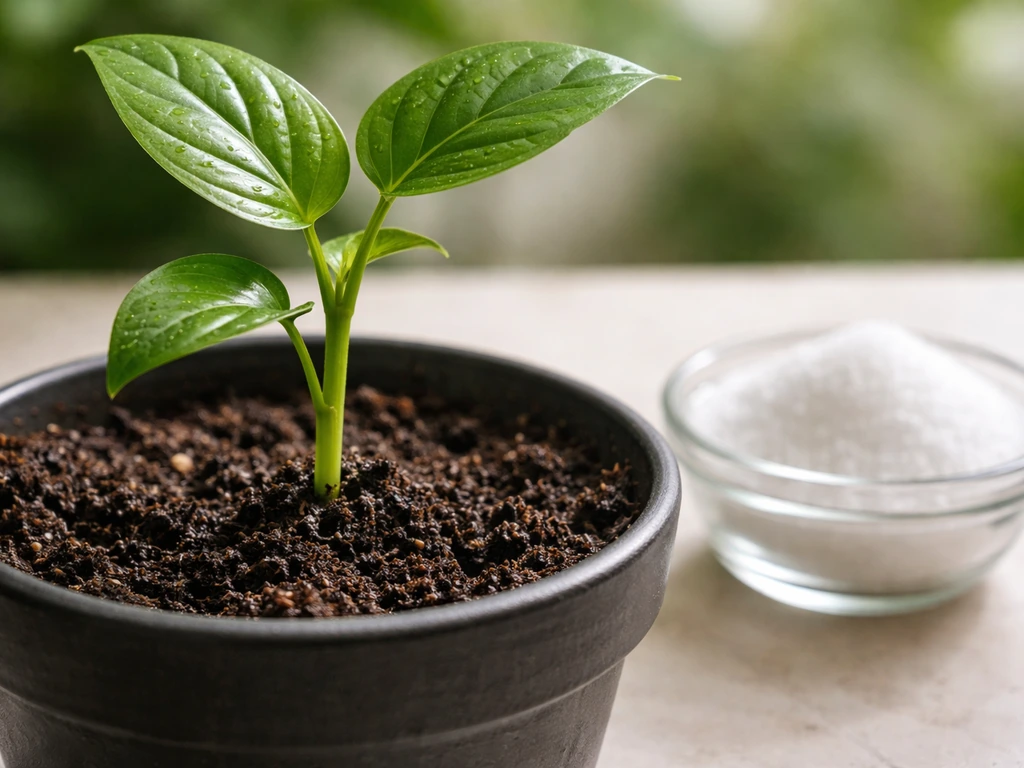
Epsom salt is a mineral compound: magnesium sulfate heptahydrate, written chemically as MgSO4·7H2O. When you dissolve it in water and apply it to soil or leaves, plants can absorb both the magnesium and the sulfur. Magnesium is the specific element that matters most here, and its job inside a plant is fundamental: it sits at the center of every chlorophyll molecule. No magnesium, no chlorophyll. No chlorophyll, no photosynthesis. Beyond that, magnesium activates more enzyme systems inside a plant than any other mineral nutrient, making it critical for energy transfer and nutrient metabolism across the board. Sulfur, the other component, also plays a supporting role in protein synthesis, but magnesium is the star of this particular show.
Because magnesium is a mobile nutrient, plants can pull it out of older tissues and redirect it toward new growth when supplies run low. That mobility is actually a key diagnostic clue, and I'll come back to it in the next section. The takeaway on chemistry is this: Epsom salt delivers magnesium and sulfur to your plant. It is not a complete fertilizer, it contains zero nitrogen, phosphorus, or potassium, and it is not a soil amendment that improves structure or pH. It does one specific thing.
How to tell if your plant actually needs magnesium
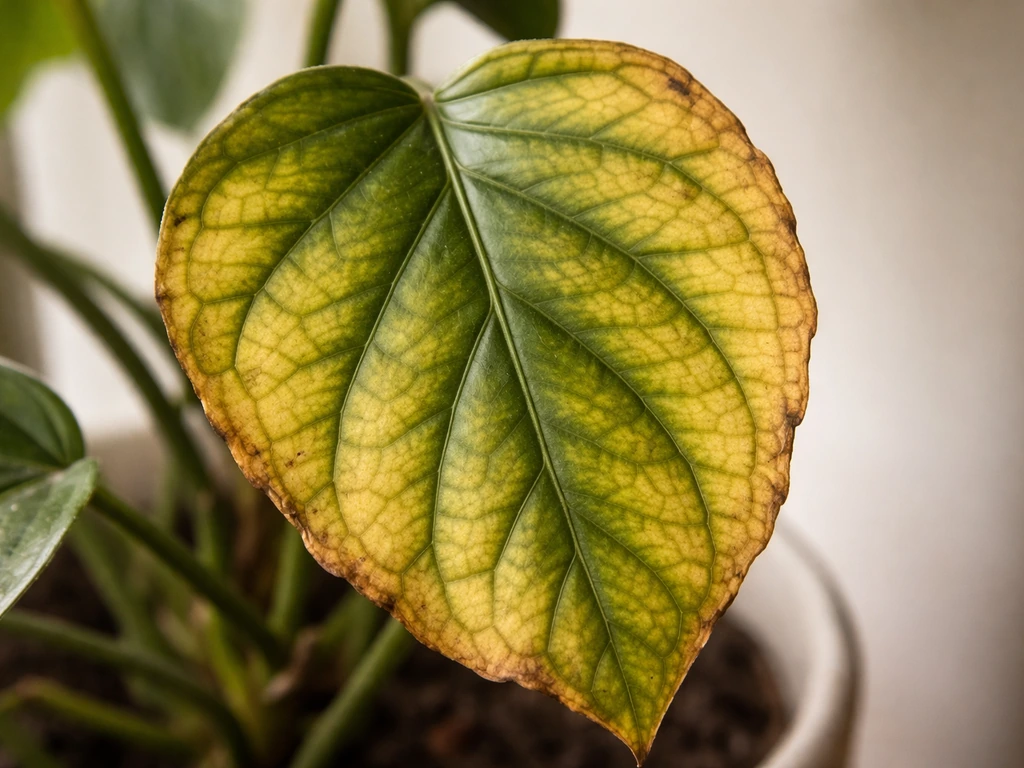
The classic magnesium deficiency symptom is blank" rel="noopener noreferrer">interveinal chlorosis on older leaves. That means the tissue between the veins turns yellow while the veins themselves stay green. It blank" rel="noopener noreferrer">starts on the lower, older leaves first, not the new growth at the tips. As the deficiency worsens, those yellowed areas can progress to reddish-purple blotches and eventually brownish, scorched-looking leaf margins. On palms, the pattern shifts a bit: leaf tips go bright yellow while the base of the leaf along the midrib stays green.
The older-leaves-first pattern is what separates magnesium deficiency from iron deficiency, which shows up on new growth first. If your youngest leaves are the ones yellowing while older leaves look fine, Epsom salt is almost certainly not your answer. Iron deficiency, manganese issues, or pH problems that lock out multiple nutrients are more likely culprits. This distinction matters a lot because the two can look similar at a glance, and treating iron chlorosis with magnesium will do nothing useful. Iron deficiency shows up on new growth first, which is why it can be easy to mix up with other causes of yellow leaves.
Magnesium deficiency is most likely to occur in sandy, acidic soils where nutrients leach quickly, in containers where water-soluble nutrients flush out with every watering, and in high-yield vegetable crops that pull heavy amounts of Mg from the soil. Tomatoes, peppers, and roses are plants people commonly associate with Mg needs. But even in these cases, confirming deficiency before treating is the smart move.
Symptoms that look like Mg deficiency but aren't
Yellowing between leaf veins can also be caused by nitrogen deficiency (which starts on older leaves too, but tends to produce a more uniform pale green to yellow rather than a patterned interveinal look), potassium deficiency, manganese or sulfur shortages, poor root health, root rot from overwatering, or soil compaction that limits root uptake altogether. Root damage from deep cultivation, nematodes, or excess fertilizer salt can cause the same chlorotic appearance as a nutrient deficiency because damaged roots simply cannot absorb anything properly. If you have drainage problems or your soil stays waterlogged, adding Epsom salt will not help and may make things worse.
How to apply Epsom salt safely: soil vs foliar
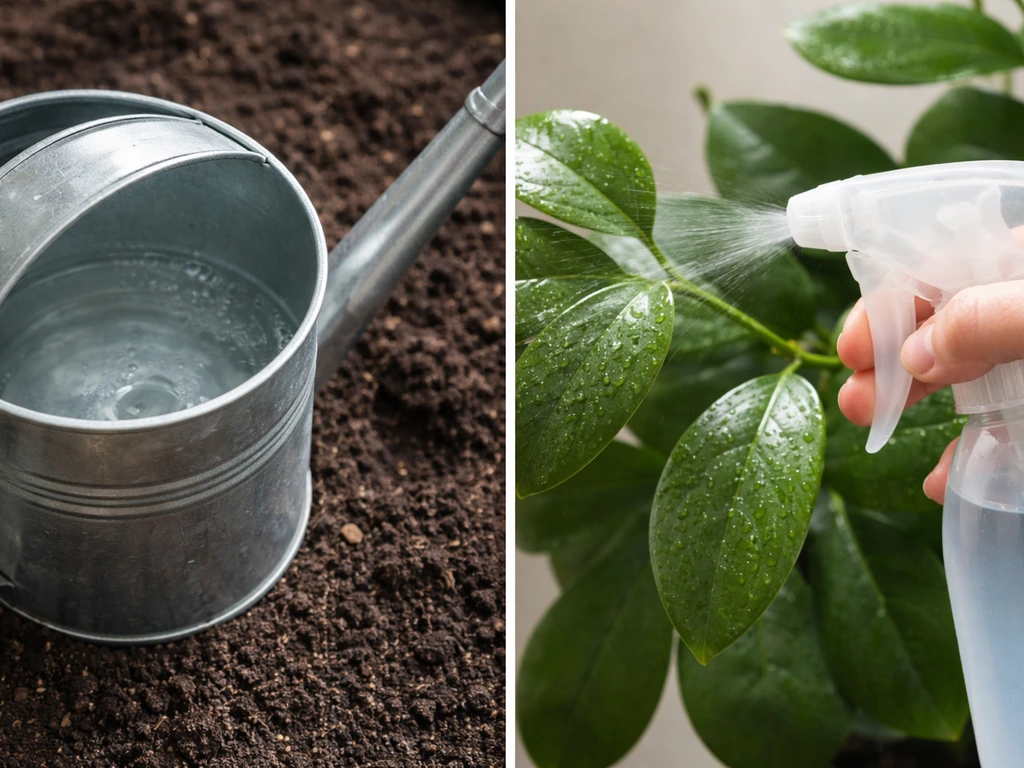
There are two main application methods: dissolving it in water and applying to soil, or mixing a diluted solution and spraying it directly on leaves (foliar feeding). Each has its place, and both come with cautions.
Soil application
For soil application, dissolve Epsom salt in water and apply around the root zone. A commonly referenced home-garden rate is roughly 1 tablespoon per gallon of water applied at the base of the plant, though extension-level guidance for broadcast field applications runs in the range of 10 to 20 pounds per acre, which gives you a sense of scale.
The key point from university extension research is that application should be need-based, meaning you should only be adding it if your soil test shows low magnesium levels or if deficiency symptoms are clearly present. If your soil is already adequate in magnesium, adding more is unnecessary and can contribute to salt buildup over time, which plants actively dislike.
Epsom salt also leaches through soil readily, so it will not accumulate in deep beds the way a lime application would, but repeated unnecessary applications still push salt levels up.
Foliar spray
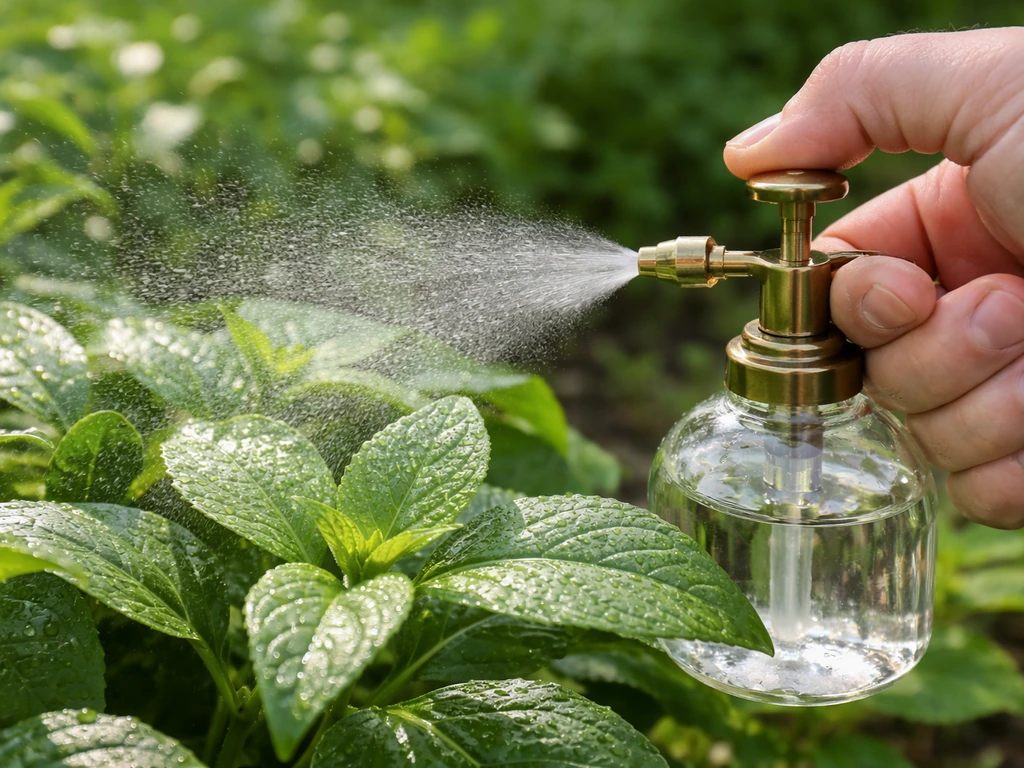
Foliar application delivers magnesium directly through the leaves and can work faster than soil application when symptoms are acute. UMass Extension guidance suggests dissolving approximately 1.5 pounds of Epsom salt per 10 gallons of water and spraying at weekly intervals until symptoms improve. The important warning here: do not spray in hot, sunny conditions. Epsom salt foliar sprays can cause leaf scorch if applied when the sun is strong and the solution dries too quickly on leaf surfaces. Spray in the early morning or evening. Also, once deficiency symptoms improve, stop spraying. There's no benefit to continued treatment when the plant has adequate magnesium, and excess magnesium in the soil can leach into groundwater.
How often to use it and what results to expect
Epsom salt is not a routine fertilizer you add every week like a nitrogen feed. Apply it when deficiency symptoms appear or when soil tests confirm low magnesium, then monitor for improvement. With foliar application, you may see the interveinal chlorosis start to improve within a few weeks on the treated leaves. New growth coming in should look noticeably greener and healthier if magnesium was truly the limiting factor. Keep in mind that already-yellowed older leaves typically will not fully green back up, so look at new growth as your progress indicator.
For ongoing maintenance in magnesium-depleted soils, some gardeners apply a diluted Epsom salt solution once or twice per growing season. That's very different from treating it as a weekly tonic. Excess magnesium is a real problem: it can compete with calcium and potassium uptake at the root level, and the Clemson Home and Garden Information Center specifically warns that unnecessary Epsom salt use adds unneeded salt to garden soil. More is not better here.
When Epsom salt won't help (and what to check instead)
This is where a lot of gardening advice goes wrong. Epsom salt has a devoted following online, and you'll find recommendations to use it for everything from boosting tomato yields to reviving struggling houseplants. The science does not support that blanket enthusiasm. Epsom salt will not help if any of the following is the real problem:
- Insufficient light: no mineral supplement fixes inadequate photosynthesis caused by too little light
- Overwatering or poor drainage: waterlogged roots cannot absorb anything, including magnesium
- Nitrogen or potassium deficiency: these are far more common causes of stunted growth and yellowing, and Epsom salt contains neither
- Soil pH out of range: if pH is too high or too low, plants cannot absorb nutrients already present in the soil
- Root damage from pests, nematodes, deep cultivation, or fertilizer burn: damaged roots lock out all nutrient uptake regardless of what you add
- Soil that already has adequate or high magnesium levels: adding more creates imbalances without any growth benefit
The pattern I see most often with gardeners who are disappointed by Epsom salt is this: they see yellowing, they read that Epsom salt helps with yellowing, they apply it, and nothing improves. Eggshell does not reliably help plants grow, so treat yellowing only after confirming the nutrient or growing condition that is actually missing do eggs help plants grow.
If you are wondering whether egg shell helps plants grow, focus on the same idea: only feed or amend when you have a clear nutrient need, otherwise you can end up changing the soil without improving growth Epsom salt helps with yellowing. That's because yellowing is a symptom with many causes, and Epsom salt only addresses one of them.
If you are wondering whether do crystals help plants grow, remember that plant growth depends on what nutrients and conditions are actually missing, not a single material yellowing is a symptom with many causes. It's a bit like taking iron supplements when you're tired without checking whether you're actually anemic. Maybe it helps, maybe it doesn't, and in the meantime you haven't addressed what's actually wrong.
It's also worth noting that nutrients like phosphorus, potassium, and iron all have distinct roles in plant health and deficiency symptoms of their own. Phosphorus is also an important nutrient, and if plants are deficient, they may struggle even when magnesium is adequate nutrients like phosphorus. Potassium can help plants grow by supporting key functions like water regulation and overall plant vigor when plants are deficient phosphorus, potassium, and iron. If your diagnosis points toward one of those instead of magnesium, Epsom salt is simply the wrong tool. The broader picture of mineral nutrition matters here, and Epsom salt is just one small piece of it.
Epsom salt vs. dolomitic lime: which is right for your situation?
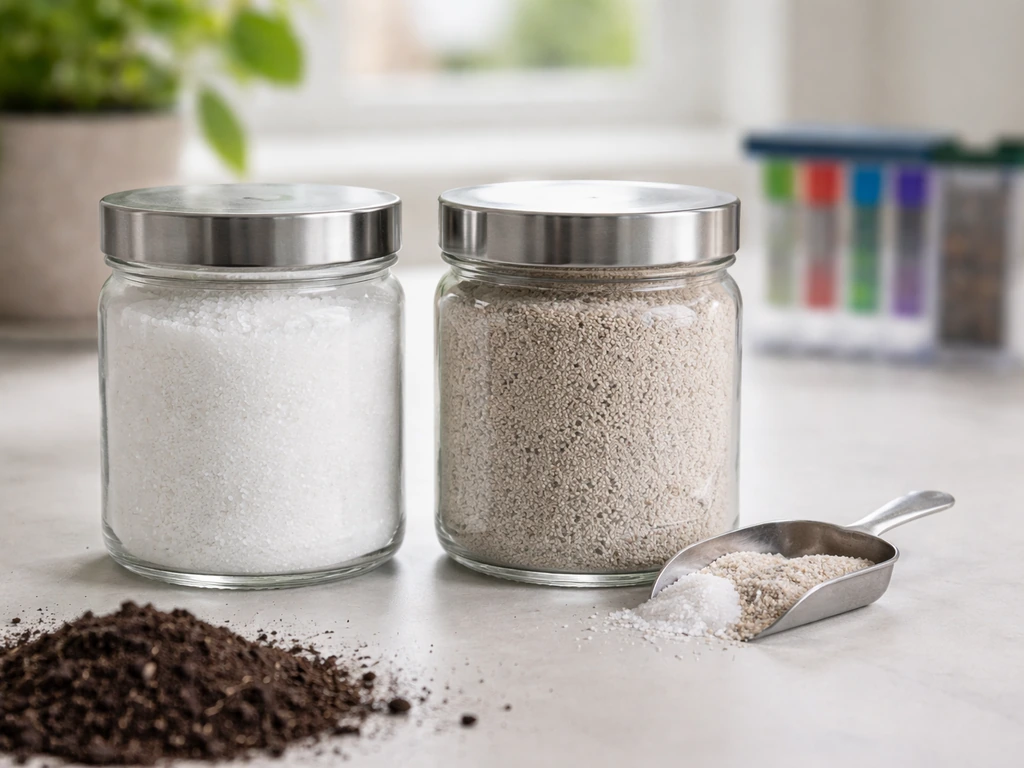
If your soil test confirms low magnesium, you actually have more than one option for fixing it. Epsom salt (magnesium sulfate) and dolomitic lime (calcium magnesium carbonate) both deliver magnesium, but they behave very differently in the soil.
| Factor | Epsom Salt (MgSO4) | Dolomitic Lime |
|---|
| Effect on soil pH | None | Raises pH (neutralizes acidity) |
| Speed of action | Fast (water-soluble) | Slow (breaks down gradually) |
| Leaching risk | High (flushes through easily) | Low (binds to soil particles) |
| Also supplies | Sulfur | Calcium |
| Best for | Acidic or well-draining soils with confirmed low Mg | Acidic soils that also need pH correction |
| Risk of overuse | Salt buildup, Mg excess | Overcorrecting pH, Ca/Mg imbalance |
UMass Extension recommends dolomitic lime as the preferred method when the soil is also acidic and needs pH adjustment, since you get two corrections in one application. Epsom salt is better suited for situations where pH is already in a good range but magnesium specifically is running low, or for a fast foliar response when deficiency symptoms need immediate attention. If you're not sure which applies to your situation, that's what a soil test is for.
Your best next steps: diagnose before you treat
Before you add anything to your soil or spray your plants, take ten minutes to actually diagnose the problem. Here's a straightforward process:
- Look at which leaves are affected: if yellowing or chlorosis is on older, lower leaves with green veins still visible, magnesium deficiency is a reasonable suspect. If new growth is the most affected, look elsewhere (iron is a common culprit in that case).
- Check your watering and drainage: stick your finger 2 inches into the soil. If it's still wet, overwatering or poor drainage may be the whole problem. Fix that before adding any nutrients.
- Get a soil test: your local cooperative extension service offers low-cost soil tests that will tell you actual magnesium levels, pH, and other key nutrients. Oregon State and other land-grant universities tie Epsom salt recommendations directly to soil test results in parts per million, not guesswork. This is the single most useful $15 to $20 you can spend on your garden.
- Check your fertilizer routine: if you're not using a balanced fertilizer with nitrogen, phosphorus, and potassium, that shortage is almost certainly a bigger growth limiter than magnesium. Epsom salt does not replace a complete fertilizer.
- If Mg deficiency is confirmed or strongly suspected, try a foliar spray first: dissolve 1.5 pounds of Epsom salt per 10 gallons of water (roughly 2 tablespoons per gallon is a common home-scale equivalent), spray in the early morning, and monitor new growth over the following 2 to 3 weeks.
- If no improvement after a few weeks, revisit the diagnosis: consider soil pH, root health, and whether another nutrient (nitrogen, potassium, iron) is the actual limiting factor.
The overarching principle here is the same one that runs through any good troubleshooting process: match the treatment to the actual problem. Epsom salt is a legitimate, useful tool when magnesium is genuinely what your plant needs. It's not a growth booster, a general tonic, or a fix-all for struggling plants. When used correctly, based on observed symptoms and ideally confirmed by a soil test, it can make a real visible difference. When used as a shot in the dark, it usually does nothing and occasionally makes things worse. Know what you're treating, treat it appropriately, and your plants will respond a lot better than they will to any guesswork.