The liquids that genuinely make plants grow faster are balanced liquid fertilizer (diluted correctly), plain water applied at the right frequency and volume, and biostimulants like diluted kelp/seaweed extract or aerated compost tea. That's the honest shortlist. Everything else you've heard about, including soda, milk, aspirin water, vinegar, beer, and Epsom salt solutions, either does nothing measurable or actively damages your plants. The fastest growth you'll ever get comes from matching the right liquid to whatever is actually limiting your plant right now, whether that's nutrients, water stress, or soil biology.
What Liquids Make Plants Grow Faster: Safe Tests

Marcus Holloway
14 May 2026
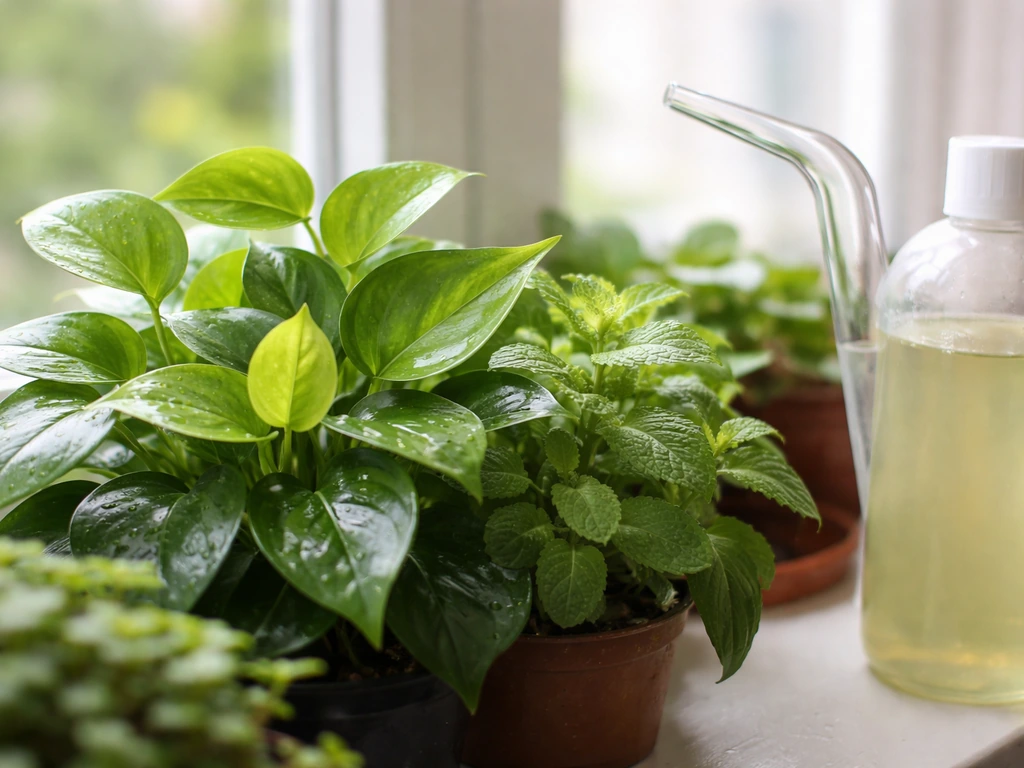
The liquids that actually work (and why)
Before going through the list, it's worth knowing why liquids matter at all. Plants take up water through their roots, and dissolved minerals ride that water into the plant's vascular system. No water movement, no nutrient transport. Liquids also carry hormonal signals and microbial metabolites that influence how fast cells divide and elongate. So the "liquid" question isn't just about watering, it's really about what you're delivering to the root zone and the leaf surface, and in what concentration.
Water itself (and how you're probably using it wrong)
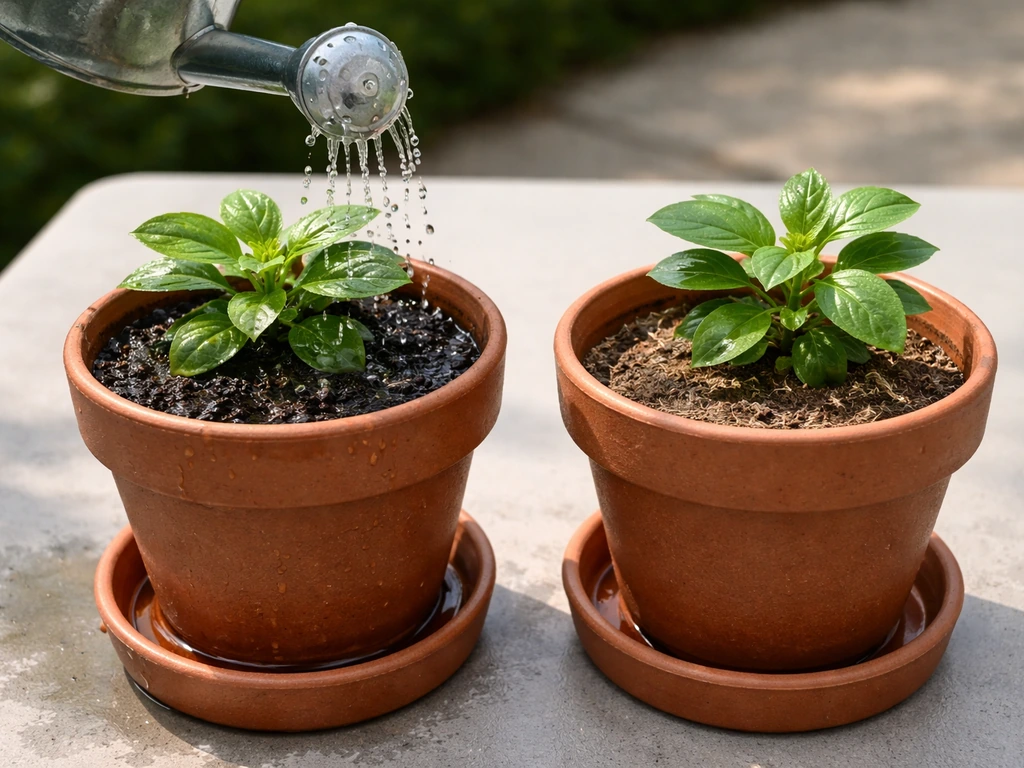
Plain water is the most growth-limiting liquid for most home gardeners, not because they forget to water, but because they water inconsistently or too shallowly. Roots follow water. Shallow, frequent sips produce shallow roots that stress out during dry spells. Deep, less frequent watering encourages roots to go down, access more nutrients, and support faster above-ground growth. The type of water matters too: tap water is fine for most plants, but if yours is heavily chlorinated or has very high dissolved salts, letting it sit overnight or switching to filtered water can help. If you want to dig into the water-type question specifically, there's a lot more to say about which water is best for plants to grow. Plain water type can matter too, so it's worth focusing on which water is best for plants to grow in your setup.
Liquid fertilizer (the single biggest growth lever)
A balanced, water-soluble fertilizer dissolved at the correct dilution is the most reliable way to accelerate plant growth when nutrients are the limiting factor. These products deliver nitrogen (for leaf and stem growth), phosphorus (for root and flower development), and potassium (for overall plant function) directly to the root zone in a form plants can absorb almost immediately. Unlike granular fertilizers or compost, liquid fertilizers don't need to be broken down by soil biology first, so the response is faster. The key word, though, is "diluted correctly." Fertilizer burn is a real and common problem: concentrated fertilizer salts pull water out of root tissue through osmosis, essentially dehydrating the roots from the outside. The result is brown leaf edges, wilting, and stunted growth rather than faster growth.
Kelp and seaweed extract
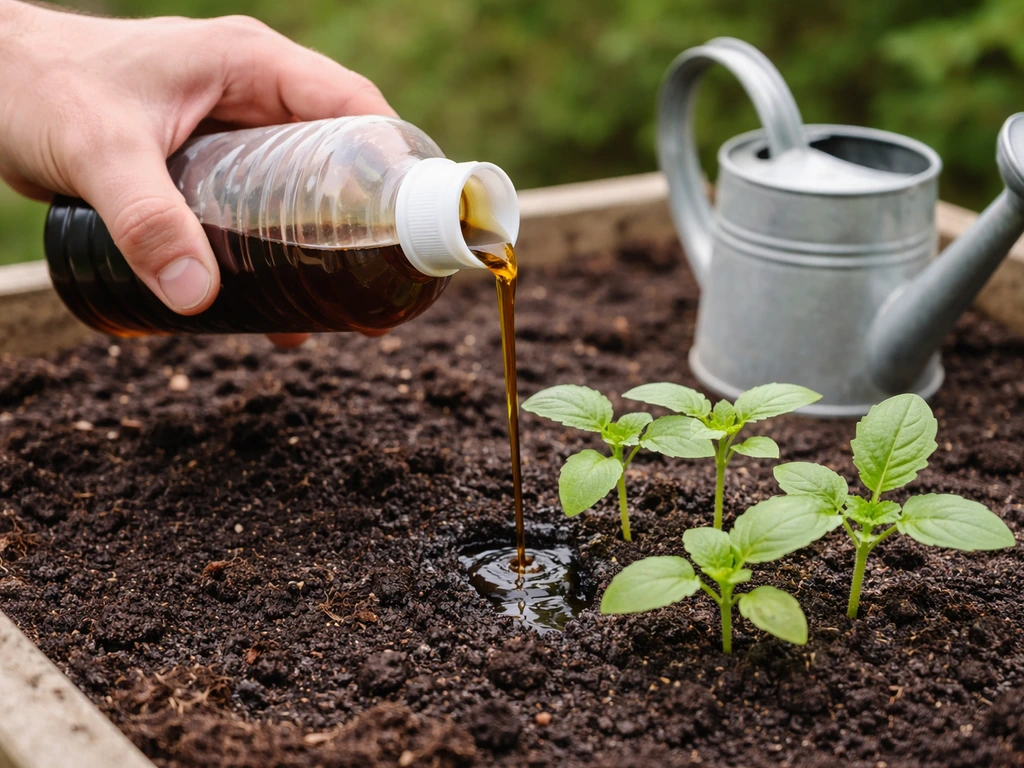
Kelp-derived liquid extracts are one of the more genuinely interesting options beyond basic fertilizers. They contain natural plant hormones including cytokinins and gibberellins, as well as trace minerals and compounds that appear to stimulate root development and stress tolerance. Gibberellins specifically promote cell division and elongation and can speed germination, which is part of why seaweed products show real results in controlled trials. Commercial kelp extracts like Seacrop 16 are used in professional horticulture as foliar supplements, and the mechanism is solid enough that this isn't folklore. These are best used as a supplement to, not a replacement for, a balanced fertilizer program.
Aerated compost tea
Compost tea is made by steeping compost in water and aerating it to encourage beneficial aerobic microbes to multiply. When applied to soil, it can improve microbial diversity, which indirectly helps plants access nutrients more efficiently. The recipe is simple: 1 part compost to 10 parts water, aerated until dissolved oxygen stays around 6 mg/L, then strained and used immediately (within 4 hours, or the microbial population crashes and quality drops). There's an important caution here, especially for vegetable gardens. Compost tea can harbor human pathogens like coliform bacteria or Salmonella if brewing conditions aren't carefully managed. University extension programs in Vermont and Connecticut both recommend that for edible crops, using well-finished compost worked into soil is a safer approach than tea. If you do brew tea, use plant-based compost rather than manure-based, keep your equipment clean, and never apply it to edible portions of the plant.
Rooting hormones (auxin-based liquids)
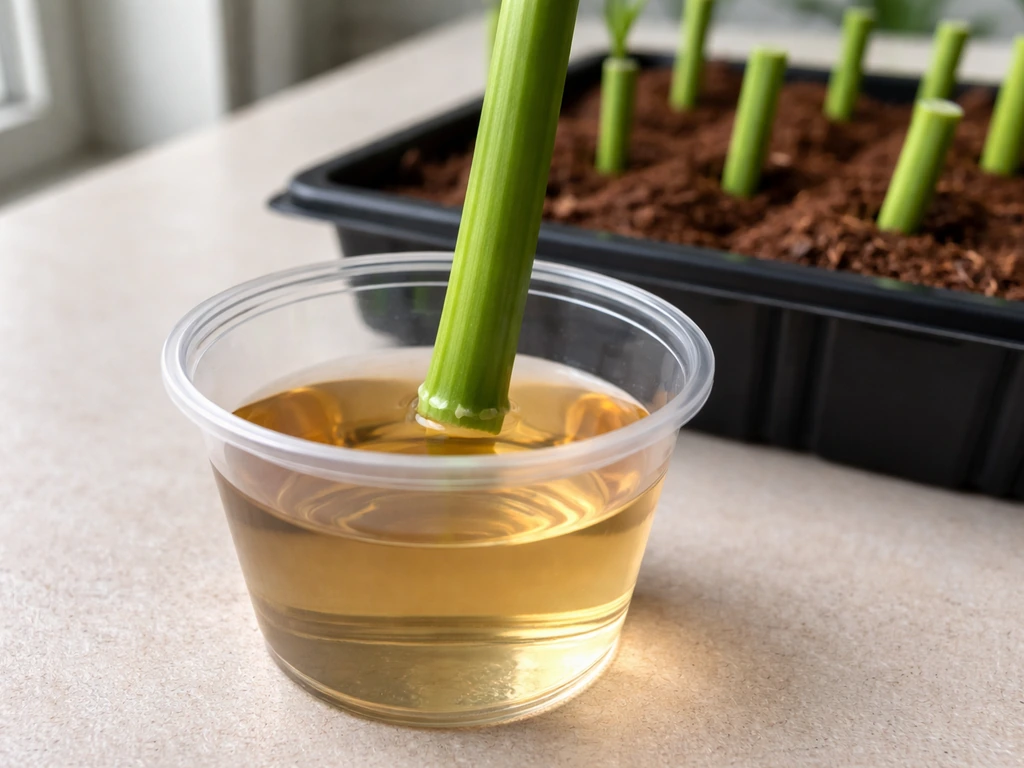
If you're trying to grow faster from cuttings rather than established plants, liquid rooting hormone products that contain auxin (like IBA, indole-3-butyric acid) are worth knowing about. Auxin is the hormone active in virtually all commercial rooting compounds. It doesn't make a whole plant grow faster in the traditional sense, but it dramatically speeds up root initiation in cuttings, which is a form of faster propagation. Gibberellic acid (GA) products are sold for germination speed and can work for certain dormant seeds. These are legitimate plant growth regulators with real mechanisms, but they're targeted tools, not general growth tonics.
Why liquids speed up growth: the short science
Growth at the cellular level requires three things happening at once: water for turgor pressure (cells literally expand by filling with water), carbon from photosynthesis, and mineral nutrients for building enzymes, proteins, and structural compounds. Liquids are the delivery system for two of those three. When you apply a nutrient solution, dissolved ions like nitrate, phosphate, and potassium move into root cells against a concentration gradient, which requires energy from the plant but happens rapidly when the solution is at the right concentration. Too concentrated and osmotic pressure reverses, pulling water out of root tissue instead. Too dilute and you're not moving the needle on growth. The sweet spot is typically a dilute solution applied regularly, not a strong solution applied rarely.
Hormone-containing liquids work differently. They bind to receptors in plant cells and trigger gene expression changes that tell cells to divide faster, elongate, or differentiate into specific tissue types. Gibberellins, for instance, upregulate genes involved in cell-wall loosening, which lets cells take on more water and expand. Cytokinins (present in kelp extract) promote cell division in shoot meristems. These effects are real, but they're also dose-sensitive and developmental-context-sensitive, meaning the same liquid that promotes growth in a seedling might have little effect on a mature fruiting plant.
Design your own plant liquid experiment at home
If you want to actually test which liquid works best for your plants in your conditions, you can run a clean home experiment. The key is controlling variables so you know what's driving the difference. Here's how to set it up properly.
- Choose one plant species and use cuttings or seedlings from the same source (same genetics, same age). Fast-growing plants like beans, radishes, or basil show results within 2 to 3 weeks.
- Set up at least 4 identical containers with identical potting mix. Label them: Control (plain water), Treatment A (dilute liquid fertilizer), Treatment B (kelp extract), Treatment C (your choice, e.g., aerated compost tea).
- Place all containers in the same location with the same light exposure. Do not move them during the experiment.
- Apply the same volume of liquid to each container on the same schedule (e.g., 100 mL every 3 days). The only variable that should differ is what's in that liquid.
- Measure height weekly, and optionally count leaves or measure leaf width. Record every measurement in a simple table.
- At the end of 3 to 4 weeks, compare measurements across groups. If Treatment A is consistently taller or leafier, the fertilizer is making a difference. If all groups look the same, your limiting factor might be light or soil quality, not the liquid.
The control group (plain water) is the most important part. Without it, you have no baseline, and you can't know whether the treated plants grew faster because of the liquid or just because it rained or the light improved. If you can run two containers per treatment instead of one, your results will be much more reliable because you can average out pot-to-pot variation. This kind of experiment is genuinely fun to run, and the results usually surprise people.
How to use each liquid: dilutions, timing, and cautions
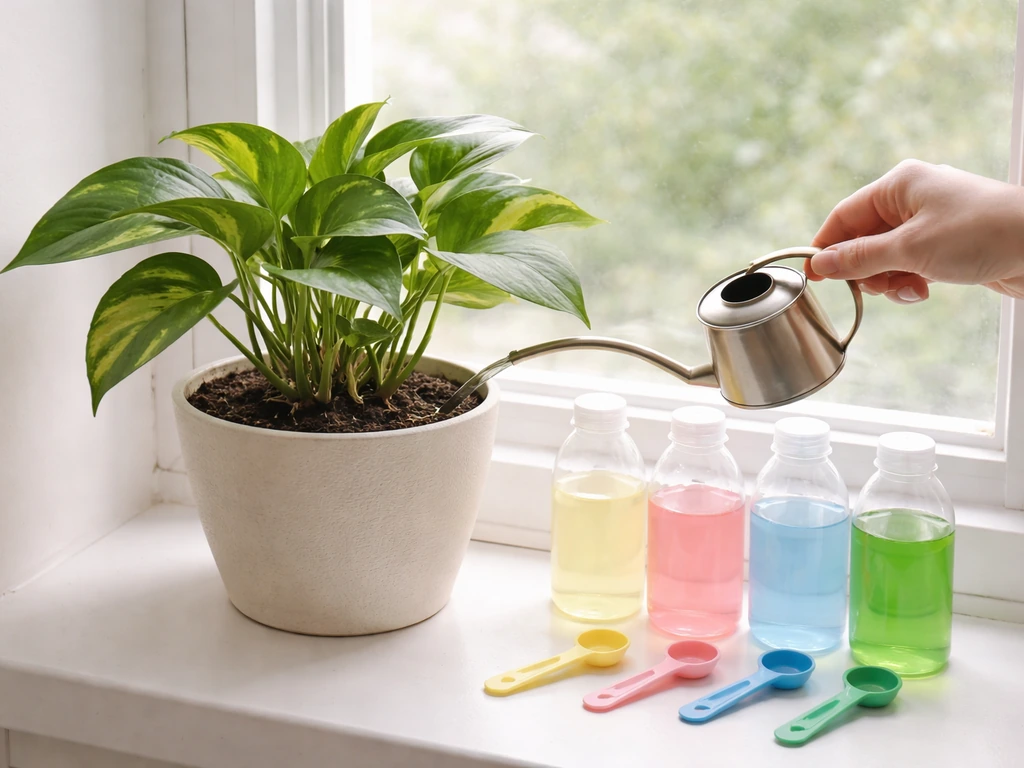
| Liquid | Dilution / Rate | How Often | Application Method | Key Caution |
|---|---|---|---|---|
| Balanced liquid fertilizer (e.g., 20-20-20) | Follow label; typically 1 tsp to 1 tbsp per gallon for most concentrates; commercial injector at 1:100 | Every 1 to 2 weeks during active growth | Drench the root zone; avoid soaking foliage | Do not exceed label rate; fertilizer burn occurs when concentrate contacts roots or wet leaves |
| Kelp / seaweed extract | 1 to 2 tbsp per gallon (or per product label) | Every 2 to 4 weeks as a supplement | Soil drench or foliar spray in early morning | Use as a supplement, not a standalone fertilizer; excess trace minerals can accumulate |
| Aerated compost tea | Use undiluted or diluted 1:1 with water | Once every 2 to 4 weeks on soil | Soil drench only for edible plants; foliar on ornamentals if risk-tolerant | Use within 4 hours of brewing; never use manure-based tea on edibles; clean all equipment |
| Liquid rooting hormone (auxin) | Per product label; typically a ready-to-use solution or diluted powder | Once at time of cutting propagation | Dip cutting base or soak briefly (5 to 30 seconds) | Longer soak times or higher concentrations can inhibit rather than promote rooting |
| Gibberellic acid solution | Very low: typically 50 to 250 ppm for seed soaking | Once at germination for dormant seeds | Brief seed soak before planting | Not a general growth booster; overuse causes abnormal elongation (etiolation-like symptoms) |
A note on foliar feeding: applying liquid fertilizer directly to leaves can work, but it's higher risk than a root drench. Leaf scorch is a real outcome, especially if you spray in full sun, on wet foliage, or at high concentration. If you do use foliar applications, do it in the early morning, keep the solution dilute, and rinse leaves with plain water if you see any spotting within 24 hours.
Liquids that won't help (and a few that will hurt)
This is the section most gardeners actually need, because the internet is full of enthusiastic recommendations for liquids that have little or no scientific backing. Some of these are harmless in small amounts, but none of them reliably speed up plant growth, and several can damage your plants or soil.
- Soda and carbonated drinks: The sugar feeds soil bacteria, not plants. Plants can't absorb sucrose through their roots in any meaningful way, and the added salt load from sugary drinks raises soil osmotic stress over time.
- Milk: Milk applied as a foliar spray or soil drench creates a film that can interfere with gas exchange and encourage fungal growth. There is no reliable evidence it accelerates growth, and the fatty acids and proteins in milk decompose in ways that are not beneficial to the root zone.
- Vinegar: Vinegar is dilute acetic acid. It lowers soil pH, and in high concentrations it kills plant tissue. It's sometimes used as a herbicide. Do not water plants with vinegar expecting growth benefits.
- Aspirin water (salicylic acid solutions): There is no evidence that aspirin sprays prevent or treat plant diseases at home-use concentrations. Extension research has not found it to be a reliable treatment, and it is not recommended.
- Beer: Stale beer is occasionally pitched as a growth enhancer because it contains trace minerals and sugars. In practice, it functions like a very weak, poorly formulated fertilizer with a lot of drawbacks. It is not comparable to a balanced nutrient solution.
- Epsom salt solution: This is one of the most persistent myths in home gardening. Epsom salt is magnesium sulfate, and adding it when your plants don't have a confirmed magnesium deficiency will do nothing except compete with calcium uptake, which can actually worsen problems like blossom end rot in tomatoes. If you suspect magnesium deficiency (yellowing between leaf veins on older leaves), get a soil test first.
- Urine: Undiluted urine has high salt and urea concentrations that can cause osmotic stress and root burn. Even heavily diluted, it's an inconsistent nitrogen source with no real advantage over a proper fertilizer solution.
The pattern here is worth noticing. Most of these myths persist because someone applied them to a healthy plant, the plant kept growing (as healthy plants do), and credit was given to the liquid rather than to the plant's normal growth trajectory. That's not an experiment, it's a coincidence. If you want to know whether something works, you need a control group, which is exactly why the experiment design section above matters.
Why your plant isn't growing faster: match the liquid to the real problem
Here's the single most important thing to understand about liquid growth boosters: none of them work if the real problem isn't what they solve. If your plant isn't getting enough light, no fertilizer in the world will compensate. If your soil is waterlogged and roots are rotting, adding kelp extract won't help. You have to diagnose the limiting factor first. If you want answers that translate directly into better growth, start by matching the right liquid to what your plant is actually missing what's good for plants to grow.
| Symptom / Situation | Likely Limiting Factor | Best Liquid Intervention | What Won't Help |
|---|---|---|---|
| Pale green or yellow leaves, slow growth on a well-watered plant | Nitrogen or general nutrient deficiency | Balanced liquid fertilizer at label rate | Epsom salt, compost tea alone |
| Yellowing between veins on older leaves, normal new growth | Magnesium deficiency (confirm with soil test) | Dilute Epsom salt ONLY if soil test confirms Mg is low | General fertilizer may not contain enough Mg |
| Plant is healthy but slow; organic soil, no fertilizer used | Microbial activity and nutrient availability | Aerated compost tea or dilute liquid fertilizer | Plain water, vinegar, soda |
| Cuttings not rooting, new plants failing to establish | Insufficient auxin for root initiation | Liquid rooting hormone (auxin) | Kelp extract alone, fertilizer at this stage |
| Stunted growth with brown leaf edges or root tip die-off | Over-fertilization / salt stress | Plain water (flush the medium thoroughly) | More fertilizer, Epsom salt, compost tea |
| Slow germination from seed | Dormancy or insufficient warmth/moisture | Gibberellic acid soak for dormant species; warm water for others | Fertilizer, milk, aspirin water |
| Good growth in spring, stalls in summer | Heat/water stress; soil drying out fast | Increased watering frequency; kelp extract for stress tolerance | Fertilizer increase (worsens salt stress in heat) |
| Overall slow growth despite good watering and feeding | Insufficient light (most common overlooked factor) | None: address light first | No liquid will substitute for adequate photosynthesis |
The troubleshooting mindset is: start with a visual diagnosis, check light and water first since they're free and fixable, then consider whether nutrients are the limiting factor before buying anything. A basic soil test (under $20 at most county extension offices) will tell you exactly which nutrients are deficient so you can choose the right fertilizer instead of guessing. University of Minnesota Extension also emphasizes that adding common “miracle” garden amendments can require blank" rel="noopener noreferrer">soil testing and nutrient diagnosis instead of assuming it will boost growth. What you add to the soil and what you add to the water are related decisions, and thinking about both together gives you much better results than treating liquid feeding as a standalone fix. To improve growth from the soil side, focus on what you add to the soil such as compost, balanced amendments, and properly aerating organic matter.
If you've confirmed that nutrients are the issue and you want to go deeper on exactly what to put in your water for maximum effect, the dilution ratios, water quality considerations, and additive options are worth exploring further. Choosing what to put in your plants to make them grow starts with matching the liquid to the limiting factor in your soil and watering routine what to put in your water. For a practical checklist, see what to add to plants to help them grow and how to match it to the specific limitation you found what to put in your water. For most plants, that usually means balanced liquid fertilizer diluted correctly, plus plain water and (optionally) biostimulants like diluted kelp or aerated compost tea what to put in your water for maximum effect. The short version is this: start with water used correctly, add a balanced liquid fertilizer at half the recommended rate and work up, consider kelp extract as a biostimulant supplement, and run a simple control experiment if you want real evidence for your specific plants and conditions. That approach will outperform any folk remedy you've read about online, every time.
FAQ
How do I tell if my plants need nutrients versus more consistent watering before choosing a liquid?
Look for patterns, not just faster growth goals. Pale green new growth often points to low nitrogen, and slow root establishment can point to nutrient or water delivery issues. If leaves are wilting during the day and recover overnight, that is usually water stress, not a need for fertilizer, so fix watering depth and frequency first.
Is it better to use liquid fertilizer every day or less often at higher strength?
For most home setups, the safer approach is dilute more frequently rather than stronger less often. Concentrated solutions applied rarely tend to increase salt buildup risk and can still cause osmotic stress, even if your plants seem fine initially.
Can I mix kelp extract or compost tea into my regular liquid fertilizer solution?
Usually keep them separate unless the label specifically says they are compatible. Mixing can change concentration, pH, and microbial activity, and with compost tea it can also kill the aerobic microbes you are trying to deliver. If you must combine, test a small batch and avoid fertilizing and tea at the same time in edible beds.
What water quality problems are most likely to limit growth at home?
Heavy chlorination and very high dissolved salts (hard, high TDS water) are the most common issues. If your plants show crusty residue on soil after watering or leaf tips burn without obvious overfertilizing, try letting water sit overnight, using a filter, and keeping fertilizer at half strength.
Will more fertilizer always speed growth if I do it carefully?
Not necessarily. If the real limiting factor is light, roots can still be stressed even with nutrients, because carbon from photosynthesis limits cellular growth. Also, once nutrients are sufficient, extra salts can reduce water uptake and slow growth, so “more” often becomes “less.”
How soon should I see results from a biostimulant like kelp extract?
Expect effects to be subtle at first. With kelp-derived extracts, you might notice changes in root activity or vigor within 1 to 2 weeks, but dramatic jumps usually require that nutrients and watering are already adequate. If nothing changes after a couple of cycles, re-check light and nutrient deficiency rather than increasing dose.
What’s the safest way to do foliar feeding so I don’t scorch leaves?
Use lower concentration than you would for a soil drench, spray early morning, and avoid wet leaves staying in direct sun. If you see any spotting within 24 hours, rinse with plain water and pause foliar feeding. Keep foliar feeding away from edible portions close to harvest.
Can I use compost tea on vegetables if I’m careful?
You can reduce risk but not eliminate it. The safest route for edible gardens is well-finished compost worked into soil instead of tea. If you choose tea anyway, use plant-based compost, keep equipment clean, and never apply near edible harvest areas or on parts you plan to eat.
Do rooting hormones make established plants grow faster too?
No, auxin-based rooting products mainly speed root initiation in cuttings, not whole-plant growth. For established plants, use proper nutrient and watering management for faster growth, and reserve auxin products for propagation when you want faster rooting.
What should I measure in my home control experiment to know which liquid is actually working?
Track at least two growth metrics, such as new leaf count and total height, plus an indirect signal like soil moisture consistency. Keep the light, pot size, and watering volume identical for all groups, and average results across at least two containers per treatment to reduce randomness.
If my plants get greener after fertilizer, does that mean the liquid is the cause?
Not automatically. Plants can look better naturally as they acclimate to light or recover from transplant stress. That is why the baseline matters: compare against plain water controls under the same conditions, or you may mistakenly credit the liquid for normal growth trajectory.
Next Articles
What to Put in Water to Help Plants Grow Today
Add the right nutrients and adjust water pH, chlorine, hardness, and temperature for healthier plant growth with safe st
What to Add to Plants to Help Them Grow: Fertilizer, Soil
Learn what to add to plants, from compost and fertilizer to mulch and pH fixes, with safe timing and dosing.
What Liquids Help Plants Grow Best: A Practical Guide
Learn which liquids best boost plant growth: water quality, nutrient solutions, fertilizer dosing, and fixes for stalled