No, fertilizer is not strictly required to grow plants. Plants can grow, flower, and thrive in nutrient-rich soil without you ever opening a bag of granules. But here is the honest follow-up: most garden soil is not nutrient-rich enough, most potted plants run out of available nutrients fast, and skipping fertilizer in those situations shows up quickly as pale leaves, stunted growth, and disappointing flowers. So the real answer is not yes or no, it is: it depends on your soil, your setup, and what you are growing.
Do You Need Fertilizer to Grow Plants and Flowers?
Marcus Holloway
23 Apr 2026
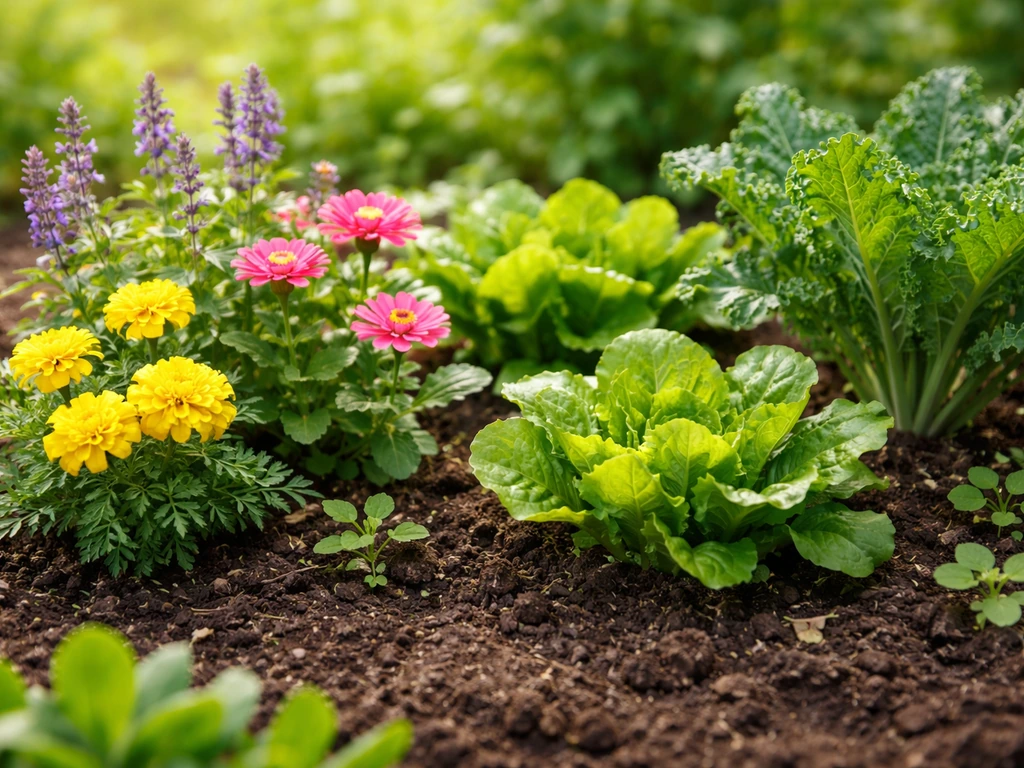
Do plants truly need fertilizer, or can they grow without it?
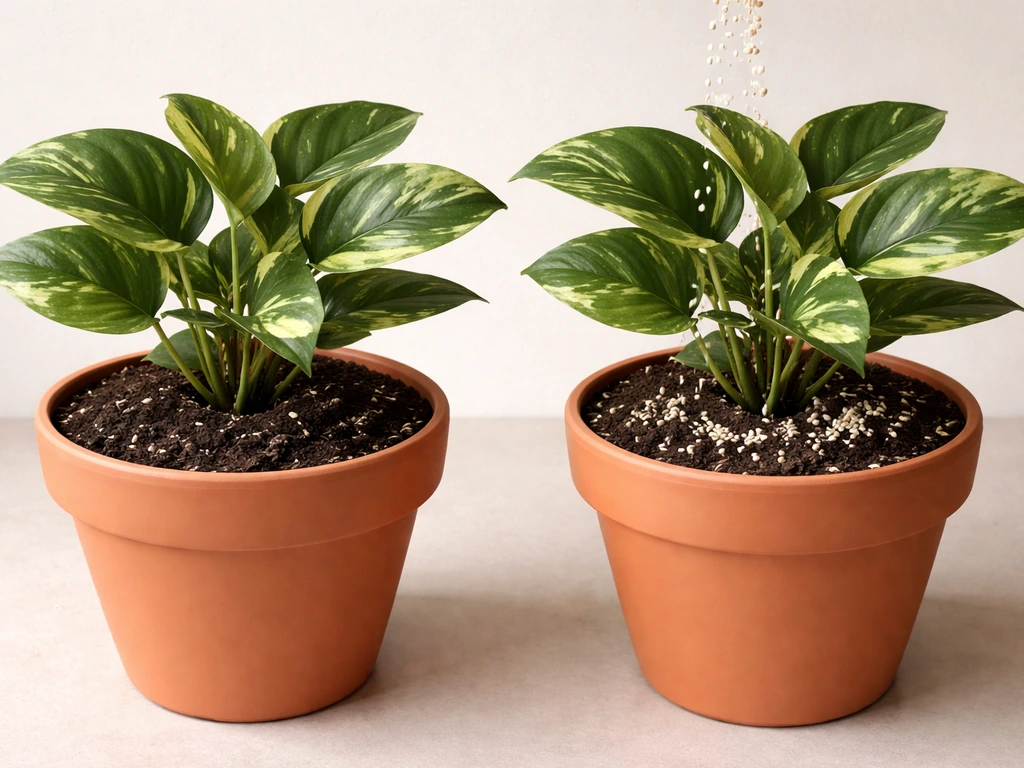
Plants do not need fertilizer as a product. They need nutrients, specifically nitrogen, phosphorus, and potassium as the big three, plus a range of micronutrients like iron, magnesium, and calcium. Fertilizer is just one delivery method for those nutrients. Rich, well-managed garden soil can supply enough of them through natural nutrient cycling, where organic matter breaks down and releases what plants need. That is exactly how forests grow without anyone fertilizing them.
The myth that fertilizer is always necessary comes from conflating the product with the underlying need. What is always necessary are the nutrients themselves. If your soil already provides them in forms plants can absorb, commercial fertilizer adds little benefit and can even cause problems. On the other hand, if your soil is sandy, compacted, depleted, or you are growing in a container, the gap between what the soil holds and what your plant needs becomes real very quickly.
And while we are clearing the air: no amount of talking to your plants, playing music, or other gardening folklore substitutes for actual nutrients in the root zone. The science-backed drivers of plant growth are soil quality, light, water, and nutrients. If you are wondering whether plant food helps plants grow, the answer depends mainly on whether your plants are actually short on nutrients and your soil can supply them plant food help plants grow. Fertilizer is a tool that addresses the last one when the first one falls short.
When fertilizer is most necessary
Think of fertilizer as gap-filling. The wider the gap between what your soil naturally provides and what your plants need, the more fertilizer matters. Three situations push that gap open the widest.
Poor or depleted soil
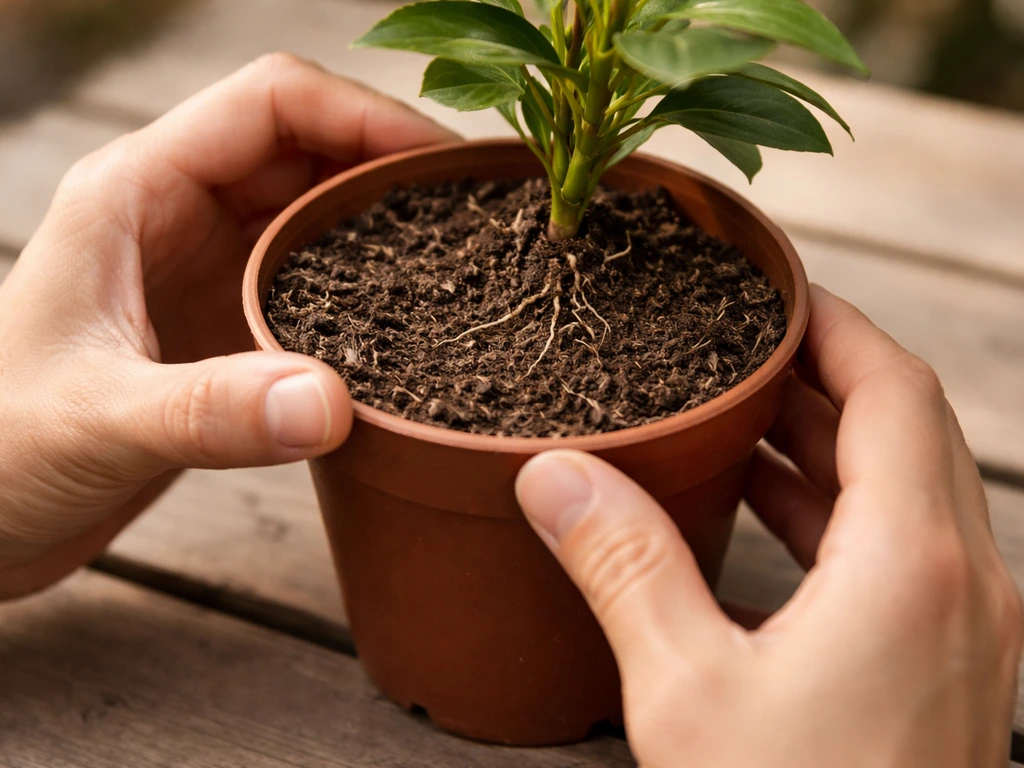
Sandy soils drain fast and hold nutrients poorly. Clay soils can lock up nutrients in forms plants cannot use. Soils that have been intensively cropped or gardened without organic matter additions get depleted over time. If your soil falls into any of these categories, plants will struggle even with good watering and sunlight, because the raw material for growth simply is not there. University of Maryland Extension makes the point directly: with less fertile soils, adding fertilizer according to soil test recommendations is the right move, especially in spring when organic matter has not yet warmed up enough for microbes to release nutrients naturally.
Containers and potted plants
This is where the fertilizer question shifts from optional to pretty much essential. A container is a closed system. The finite volume of potting mix only holds so many nutrients, and every time you water, some leach out the drainage holes. University of New Hampshire Extension is blunt about this: compost alone is not sufficient as a sole nutrient source for container production. Even premium potting mixes with fertilizer added at the factory typically exhaust those reserves within four to six weeks. After that, you are fertilizing or you are watching your plants slowly starve. University of Nebraska-Lincoln adds a practical note: if your potting mix already contains fertilizer, hold off on adding more right away, since those pre-loaded nutrients count.
Heavy feeders and fast growers
Some plants are genuinely hungry. Vegetables like tomatoes and corn, and many popular flowering annuals like petunias, dahlias, and zinnias, pull nutrients from the soil faster than a naturalistic garden ecosystem can cycle them back. If you are growing these and pushing them for maximum flower production or yield, supplemental feeding is part of the deal. Perennials in established beds with good organic matter are usually more forgiving, but even they benefit from a nutrient check every few years.
How to tell if your plant needs nutrients vs. light or water problems
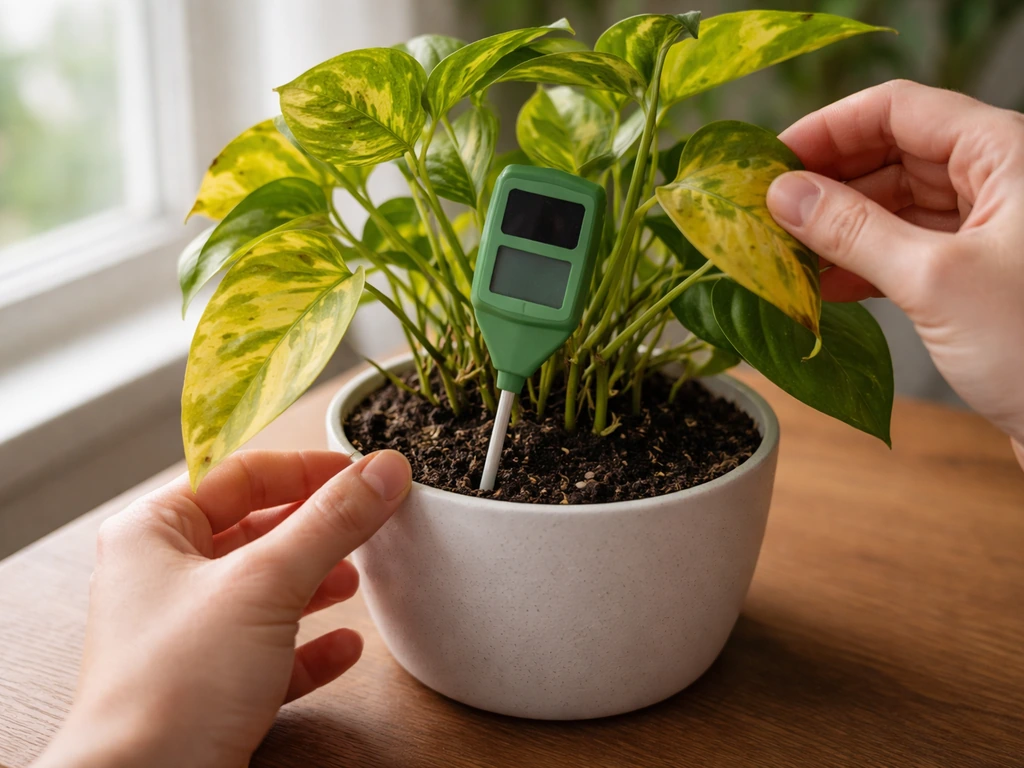
This is where a lot of gardeners go wrong. They see yellow leaves and reach for fertilizer, when the actual problem is overwatering, underwatering, or insufficient light. Applying fertilizer to a stressed plant does not help and can make things worse. The symptoms overlap enough to cause real confusion, but there are patterns worth knowing.
Nutrient deficiencies tend to show specific, patterned changes. Nitrogen deficiency causes an overall pale yellowing that starts on older, lower leaves first and works upward. Magnesium deficiency shows as yellowing between the leaf veins while the veins themselves stay green, often starting at leaf tips. Iron or manganese deficiency, which is common in plants grown in high-pH (alkaline) soil or sandy conditions, shows as yellowing between veins on new, young leaves at the top of the plant. Arizona Cooperative Extension adds an important caution: if multiple stressors are happening at once, like drought stress alongside a nutrient deficiency, the classic symptoms get muddied. Before blaming nutrients, rule out the basics.
Water problems look different. Overwatering typically causes uniform yellowing, wilting even in moist soil, and sometimes root rot. Underwatering produces wilting and crispy brown leaf edges that go dry, not mushy. Light deficiency shows as leggy, stretched growth reaching toward the nearest window, small pale leaves, and almost no flowers. If your plant is stretching but not yellowing from the bottom up, it wants more light, not more fertilizer.
The most reliable way to confirm a nutrient problem rather than guessing is a soil test. University of Minnesota Extension recommends this as the best method for assessing nutrient availability, and it will tell you exactly which nutrients are missing and which are already adequate so you do not add what is not needed.
Soil improvement first: compost, organic matter, and nutrient cycling
Before you buy a single bag of fertilizer, consider whether improving your soil structure would solve the problem more durably. University of Nevada, Reno Extension puts it clearly: before applying fertilizer, increase the soil's ability to hold onto nutrients by adding organic matter. That is the sequence that matters. Fertilizer applied to poor soil that cannot retain nutrients just leaches away. Organic matter fixes the underlying problem.
Compost is the most practical tool for this. It feeds the microbial community in the soil, and those microbes are what convert organic material into the plant-available forms your roots can actually absorb. University of Minnesota Extension notes that soil organic matter provides nutrients and energy for microbes and supports the cation exchange capacity (CEC) that helps soil hold onto nutrients between waterings. More organic matter means better nutrient retention, which means less fertilizer needed over time.
For application rates, Colorado State University Extension gives a useful starting point: three cubic yards of compost covers roughly 1,000 square feet about one inch deep. Washington State University Extension suggests thinking in inches of compost worked into the top few inches of your bed, usually two to three inches incorporated before planting. These are not precise prescriptions for every situation, but they give you a real-world starting point rather than vague advice to just add some compost.
For garden beds, a commitment to adding compost each season reduces or eliminates the fertilizer need for many plants over time. For containers, the story is different, as covered above. Organic matter still helps potting mix structure and microbial health, but the closed-system math eventually catches up.
Fertilizer options for flowers: types, timing, and how much
If you have confirmed your flowers need feeding, choosing the right fertilizer matters more than most people realize. The N-P-K ratio on every fertilizer bag tells you the percentage of nitrogen (N), phosphorus (P), and potassium (K) by weight. Nitrogen drives leafy green growth. Phosphorus supports root development and flowering. Potassium contributes to disease resistance and overall plant hardiness. For flowers, you want balance, not a nitrogen-heavy formula that pushes lush foliage at the expense of blooms.
UConn's flower fertilizer guidance warns specifically against fertilizer programs that produce leafy growth at the expense of flower production, and UMass CAFE echoes the concern about too much phosphorus as well. The practical takeaway: avoid high-nitrogen formulas for flowering plants. A balanced granular fertilizer or one slightly higher in phosphorus and potassium is a better fit for flower gardens.
| Fertilizer Type | How It Works | Best For | Watch Out For |
|---|---|---|---|
| Balanced granular (e.g., 10-10-10) | Slow-release nutrients worked into soil | Established flower beds, perennials | Applying too close to plant stems |
| Liquid fertilizer (water-soluble) | Fast-acting, absorbed quickly through roots | Containers, annuals needing a quick boost | Overfeeding, salt buildup with frequent use |
| Organic slow-release (e.g., compost, bone meal, kelp) | Releases nutrients gradually as microbes break it down | In-ground beds, long-term soil health | Slower results, needs active soil biology to work |
| Starter fertilizer (higher P) | Supports root establishment for transplants | Seedlings and new transplants in spring | Not ideal once plants are established |
Timing is a real factor too. Nitrogen is mobile in soil, meaning it moves with water and can leach before plants even use it. University of Minnesota Extension specifically notes that timing nitrogen application for when plants will actively use it is important for efficiency and to avoid waste. For flowers, this usually means fertilizing at or just before the main growth surge in spring, and again when bud development begins, rather than on a rigid monthly calendar. Always base rates on your soil test report, not the maximum rate on the bag.
Organic fertilizers release nutrients more slowly than synthetic options and can improve soil properties in the process, as Colorado State University Extension notes. They are a great choice for in-ground beds where you have time for gradual release. Synthetics work faster and are more useful when you need a quick correction, especially in containers.
How to apply fertilizer safely and avoid overfeeding
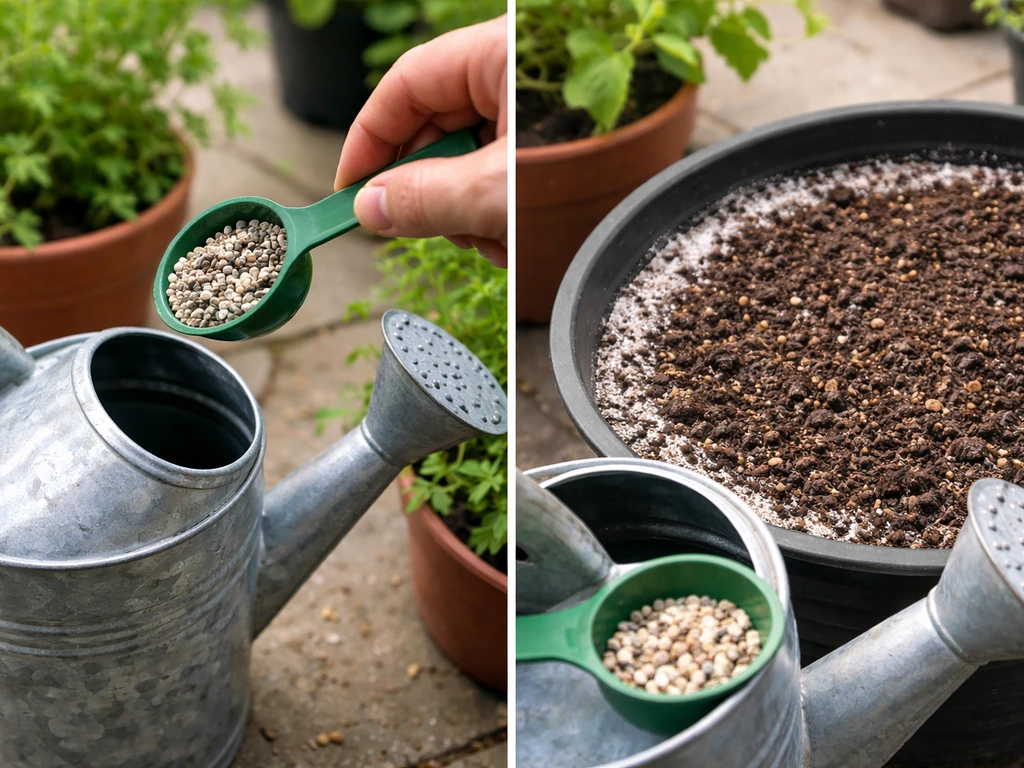
More fertilizer is not better. This is probably the most common and damaging myth in home gardening. Over-fertilization, especially in containers, causes salt buildup in the growing medium. The symptoms look almost identical to drought stress: browning and dieback at leaf tips and margins, reduced growth, and wilting even when the soil is moist. University of Maryland Extension lists these symptoms clearly and traces the cause back to excessive fertilizer use, frequent applications, and using the wrong concentration. Penn State Extension confirms that high concentrations of soluble salts in potting medium from over-fertilization are a real and common problem.
A crust forming on the surface of container soil is one early warning sign of salt buildup, as noted in University of Idaho Master Gardener guidance. If you see this, or the browning-tip symptoms, the fix is not more fertilizer. University of Maryland Extension recommends flushing the container with clear water, irrigating thoroughly several times to leach excess salts out through the drainage holes.
For in-ground beds, over-fertilization from repeated compost or manure additions can also build up over time. UMass notes that over-fertilized soils can result from overuse of organic materials as much as synthetic fertilizers. A soil test catches this before it becomes a visible problem.
- Always read the label and start at the lower end of the recommended rate, especially for containers
- Never fertilize dry soil or a wilting plant, water first and fertilize after
- Keep granular fertilizer off stems and leaves to avoid chemical burn
- For liquid fertilizers in containers, do not apply more frequently than the label directs
- If you see browning leaf tips, rule out over-fertilization before applying more
- Flush containers with clean water every few weeks if you are fertilizing regularly
- Get a soil test before adding anything to a new or struggling bed
Quick troubleshooting checklist for better growth and flowering
Before you reach for fertilizer or panic about what is wrong, work through this sequence. Most plant problems come down to one of four things, and addressing them in order saves time and money.
- Check light first: Is the plant getting enough direct or indirect light for its type? Leggy, stretched growth with few flowers almost always points here, not to nutrients.
- Check water next: Overwatering is more common than underwatering. Stick your finger two inches into the soil. If it is still wet, hold off. If it is bone dry and the plant is wilting, water thoroughly before doing anything else.
- Look at the symptom pattern: Is yellowing starting on old leaves (nitrogen), showing interveinal patterns (magnesium or iron), or affecting all leaves uniformly (likely water or root issue)? Patterned deficiencies point to nutrients; uniform symptoms usually do not.
- Test your soil: If you have not done a soil test in the last two to three years, do one now. It removes the guesswork entirely and tells you what to add and what to leave alone.
- Add compost before fertilizer: If your soil test shows low organic matter or poor structure, work in two to three inches of compost before reaching for a bag of granules. Better soil holds nutrients longer.
- Choose the right fertilizer for flowering plants: For flowers, avoid high-nitrogen formulas. A balanced or slightly phosphorus-forward formula applied at the rates your soil test recommends is the right starting point.
- Watch for overfeeding signs: Browning leaf tips and margins in a well-watered plant often mean too much fertilizer, not too little. Flush containers with clear water and back off on applications.
- Reassess in two to three weeks: Nutrient corrections take time to show up as improved growth. If you have fixed light, water, and nutrients and still see no improvement after a few weeks, look harder at the root system and whether the plant is in appropriate conditions for its species.
If you are specifically trying to grow flowers and want to go deeper on how fertilizer affects bloom size, speed, and plant size, those are genuinely separate questions worth exploring. <a data-article-id="06F0D42B-D363-4F71-A8AB-B2383A71AE5C">Whether fertilizer makes plants grow faster</a>, whether it makes them grow bigger, and exactly how fertilizer helps at the cellular level all have more nuanced answers than a simple yes or no. But the foundation you need is here: get your soil right first, confirm your plant actually needs nutrients before adding them, match your fertilizer to what flowers specifically need, and apply carefully. Do that, and your plants will do most of the work themselves.
FAQ
If my plants look healthy, should I still fertilize as a preventive measure?
Usually no. If growth is steady, leaves are consistently green for your plant type, and flowers are forming, fertilizing “just in case” can push nutrients out of balance. A better approach is to fertilize only when you have a reason (container mix exhaustion, known soil limitation, or a soil test showing a gap).
How often should I fertilize if I am not using a soil test?
For in-ground beds, many gardeners can get by with seasonal compost top-dressing and a light feeding only when plants show a nutrient pattern. For containers, the schedule is usually more frequent because nutrients leach, but exact timing depends on how often you water and the fertilizer product rate. Start with the label guidance for your specific fertilizer type, then adjust based on plant response, not on a rigid calendar.
Can I use compost instead of fertilizer for container plants?
Compost can help container plants, but it is rarely a complete substitute for feeding in the short term. Potting mix volume is limited and nutrients are leached quickly, so you will often need a supplementary fertilizer once the initial nutrients decline. If you want a compost-based approach, expect to start feeding sooner rather than later and watch for the characteristic deficiency patterns.
What is the difference between slow-release fertilizer and liquid fertilizer for flowering plants?
Slow-release fertilizers generally provide steadier nutrient availability over weeks and can reduce the risk of over-concentrating salts when applied correctly. Liquid fertilizers act faster and are useful for targeted corrections, especially in containers, but they require careful concentration control to avoid salt buildup and leaf-tip damage.
My leaves are yellow. How do I tell nutrient deficiency from watering or light problems quickly?
Use the pattern. Nutrient issues often follow consistent directions on the plant (for example, nitrogen deficiency typically starts on older leaves). Overwatering often causes wilting while the soil is still wet and may progress with signs like root stress. Light deficiency usually produces leggy, stretched growth and fewer blooms. If multiple symptoms appear at once, diagnose watering and light first before adding fertilizer.
Should I fertilize immediately after transplanting or repotting?
Often not right away. New roots are sensitive, and many potting mixes include some pre-added nutrients. A common rule is to wait until you see active new growth, or follow the “time before fertilizing” guidance on your potting mix or fertilizer product. If the mix had no fertilizer, consider a weak dose after roots establish.
Is high phosphorus fertilizer always bad for plants that are not blooming yet?
Not always, but too much can cause issues and it is not a guaranteed bloom trigger. Phosphorus supports root development and can help flowering when plants are otherwise ready, but bloom timing usually depends on light, plant maturity, and temperature as well. For flowering goals, prioritize balanced formulas and rely on soil test results when possible.
How do I avoid burning plants from fertilizer in containers?
Use dilution and leach. Apply at the rate recommended for the product and start with the lower end if you are unsure. If you see early warning signs like surface crusting from salts, flush with clear water thoroughly so excess salts move out of the drainage holes. Also avoid fertilizing dry soil, since it increases the chance of root damage.
What should I do if my soil test shows plenty of nutrients but my plants still look unwell?
Treat the result as a clue that the problem may not be nutrition. Common alternatives include insufficient light, wrong watering (too much or too little), damaged roots, pests, or pH problems that affect availability even when total nutrients are present. If pH is off, adjusting pH can matter more than adding more fertilizer.
Do I need fertilizer for every plant in a garden, including perennials and shrubs?
Not every plant in every year. Established perennials in beds with ongoing compost additions can often maintain good growth without frequent fertilizer. Fast-growing feeders and plants grown for heavy harvest (like many vegetables) usually need supplemental nutrients more often. The key decision is your soil’s nutrient supply and your plant’s nutrient demand.
Next Articles
How Fertilizers Help Plants Grow: Nutrients and Timing
Learn how fertilizers boost growth with N-P-K nutrients, proper timing, and soil conditions, plus safe, myth-busting app
Does Red Light Help Plants Grow? Setup Guide and Why
Learn if red LED light helps plants grow, why it works, and how to set wavelength, distance, and schedule.
What Color Light Helps Plants Grow Best (LED Guide)
Learn which light colors boost plant growth fastest using LEDs, plus science on red, blue, far-red and setup tips.