Yes, fertilizer can make plants grow faster, but only when nutrients are actually the thing holding your plant back. If you're wondering does plant food help plants grow, the key is whether nutrients are actually limiting, not just adding fertilizer automatically. If your soil is already well-stocked with nitrogen, phosphorus, and potassium, adding more fertilizer won't speed anything up. It might even slow growth or burn roots.
Does Fertilizer Make Plants Grow Faster? Clear Answers

Marcus Holloway
25 Apr 2026
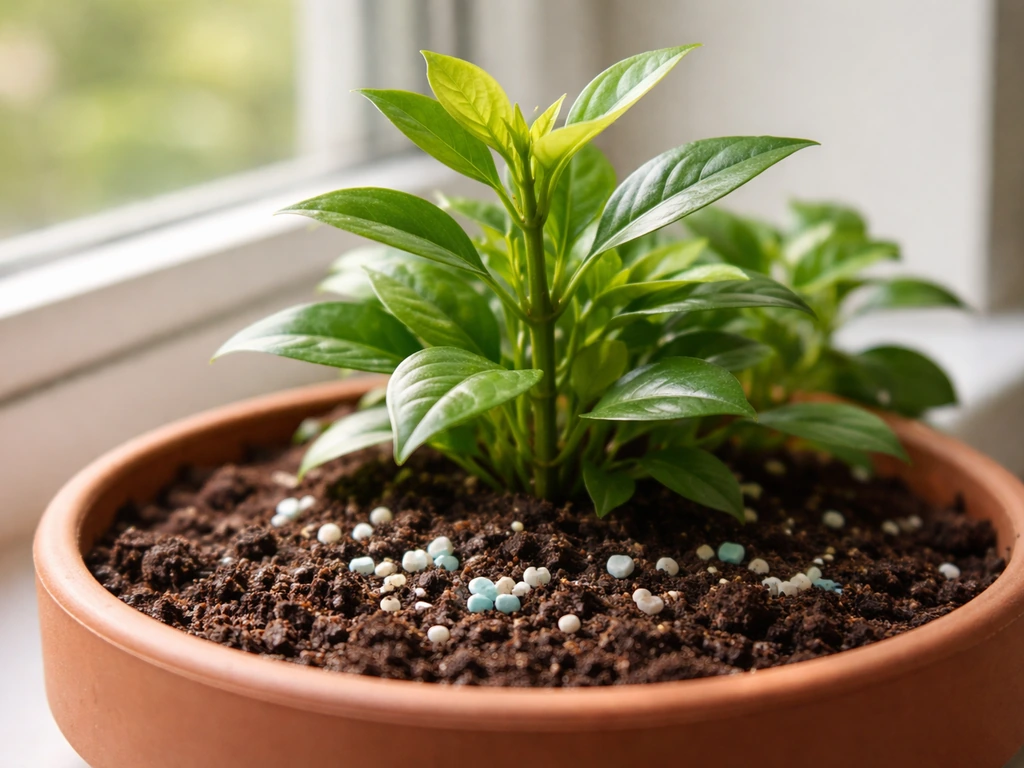
The real key is diagnosing what's limiting your plant right now, and then giving it exactly what it needs, at the right rate, at the right time. If you are unsure, a soil test is the quickest way to find out whether you need fertilizer to grow plants or if another factor is limiting growth.
How fertilizer actually speeds up plant growth
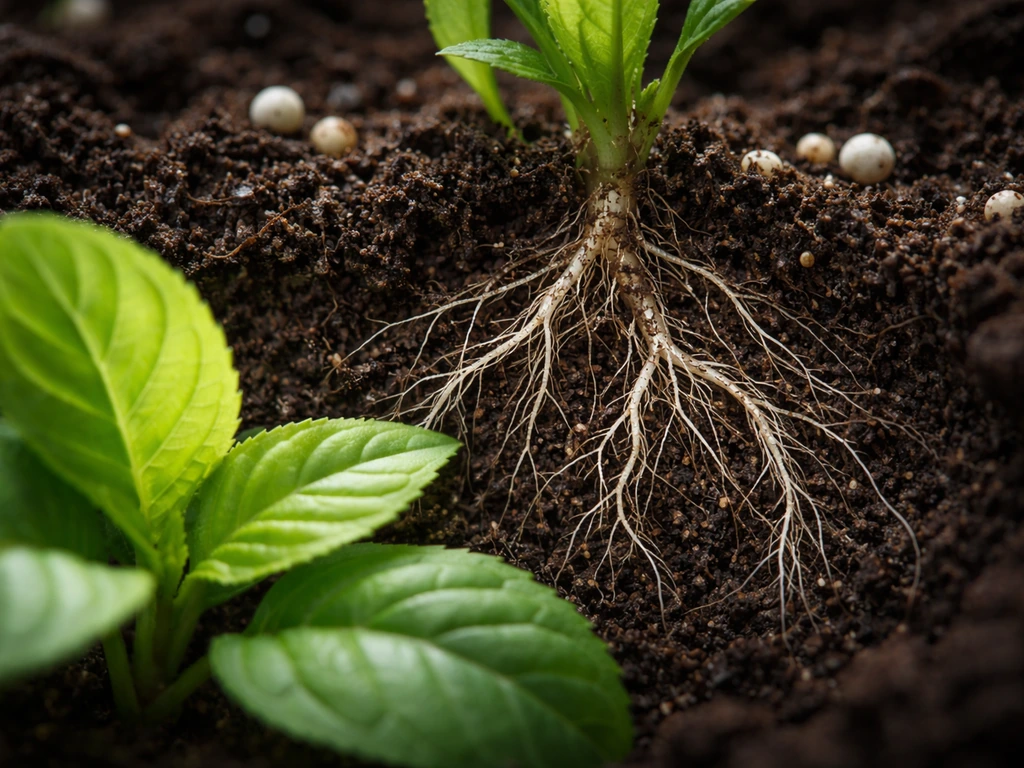
Plants build everything they are out of nutrients. Nitrogen drives protein synthesis and leafy vegetative growth. Phosphorus powers ATP production, the energy currency behind nearly every cellular process, and is also built into the nucleic acids that carry genetic instructions. Potassium regulates stomatal opening, supports leaf-level photosynthesis, and keeps cells turgid enough to actually expand. When any one of these is in short supply, the plant can't run its metabolic machinery at full speed, and growth stalls. Cornell's nutrient management guidance frames this as the 'limiting factor' principle: the nutrient that runs out first is the one that caps your results, and fertilizer only accelerates growth to the degree it removes that cap.
It's not just about dumping nutrients into the soil, either. Soil biology matters. Mycorrhizal fungi, for example, dramatically extend root access to phosphorus, which barely moves through soil on its own. Adequate soil moisture keeps diffusion working so roots can actually intercept nutrients. When you fertilize, you're feeding both the plant and the system around it. That's why soil test levels matter so much: University of Missouri research across dozens of field experiments found little or no yield response to phosphorus fertilizer when previous soil management had already built P up to target levels. More fertilizer on an already-adequate soil does nothing useful.
Fertilizer vs. the other things that actually drive growth
Here's the honest truth that a lot of fertilizer marketing skips over: nutrients are rarely the first limiting factor for most home gardeners. If you're aiming to answer does fertilizer make a plant grow bigger in your specific case, start by checking whether nutrients are the true limiting factor. Light is.
A plant stuck in too much shade cannot grow faster no matter how much nitrogen you give it, because photosynthesis is what creates the carbohydrates that fuel growth in the first place. Water is next. Potassium uptake increases directly as soil moisture increases, and drought stress suppresses nutrient absorption across the board, so a dry plant can't even use the fertilizer you've applied.
Temperature rounds out the trio: below certain thresholds, root activity and organic matter decomposition both slow down, meaning nutrients aren't being released or taken up efficiently.
Montana State University Extension puts it plainly in their fertilizer guidelines: fertilizer increases growth when soil analysis shows a deficiency and other growth-limiting factors are not the actual bottleneck. MSU Extension Soil Fertility notes that applying nutrients at or above the soil’s critical level is unlikely to improve yield, while adding nutrients when levels are low is more likely to help [fertilizer increases growth only when soil analysis shows a deficiency](https://landresources. montana. edu/soilfertility/soilscoop/ss_InterpSoilTest.
html). So before you reach for a bag of fertilizer and wonder why it's not doing much, run through this checklist: Is the plant getting enough direct or appropriate light? Is the soil consistently moist but not waterlogged? Is the temperature in the right range for that species?
If any of those answers is no, fix that first. Fertilizer works best as the final piece of the puzzle, not the first.
Choosing the right fertilizer for faster growth
Understanding N-P-K for your goal
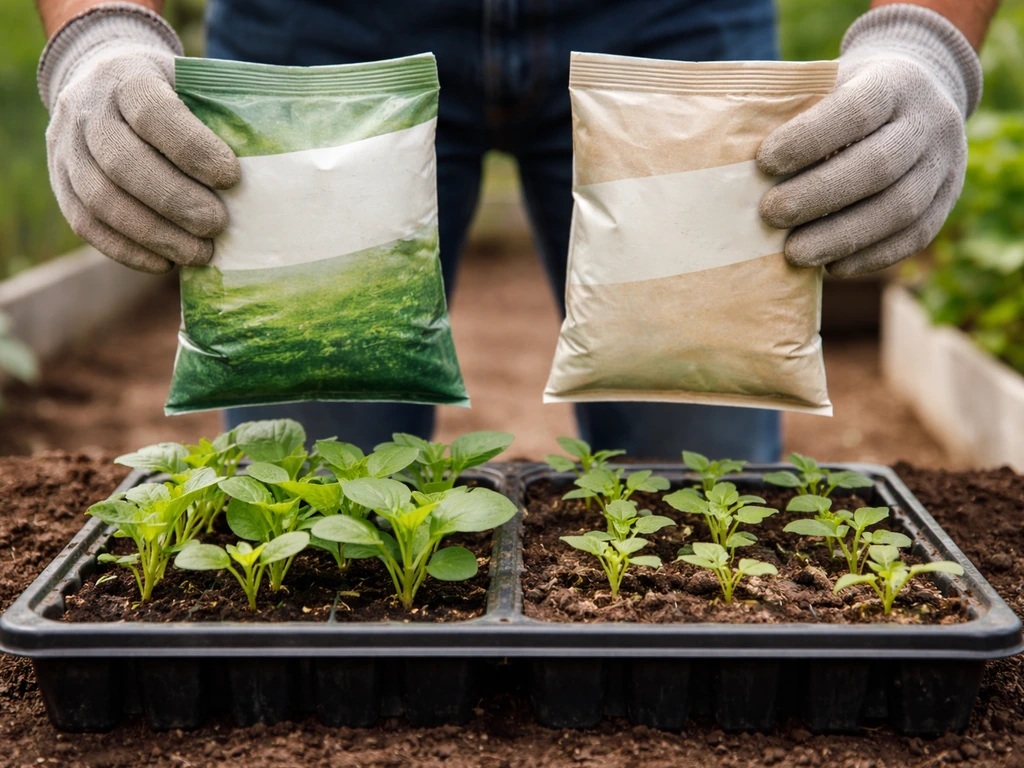
The three numbers on every fertilizer bag (for example, 10-5-5) are the percentages of nitrogen (N), phosphorus as P2O5, and potassium as K2O. For fast vegetative growth, things like leafy greens, lawn grass, or young transplants you're trying to establish, you want a higher first number. Nitrogen is the primary driver of shoot and leaf expansion. For flowering and fruiting stages, you generally want to reduce nitrogen and bump up phosphorus and potassium. For root establishment on newly planted trees or shrubs, a higher middle number helps. The stage of your plant's life cycle should dictate what ratio you reach for.
Organic vs. synthetic: which one works faster

Synthetic fertilizers release nutrients quickly, often within days of being watered in. Water-soluble nitrogen becomes available almost immediately after application, and that rapid availability is exactly why you see a flush of green growth fast. The tradeoff is a higher risk of burning plants if you over-apply, and nutrients can leach out of the root zone quickly. Organic fertilizers release more slowly because soil microbes have to break them down first. That's actually an advantage for sustained growth and building long-term soil health, but it means you won't see a dramatic two-week turnaround the way you might with a synthetic product.
| Feature | Synthetic Fertilizer | Organic Fertilizer |
|---|---|---|
| Speed of effect | Fast (days after watering in) | Slow (weeks, depends on microbial activity) |
| Burn risk | Higher, especially at excess rates | Lower, but still possible |
| Nutrient precision | Exact ratios, predictable | Variable, harder to dial in |
| Soil health over time | Neutral to slightly negative | Builds organic matter and biology |
| Best use case | Quick fix, clear deficiency, established plants | Long-term fertility, new beds, slow-release maintenance |
| Label guidance needed | Yes, follow rates strictly | Yes, but more forgiving |
For the fastest visible growth response on an established plant with a confirmed deficiency, a water-soluble synthetic fertilizer will outperform organic in the short run. For a new garden bed or a long-term planting, starting with organic amendments and using synthetic as a targeted supplement gives you the best of both worlds. If you're trying to understand more about whether fertilizer is strictly necessary for your situation, that question about whether you truly need fertilizer to grow plants at all is worth exploring on its own.
Slow-release nitrogen: when it makes sense
Slow-release fertilizers are labeled with a percentage of their nitrogen in slow-release form. University of Georgia Extension recommends that lawn fertilizers contain at least 30% of their nitrogen as slow-release to avoid boom-and-bust growth cycles. Slow-release products are especially useful if you tend to forget to reapply, or if you're fertilizing a container plant where nutrients leach with every watering. For in-ground plants with reasonable soil, a mix of quick-release for the immediate boost and slow-release for sustained feeding tends to work well.
How to apply fertilizer so it actually works
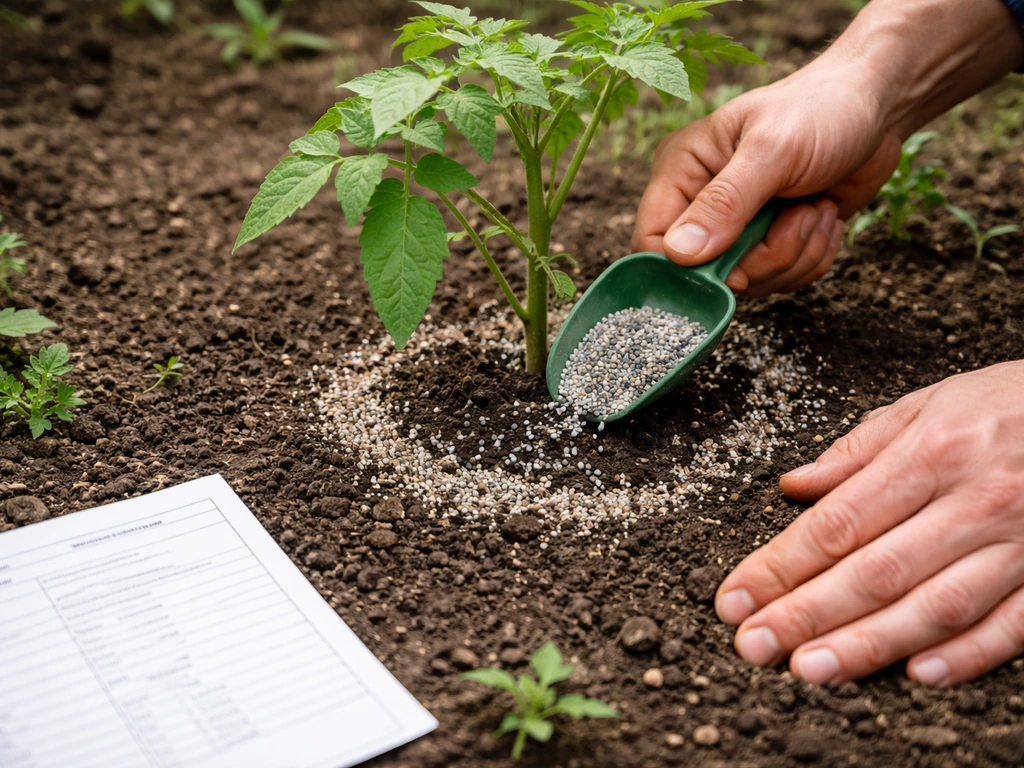
- Get a soil test first. This is the single step most home gardeners skip, and it's the one that makes everything else smarter. A soil test tells you what's already there so you only add what's actually missing. University of Minnesota Extension recommends using calibrated local guidelines alongside your test results for the most accurate recommendations.
- Time it to active growth. Fertilize when your plant is actively growing and can actually use the nutrients. For most garden plants, that's spring through early summer. Fertilizing a dormant plant or one under heat or drought stress is largely wasted effort.
- Use the right rate. Follow label directions and err on the low side for a first application. More is not better. Purdue Extension advises applying at reduced doses and then watering thoroughly afterward to move fertilizer off foliage and into the root zone.
- Water it in immediately. Oregon State University Extension is clear that water-soluble nitrogen only becomes available after being watered in. Watering also prevents fertilizer salts from sitting on leaves or surface roots and causing burn.
- Place it near roots, not on them. For granular fertilizers, spread evenly in the root zone but avoid direct contact with stems or trunks. For woody plants, a light surface application followed by thorough irrigation works well.
- Split your applications. Rather than one heavy dose, split the recommended annual rate into two or three applications across the growing season. This keeps nutrients available without overwhelming the plant or leaching into groundwater.
Why fertilizer sometimes doesn't seem to help (or makes things worse)
If you've fertilized and your plants aren't responding, or they're actually looking worse, one of a handful of things is going wrong. The most common is that nutrients aren't actually the limiting factor: your plant is struggling because of inadequate light, inconsistent watering, compacted soil, or root damage from transplanting, and fertilizer can't fix any of those. University of Missouri Extension notes that leaf scorch, which people sometimes blame on fertilizer, often traces back to water disruption caused by shallow or damaged root systems, not nutrient problems at all.
Overfertilization is the next big trap, and it's a genuinely counterproductive one. Mineral fertilizers can 'burn' plants because high salt concentrations draw water out of root cells by osmosis. If you've ever seen brown, crispy leaf margins on a plant you recently fertilized, that's salt damage. University of Maryland Extension describes the pattern as marginal leaf browning or leaf scorch, and it follows water movement in the plant, concentrating at the tips and edges where moisture is lost through transpiration. Purdue Extension explains the mechanism clearly: too much fertilizer salt pulls water out of cells rather than into them, which is the opposite of what you want.
Soil pH is another often-overlooked culprit. Even if you've applied the right nutrients at the right rate, plants can't absorb them efficiently outside of their preferred pH range. Phosphorus in particular becomes chemically locked in soils that are too acidic or too alkaline. And if you're dealing with genuinely saline soil, UC IPM is blunt about this: neither organic nor synthetic fertilizers can remedy true salt toxicity. You need to address the underlying soil chemistry first.
Wrong product for the growth stage is also surprisingly common. If you're using a high-phosphorus bloom booster on a plant that's supposed to be putting on vegetative growth, you're withholding the nitrogen it actually needs. And using a fast-release synthetic fertilizer on a plant with a damaged or restricted root system (like something you just transplanted) means the fertilizer salts are sitting in the root zone with no healthy roots to take them up, making the burn risk much worse.
Your practical next steps right now
If you want to see faster growth today, here's what I'd actually do. First, honestly assess whether light and water are adequate for the species you're growing. If both check out, pick up an inexpensive soil test kit or send a sample to your local extension service.
If it confirms a nutrient deficiency, choose a fertilizer with an N-P-K ratio that matches your plant's current growth stage, lean toward a water-soluble product for a faster visible response, and apply at the lower end of the label rate. Water it in well. Reassess in two to three weeks. You should see a clear response in leaf color and growth rate if nutrients were genuinely the limiting factor.
If you don't see a response, go back and look harder at the other variables: root health, soil drainage, pH, and whether any salt buildup has accumulated from previous applications.
Fertilizer is a real and effective tool for accelerating plant growth, but it works within a system. Fertilizers help plants grow by supplying essential nutrients that support photosynthesis, protein production, and overall metabolism. Treat it as one lever among several rather than a magic solution, and you'll get results that are actually worth the effort.
FAQ
How fast should I expect plants to grow after fertilizing if nutrients were the limiting factor?
With a water-soluble synthetic fertilizer, visible changes like deeper leaf color and modest growth acceleration can show up within a few days to a week. If you used slower or organic products, the first noticeable effect often takes longer (typically weeks) because nutrients must be released and mineralized before roots can use them.
Can fertilizer make plants grow faster even if I did not do a soil test?
It can, but only by chance. Without testing, you might apply nutrients to soil that is already adequate, or you could create salt stress from over-application. A more reliable approach is to start with a conservative label rate and watch for response, then adjust based on symptoms and, ideally, a soil test.
What are the common signs that fertilizer is not helping because another factor is limiting?
If leaves stay pale despite feeding, or growth stalls without improvement, the bottleneck may be light (stretched growth, slow leaf expansion), water stress (wilting or leaf droop patterns), root issues (transplant shock, circling roots), or soil compaction (poor drainage, stunted roots). Fertilizer will not correct these, so re-check them before reapplying.
Is leaf scorch always caused by fertilizer burn?
Not always. Fertilizer burn often appears as browning at the margins or tips and is related to salt concentration. However, drought stress or disrupted root water uptake can also cause scorch that looks similar. Checking whether the soil stays evenly moist and whether scorch began shortly after application can help distinguish the cause.
How do I avoid overfertilizing when I want faster growth?
Use less than the label’s maximum the first time, apply only when the plant can actively take up nutrients (not during severe drought or cold), and avoid frequent small doses that add up to high salt levels. For container plants, especially, consider leaching with plain water occasionally to reduce salt buildup.
Does fertilizing a plant in poor light still provide any benefit?
Some benefit is possible if a true nutrient deficiency is present, but it is usually limited because photosynthesis is still constrained. The plant can only convert available nutrients into growth when it can generate carbohydrates, so increasing light quality or duration is often the faster path to real growth speed.
What fertilizer rate should I use for containers versus in-ground plants?
Container plants usually need lower concentrations because nutrients wash through more quickly and salts accumulate faster as there is no natural soil buffering. Many gardeners succeed by using a diluted water-soluble fertilizer and feeding more often at smaller doses rather than applying the full labeled rate at once.
How does soil pH affect whether fertilizer works quickly?
If pH is outside a plant’s preferred range, nutrients can be chemically unavailable, especially phosphorus and sometimes iron or micronutrients. In that case, you may apply fertilizer and see little response for weeks, even if nutrients were correct on paper. A soil test is the quickest way to confirm pH is not the hidden limiter.
Should I fertilize immediately after transplanting for faster recovery?
Usually not right away. After transplanting, roots can be damaged or have reduced function, so high salt levels from fast-release fertilizer can burn. If you fertilize at all, start with a gentler approach (lower rate, possibly a more balanced or weaker solution) and focus first on consistent watering and root establishment.
Does more fertilizer always mean faster growth?
No. Once the limiting nutrient is no longer limiting, extra fertilizer does not increase growth and can harm the plant through salt stress, nutrient imbalances, or leaching losses. Aim for the minimum effective amount based on symptoms and test results, then reassess after a couple of weeks.
What’s the difference between quick-release and slow-release for “faster” results?
Quick-release products often produce the earliest visible change because nutrients become available soon after watering in. Slow-release forms provide steadier feeding and reduce boom-and-bust or burn risk, but they generally do not deliver the same rapid turnaround you might expect over a short window.
Next Articles
Do You Need Fertilizer to Grow Plants and Flowers?
Find out if you need fertilizer for plants and flowers, when it helps, and how to test, choose, and apply safely.
How Fertilizers Help Plants Grow: Nutrients and Timing
Learn how fertilizers boost growth with N-P-K nutrients, proper timing, and soil conditions, plus safe, myth-busting app
How Do Microorganisms Help Plants Grow: Practical Guide
Learn how microbes in the rhizosphere fix nitrogen, boost phosphorus, aid roots, suppress disease, and how to grow them.