Thunderstorms do have some real effects on plants, but thunder itself is not one of them. The sound of thunder is just low-frequency vibration in the air, and there is no credible evidence it does anything meaningful to plant growth under real garden conditions. What actually helps your plants during a storm is the rain, the lightning-driven changes to atmospheric nitrogen, and the temperature and humidity shifts that come with the weather system. Some of those effects are genuinely beneficial. Others can hurt or kill your plants outright. Here is exactly what is happening and what you should do about it.
Does Thunder Help Plants Grow? What’s Real and What Helps
Marcus Holloway
16 Jun 2026
Does thunder itself affect plant growth?
Thunder is, at its core, a pressure wave. When it reaches your garden, your plants feel it as a mechanical vibration, the same basic stimulus that researchers have been studying in controlled lab settings. And there is some real science here worth understanding. Studies on Arabidopsis (the lab mouse of the plant world) show that exposure to sound vibration can trigger measurable changes in gene expression, hormone levels, and even seed germination rates.
A Scientific Reports study by exposure experiments found that sound vibration can drive transcriptomic, proteomic, and hormonal changes in Arabidopsis, supporting the idea that mechanical stimulation pathways can modulate plant growth and development exposure to sound vibration can trigger measurable changes in gene expression, hormone levels. One study found that sinusoidal vibrations in the 40 to 120 Hz range affected germination outcomes.
Another found that raindrop sounds specifically can help seeds sense their planting depth and time germination more effectively. So vibrations are not completely irrelevant to plant biology.
The catch is that all of this research was done under tightly controlled lab conditions where frequency, amplitude, and duration were carefully managed. Thunder is chaotic, brief, and highly variable. It rumbles for a few seconds, hits your plants from a distance, and then it is done. The specific frequencies and intensities that showed effects in experiments (often continuous, targeted vibration for extended periods) are nothing like what your tomatoes experience during a storm.
Some research also suggests that sound waves may slightly disrupt the boundary layer of air around leaves, which could nudge transpiration rates. But again, a two-second thunder clap is not going to replicate that effect in any meaningful way. The honest verdict: thunder is not a growth trigger for your garden.
What a thunderstorm actually changes in your garden
Even if thunder itself is a non-event for plants, a full thunderstorm is a different story. Several things happen simultaneously that can genuinely shift the conditions in your garden, sometimes for the better.
Rain and water uptake
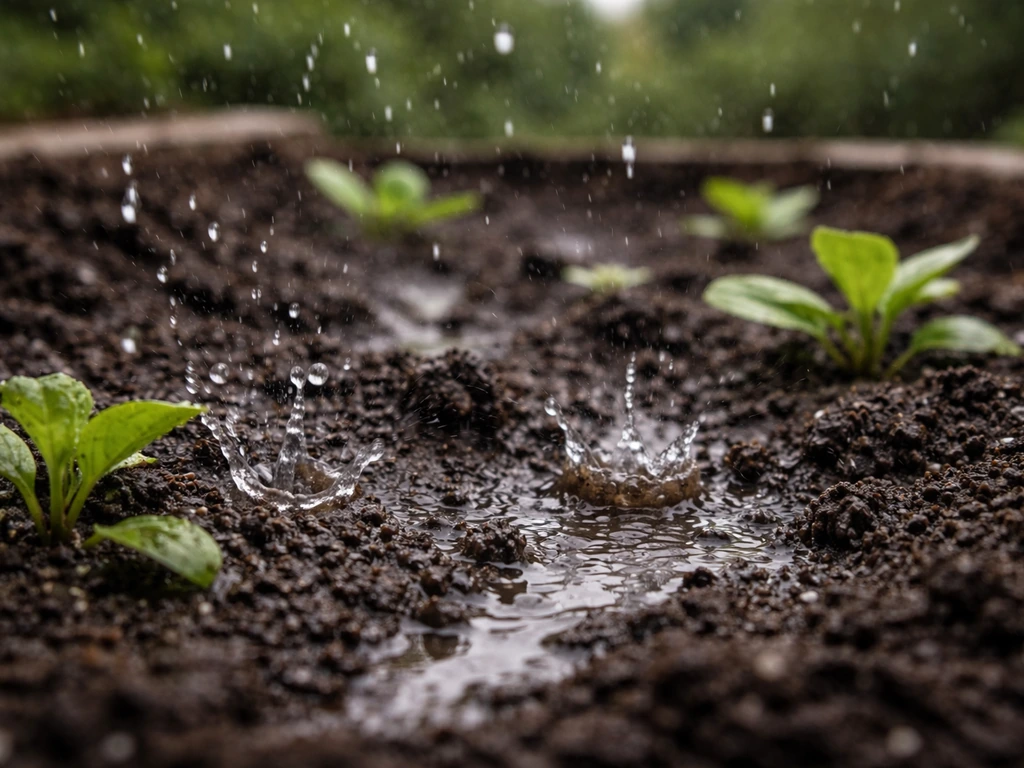
Rain is obviously the headline benefit, but how much it helps depends on how much falls. Research measuring physiological responses in plants found that rainfall events under about 5 mm produced very little change in photosynthetic rate, while events delivering around 13 mm or more could boost net photosynthesis by roughly 10 micromoles per square meter per second. A quick five-minute shower during a passing storm may not do much beyond wetting the surface.
A sustained thunderstorm that drops 20 to 30 mm of rain, on the other hand, can genuinely rehydrate stressed plants and kick photosynthesis back into gear. The quality also matters: rainwater is slightly acidic (closer to pH 5. 6), which many plants prefer over hard tap water, and it arrives without chlorine or fluoride.
Temperature, humidity, and microclimate shifts
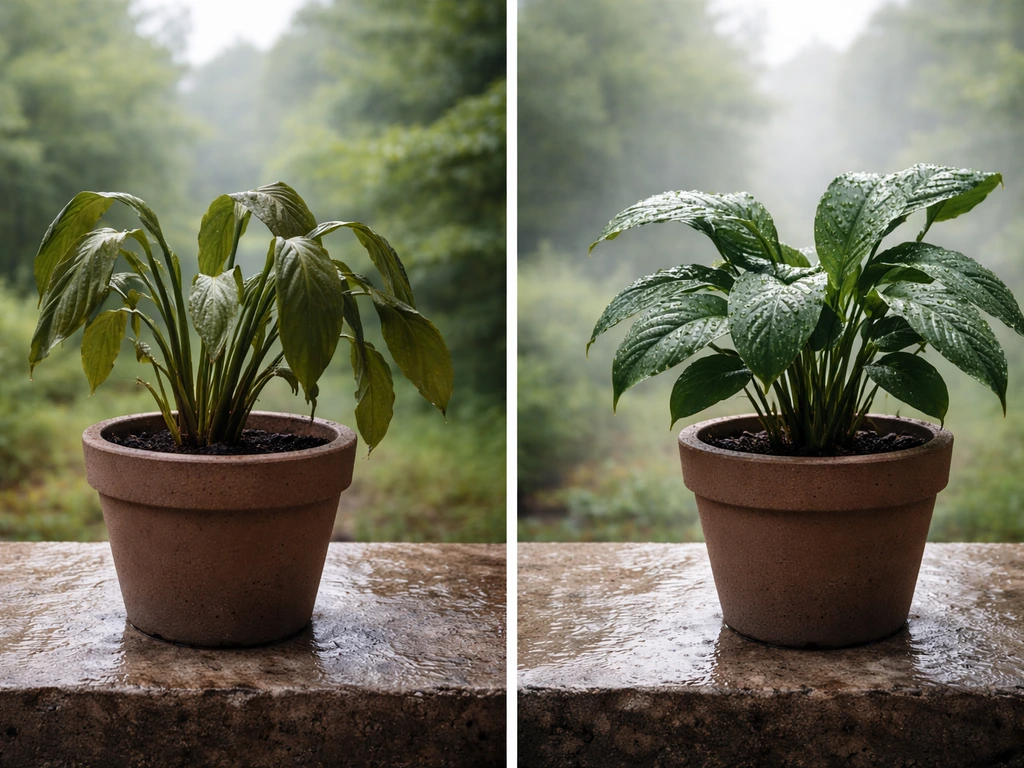
Thunderstorms usually arrive with a drop in temperature and a surge in humidity. For plants that have been baking under midsummer heat, that thermal relief can reduce heat stress, lower transpiration demand, and give the plant a window to redirect energy toward growth rather than survival. Elevated humidity also slows moisture loss from leaves, which is helpful for plants in drought-stressed conditions. These are genuine microclimate benefits, even if they are temporary.
Lightning and soil nutrients: is it really a natural fertilizer?
This is the part of the thunder-and-plants story that has the most scientific truth behind it, but also the most misunderstanding. Lightning does produce reactive nitrogen. When a bolt fires, the extreme temperature in the lightning channel (tens of thousands of degrees) breaks apart oxygen and nitrogen molecules in the atmosphere and forces them to recombine as nitrogen oxides (NOx). Those compounds get carried down to earth by rain, where they can eventually be converted into forms plants can absorb through their roots.
The numbers are real but small. Estimates suggest a single lightning flash produces roughly 90 moles of NOx, equivalent to about 1. 3 kg of nitrogen per flash (with a wide uncertainty range of 0. 4 to 3.
4 kg). Across global storm activity, lightning accounts for around 10 to 15 percent of total atmospheric NOx emissions. At a global atmospheric scale, that is meaningful. At your garden scale, it is almost nothing.
The nitrogen deposited over your vegetable patch from a single storm is a trace amount compared to what you get from a modest application of balanced fertilizer or a scoop of compost. University of Wisconsin meteorologists put it plainly: soil microorganisms are the dominant drivers of nitrogen fixation by an enormous margin, and lightning's contribution to any individual plot of land is negligible as a fertilization strategy.
There is one more layer worth knowing. A study looking at lightning strike sites near Camellia tea plants found that direct and near-direct strikes can actually perturb soil microbial communities in the rhizosphere. That is not a fertilization benefit. It is a disruption. So the romantic idea of lightning turbocharging your garden with nitrogen is, at best, a heavily diluted version of something real and at worst a misread of what lightning actually does to the soil it hits directly.
The real downsides: storm damage your plants face
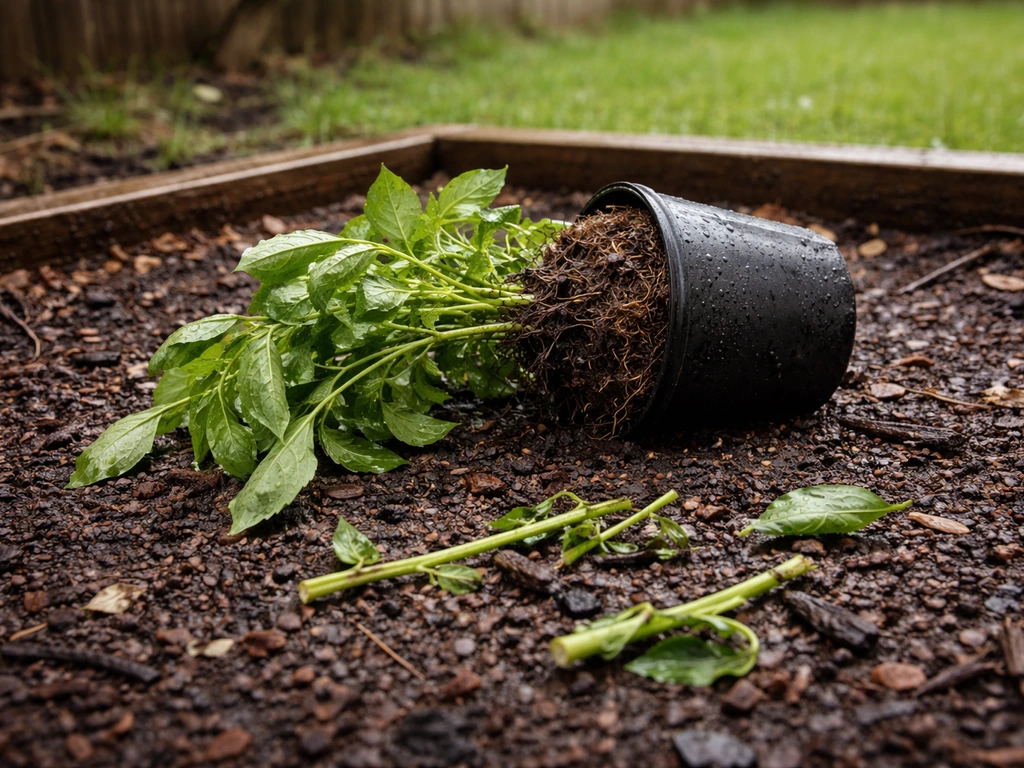
Thunderstorms can hurt plants in several distinct ways, and if you are gardening in a storm-prone area, these risks deserve more attention than any growth benefit. A 2024 review in Crop Science summarizes how storm winds can cause root lodging or stalk breakage in corn and how internal stalk destruction by fungi can predispose plants to lodging under winds and heavy rains Thunderstorms can hurt plants in several distinct ways.
- Wind damage and lodging: Storm gusts can physically snap stems, break branches, or uproot shallow-rooted plants. Research on crop damage confirms that intense, short-lived gusts (not just average wind speed) are what cause mechanical failure. Tall plants like corn, sunflowers, and staked tomatoes are especially vulnerable. Any existing fungal damage to stems makes this dramatically worse.
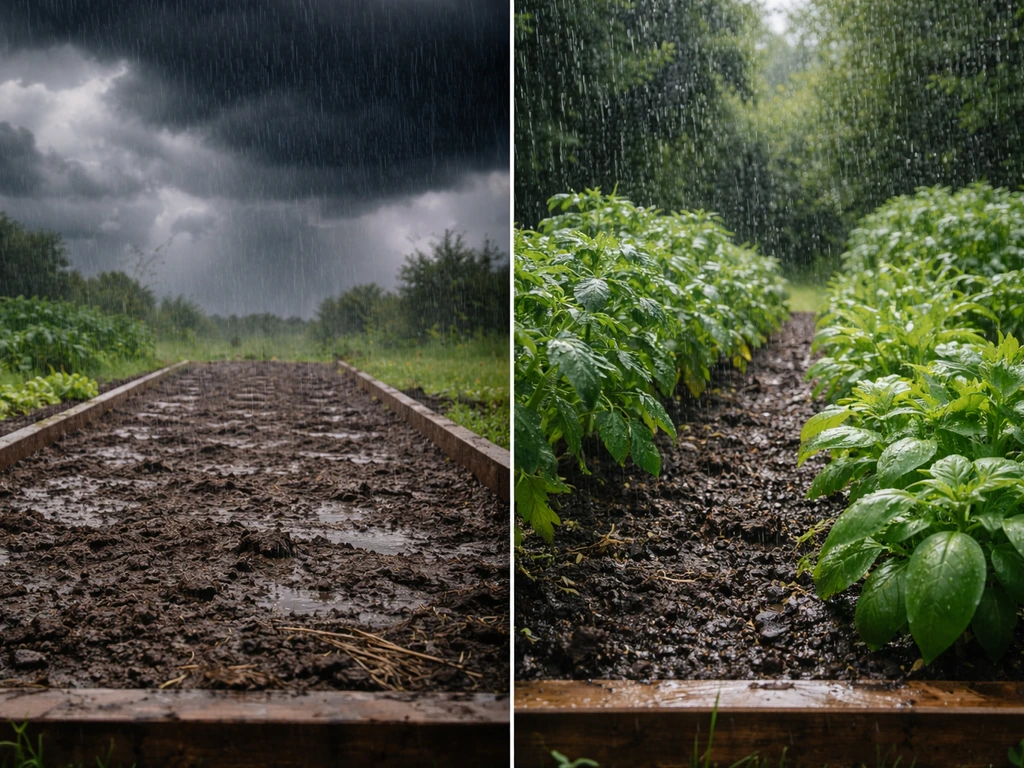
- Flooding and waterlogging: Heavy, fast-falling rain can quickly saturate soil and cut off oxygen to roots. Most vegetable plants begin to suffer root damage within 24 to 48 hours of waterlogged conditions. Container plants left in saucers during a storm can sit in standing water for hours.
- Soil erosion and compaction: Hard rain hitting bare soil compacts the surface, disrupts soil structure, and can erode topsoil from raised beds or sloped areas. This washes away the nutrients and organic matter you have built up.
- Hail: Even moderate hail can shred leaves, bruise fruit, and create entry wounds for fungal and bacterial pathogens. A hail event can set a plant back by weeks.
- Direct lightning strike: A direct strike kills plants and can char roots and alter the soil chemistry and microbial community at the strike site.
Let's bust the myths cleanly
The thunder-helps-plants myth persists partly because it bundles together a real effect (lightning-fixed nitrogen in rain) with something that sounds plausible but is not backed up (the sound of thunder stimulating growth). Here is where the lines actually fall.
| Claim | What the science actually says | Verdict |
|---|---|---|
| Thunder makes plants grow faster | Thunder is brief, chaotic vibration with no demonstrated growth effect under real-world conditions | Myth |
| Lightning fertilizes plants with nitrogen | Lightning produces NOx that becomes plant-available nitrogen, but the amount reaching any garden is negligible | Mostly myth (trace real effect at global scale) |
| Raindrop vibrations help seeds germinate | Lab studies show rain-associated sound can help seeds sense depth and time germination. Effect is localized and real but modest. | Partially true, in specific conditions |
| Talking to plants or playing music helps growth | Controlled vibration studies show some physiological responses, but casual talking and music lack the consistency and intensity shown in experiments | Unproven under real garden conditions |
| Thunderstorm rain is better than tap water | Rainwater is naturally soft, slightly acidic, and free of treatment chemicals, which many plants do prefer | Mostly true |
The talking-to-plants and music-for-growth questions come from the same general area of inquiry as thunder. The underlying science (mechanical vibrations can affect plant physiology) is real but highly condition-dependent. The leap from 'controlled lab vibration at specific frequencies causes measurable transcriptomic changes in Arabidopsis' to 'playing a thunderstorm recording in your greenhouse will grow bigger tomatoes' is enormous, and no practical evidence supports it.
If you are curious about the deeper relationship between sound frequency and plant growth, that is a genuinely interesting research frontier, but it is not a gardening tool you can use today. If you want to use frequency to help plants grow, focus on controllable, tested sound vibration conditions rather than random storm thunder sound of thunder.
What actually helps plants grow faster right now
If you want the growth benefits people associate with a thunderstorm, you can deliver most of them yourself, without waiting for weather. Here is where your time and money actually pay off.
Water management
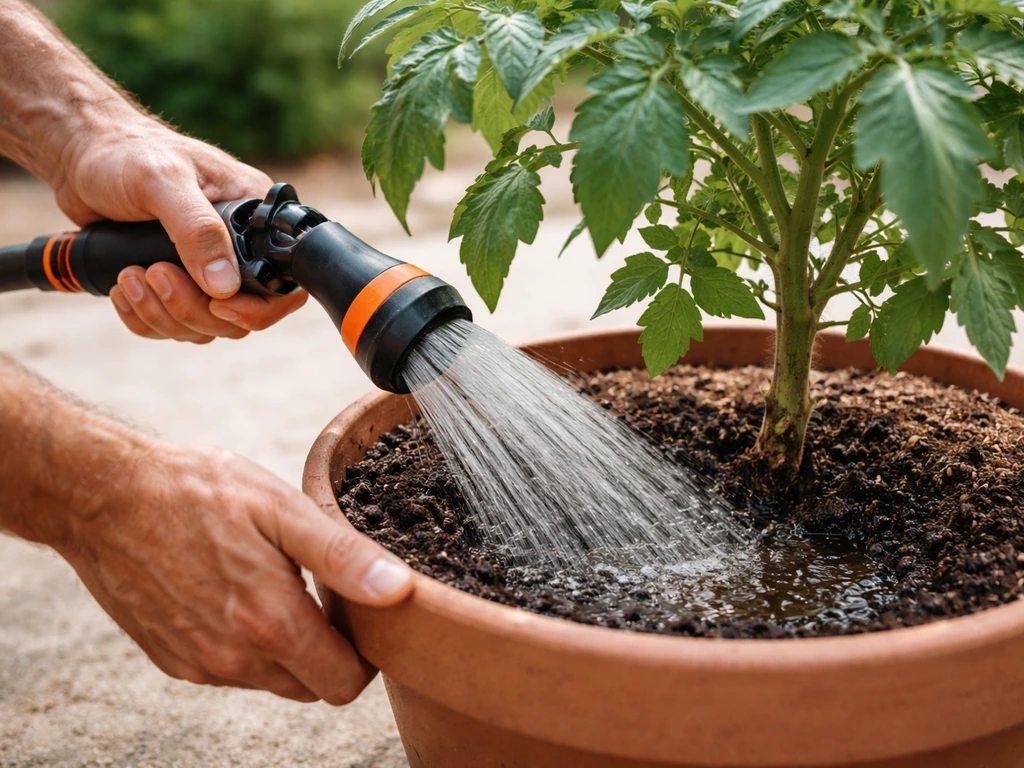
Deep, infrequent watering that saturates the root zone beats frequent shallow watering every time. Aim for the equivalent of about 25 mm (1 inch) of water per week for most vegetables and perennials. Water early in the morning so foliage dries before evening. If you want to replicate the softness and acidity of rainwater, collect and use rainwater from a barrel or let tap water sit uncovered for a few hours to off-gas chlorine.
Soil testing and nutrients
A basic soil test (available at most garden centers or through cooperative extension services for around $15 to $30) tells you your actual nitrogen, phosphorus, potassium, and pH levels. This removes all the guesswork. If your nitrogen is low, a balanced slow-release fertilizer or a top-dressing of compost will deliver more usable nitrogen to your plants in one application than every thunderstorm that hits your yard all year combined. If lightning-fixed nitrogen sounds appealing, just add a diluted liquid fish emulsion or ammonium sulfate and you get the same ions your plants would have absorbed from storm runoff, except in quantities that actually move the needle.
Light quality and duration
Light is usually the biggest limiting factor in plant growth that gardeners underestimate. Most vegetables need 6 to 8 hours of direct sun. If your plants are not getting that, no amount of rain or soil fertility will compensate. For indoor plants or supplemental growing, the spectrum of your light source matters considerably.
Full-spectrum grow lights and daylight-balanced bulbs that cover the blue and red wavelengths used in photosynthesis make a real and immediate difference to growth rates. This is something you have direct control over regardless of what the sky is doing. If you are trying to boost growth with artificial light, you can look for solar lights that provide enough usable brightness and a suitable light schedule for your plants light source matters.
Soil structure and aeration
Compacted soil is one of the most common hidden growth limiters. If roots cannot penetrate easily and oxygen cannot move through the soil, plants struggle even with good nutrients and water. Adding organic matter (compost, aged manure, leaf mold) loosens soil, improves water retention, and feeds the microbial community that actually drives nutrient cycling. This does more for your garden's long-term productivity than any atmospheric nitrogen event.
Temperature and humidity
Most fruiting vegetables grow best between about 18 and 29 degrees Celsius (65 to 85 F). Outside that range, growth slows noticeably. For indoor or greenhouse plants, a simple thermometer-hygrometer combo (under $15) tells you whether temperature or humidity is the problem. Shade cloth in summer and row covers in spring and fall let you extend your effective growing season without waiting for perfect weather.
Lightning safety and storm-time gardening rules
However excited you are about your garden, there is no task out there worth being struck by lightning. The CDC, NOAA, and OSHA are all completely aligned on this: when you hear thunder, go inside. Thunder means lightning is within striking range, even if the sky above you looks clear. You do not need to see a flash to be in danger.
- Go indoors at the first clap of thunder. A substantial building or hard-topped vehicle is safe. Sheds, pergolas, and open garages are not.
- Stay inside until at least 30 minutes after the last thunder you hear. This is the NOAA standard, not an overly cautious estimate.
- Do not shelter under trees. Tall, isolated trees are primary lightning targets.
- Avoid contact with water, metal tools, and fencing during a storm. Lightning can travel through these.
- Do not rush outside to cover or stake plants mid-storm. Prep before the storm arrives or after it fully passes.
- After the storm, check for waterlogging, physical damage, and soil erosion before resuming normal care.
The storm preparation that actually protects your plants happens before the weather hits: stake tall plants, mulch beds to reduce erosion, ensure containers have drainage, and move potted plants to a sheltered spot if large hail is forecast. That ten minutes of prep does more for your garden than anything the storm itself delivers.
Bottom line: thunderstorms are not a gardening strategy. They bring some rain, a trace of atmospheric nitrogen, and a temporary microclimate shift, most of which you can replicate on your own terms with water, compost, a soil test, and good light. The thunder itself? Your plants do not notice. Electricity itself is not a reliable way to boost plant growth, though thunderstorms can indirectly help via rain and small amounts of nitrogen electricity help plants grow. Go inside, let the storm pass, and then get back out there with a watering can and a bag of compost.
FAQ
If I can’t avoid storms, should I water my plants only after thunder and lightning, or during the storm too?
In most cases, wait until the storm passes. During the storm, additional watering can wash fertilizer deeper, saturate soil, and worsen root oxygen stress, especially if rain is already heavy. After the storm, check drainage and only water if the top few centimeters of soil are dry and plants show clear wilting or drought stress.
Can I use thunder recordings or vibration speakers to help seedlings germinate?
You can experiment, but do it like a controlled test, not as blanket “play thunder” practice. Lab effects often depend on specific vibration frequency, amplitude, and exposure time, which you cannot reliably reproduce with household audio. If you try it, keep exposure brief, use a consistent schedule, and compare against an identical control group in the same temperature and light.
Does lightning help plants if I’m seeing it deposit rain into my garden?
The nitrogen from lightning is real but extremely small at garden scale, so it should not be treated as fertilizer. Also, near-direct strikes can disrupt soil microbes in the root zone, which is a downside rather than an advantage. Plan on conventional nutrient sources, and let storms only be a bonus, not a strategy.
Are there specific plant types that benefit more from thunderstorm effects like humidity and temperature drops?
Plants that are heat-stressed or in hot, dry conditions can show temporary improvement from the storm’s cooler temperatures and higher humidity, especially during peak summer. However, if storms bring waterlogging or hail, sensitive crops may decline regardless of humidity benefits.
What storm-related damage is most likely, and how do I tell after a thunderstorm whether I need to intervene?
The biggest risks are hail bruising, wind damage, and waterlogging. After the storm, look for broken stems, torn leaves, and signs of oxygen stress (yellowing, slow regrowth). If soil stays soggy for more than a day, improve drainage or avoid further watering until it dries.
If rain helps, how can I estimate whether my garden got “enough” from a storm?
Use a simple rain gauge or a straight-sided container to measure rainfall depth right after the storm. Light drizzle events often add little to root-zone moisture, while multi-hour storms that add roughly a couple inches (about 50 mm or more) are more likely to recharge the root zone and improve photosynthesis.
Does rainwater from thunderstorms work better for plants than tap water because it’s acidic?
Storm rain can be slightly acidic, which some plants prefer, but you should not rely on it as a consistent replacement for irrigation. Rain can also contain contaminants depending on air quality and runoff. If you collect rainwater, clean your barrel and use it as a supplement, not the only water source year-round.
Should I fertilize immediately after a thunderstorm to take advantage of storm nitrogen?
Usually no. If the storm was heavy, nutrients can be diluted or washed away beyond the root zone, and soil may already be nutrient-poor at the surface after runoff. Instead, wait a few days and, if possible, confirm with a soil test or observe plant response before adding more nitrogen.
Do thunderstorms affect indoor plants differently than outdoor plants?
Yes, because indoor conditions change less. You may get a humidity or temperature shift if windows are open, but you will not get the same rain wetting, runoff, or lightning deposition into the soil. For indoor plants, focus on stable watering, airflow, and correct light rather than expecting weather events to do the job.
Next Articles
Do Solar Lights Help Plants Grow? What to Know
See when solar garden lights boost growth and when they fall short on intensity, spectrum, and runtime for plants.
Does Electricity Help Plants Grow? Electric Light Guide
Learn if electricity or electric light helps plants grow, plus how to set spectrum, intensity, distance, and timers safe
Do Daylight Bulbs Help Plants Grow? What to Know
Find out if daylight LED bulbs really help plants grow, what to check for spectrum and intensity, and how to place run t