Tea can give your plants a small, modest boost in certain situations, but it is not a reliable growth driver and it can genuinely cause harm if you overdo it. The honest answer is: composting used tea leaves or adding them to mulch is a low-risk way to slowly enrich soil organic matter, and a heavily diluted cool brew poured occasionally around acid-loving plants is unlikely to hurt anything. But pouring tea directly onto soil regularly, concentrating used leaves around roots, or expecting measurable growth gains over a control plant watered normally? The science does not support that, and several risks make it easy to go wrong.
Does Tea Help Plants Grow? What Works and What to Avoid
Marcus Holloway
16 May 2026
Quick verdict: does tea actually help plants grow?
For most plants in most situations: not in any way you would notice or measure. Used tea leaves can be composted, but they are not a reliable way to help plants grow from the “tea bag” itself does tea bags help plants grow. Tea, whether green tea, black tea, or the wet leaves left in the bag, contains real compounds including polyphenols, a small amount of nitrogen, some potassium, and caffeine. Those sound promising on paper. In practice, the concentrations reaching roots after any reasonable application are too low to move the needle on growth, the pH effects can work against you if your soil is already slightly acidic, and caffeine at higher doses actively suppresses root development and seed germination. Caffeine in particular can suppress root development and seed germination at higher doses, so it is not a reliable growth boost for most plants caffeine help plants grow. Tea is not a fertilizer. It is not a growth tonic. At best it is a very minor soil amendment when used carefully, and at worst it is a source of mold, salt buildup, and root interference.
What is actually in tea and why it matters to your soil
Brewed black tea delivers roughly 48 mg of caffeine per 8 oz cup, while green tea comes in around 29 mg per cup, though individual measurements vary quite a bit depending on brand, leaf quality, and brewing time. In terms of solid chemistry, green tea catechins (the main polyphenol group, including the well-known EGCG) can make up 30 to 42 percent of tea solids, with caffeine representing about 3 to 6 percent of tea solids. Studies using HPLC analysis have found total catechin concentrations in brewed green tea ranging from roughly 1,325 to 2,798 mg per liter depending on brewing conditions. That sounds like a lot of bioactive material, and in a human health context it is. In a soil context, it mostly is not.
When you pour that brew into your potting mix or garden bed, several things happen quickly. The polyphenols bind to soil particles and break down. The caffeine, which is genuinely allelopathic (meaning it suppresses the growth of competing plants and can inhibit root elongation), disperses and degrades, though not before it has some effect on the rhizosphere. The tannins in tea are mildly acidic and shift soil pH downward. The nitrogen content in tea leaves is real but minimal, roughly 3 to 4.5 percent by dry weight in used leaves, far below what a balanced fertilizer delivers and unavailable to roots until microbial decomposition releases it. The potassium and phosphorus levels are similarly trace-level. So the input is real, but it is tiny and inconsistent.
Green tea specifically: what it might do and where it can backfire
Green tea has the highest catechin concentration of any common tea type because it is unoxidized. Those catechins have demonstrated antimicrobial properties in lab settings, which is why some gardeners hope green tea might protect plants from soil pathogens. There is a kernel of logic there. A light application of brewed green tea to the soil surface could, in theory, mildly suppress certain fungal species. The problem is that the same antimicrobial action hits beneficial fungi and bacteria too, including mycorrhizal networks that your plant depends on for nutrient uptake. Disrupting that microbial community is not a trade you want to make for a speculative pathogen reduction.
Green tea also lowers soil pH more predictably than black tea because of its higher polyphenol content. For acid-loving plants like azaleas, blueberries, camellias, and rhododendrons, a very mild pH nudge downward from a diluted occasional drench is unlikely to cause problems and might marginally suit them. For most vegetables, herbs, and tropical houseplants that prefer a pH closer to 6.0 to 7.0, repeated green tea applications can push your soil into a range where iron, calcium, and magnesium become less available to roots, causing yellowing and stunted growth that looks frustratingly like a nutrient deficiency even though there are plenty of nutrients in the soil.
The caffeine risk is real too. In concentrations that seem small to us, caffeine has been shown in multiple studies to inhibit seed germination and reduce root elongation. A study summarized on PubMed found caffeine concentrations in tea servings can range from about 14 to 61 mg per 6 to 8 oz serving, varying with tea type and brewing or serving factors caffeine has been shown in multiple studies to inhibit seed germination and reduce root elongation. If you are watering seedlings or young transplants with green tea, even diluted, that caffeine exposure is the last thing you want at the growth stage where roots are racing to establish.
Tea leaves: composting and mulching versus dumping them directly
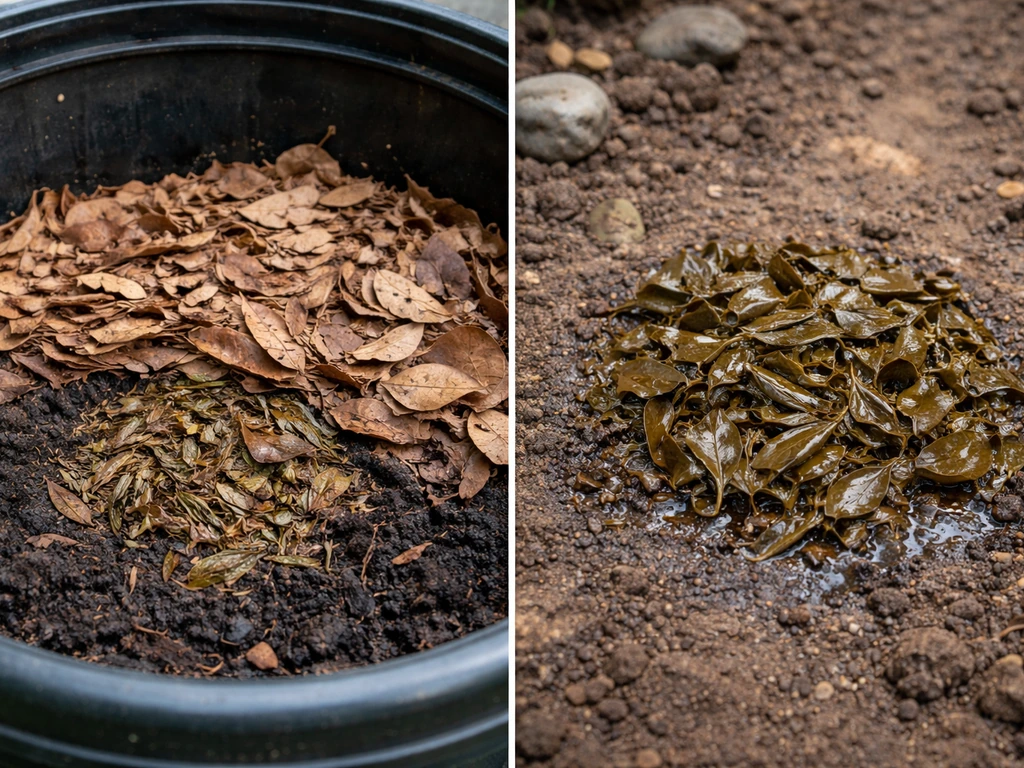
Used tea leaves (the wet spent leaves, whether loose or from a bag) are a different conversation from brewed liquid tea. The leaves still contain organic matter, a modest nitrogen profile, and some trace minerals. The question is how you introduce them to the plant's environment.
Directly burying or scattering wet tea leaves at the base of a plant is the approach most people reach for, and it is the one most likely to cause trouble. Wet tea leaves sitting on the soil surface or in the top inch of soil invite mold growth fast, especially in humid conditions or indoors. They can also compact and form a barrier that reduces airflow to roots. If you are using bagged tea, make sure the bag itself is fully compostable and not made of nylon or polypropylene mesh, which does not break down and will clog your soil over time.
The much better use of tea leaves is adding them to a compost pile. In a hot compost system, tea leaves contribute nitrogen as a green material, help retain moisture, and break down fully within weeks alongside other kitchen scraps. By the time that compost reaches your plants, the caffeine has degraded, the polyphenols have transformed, and what remains is stable organic matter that genuinely feeds soil biology. This is where tea leaves deliver real value: not as a direct plant input, but as a compost ingredient. The sibling question of whether tea grounds or tea bags specifically help plants grow comes down to the same answer: composting them first is always the safer, more effective route than direct application.
| Application method | Benefit potential | Risk level | Recommended? |
|---|---|---|---|
| Composting tea leaves | Real: adds organic matter and nitrogen after decomposition | Very low | Yes |
| Mulching with dry tea leaves | Low: minor weed suppression, slow organic breakdown | Low if dry | Cautiously |
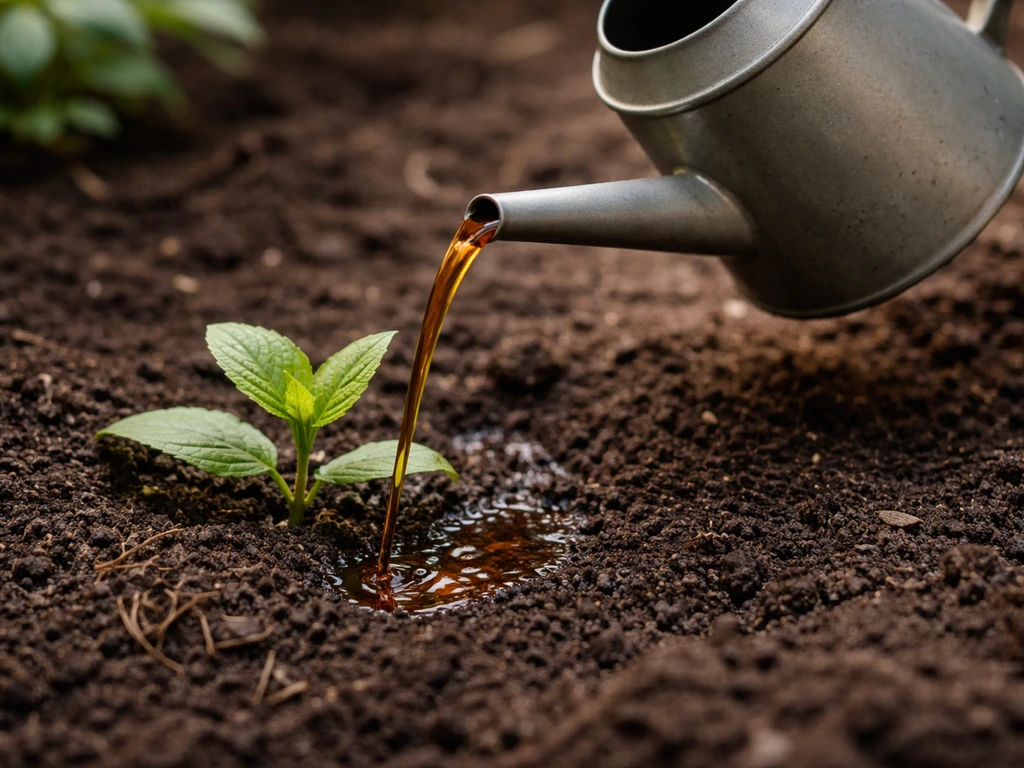
| Soil drench with diluted brewed tea | Minimal: tiny trace minerals, mild pH effect | Moderate (pH, caffeine) | Occasionally, acid-loving plants only |
| Direct wet tea leaves on soil surface | Negligible | High: mold, compaction, root interference | No |
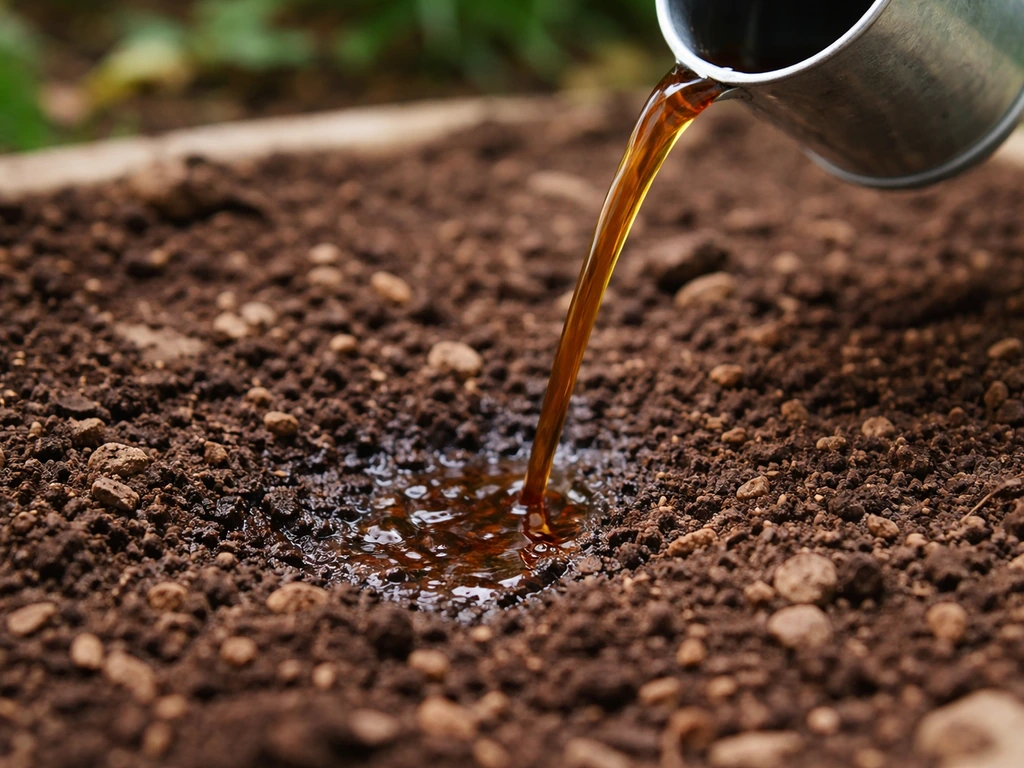
| Undiluted brewed tea poured on roots | None reliably documented | High: salt buildup, pH swing, caffeine toxicity | No |
How to try it safely if you want to experiment
If you are genuinely curious and want to test tea on your plants without risking them, here is a sensible protocol based on keeping concentrations low and frequency minimal.
- Let brewed tea cool completely to room temperature before applying it to any plant. Hot or warm liquid damages roots and soil microbes.
- Dilute brewed tea at a ratio of at least 1 part tea to 3 parts water. For sensitive plants or seedlings, go 1 to 5 or weaker.
- Apply as a soil drench, not a foliar spray. Polyphenols on leaves can cause spotting or interfere with stomata.
- Use it no more than once every two to three weeks, and only as a substitute for one regular watering, not an addition to your normal watering schedule. Overwatering is already one of the top killers of houseplants.
- Limit use to established plants with healthy root systems. Avoid applying to seedlings, recently transplanted starts, or any plant already showing stress.
- Prioritize acid-loving species: blueberries, azaleas, ferns, gardenias, and hydrangeas are better candidates than tomatoes, peppers, or most herbs.
- If you use tea leaves rather than liquid, compost them first or at minimum allow them to dry fully before using as a thin top-dress mulch well away from the stem.
When you should not use tea, and warning signs to watch for
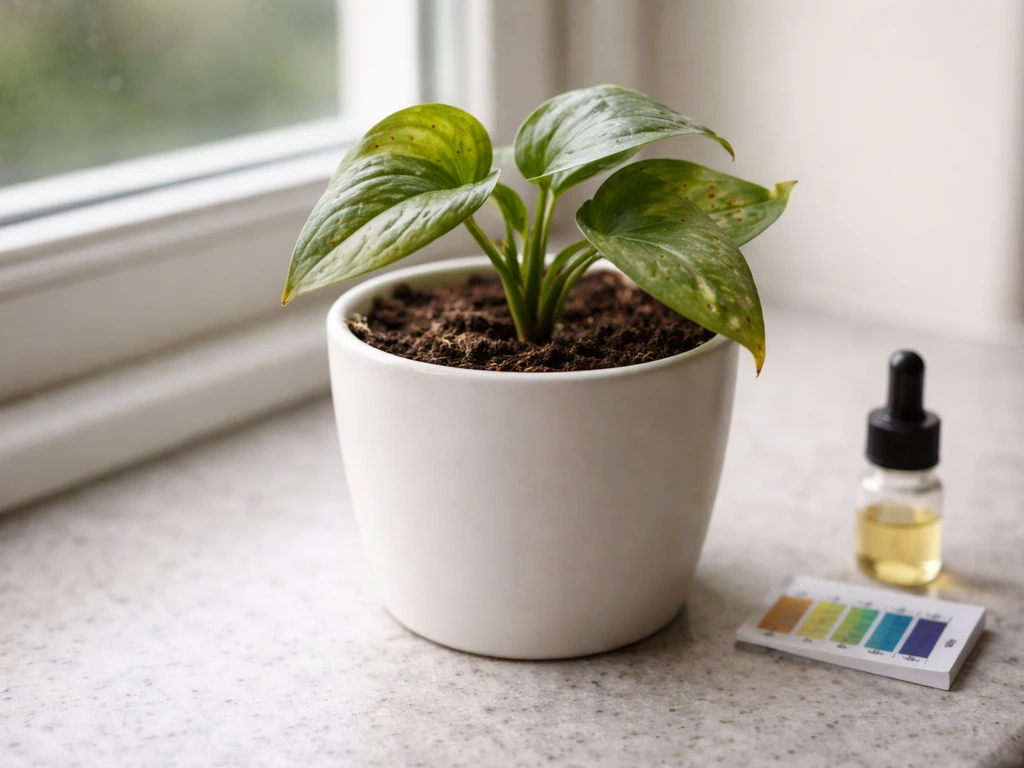
Skip tea entirely in these situations: your soil is already acidic (below pH 6.0), you are growing seedlings or germinating seeds, your plant is stressed or recently transplanted, you are growing alkaline-preferring plants like lavender, clematis, or most vegetables, or you have had recent mold or fungal problems in your growing medium. In all of these cases, the risks of tea application outweigh any possible benefit.
Watch for these signs that tea is causing harm rather than helping. If you see yellowing between leaf veins (interveinal chlorosis), that is a classic sign of pH-induced nutrient lockout, and you should stop tea applications, flush the soil with plain pH-neutral water, and test your soil pH. If you see white fuzzy growth on the soil surface after applying tea leaves, you have mold starting: remove the leaves, let the soil dry out, and improve airflow. Leggy, slowed growth or browning leaf tips after starting a tea routine can indicate salt or caffeine accumulation. And if roots look brown and mushy when you unpot to check, overwatering combined with reduced drainage from compacted tea leaves may be the culprit.
What actually moves the needle on plant growth
If your plants are struggling or growing slowly, tea is almost certainly not the fix, and chasing that answer will cost you time while the real problem continues. The science-backed drivers of plant growth are well established, and they are worth checking first before reaching for any folk remedy.
- Light: Most indoor plant problems are light problems. Insufficient light intensity or the wrong spectrum limits photosynthesis, and no amount of soil amendment compensates for a plant sitting three feet from a north-facing window. Moving a plant closer to a window or adding a full-spectrum grow light will produce more visible growth change in two weeks than any soil drench.
- Water quality and frequency: Both underwatering and overwatering stunt growth. Check that you are watering to runoff, draining completely, and waiting until the appropriate soil moisture level for your specific species before watering again.
- Soil health and structure: A well-draining, biologically active soil with the right pH for your plant species is the foundation everything else depends on. Fresh potting mix with perlite and adequate aeration does more than any additive.
- Balanced nutrients: A balanced slow-release fertilizer or a diluted liquid fertilizer on the right schedule provides nitrogen, phosphorus, and potassium at concentrations that actually register in plant tissues. This is where nutrients actually matter, not from trace amounts in tea.
- Temperature and humidity: Many tropical plants slow dramatically when temperatures drop below 60°F or when air humidity falls under 40 percent. Fixing environmental conditions often unlocks growth that was stalled for non-soil reasons.
- Root health: Check for rootbound plants, root rot, and soil compaction before anything else. A healthy root system is what makes all other growth inputs actually work.
The same reasoning applies to other popular folk remedies in this space. Coffee grounds, liquid coffee, and caffeine in general follow a similar pattern to tea: real compounds, real but often counterproductive effects at realistic doses, and better results when composted than applied directly. If you are exploring the coffee side of this question alongside tea, the answers are more similar than different, and the cautions around pH and caffeine toxicity overlap closely. If you are exploring the coffee side of this question alongside tea, the answers are more similar than different, and the cautions around pH and caffeine toxicity overlap closely, too, when asking does coffee help plants grow indoors. If you are wondering whether coffee helps flowers grow, the same ideas about nutrient availability and caffeine effects on roots come into play coffee side of this question. For example, the same cautions that apply to tea, like pH shifts and caffeine-related root effects, are why you should be careful when asking whether do coffee grounds help pumpkins grow coffee side of this question. Coffee is unlikely to be a reliable plant growth booster for the same reasons, mainly due to pH shifts and caffeine effects the cautions around pH and caffeine toxicity overlap closely.
Tea is not magic, but it is not completely without value either. Used leaves composted into healthy soil, or a diluted occasional drench on an established acid-loving plant: those are low-risk experiments worth trying if you are curious. Just keep your expectations calibrated to what the chemistry actually supports, and do not let a tea routine distract you from the light, water, and soil fundamentals that your plant is actually waiting on.
FAQ
Can I use tea water to help seedlings grow faster?
If you want to try tea without risking germination or root establishment, the safest move is to skip liquid tea entirely and use only spent leaves blended into compost (or fully cured compost). If you do use brewed liquid, keep it for established, not stressed, acid-tolerant plants, and stop if you see interveinal yellowing or slowed growth.
Does tea help plants grow if I use it directly on the soil?
Yes, but only in the sense that it can slightly change soil conditions. The meaningful benefit comes from tea leaves being composted first, so the caffeine breaks down and the remaining organic matter feeds soil microbes. Direct application to roots is the part that most often causes issues (mold, pH drift, and caffeine effects).
How often can I apply diluted tea to my plants?
A practical approach is to treat tea as a rare supplement, not a routine. For established acid-loving plants, use a very dilute brew occasionally (not after every watering), and replace your normal irrigation with plain water between applications so you do not keep pushing pH or leaving caffeine residues in the root zone.
What should I check in my soil before using tea?
Test first. If your soil is already acidic (near or below pH 6.0), adding brewed green tea tends to increase the risk of nutrient lockout (especially iron, calcium, and magnesium availability problems). If you do not have a pH test, assume increased risk and avoid tea for most non-acid-loving plants.
Is tea a substitute for fertilizer?
No. Even though tea contains nitrogen and potassium, the amounts delivered through realistic tea watering are too low and too inconsistent to replace fertilizer. If your plants look hungry, focus on correcting the actual nutrient driver (fertilizer regime, light level, watering schedule) and use compost or balanced feeding instead of tea.
What should I do if white mold appears after adding tea leaves?
If you see white fuzzy growth, stop tea leaf additions immediately, remove the leaves you can reach, and improve airflow (spacing, surface drying between waterings). Then let the potting mix dry slightly and consider replacing the top layer if mold keeps returning.
Why are my leaves yellowing or my plant seems stunted after using tea?
Yes, and it is a common failure mode. Pouring tea repeatedly can create a cycle of pH lowering plus caffeine and polyphenol buildup near roots, which can present like nutrient deficiency. Flushing with plain, pH-neutral water and pausing tea for a few weeks is usually the first response before you change anything else.
Can I compost tea bags along with the leaves, and what material matters?
Look at the container and the label. Many tea bag materials are not fully compostable (common examples include nylon or polypropylene mesh), and those can persist and clog soil over time. If you compost tea bags, use ones explicitly made for home/industrial composting.
Is green tea safer than black tea for plants?
Green tea and black tea both carry caffeine and polyphenols, but green tea is more likely to nudge soil pH downward and has higher catechin content. For that reason, if you are going to experiment at all, brewed green tea generally carries higher risk than black tea, especially for plants that are not strongly acid-tolerant.
My plants are struggling, should I switch to tea?
In most cases, it is not the correct target. If a plant is leggy, slow, or declining, the biggest levers are light, watering consistency, drainage, and root health, not tea. Tea can also mask symptoms while the real issue remains, so the better next step is to identify the primary growth constraint first.
Next Articles
Does Caffeine Help Plants Grow Faster? Myth vs Reality
Find out if caffeine helps plants grow faster, what research shows, risks of wrong doses, and how to test safely.
Do Coffee Grounds Help Plants Grow? Benefits and How to Use
Do coffee grounds help plants grow? Learn real benefits, limits, and how to use used grounds safely in garden soil.
Does Coffee Help Plants Grow Yes No and How to Use It Safely
Does coffee help plants grow? Yes or no, which types to use safely, and how to avoid caffeine, acid, and nutrient issues