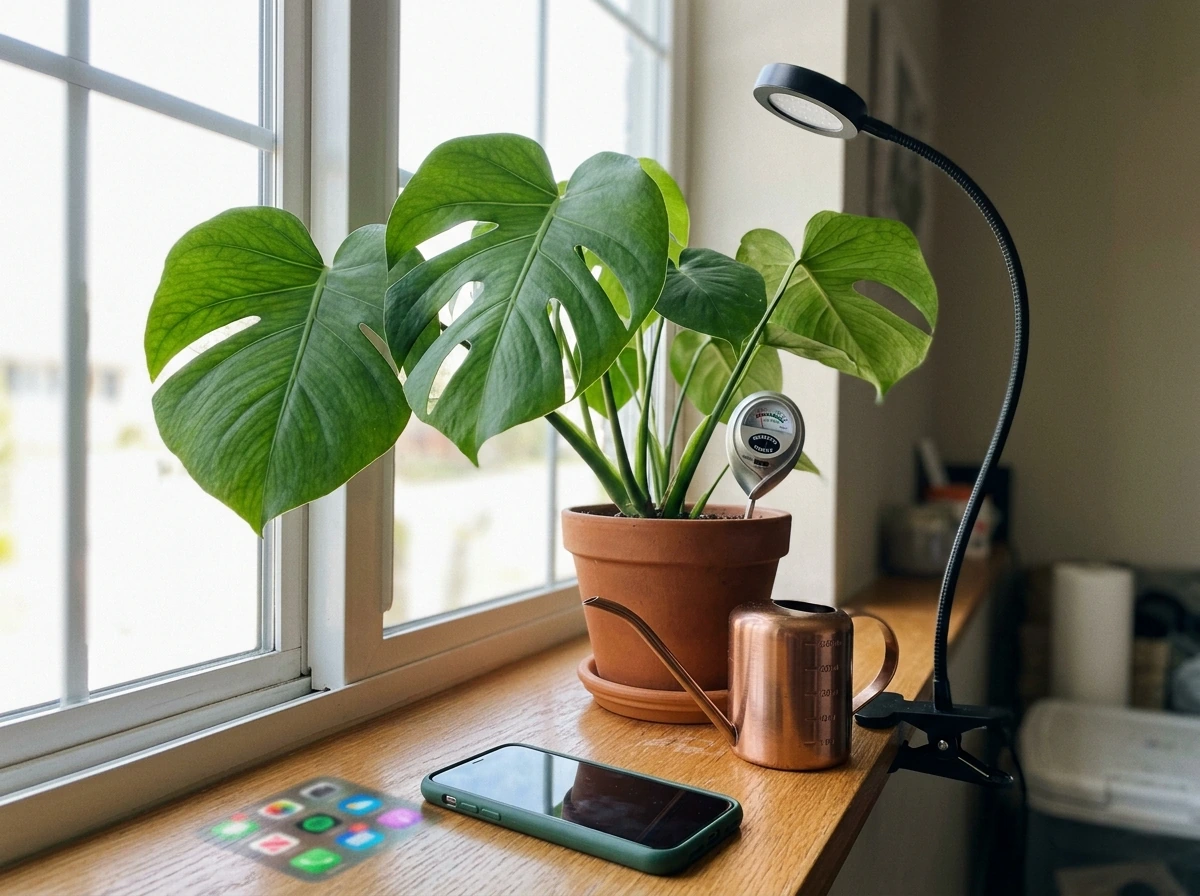
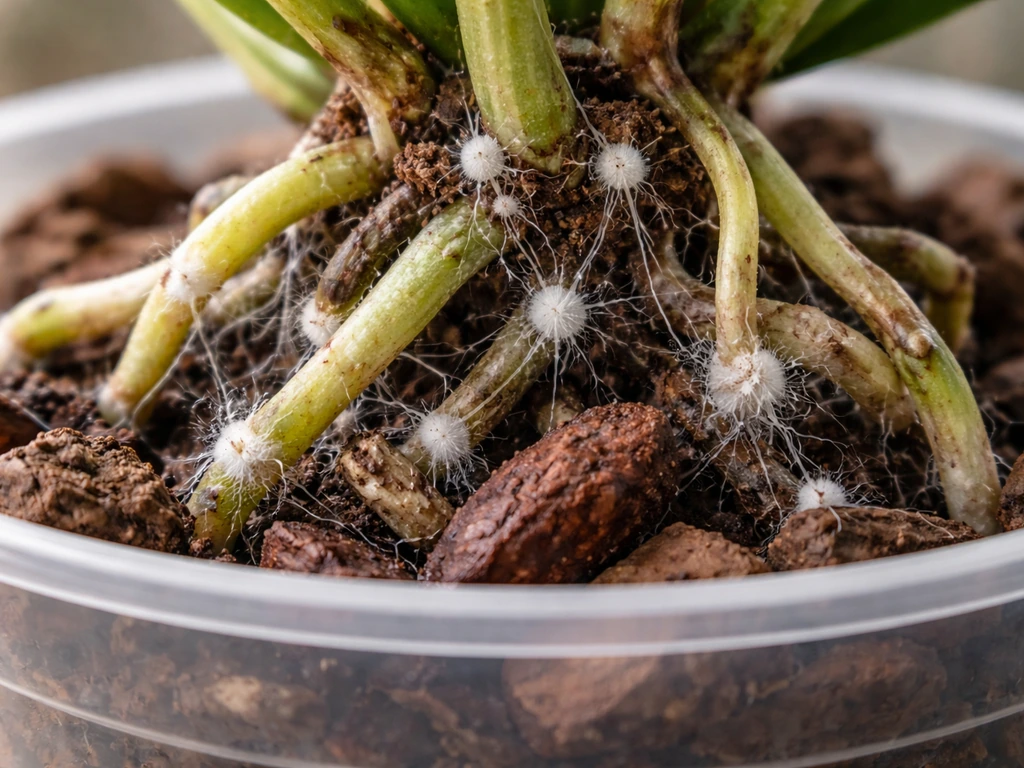
Does talking to plants actually help them grow?
The short answer: not in any meaningful, reliable way. There is no solid scientific evidence that the words you say to a plant, or the tone of your voice, or even how nicely you speak to it, causes measurable growth improvements. What research does show is that plants can respond to vibration and mechanical stimuli, but that is a far cry from plants understanding or benefiting from human speech the way the popular myth suggests. If your plants seem to do better when you talk to them, the most likely explanation is that you are paying closer attention to them, not that they are absorbing your encouragement.
What biology actually says about plants and sound
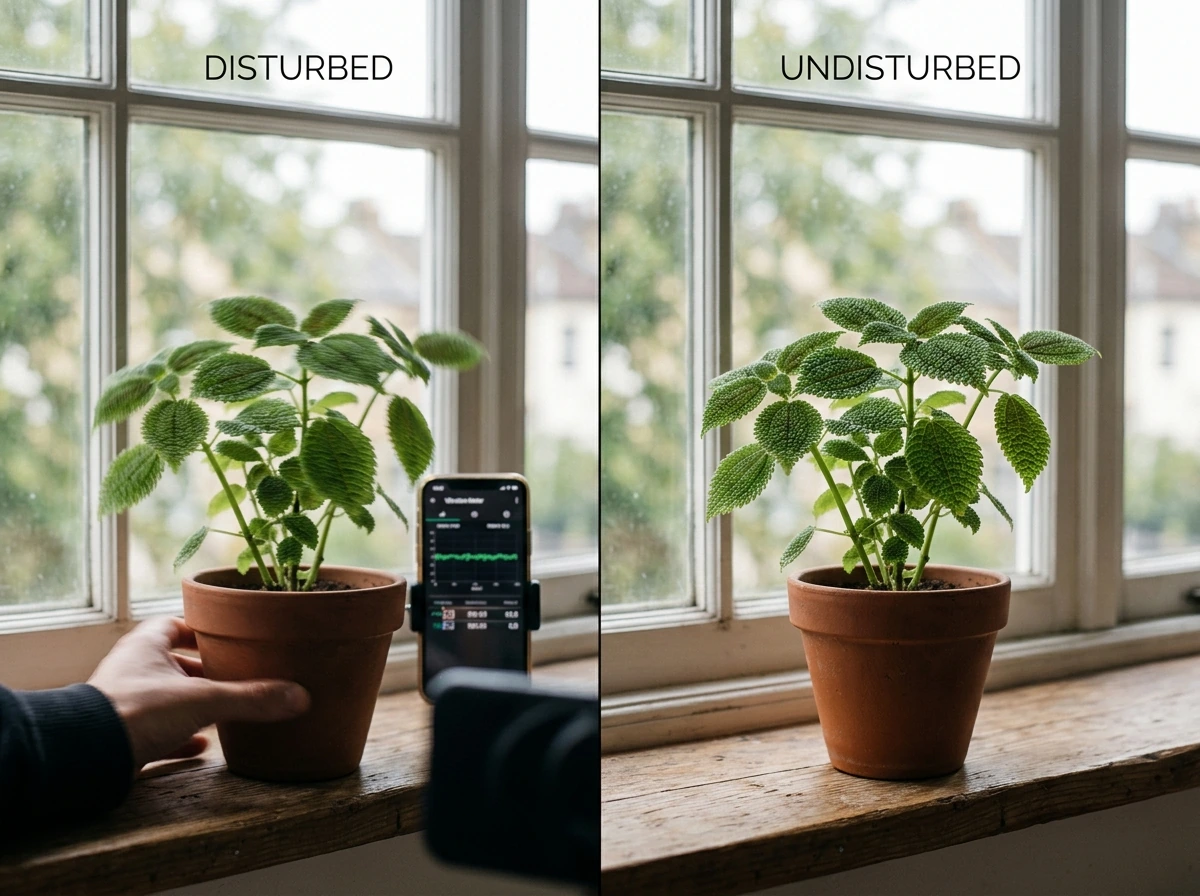
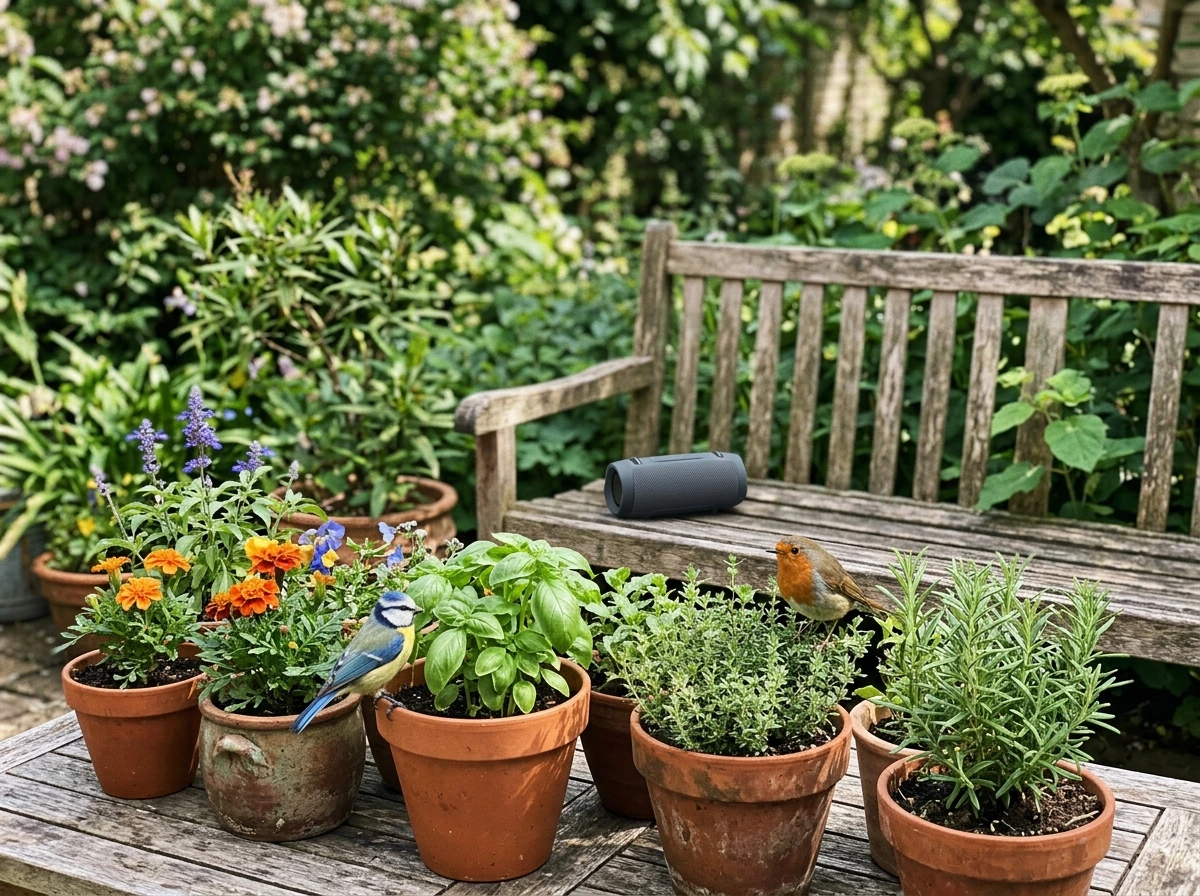
Plants do not have ears, a nervous system, or any structure analogous to an auditory system. What they do have are mechanosensitive cells that can detect physical forces, including vibration. When sound waves travel through the air, they create pressure and vibration, and some of that physical energy can reach a plant's tissues. Research published in journals like the Journal of Experimental Botany and Nature Communications confirms that plants have mechanosensitive calcium signaling pathways, meaning a physical stimulus can trigger a cascade of cellular responses. A 2022 study on duckweed found that sound vibration can modulate growth and signal responses in plants under specific experimental conditions. A 2022 study on duckweed found that sound vibration can modulate growth and signal responses in plants under specific experimental conditions, which is an adjacent angle to whether do birds chirping help plants grow.
But here is the important distinction: responding to vibration is not the same as hearing speech. A PubMed-indexed review on how plants detect and respond to sounds is careful to frame the issue around acoustic signals and physical energy, not information content. Plants are, as Scientific American puts it, extremely sensitive to vibration, but they have no mechanism for decoding the semantic content of words. Whether you are reciting poetry or reading a grocery list makes no difference to the plant. The vibration is the only variable that could possibly matter, and even that effect is described by researchers as inconclusive when it comes to the human voice specifically.
Why the myth persists (and why it is not entirely useless)
The idea that talking to plants helps them grow has survived for decades, and it keeps coming up on Reddit threads and gardening forums for a real reason: for some people, it seems to work. The explanation is not botanical, though. It is behavioral. When you make a habit of talking to your plants, you are also making a habit of standing close to them, looking at them carefully, and checking on their condition. That routine is genuinely valuable. You notice yellowing leaves sooner. You catch a pest infestation before it spreads. You realize the soil is dry or waterlogged. The talking is just the vehicle for better observation.
The Washington Post has covered this exact dynamic, describing it as a caregiver-attention loop: the act of talking becomes a trigger for closer monitoring, and closer monitoring leads to better care decisions. It is a self-fulfilling cycle, just not in the way most people imagine. The plant is not thriving because of your words. It is thriving because you are showing up consistently and catching problems early. This is also why anecdotal reports, including those informal school-project-style comparisons that show up on Reddit claiming one plant grew taller after being yelled at, are essentially meaningless without proper controls. There are just too many confounding variables to attribute the difference to the talking itself.
The MythBusters episode that tested plants under different audio conditions (including classical music, death metal, and silence) became a popular reference point for this conversation. The show reported differences in growth between conditions, but plant researchers and commenters alike have pointed out that the experimental controls were weak, and the results are more plausibly explained by vibration differences or other unconsidered variables than by a plant's appreciation of musical genre. It is a fun experiment but not a scientific conclusion.
What actually makes plants grow (the real list)
If you want reliable growth, here is where to put your energy. Every one of these factors has a direct, well-documented mechanism for affecting plant health, and every major university extension program points to the same set of essentials.
- Light: Plants kept in insufficient light become spindly and weak, and no amount of extra water or fertilizer fixes a light problem. Match light intensity and duration to your plant's specific needs.
- Water: Improper watering, too much or too little, is consistently identified as the number one limiting factor in container plant success. Learn your plant's soil moisture preferences and stick to them.
- Soil and pH: Soil pH directly controls nutrient availability. Nutrients are only accessible to roots within specific pH ranges, so a mismatch in pH can cause deficiencies even when nutrients are present in the soil.
- Nutrients and fertilization: For container plants, University of Minnesota Extension recommends beginning regular fertilizer applications somewhere between 2 and 6 weeks after planting, depending on your potting mix, watering frequency, and growth rate.
- Temperature and humidity: These are often overlooked indoors. Most houseplants have specific temperature tolerance windows and humidity preferences that, when ignored, lead to stress and slow growth.
- Container size: Colorado State University Extension notes that the container must be large enough to accommodate a plant's root system as it matures. A root-bound plant in too-small a pot simply cannot grow at its potential.
- Pest and disease management: Catching infestations or fungal issues early keeps a plant from diverting energy to stress responses and away from growth.
Oklahoma State University's extension program on houseplant care is direct about this: success is governed by careful management of light, temperature, water, nutrients, and humidity. Speech does not appear on that list anywhere.
How to run a fair at-home experiment
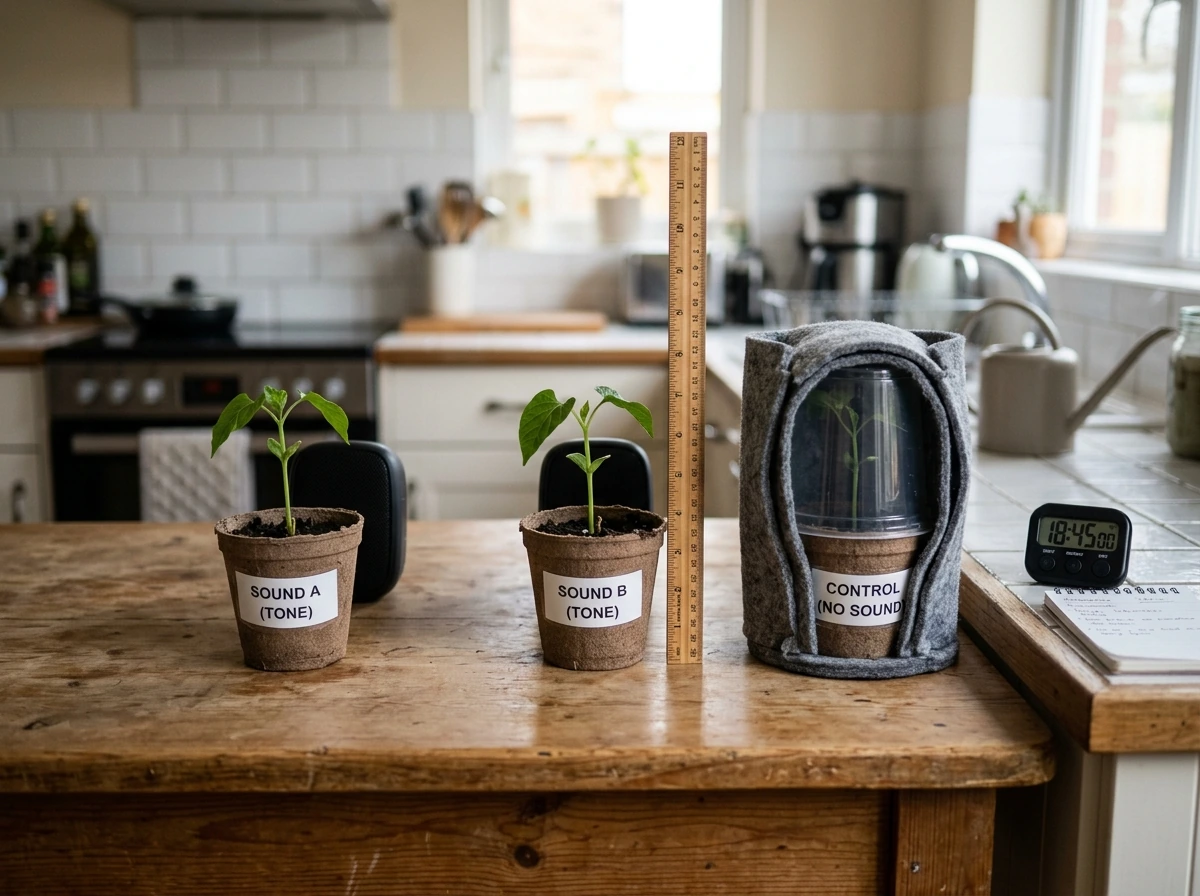
If you are genuinely curious and want to test this yourself rather than taking anyone's word for it, you absolutely can. The key is designing it so you can actually trust the results. A fair experiment needs to isolate the one variable you are testing (talking) while holding everything else constant. Here is how to set it up properly.
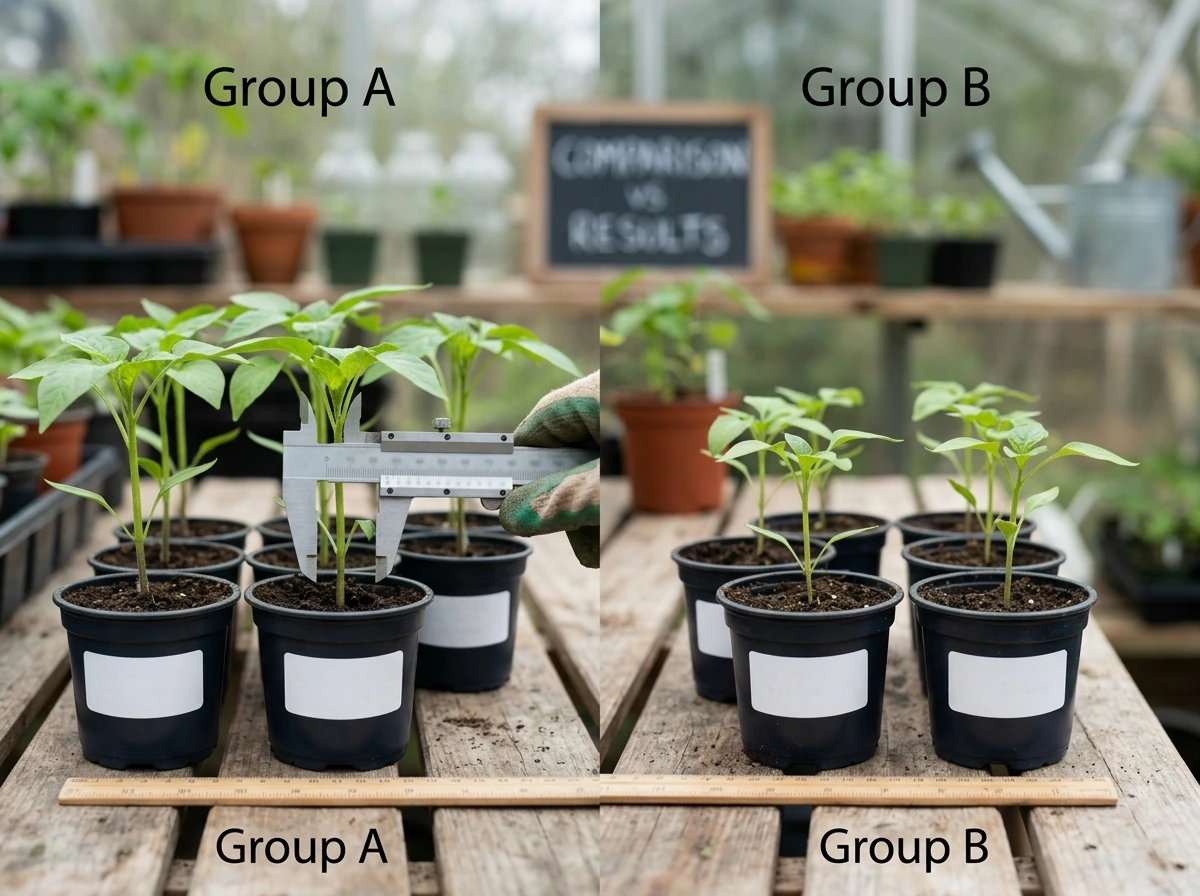
- Choose your plants: Use the same species, from the same seed batch or propagated from the same parent plant if possible. Aim for at least 3 plants per condition (talk vs no talk) to account for natural variation. Two groups minimum: a 'talked to' group and a control group that receives identical care but no talking.
- Standardize everything else: Same pot size and type, same potting mix from the same bag, same location with identical light exposure, same watering schedule using measured amounts of water, same temperature and humidity environment. If any of these differ between groups, your results are meaningless.
- Define your talking treatment: Decide exactly how long you will talk to the treatment group each day (10 minutes is reasonable), at what distance, and how consistently. Keep a log. For the control plants, stay out of the room or maintain the same proximity without talking.
- Measure objectively from day one: Record starting height from soil surface to the tallest growing tip. Count leaf nodes. Photograph plants from the same angle and distance at the same time each week. Consider measuring stem diameter if you have calipers.
- Run it long enough: A minimum of 4 to 6 weeks gives most fast-growing plants (like basil, beans, or radishes) enough time to show measurable differences if any exist. Slower-growing houseplants may need 8 to 12 weeks.
- Analyze honestly: At the end, compare average height gain and leaf count change between groups. Calculate whether the difference is large enough to be meaningful, or whether it falls within the normal variation between individual plants of the same type.
One thing to be especially careful about: do not be the one watering both groups if you are also the one talking to the treatment group. Your attention and handling of the plants in the treatment group may be subtly different from your handling of the control group, which introduces exactly the kind of bias that makes anecdotal results unreliable. If you can, have someone else handle the control group's care.
What to expect from your results
Based on what the science shows, you are unlikely to see a statistically consistent difference that you can attribute to talking. If you do see a difference, consider whether the treatment group received even slightly more attention, more consistent watering, or better light positioning as a side effect of you being near them more often. Those are the more plausible causes. That said, running the experiment yourself is genuinely useful because it trains you to observe plants more carefully, which is a skill that pays off regardless of the outcome.
Talking vs the real growth drivers: a quick comparison
| Factor | Evidence Level | Mechanism | Practical Impact |
|---|
| Talking to plants | Very weak / anecdotal | No established mechanism for speech content; vibration effects inconclusive | Low, unless it improves your observation habits |
| Light quality and duration | Strong | Drives photosynthesis directly; insufficient light causes spindly, weak growth | High, often the single biggest limiter indoors |
| Watering consistency | Strong | Water stress (over or under) is the top container plant failure cause | High |
| Soil pH | Strong | Controls which nutrients roots can absorb | High, especially for nutrient-deficient plants |
| Fertilization | Strong | Provides macro and micronutrients depleted from container media | High for container plants after 2 to 6 weeks |
| Container size | Moderate to strong | Root-bound plants cannot sustain growth | Medium to high depending on species and age |
| Sound / vibration (non-speech) | Preliminary / inconclusive | Mechanosensitive signaling pathways may respond to physical vibration | Low to unknown; not a practical tool yet |
What to do right now if you want better growth
Skip the TED talk to your fiddle-leaf fig and do these things instead. They will move the needle in ways that are actually measurable.
- Audit your light situation: Move slow-growing or struggling plants closer to a window, or add a grow light if natural light is consistently poor. This is the single highest-leverage change for most indoor plants.
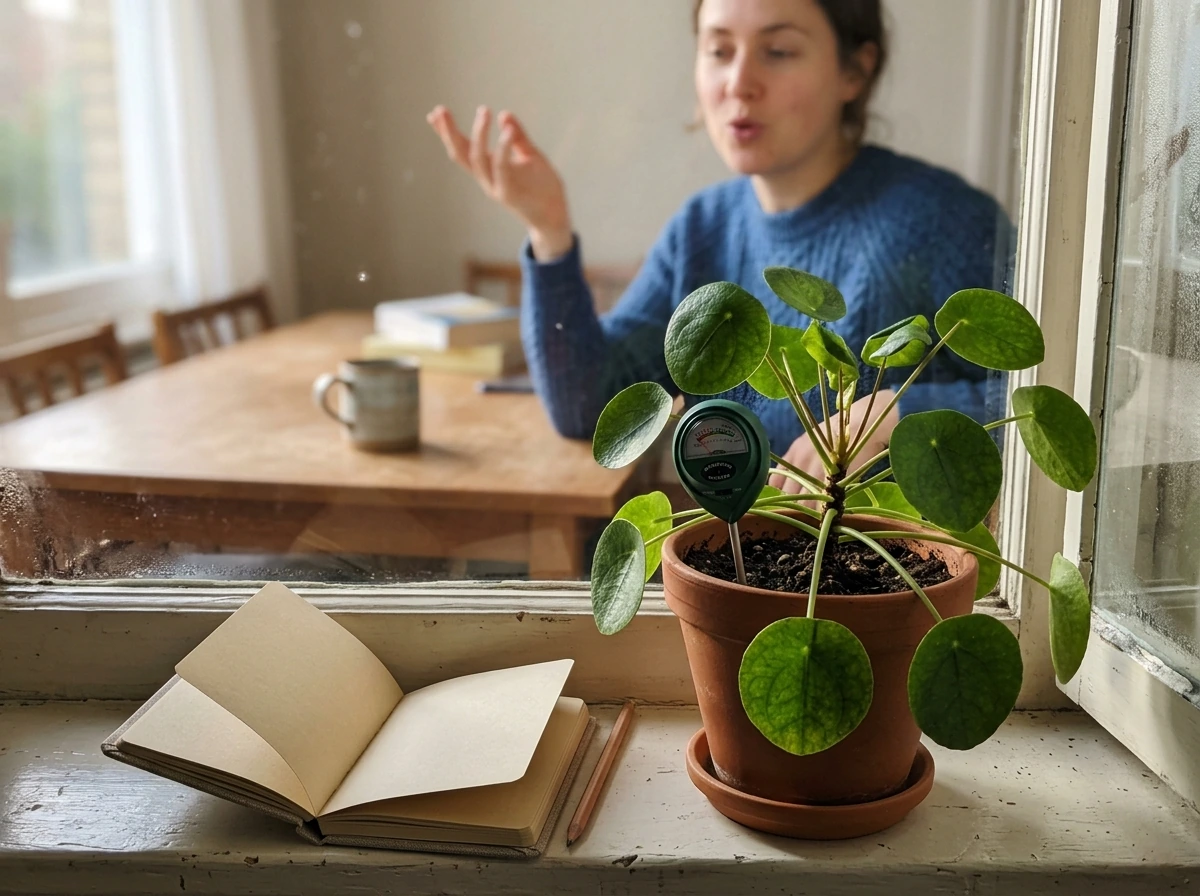
- Check your watering habits: Buy a cheap soil moisture meter or simply stick your finger 2 inches into the soil before watering. Most houseplant overwatering problems are solved by this one step.
- Test your soil pH: A basic pH test kit (available at any garden center for under $15) tells you whether your soil pH is in the range where nutrients are actually accessible to your plant.
- Start a fertilizing schedule: If your container plants have been growing in the same potting mix for more than 6 weeks without supplemental feeding, they are almost certainly nutrient-depleted. Pick a balanced liquid fertilizer and apply it according to package directions.
- Check the pot size: If roots are circling the bottom of the pot or poking out of drainage holes, it is time to size up by one container size.
- Build a care routine: This is where talking to your plants actually has indirect value. If narrating your care routine out loud helps you show up daily and observe closely, do it. Just know the growth benefit comes from the attention, not the words.
If you are curious about whether sound more broadly (music, frequencies, ambient noise) affects plant growth, that question is explored in more detail in related articles on music and plant growth and whether singing to plants makes a difference The science in those areas is similarly preliminary, but the discussion around specific frequencies and vibration effects is worth understanding if you want the full picture. The science in those areas is similarly preliminary, but the discussion around specific frequencies and vibration effects is worth understanding if you want the full picture. The bottom line for <a data-article-id="B0163E0E-F8B3-434C-BCB5-40320EAD9C5C"><a data-article-id="B0163E0E-F8B3-434C-BCB5-40320EAD9C5C"><a data-article-id="B0163E0E-F8B3-434C-BCB5-40320EAD9C5C">does talking to flowers help them grow</a></a></a> specifically: it will not hurt, it might help your habits, but it is not a substitute for getting the basics right.