Fertilizer can make flowering plants grow taller, but only under specific conditions, and it's just as likely to cause problems if you apply the wrong type, at the wrong time, or to plants that are already well-fed. The honest answer is: a nitrogen-starved plant will often shoot up after you feed it, but a plant getting plenty of nutrients may grow lush and leafy while stubbornly refusing to bloom. The N-P-K ratio and the timing of your application matter far more than simply whether you fertilize or not.
Does Adding Fertilizer Cause Flowering Plants to Grow Taller?

Marcus Holloway
18 Jun 2026
It depends: the real relationship between fertilizer and plant height
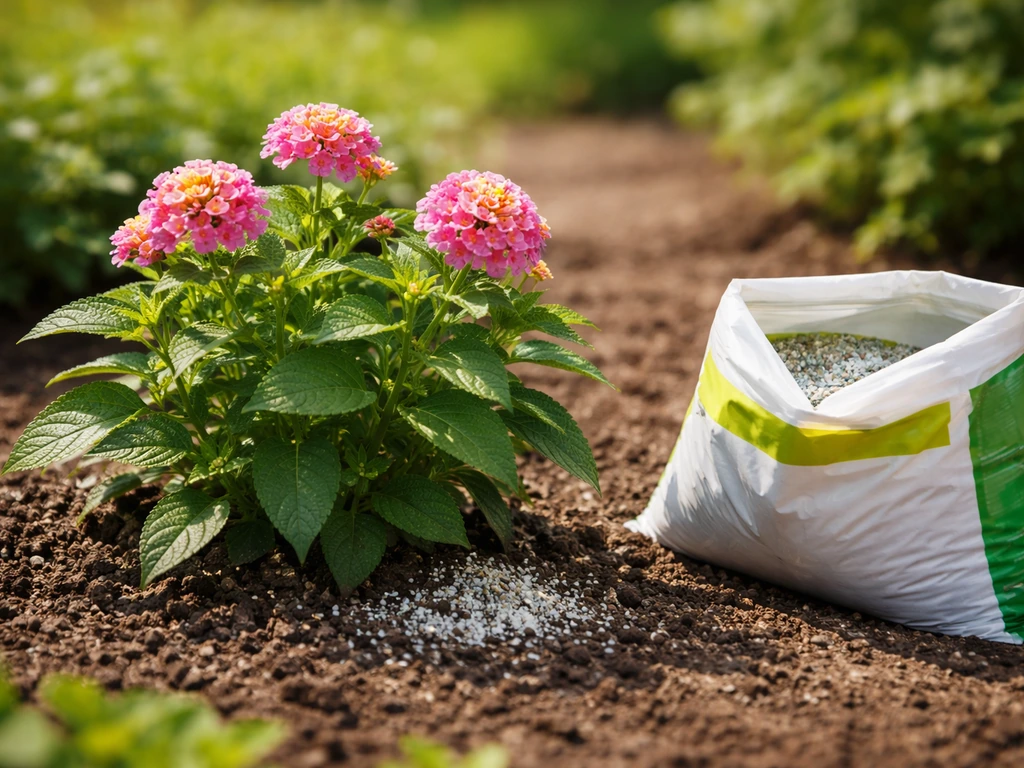
The myth is that fertilizer automatically makes plants bigger and taller. The reality is more nuanced. Fertilizer corrects a deficiency or shifts the plant's energy allocation, and the result depends entirely on where the plant was starting from. A nitrogen-deficient plant showing thin stems, slow growth, and pale leaves will almost certainly grow taller after a balanced feeding because you've removed the limiting factor. But a plant already growing in rich soil may respond to extra fertilizer by producing more foliage and delaying or reducing blooming, which is the opposite of what most gardeners want from their flowering plants. Height gain is really just one possible outcome among several.
It's also worth separating 'taller' from 'bigger.' Spindly, elongated stems are not the same as strong, healthy height. A plant that grows tall because of a combination of good nutrition and good light will have thick stems, deep green foliage, and buds forming on schedule. A plant that gets pushed upward by too much nitrogen in low light will be weak, floppy, and slow to flower. The goal should be balanced growth, not just maximum height.
What nitrogen, phosphorus, and potassium actually do

Every fertilizer label shows three numbers, like 10-10-10 or 15-30-15. Those are the N-P-K percentages: nitrogen, phosphorus (listed as P2O5), and potassium (listed as K2O). Each nutrient does something distinct, and understanding that is the whole game when it comes to managing height versus bloom.
- Nitrogen (N) drives leafy, vegetative growth. It's responsible for stem elongation, leaf size, and that deep green color. Giving a plant more nitrogen will often make it grow taller, especially if it was deficient. But too much nitrogen late in the season pushes the plant to keep producing foliage instead of shifting energy toward flower buds.
- Phosphorus (P) supports root development, energy transfer, and flowering. Phosphorus-deficient plants grow slowly, develop poorly, and often produce weak or sparse flowers. 'Bloom booster' fertilizers lean on higher phosphorus ratios (like 10-30-20 or 15-30-50) specifically to encourage bud development and stronger flowering.
- Potassium (K) is essential for photosynthesis and regulates the metabolic processes behind overall plant health, including fruit and seed development. It doesn't drive height directly, but it underpins the whole system.
So if you're asking whether fertilizer makes flowering plants taller: nitrogen is the nutrient most directly responsible for that effect. Fertilizer can help height mostly when the plant is missing a nutrient, but light and other conditions still decide how it grows fertilizer makes flowering plants taller. But pushing nitrogen too hard while neglecting phosphorus shifts the plant's energy away from blooms and toward stems and leaves. That's why the ratio on the label matters as much as the numbers themselves.
When fertilizer helps flowering and when it hurts it
Before buds form: this is your window
The best time to fertilize for both healthy height and eventual blooming is during active vegetative growth, before the plant starts setting flower buds. This is when the plant is primed to use nitrogen efficiently for structural growth. A balanced fertilizer (something like 10-10-10 or a slightly higher-N formula) applied in this phase will help the plant build the stem length, root system, and leaf area it needs to support a strong flowering cycle later.
Once buds appear: switch gears
Once flower buds start to form, the plant's nutrient needs shift. [Research from Oregon State confirms that plants absorb different nutrients as buds develop than during rapid vegetative growth. ](https://extension. oregonstate.
edu/gardening/techniques/environmental-factors-affecting-plant-growth) This is when a bloom booster with higher phosphorus and lower nitrogen makes more sense. For tomatoes specifically, use a balanced fertilizer early, then shift to a phosphorus-forward formula once flowering starts to support faster, healthier growth and fruiting. Continuing to apply a high-nitrogen fertilizer at this stage can delay or reduce blooms, a well-documented effect seen with ornamental shrubs like hydrangeas, where excessive nitrogen is a leading cause of 'all leaves, no flowers.
' Too much nitrogen late in the season can minimize or delay flowering and fruiting across many species.
| Growth Stage | Recommended N-P-K Focus | Effect on Height | Effect on Flowering |
|---|---|---|---|
| Early vegetative (pre-bud) | Balanced or slightly higher N (e.g., 10-10-10) | Promotes healthy stem elongation | Builds structure for later blooming |
| Bud formation | Lower N, higher P (e.g., 10-30-20) | Slows vegetative extension | Encourages bud development |
| Active flowering | Low N or none | Minimal | Supports bloom quality and duration |
| Late season / post-bloom | Light balanced feed if needed | Minimal | May support next season's root health |
How to tell if your plants need more fertilizer or already have too much
Signs of nutrient deficiency
- Slow, weak, or stunted growth with noticeably small overall plant size
- Thin stems that struggle to support the plant's own weight
- Pale yellow-green leaves, especially on older foliage (classic nitrogen deficiency)
- Poor root development and sparse or absent flowering (phosphorus deficiency)
- Leaf drop during the growing season in otherwise healthy conditions
Signs of overfertilization
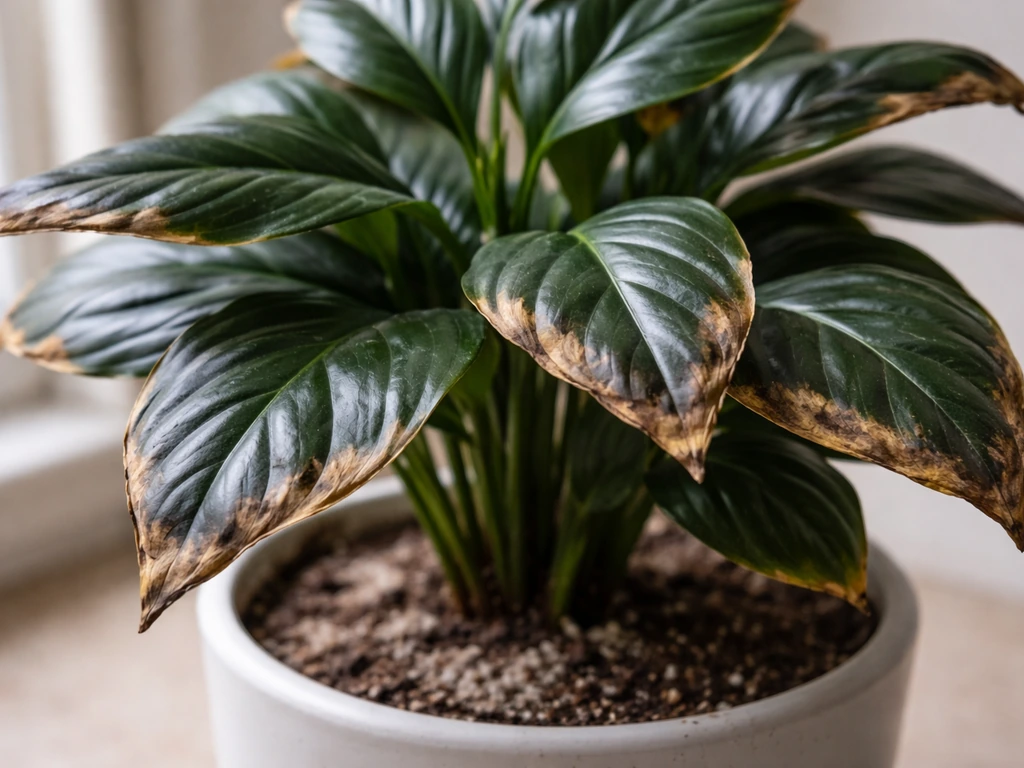
- Abnormally dark green, almost unnaturally lush foliage (classic excess nitrogen signal)
- Leaf tip and margin burn: brown, gray, or yellowing edges, which indicate soluble salt buildup in the root zone
- Lots of vegetative growth but no flower buds forming, or buds that form late
- Wilting even when the soil is moist, a sign that high salt concentration is disrupting water uptake in container plants
- White crusty deposits on the surface of potting mix or container edges
The salt buildup issue is especially important in containers. Penn State Extension explains that over-fertilization of potted plants creates high concentrations of soluble salts in the potting medium, which is the mechanism behind fertilizer burn symptoms. If you're growing flowering plants in pots and seeing tip burn or wilting despite adequate watering, overfertilization is the first thing to investigate.
Fertilizer doesn't work in isolation: light, water, and temperature all matter
One of the most common frustrations I hear from gardeners is 'I fertilized but nothing happened.' That's almost always an environment problem, not a fertilizer problem. Nutrients are only useful if the plant can actually absorb and process them, and that requires adequate light, consistent moisture, and reasonable temperatures working together. To help weed plants grow better, also make sure they have enough light, consistent moisture, and the right balance of nutrients.
- Light is often the real limiting factor for both height and flowering. A plant in low light will not convert extra nitrogen into strong stem growth; it'll produce weak, stretched growth reaching for the light source. Oregon State Extension notes that in low light or extreme temperatures, nutrient deficiency symptoms can develop because plants absorb and require nutrients differently under stress.
- Watering consistency affects nutrient uptake directly. Irregular watering creates inconsistent nutrient delivery to roots and can intensify salt buildup in containers. In outdoor beds, underwatering locks nutrients into dry soil where roots can't reach them.
- Temperature extremes slow nutrient absorption. Plants stressed by heat or cold are not processing fertilizer efficiently, so applying fertilizer during a heat wave or late-season cold snap often does little good and risks salt accumulation.
- Plant density and competition in a crowded bed means roots are competing for the same nutrients, and taller, established plants often outcompete smaller ones regardless of how much fertilizer is added.
There's also an important nutrient interaction effect to keep in mind. West Virginia University Extension points out that too much of one nutrient can block uptake of similar nutrients, for example, excess potassium or sodium can suppress calcium absorption. So a more-is-better approach to fertilizing can actually create new deficiencies rather than fixing existing ones.
How to fertilize flowering plants today: amounts, schedules, and label reading
Start with the label, and actually use it. The N-P-K numbers tell you the percentage of each nutrient by weight. A 10-10-10 fertilizer contains 10% nitrogen, 10% phosphorus (as P2O5), and 10% potassium (as K2O). From there, use these practical guidelines:
- For flower beds, University of Maryland Extension recommends applying approximately 0.1 lb of nitrogen per 100 sq ft. University of Illinois Extension suggests a general starting rate of 1 to 2 lbs of fertilizer per 100 sq ft at planting, with a second application 6 to 8 weeks later if needed.
- For container plants, University of Minnesota Extension recommends starting regular fertilizer applications between 2 and 6 weeks after planting, depending on your potting mix and how frequently you water (more watering leaches nutrients faster).
- Use a balanced fertilizer (10-10-10 or similar) during vegetative growth. Switch to a bloom formula with higher phosphorus (something like 10-30-20) once buds begin to form.
- Always water before and after applying fertilizer to help distribute nutrients and reduce salt burn risk.
- In containers, flush the potting mix periodically with plain water to leach accumulated salts, especially if you're fertilizing on a regular schedule.
- Don't fertilize stressed plants. If your plant is wilting from heat, drought, or disease, fix the underlying problem first, then feed once it recovers.
If you're not sure what your soil already contains, a basic soil test is genuinely worth the small investment. Montana State University Extension and most cooperative extension services offer soil testing that tells you existing N, P, and K levels so you're not guessing. Adding phosphorus to soil that already has plenty, for example, is wasteful and can create nutrient imbalances.
Troubleshooting: spindly plants, no blooms, and how to fix them
Plant is very tall but weak and spindly
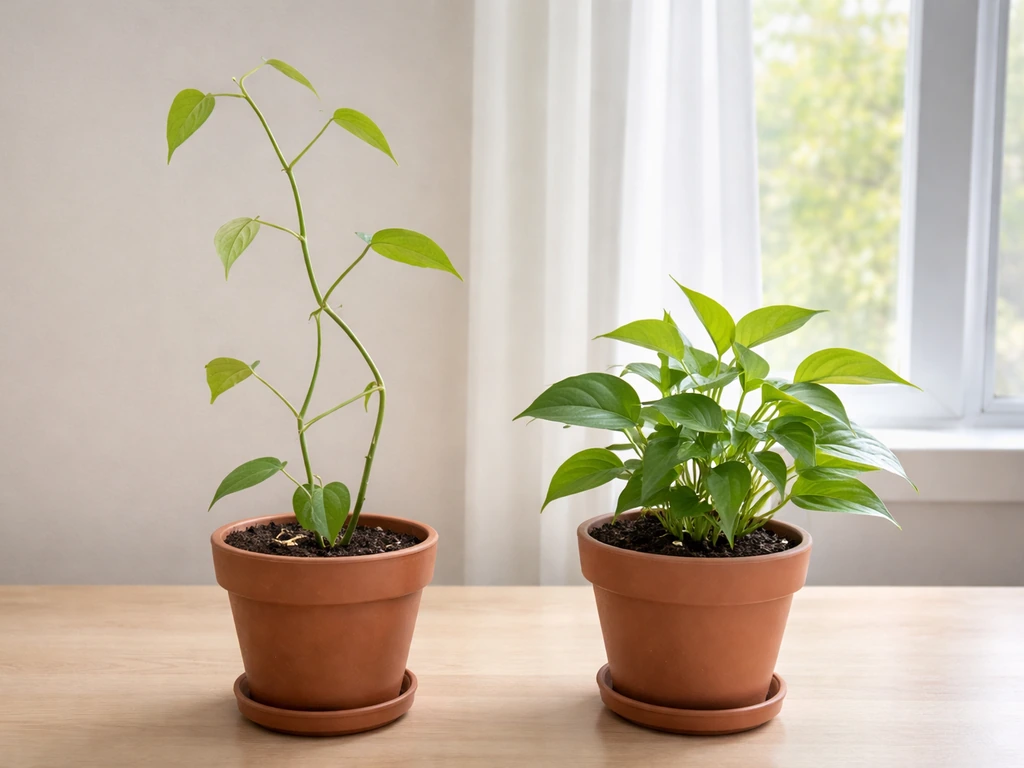
This is almost always a light problem, not a fertilizer problem. Stretched, weak stems (called etiolation) happen when a plant grows fast toward insufficient light. Stop fertilizing with high-nitrogen products and improve the light situation first. Move container plants to a brighter spot or, for outdoor beds, assess whether nearby trees or structures are casting too much shade. Once light improves, a balanced fertilizer can support proper stem strength.
Plant looks lush and green but isn't blooming
This is the classic too-much-nitrogen scenario. The plant is doing exactly what nitrogen tells it to do: grow leaves and stems. Stop applying high-N fertilizer immediately. If the plant is in a container, flush it with plain water two or three times over a week to leach excess nitrogen from the soil. Then wait. In many cases, simply stopping the nitrogen and being patient will allow the plant to shift its energy into flower bud development. If you want to speed the process, apply a low-nitrogen, higher-phosphorus bloom booster once.
Plant is short, pale, and not blooming either
This looks like a genuine deficiency, either nitrogen or phosphorus or both. The key is to check light and watering first because both symptoms can mimic nutrient deficiency under stress. If light and water are adequate, a balanced fertilizer applied at the recommended rate should help. Watch for improvement over two to three weeks. If growth resumes and color returns, you've confirmed deficiency was the issue. If symptoms persist, a soil test will tell you what's actually missing.
Blooms are delayed even though the plant seems healthy
Delayed flowering is often a timing issue. If you've been applying balanced or high-nitrogen fertilizer well into the season, the plant has been staying in vegetative mode longer than it should. The fix is to stop nitrogen-heavy applications and, if the plant is approaching its normal flowering window, apply a phosphorus-forward bloom formula to nudge it into reproductive mode.
Also check temperature and day-length conditions, since some flowering plants are sensitive to photoperiod and won't bloom until day length conditions are right regardless of nutrition. In Arabidopsis, nitrate availability can regulate flowering time at the shoot apical meristem in a way that shifts flowering behavior under long-day versus short-day conditions, linking nitrogen status to photoperiodic timing [some flowering plants are sensitive to photoperiod and won't bloom until day length conditions are right regardless of nutrition](https://pmc. ncbi. nlm.
nih. gov/articles/PMC6618062/).
The broader point is that fertilizer is one lever among several. If you're troubleshooting height or bloom issues, it's worth reviewing how fertilizer fits into the bigger picture alongside light, watering, and whether your plants actually have a nutrient deficit to begin with. The plants that tend to respond most dramatically to fertilizer are the ones that genuinely needed it in the first place.
FAQ
If fertilizer makes plants taller, how can I tell if it will improve flowering or just cause weak growth?
Sometimes yes, but the most common “taller” response is spindly growth caused by excess nitrogen plus insufficient light (etiolation). If the plant’s stems get longer but turn weak or floppy, that is a sign the height came at the expense of strength and bloom.
When should I stop using my regular fertilizer so it does not keep my flowering plants from blooming?
Use the plant’s current stage, not the calendar alone. Feed lightly (or stop) once you see buds forming, then switch to a lower-nitrogen, higher-phosphorus approach so you support blooming rather than extending leaf production.
Can fertilizer increase height but still fail to produce flowers, and why does that happen?
Not reliably. Even if a plant is tall, fertilizer may not trigger flowering if the environment limits bloom, such as low light, incorrect temperature, or missed photoperiod requirements. In these cases, fertilizer mainly changes foliage, not bud set.
What should I do if my flowering plants look burned or droopy after fertilizing in containers?
Overfertilizing in pots can burn roots and create symptoms that look like drought or poor growth, including wilting and tip burn. If you suspect this, pause feeding and flush the container with plain water to remove excess soluble salts, then resume only at reduced rates.
Does too much nitrogen late in the season always reduce flowering?
Yes. High-nitrogen feeding can delay bud development, especially if applied late. A practical approach is to stop nitrogen-heavy products when flowering is near, then use a bloom-focused fertilizer at the label rate rather than continuing monthly high-N feeding.
Why can adding more fertilizer make my nutrient problem worse instead of better?
More fertilizer is not better. If one nutrient is already high, extra amounts can interfere with uptake of related nutrients (for example, excess potassium or sodium reducing calcium uptake), leading to new problems instead of improved blooms.
How can I encourage sturdier, shorter flowering plants without stopping growth entirely?
It depends on whether “tall” is actually desired. If your goal is compact, sturdy plants with earlier blooms, choose a balanced fertilizer or a lower-nitrogen formulation and keep nitrogen applications at the low end of the label, especially in shade.
I fertilized but nothing changed, what are the most likely reasons beyond the fertilizer itself?
First check light and watering, then the fertilizer rate. If the soil is already rich or the plant is under stress, additional feeding often does little. A soil test helps confirm whether nutrients are missing before you change formulas.
How do I know whether my plant is truly deficient versus just stressed from bad conditions?
If growth is pale or stunted, a deficiency is possible, but stress can mimic it. Look for improvement after correcting conditions (especially light and moisture) and only then confirm with a soil test if symptoms persist beyond about two to three weeks.
Next Articles
What Helps Weed Plants Grow Better: Practical Guide
Actionable guide to help weed plants thrive: optimize light, watering, soil nutrients, and environment with quick growth
Does Fertilizer Help Plants Grow Taller? A Practical Guide
Learn when fertilizer increases plant height, which types help, and how to apply safely for taller growth.
Does Fertilizer Make a Plant Grow Bigger? Test Setup
Set up a simple test to see if fertilizer, as the independent variable, increases plant size and how to measure results.