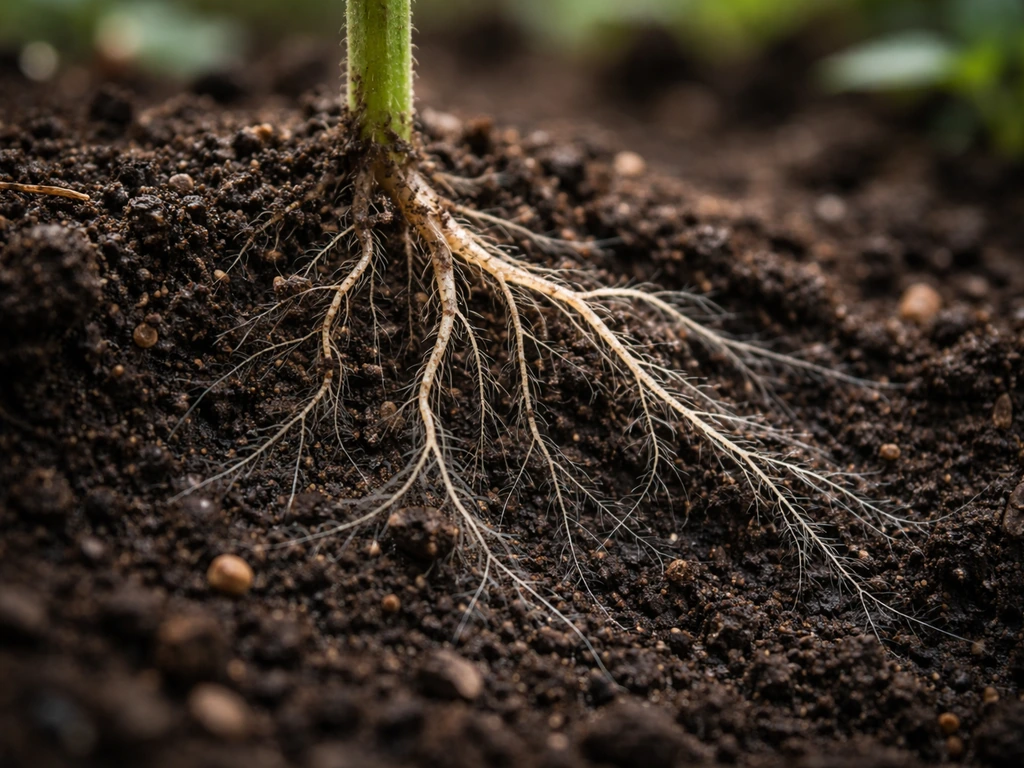
How baking soda changes your soil and water chemistry
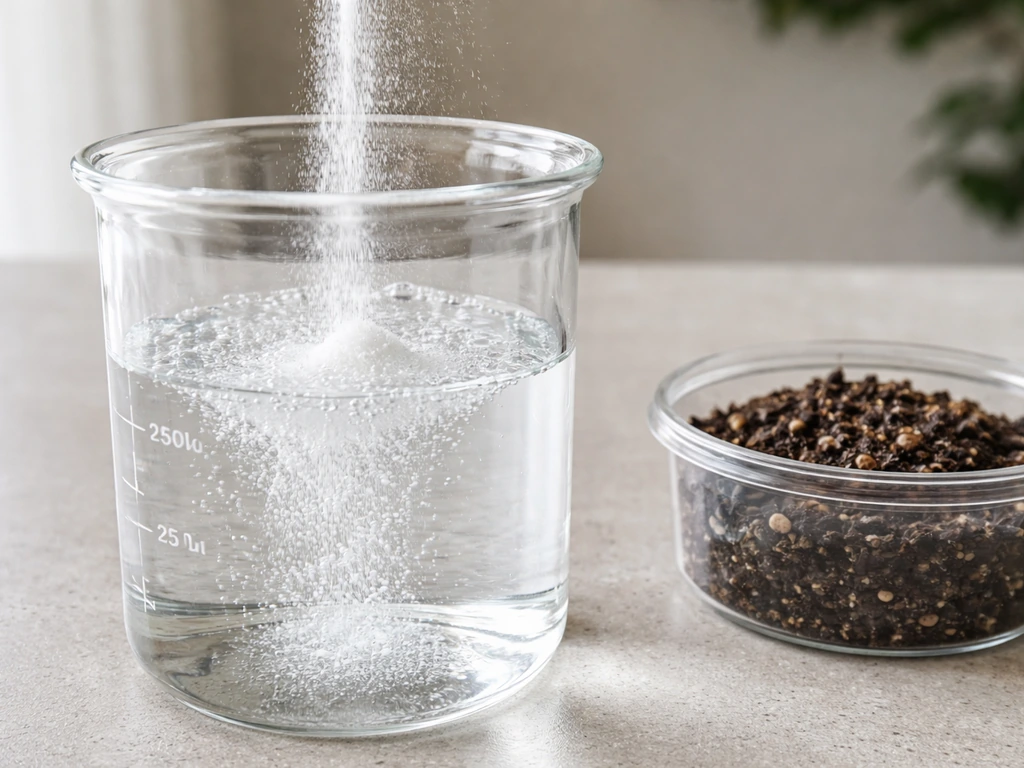
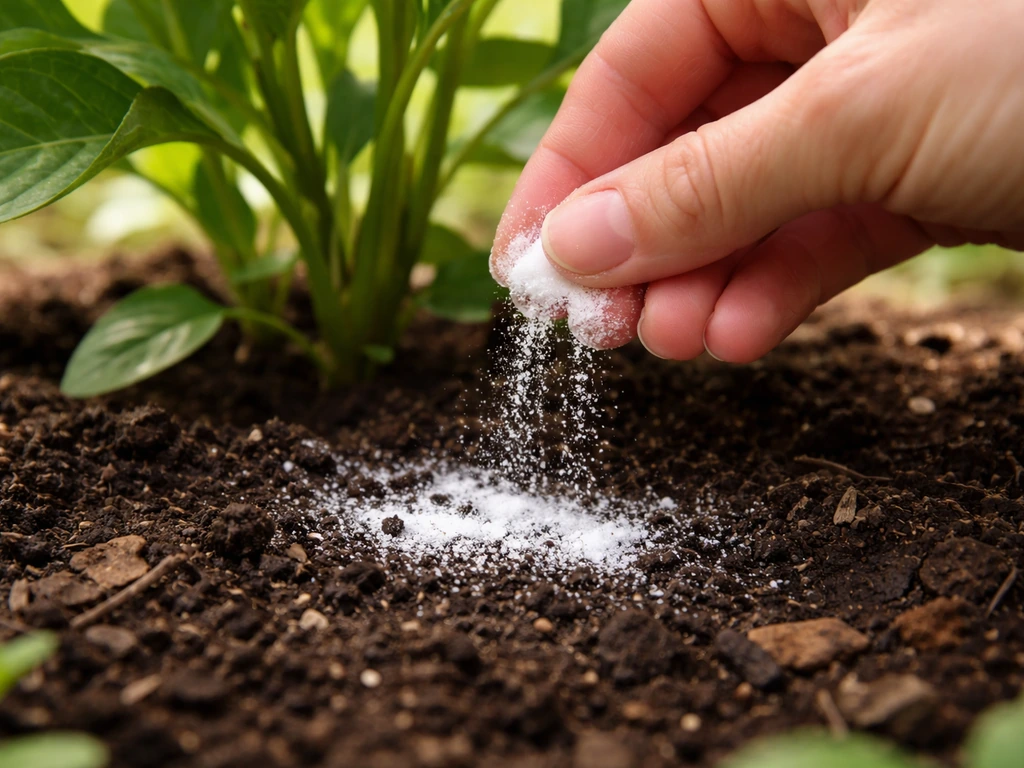
Baking soda is sodium bicarbonate (NaHCO3). When you dissolve it in water or sprinkle it on soil, two things happen: bicarbonate ions raise the pH of whatever they contact, and sodium starts accumulating. Both of those outcomes are problems for most garden plants.
Bicarbonate's pH effect is well-documented. Research from Oregon State University's Pacific Northwest pest management materials notes directly that bicarbonate raises pH and inhibits a plant's ability to pull iron out of the soil solution. This matters a lot because iron has to be in its reduced form (Fe2+) for roots to actually absorb it. When pH climbs, that conversion from Fe3+ to Fe2+ gets harder.
University of Minnesota Extension research adds another layer to this: when leaf-sap pH rises, the rate of iron reduction inside the plant also slows down, meaning the problem isn't just at the root level, it follows the plant all the way up into its leaves. The result is iron chlorosis, where younger leaves turn yellow between the veins while the veins stay green.
Utah State University Extension identifies this as a common pH-related deficiency, and OSU's grape management handbooks call it "lime-induced iron chlorosis" when high-pH soil is the cause.
The sodium side of the equation is just as concerning over time. Purdue University extension materials note that irrigation water containing around 450 ppm of bicarbonate is alkaline enough to raise soil pH over repeated applications. UF/IFAS warns that even 350 ppm bicarbonate in irrigation water can create alkalinity issues. Now think about what happens when you dissolve a tablespoon of baking soda into a watering can and apply it weekly.
Sodium builds up in the soil structure, which can disrupt the sodium adsorption ratio and eventually reduce water infiltration. Research in PubMed-indexed studies on salt stress shows sodium-related ion imbalance directly decreases plant growth, with spinach showing measurable mineral disruption under sodium salt irrigation. Brooklyn Botanic Garden's pest management guidance puts it plainly: repeated bicarbonate sprays can accumulate and lead to slower plant growth, particularly in dry climates where there's little rainfall to flush residues out.
7up is also a bicarbonate-based soda, so it is unlikely to help plants grow and could contribute to similar slowdowns over time bicarbonate sprays can accumulate and lead to slower plant growth.
Can baking soda make plants grow faster? Realistic expectations
I understand why people ask this. The logic goes: baking soda kills fungal disease, fungal disease slows growth, therefore baking soda speeds up growth. The chain breaks at the first link, though. Even if baking soda did knock out a fungal issue, the sodium and alkalinity it introduces are likely to suppress growth more than the fungus was.
MDPI peer-reviewed research on sodium bicarbonate in plant culture solutions found that increasing bicarbonate concentration raised solution pH, reduced water and inorganic salt absorption, and created conditions resembling salt stress, all of which affected normal growth negatively. There was a narrow concentration window in that study where extremely low levels did not cause harm, but the researchers were working in controlled hydroponic conditions, not garden soil, and they were not measuring growth gains, only the absence of damage. That is nowhere near evidence that baking soda speeds anything up.
The honest answer is that nothing about baking soda's chemistry points toward faster plant growth. It doesn't add meaningful nitrogen, phosphorus, or potassium. It doesn't improve soil structure. It doesn't enhance photosynthesis. What it does do is shift pH upward, which for most plants means fewer available micronutrients, not more.
When (and when not) to use baking soda around plants
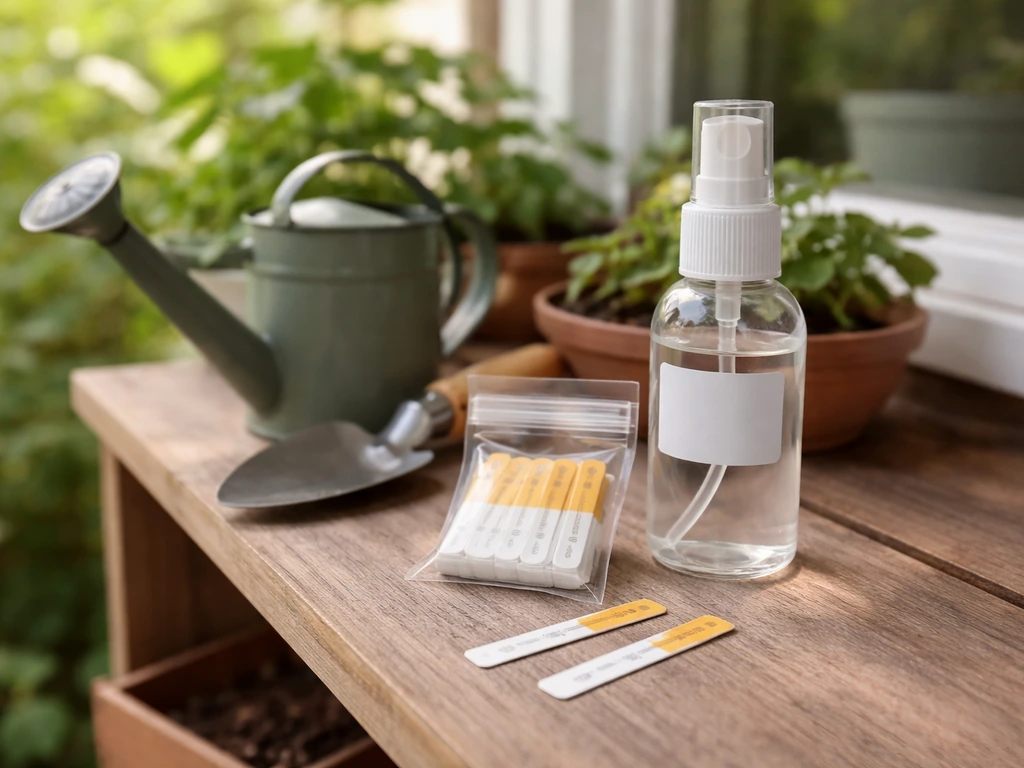
The one context where baking soda gets legitimate (if limited) mention in extension literature is powdery mildew control. Colorado State University Extension describes it as a nontoxic alternative for powdery mildew management, often combined with horticultural oil. Colorado State University Extension also discusses powdery mildew control using [potassium bicarbonate products like Kaligreen](https://extension. colostate.
edu/docs/pubs/garden/02902. pdf), alongside non-toxic approaches such as horticultural oil combinations. But even here, extension researchers consistently point out that potassium bicarbonate outperforms baking soda and is safer for plants. UF/IFAS notes this directly: potassium bicarbonate is less likely to harm plants than sodium bicarbonate.
Oregon State University's 2020 high-tunnel trials measured plant height, fruit count, and leaf chlorophyll during powdery mildew management trials, and those trials used potassium bicarbonate, not baking soda. If you're going to use a bicarbonate spray for disease control, potassium bicarbonate is the version worth trying.
Beyond that narrow disease-management use case, here is when baking soda is most likely to cause harm rather than help:
- Acid-loving plants like blueberries, azaleas, and rhododendrons thrive at pH 4.5 to 5.5. Any bicarbonate exposure moves them in the wrong direction fast.
- Already alkaline soils (pH above 7.0) will be pushed further out of range, worsening iron and manganese deficiencies.
- Dry climates or container gardens where sodium has nowhere to flush. Brooklyn Botanic Garden's guidance specifically flags drought-stressed areas as high-risk for bicarbonate accumulation.
- Seedlings and young transplants with undeveloped root systems are more sensitive to any sodium or pH shock.
- Repeated or heavy application to any soil type. Even one-time use on neutral soil can edge pH in the wrong direction.
If your soil pH is naturally alkaline already, and you're seeing yellowing leaves on young growth, there is a real chance adding baking soda would make that worse. USU Extension notes that in very alkaline soils fed by alkaline irrigation water, trying to manage iron deficiency by reducing soil pH can be nearly impossible without fixing the water source first. Adding more bicarbonate to that situation would be counterproductive.
How to test and apply safely (or choose a better fix)
Test your soil pH before anything else
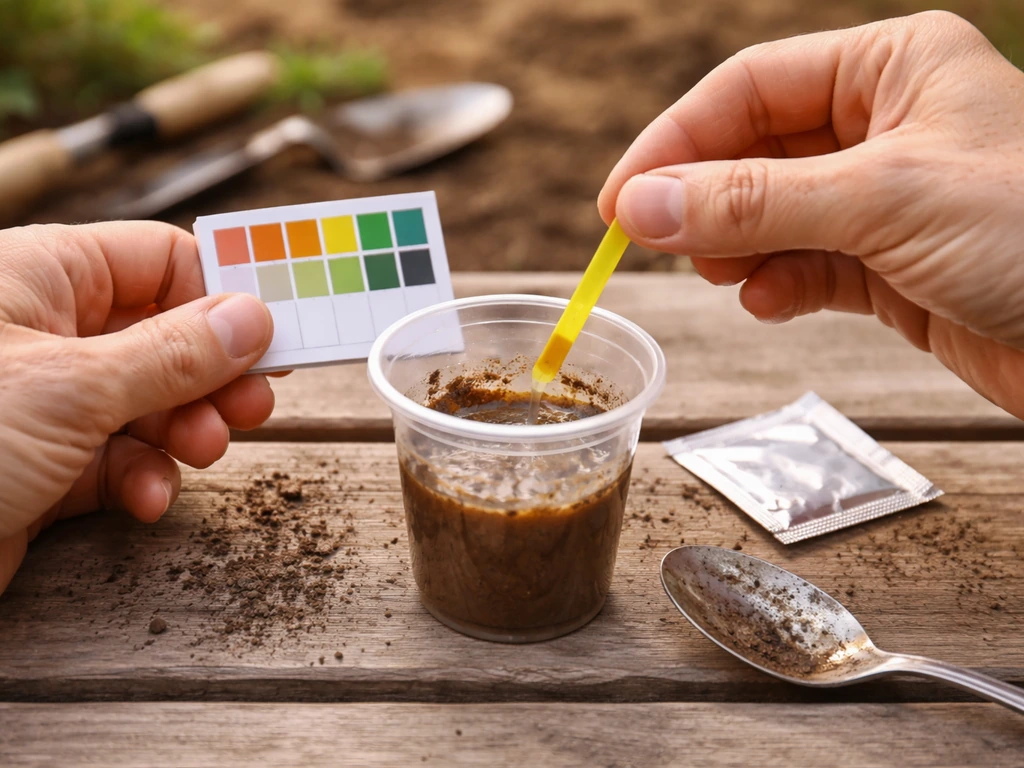
If you're considering baking soda for any reason, start with an inexpensive soil pH test (available at most garden centers for under $15, or send a sample to your local cooperative extension for a more detailed analysis). If your pH is already at 7.0 or above, baking soda is off the table. If you're near-neutral (6.5 to 7.0) and dealing with a powdery mildew problem, a single conservative foliar spray might not cause lasting harm, but potassium bicarbonate is still the smarter choice.
If you decide to use baking soda as a foliar spray
Keep concentrations very low: about 1 teaspoon per quart of water is the standard extension recommendation for powdery mildew. Spray in the evening to reduce evaporation and leaf burn risk. Do not apply more than once every 7 to 10 days, and stop entirely if you see leaf-edge browning or new yellowing. Rinse off any visible residue on leaves the following morning. And again: potassium bicarbonate does the same job with less sodium risk.
Measure whether it's actually working
If you're treating powdery mildew, look for a reduction in the white coating on leaves over one to two weeks, not faster growth. Retest soil pH after a month of any treatment to see if alkalinity is climbing. Watch for iron chlorosis symptoms: yellowing between leaf veins on new growth is your early warning sign that pH has shifted too far. USU Extension describes iron chlorosis as tied to soil pH, noting that iron availability decreases as pH increases Watch for iron chlorosis symptoms. If chlorosis appears, stop all bicarbonate applications immediately and consider applying chelated iron as a short-term fix while you work on correcting the root cause.
Better pH management options
To lower soil pH in a sustainable way, use elemental sulfur (applied per package directions based on your current pH and soil type), acidifying fertilizers like ammonium sulfate, or compost worked into the soil over time. For ongoing alkaline irrigation water issues, acidifying the water with small amounts of phosphoric acid (as used in fertigation systems) is a well-established commercial practice that UF/IFAS covers in detail. These approaches address the actual chemistry, rather than adding more chemistry on top.
What actually makes plants grow faster
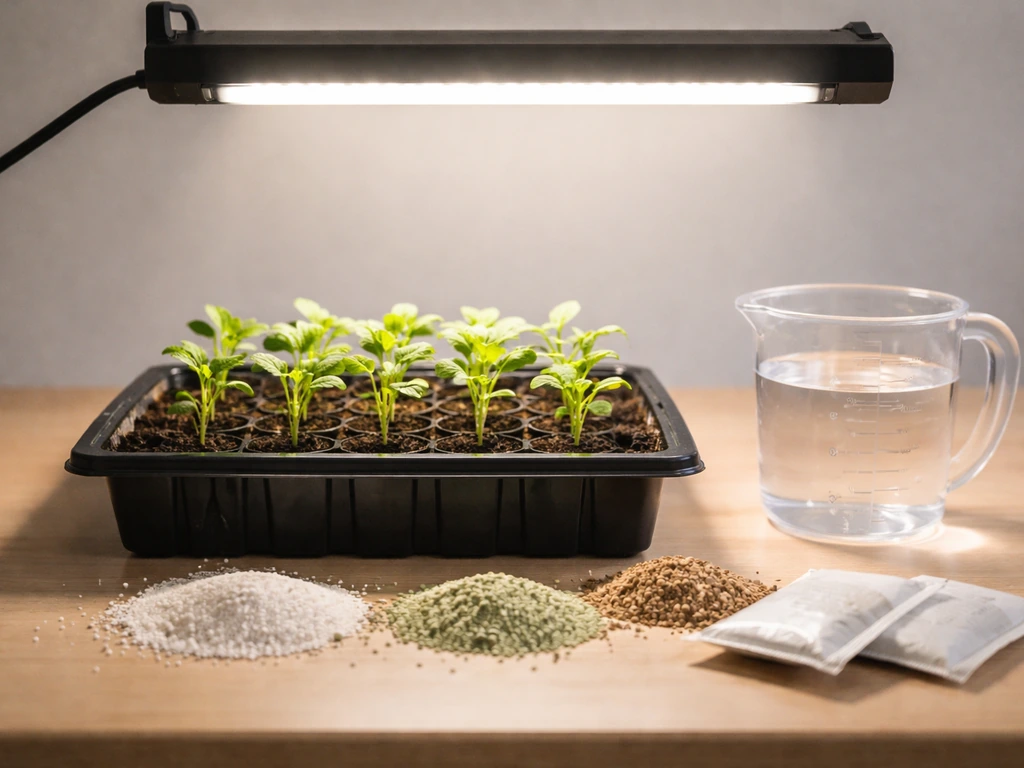
This is where I want to spend a minute, because if you searched for whether baking soda grows plants faster, you probably have a goal: you want healthier, faster-growing plants. That's completely achievable without any kitchen-cabinet experiments. The factors that actually drive faster, stronger growth are light, water consistency, balanced nutrients, temperature, and root health. Baking soda influences none of them positively. Baking soda influences none of them positively, and the same is true of unrelated “miracle” products like can birth control pills help plants grow. If you are growing orchids, you will usually get better results by addressing light, airflow, and bark conditions instead of using baking soda Baking soda influences none of them positively..
| Factor | What to do | Why it matters |
|---|
| Light | Maximize intensity and duration within the plant's tolerance; for indoor plants, move closer to a south-facing window or add a full-spectrum grow light | Photosynthesis rate directly drives growth speed; more usable light equals more glucose produced |
| Water consistency | Water deeply and consistently based on soil moisture, not a fixed schedule; avoid both drought stress and waterlogging | Water stress shrinks cells and slows growth; consistent moisture keeps nutrient transport moving |
| Balanced nutrients | Use a complete fertilizer with N-P-K and micronutrients matched to your plant type; compost improves availability over time | Plants need nitrogen for leaf growth, phosphorus for roots and flowers, potassium for overall function, and iron/zinc for enzymes |
| Soil pH in range | Target 6.0 to 6.8 for most vegetables and ornamentals; test and amend with sulfur (to lower) or lime (to raise) as needed | pH controls nutrient availability; even abundant fertilizer is useless if pH locks nutrients out |
| Temperature | Keep plants within their ideal range; most vegetables grow fastest between 60°F and 80°F (15°C to 27°C) | Metabolic rates in plants are temperature-dependent; cold slows enzyme activity and nutrient uptake |
| Root health | Use well-draining soil, avoid compaction, and refresh container soil annually | Roots are the engine; damaged or oxygen-starved roots cannot deliver water or nutrients regardless of what you apply to leaves |
It's worth noting that baking soda sits in a category with a few other household substances that get oversold as plant helpers. Products like regular soda, dish soap, and bleach all have similar stories: a narrow, often legitimate use case that gets exaggerated into "this makes plants grow better. Bleach also is not a plant growth booster, and using it on or around plants can damage tissue and disrupt healthy soil life does bleach help plants grow.
" The reality is usually more nuanced, and sometimes the substance is outright harmful. Baking soda lands somewhere in the middle: not useful as a growth aid, occasionally useful in very small doses for disease management, and genuinely harmful if overused or applied to the wrong plants or soil type.
The short version if you're in a hurry
Baking soda will not help your plants grow and will not make them grow faster. Its sodium content and pH-raising effect work against plant health in most situations. The one place it shows up in credible extension research is as a low-risk fungicide for powdery mildew, and even there, potassium bicarbonate is the better, safer version. If you want faster plant growth, test your soil pH, optimize your light and watering, and feed with a balanced fertilizer.
If you're wondering whether sprite helps plants grow, the same idea applies: check the underlying nutrient and pH needs rather than relying on a household liquid to boost growth does sprite help plants grow. If you're wondering does toothpaste help plants grow, the takeaway is similar: the chemistry can easily harm plants or do nothing for growth. Those are the moves that actually move the needle.