No soda helps orchids grow. Not cola, not Sprite, not 7UP, not ginger ale. The sugar, acids, and carbonation in soft drinks actively work against orchid health rather than supporting it. If your orchid is struggling, the fix is almost always about light, water, airflow, or a proper dilute fertilizer program, not a kitchen hack involving soda.
What Soda Helps Orchids Grow? The Truth and Fixes

Marcus Holloway
2 Jun 2026
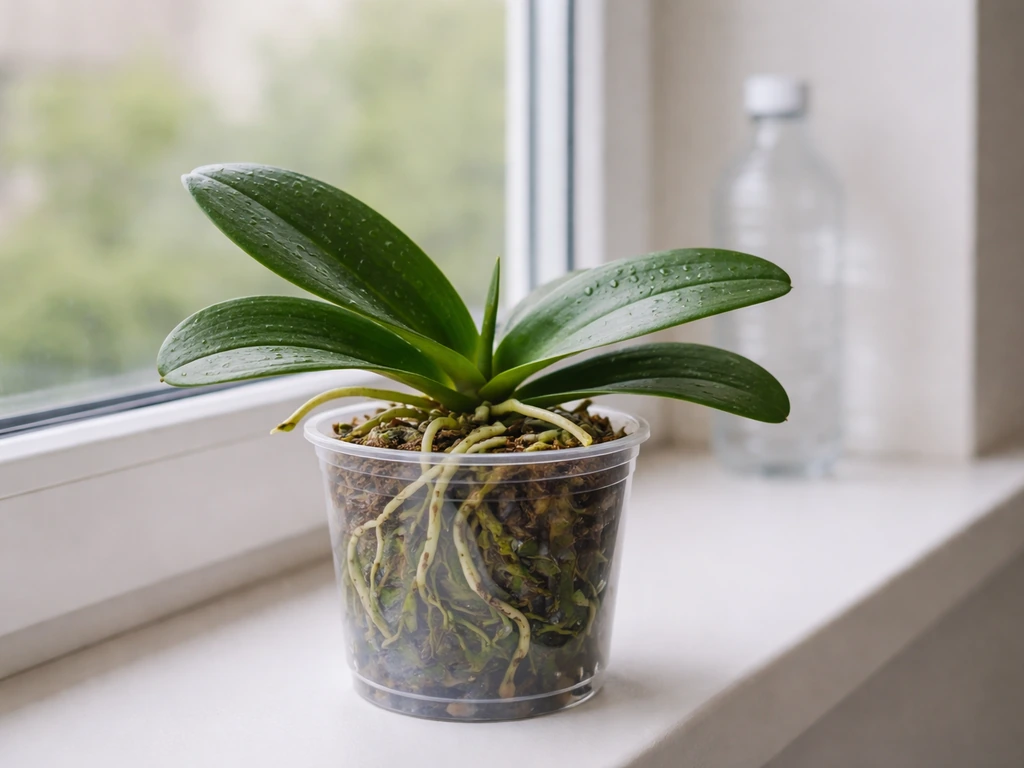
Quick truth check: does soda actually help orchids?
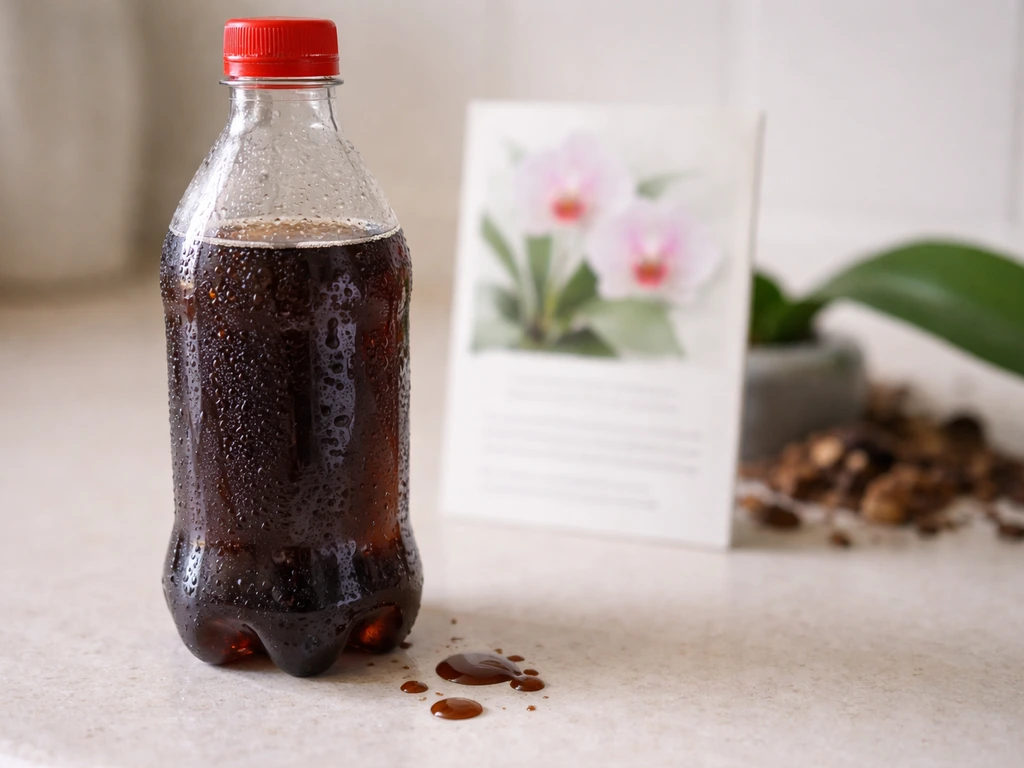
The short version: soda is the wrong tool for every job an orchid needs done. The American Orchid Society doesn't mention soft drinks as a care option anywhere in their fertilizer guidance, and that's not an accident. Orchids are epiphytes, meaning they evolved to grow on trees and absorb nutrients from rainwater, decomposing organic debris, and air. Their nutritional needs are genuinely low and very specific. A can of cola gives them none of what they need and several things that hurt them.
Here's the chemistry problem. Most sodas contain either phosphoric acid (colas) or citric acid (citrus-flavored drinks), which can push soil pH into ranges that orchid roots struggle with. The sugar creates a high osmotic pressure environment that pulls water out of roots rather than letting them absorb it. That same sugar also feeds bacterial and fungal growth in the potting medium, accelerating decay. If you've seen advice online saying carbonation delivers extra CO2 to roots, that's not how CO2 uptake works in plants. Roots don't absorb CO2 to benefit growth; leaves do that through gas exchange in the air. Pouring carbonated liquid on the roots accomplishes nothing useful.
This myth persists partly because people see soda listed alongside other "kitchen hacks" like baking soda or dish soap. Baking soda and dish soap actually have narrow, conditional uses in horticulture (baking soda has some limited fungal suppression research behind it, for instance), but even those have real downsides when overused. Soda doesn't even clear that low bar. It's purely folkloric.
What orchids actually need
If you want to understand why soda fails, it helps to understand what orchids are actually asking for. These aren't heavy feeders or sun-lovers. They evolved in conditions most houseplants would find extreme: hanging off tree branches, drying out between rains, getting a thin trickle of dilute nutrients from passing water. Replicate those conditions and your orchid will thrive.
Light
Phalaenopsis (the most common grocery-store orchid) and Paphiopedilum varieties do well at light intensities up to about 1,500 foot-candles. That's a bright windowsill with indirect light, not a shaded corner and not direct afternoon sun. A north-facing window is usually too dim. East-facing is ideal for most homes. If leaves are dark green and limp, that's typically a sign the plant isn't getting enough light, not that it needs a nutrient supplement.
Water and the soak-then-dry cycle
Orchid roots need both water and air, in sequence. The right method is to soak the potting medium thoroughly, then let it dry out before watering again. The American Orchid Society is explicit that overwatering isn't just about pouring too much water at once; it's about watering before the medium has had a chance to dry. Roots that stay constantly wet rot. If you're checking every few days and the bark or moss still feels damp, wait. The drying phase is not neglect; it's part of the process.
Airflow and temperature
Phalaenopsis prefers nights above 60°F and days in the 75 to 85°F range, with a reasonable ceiling around 90 to 95°F (above that, you need to increase humidity and airflow to compensate). Humidity around 70% is a reasonable minimum. Stagnant air is one of the underappreciated killers of houseplant orchids. A small fan running on low nearby, pointed away from the plant but circulating the room, makes a genuine difference. It speeds up the drying cycle and reduces fungal risk at the same time.
What nutrients orchids actually rely on
Orchids need the same basic macronutrients as other plants: nitrogen (N), phosphorus (P), and potassium (K), plus a range of trace micronutrients. The key difference is concentration. Orchids are adapted to extremely dilute nutrient inputs, so the standard orchid fertilizer guidance from the American Orchid Society is "weakly, weekly": fertilize frequently but at very low concentrations, roughly 50 to 100 ppm nitrogen, which is a quarter to half of the 200 ppm nitrogen concentration recommended for many other floral crops.
Soda provides none of these nutrients in usable form. For other plants, like houseplants, does bleach help plants grow? If you are also wondering does 7up help plants grow, the safe answer is still no, and you will get better results focusing on proper orchid care basics like light, water, and a dilute fertilizer program. In most cases it can harm roots and soil life instead of improving growth <a data-article-id="B12029AE-B854-4668-A1D3-7E412B1E8F9E">Soda provides none of these nutrients in usable form.
. Cola contains phosphoric acid, yes, but phosphorus delivered in that chemical form, at that concentration, in an acid solution, is not the same as the balanced phosphorus in an orchid fertilizer. The ratio is wrong, the pH is wrong, and the accompanying sugar creates root stress that blocks the uptake of anything useful that might theoretically be present.
It's a bit like saying a bag of sugar contains carbon, and carbon is essential for plant growth, so sugar must help plants. If you're wondering, does Sprite help plants grow, the answer is basically the same: the ingredients don't translate into the right nutrients and conditions plants need Technically true at the element level. Technically true at the element level; completely useless in practice.
A safer approach if you want to "boost" your orchid
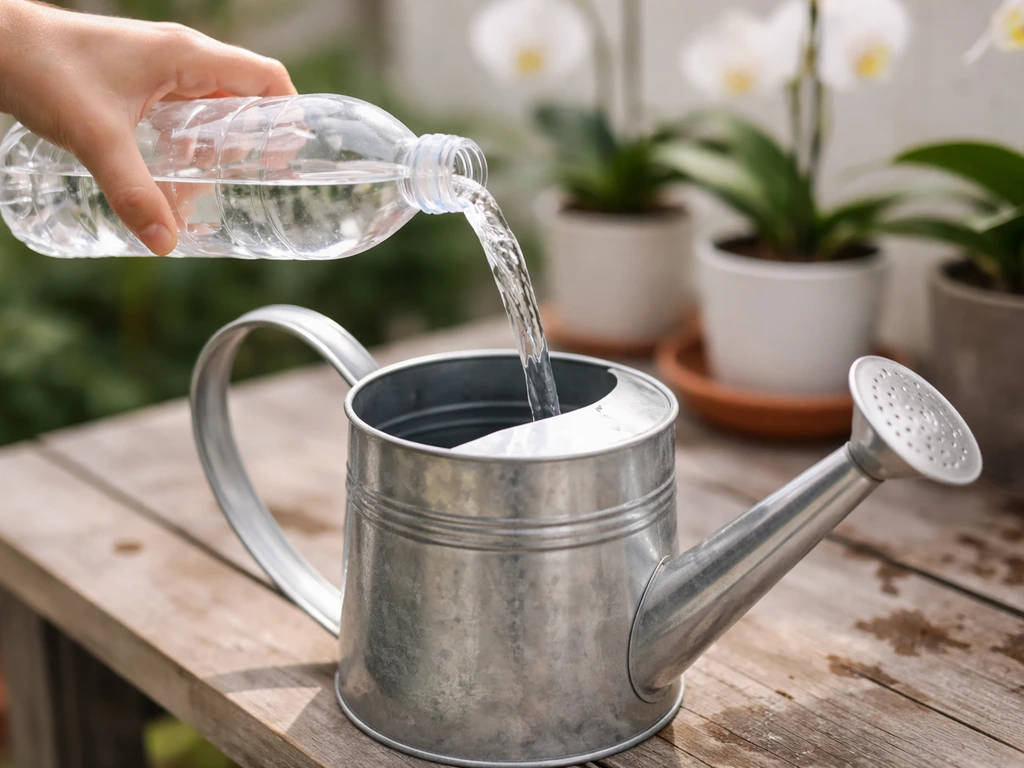
Most people searching for what soda to use on orchids are really asking: "My orchid looks bad, what can I give it to help it recover?" That's a fair question with a real answer. The answer is a proper dilute fertilizer program, not a kitchen shortcut.
Choose a balanced orchid fertilizer (a 20-20-20 NPK ratio is common and works well, though urea-free formulas are preferred if you're watering with tap water) and mix it at half the label rate, or even a quarter rate if you're cautious. If you are wondering whether bleach helps plants grow, the answer is no, and using it can easily burn roots and harm your orchid bleach help plants grow. Apply it every time you water, or at minimum every other watering. This is the "weakly, weekly" method in practice. For a small home collection, fertilizing at every other watering with a dilute solution is plenty.
One important maintenance step: flush your orchid with plain water every month or so. Fertilizer salts accumulate in bark and moss over time, and that salt buildup can damage roots in exactly the same way that high-sugar soda would. Good Housekeeping notes that repeated use of baking soda, which adds sodium and raises alkalinity, can lead to sodium buildup and stress roots by interfering with water uptake sodium buildup and root stress can happen with salt buildup. If your tap water is very hard, consider using collected rainwater or distilled water for at least some of your watering cycles. This is one area where orchid care overlaps with good general houseplant hygiene.
| Method | What it provides | Risk level | Recommended? |
|---|---|---|---|
| Dilute orchid fertilizer (balanced NPK) | N, P, K at correct concentration and ratio | Low if used as directed | Yes |
| Cola or dark soda | Sugar, phosphoric acid, carbonation | High (root stress, pH issues, microbial growth) | No |
| Sprite or 7UP | Sugar, citric acid, carbonation | High (same problems as cola) | No |
| Baking soda solution | Sodium bicarbonate, alkalinity | Medium (sodium buildup over time, wrong pH) | No |
| Plain rainwater or distilled water flush | Clean hydration, salt removal | Very low | Yes, periodically |
Diagnosing orchid problems quickly
One reason people reach for soda is that their orchid clearly needs something, but they're not sure what. Here's a fast diagnostic framework based on the most common symptoms.
Yellow leaves
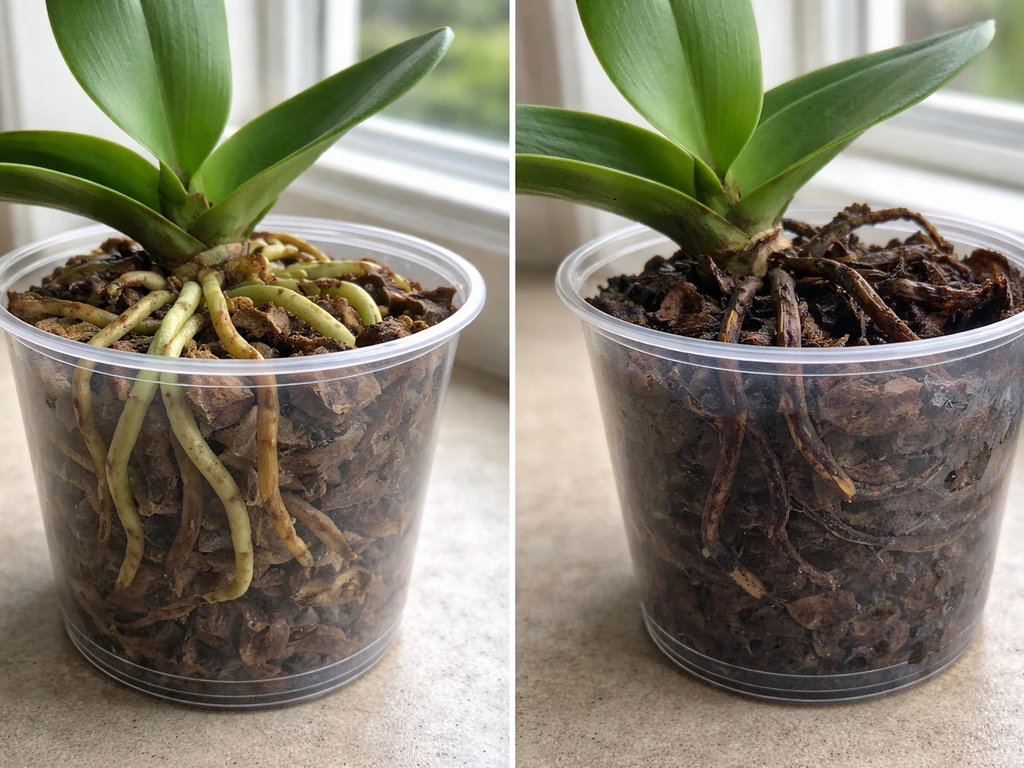
Yellow leaves on the bottom (oldest) leaf pair is normal aging. Yellow leaves spreading up the plant usually point to overwatering or root rot. Check the roots: healthy orchid roots are white to silvery when dry and green when wet. If roots are brown, mushy, or hollow, the medium has been staying too wet. Remove dead roots, let the plant dry out more between waterings, and improve airflow around the pot.
No blooms
Phalaenopsis needs a temperature drop at night (around 10 to 15°F cooler than daytime) to trigger blooming. In most homes, this happens naturally in fall. If your orchid hasn't rebloomed in over a year, try moving it to a spot that gets slightly cooler nights, like near a window in September and October. Low light is also a common culprit for non-blooming orchids; brighten the location before reaching for any supplement.
Root problems
The American Orchid Society offers a useful diagnostic split here: dry, shriveled, or brittle roots point to underwatering; brown, mushy roots point to overwatering conditions. Underwatered roots respond quickly to a proper soaking cycle. Overwatered roots require trimming dead material, repotting into fresh bark if the medium has broken down, and a corrected watering schedule. Neither problem benefits from adding soda.
Stalled growth
If your orchid produces no new leaves or roots over several months, rule out light first (too dim is the most common cause), then consider whether the potting medium has broken down. Bark media compacts and retains too much water as it ages, which suffocates roots. Repotting into fresh medium every one to two years typically restores growth momentum faster than any fertilizer or supplement change.
Myths worth skipping entirely
Beyond soda, there's a whole category of "miracle" orchid hacks floating around online. Some are harmless, many are counterproductive, and a few can seriously damage a plant. Here are the most common ones to ignore.
- Adding sugar to water: Sugar does not feed plants directly. Plants make their own sugars through photosynthesis. Adding sugar to the root zone feeds bacteria and fungi in the potting medium, accelerating rot.
- Using carbonated water for extra CO2: CO2 is absorbed through leaf stomata in the air, not through roots in water. Carbonated water delivers no meaningful CO2 benefit to the plant and goes flat within minutes of being poured.
- Pouring leftover soda (flat or otherwise) to avoid wasting it: Even flat soda still contains sugar and acid. The carbonation was the least of the problems.
- Baking soda as a growth booster: Baking soda has limited, conditional use as a mild antifungal spray (not a root drench), and even that use comes with caveats. Repeated application to soil causes sodium buildup that interferes with water uptake and root health.
- "Banana water" or kitchen-scrap teas as fertilizer substitutes: These deliver wildly inconsistent and unbalanced nutrients. They can also introduce pests and pathogens. A proper orchid fertilizer costs a few dollars and does the job cleanly.
- Ice cube watering for slow release: Ice damages tropical roots. Cold stress is real. Use room-temperature water.
- Dish soap as a growth tonic: Dish soap has a narrow insecticidal use (diluted, for soft-bodied pests like aphids), but it's not a fertilizer or growth enhancer. Overuse strips protective coatings from leaves.
These myths persist because orchid care can feel mysterious, especially when a plant drops its blooms and just sits there looking inert for months. It's tempting to do something, anything, rather than wait. But orchids reward patience and consistency more than intervention. Getting the basics right, specifically correct light, a proper soak-then-dry watering cycle, good airflow, and a dilute fertilizer applied regularly, will outperform any amount of kitchen experimentation every single time. Dish soap is another kitchen fix people try, but it is not a proven way to help plants grow. Can birth control pills help plants grow? In most cases, they will not solve basic care issues like light, watering, airflow, and proper dilute fertilizing.
Your actual next steps
If you landed here because your orchid looks rough and you wanted something fast, here's what to do today: move the plant to your brightest indirect-light window, check the roots to confirm whether you're dealing with over- or underwatering, adjust your watering cycle accordingly, and pick up a small bottle of balanced orchid fertilizer to start the weakly-weekly program. That combination addresses 90% of orchid problems. If you are also wondering whether toothpaste helps plants grow, focus on the basics first, like light and water, because random additives rarely fix the real issue 90% of orchid problems. No soda required.
FAQ
Can I use a tiny amount of soda on an orchid, like a splash in the watering can?
It still is not recommended. Even small amounts introduce sugar plus acid (cola has phosphoric acid, citrus drinks have citric acid), which can stress roots, shift potting-media pH, and increase microbial growth. If you already did it, switch back to plain water and follow the soak-then-dry routine, then avoid fertilizing for a week to let stressed roots stabilize.
Does any type of soda work better than the others, for example diet soda or ginger beer?
No soda type helps. Diet versions remove some sugar but still include acids and additives, and carbonation is not a useful CO2 boost for roots. Ginger beer and flavored drinks can contain sugars and acids too, so they create the same or similar risks without providing orchid-appropriate nutrients.
What should I do if soda was already used and the orchid looks worse?
First, stop using soda immediately. Next, inspect roots and remove mushy or hollow ones with sterile scissors. Rinse remaining roots with room-temperature water, then repot into fresh orchid bark or a clean medium if the current mix stayed wet too long or smells sour. Resume fertilizing only after you see new, firm root growth or after a couple of successful soak-then-dry cycles.
Will soda burn orchid leaves or cause spots?
It can. Acidic liquids can irritate leaf tissue, and sticky residues from sugar can attract microbes, leading to soft rot or fungal spotting, especially when airflow is poor. If any soda contacted leaves, wipe with clean water, then let the plant dry with good circulation.
Is it better to use soda as a foliar spray instead of watering the roots?
No. Orchids mainly need dilute nutrition through the watering cycle and good gas exchange through leaf stomata. Foliar soda can leave sugary residue, block airflow, and raise the chance of leaf spotting. Use proper orchid fertilizer at weak concentrations instead.
How can I tell whether my orchid problem is overwatering versus underwatering before trying fertilizer?
Check roots and the medium, not just leaf appearance. Healthy roots look white or silvery when dry and green when wet, while brown, mushy, or hollow roots point to staying wet too long. Dry, shriveled, brittle roots suggest underhydration. Adjust the soak-then-dry schedule first, then use the weakly-weekly dilute fertilizer approach.
Can soda affect orchid potting media long-term, even if the plant seems okay right now?
Yes. Sugar and acid can change how fast bark or moss breaks down and can contribute to salt and microbial buildup. Over time this can reduce root oxygenation and increase rot risk. A monthly flush with plain water and, if needed, repotting when media degrades helps prevent delayed damage.
If soda is harmful, what is the closest safe substitute for “something quick” to help orchids recover?
A weakly weekly orchid fertilizer routine, or a plain-water reset if the roots look compromised. Mix balanced orchid fertilizer at about half the label rate, or even a quarter if you are cautious, then apply every watering or every other watering. If you suspect root rot, prioritize trimming and drying cycles over fertilizing.
How often should I flush fertilizer salts out of the potting medium?
A good rule is about once per month. Run clean water through the potting medium until it drains freely, then let it dry properly before the next watering. This matters most if you fertilize regularly or your water tends to be hard.
What temperature and humidity changes help orchids bounce back faster after stress, without using any additives?
Keep temperatures in a stable range and improve airflow. Many Phalaenopsis do best with cooler nights and warm days, and humidity around the ~70% range is a reasonable minimum for home conditions. If your room is very humid but still stagnant, a small fan that circulates air (not blasting the plant) can reduce fungal risk and speed drying.
My orchid won’t bloom, could soda help with flowering?
No. Non-blooming is usually about insufficient light or missing a night temperature drop for Phalaenopsis. Move to a brighter indirect-light location first, then ensure nights are noticeably cooler than daytime. Blooming triggers are environmental, not nutrient boosts from soda.
What are common mistakes people make when trying to fix orchids with home remedies?
The biggest mistake is treating visible symptoms as a nutrition problem. Another is applying concentrated substances, including sugary drinks, too frequently. Instead, address the core drivers: correct light, proper soak-then-dry watering, airflow, and a dilute fertilizer program.
Next Articles
Does Dish Soap Help Plants Grow? What It Actually Does
Dish soap does not help plants grow. Learn how it harms leaves and soil, plus safer fixes for growth or pests.
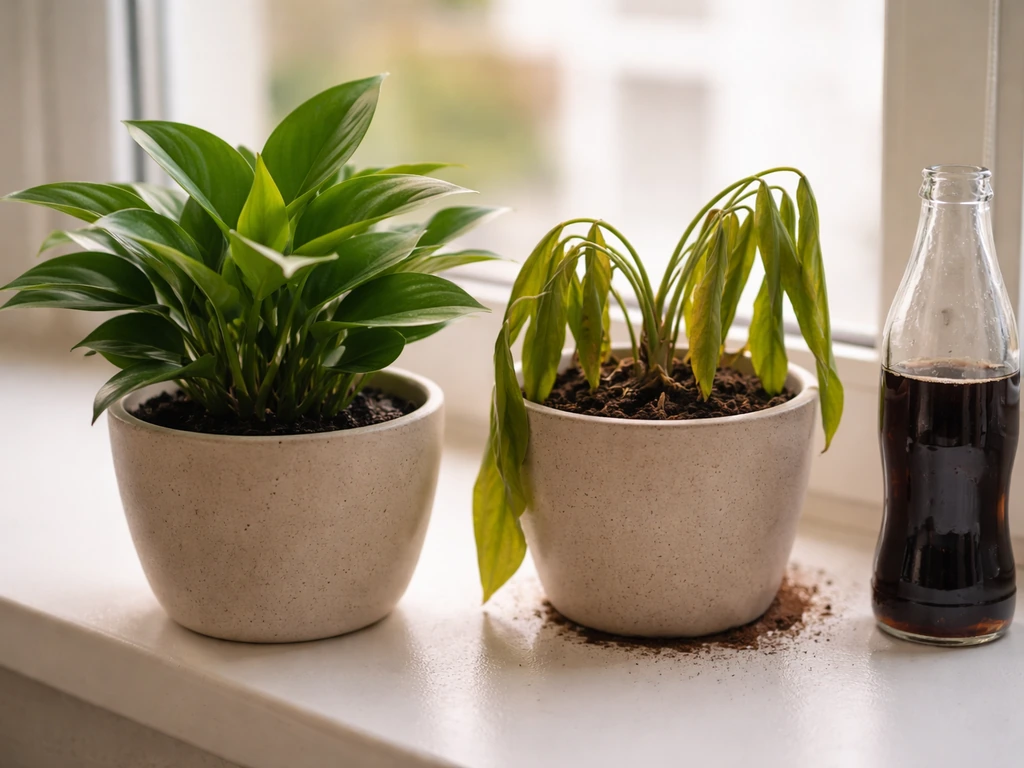
Does Soda Help Plants Grow? What Happens and What to Do Instead
Learn why soda does not help plants grow, what it does to soil and roots, and what to do instead for healthy growth.
Does Sprite Help Plants Grow? Science, Risks, and Better Options
Learn if Sprite helps plants grow, why soda harms them, and what to do instead for healthier growth.