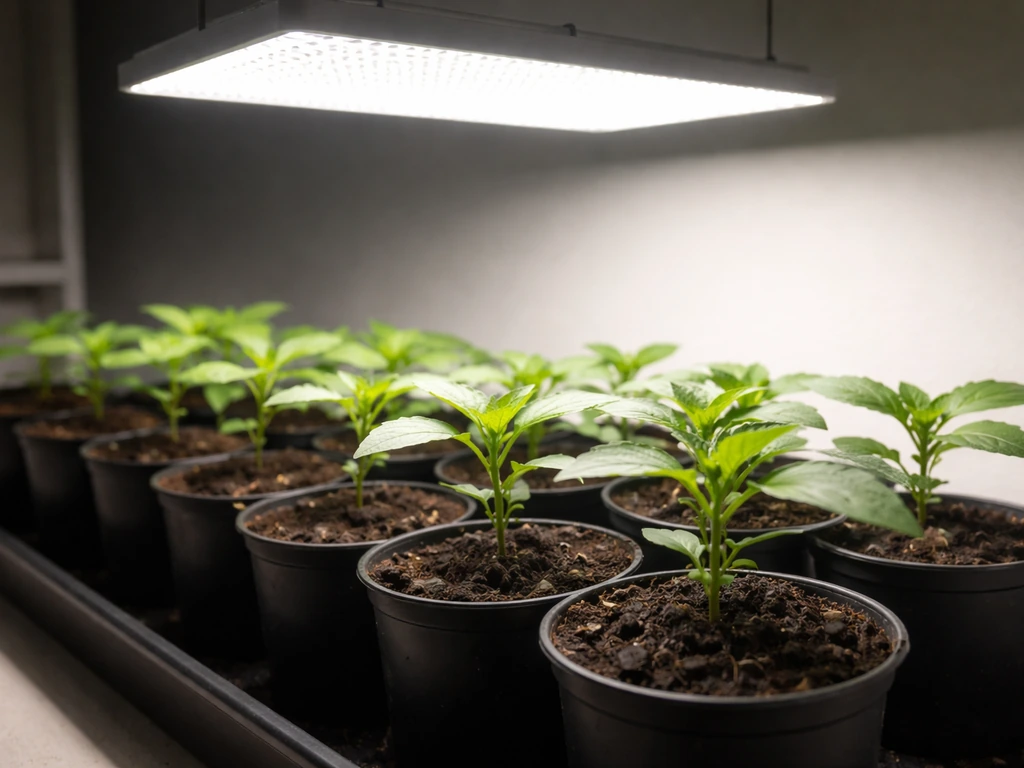
Yes, white LED light can help plants grow, and for most home growers and indoor gardeners it works well enough to raise healthy seedlings, keep houseplants thriving, and even support leafy greens through harvest. The catch is that not all white LEDs are equally useful for plants, and 'white' is more of a human perception than a plant-relevant description. What actually drives growth is whether the light contains enough photons in the red (roughly 600–680 nm) and blue (around 430–470 nm) wavelength ranges, delivered at sufficient intensity and for the right number of hours per day. Blue light supports plant growth by supplying photons in the 430 to 470 nm range that drive photosynthesis and help with vegetative development. The key colors to prioritize are red and blue wavelengths, because they drive the strongest photosynthesis in most plants. A decent white LED can tick all those boxes. A cheap, dim, warm-white desk lamp probably won't.
Does White Light Help Plants Grow? When It Works
What 'white light' actually means for plants
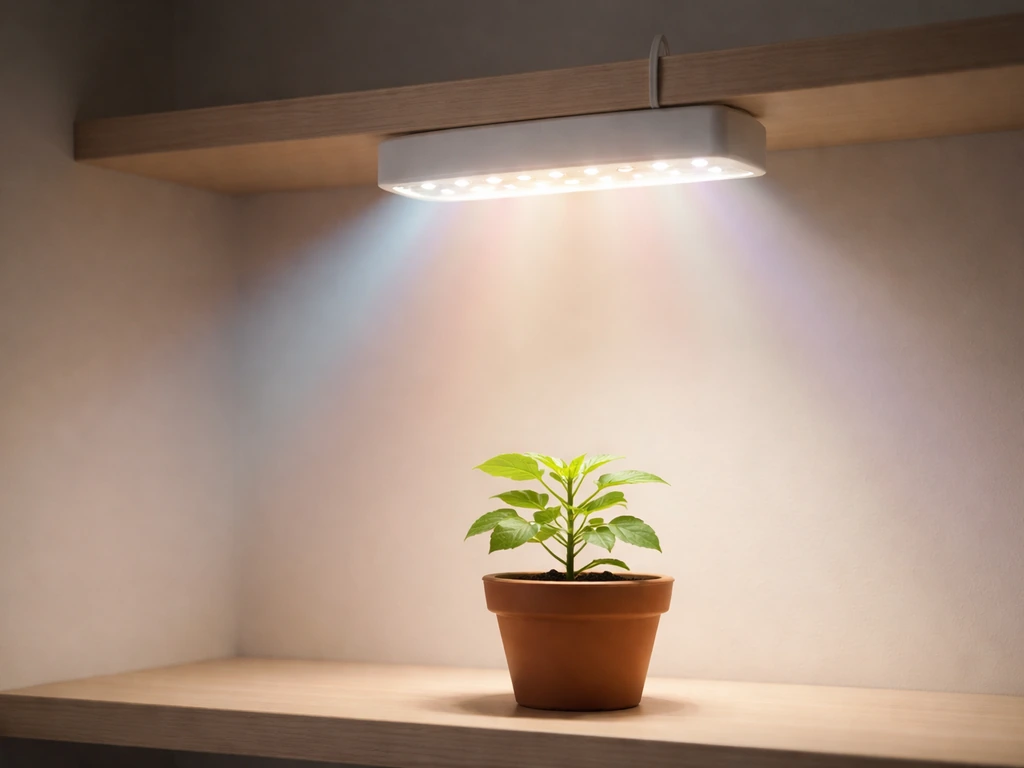
White light doesn't exist as a single wavelength. Your eye perceives it as white when a light source combines enough wavelengths across the visible spectrum, but plants don't see color the way we do. They respond to specific photon wavelengths through chlorophyll and other photoreceptors. The photosynthetic action spectrum of a typical leaf shows two strong red-region peaks (around 670 nm and 630 nm) and a blue peak near 437 nm, plus a smaller green-region contribution around 500 nm. Photosynthesis drops off sharply above about 680 nm and hits a trough near 700 nm.
Most white LEDs are built one of two ways. The most common method uses a blue InGaN chip (usually peaking around 450 nm) coated with a yellow phosphor that converts part of that blue light into a broad yellow-amber emission. The two outputs mix and your eye reads 'white.' The second approach mixes separate red, green, and blue LEDs electronically. Both methods produce a spectrum that spans most of the 400–700 nm range plants use for photosynthesis (what scientists call PAR, or photosynthetically active radiation), but the spectral shape varies a lot depending on the chip and phosphor recipe. Some white LEDs are relatively strong in red and blue. Others are heavy in the yellow-green middle, which plants use less efficiently for photosynthesis.
Green light isn't useless, but it's less efficient. Research puts green photons at roughly 10% less photosynthetically effective than red photons from around 660 nm. At high intensities, green actually penetrates deeper into a canopy than red or blue, which has some benefit in dense plantings, but for most home growers it's not the wavelength you want to optimize. If a white LED is heavily weighted toward yellow-green (which many general-purpose LEDs are), you're delivering a lot of light that does relatively little work per photon.
Does white LED light support photosynthesis? Yes, but conditions matter
The straightforward answer is yes. A quality white LED covers the 400–700 nm PAR window, and plants will photosynthesize under it. If you set that up with enough intensity and the right photoperiod, the red part of the spectrum does help plants grow too white LED covers the 400–700 nm PAR window. What varies is how efficiently they do so compared to a tuned grow light with dedicated red and blue peaks. However, purple light can still support growth depending on how much usable red and blue it provides. 'Full spectrum white' is intended to provide useful light across that entire PAR range, and modern high-CRI white LEDs do reach into the red and blue bands that chlorophyll prefers. But 'full spectrum' on a marketing label doesn't guarantee the spectral distribution actually delivers strong red and blue peaks. Some fixtures that market themselves this way are still phosphor-heavy in yellow-green.
The more important variable is intensity. Plants need a meaningful quantity of photons, not just photons from the right wavelengths. A dim white LED aimed at the right spectrum will still underperform because intensity matters as much as color. And duration matters too: a plant getting 6 hours under a great white LED may grow worse than one getting 16 hours under a mediocre one. The interplay between spectrum, intensity, and photoperiod is what you actually need to optimize, not just whether the light looks white or purple.
How to pick the right white LED for plants
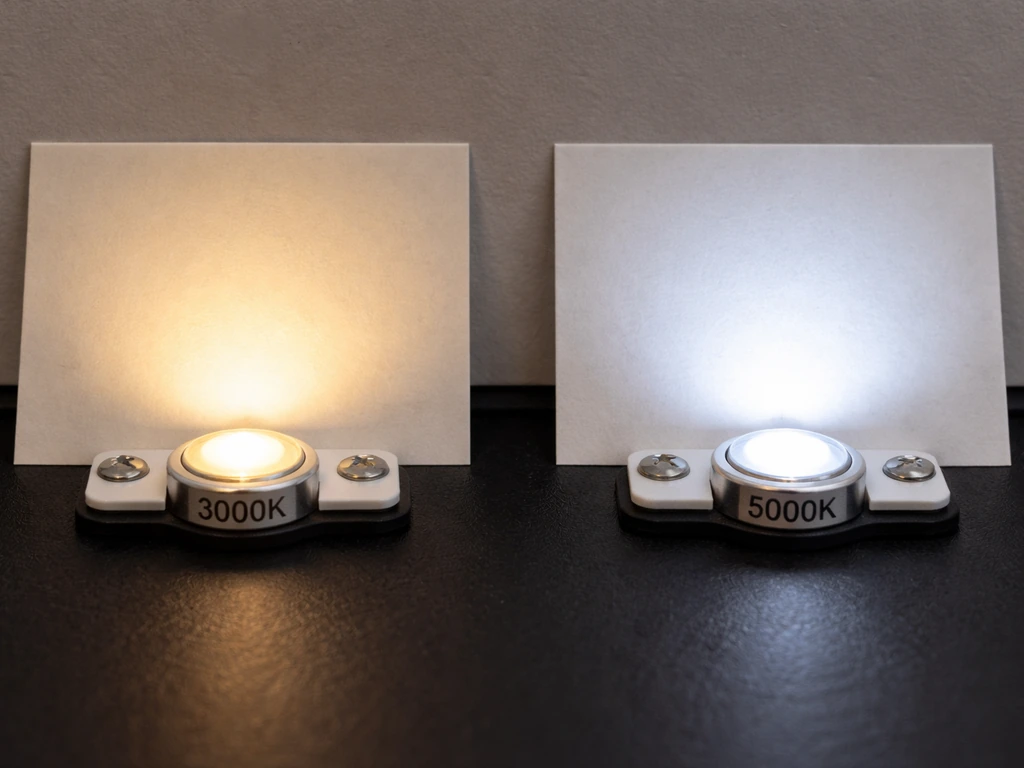
Color temperature (CCT) is your first filter
Color correlated temperature (CCT) is measured in Kelvins and tells you whether a white LED skews warm (more red/yellow) or cool (more blue). For plants, the sweet spot is generally between 4000K and 6500K. In that range you get meaningful blue output (useful for vegetative growth, compact leaf development, and chlorophyll production) while still retaining some red output. Bulbs below 3000K are heavy in yellow-amber and light on blue, making them poor choices for most plants. Bulbs above 6500K are strong in blue but can be weak in red, which matters more during flowering and fruiting stages.
A 5000K–6500K white LED is a solid general-purpose choice for seedlings and leafy greens. If you're growing fruiting crops like tomatoes or peppers under lights alone, you'd ideally want a fixture with supplemental red (or switch to a dedicated grow light for that stage). For most herbs, leafy vegetables, and houseplants, a good 5000K broad-spectrum white LED works well.
CRI: useful but don't over-rely on it
CRI (Color Rendering Index) measures how accurately a light renders human-visible colors compared to sunlight. A CRI of 90+ means colors look true under that light. It's a useful rough proxy for spectral completeness, because a high-CRI bulb has to cover the visible spectrum evenly to score well. However, high CRI does not guarantee great plant performance. A bulb can have CRI 95 and still be weak in the deep red (660–680 nm) region that chlorophyll peak-absorbs at. Use CRI as a supporting data point, not the deciding one. If you can find a spec sheet showing the spectral power distribution (SPD) graph of the fixture, that's far more informative than CRI alone.
The specs that actually matter
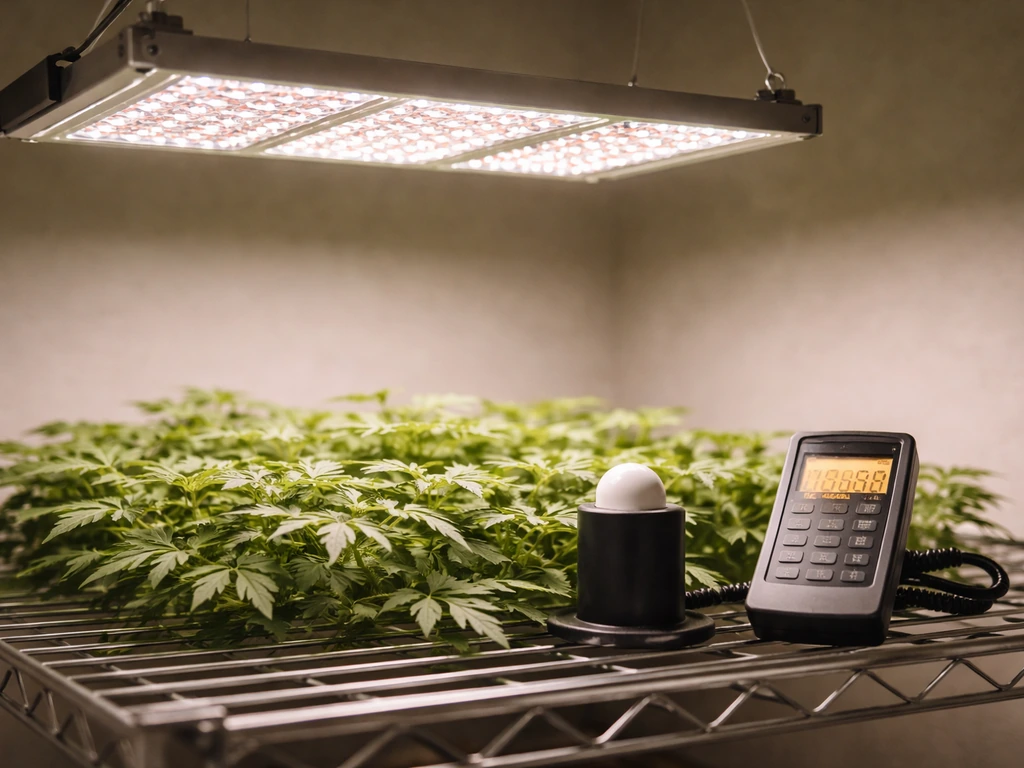
- PPF (photosynthetic photon flux): the total PAR photons the fixture emits per second, measured in µmol/s. Higher is better. This is the number that tells you how much usable light the fixture actually produces.
- PPFD (photosynthetic photon flux density): PAR photons hitting a specific surface per second, measured in µmol·m⁻²·s⁻¹. This is what your plant actually receives at canopy level. Aim for at least 200–400 µmol·m⁻²·s⁻¹ for most vegetable seedlings and leafy greens.
- CCT: as described above, 4000K–6500K for most plant uses.
- Wattage is not a reliable proxy for photon output because efficacy varies widely between fixtures. Two 40W fixtures can deliver very different amounts of usable PAR.
- Avoid relying on lumens as a plant-growth metric. Lumens weight green-yellow light heavily because it matches human eye sensitivity, not plant chlorophyll absorption.
Setup basics: distance, photoperiod, and avoiding heat issues
How far away should your light be?
Distance directly controls how much light (PPFD) reaches your plants. The inverse square law applies: double the distance, you get roughly a quarter of the intensity. As a starting point, most quality LED grow panels for seedlings work well at 12–24 inches above the canopy. General-purpose white LED shop lights and T8 fluorescents should be kept much closer, often under 12 inches, because their output is weaker. UNH Extension recommends mounting fluorescent shop lights less than one foot from seedlings to get useful intensity. The same principle applies to comparable white LED shop lights.
Always watch your plants, not just your ruler. If you see leaf edges curling upward, bleached or pale patches on upper leaves, or crispy tips, the light is probably too close or too intense. If plants are stretching toward the light with long gaps between leaf nodes (etiolation), the light is too far away or too dim.
Photoperiod: how many hours per day?
Most seedlings and vegetative plants do well with 14–18 hours of light per day. Fruiting crops and plants that flower based on day length need specific photoperiod management. The metric that ties it all together is DLI (Daily Light Integral), which measures the total moles of PAR photons a plant receives over a full day. DLI is calculated from PPFD multiplied by seconds of light, divided by 1,000,000. As an example: a fixture delivering 200 µmol·m⁻²·s⁻¹ for 16 hours gives a DLI of about 12 mol·m⁻²·day⁻¹. MSU Extension and other university research sources identify 10–12 mol·m⁻²·day⁻¹ as a common minimum DLI target for many greenhouse crops during low-light seasons. Below that threshold, visible growth quality suffers.
If your white LED can only deliver 100 µmol·m⁻²·s⁻¹ at canopy level, you'd need to run it for about 28 hours to hit a DLI of 10, which is obviously impossible. That's when you need either a more powerful fixture, shorter plant-to-light distance, or supplemental lighting. Running a dim light for 22 hours can work for some low-light plants, but it's not a sustainable workaround for bright-light crops.
Heat and light burn
LEDs run cooler than HID or fluorescent fixtures but they still generate heat, especially high-output panels. Keep your hand at canopy level for 30 seconds. If it feels uncomfortably warm, the light is too close or the room needs better airflow. Heat stress and light burn produce similar symptoms: leaf cupping, bleaching, and tip burn. Always rule out heat before assuming you need more light.
How to verify it's actually working
Measure PPFD and calculate DLI if you can
The most reliable way to confirm your white LED is delivering enough light is to blank" rel="noopener noreferrer">measure PPFD with a quantum sensor or a calibrated smartphone app designed for PAR measurement. MSU Extension also emphasizes that using light sensors correctly helps provide the most accurate data for determining DLI, and it recommends periodic cleaning and recalibration of sensors blank" rel="noopener noreferrer">measure PPFD with a quantum sensor. These vary in accuracy, but a decent app gives you a ballpark figure. Place the sensor or phone at canopy height, take a few readings at different spots under the light, and average them. Then use the DLI formula to see if your photoperiod hours get you to the 10–12 mol·m⁻²·day⁻¹ minimum most crops need. Iowa State Extension notes you should check that your measurement tool is calibrated for LEDs specifically, since some meters are calibrated for fluorescent or sunlight and can read inaccurate values under LED fixtures.
Simple observation checks if you don't have a meter
- Compact, dark green growth with short internodes (gaps between leaf nodes) suggests adequate light intensity.
- Leaves tracking or orienting toward the light source (phototropism) is normal and not a problem sign on its own.
- Long, stretched stems with large gaps between leaves (etiolation) is the clearest visual sign of insufficient light.
- Pale, yellowing upper leaves that aren't caused by overwatering or nutrient deficiency suggest low photon delivery.
- Slow growth rate relative to what the plant species should show in good conditions is a softer indicator but worth tracking.
When white light isn't enough
White LEDs in the 4000K–6500K range work well for leafy greens, herbs, seedling propagation, and most foliage houseplants. They start to fall short in a few specific situations. Fruiting crops like tomatoes, peppers, and cucumbers benefit from stronger deep-red output (660–680 nm) during flowering and fruit development, and many white LEDs don't deliver this wavelength at high enough intensity. If you're growing these crops exclusively under artificial light, a dedicated full-cycle grow light with targeted red peaks, or supplemental red LED strips, will outperform a white-only setup.
High-light plants like succulents, cacti, and most fruiting crops need DLI levels of 20–30 mol·m⁻²·day⁻¹ or more. Reaching those numbers with standard white LEDs requires either very high-output fixtures or impractically long photoperiods. In those cases, moving plants to a bright south-facing window (supplementing with white LED) or upgrading to a purpose-built grow light with higher PPF output makes more practical sense.
It's also worth knowing that tuned purple or blue-and-red grow lights are not automatically better than white LEDs just because they look more 'plant-specific.' The marketing around spectrum is noisy. A high-quality white LED delivering sufficient PPFD will outperform a cheap narrow-band red/blue fixture delivering inadequate intensity. What matters is photons delivered in usable wavelengths at adequate quantity, not the color of the light as your eye sees it.
Troubleshooting stunted growth: light vs. water vs. nutrients vs. environment
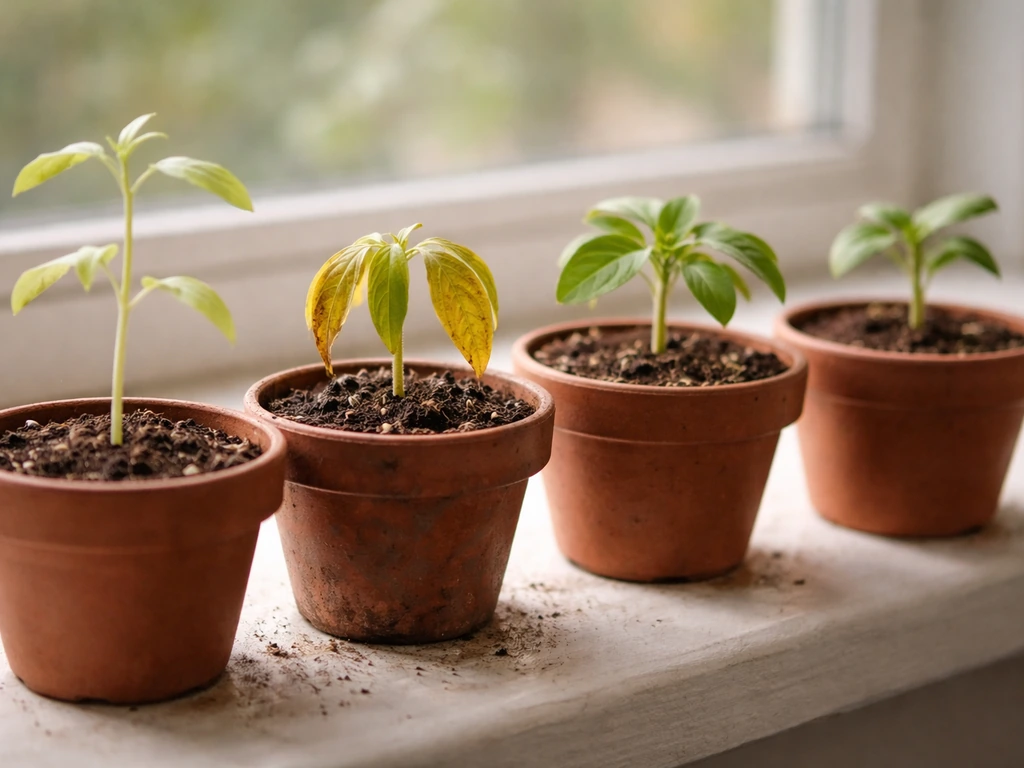
Slow or stunted growth under white LEDs doesn't automatically mean your light is the problem. Several issues produce nearly identical symptoms, and misdiagnosing them wastes time and money. Here's how to work through it systematically.
| Symptom | Possible light cause | Possible non-light cause | Quick check |
|---|---|---|---|
| Long, stretched stems with pale leaves | DLI too low; light too far away | Unlikely to be water or nutrients | Measure PPFD at canopy; move light closer |
| Pale or yellowing new growth | Insufficient intensity | Nitrogen deficiency; overwatering (root rot limiting nutrient uptake) | Check soil moisture and drainage before adjusting light |
| Dark green but very slow overall growth | Slightly low DLI | Underwatering; phosphorus or micronutrient deficiency; cold root zone | Confirm watering schedule and fertilizer program first |
| Wilting despite moist soil | Heat from fixture too close | Root rot from overwatering; compacted soil | Check soil drainage and fixture temperature at canopy |
| Brown leaf tips or edges | Light burn; fixture too close | Salt buildup from over-fertilizing; low humidity | Flush soil, check EC, then adjust light distance |
| Dropping lower leaves; reduced lateral branching | Chronic low light | Normal leaf senescence; overwatering; root-bound plant | Assess root health and pot size alongside light levels |
The single most common mistake I see is growers adding more light when the real problem is overwatering. Waterlogged roots can't take up nutrients effectively, which causes pale, stunted growth that looks exactly like a light deficiency. Before you buy another fixture or move your light closer, stick your finger two inches into the soil. If it's wet, water less. If it drains poorly, fix the drainage. Solving the wrong problem doesn't help your plants and can make things worse.
Temperature is another underrated variable. Roots and shoots both have optimal temperature ranges, and growing in a cold basement or drafty windowsill slows metabolism regardless of how much light you provide. If your white LED setup looks good on paper but growth is still sluggish, check the air temperature around the plant and the root zone temperature before assuming light is the culprit.
Once you've ruled out water, nutrients, and temperature, then revisit light. Measure your PPFD, calculate your DLI, and compare it to the target for the specific plant you're growing. If you're short, either increase intensity by moving the fixture closer, add a second fixture, or extend your photoperiod within reason. That systematic approach will get you to the root cause faster than guessing.
FAQ
If a white LED fixture is bright to my eyes, will it definitely grow plants well?
Often, yes, but you must verify intensity at canopy height. A “bright” lamp can still deliver too few photons (low PPFD) for the DLI your plant needs, especially for seedlings and dense leafy crops. If you do not have a PPFD meter, assume you will need either a higher-output fixture or longer daily hours, and watch for stretching or pale new growth.
Is a high-CRI “full spectrum” white LED automatically good for plant growth?
Not necessarily. High-CRI only suggests the spectrum covers human-visible wavelengths, it does not guarantee strong deep red output or the exact red-blue balance plants use most efficiently. If you can, use the fixture’s spectral power distribution (SPD) plot to confirm meaningful output in the 660–680 nm and 430–470 nm regions, not just a high CRI number.
Will a warm-white (around 2700K to 3000K) bulb help plants grow?
If the bulb is under 4000K and heavy in yellow-amber, it may work for maintenance but can slow compact vegetative growth because blue output is limited. For most indoor growers, aim for about 4000K to 6500K. If you already have a warm LED, consider increasing photoperiod slightly or adding supplemental cool/blue light.
Can I run white grow lights 24/7 to boost growth?
It can, but it depends on how long the photoperiod is and whether you can reach the target DLI. Many plants need 10 to 12 mol·m⁻²·day⁻¹ minimum, and that can require more than 14 to 16 hours if your fixture is not high output. Also ensure you are not causing heat stress when running longer hours.
What if I only want to run the lights for 8 to 10 hours per day?
Yes, but it is usually a tradeoff between light intensity and daily light integral. Shorter photoperiods require higher PPFD to hit the same DLI, and dim fixtures will underperform if you cut the hours. A practical approach is to measure PPFD, calculate DLI, then adjust either distance or hours to match the plant’s target.
How do I tell if my white light is causing light burn versus heat stress?
Plants can show stress that looks similar to light problems, such as bleaching or tip burn, but heat can be the cause. Do the canopy-level hand check and improve airflow or raise the fixture if the area feels uncomfortably warm. If symptoms appear suddenly after moving the light closer, treat heat and intensity as the first suspect.
Is it better to move the light closer to fix slow growth?
You might, but “closer” is not always better if the fixture is too intense. If you move the light closer and see bleaching, crispy tips, or pale patches, reduce intensity by raising the fixture slightly or lowering the power if it’s dimmable. Measure PPFD if possible to stop guessing.
Can I combine natural daylight with a white LED and still meet the DLI needs?
Yes. DLI needs add up across the day, so supplementing with a window and a white LED can make up the difference. However, window light is highly variable with season and weather, so it is easy to overestimate what the plant receives. If you want consistency, rely more on your measured PPFD from the LED.
What DLI target should I use for leafy greens versus succulents or fruiting plants?
For leafy greens and most herbs, the goal is often around 10 to 12 mol·m⁻²·day⁻¹ in low-light seasons, but high-light plants usually need far more. If you aim for succulents, cacti, or fruiting crops indoors, plan for much higher PPFD or a different, higher-output grow setup rather than assuming “white” alone will do it.
My plants are stretching and slow, what should I check after I rule out watering problems?
LEDs can still be an issue if the spectrum is imbalanced or the fixture is too weak. If growth is slow or leggy after you confirm water, nutrients, and temperature, measure PPFD, compute DLI, and compare to the plant’s needs. Most remaining fixes are distance, fixture power, adding another light, or extending photoperiod within a reasonable range.
How accurate are smartphone apps or cheap PPFD meters for white LEDs?
Yes, and it’s specifically important for LED measurements. Some smartphone apps or meters are calibrated for sunlight or fluorescent sources, and LED readings can be off. If you use a meter, confirm it is designed or calibrated for LEDs, and take multiple readings across the footprint before you calculate DLI.
Should I change lighting when plants move from vegetative growth to flowering or fruiting?
Look for stage-specific cues. During vegetative growth, plants often respond well to a balanced red-blue white LED, while fruiting and flowering stages usually need stronger deep red (660–680 nm) and higher DLI. If you are growing tomatoes or peppers under white LED only, expect slower or less reliable flowering unless you supplement red or use a grow light designed for that stage.
If my fixture claims “full spectrum,” can I trust it without measuring anything?
In most cases, yes for a ballpark answer, but you should not ignore intensity. Even if your spectrum is great, a dim fixture will not hit the required DLI. Use the SPD or at least the CCT and then measure PPFD to confirm you are delivering enough photons at canopy height.
Why do some plants under the same white LED look good while others are leggy?
Often, the easiest win is improving coverage. If only the center is bright, plants at the edges may fall below the DLI threshold and become uneven or leggy. Measure PPFD at several points under the fixture footprint, and consider repositioning plants or adding another fixture to even out the output.
Does it matter whether the white LED is a blue-plus-phosphor bulb or an RGB-based fixture?
Yes, because different white LED construction can change the spectral shape even when the light appears the same color. Phosphor-heavy designs can lean toward yellow-green, which is less efficient for photosynthesis per photon. If you are shopping, prioritize fixtures with published SPD data or ones that explicitly provide strong red and blue output rather than only broad “full spectrum” wording.
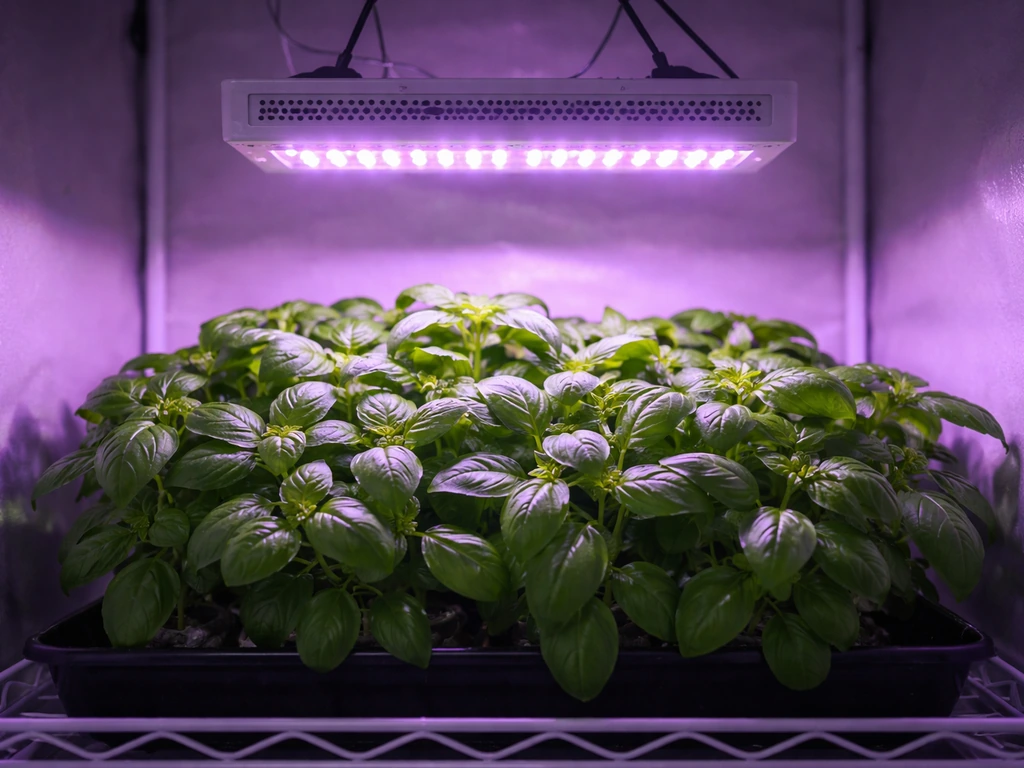
Learn if purple LED light boosts plant growth, when it helps, and how to set PPFD, placement, and duration.
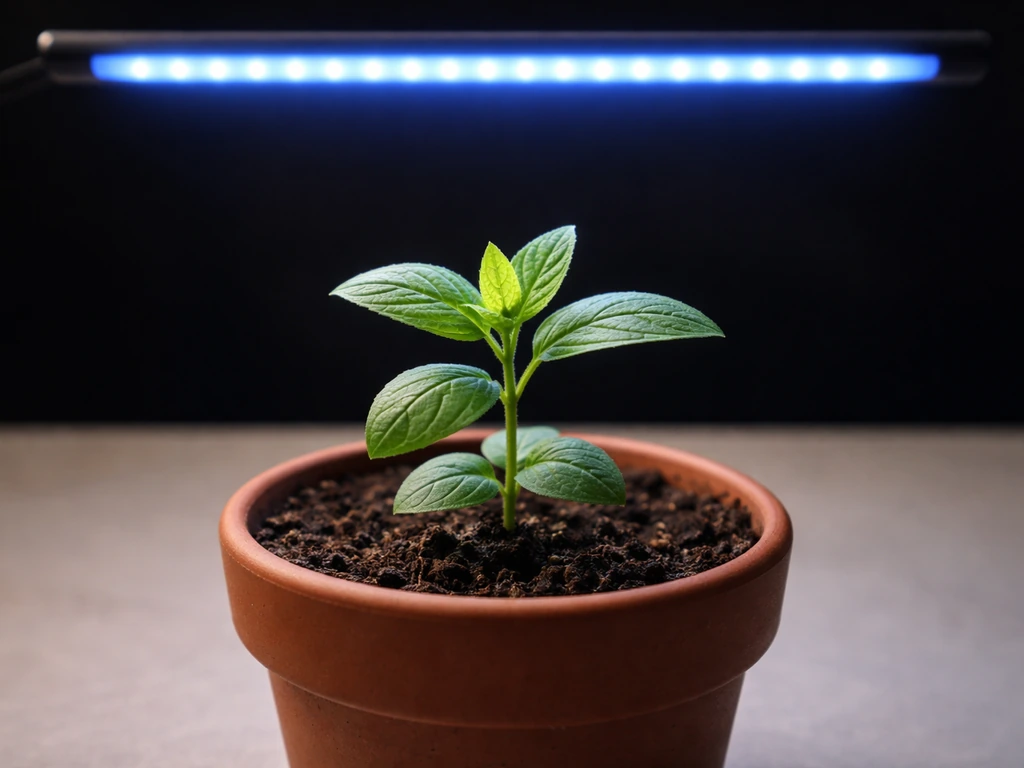
Learn how blue LED light boosts photosynthesis and compact growth, and how to set spectrum, intensity, and timing for pl
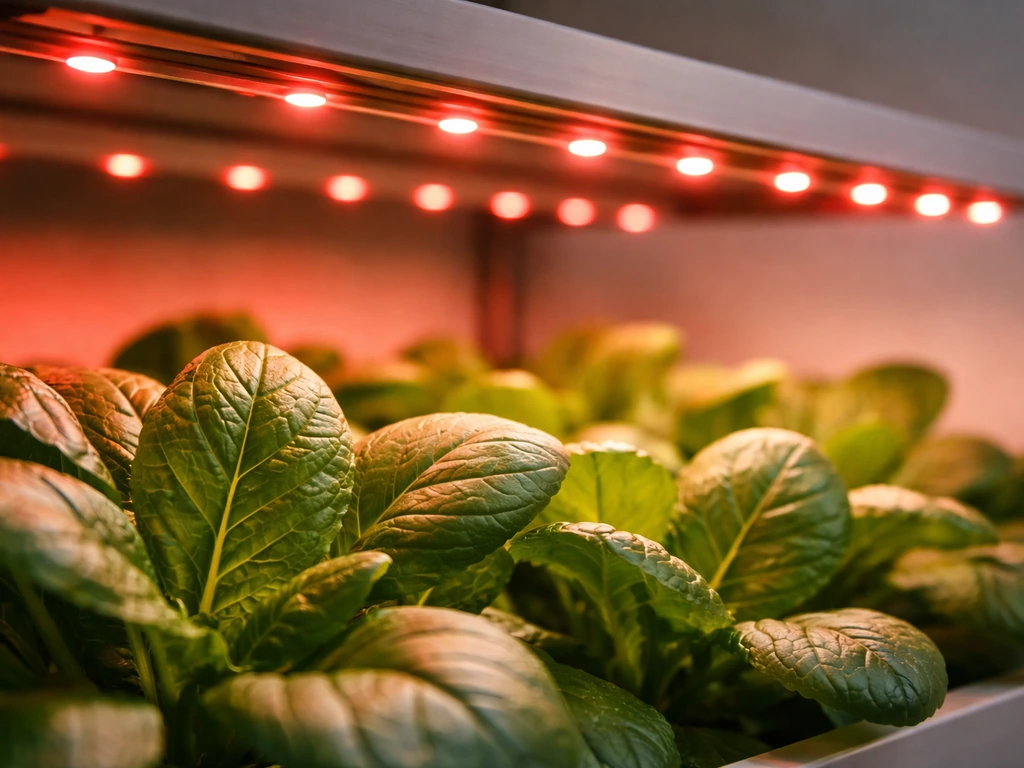
Learn if red LED light helps plants grow, why it works, and how to set wavelength, distance, and schedule.