No single "tick speed" setting makes crops grow faster. Growth rate is governed by four measurable, science-backed variables: how much light a plant receives over the day (its daily light integral), the temperature pattern across day and night, how well-timed and moisture-targeted your irrigation is, and whether your nutrient solution sits at the right EC and pH. Dial those in correctly for your specific crop and growth accelerates. Change a controller's cycle frequency without changing what the plant actually receives in light, water, or nutrients, and nothing happens.
What Tick Speed Makes Crops Grow Faster? Real-Time Levers
Marcus Holloway
11 May 2026
What "tick speed" could mean here (and what it doesn't)
The phrase "tick speed" comes from gaming, specifically Minecraft, where a game tick controls how fast in-game processes like crop growth advance. In that context, increasing the random tick speed (the default is 3) absolutely does make virtual crops grow faster because you're literally speeding up the simulation clock. That's a fun mechanic, but it has no equivalent in real plant biology.
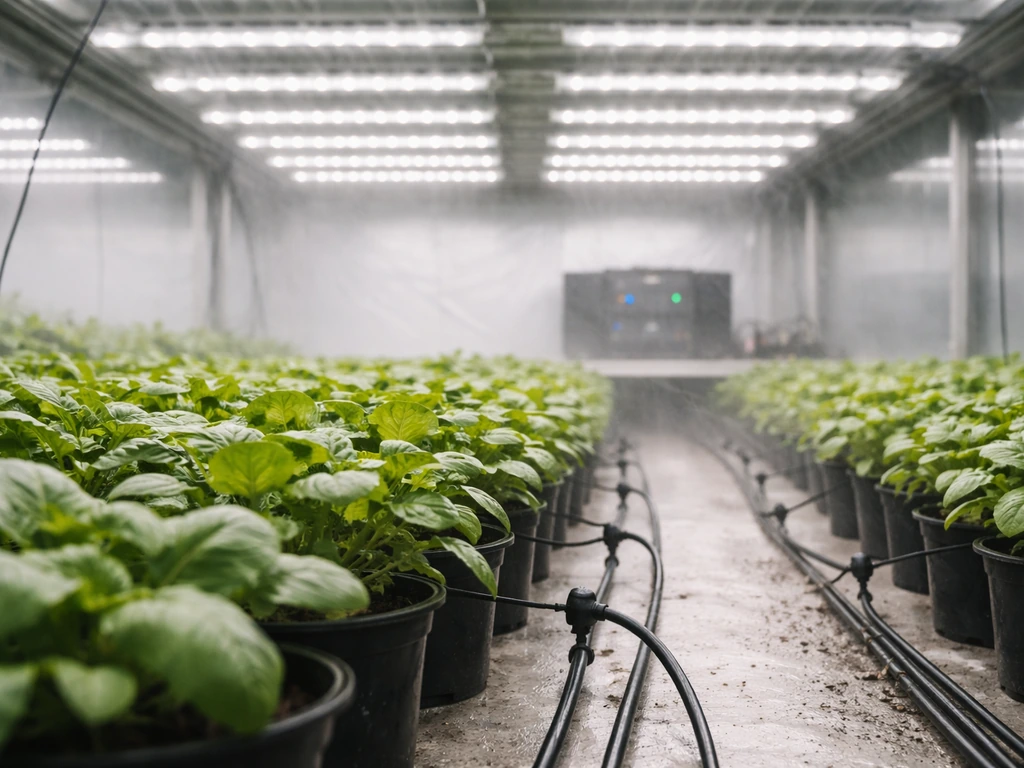
In real-world growing setups, "tick speed" sometimes gets borrowed loosely to describe a controller's cycle frequency: how often an irrigation timer fires, how fast a CO2 dosing system pulses, how frequently an LED driver refreshes, or how often an automation hub polls sensors. None of these controller-level frequencies have a meaningful effect on plant growth as long as the actual delivery amounts stay the same. A drip timer that fires every 15 minutes delivering the same total water as one that fires every 60 minutes doesn't produce faster growth. The plant doesn't know or care about the internal clock of your hardware.
What does matter is the biological timing that directly governs a plant's metabolic state: the uninterrupted dark period that controls flowering signals, the temperature a plant experiences across a 24-hour cycle, the moisture level in the root zone between events, and how much light energy accumulates in a full day. Those are the real "speeds" you can adjust.
Why crop growth responds to time, but not to a controller's tick rate
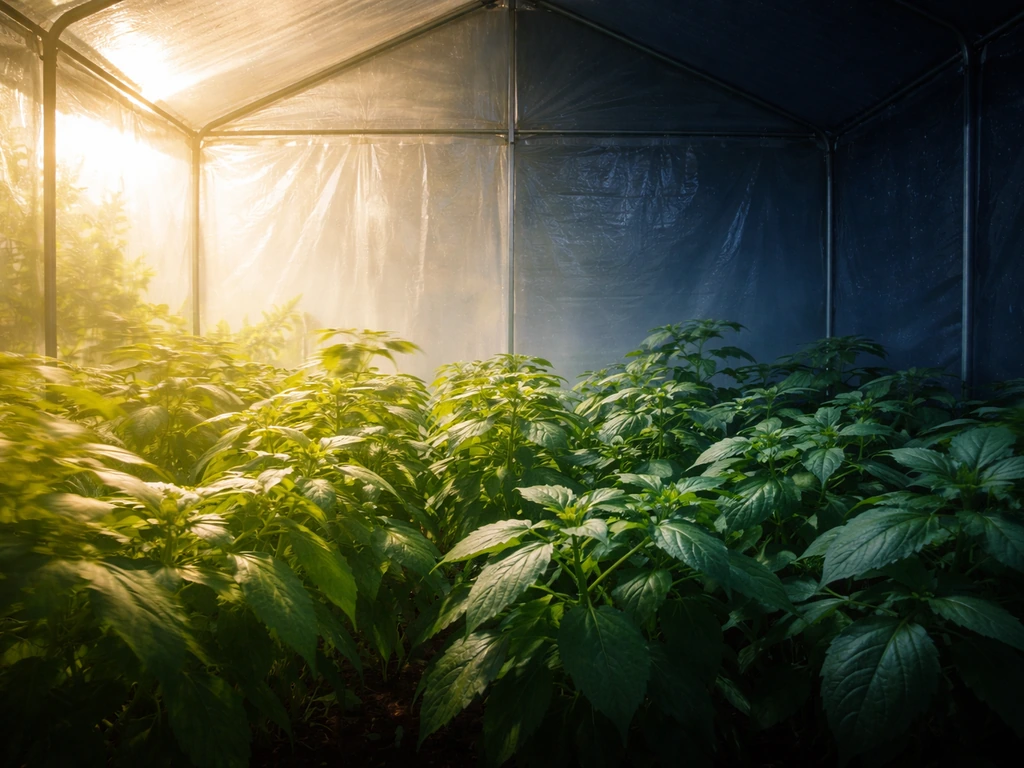
Plant growth is fundamentally a carbon accounting problem. During the day, photosynthesis builds carbohydrates. During the night, respiration burns some of them. Growth only happens when the plant ends up with a surplus. MSU's controlled-environment research frames it plainly: maximize photosynthesis (Pn), minimize unnecessary respiration (Rs), and you get faster biomass accumulation. OSU Extension backs this up with a direct statement that for growth to occur, photosynthesis must exceed respiration. No controller tick rate changes this equation. What changes it is the amount of light delivered, the duration it's delivered, and the temperatures during both day and night.
This also explains why simply running your irrigation timer more frequently, running your CO2 solenoid on shorter pulses, or updating your LED controller firmware does absolutely nothing to plant growth rate. The hardware communicating faster doesn't change what the plant's leaf cells are doing. You need to move the biological levers, not the electrical ones.
Light timing: photoperiod, day/night cycles, and DLI targets
Light is the most powerful growth accelerator you have real control over indoors, and it works through two related mechanisms: photoperiod (how many hours of light the plant receives) and DLI, or Daily Light Integral (the total photon dose accumulated across the full day, measured in mol per square meter per day). Both matter, and they interact.
A controlled-environment tomato seedling study that increased photoperiods from 12 to 16 to 20 hours found progressively greater biomass accumulation, and the researchers linked the result directly to higher DLI from the extended light duration. So longer photoperiod, at the same light intensity, means more total photons and more photosynthesis capacity. But there's a ceiling. ISHS research on greenhouse vegetables found that chlorosis and other stress symptoms can appear under very long photoperiods, meaning more isn't always better indefinitely. There are crop-specific sweet spots.
One important detail from OSU Extension's photoperiodism research: for many plants, what actually controls flowering signals is the length of uninterrupted darkness, not just the hours of light. If you're trying to keep a crop in vegetative mode, interrupting the dark period matters more than simply adding light hours. Get this wrong and you can accidentally trigger early flowering, which redirects energy away from the growth you want.
For practical DLI targets, Virginia Tech Extension provides solid reference ranges. Leafy crops like lettuce need roughly 12 to 17 mol per square meter per day. Fruiting crops like tomato need 20 to 30 mol per square meter per day. Purdue Extension's greenhouse lighting guides provide similar crop-by-crop breakdowns. If you're running below these targets, extending your photoperiod or increasing fixture intensity is the single highest-leverage change you can make to accelerate growth. If you're already at the top of the range, pushing further won't help and may cause heat stress or photobleaching.
| Crop type | Target DLI (mol·m⁻²·d⁻¹) | Typical photoperiod |
|---|---|---|
| Lettuce / leafy greens | 12–17 | 14–18 hours |
| Tomato (fruiting) | 20–30 | 16–18 hours (vegetative) |
| Cucumbers | 20–25 | 16–18 hours (vegetative) |
| Herbs (basil, cilantro) | 12–16 | 14–16 hours |
Temperature timing: warm days, cool nights, and where metabolism breaks down
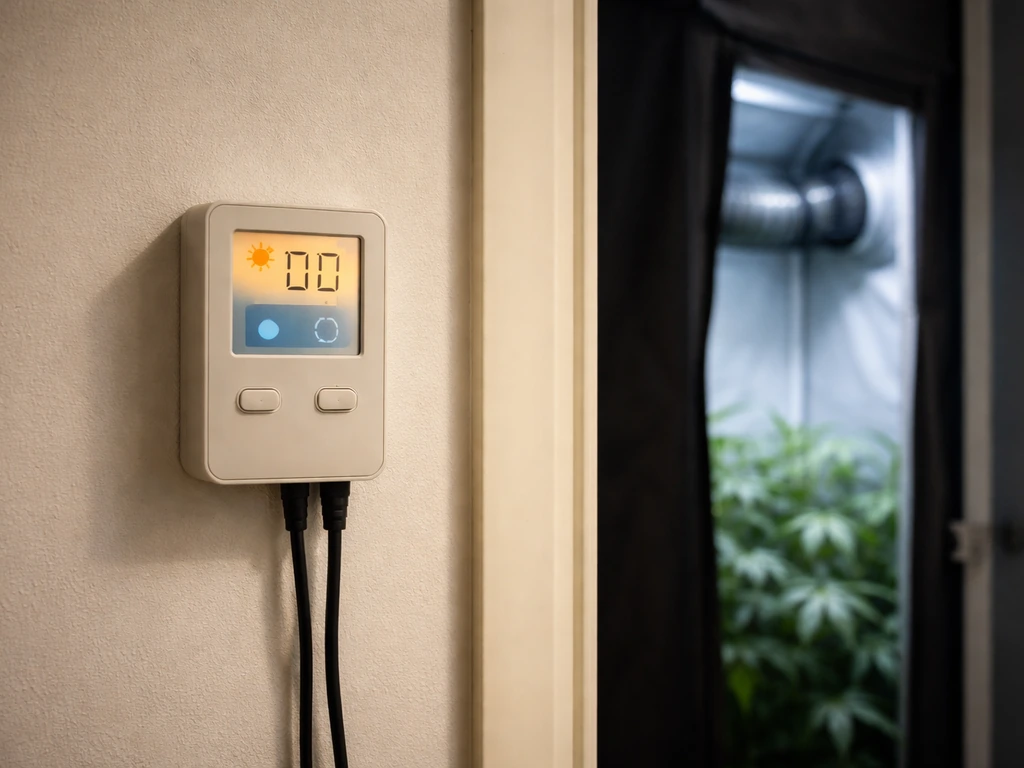
Temperature during the day drives the rate of photosynthesis and all enzymatic processes in the leaf. Temperature at night determines how fast the plant burns through the carbohydrates it built during the day. Get the night temperature wrong in either direction and you either waste the energy surplus or don't generate enough metabolic heat to support growth processes.
A mechanistic growth model linking dark respiration to temperature found that at low night temperatures, growth can actually be limited by insufficient respiratory energy availability, while at high night temperatures the problem flips: respiration burns carbohydrates faster than photosynthesis can replace them, creating a net carbon deficit. Both OSU Extension and NC State Extension make the same point directly: very high night temperatures cause respiration to surpass photosynthesis, choking off net growth. This is why a warm day combined with a cool (not cold) night is the classic recipe for fast vegetative growth.
Research on cucumber diurnal thermoperiodism is a useful caution here. When night temperatures exceeded day temperatures (27°C night vs 23°C day), stem elongation slowed even though the plants technically experienced more warmth overall. Warmer is not always faster. The pattern of temperature across the 24-hour cycle matters as much as the average. A HORTSCIENCE study on tomato under dynamic temperature regimes confirmed this: it's the thermoregime (the time-at-temperature profile) that governs growth, not just the peak or the mean.
Practical targets for most warm-season vegetable crops: daytime temperatures between 22°C and 28°C (72°F to 82°F) with night temperatures 4°C to 8°C lower. This gap, called the DIF, helps control internode stretch. For greenhouse growers, thermostat placement matters enormously. Greenhouse Management guidance specifically warns that sensors located away from the crop zone give inaccurate readings, meaning the plant experiences a different temperature than what the controller thinks it's maintaining.
Water and fertigation timing: frequency vs actual moisture and nutrient targets
This is where the "tick speed" misunderstanding does the most real-world damage. Growers sometimes increase irrigation cycle frequency, thinking more frequent watering equals faster growth. What actually happens is overwatering, root zone oxygen depletion, and disease pressure.
USU Extension is direct about this: overwatering wastes water and encourages root rot and foliar disease. The right approach is moisture-target-based scheduling, not frequency-based scheduling. Irrigation events can be set to start when [volumetric soil water content drops below field capacity](https://edis. ifas.
ufl. edu/publication/CV297), using example numeric thresholds to guide trigger points. UF/IFAS research on soil moisture sensors explains this clearly: irrigation events should trigger when [soil moisture depletes below field capacity thresholds](https://extension. umn.
edu/node/22636), not on a fixed timer cycle. UC Davis tensiometer guidance gives you the numbers: a tensiometer reading of roughly 10 to 25 centibars reflects soil near field capacity. At zero, the soil is saturated and roots suffer from poor aeration. You want to irrigate before you hit stress territory, but not so often that you're keeping the root zone perpetually saturated.
For hydroponic and ebb-and-flow systems, cycle timing does matter, but not in the way people assume. OSU Extension's hydroponics guidance explains that the ebb cycle pulls fresh air into the root zone while the flow cycle pushes stale air out. The relevant outcome here is root oxygenation, not some abstract tick rate. Missouri Extension backs this up, noting that roots need dissolved oxygen to support nutrient uptake. Cycle and soak programming (dividing total runtime into shorter events with rest periods between them) improves infiltration and soil wetting precisely because it gives water time to move into the root zone rather than running off. Again, what matters is what the root zone experiences, not how fast the controller is cycling.
On fertigation: for hydroponic crops, OSU Ohioline recommends keeping pH between 5.5 and 6.5 for maximum nutrient availability. Oklahoma State Extension emphasizes that outside this range, nutrients become locked out or toxic regardless of how often you're delivering solution. EC (electrical conductivity) should be matched to crop growth stage and species. Delivering nutrient solution at the wrong EC or pH more frequently does not help and can cause nutrient burn or deficiency. The schedule matters far less than the solution quality.
How to choose settings for your specific crop today
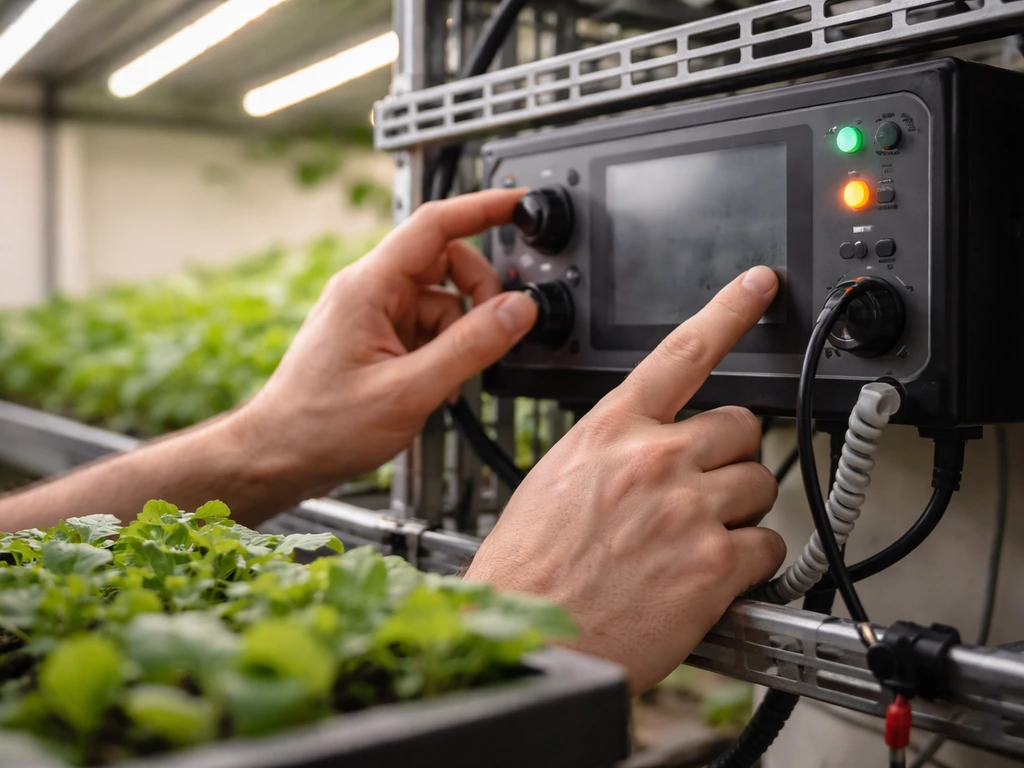
Start with these four levers in order of impact. First, find your crop's DLI target and check whether you're hitting it. If you're growing lettuce indoors and your DLI is only 8 mol per square meter per day, you're leaving the most significant growth driver on the table. Extend your photoperiod or add fixture intensity until you're in the 12 to 17 range.
Second, set your day and night temperature to match your crop's needs with a meaningful day/night differential, warmer days and slightly cooler nights, and make sure your sensor is actually reading the crop zone. Third, set up moisture-based irrigation triggers rather than fixed-interval timers. If you don't have a soil moisture sensor, a simple finger test or cheap capacitive sensor gets you 80% of the way there. Irrigate when the root zone is approaching dryness, not on a schedule.
Fourth, verify your nutrient solution pH and EC. A $20 pH pen and EC meter are non-negotiable for any hydroponic setup. Get these values right before worrying about anything else. Root growth is helped most by adequate phosphorus, which supports energy transfer and healthy cell development.
If you're growing a fruiting crop like tomato or cucumber, the nutrient and temperature targets shift across growth phases. Early seedling and vegetative stages benefit from slightly lower EC (1.5 to 2.5 mS/cm) and longer photoperiods. As the plant moves into flowering and fruiting, slightly higher EC and careful attention to the uninterrupted dark period become more important. These are the timing decisions that actually accelerate a crop through its stages, not the frequency at which your timer's internal clock fires.
How to measure "faster growth" and troubleshoot stress or stalled growth
You can't optimize what you don't measure. Pick two or three concrete metrics before you change anything: stem height every 48 to 72 hours, leaf count per week, or fresh weight at harvest. For crops with measurable stages (first true leaf, flowering, first fruit set), log the date each milestone occurs. This gives you a real baseline to compare against after you change a variable.
When growth stalls, run through this checklist in order. Light first: is DLI actually hitting the crop's target range? Under-lit plants are the most common cause of slow growth indoors. Temperature second: are night temperatures creeping too high? A night temperature above 22 to 24°C for most vegetable crops starts eating into the carbon surplus. Third, check root zone moisture: is the medium staying consistently too wet? Yellow lower leaves, wilting despite wet soil, and a sour smell from the growing medium all point to overwatering and root zone oxygen depletion. Fourth, check EC and pH: nutrient deficiency symptoms (yellowing, interveinal chlorosis, tip burn) often aren't a sign of missing nutrients but of locked-out nutrients due to pH drift.
A few common mistakes worth naming directly. Overwatering from too-frequent irrigation cycles is probably the most widespread error when growers try to "speed things up." Light oversaturation causing heat stress is the second: adding more fixtures without improving airflow and cooling just moves the limiting factor from light to heat. Nutrient burn from excessive EC is the third: doubling your nutrient concentration doesn't double your growth rate; it burns root tips and locks out uptake. And aggressive environmental swings, like flipping temperatures by more than 10°C in a short window, create chronic stress that slows growth even if the average conditions look fine on paper.
For gardeners also interested in what's happening in the soil beneath the surface, the same principles around root zone oxygen, moisture targets, and nutrient availability connect directly to how roots develop and take up water. { corn. Spore-forming blossoms and other biological soil inputs can influence plant health, but they still do not replace dialing in light, temperature, irrigation, and nutrients do spore blossoms help crops grow.
Understanding what nutrients help roots grow and how root health feeds shoot growth is the same physiology from a different angle. Using the right pesticides can also help crops grow by reducing pest and disease pressure pesticides can help crops grow. In the same way, forests regenerate best when soil conditions, moisture, and the availability of light and nutrients support healthy root and microbial activity what helps forest to grow and regenerate. Pesticides can also play a role by reducing pest and disease pressure so crops can put that energy toward photosynthesis and growth what nutrients help roots grow.
If you want to improve growth, start with what helps roots grow by keeping the root zone oxygenated, at the right moisture level, and within safe pH and EC. The biology is all connected: better roots mean better water and nutrient uptake, which means a larger carbon surplus, which means faster above-ground growth.
The bottom line: there is no tick speed dial for real plants. There are four biological variables that you can actually control and measure. Early farmers also relied on better timing and the right growing conditions to support strong plant growth, long before modern controllers existed. Get your light dose right for the crop, set a meaningful day/night temperature differential, irrigate based on moisture status rather than a timer clock, and keep your nutrient solution in the right pH and EC window. Do those four things consistently and your crops will grow as fast as their biology allows.
FAQ
If I increase my controller cycling rate (irrigation pulses, LED refresh, CO2 pulses), will my crops grow faster?
No. Plant growth responds to the total delivered light energy and the day-night temperature and moisture conditions, not how often your controller turns output on and off. If you change pump, LED, or irrigation cycle frequency but keep delivered totals (DLI, water volume, nutrient concentration exposure) the same, growth should not meaningfully speed up.
Can I just run lights longer (higher photoperiod) to always get faster growth?
You can accidentally lower growth when you push light too long. Many crops have a photoperiod sweet spot, beyond which you get stress signs like chlorosis, and plants may divert energy to repair or show reduced performance even though total hours of light increased.
How do I know my temperature sensor placement is not slowing growth?
Usually, yes for nutrient and irrigation accuracy. Place temperature and humidity sensors where the leaves actually sit and where the root zone truly is, then validate readings with an independent thermometer. If your sensor is in a warmer or cooler pocket, the controller can maintain the “setpoint” while the plant experiences a different thermoregime, slowing growth.
What is the practical way to stop irrigation frequency from harming growth?
For soil grows, rely on moisture triggers rather than a fixed timer. Use a sensor or a repeatable manual check, then irrigate when the root zone approaches your chosen depletion level. Timing “more often” without knowing moisture depletion often increases wetness, reduces oxygen, and raises disease risk.
Does cycle timing matter in hydroponics, and how is it different from soil?
In hydroponics, cycle timing matters because it changes root oxygenation and water movement, not because it changes plant biology directly. Designs with rest periods (shorter events separated by non-flow time) often improve oxygen availability versus continuous dripping or long, uninterrupted soaks.
If my plants are small, will increasing EC more frequently make them grow faster?
Mostly, no. If you raise EC but keep pH and water delivery consistent, you can still hurt growth through nutrient salt stress, burning, or uptake lockout. In many cases, the limiting factor is carbon surplus from light and temperature, or root health from oxygen and moisture, not nutrient “amount per pulse.”
How can I tell if stalling growth is from pH/EC issues versus overwatering?
Look for pattern clues. Nutrient lockout from pH drift often causes interveinal chlorosis or tip burn-like symptoms while the medium may still contain nutrients. Overwatering often shows wet-medium symptoms like persistent lower-leaf yellowing and sometimes a sour odor. EC burn is more likely after high concentration changes and can show root-tip damage effects.
How careful do I need to be about the dark period for vegetative growth?
If you are trying to keep plants vegetative, protect uninterrupted darkness. Many photoperiod-dependent crops can switch behavior when the dark period is broken by stray light from LEDs, controllers, or light leaks in the environment.
Can perfect light and nutrients still fail if my roots are staying too wet?
Yes. If the irrigation schedule is too frequent, you can keep the root zone near saturation, which reduces oxygen and can limit nutrient uptake even if EC and pH are perfect. The target is moisture that allows air-filled pores, not just “water available.”
What should I measure to confirm that changes are actually speeding growth?
Log the same metrics on the same schedule, then compare before-and-after once you change one variable. For example, track stem height and leaf count weekly and note the date of first true leaf, first flower, or first fruit set, so you can distinguish faster germination from faster biomass accumulation or faster flowering.
Next Articles
Do Spore Blossoms Help Crops Grow? What to Expect
Do spore blossoms help crops grow? Know what fungal spores can do, how to use them, and realistic results.
What Helps Corn Grow Faster: Practical Steps for Healthy Growth
Actionable tips to help corn grow faster: timing, full sun, soil pH, spacing depth, watering, nitrogen feeding, troubles
What Farmers Sow to Make Plants Grow: A Practical Guide
What farmers sow to grow plants: seeds, transplants, cover crops, and inputs plus soil, light, water, timing tips.