
Some plants genuinely make their neighbors healthier, more productive, and less pest-ridden. The key pairings that hold up to scrutiny include legumes with heavy feeders like corn, marigolds and aromatic herbs with tomatoes and brassicas, and the classic Three Sisters system of corn, beans, and squash. These combinations work through real, measurable mechanisms: nitrogen fixation, volatile compound emissions that disrupt pests, habitat provision for beneficial insects, and physical structure support. The gardening internet is full of magical-sounding 'love lists,' but if you focus on the pairings where the mechanism is understood, you'll actually see results.
What Plants Help Each Other Grow: Companion Planting Guide

Marcus Holloway
17 Jun 2026
What 'help each other grow' actually means
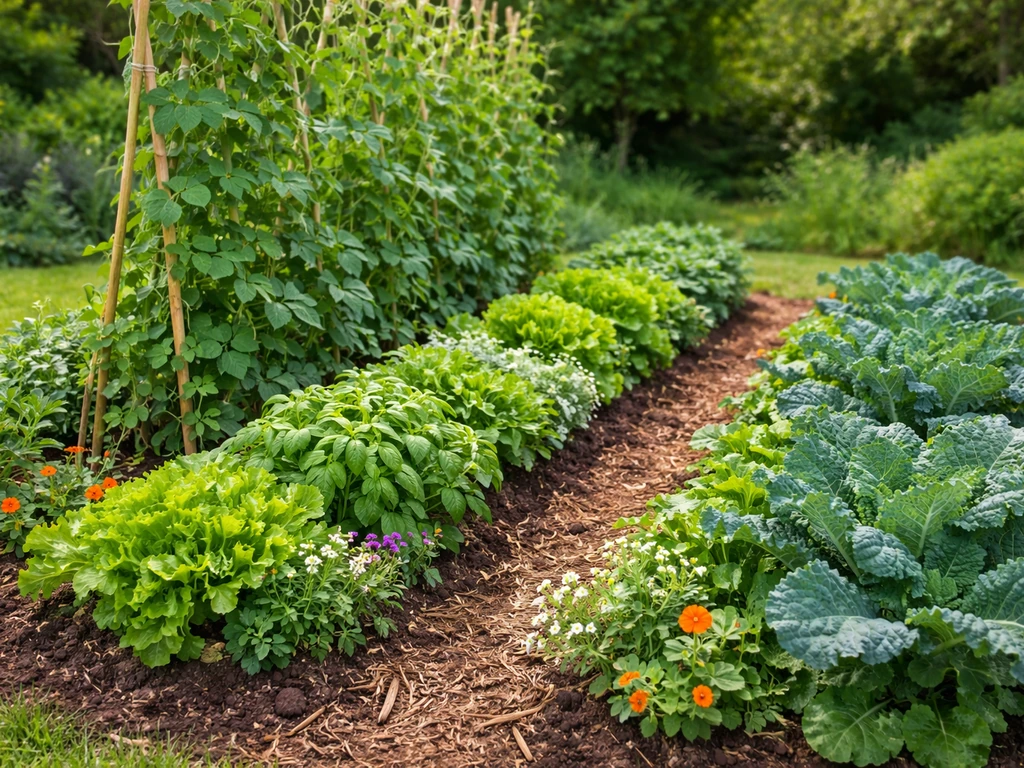
When plants genuinely benefit each other, something physical or chemical is happening that you could measure. It's not plant telepathy or good vibes. The real mechanisms fall into a handful of categories, and once you understand them, you can stop blindly following pairing lists and start reasoning through your own garden decisions.
- Nitrogen fixation: Legumes like beans and peas form a symbiosis with soil bacteria (Rhizobium and Bradyrhizobium) that converts atmospheric nitrogen into ammonia the plant can use. Neighboring plants can access some of that nitrogen, especially after legume roots decompose.
- Volatile organic compound (VOC) emissions: Aromatic plants like basil, marigolds, and thyme release volatile compounds that can deter or confuse insects looking for host plants. Research on limonene, for example, shows it can reduce whitefly performance on tomatoes at sufficiently high concentrations.
- Habitat for beneficial insects: Diverse plantings with varied flower shapes and bloom timing attract predatory and parasitic insects that eat common pests. Penn State Extension specifically identifies herb volatile oils as attractants for these beneficials.
- Physical structure and microclimate: Tall plants like corn provide climbing support for pole beans and can create wind protection or partial shade that helps heat-sensitive neighbors.
- Pest confusion through diversity: When a monoculture is broken up with other species, pest insects have a harder time locating and colonizing their preferred host plants. This is one of the most consistently supported mechanisms.
- Improved pollination: Insectary plants that attract pollinators in large numbers can increase fruit set on neighboring crops that depend on insect pollination.
It's worth being straight with you about the research landscape: some companion planting claims are well-supported, and some are folklore. The University of Minnesota Extension notes that certain repellent claims (like using herbs to repel flea beetles) have little research backing and that studies sometimes contradict each other. The scientist Linda Chalker-Scott at WSU has done a lot of work pushing back on overclaiming in this space. That doesn't mean companion planting doesn't work; it means the pairings where you can name a specific mechanism are far more reliable than those on a list with no explanation.
Companion planting pairings that actually deliver in a vegetable garden
Let's get into the specific pairs and small systems that have the best evidence behind them. These are the ones I'd stake garden space on.
The Three Sisters: corn, beans, and squash
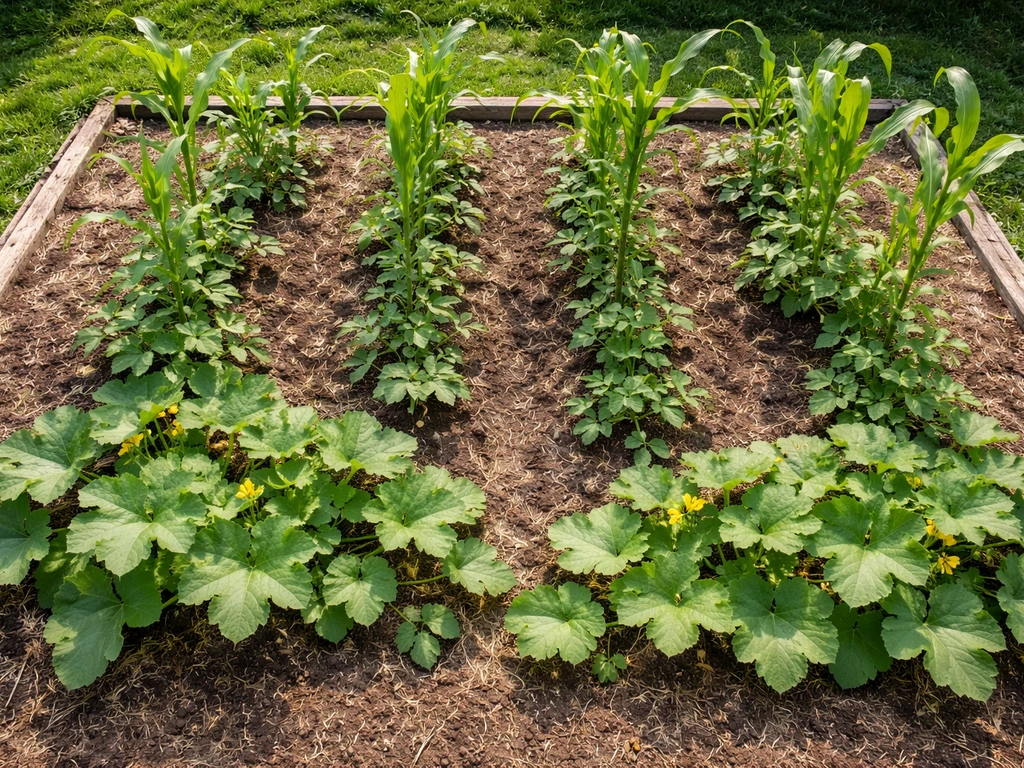
This is the most thoroughly documented companion system in North American gardening, and it works for clear functional reasons. Corn provides a vertical trellis for pole beans, which fixes nitrogen and reduces how much fertilizer the corn needs. Squash spreads along the ground, shading out weeds and creating a humid, cool microclimate at soil level that conserves moisture. Virginia Tech Extension cites this as a classic system based on known functions, not folklore. If you've never tried companion planting before, this is the best place to start.
Tomatoes with basil and carrots
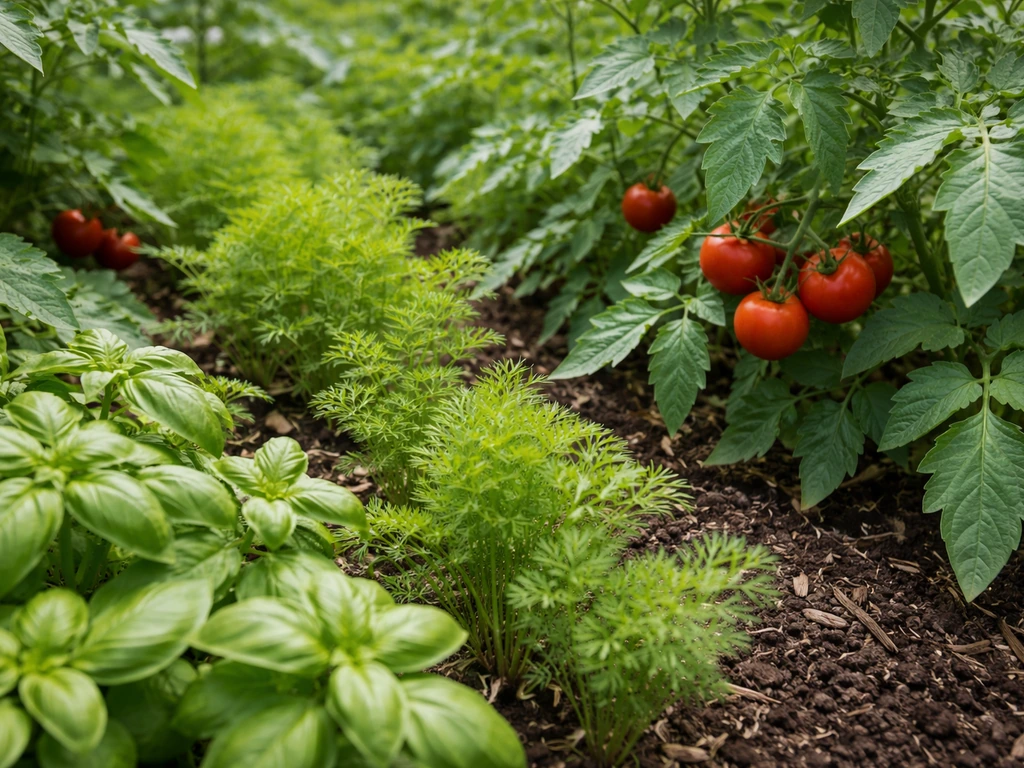
Oregon State University Extension specifically mentions tomatoes with carrots and basil as a practical interplanting example. Basil emits aromatic compounds that may deter thrips and aphids, and it attracts pollinators that improve fruit set. Penn State Extension also notes that interplanting specific vegetables with herbs can help suppress pests, including by using herb volatile oils to attract beneficial insects, and can increase pollination for many vegetable and fruit crops Basil emits aromatic compounds that may deter thrips and aphids, and it attracts pollinators that improve fruit set.. Carrots have a deep taproot that works a different soil zone than tomato roots, reducing direct competition for nutrients. Practically, they also use similar water levels, which simplifies irrigation.
Brassicas with thyme, onions, or nasturtiums
An Iowa study cited by UMN Extension found that thyme, onion, and nasturtium plantings alongside broccoli reduced cabbage looper and imported cabbageworm damage. That's a real result with named pest species and a named crop. The working theory involves VOC-based confusion for egg-laying butterflies and attracting parasitic wasps. Nasturtiums also act as a trap crop for aphids, pulling them away from the brassica leaves.
Marigolds with tomatoes and peppers
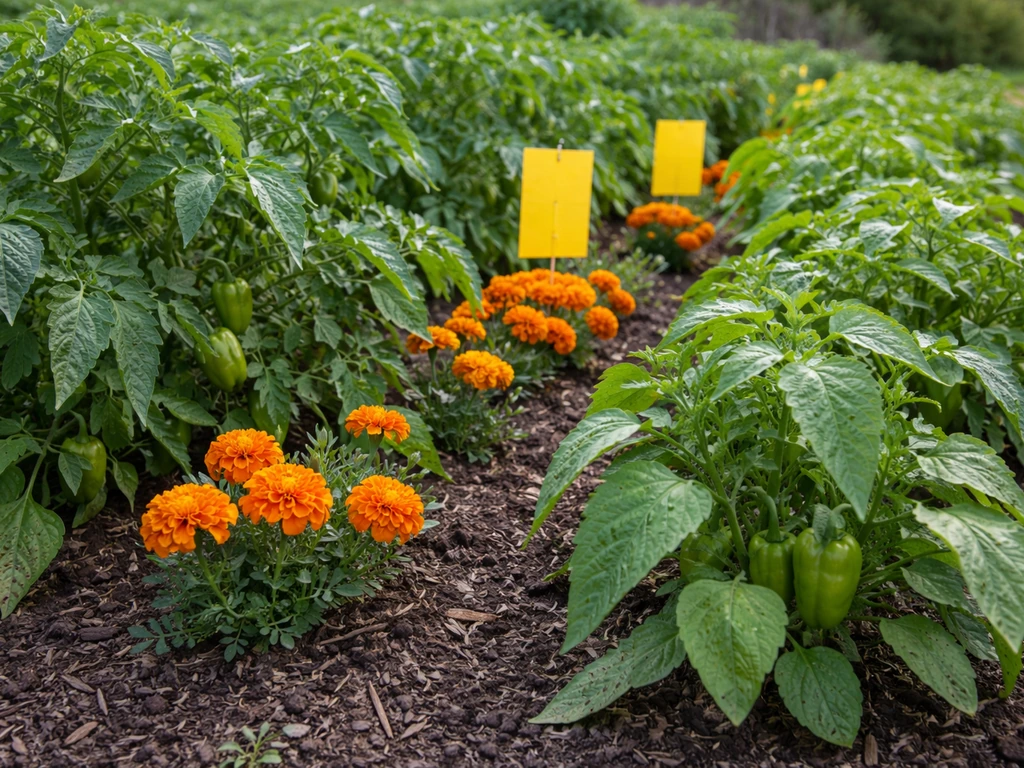
Marigolds are one of the most studied companion plants. The protection mechanism against whiteflies comes from limonene emissions. Research testing limonene dispensers on tomatoes showed reduced whitefly performance, and Chemical & Engineering News reported that synthetic limonene actually outperformed marigolds themselves in this role. The takeaway: marigolds help, but they're not magic. Dense plantings close to the crop work better than a single marigold at the garden edge. Use French marigolds (Tagetes patula), which have higher VOC output than African marigolds.
Beans with potatoes and corn
Pole beans and corn have a mutually useful relationship (as above), but bush beans also pair well with potatoes. Beans repel Mexican bean beetle when intercropped with potatoes, and potatoes may reduce some aphid pressure on beans. The nitrogen beans fix benefits the potato crop indirectly, especially in poor soils.
Herbs, flowers, and insectary plants that pull real weight
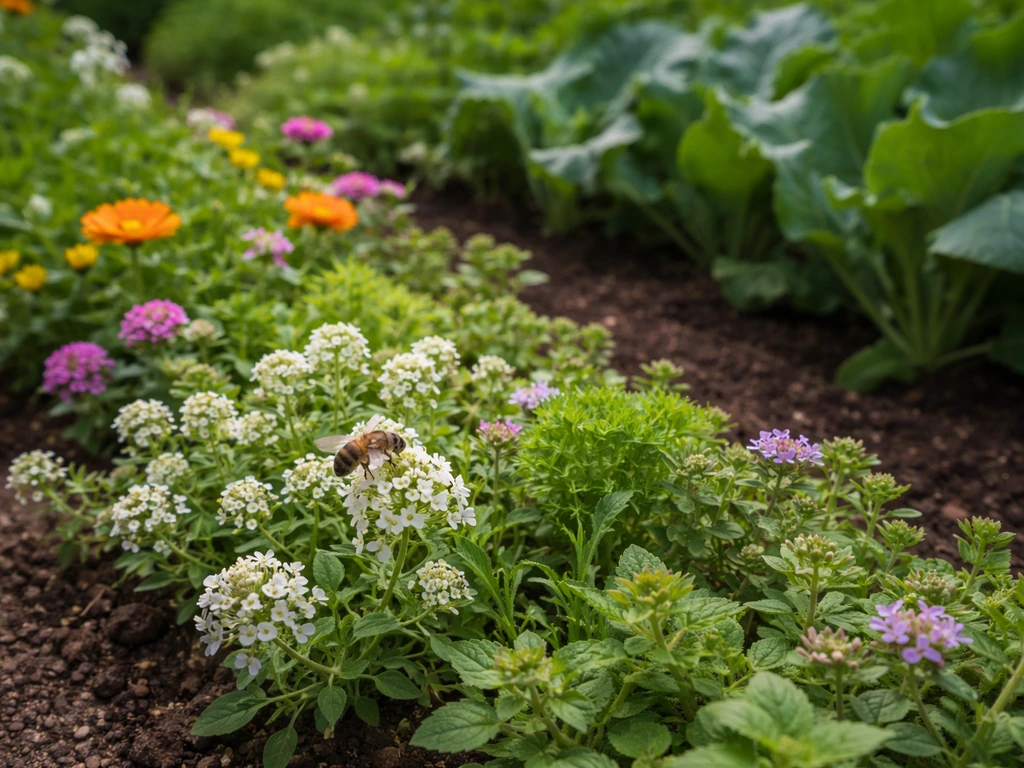
One of the highest-leverage things you can do in any vegetable garden is plant a border or scatter plantings of insectary species. These are plants whose primary value is feeding and housing the insects that eat your pests. Penn State Extension explains that herbs can attract beneficial insects through volatile oils and simultaneously increase pollination of vegetable and fruit crops. OSU Extension adds that diverse flower shapes and varied bloom timing are important, because different beneficials need different floral structures to feed.
| Plant | Primary benefit | Best neighbors | Notes |
|---|---|---|---|
| Sweet alyssum | Attracts hoverflies (aphid predators) and parasitic wasps | Any brassica, tomato, cucumber | University of Delaware's demonstration garden uses this within vegetable beds |
| Dill | Hosts beneficial wasps; attracts predatory insects | Tomatoes, brassicas, cucumbers | Let some bolt to flower; avoid planting near carrots |
| Fennel | Attracts beneficials but allelopathic to many vegetables | Best in isolation or at garden edge | Keep away from tomatoes, beans, kohlrabi |
| Nasturtium | Trap crop for aphids; deters whiteflies | Brassicas, beans, cucumbers | Let aphids colonize it to attract ladybugs |
| French marigold | VOC-based whitefly deterrence; nematode suppression in soil | Tomatoes, peppers, eggplant | Use Tagetes patula, not Tagetes erecta |
| Borage | Attracts pollinators; deters tomato hornworm | Tomatoes, squash, strawberries | Self-seeds aggressively; plan accordingly |
| Thyme | VOC emissions reduce cabbage pest pressure | Brassicas, eggplant | Iowa study showed reduced looper and cabbageworm damage |
| Phacelia | Fast-blooming insectary plant; excellent for beneficials | Any vegetable bed | Often overlooked but highly effective |
The University of Delaware Extension recommends planting sweet alyssum directly within vegetable beds rather than just at the border. Place indoor plants closer to a bright window, and aim for consistent moisture so they can actually use the nutrients you provide beneficial insects. That placement matters because beneficial insects don't travel far from their food and habitat source. A hoverfly that hatches 10 feet from your aphid-infested kale is far more useful than one at the garden's edge.
How legumes, dynamic accumulators, and root architecture improve your soil
Soil improvement is the quietest and most durable benefit plants give each other. It operates on a slower timeline than pest control, but the compounding effect over multiple seasons is significant.
Legumes as nitrogen factories
Peas and beans form root nodules that house nitrogen-fixing bacteria. West Virginia University Extension describes this as a genuine nitrogen factory: the bacteria convert atmospheric N2 into ammonia that the legume can use, and crucially, some leaks into the surrounding soil. Mississippi State University Extension notes that beans and peas generally need no more than about 20 pounds of nitrogen per acre when this system is functioning. Colorado State University Extension adds an important caveat: if you over-fertilize with nitrogen, the plant stops fixing it because the soil already has enough. So don't over-feed your beans and expect the nitrogen benefit downstream.
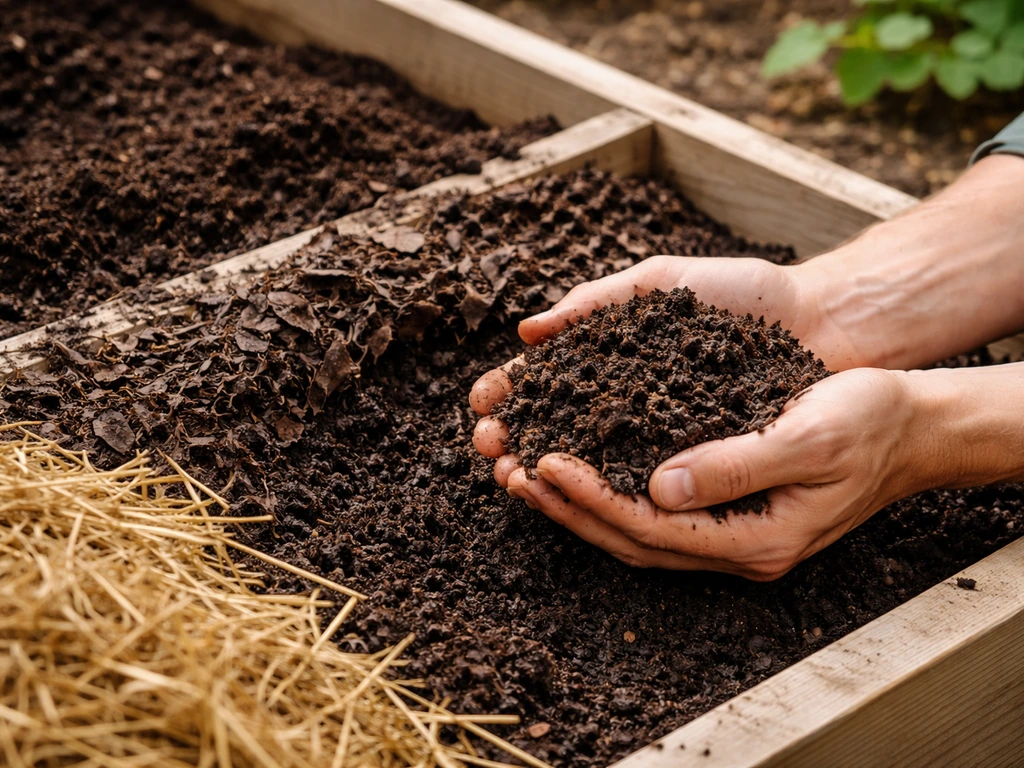
For maximum nitrogen transfer to the rest of your garden, let legume roots decompose in place rather than pulling the whole plant. Cut the tops for compost, but leave the roots. As they break down, neighboring plants get access to the fixed nitrogen. Running a cover crop mix with hairy vetch, Austrian winter pea, or crimson clover after your main crop is harvested is one of the smartest soil investments you can make in the off-season. After harvest, you can also use legume-containing cover crop mixes like hairy vetch, Austrian winter pea, or crimson clover to keep a nitrogen-fixing “factory” working in the soil.
Deep taproots and root architecture
Plants with deep taproots, like comfrey, dandelion, and daikon radish, mine nutrients from subsoil layers that shallow-rooted crops can't reach. When these deep-rooted plants shed leaves or their roots decompose, those minerals become available near the surface. This is what 'dynamic accumulator' means in practical terms: the plant acts as a mineral pump, pulling nutrients up from depth and depositing them where shallower neighbors can use them. Comfrey is the most commonly used example, and its leaves make an excellent mulch or liquid fertilizer. The science on precise mineral transfer rates is limited, but the mechanism is real and observable.
Root structure and soil health
Interplanting species with different root architectures reduces competition and improves soil structure. Shallow-rooted crops like lettuce and onions sit comfortably under or between deep-rooted tomatoes or squash without fighting for the same soil zone. Over time, varied root depths create channels and organic matter at different levels, improving drainage, aeration, and microbial diversity throughout the soil profile.
How to choose compatible plant neighbors
Beyond the 'this plant likes that plant' lists, there's a logic you can apply to any pair of plants you're considering. Run through these five compatibility checks before committing bed space.
- Light needs: Don't plant a tall, light-hungry crop on the south side of a short, shade-intolerant crop. Corn goes on the north side of your bed (in the Northern Hemisphere) so it doesn't shade tomatoes or peppers. Sun-loving crops need at least 6 to 8 hours of direct light.
- Water needs: Pairing a drought-tolerant plant like rosemary with a moisture-hungry crop like basil creates a watering conflict. Group plants with similar moisture requirements: heavy drinkers together, drought-tolerant plants together.
- Nutrient demands: Heavy feeders like corn, tomatoes, and squash compete aggressively for nitrogen, phosphorus, and potassium. Pair them with nitrogen-fixing legumes or light feeders like herbs and flowers rather than stacking heavy feeders side by side.
- Rooting depth: Match shallow-rooted crops with deep-rooted ones to minimize underground competition. Lettuce, onions, and radishes share root zones comfortably with deep-rooted crops that forage below them.
- Spacing and airflow: Overcrowding is one of the most common ways companion planting goes wrong. Tight spacing increases humidity and fungal disease pressure. Leave enough room for airflow between plants, especially for tomatoes and squash, which are prone to powdery mildew and blight.
Also watch out for allelopathic plants: those that release chemicals inhibiting neighbors' growth. Fennel is the most notorious vegetable-garden culprit and should be kept well away from tomatoes, beans, peppers, and kohlrabi. Black walnut trees produce juglone, which is toxic to tomatoes and many other plants within root range. Sunflowers can suppress germination of some crops if planted too close. These are real documented effects, not myth.
Setting up your garden plan step by step
Here's how to move from concept to actual planted beds. This is the part where most people get stuck because companion planting advice is easy to read and hard to implement across a real garden with real space constraints.
Step 1: Map your beds by sun, space, and crop type
Sketch your garden, note which direction is north, and mark where you'll put your tallest plants (corn, tomatoes, trellised beans). These go on the north side of each bed. Assign beds or zones to general crop families: brassicas together, nightshades together, legumes in a dedicated area. This also makes crop rotation easier to manage.
Step 2: Assign companion roles deliberately
For each main crop, ask: what does this plant need most? If it's a heavy nitrogen user (corn, squash), put a nitrogen fixer (beans, peas) nearby. If it's pest-prone (tomatoes, brassicas), add insectary plants and aromatic herbs. Don't try to add every possible companion at once. Pick one or two roles per crop and fill them with the best-evidenced plant for the job.
Step 3: Stagger planting times for harvest and succession
Oregon State University Extension highlights staggered harvests as a direct benefit of interplanting. Radishes mature in 30 days and can be harvested before neighboring carrots fill in. Lettuce bolts in summer heat and can be pulled to make room for fall crops. Timing your companions' lifecycles so they don't compete at peak size is one of the most practical layout decisions you can make.
Step 4: Build in rotation from the start
Penn State Extension and UGA Cooperative Extension both emphasize that crop rotation prevents soil-borne disease and pest buildup. Once a pest or pathogen finds a bed with its preferred host, it persists in the soil. Rotate by plant family: where you grew tomatoes this year, grow a legume or brassica next year. Keep a simple log (even a phone note) of what grew where. This is also the single most effective thing you can do against clubroot in brassicas and root knot nematodes in nightshades.
Step 5: Manage water for multiple species in one bed
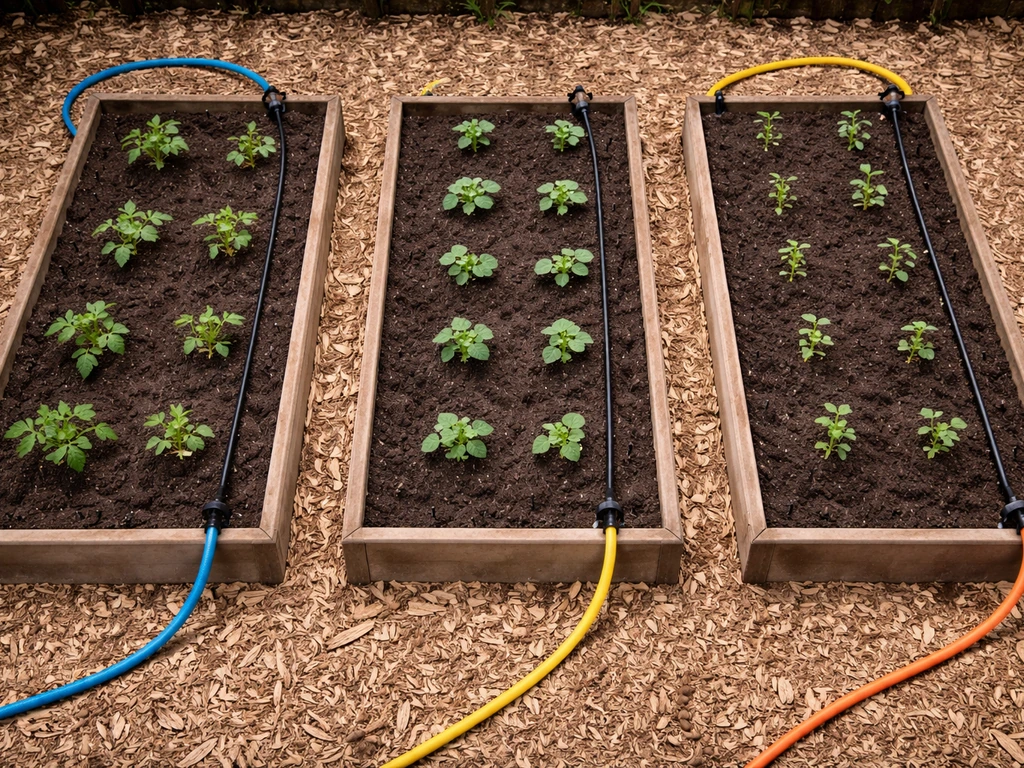
The biggest practical challenge of companion planting is that different plants in the same bed may have different water needs. Group moisture-lovers in the same irrigation zone. Use drip irrigation or soaker hoses to deliver water at root level and avoid wetting foliage, which reduces fungal disease. Mulch between plants to even out soil moisture and give all companions a more stable environment.
Troubleshooting when a pairing isn't working
Reddit gardeners in the r/SquareFootGardening community frequently note that companion planting results can be inconsistent, and that tracking which combinations actually performed in your specific conditions is the hardest part. If a pairing is underperforming, work through this checklist before giving up on it: Are the plants close enough to interact (within 12 to 18 inches for VOC effects to matter)? Is the companion in flower during the pest pressure window? Is there enough of it (one marigold plant does far less than a border of 10)? Is competition for water or nutrients canceling out the benefit? Could a soil or pH issue be the actual limiting factor? Most 'companion planting failures' are really spacing, timing, or quantity failures.
A starter plan you can use right now
If you want a proven starting point rather than designing from scratch, this three-bed layout covers most of the core mechanisms and is manageable for a first-time companion planter.
| Bed | Main crops | Companions | Mechanism served |
|---|---|---|---|
| Bed 1: Nightshades | Tomatoes, peppers, eggplant | French marigolds, basil, sweet alyssum | VOC pest deterrence, pollinator/beneficial insect habitat |
| Bed 2: Brassicas | Broccoli, kale, cabbage | Thyme, nasturtium, dill (let bolt) | Cabbage pest reduction, trap crop for aphids, parasitic wasp habitat |
| Bed 3: Three Sisters | Corn, pole beans, squash | Borage or phacelia at bed edge | Nitrogen fixation, structural support, weed suppression, pollinator attraction |
Keep a simple log of what you plant, where, and what pest pressure looks like through the season. After one full season, you'll have your own data to build on, which is far more useful than any generic pairing chart. Companion planting rewards the gardeners who track what's actually happening in their specific beds, not just those who follow the lists.
If you're exploring other angles on plant-to-plant and environment-to-plant relationships, the same site also covers what specifically helps indoor plants thrive, where light, humidity, and soil quality are the dominant factors that folk remedies often can't replace. Plantasia, as a plant-care tool, may provide supportive guidance, but it does not replace proper light, watering, and nutrients for steady plant growth does plantasia help plants grow.
FAQ
How close do plants need to be for companion effects like scent or insect attraction to work?
For volatile compound and insect-attraction effects to be noticeable, aim for partners within roughly 12 to 18 inches in many vegetable beds. If your “companion” is only planted at the far edge, it often provides habitat at best, but not enough odor concentration to influence pests near the crop.
Do companion plants replace pest control, or should I still use sprays?
Companions work best as a prevention layer, not a full replacement for interventions when pest pressure is extreme. If you see runaway damage, treat companions as risk-reduction (more natural enemies, disrupted egg laying, fewer pests per plant), then combine with targeted options like physical removal, row covers, or spot treatments.
What’s the biggest reason companion planting “doesn’t work” in home gardens?
The most common failure is mismatched spacing, timing, or quantity. Examples include only one or two companion plants instead of a functional mass, planting when the companion is not flowering during the pest’s egg-laying window, or letting water and nutrient competition erase the intended benefit.
Can I use companion planting with container gardens, or do mechanisms change?
You can, but root-space limits make competition and nutrient demand more intense. Choose compact insectary herbs and fast-maturing overlaps, keep irrigation consistent, and avoid pairs where both plants are heavy feeders in small media volumes.
Should I put legumes (peas, beans) near nitrogen-hungry crops right away, or is timing important?
Timing matters. Let legumes establish and begin nitrogen fixation before you rely on downstream benefits. Also avoid heavy nitrogen supplementation during the period when you want the legumes to do the work, since excess nitrogen can reduce fixation.
Are herbs always safe to plant with tomatoes and brassicas?
Most aromatic herbs are fine, but don’t assume “edible herb” equals “universally compatible.” Check spacing and water needs, and also avoid allelopathic culprits like fennel near sensitive crops such as tomatoes, beans, peppers, and kohlrabi.
How do I decide whether to pair for pest control or for soil improvement?
Use the crop’s limiting factor. If the bed struggles with insect pressure, prioritize insectary flowers, trap crops, and odor-based partners. If the bed’s productivity is held back by soil depletion or poor structure, prioritize legumes, cover crops, and deep taproot dynamic accumulators instead of adding many pest-focused companions.
Will interplanting slow down my harvest schedule or make weeding harder?
It can, unless you plan lifecycle timing. The advantage of staggered companions like radish near carrots is you harvest the fast crop before the neighbor fills in, reducing clutter. For weeding, use mulching and group plants so you can still access the soil surface without damaging neighbors.
Can companion planting help with soil-borne disease, or is rotation the real answer?
Rotation is the most reliable control for many soil-borne problems because it breaks the pest or pathogen’s host cycle. Companion planting can support overall vigor and beneficial insects, but it does not substitute for moving plant families between beds each season.
What should I track in a garden log to know which companions actually help me?
Record three things: pest counts or damage notes by crop, companion flowering timing (date ranges), and irrigation or rainfall patterns. After one season, you’ll be able to tell whether a pairing reduced pest pressure during the key window or whether it was simply outcompeted by water or nutrient demands.
Next Articles
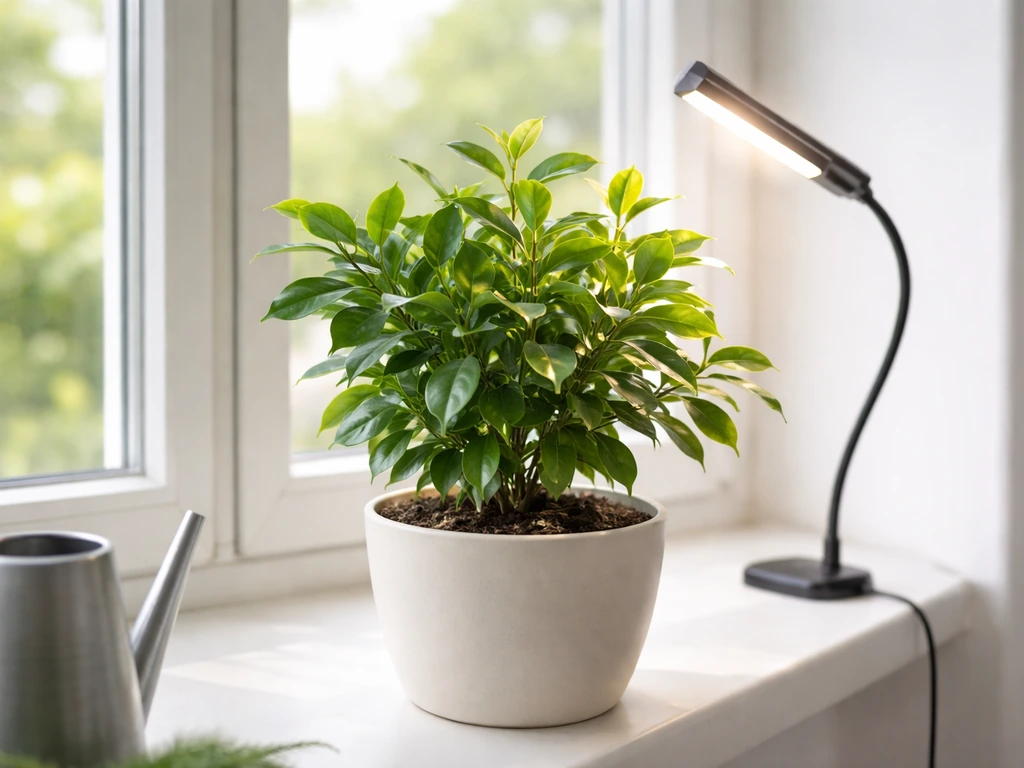
What Helps Indoor Plants Grow: Light, Water, Soil Tips
Actionable indoor plant care tips on light, watering, soil, nutrients, and humidity to fix leggy, yellow, or slow growth
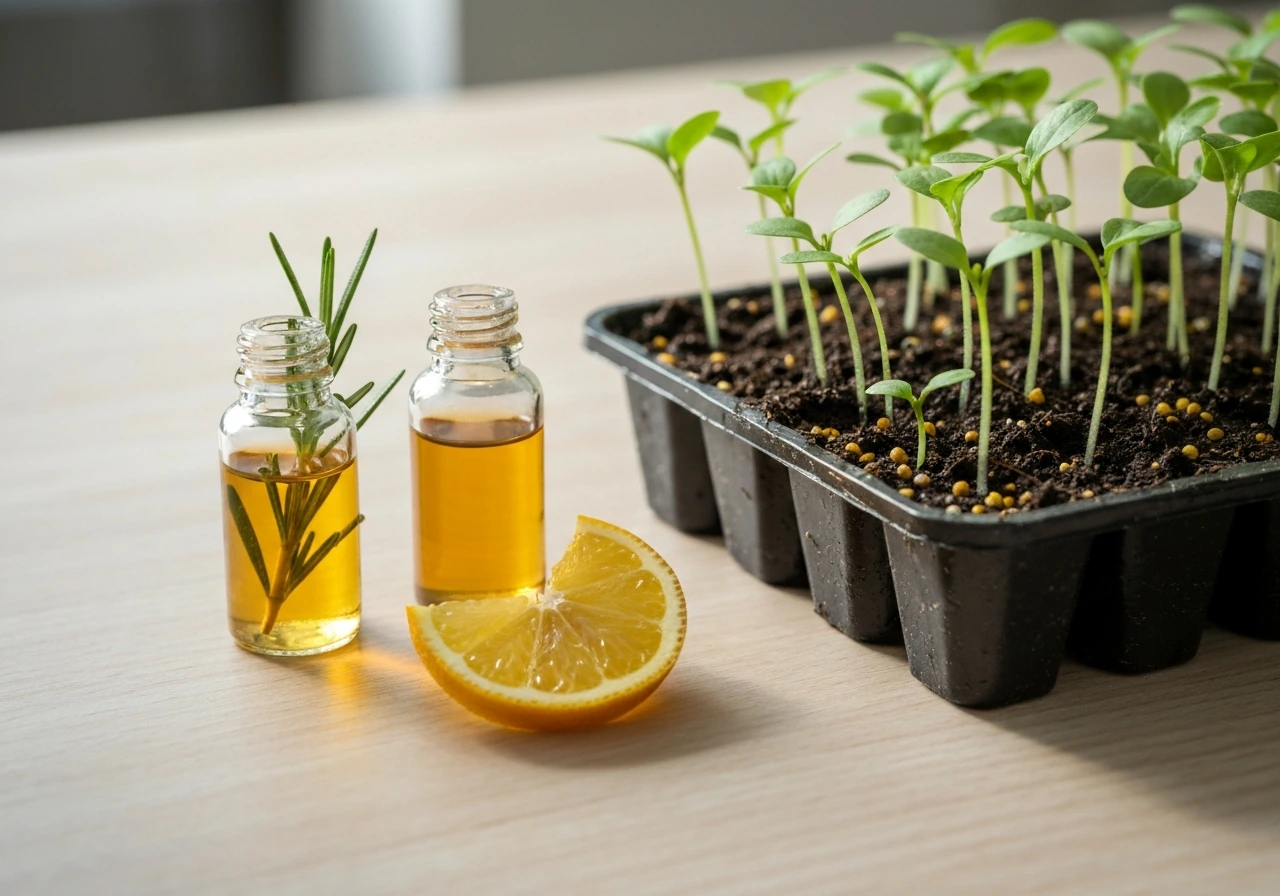
What Essential Oils Help Plants Grow and What Works
Learn which essential oils might help plants via microbes, plus safe, very dilute use tips and why light, soil matter mo
How Plant Products Help an Area Grow: Practical Guide
Learn how compost, mulch, leaf mold, plant fertilizers, and teas boost soil fertility, water retention, microbes, and we