
Yes, a fan genuinely helps plants grow indoors, but not in the magic-air way some people imagine. What it actually does is reduce stagnant humidity around leaves, improve gas exchange at the leaf surface, lower disease pressure from mold and fungus, and over time encourage thicker, sturdier stems. It won't compensate for bad light, poor soil, or inconsistent watering, but as one piece of a healthy indoor growing environment, proper airflow makes a real, measurable difference. Air purifiers can also change the air around your plants, but their impact on growth is usually indirect compared with basic airflow like fans.
Does a Fan Help Plants Grow? Indoor Airflow Guide

Marcus Holloway
3 Jun 2026
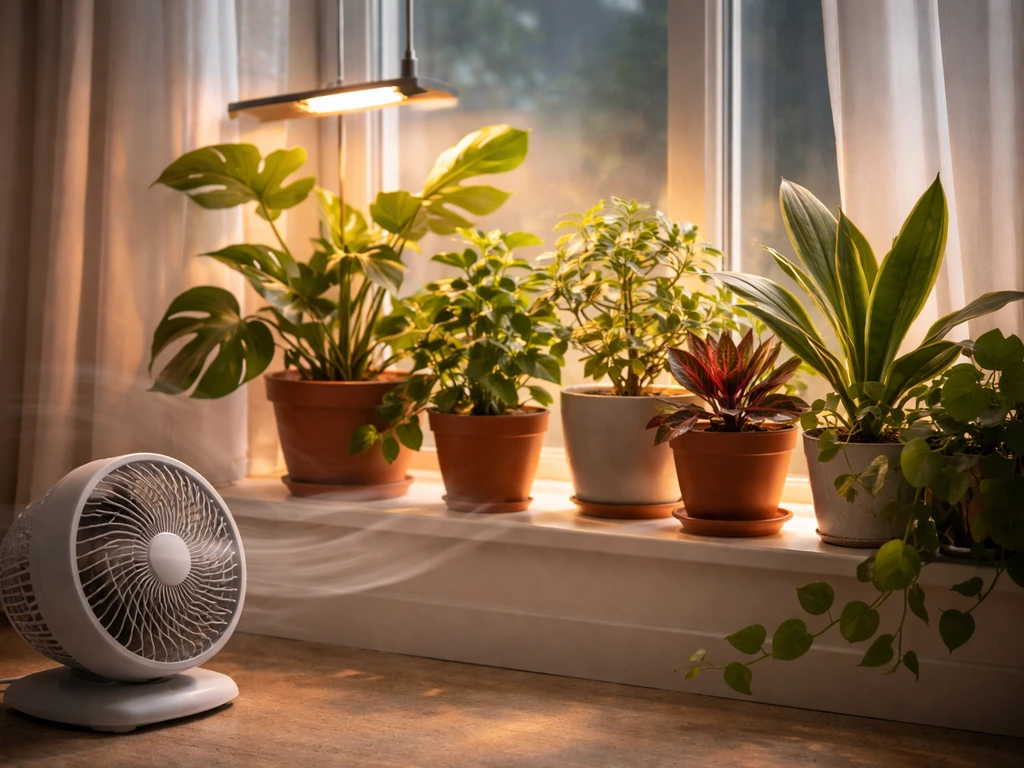
What a fan can and can't change for plant growth
A fan changes the environment immediately around your plants, and that's more powerful than it sounds. The layer of air sitting right against a leaf (called the boundary layer) tends to become saturated with water vapor and depleted of CO2 as the plant transpires and photosynthesizes. Moving air disrupts that stagnant layer constantly, keeping the diffusion gradient active so the plant can keep pulling in CO2 and releasing water vapor efficiently. That's the core mechanism at work.
What a fan won't do: replace light, replace nutrients in the soil, fix overwatering, or substitute for proper humidity management in genuinely dry climates. If your plants are leggy and weak-looking, that's almost certainly a light problem, not an airflow problem. A common mistake is adding a fan to a dim grow space and expecting it to fix stretched, floppy seedlings. It won't. Good airflow supports healthy growth; it doesn't create it from scratch.
- Fan CAN do: reduce leaf-surface humidity, improve transpiration efficiency, lower fungal disease pressure, encourage stronger stems, moderate temperature hot spots
- Fan CANNOT do: replace adequate light, fix nutrient deficiencies, compensate for overwatering, or make up for poor soil structure
- Fan CAN do: reduce the conditions that cause damping-off in seedlings and gray mold (Botrytis) in mature plants
- Fan CANNOT do: sterilize the air, eliminate pests, or prevent disease on its own without addressing underlying environmental issues
How airflow affects transpiration, humidity pockets, and plant stress
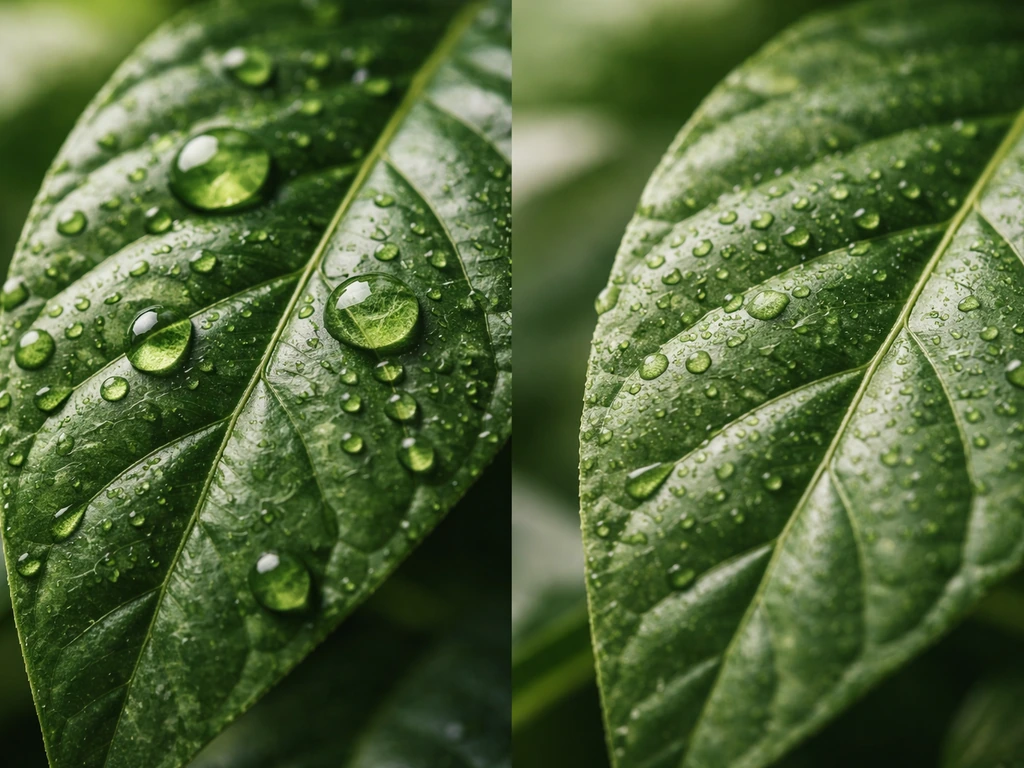
Transpiration is the process of water moving through a plant and evaporating from its leaves, and it's the engine that drives nutrient uptake from roots. That leaf-level movement also helps drive photosynthesis and overall plant growth by improving how efficiently plants exchange gases. When air is still, the boundary layer around each leaf becomes saturated with water vapor, which slows transpiration and effectively puts the brakes on the whole system. blank" rel="noopener noreferrer">Wind, even gentle movement from a small fan, increases the diffusion gradient at the leaf surface by constantly replacing that humid air with drier air. The plant can keep transpiring efficiently, and nutrients keep moving.
Humidity pockets are a real problem in indoor growing spaces, especially when plants are crowded. The canopy of a dense group of houseplants or a tray of seedlings can hold relative humidity well above 90% even when the room itself feels comfortable. At those levels, fungal pathogens thrive. Botrytis (gray mold), for example, needs relative humidity above 93% in the canopy and free moisture on leaf surfaces for 8 to 12 continuous hours to take hold. Leaf mold fungus needs humidity consistently above 85%. A fan doesn't have to dry the whole room; it just needs to break up those local pockets so the conditions never stay at those tipping points long enough for infection to develop.
There's also a mechanical benefit to gentle airflow that's easy to overlook: stem strengthening. When plants move in response to wind, they produce more supportive tissue over time, resulting in thicker, shorter, more structurally sound stems. Seedlings started indoors without any airflow often turn out noticeably flimsier than those grown with even occasional gentle movement. This is the same reason outdoor plants are naturally more robust than sheltered greenhouse-grown transplants that haven't been hardened off.
When fans help most
Seedlings and damping-off risk
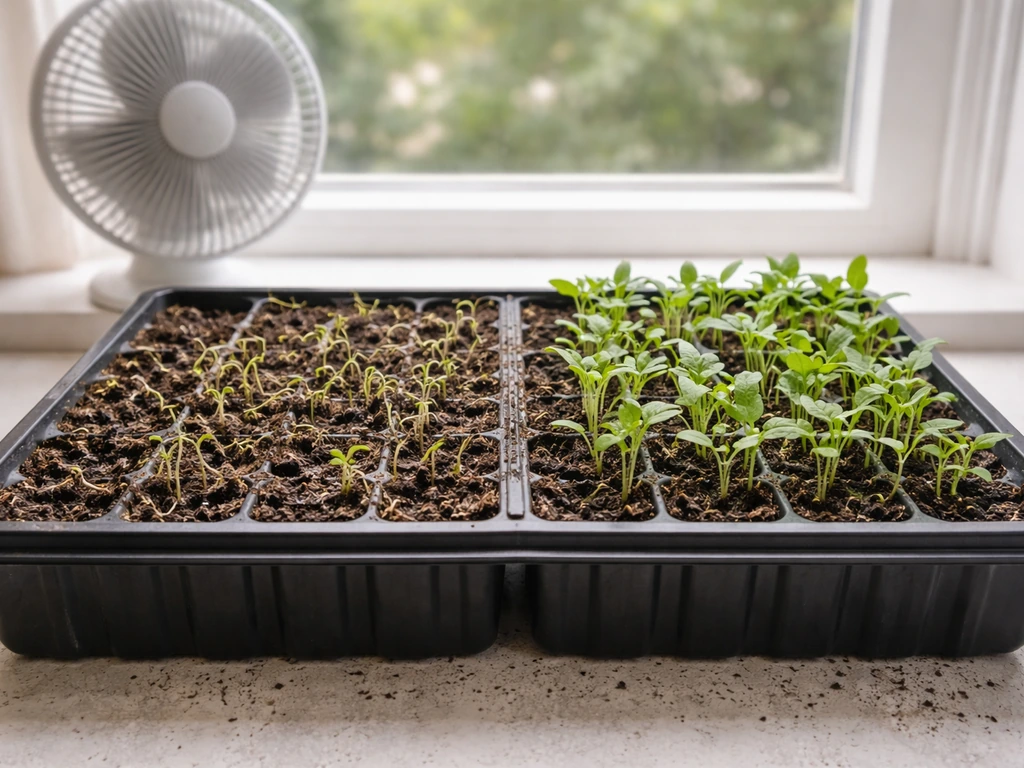
If you're starting seeds indoors, a fan is close to essential. Damping-off is a fungal disease that rots seeds and destroys newly emerged seedlings, and it thrives in the still, humid, warm conditions of a typical seed-starting setup. The fluffy white fungal growth and mushy tan collapse at the base of a seedling that damping-off causes can wipe out a whole tray overnight. Gentle airflow from a small fan placed at seedling level disrupts the humid microclimate that feeds those fungi. You don't need a lot of airflow here. Short directed sessions, 5 to 10 minutes several times a day, can meaningfully reduce risk.
Dense canopies and gray mold pressure
Mature houseplants, especially leafy tropical types packed close together, create the same humid pockets that seedlings do. Botrytis (gray mold) management guidance from plant pathologists specifically calls out adequate air circulation as a way to reduce gray mold development even when ambient humidity is high. The goal isn't to drop room humidity drastically; it's to prevent humidity from sitting undisturbed on and around leaf surfaces long enough for spores to germinate and infect.
Temperature swings and hot spots
In rooms with grow lights, near south-facing windows in summer, or in any space where heat builds up unevenly, a fan helps moderate temperature by moving warmer air away from the canopy and mixing it with cooler surrounding air. This is especially relevant in enclosed growing tents or greenhouse-style setups where continuous air movement keeps conditions more uniform throughout the space rather than letting stratified hot zones develop near lights or cold zones develop near windows in winter.
When fans hurt instead of help
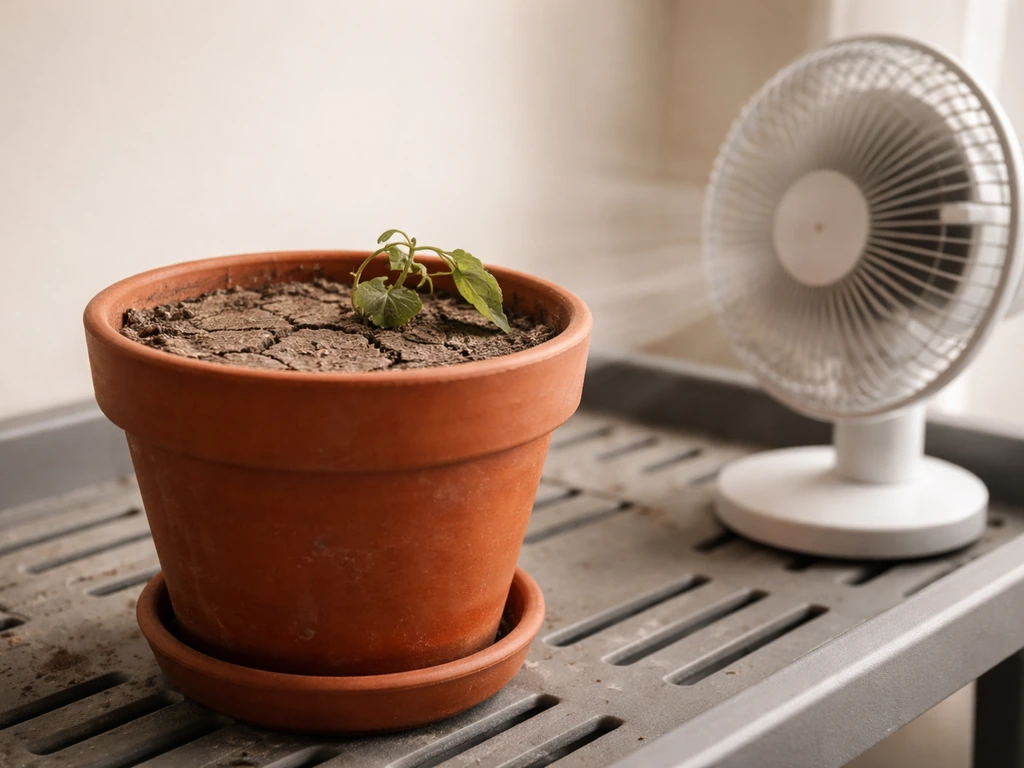
Too much of a good thing applies here. Rapid air movement causes moisture to be lost from both foliage and soil faster than the plant can replace it. This is the mechanism behind windburn (also called wind scorch): leaves lose water faster than roots can supply it, tissue desiccates, and once scorched tissue won't recover. Sensitive houseplants like ferns, calathea, or any plant with thin, delicate leaves are especially vulnerable. Even tougher plants will show brown, crispy leaf edges if a fan is blowing directly on them continuously at high speed.
Soil drying is a less obvious problem. A fan aimed at pots or grow trays accelerates evaporation from the soil surface, which can push you into a cycle of constant watering and root stress. You might think the plant is thirsty when it's actually getting windburned from below. Check soil moisture rates if you add a fan and notice you're suddenly watering much more frequently.
There are also some practical concerns worth mentioning: fans can blow dust and particulates onto sticky or fuzzy leaves, which clogs pores and stresses the plant. In homes with pets or dusty conditions, point the fan away from walls and dusty surfaces. Finally, in cold climates or during winter cold snaps, running a fan near single-pane windows or exterior walls can pull cold air across plants. Don't run fans at full blast near cold surfaces during freezing weather.
How to set up a fan for your plants today
Choosing the right fan
For most indoor plant setups, a small oscillating fan (6 to 12 inches) is the right tool. Oscillating models distribute airflow across more of your space and avoid blasting any single plant continuously. For seedling trays, a small clip-on or desk fan on its lowest setting works well. For larger grow tents or greenhouse-style rooms, the standard rule of thumb is about 2 cubic feet per minute (cfm) of fan capacity for each square foot of floor area. A 10-square-foot grow space would need roughly 20 cfm minimum, which any basic box fan handles easily.
Placement and distance
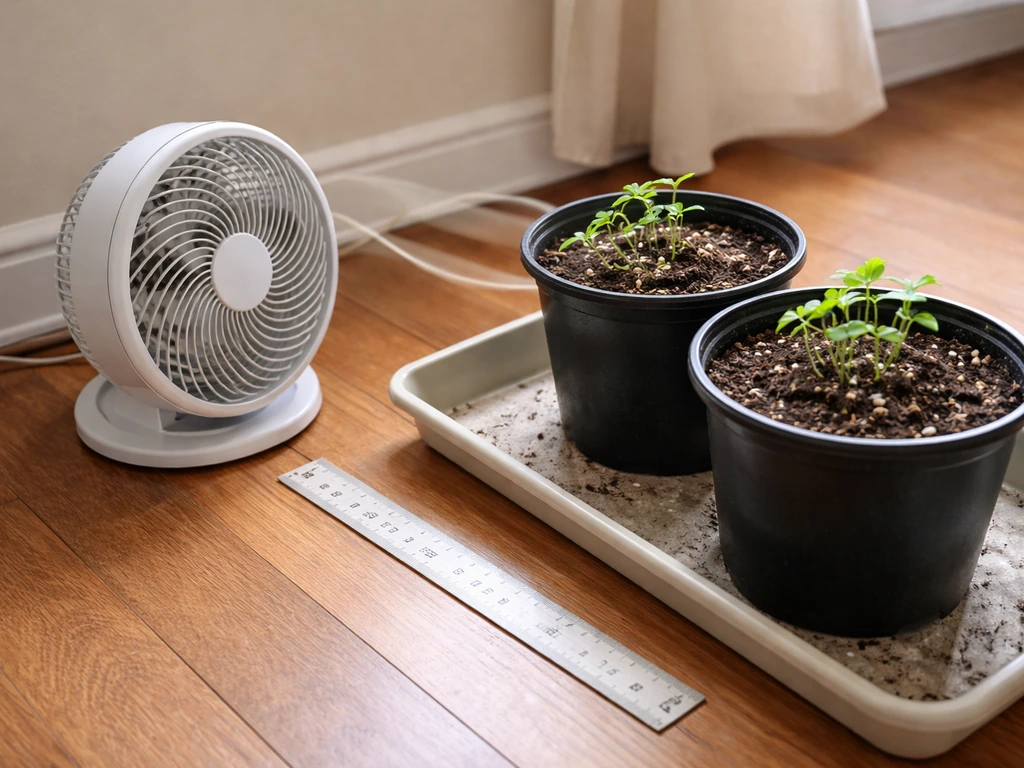
Place the fan so it moves air across the tops or sides of your plants, not directly into them. The goal is indirect, gentle movement, like a light breeze, not a direct blast. For a group of houseplants on a shelf or table, position the fan a few feet away at the same level as the canopy or slightly above, aimed to circulate air around rather than through the plants. For seedlings, place the fan 2 to 3 feet away on its lowest setting. If leaves are visibly flapping aggressively, you're too close or the speed is too high.
Intensity and schedule
You don't need the fan running 24 hours a day. For seedlings especially, short sessions of 5 to 10 minutes multiple times per day can be enough to prevent humidity pockets and build stem strength without causing stress. For mature houseplants or grow tent setups, running a fan on a timer for 15 to 30 minutes every few hours during the plant's light cycle is a practical starting point. If you're dealing with active humidity issues or fungal disease pressure, you can increase to continuous low-speed airflow, but keep monitoring for windburn and soil drying. Always run fans during the lights-on period and consider reducing or pausing during dark cycles when transpiration slows.
| Setup type | Fan type | Distance | Speed/intensity | Schedule |
|---|---|---|---|---|
| Seedling trays | Small clip-on or desk fan | 2-3 feet | Lowest setting | 5-10 min, several times/day |
| Indoor houseplants (group) | 6-12 inch oscillating fan | 3-4 feet, angled across canopy | Low to medium | 15-30 min every few hours during daytime |
| Grow tent or enclosed space | Inline or oscillating fan | Positioned to circulate, not direct blast | Continuous low | On during full light cycle, reduced or off overnight |
| Greenhouse-style room | Multiple oscillating fans | Distributed at plant level and above | Continuous low | Continuous during daytime, reduced at night |
Best indicators you're getting the right airflow (and what to adjust)
The best feedback loop for dialing in airflow is your plants themselves. Here's what to look for and what it means:
- Leaves move gently but don't flap hard: good airflow intensity. If leaves are whipping around or consistently pushed in one direction, reduce speed or move the fan back.
- No condensation on leaves or on the inside of grow tent walls: airflow is successfully preventing moisture from pooling. If you see condensation forming, increase air circulation.
- Soil is staying moist at roughly the same rate as before: balanced drying. If you're suddenly watering every day when you used to water every few days, the fan is drying soil too aggressively.
- Seedlings develop thicker stems over 2 to 3 weeks: stem strengthening is working. Floppy, thin stems suggest either insufficient light or zero airflow.
- No new gray mold or white fuzzy fungal growth in humid spots: humidity pockets are being disrupted effectively. If mold keeps appearing, increase fan duration or check that airflow is actually reaching the problem areas.
- Leaf edges stay green and intact: no windburn. Brown, crispy leaf margins mean you're too close, the speed is too high, or the fan is aimed too directly at sensitive plants.
One useful low-tech test: hold a thin piece of tissue paper near your plants when the fan is running. You want it to move slightly, just enough to show gentle airflow. If it's blowing sideways dramatically, turn the fan down or move it further away. If it barely moves, you may need to reposition to actually reach the canopy where humidity builds up.
Air quality and movement are part of a bigger picture for plant health. The airflow question is closely related to how oxygen and CO2 availability at the leaf level affects growth, and it connects to why some enclosed or poorly ventilated indoor setups underperform even with good light and nutrients. If you're curious about how the gases themselves factor in, the relationship between oxygen availability and plant growth is worth understanding alongside airflow mechanics.
p32s2 oxygen availability and plant growth. Oxygen is important because plants need it for cellular respiration, which helps fuel photosynthesis and overall growth oxygen availability. The short version here is that a fan is a practical, affordable tool that addresses several real bottlenecks at once, and for most indoor growers it's genuinely worth using.
FAQ
Will a fan help even if I don’t vent my room, or do I need exhaust?
Yes, but only if the fan air actually reaches the leaf level where humidity pockets form. If your fan is too high, too far away, or blocked by tall plants, the canopy can stay stagnant even while the room feels breezy. Use the tissue-paper check near the top of the canopy (when the fan runs) to confirm you are breaking up the local boundary layer.
My seedlings look leggy. If I add a fan, will it fix them?
Probably not. If leaves are turning yellow, developing legginess, or looking weak, the most common cause is light level and watering consistency. A fan mainly reduces stagnant humidity at the leaf surface and improves gas exchange there. If seedlings look floppy, increase light first, then use airflow as support.
Is it better to run the fan 24/7 for faster growth?
The safe approach is intermittent low airflow, especially at the seedling stage. Running a fan continuously at high speed can raise the risk of wind scorch and faster soil drying (which can look like thirst). Start with short sessions (for seedlings 5 to 10 minutes several times per day), then adjust based on leaf response and how often the soil actually needs water.
How can I tell if my fan is harming my plants?
It can, if the fan is powerful or aimed too directly. Wind scorch shows up as brown, crispy edges or scorched patches, often most noticeable on leaves closest to the airflow. Reduce speed and distance, or switch to oscillating airflow aimed around the plants rather than into them.
If I use a fan, will I need to water more often?
Yes, but it usually happens because leaves and soil surfaces dry faster than your roots can keep up. After adding airflow, check soil moisture more carefully and avoid watering on schedule. If you find you are watering much more frequently than before, reassess fan placement and speed.
Should I lower my overall indoor humidity to stop mold?
You don’t have to chase perfect room humidity. The goal is to prevent long humid stagnation on and around leaf surfaces in the canopy. That means keeping gentle airflow through the area where plants are crowded, not necessarily drying the entire room.
Can a fan cause problems like dust buildup on leaves?
If the fan blows directly onto sticky or fuzzy leaves, it can spread dust and fine particulates and increase leaf stress. Point airflow slightly away from walls and dusty surfaces, and wipe down very fuzzy plants occasionally if your home is dusty. Also avoid directing the fan straight into the plant’s leaves.
What fan setting should I use if I’m not sure how strong the airflow should be?
For most indoor setups, gentle, indirect airflow is the target. If leaves visibly flap aggressively, that’s too strong. A practical compromise is using a small oscillating fan on a low setting and keeping it a few feet away for mature plants, farther for seedlings.
Do I need a fan when starting seeds if I don’t see mold yet?
Consider airflow even if you have no visible disease. Damping-off risk rises in warm, still seed-starting conditions where humid microclimates form around new sprouts. Small, repeated gentle airflow sessions help keep that base area from staying overly humid for long periods.
Will a fan help with temperature swings in a grow tent or near windows?
Yes, if the airflow is uneven near lights or windows. A fan can reduce temperature stratification by mixing warmer air near grow lights with cooler air in the room. Just avoid placing the fan so it chills plants near cold walls or single-pane windows during cold snaps.
Can a fan increase growth in any indoor setup, or only when other conditions are already good?
Potentially, if airflow is sufficient to prevent canopy stagnation and your plants are otherwise healthy. However, fans are not a substitute for proper light intensity, nutrient availability, or correct watering. Treat the fan as risk reduction and growth support, not as a replacement for those fundamentals.
Should I run the fan during the dark period, too?
It’s common to run fans during lights-on, when transpiration and gas exchange demand are higher, and then reduce or pause during dark periods if your plants are sensitive to wind scorch. If you are actively managing humidity or disease pressure, you may keep continuous low airflow during dark times, but monitor leaf dryness and soil moisture.
Next Articles
Does Breathing on Plants Help Them Grow? The Truth
Breathing on plants rarely boosts growth; explain CO₂ limits and what truly drives growth: light, water, nutrients, care
How Do Microorganisms Help Plants Grow: Practical Guide
Learn how microbes in the rhizosphere fix nitrogen, boost phosphorus, aid roots, suppress disease, and how to grow them.
How Does Yeast Help Plants Grow? Safe, Practical Guide
Learn how yeast boosts plant growth via soil microbes, safe dilution and timing, plus myths, limits, and troubleshooting