Vitamin B12 does not directly help most plants grow. Vascular plants (the ones you're growing in pots or garden beds) don't have the enzymes needed to use B12 the way animals do, so pouring it on your tomatoes or houseplants isn't going to trigger faster growth, greener leaves, or bigger harvests. That said, there's a small, real, indirect story involving soil microbes worth understanding before you write it off completely.
Does Vitamin B12 Help Plants Grow? What Actually Works

Marcus Holloway
13 Jun 2026
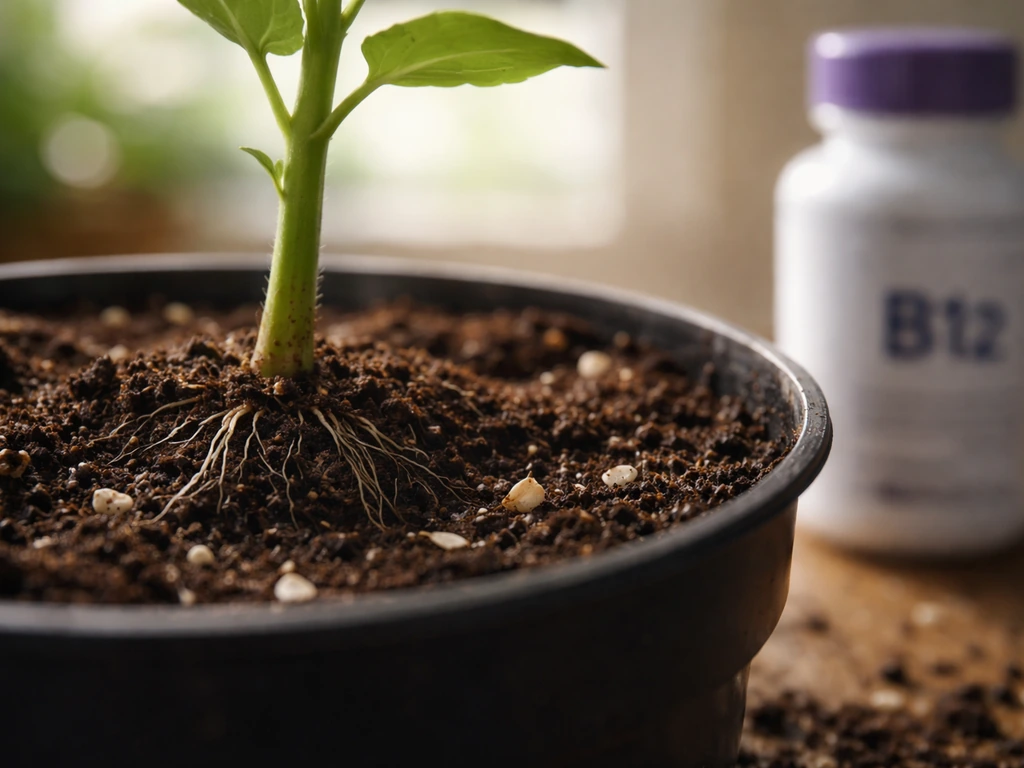
The quick answer: does B12 actually do anything for plants?
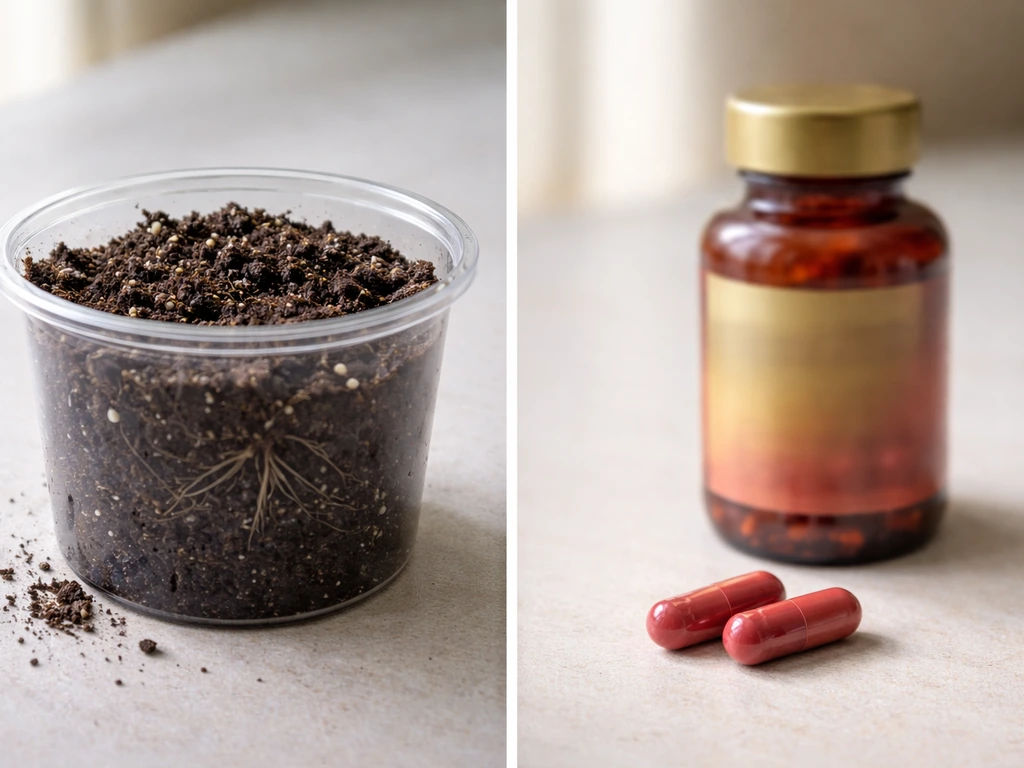
No, not directly. Research is pretty clear that higher plants (angiosperms, the vast majority of what you're growing) don't synthesize or use vitamin B12 the way animals do. Unlike us, plants don't rely on cobalamin-dependent enzymes for their core metabolic processes. There's no B12-powered reaction sitting in your basil plant waiting to be unlocked by a supplement. This puts B12 in a very different category from, say, nitrogen, phosphorus, or iron, which plants genuinely need and actively take up.
The more interesting nuance is that some algae and microorganisms do use B12, and those microbes interact with plant roots in ways that affect nutrient availability. So if B12 does anything in a garden setting, it's more likely happening a step removed, through microbial activity rather than direct plant uptake. That's a meaningful distinction for anyone trying to figure out whether buying a B12 supplement for their garden is worth it (spoiler: usually it isn't).
What B12 actually is, and how plants handle nutrients
Vitamin B12 (cobalamin) is a water-soluble vitamin built around a cobalt atom at its center. In the human body it's essential for nerve function, DNA synthesis, and red blood cell formation. Inside cells it gets converted into two active forms: methylcobalamin and adenosylcobalamin, which act as cofactors for specific enzymes. In plant-related experimental work, intracellular vitamin B12 is described as being converted into methylcobalamin and adenosylcobalamin, which correspond to cofactors for cytosolic methionine synthase and mitochondrial methylmalonyl-CoA mutase blank" rel="noopener noreferrer">converted into two active forms: methylcobalamin and adenosylcobalamin. Without those enzymes, though, B12 is just an expensive molecule doing nothing.
Plants absorb nutrients primarily through their roots via ion transport channels and protein carriers. Each nutrient has a specific uptake mechanism. For example, plants absorb nitrogen as nitrate or ammonium ions, iron using specialized reductase enzymes, and phosphorus through phosphate transporters. There is no equivalent B12 transporter in the root cells of common vascular plants. Experimental work has shown that a conserved B12 acquisition protein (called CBA1) exists in certain algae like Chlamydomonas, making B12 uptake possible in those lineages, but this machinery is absent in typical crop plants, vegetables, and houseplants. In other words, your plant wouldn't know what to do with B12 even if you drenched the roots in it.
Where B12 in soil comes from (it's the microbes)
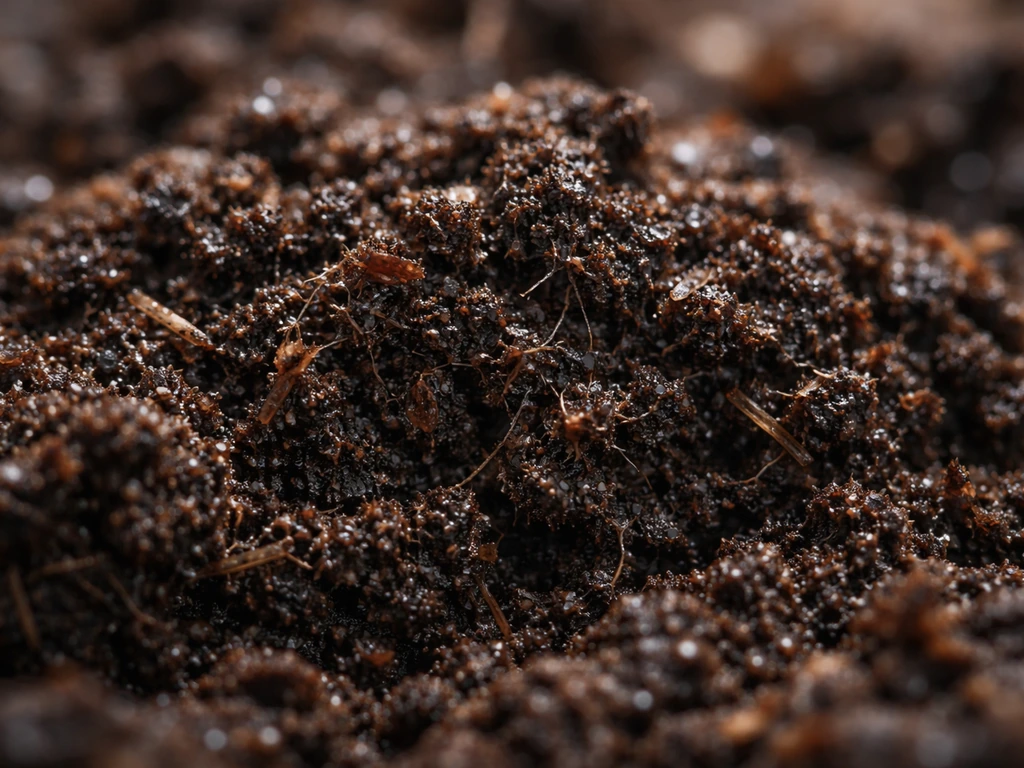
Healthy soil contains billions of bacteria and fungi, and some of those bacteria do synthesize cobalamin. This is where B12 enters the gardening picture, not as something you add, but as something a thriving soil ecosystem already produces. Certain nitrogen-fixing bacteria, including Sinorhizobium meliloti (which forms root nodules on legumes like clover and alfalfa), actually require cobalamin-dependent enzymes to carry out their symbiotic work with plants. So when your legumes fix nitrogen and become a living fertilizer, there's B12-dependent microbial chemistry quietly running in the background.
Compost is probably the best real-world source of B12-related microbial activity in most gardens. A well-made compost pile is a hotbed of microbial diversity, including cobalamin-producing bacteria. When you add compost to soil, you're seeding it with those organisms and the organic matter they need to stay active. This is why compost-rich soil tends to outperform sterile or depleted soil in ways that no single supplement can replicate: you're rebuilding an ecosystem, not just adding one nutrient.
When B12 might actually matter: specific growing setups
Most gardeners will never encounter a situation where B12 is even a secondary limiting factor. But there are a few niche scenarios where it enters the conversation more legitimately.
- Hydroponics and sterile media: In a hydroponic system or a heavily peat-based potting mix with little to no microbial activity, the usual background source of cobalamin (soil bacteria) is absent. If you're also growing algae in a reservoir or have algae-related issues, B12-dependent algal physiology could technically be relevant. For most hydroponic vegetables, though, this still isn't a practical growth factor.
- Legume-focused growing: If you're cultivating legumes and trying to maximize biological nitrogen fixation, supporting the microbial community (including cobalamin-synthesizing bacteria) makes real sense. Adding compost, inoculants with Rhizobium bacteria, and cobalt-containing trace mineral amendments is far more targeted than pouring in B12 supplements.
- Cobalt-deficient soils: B12 is built around cobalt. Some highly leached, sandy, or acidic soils in certain regions (parts of Australia, some areas of the southeastern US) are genuinely cobalt-deficient, and this can impair the soil microbes that depend on it. Research suggests that cobalt deficiency in soil can limit plant growth indirectly, and that this can sometimes be relieved by amendment. But the answer there is adding a cobalt trace mineral amendment, not a vitamin B12 capsule dissolved in water.
- Algae cultivation: If you're growing microalgae (spirulina, chlorella) for food or as a garden amendment, B12 is actually nutritionally meaningful for many algal species. Some depend on external B12 sources for growth, making it genuinely relevant in that specific context.
B12 myths vs. what horticulture actually tells us
The B12-for-plants idea circulates in certain organic gardening and biohacking communities, usually alongside claims that it boosts root growth, improves stress recovery, or helps seedlings establish faster. The reasoning often goes: 'B12 is good for nerves and energy in humans, so it must energize plants too.' That logic doesn't hold up botanically. It's the same category of reasoning that suggests orange juice, vitamin water, or alcohol might perk up your plants. Plants are not small mammals. Their nutritional biochemistry is fundamentally different.
That doesn't mean people are lying when they report positive results after using B12 on plants. A few things could explain anecdotal improvement: the solution carrying B12 also dilutes salt buildup in potting mix, the water itself was the main benefit, the placebo effect on attentive care (you pay more attention to plants you're experimenting on), or a genuine microbial response in certain soils. None of these explanations require direct plant uptake of B12 to be true.
| Claim | Reality | Verdict |
|---|---|---|
| B12 boosts plant energy and growth rate | Plants lack the enzymes to use B12 directly | Myth |
| B12 greens up yellowing leaves | Yellowing is caused by nitrogen, iron, or magnesium deficiency, not B12 | Myth |
| B12 helps root development | No root-growth pathway uses cobalamin in vascular plants | Myth |
| B12 benefits soil microbes | Some soil bacteria do use cobalamin; supporting microbe populations is real | Partially true, indirect |
| B12 matters for legume nitrogen fixation | Rhizobium bacteria need cobalamin-dependent enzymes for symbiosis | True but cobalt amendment is more targeted |
| B12 is relevant for algae cultivation | Many algae species genuinely need external B12 to grow | True for algae specifically |
How to actually try B12 if you want to experiment
If you're curious and want to test it yourself, that's fair. Here's how to do it cheaply and in a way that gives you real information rather than noise.
Use cyanocobalamin, the standard form sold in most B12 supplements, since it's the most stable and least expensive. Methylcobalamin is more bioavailable for humans but there's no meaningful reason to prefer it for a plant experiment. Dissolve roughly 1,000 mcg (1 mg) in one liter of water. That sounds like a lot, but B12 supplements are typically 1,000 mcg per tablet and they're cheap. Apply it as either a soil drench or a foliar spray to a set of test plants, keeping identical untreated controls side by side under the same light, temperature, and watering conditions.
Foliar application (spraying leaves) is how some B12 proponents prefer it, since it bypasses the soil entirely and delivers the molecule directly to leaf tissue. The problem is that vascular plant leaves don't have transport proteins for cobalamin either, so it's not clear there's an advantage. Soil drench at least has the potential to feed soil bacteria, which is the one indirect pathway that has some biological basis.
Set realistic expectations. If you run this experiment for 8 to 12 weeks with proper controls, the most likely outcome is no measurable difference in growth rate, leaf color, or flowering. A subtle positive difference in a soil with poor microbial activity is possible but not guaranteed. If you do see a difference, rerun the test before drawing conclusions, because one positive result in a single planting could be noise.
If your plants aren't growing, check these things first
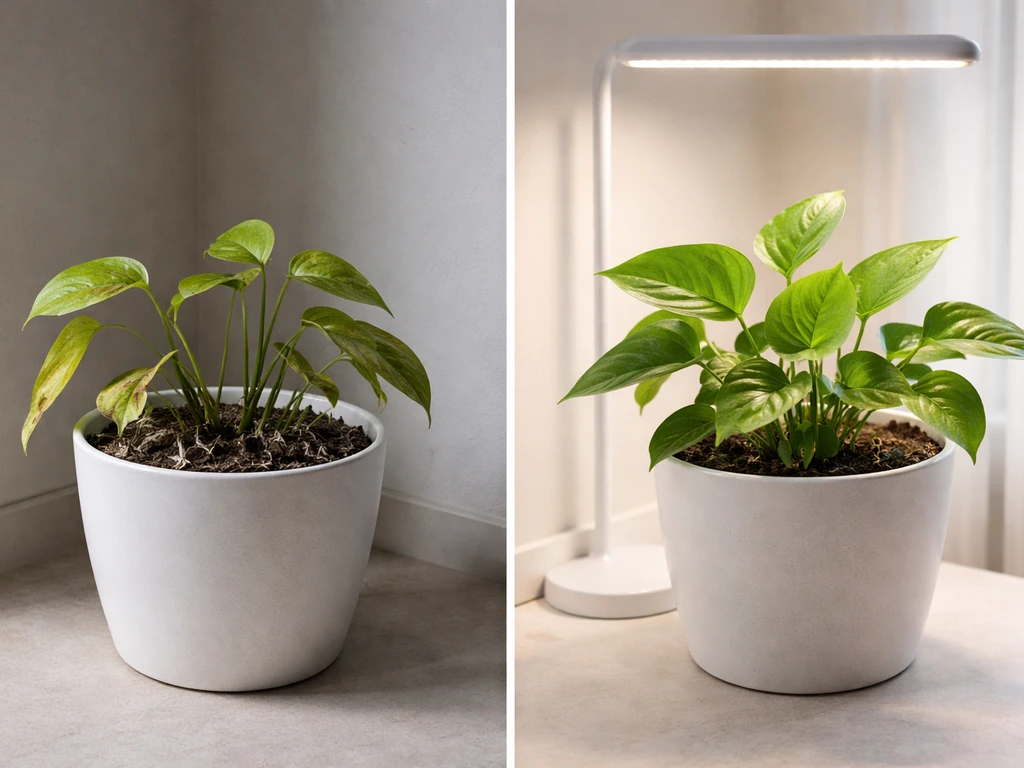
B12 deficiency is almost certainly not why your plant is struggling. Before spending any money on supplements, work through this checklist. Most plant problems trace back to one of these factors, and fixing the real cause will produce visible results within days to a few weeks, not the speculative timeline of a B12 experiment.
- Light: This is the number one overlooked factor for indoor plants. Most houseplants and vegetable starts need far more light than a typical windowsill provides. Get a PAR meter or use a reliable light meter app to measure actual photosynthetically active radiation at canopy level. Tomatoes need 25,000 to 50,000+ lux for good production; most rooms deliver under 5,000 lux even near a south-facing window.
- Watering: Both overwatering and underwatering stall growth and look nearly identical from the outside. Check soil moisture 2 to 3 inches below the surface, not just at the top. Root rot from chronic overwatering is one of the most common plant killers and often misdiagnosed as a nutrient problem.
- Soil pH: pH controls nutrient availability. Most vegetable and flower crops want a pH of 6.0 to 7.0. Iron, manganese, and phosphorus become locked up at high pH; calcium and magnesium become scarce at low pH. A $15 soil pH meter tells you more in 30 seconds than any supplement can fix blindly. Adjust with lime (to raise pH) or sulfur/acidifying fertilizer (to lower it).
- Nitrogen, phosphorus, and potassium: These are the big three for a reason. Nitrogen deficiency shows as yellowing starting from older, lower leaves. Phosphorus deficiency often turns leaves purple or dark green and stunts root growth. Potassium deficiency causes brown leaf edges and poor flowering. A balanced granular fertilizer or a soil test from your county extension service will diagnose and fix this more effectively than any micronutrient supplement.
- Calcium and magnesium: Often secondary but very common problems. Blossom end rot in tomatoes and peppers is a calcium issue. Interveinal yellowing on new leaves often signals magnesium deficiency. Dolomitic lime addresses both at once in garden beds.
- Root health: Circling roots in a container, compaction, anaerobic soil conditions, and pests like root aphids or fungus gnats larvae all limit growth in ways that no foliar nutrient can fix. Unpot and inspect roots if surface-level fixes aren't working.
- Temperature: Growth slows sharply outside a plant's preferred range. Most tropical houseplants stop growing below 60°F (15°C). Cool-season crops bolt or stall when temperatures exceed 80°F (27°C). Night temperatures especially matter for fruiting crops.
How to tell if microbe activity is actually your problem
If you've ruled out the checklist above and you're still seeing poor growth in a potting mix or heavily treated soil that's been reused without refreshing, depleted microbial activity could legitimately be a factor. Signs include: compacted, hydrophobic soil that doesn't absorb water evenly; a lack of earthworms or visible soil life in garden beds; plants that respond poorly to fertilizer additions (suggesting nutrient cycling is broken rather than nutrients being absent); and a faint sour or anaerobic smell from the potting mix.
The fix here is not B12. It's compost, worm castings, mycorrhizal inoculants, and reducing soil disruption and synthetic pesticide use. These rebuild the actual ecosystem. If you're using a sterile hydroponic setup and want to experiment with microbial additions, there are research-backed products containing beneficial bacteria and fungi (PGPR strains, Trichoderma, Bacillus subtilis) that have much stronger evidence behind them than vitamin B12 ever will.
The bottom line on B12 and plants
Vitamin B12 is not a plant fertilizer. It won't green up your leaves, boost your yield, or rescue a struggling seedling the way nitrogen or proper lighting will. The indirect microbial angle is real but limited: healthy soil already has the B12-producing bacteria it needs, and adding a supplement does little to change that. If you're genuinely curious, run a controlled experiment, it won't cost much, and the result will tell you something. But if your plants are underperforming right now, put your energy into the light, water, pH, and nutrient checklist first. That's where the actual limiting factor almost certainly lives.
The B12 question is part of a broader pattern worth recognizing: lots of things that are good for human health get tested on plants, and most of the time the biology just doesn't translate. The same critical thinking applies if you've ever wondered whether vitamin water, apple juice, or alcohol does anything useful for plant growth. Plants have their own nutritional logic, and working with that logic is what actually produces results.
FAQ
If B12 does not help vascular plants, why do some gardeners report greener leaves after using it?
Most reports can come from factors other than plant B12 uptake, for example the liquid dilutes soluble salts in potting mix, the grower changes watering frequency during the experiment, or the added solution coincides with improved soil moisture and aeration. A real microbial response can also happen if the soil is depleted and the treatment improves microbial activity indirectly, but it is not reliable or specific to B12.
Can I just add B12 to hydroponics and expect faster growth?
Unlikely. Common hydroponic systems have limited microbial buffering, and plants still lack the transport and enzyme pathways to use B12 directly. If you want microbial benefits in hydroponics, it is usually more effective to test inoculants (beneficial bacteria or fungi) designed for root colonization rather than a vitamin supplement.
Is there any situation where B12 could become a limiting factor for plants?
For typical crop and house plants, it is very unlikely. The main realistic link is indirect, through certain microbes that use or produce cobalamin, and that depends on your soil biology already being present or suppressed. In most gardens, other nutrients, pH, light, and water balance set the limits long before B12.
What B12 form should I use if I want to run the simple test mentioned in the article?
Cyanocobalamin is a practical choice for a low-cost trial because it is stable and commonly sold at standardized dosages. Using methylcobalamin does not provide a clear plant-specific advantage in most cases, since vascular plants still lack the uptake mechanism for cobalamin.
Should I apply B12 as a foliar spray or a soil drench?
A soil drench is usually more informative if you suspect an indirect microbial effect, because it can influence soil microbes along with moisture movement. Foliar spraying may not provide an advantage since leaf tissues of vascular plants also lack cobalamin transport pathways for meaningful uptake.
How long should I test B12 to know whether it is doing anything?
Use a window long enough to see measurable differences under controlled conditions, typically 8 to 12 weeks as suggested. If you see changes earlier, rerun the experiment, since short-term shifts can reflect watering, nutrient carryover from the solution, or microclimate effects rather than true B12-related biology.
What controls should I use to avoid getting a false positive from an experiment?
Keep at least one untreated control group that matches everything except the B12 (same pot size, light intensity, temperature, watering schedule, and nutrient regimen). Randomize plant placement if possible, and measure a few consistent outcomes (new leaf count, color, dry weight, or flowering timing) instead of relying on subjective appearance.
Could B12 fix poor growth caused by nitrogen, phosphorus, or iron problems?
No. If your plant is chlorotic or stunted, the cause is far more likely to be a limiting nutrient, pH imbalance, or root health issue than B12. Use the article’s checklist first, because correcting the real deficiency typically shows results in days to a few weeks.
Are there any risks to adding B12 to soil or potting mix?
B12 itself is unlikely to be toxic at typical supplement-level doses, but the solution you apply may change other variables, such as adding salts if the product contains additional ingredients or repeatedly wetting leaves leading to humidity-related issues. Also, over-focusing on supplements can delay the fixes that actually improve root function and nutrient cycling.
If I suspect microbial depletion, what should I do before trying B12?
Prioritize ecosystem rebuilding, for example refresh compost, add worm castings, consider mycorrhizal inoculation if appropriate for the crop, and reduce disruptive practices like frequent sterilization or heavy pesticide use. If you can observe signs like hydrophobic soil, poor water infiltration, or anaerobic odor, that is a stronger signal for microbial and soil structure problems than a vitamin deficiency.
Next Articles
Does Orange Juice Help Plants Grow? What to Do Instead
Find out if orange juice helps plants grow, why it can harm soil, and what to use instead for fast, healthy growth.
Does Alcohol Help Plants Grow? What Works Instead
Alcohol myths for plants answered: ethanol hurts roots and microbes. Use light, nutrients, soil, and pests control inste
How Do Microorganisms Help Plants Grow: Practical Guide
Learn how microbes in the rhizosphere fix nitrogen, boost phosphorus, aid roots, suppress disease, and how to grow them.