Alcohol does not help plants grow. Whether you're talking about beer, vodka, rubbing alcohol, or pure ethanol, none of these act as nutrients or growth stimulants for plants. At concentrations commonly used around the garden, alcohol is more likely to damage roots, disrupt soil microbes, and cause leaf burn than to do anything useful. There are a couple of narrow, legitimate uses for alcohol in the garden, but feeding plants or boosting growth is not one of them.
Does Alcohol Help Plants Grow? What Works Instead
Marcus Holloway
24 May 2026
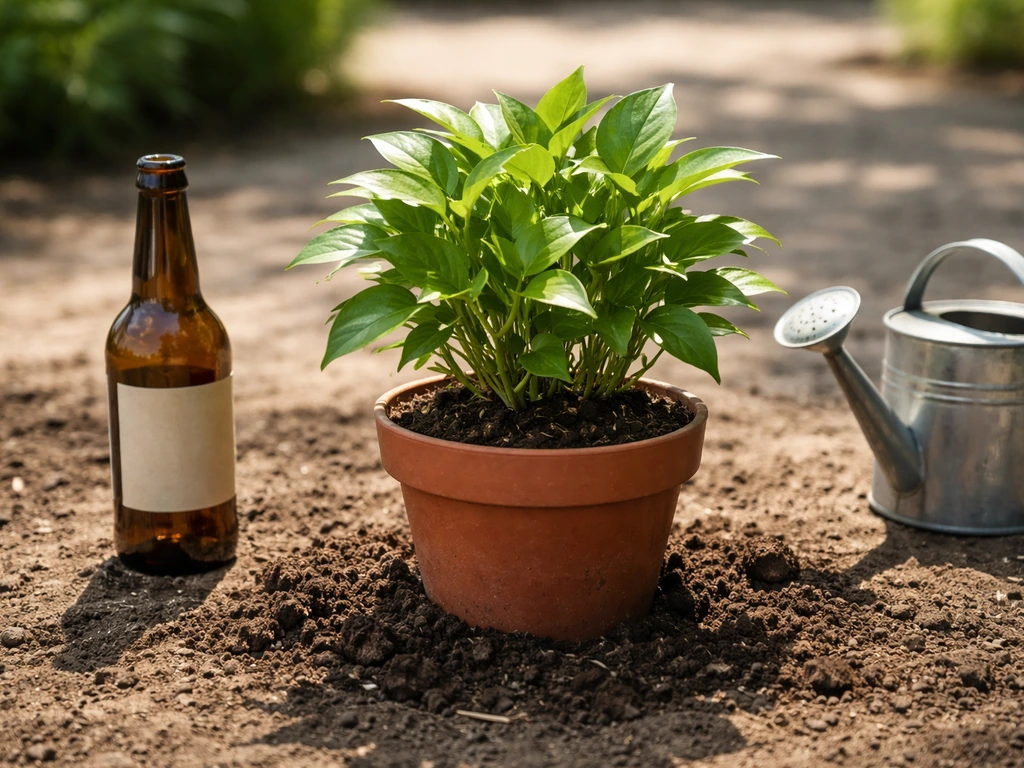
What people actually mean by "alcohol" in gardening
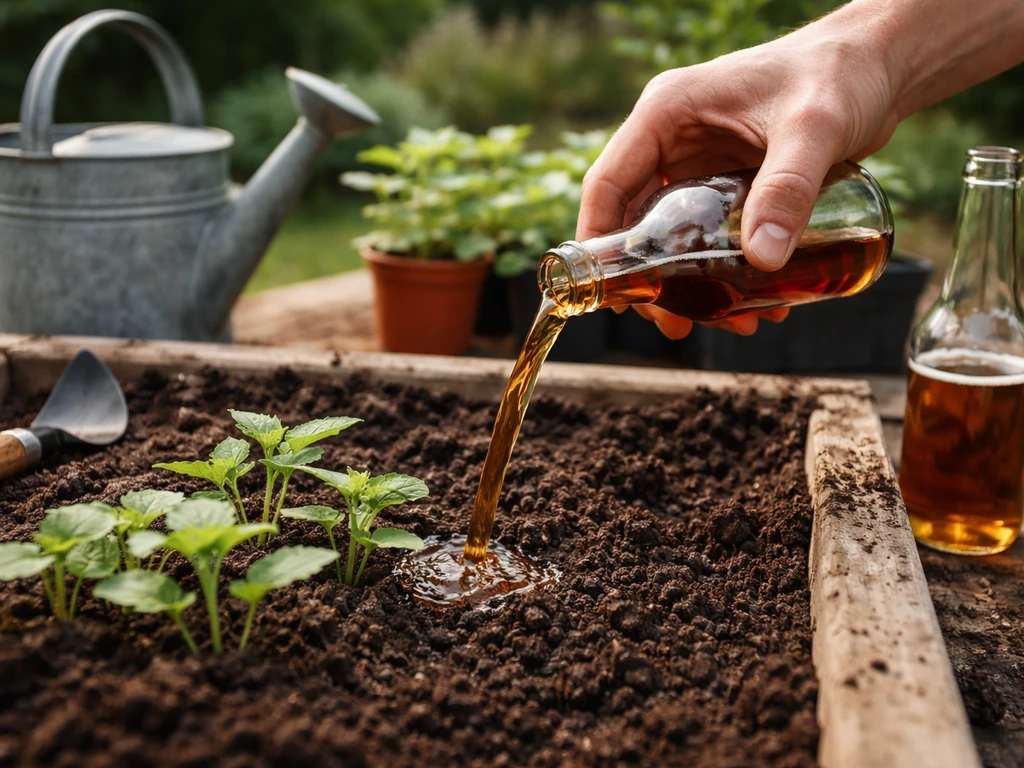
When this question comes up online, people are usually talking about one of a few different things, and it helps to be specific because the risks and the myths differ slightly by product.
- Beer: The most common folk remedy. People pour it on soil or spray it on leaves, sometimes believing the yeast, sugars, or fermentation byproducts will feed plants or repel pests.
- Vodka or other spirits: Occasionally suggested as a rooting aid or foliar spray, often with no clear mechanism behind the recommendation.
- Rubbing alcohol (isopropyl alcohol): The most defensible use case. At the right concentration and applied correctly, it can kill soft-bodied pests on contact. But it is not a plant nutrient.
- Ethanol (pure or diluted): The active molecule in alcoholic drinks. It's also used as a solvent in some rooting hormone preparations, where it's treated as a potential phytotoxin, not a growth booster.
- "Spirit mixtures": DIY blends that combine alcohol with water, dish soap, or essential oils, typically pitched as homemade insecticides or fungicides.
The short version: the gardening community tends to lump all of these together under "alcohol helps plants," but the actual research treats them very differently. The one thing they share is that none of them function as plant food or growth stimulants.
Why alcohol doesn't help plants grow
Plants grow by converting light, water, carbon dioxide, and soil nutrients into energy and tissue. Alcohol fits into none of those categories. Ethanol is not a macro or micronutrient that plants can meaningfully absorb and use for growth. What it actually does at typical gardening concentrations is cause harm at multiple levels.
What it does to roots
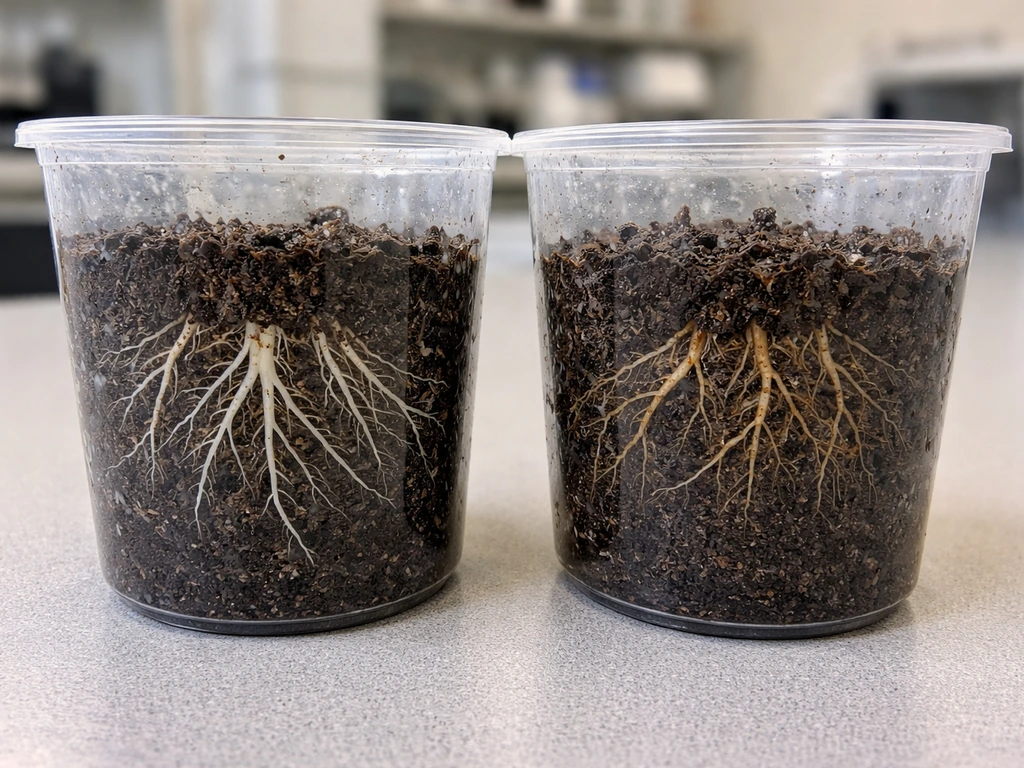
Root exposure to ethanol is well-studied, and the results are not encouraging. Research on tomatoes found that 5% ethanol concentrations severely reduced growth, and phytotoxic effects became pronounced above 10%. Even for more tolerant species, the safe threshold for root exposure sits well below 1% ethanol. Think about that: a standard beer is around 5% alcohol by volume. Pour it directly on soil around the root zone and you are already in the range where root damage becomes a real concern, especially in container plants with limited soil volume to dilute the concentration.
What it does to soil microbes
Healthy soil is a living system. The bacteria and fungi that break down organic matter, fix nitrogen, and transfer nutrients to roots are doing work that no fertilizer can fully replicate. Alcohol disrupts that system. Research shows that ethanol-containing substances cause measurable shifts in soil bacterial community structure.
The good news is that recovery can happen within a few days once the source is removed, but if you're repeatedly applying alcohol-containing products, you're repeatedly knocking back the microbial community your plants depend on.
Volatile organic compounds, including alcohol-like molecules, can also interfere with nitrification, the process by which bacteria convert ammonia into plant-available nitrate. Volatile aromatic and other organic compounds in soil can inhibit nitrification, and the magnitude of the effect can differ by soil type, including effects on ammonia oxidation volatile organic compounds, including alcohol-like molecules, can also interfere with nitrification.
Fewer active nitrifying bacteria means less nitrogen available to your plants, which works directly against growth.
What it does to seeds
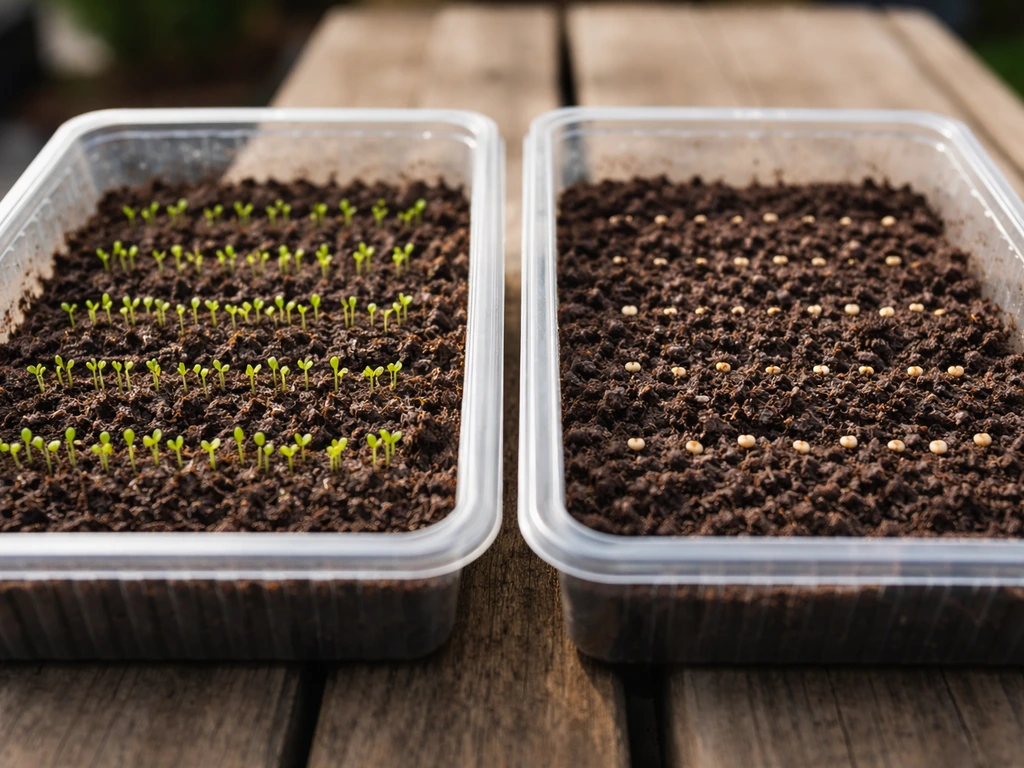
Ethanol exposure can inhibit seed germination in a concentration-dependent way. Studies on red spruce and other species show measurable germination suppression with ethanol exposure. Even at very low, near-physiological concentrations, ethanol has been shown to modify ethylene sensing in tomato seeds, which affects germination timing and seedling development. The effect is not straightforwardly positive: it depends entirely on concentration and species, and it is not something you can reliably or safely exploit with a beer pour.
Is any type of alcohol ever useful in the garden?
Honestly, there is one legitimate use for alcohol near plants, and one use that has limited supporting evidence. Everything else is folklore.
| Type of Alcohol | Common Garden Claim | Reality |
|---|---|---|
| Beer | Feeds plants, boosts soil, repels slugs | No evidence for plant growth benefit; slugs are attracted to it, not repelled; the yeast/carbs can feed soil microbes transiently but not in a useful way |
| Vodka / spirits | Rooting stimulant, foliar boost | No credible mechanism; ethanol in rooting solutions is treated as a phytotoxicity risk, not a benefit |
| Rubbing alcohol (isopropyl 70%) | Kills mealybugs and soft-bodied pests on contact | Legitimate, narrow use when applied directly to pests, not to soil or leaves broadly |
| Ethanol (70–90%) | Sterilizes tools and pots | Genuinely effective disinfectant for equipment; NC State Extension recommends 10 minutes of contact time |
| Dilute alcohol sprays (25–50%) | Houseplant pest control | Supported by Colorado State University Extension as an alternative to insecticidal soap, but careful application is critical |
So the honest answer is: rubbing alcohol and high-concentration ethanol have real, evidence-backed uses for pest control and equipment disinfection. Beer and spirits have no proven use as plant growth aids, period. The key distinction is that even the legitimate uses involve applying alcohol to insects or tools, not to plant tissue, roots, or soil as a general practice.
"But it worked for me", what's actually going on
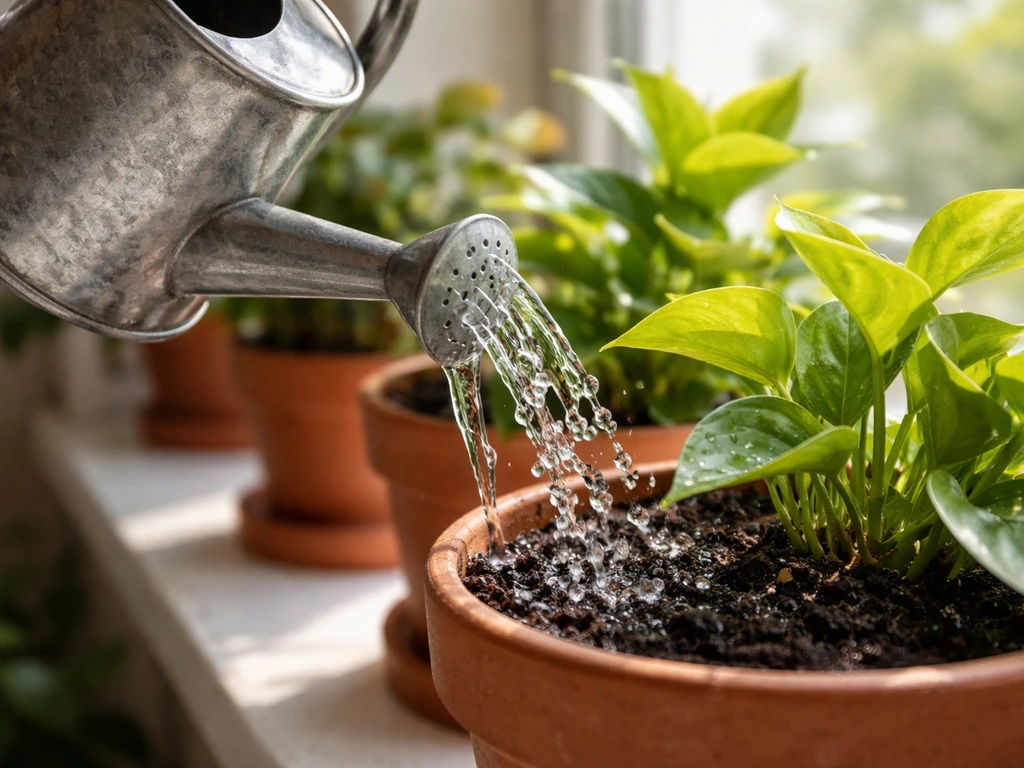
This is where it gets interesting, because the anecdotes are real even if the explanation is wrong. Someone pours beer on their tomatoes, the plants seem to perk up, and the story gets shared. Here are the most common real explanations behind those experiences.
- Watering effect: Many people apply beer or alcohol solutions as a liquid drench, which simply means the plant got more water than usual. If it was previously underwatered, that's the real explanation for the improvement.
- Nutrient contribution from beer additives: Beer contains trace amounts of phosphorus, potassium, and organic carbon from the brewing process. If a plant was nutrient-deficient, those small contributions might produce a temporary response. This is not an argument for beer as fertilizer; it's an argument for actually fertilizing.
- Pest disruption: Spraying anything on leaves can physically dislodge soft-bodied insects like aphids or spider mites. The alcohol got credit, but the act of spraying and the moisture helped more.
- Timing coincidence: Gardening outcomes are slow and often tied to seasonal shifts, repotting, a change in light, or a spell of better weather. The alcohol application just happened to occur before a naturally positive change.
- Dilution: A highly diluted alcohol application (a few tablespoons in a gallon of water) may cause negligible harm, so the plant does fine. "Did fine" becomes "the alcohol helped" in the retelling.
- Yeast and organic carbon in beer: Beer adds organic carbon to soil, which can briefly stimulate microbial activity. Increased microbial activity can improve nutrient cycling short-term. But any organic matter source would do the same thing without the alcohol-related risk.
The pattern here mirrors what happens with other supposed plant boosters. You might have seen similar reasoning come up around orange juice, apple juice, or vitamin water being poured on plants: the liquid provides some water, maybe a trace of something, and any improvement gets attributed to the special ingredient rather than the basics. Orange juice may seem to help because it adds a bit of water, but it is not a nutrient source that helps plants grow.
If you already used alcohol on your plants: what to look for and what to do
If you poured a beer on your garden bed or sprayed something alcohol-based on your houseplants, don't panic. The outcome depends heavily on concentration, how much you used, whether it hit roots or just leaves, and how sensitive the plant species is. Here's how to assess the situation.
Signs of damage
- Leaf tip burn or marginal browning that appears within 24–72 hours of application
- Wilting that doesn't resolve after normal watering
- Yellowing or bleached patches on leaves where a spray made contact
- Stunted new growth or no new growth in a plant that was previously active
- Soil that smells off or fermented (relevant after beer application in containers)
Note that leaf scorch from heat and sun can look very similar to chemical burn. If you applied anything to leaves during hot, bright conditions, some of the browning might be from temperature and light exposure rather than the alcohol itself. That distinction matters for diagnosis but not much for treatment.
What to do now
- For soil applications: water the pot or bed thoroughly to dilute and flush the alcohol concentration. In containers, water until it flows freely from drainage holes, then let the soil approach normal moisture before watering again.
- For leaf sprays: rinse leaves gently with clean water to remove residue. Avoid direct sun for a day or two while the plant recovers.
- For container plants with heavy soil application: if you're seeing root wilting that doesn't improve after flushing, consider repotting into fresh potting mix to remove contaminated soil.
- Hold off on fertilizing for at least a week. Roots dealing with chemical stress cannot absorb nutrients effectively, and adding fertilizer salts to stressed roots will make things worse.
- Move the plant to gentler conditions temporarily: indirect light, stable temperature, and consistent moisture will support recovery better than anything else you can do.
The research on soil microbial recovery is somewhat reassuring: bacterial community structure can begin to rebound within a few days of removing the source. So if you stop applying alcohol and support the plant with good basics, the soil and the plant have a reasonable chance of recovering on their own.
What actually boosts plant growth
This is where I want to spend real time, because the evidence-based levers for plant growth are straightforward and genuinely effective. If you've been experimenting with folk remedies because your plants aren't thriving, these are the things worth checking first.
Light
Light is the most commonly underestimated factor for indoor plants, and the most commonly misjudged outdoors. Most food crops and flowering plants need six to eight hours of direct or strong indirect light per day. Indoors, "bright indirect light" near a window is rarely bright enough for plants that evolved in full sun. A grow light with a full spectrum (ideally covering both the blue range around 450nm for vegetative growth and the red range around 660nm for flowering) placed 6 to 18 inches from the plant will outperform any supplement you can pour on the soil.
Watering
Overwatering kills far more houseplants than underwatering. The goal is to keep roots in moist, well-aerated soil, not in soggy, anaerobic conditions. For most tropical houseplants, water when the top inch or two of soil is dry. For succulents and cacti, let the soil dry out almost completely. Consistent watering at the right interval does more for steady growth than any amendment. If you're wondering about DIY plant “boosters” like does apple juice help plants grow, focus first on proven fundamentals such as watering, light, and nutrients instead consistent watering at the right interval.
Soil quality and drainage
A good potting mix for containers should include structure (like perlite or bark) that keeps it from compacting and cutting off oxygen to roots. For garden beds, compost is the single best investment you can make. Adding 2 to 4 inches of compost to a bed and working it into the top 8 inches improves water retention, drainage, microbial activity, and slow-release nutrient availability simultaneously. Mulch on top of soil reduces moisture loss and moderates soil temperature, both of which support steady growth.
Nutrients and pH
Most plants need a balanced supply of nitrogen (N), phosphorus (P), and potassium (K), plus trace micronutrients. A soil test is the most useful tool you can use if plants are struggling: it tells you what's actually missing rather than making you guess. Most vegetables grow best in soil with a pH between 6.0 and 7.0. Outside that range, plants can't absorb nutrients even when they're present in the soil. Lime raises pH; sulfur lowers it. Getting pH right is often more impactful than adding more fertilizer.
Safer alternatives for specific goals where alcohol gets suggested
Most of the time, people reach for alcohol because they're trying to solve a specific problem: kill pests, prevent fungal issues, or stimulate rooting in cuttings. There are better tools for each of these.
Pest control
For soft-bodied insects like mealybugs, aphids, and scale, insecticidal soap spray is your most forgiving first option. It works on contact, it's less likely to burn leaves than alcohol, and it degrades quickly without leaving residue. Neem oil is another excellent, broad-spectrum option that disrupts insect life cycles. If you do use isopropyl alcohol for mealybugs, the Colorado State Extension guidance is specific: use a 25 to 50% dilution, apply it directly to the insects (a cotton swab works well), and avoid broad spray contact with leaves or soil.
Fungal issues
Powdery mildew and other fungal problems are best addressed by improving airflow around plants, reducing leaf wetness, and applying a targeted fungicide like copper-based spray or a dilute baking soda solution (1 tablespoon per gallon of water with a few drops of dish soap) as a preventive. Alcohol does not effectively treat fungal disease on plant tissue.
Rooting cuttings
Commercial rooting hormone (indole-3-butyric acid, IBA) is the evidence-backed tool here. It's available as a powder, gel, or liquid. Some liquid formulations use alcohol as a solvent to dissolve the hormone, but in those cases, the alcohol is just the carrier and is specifically identified in the research as a phytotoxicity risk, not a benefit. Rooting cuttings in water or a moist, well-aerated medium (like perlite or a 50/50 mix of perlite and peat) with proper humidity and indirect light is more reliable than any alcohol application.
Equipment and pot disinfection
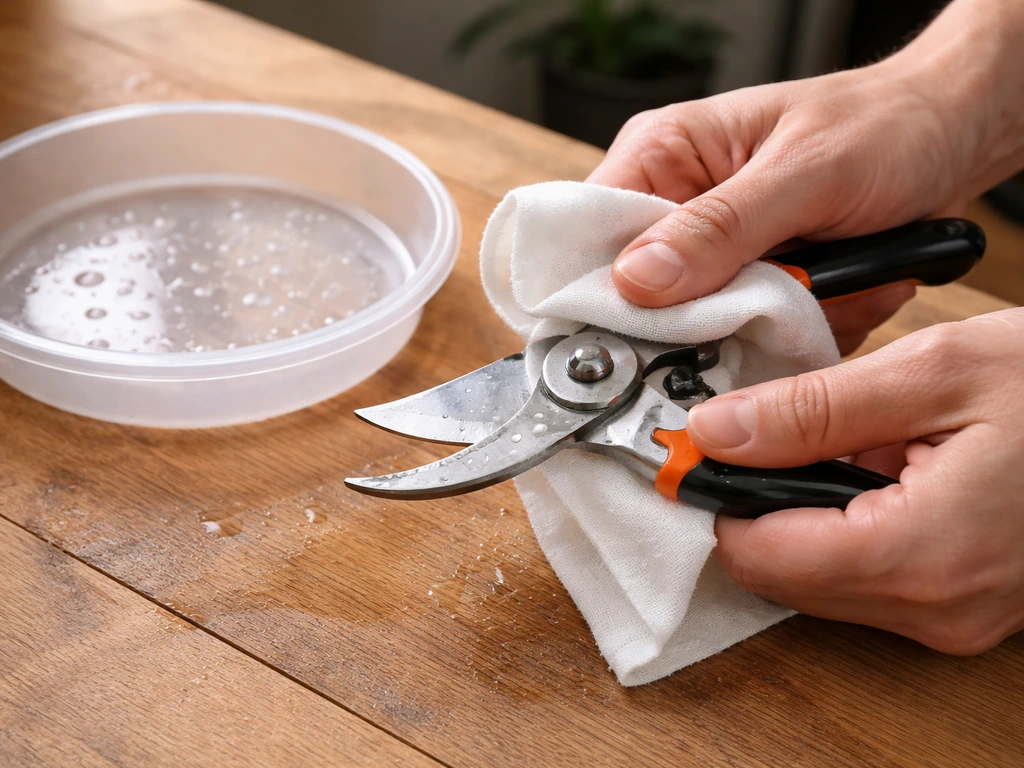
This is where alcohol earns its keep. Seventy to ninety percent ethanol or isopropyl alcohol is genuinely effective at disinfecting pruning shears, pots, and trays between uses. NC State Extension recommends 10 minutes of contact time. This prevents spreading fungal and bacterial diseases between plants. Just keep it on the tools, not on the plant tissue.
The do/don't summary
| Situation | What to do | What to skip |
|---|---|---|
| Plant isn't growing well | Check light, watering schedule, soil drainage, and pH | Pouring beer, wine, or spirits on soil |
| Mealybugs on houseplants | Dab 25–50% isopropyl alcohol directly on insects with a cotton swab | Spraying dilute beer or broad alcohol solution on leaves |
| Rooting a cutting | Use IBA rooting hormone in powder or gel form, moist perlite, humidity | Soaking cuttings in alcohol or spirit solutions |
| Preventing fungal disease | Improve airflow, reduce leaf wetness, use copper fungicide or baking soda spray | Spraying alcohol on leaves as a preventive |
| Disinfecting tools and pots | Use 70–90% ethanol or isopropyl alcohol, 10 minutes of contact | Using diluted beer or household spirits as a substitute |
| Slugs and other soil pests | Use iron phosphate bait (pet and wildlife safe) or diatomaceous earth | Sinking beer traps (attracts more slugs than it kills sustainably) |
| Soil not performing well | Add compost, get a soil test, correct pH | Adding alcohol to stimulate soil microbes |
The bottom line is simple: alcohol is not a plant growth aid, and the science is clear on that. The only place it belongs in your gardening routine is on your tools and, very carefully and directly, on pest insects. Everything else you're hoping to accomplish, whether it's better growth, pest control, disease prevention, or propagation success, has a more effective, less risky tool available. Spend your time and attention on light, soil, water, and nutrients. That's where real growth happens. Vitamin B12 is not a nutrient that plants rely on for healthy growth, so it is unlikely to help them thrive does vitamin b12 help plants grow.
FAQ
If alcohol does not help plants grow, is it ever safe to apply it to leaves or soil?
Only use it as a targeted spot treatment (for example, dabbing insects with a cotton swab). If you want to use alcohol on anything other than pruning tools, keep the concentration low enough and apply directly to the pest, because any broad application to leaves or the root zone increases the risk of leaf burn and root damage.
I poured beer or sprayed alcohol by mistake, what should I do next and will the plant recover?
A single accidental splash is less likely to permanently harm a plant than repeated applications. The priorities are to stop the alcohol immediately, then assess whether roots were exposed (wetter, concentrated spots in containers are the usual problem area) and support the plant with correct light and watering so it can recover as soil microbes rebound within days.
Does alcohol work as a treatment for powdery mildew or other fungal diseases?
Alcohol does not kill fungi in the way a disease treatment needs, it can injure plant tissue and it can disrupt beneficial soil organisms. For mildew, focus on airflow, reducing leaf wetness, and use a targeted approach like a copper-based spray or a dilute baking soda preventive, not alcohol on leaves.
How should I disinfect pruning shears or pots with alcohol to actually prevent disease spread?
Ethanol and isopropyl alcohol can both disinfect tools, but they should not be diluted and sprayed like a garden insecticide. For tools, follow contact-time guidance (about 10 minutes) and let tools dry or rinse if needed, because residues or incomplete contact reduce disinfection.
Can I sterilize potting mix or garden soil with alcohol to prevent pests and disease?
Do not use alcohol to “sanitize” potting mix or soil. Soil microbial life matters for nutrient cycling, and alcohol can shift microbial communities and interfere with nitrogen availability, so replacing the soil component or using proper composting/sterilization methods is safer than treating soil with alcohol.
Does alcohol help with rooting cuttings or improving germination?
If you are trying to propagate cuttings, alcohol is not a reliable rooting aid and can inhibit germination or early root development depending on concentration and exposure. Use rooting hormone labeled for cuttings (IBA is evidence-based) and a moist, well-aerated medium with humidity and indirect light.
How can I tell if browning is chemical burn from alcohol versus sun or heat stress?
Start by separating leaf scorch from heat damage. If the browning appeared after hot sun or bright daytime spraying, some symptoms may be temperature-related rather than chemical burn. Regardless, stop alcohol exposure and confirm by checking for root zone issues, such as wilting without improvement and unusually wet concentrated spots in containers.
What should I use instead of alcohol for common houseplant pests like mealybugs and aphids?
For pests, alcohol is usually a last resort because it can stress plants and does not address eggs or all life stages. Better options depend on the pest, insecticidal soap for many soft-bodied insects, neem oil for broader disruption, and if you use isopropyl alcohol it should be carefully diluted and applied directly to the insects.
My plants are struggling, how do I diagnose the real cause instead of trying alcohol or other DIY liquids?
Use a soil test and observe growth before adding anything. Alcohol is not a nutrient fix, and if plants are stunted, yellowing, or failing to flower, the more common causes are insufficient light, overwatering, pH problems, or specific nutrient deficiencies.
Next Articles
How Do Microorganisms Help Plants Grow: Practical Guide
Learn how microbes in the rhizosphere fix nitrogen, boost phosphorus, aid roots, suppress disease, and how to grow them.
How Does Yeast Help Plants Grow? Safe, Practical Guide
Learn how yeast boosts plant growth via soil microbes, safe dilution and timing, plus myths, limits, and troubleshooting
Do Mushrooms Help Plants Grow? Science and How to Use
Science-backed answer on whether mushrooms help plants grow, plus how to use mycorrhiza, compost, and test results.