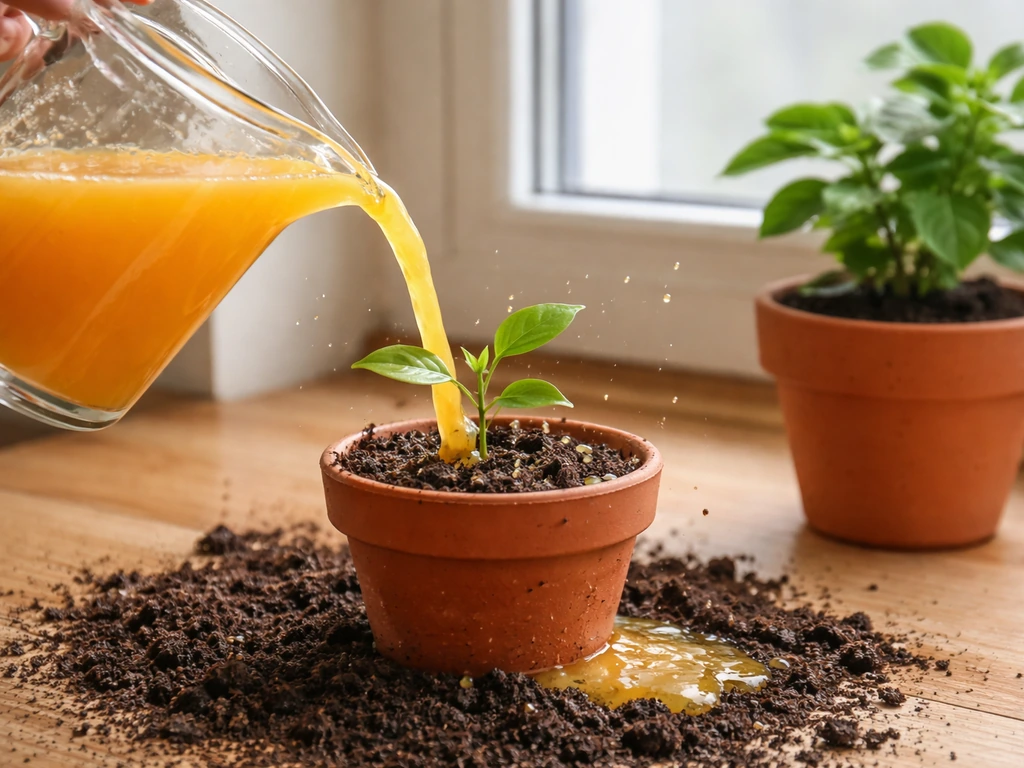
No, orange juice does not help plants grow in any meaningful or reliable way. At best, it does nothing useful. At worst, it acidifies your soil, burns your roots, feeds harmful mold, and locks out the nutrients your plant was already getting just fine. There are narrow edge cases where diluted citrus juice could nudge an overly alkaline soil slightly toward neutral, but you'd never reach for orange juice to do that job when proper soil amendments exist. Save the OJ for breakfast.
Does Orange Juice Help Plants Grow? What to Do Instead

Marcus Holloway
8 Jun 2026
What's actually in orange juice

Understanding why orange juice fails as a plant feed starts with knowing what's actually in it. A typical glass of orange juice is roughly 88% water, which is harmless. The rest is where things get complicated. You're looking at natural sugars (mostly fructose, glucose, and sucrose) sitting around 8–10% by weight, citric acid and ascorbic acid that push the pH down to somewhere between 3.4 and 4.0, and small amounts of potassium, vitamin C, some calcium, and trace folate. Does vitamin B12 help plants grow vitamin C. That sounds like a nutrient profile at first glance, but context matters enormously here.
Plants take up nutrients as dissolved ions in water. Whether potassium comes from a formulated fertilizer or from orange juice doesn't change the ion itself. What changes is the quantity, the ratio, and the delivery environment. The potassium in a cup of OJ is a tiny, uncontrolled dose packaged alongside high acidity and a significant sugar load. University of Minnesota Extension is clear that fertilizer choices should be based on soil test results and actual plant needs, with the goal of delivering the right ions at the right rates. Orange juice delivers unreliable amounts of a few nutrients wrapped in chemistry that works directly against your soil's health.
The real risks: acidity, sugar, and nutrient lockout
The acidity is the first problem and probably the biggest. With a pH between 3.4 and 4.0, orange juice is dramatically more acidic than most garden soils, which ideally sit somewhere between 6.0 and 7.0 for general growing. Pouring acidic liquid directly onto soil pushes that pH down, and as pH drops below 5.5, several things go wrong fast. Aluminum and manganese become soluble at those low pH levels and reach concentrations toxic to roots. Phosphorus binds up and becomes unavailable. Beneficial soil microbes that help break down organic matter into plant-available nutrients start dying off. You're not feeding your plant; you're dismantling the ecosystem that was already feeding it.
The sugar load compounds the problem. Soil is a living system, and dumping sugars into it is essentially putting out a feast for the wrong guests. Fungal pathogens, mold, fungus gnats, and harmful bacteria all thrive on simple sugars. A single application might not cause immediate visible damage, but repeated use creates a soil environment that's increasingly hostile to your plant and increasingly welcoming to pests and rot. In container plants especially, where soil volume is limited and drainage can be imperfect, this process moves fast.
Then there's the salt effect. Even fresh-squeezed OJ carries dissolved salts that, over repeated applications, can accumulate in the root zone and draw water out of root cells through osmotic pressure. This is the same mechanism that makes it hard for plants to grow in saline soils. The result looks like drought stress even when the soil is moist: wilting, curling leaves, and eventual root damage. Nutrient lockout follows because a stressed, damaged root system simply can't absorb what it needs, regardless of what's available in the soil.
Why the myth persists
People try orange juice on plants and sometimes think they see improvement, and there are a few reasons that happens. If a plant was sitting in alkaline soil with a pH above 7.5, a small amount of diluted citrus juice could nudge the pH closer to neutral and temporarily unlock nutrients that were already bound up. The plant responds positively, and the orange juice gets the credit. What actually helped was the pH correction, which could have been done more precisely and safely with sulfur amendments or acidifying fertilizers. In other cases, the plant was just getting better watering frequency alongside the juice applications, and water was what it actually needed.
It's worth noting that similar myths surround other household liquids. Questions like whether apple juice, vitamin water, or even alcohol help plants grow follow the same pattern: a liquid contains trace nutrients or alters the growing environment slightly, someone observes a short-term change, and the connection gets passed around as a tip. The same goes for apple juice: it may contain trace nutrients, but it is still not a reliable way to help plants grow. This also applies to alcohol, which does not meaningfully help plants grow. The plant biology doesn't really support any of these as reliable feeding strategies, but curiosity about them is completely reasonable.
What to do instead for actual results
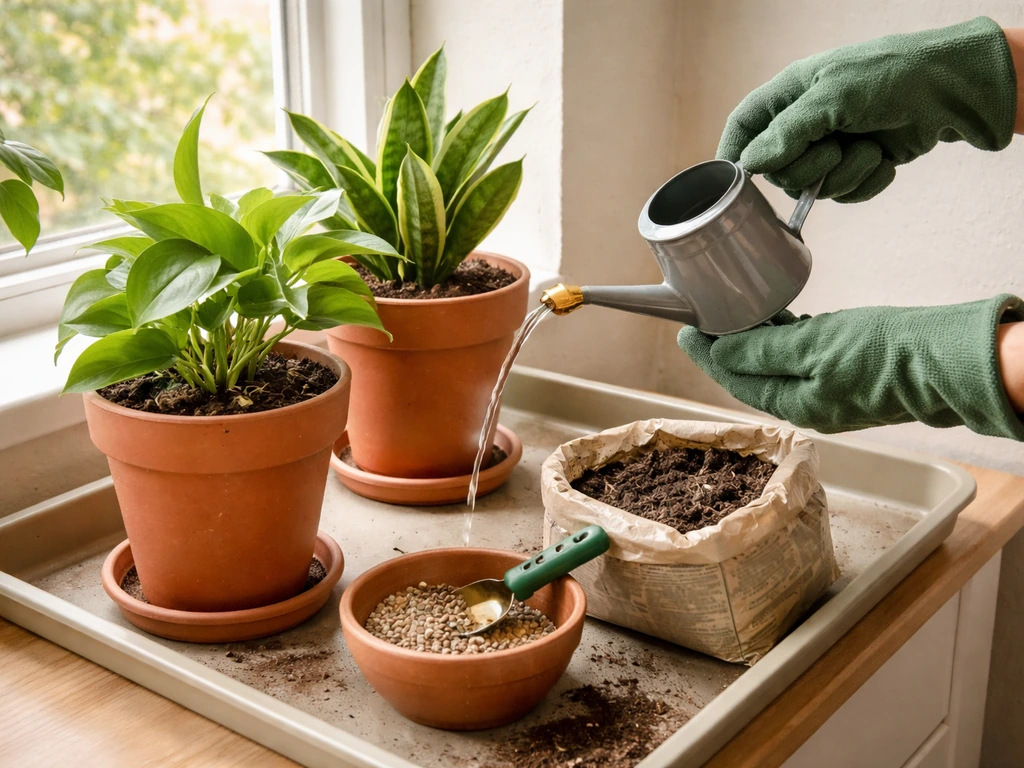
If you want faster, more reliable plant growth, the factors that consistently move the needle are light, water, soil quality, and appropriate fertilization. Most houseplants that look sad are either underlit, inconsistently watered, or root-bound in depleted potting mix. Fixing those three things will do more in two weeks than any kitchen-cabinet liquid can do in a season.
- Get a soil test before adding anything: your county extension office often offers these cheaply or free, and it tells you exactly what's missing so you don't guess.
- Use a balanced water-soluble fertilizer (something like a 10-10-10 or 20-20-20 NPK ratio) diluted to label rate for fast, visible results in container plants.
- For garden beds, work compost into the top 6 inches of soil. Finished compost improves structure, feeds soil microbes, and releases nutrients slowly over weeks.
- If your soil is genuinely too alkaline and needs acidifying, use elemental sulfur or an acidifying fertilizer formulated for acid-loving plants. These products lower pH predictably and don't carry sugar or mold risk.
- Compost citrus peels instead of applying fresh juice: once fully broken down, citrus adds organic matter to the pile without dumping raw acid into the root zone.
For container plants specifically, University of Minnesota Extension recommends using soluble fertilizers when you see specific deficiency symptoms like yellowing lower leaves (which often signals nitrogen deficiency). University of Minnesota Extension notes that soluble fertilizers deliver nutrients quickly when needed, such as when yellowing lower leaves point to nitrogen deficiency yellowing lower leaves (which often signals nitrogen deficiency). That targeted approach beats any homemade liquid remedy because it matches the right nutrient to the visible problem.
If you already poured orange juice on your plant
Don't panic. One application, especially a diluted or accidental one, is unlikely to be fatal for a healthy plant. Here's what to watch for in the next few days and what to do if you see it.
| Symptom | What it likely means | Fix it by |
|---|---|---|
| Leaf tips browning or scorching | Salt stress or acid burn at roots | Flush the soil thoroughly with plain water 2-3 times over 24-48 hours |
| Wilting despite moist soil | Osmotic stress or root damage | Flush, then let soil dry slightly before next watering; check for root rot |
| Yellowing leaves across the plant | Nutrient lockout from pH drop | Test soil pH, then amend with lime to raise pH back toward 6.0-6.5 |
| White crust or sour smell from soil surface | Sugar fermentation or salt buildup | Remove top inch of soil if possible, flush remaining soil with plain water |
| Fungus gnats or mold on soil surface | Sugar feeding harmful organisms | Let soil dry between waterings, apply a layer of horticultural sand on top |
The core recovery principle is flushing. Run plain water through the pot or soil volume at a ratio of roughly three times the container volume, letting it drain fully each pass. This pushes salt, sugar residue, and acid out of the root zone without you having to repot. After flushing, give the plant a week of normal care before assessing whether further intervention is needed.
How to test it responsibly if you're curious
If you still want to see for yourself, I get it. Running your own experiment is actually a great way to learn plant biology hands-on, and doing it with a controlled setup means you won't accidentally harm a plant you care about. Here's a simple checklist for a responsible mini-experiment.
- Choose a fast-growing plant you have multiples of, like radish seedlings, bean sprouts, or small herb starts. You need at least two identical specimens.
- Use fresh potting mix for both plants and start with a baseline pH reading using a cheap soil pH meter or test strips.
- Label one pot 'Control' (water only) and one pot 'OJ Test' (very diluted orange juice, no more than 1 tablespoon per liter of water).
- Apply the same volume of liquid to each plant on the same schedule, once or twice per week for three weeks.
- Measure and photograph both plants every three or four days, noting leaf color, stem height, and any signs of stress.
- At the end of three weeks, retest soil pH in both pots and compare the numbers alongside your growth observations.
- If the OJ plant shows stress symptoms, flush it with plain water and observe recovery.
That structure gives you real data instead of a gut feeling. Most people who run this properly find the control plant performs at least as well, and usually better, than the OJ-fed plant by week two. The soil pH numbers at the end make it very concrete: you'll see exactly what the juice did to your growing medium. That's the kind of evidence that sticks, and it puts you in a much better position to evaluate any other home remedy you come across.
FAQ
If I already poured orange juice on my plant, should I throw it out or repot immediately?
Repotting is usually unnecessary for a single accidental application. Start with flushing, run plain water through the container using about three times the container volume, and let it drain fully each pass. Repot only if you see persistent root damage signs, the plant is in very poor draining mix, or the injury is still worsening after a week of normal care.
How can I tell whether the problem is acidity, fertilizer imbalance, or underwatering after using orange juice?
Acid/sugar damage often shows as browning or soft roots with wilting despite moist soil, plus leaf curl or yellowing that does not improve when you correct watering. Underwatering improves after you thoroughly water and the plant firms up within hours. If the soil stays wet and the plant still wilts, suspect root stress from salts or low pH and flush.
Does diluted orange juice (like 10:1 water) still harm plants?
Even diluted, it still delivers acid plus sugars, and the pH can shift enough to stress sensitive plants, especially in containers. Some plants may tolerate one-off use, but repeated or frequent dosing is where harm becomes likely. If you want a pH nudge, use soil amendments or an acidifying fertilizer designed for predictable dosing.
Can orange juice help plants that are specifically in alkaline soil?
A mild correction can sometimes happen if the soil pH is very high, but orange juice is an imprecise tool because it varies in acidity and sugar content batch to batch. For alkaline soils, choose targeted amendments based on a soil test, then recheck pH after the recommended waiting period.
What plants are most likely to be damaged by orange juice?
Plants with fine, shallow roots (many houseplants), slow-draining containers, and species that prefer slightly acidic conditions can be more sensitive to pH swings and salt buildup. Container plants also reach harmful concentration levels faster because there is less soil volume to buffer changes.
Will orange juice make fungus gnats and molds worse?
Yes, the sugar load can feed unwanted microbes, which can contribute to mold growth and create conditions that attract or support fungus gnat activity. If you notice more gnats or surface mold after dosing, stop all sugary liquids and address the moisture level and drainage, then remove affected topsoil if needed.
If I want to experiment, how should I design it to avoid misleading results?
Use at least two groups (one treated, one control), keep light, watering amount, pot size, and soil mix identical, and treat on a fixed schedule. Measure soil moisture and, if possible, soil pH before and after. That prevents “it improved by luck” from being mistaken as proof the juice helped.
What should I do if my plant looks worse after flushing?
Keep care consistent for about a week. Ensure proper drainage, avoid further additives, and do not switch to more homemade remedies. If symptoms steadily worsen beyond a week, consider root inspection, remove any dead roots, and repot into fresh potting mix to reset the root zone environment.
Does orange juice help seedlings or young plants?
It is not recommended for seedlings. Young plants have smaller root systems, so sugar, acid, and salt effects hit faster, and the risk of root stress is higher. Use balanced starter fertilizer only if you actually see a deficiency signal or your growing conditions warrant it.
Is it safer to use orange juice as a foliar spray instead of soil drenching?
Foliar application is still not a reliable strategy and can create sticky residues that promote fungal issues or attract pests. If you need nutrient support, use a diluted, labeled fertilizer appropriate for the plant and stage, and apply it to soil or as directed for foliar feeding.
Next Articles
Does Alcohol Help Plants Grow? What Works Instead
Alcohol myths for plants answered: ethanol hurts roots and microbes. Use light, nutrients, soil, and pests control inste
How Do Microorganisms Help Plants Grow: Practical Guide
Learn how microbes in the rhizosphere fix nitrogen, boost phosphorus, aid roots, suppress disease, and how to grow them.
How Does Yeast Help Plants Grow? Safe, Practical Guide
Learn how yeast boosts plant growth via soil microbes, safe dilution and timing, plus myths, limits, and troubleshooting