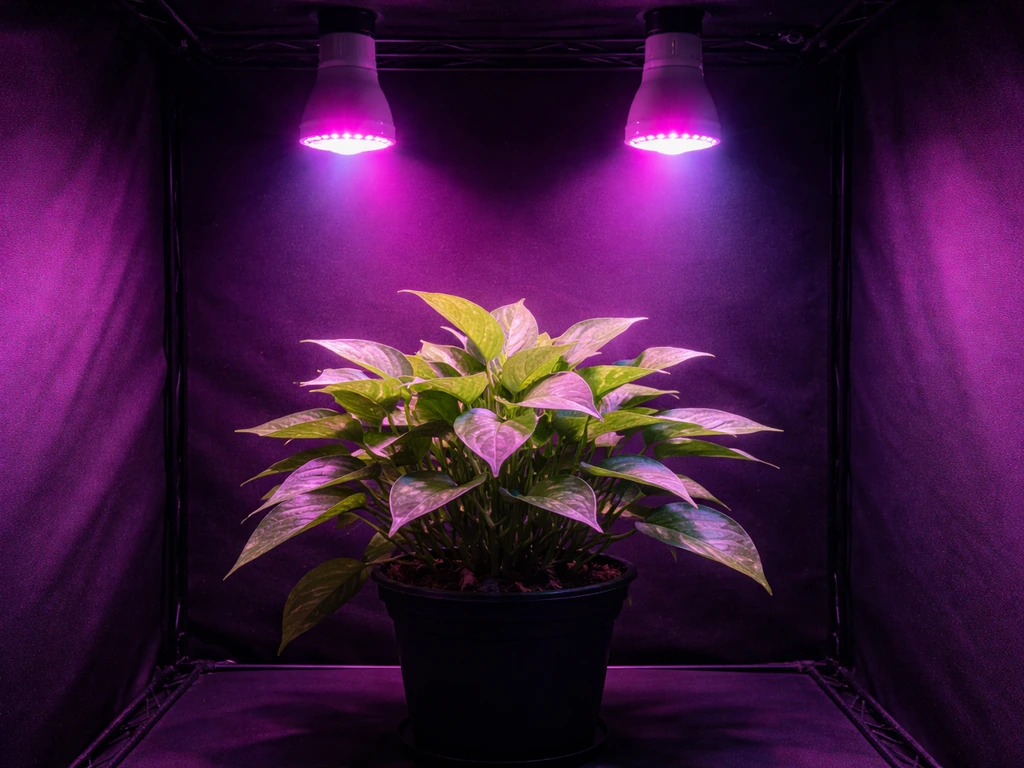
Pink grow lights do help plants grow, but not because they're pink. The glow you see is just what happens when red and blue LEDs are combined without a white or green component to balance them out visually. What actually matters is the red and blue wavelengths underneath that color, both of which drive photosynthesis and plant development in measurable ways. So yes, a well-built pink or magenta grow light can absolutely support healthy growth, but only if it's delivering the right wavelengths at the right intensity. The color alone tells you nothing. That's the core thing to understand before you spend money on a fixture or rearrange your grow space.
Does Pink Light Help Plants Grow? How to Choose LED Grow Bulbs

Marcus Holloway
29 May 2026
What "pink light" actually means for your plants
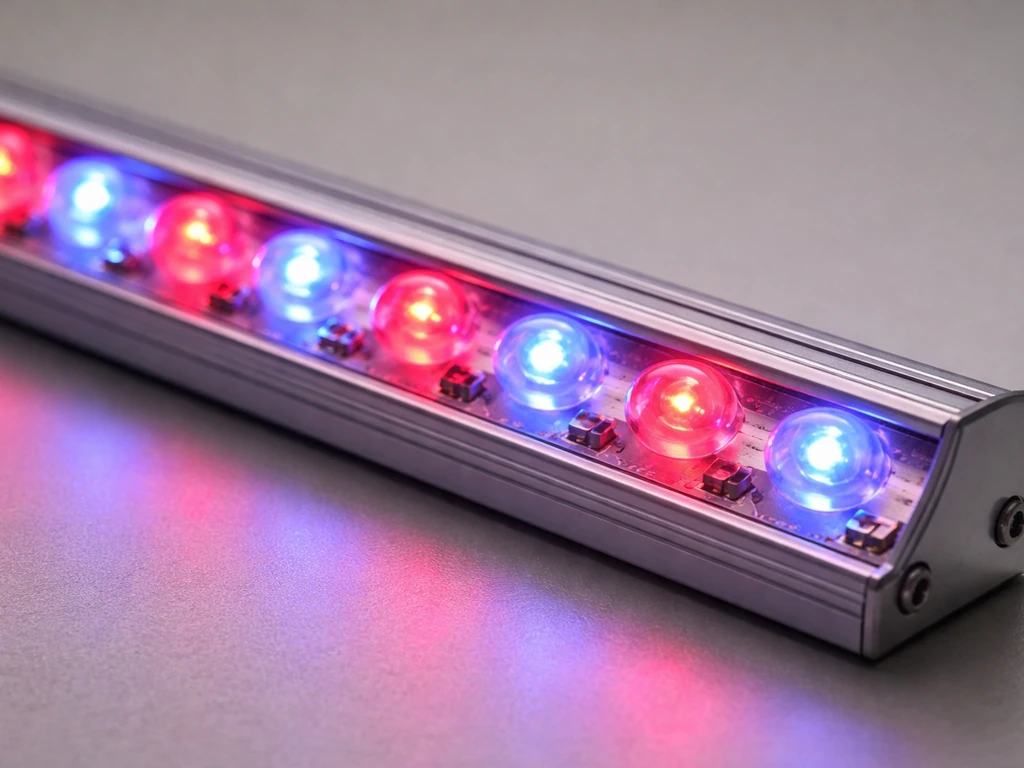
When growers talk about pink or purple grow lights, they're almost always referring to LEDs that combine red (typically around 660 nm) and blue (typically around 450 nm) diodes without adding green or white diodes to round out the spectrum. If you're wondering does purple light help plants grow, the key is whether the fixture delivers the right red and blue wavelengths at enough intensity purple grow lights. Human eyes mix those two colors and see magenta or pink. Plants, on the other hand, don't perceive color the way we do. They respond to specific wavelength ranges through photoreceptors, and the plant-relevant spectrum is broadly divided into UV (300–400 nm), blue (400–500 nm), green (500–600 nm), red (600–700 nm), and far-red (700–800 nm). A "pink" light is really just a red+blue light with a pink aesthetic. Some fixtures also include a small amount of far-red, which can shift results significantly even though it's invisible to us.
This distinction matters a lot when you're shopping. A light that looks intensely purple or pink might be perfectly efficient or nearly useless depending on the actual diode specs and output levels. The color you see is a byproduct of the spectral design, not a signal of quality or plant-effectiveness.
How red and blue wavelengths actually affect plant growth
Red light in the 600–700 nm range is the primary driver of photosynthetic performance. Plant growth is often fastest when your light delivers the right red and blue wavelengths at sufficient intensity, which is why PPFD and DLI matter more than the fixture color. It's what chlorophyll absorbs most efficiently, and it's responsible for the bulk of carbohydrate production that fuels growth. Blue light in the 400–500 nm range has a different but equally important role: it governs morphology and development signals through photoreceptors like cryptochromes and phototropins. Blue light affects how a plant shapes itself, including stomatal opening (which controls gas exchange and water use), stem thickness, leaf expansion, and whether a plant stays compact or stretches. Research shows that blue light addition can actually stop guard cell oscillations that occur under red-only lighting, which is one reason red-only setups can cause plants to behave oddly even when they're getting plenty of light for photosynthesis.
A meta-analysis that reviewed 26 measurable plant traits found that red LED light and blue LED light each changed different subsets of those traits compared to standard white fluorescent light. Red changed 4 of the 26 traits at a meaningful effect size; blue changed 5. Neither alone covers everything. That's why the combination matters, and why a pink (red+blue) light that's well-specced can outperform either color alone.
Far-red (700–800 nm) is also worth understanding here. Plants use the ratio of red to far-red light to sense whether they're in shade (signaled by high far-red) or open sun (lower far-red). Under a strict red+blue light with no far-red, plants may produce compact growth, which can be desirable or a problem depending on your goals. Some pink grow lights include a far-red component; many don't. This is one of the hidden variables that explains why two "pink" lights from different brands can produce noticeably different plant architectures.
Does pink light help more than other colors? What the research actually shows
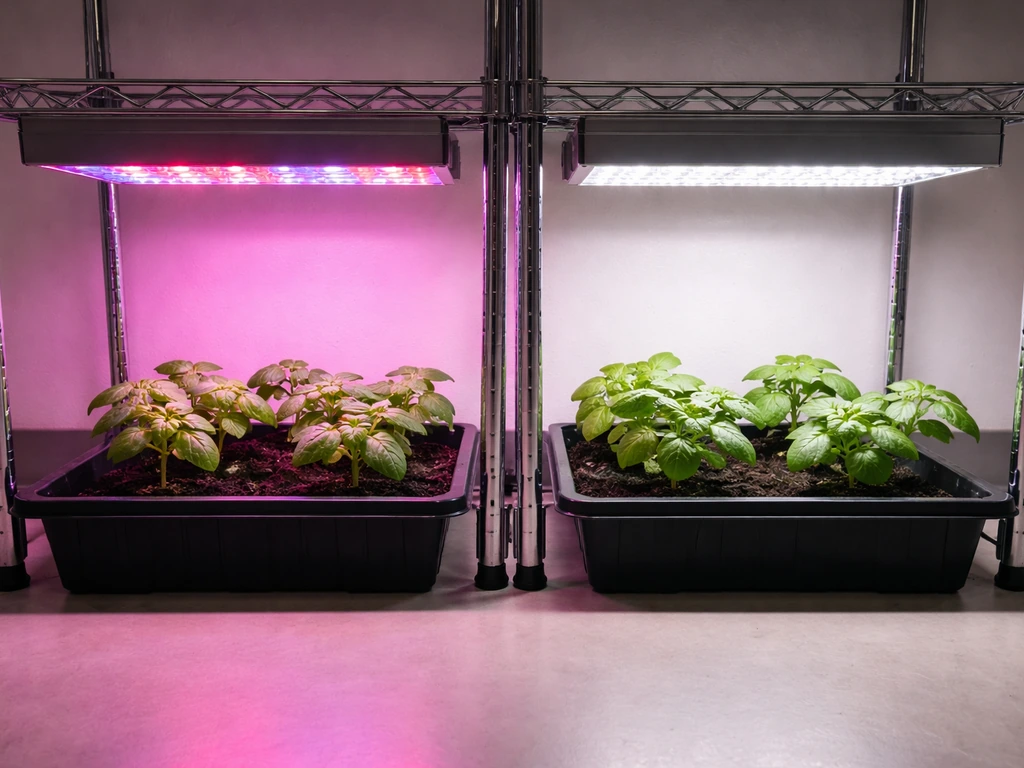
This is where the myth-busting matters. Pink light is not special. It's not some optimized plant-growth secret that white or full-spectrum lights lack. The early popularity of red+blue LED grow lights came from energy efficiency arguments: those two wavelengths hit chlorophyll absorption peaks, so why waste diodes on anything else? That reasoning isn't wrong, but it's incomplete. A meta-analysis published in the Journal of Experimental Botany found that green light (500–600 nm, the part pink lights skip entirely) is roughly equally effective in promoting plant biomass as red and blue light. In other words, does green light help plants grow? Yes, it can support biomass growth too, not just red and blue green light (500–600 nm). Pink lights miss that entire band, which means there are growth contexts where a pink-only setup leaves real potential on the table.
Studies comparing white LED treatments to red+blue (pink) treatments consistently show that spectral composition affects both morphology outcomes and growth rates, and that neither spectrum is universally better. In lettuce experiments, red+blue at a 1:1 ratio produced different results than red+blue supplemented with green and far-red. The plants weren't just shaped differently; their yield and nutritional content shifted too. For seedlings in particular, the presence of far-red and green in a spectrum can meaningfully change the trajectory of early development.
The bottom line: if your pink light delivers adequate PPFD (light intensity at the plant surface), it will grow plants. Results that look impressive under pink lights are usually explained by adequate intensity and total daily light, not anything uniquely powerful about the pink spectrum. For DLI, one commonly used conversion is DLI = PPFD × light-hours/day × 0.0036 blank" rel="noopener noreferrer">total daily light. Don't buy a pink light because you've heard it's the best for plants. Buy it if the specs show it delivers what your plants actually need.
Best uses for pink light at each growth stage
Seedlings
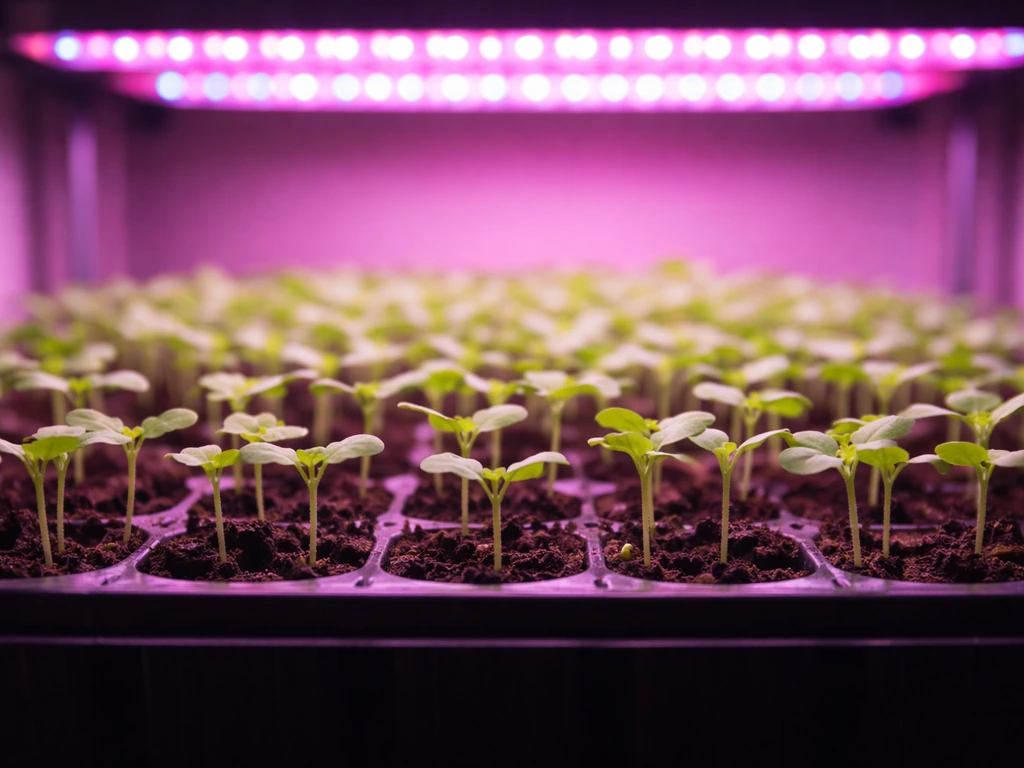
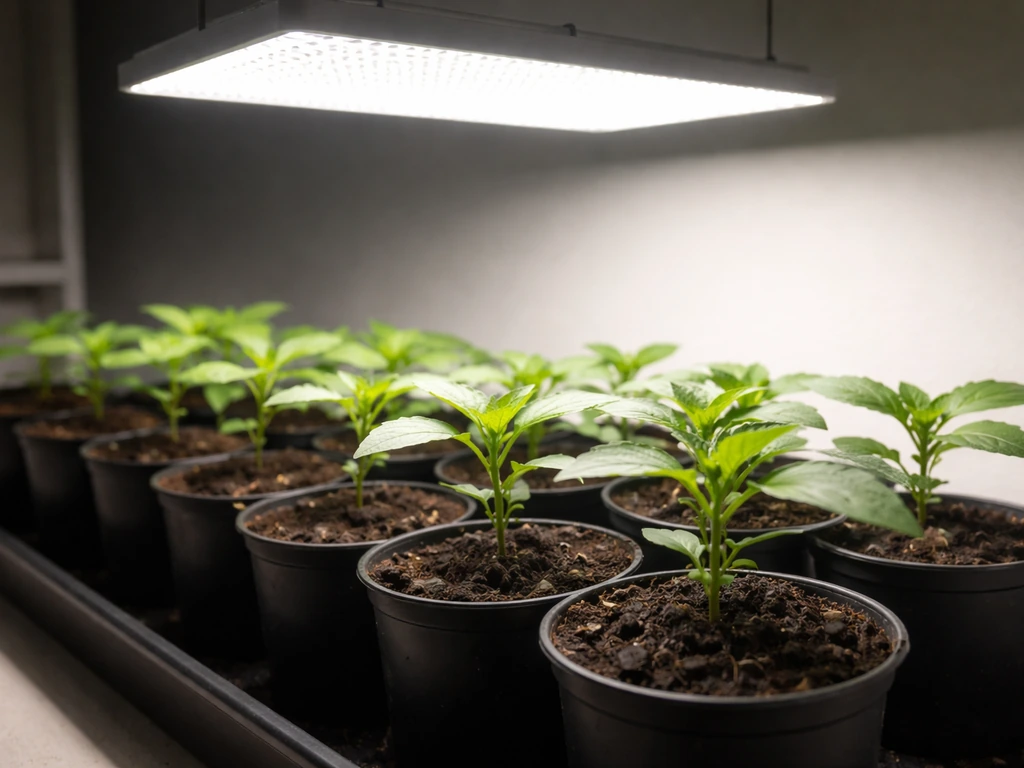
Red+blue (pink) lights work reasonably well for germination and early seedling development. Seedlings primarily need consistent, moderate light intensity and a reliable photoperiod. Because pink lights tend to produce compact growth by suppressing the far-red signal, they can be useful if you're trying to avoid leggy, stretched seedlings. The risk is that very high blue ratios can stunt growth excessively, so look for a pink light with a red-dominant ratio (more red than blue) for seedlings. Start lights close, around 4 to 6 inches above the tray, and adjust upward as plants emerge.
Vegetative growth
During active vegetative growth, plants benefit from the full photosynthetic drive of red light combined with the morphological signals from blue. Pink lights can work well here, particularly for leafy greens like lettuce, spinach, and herbs where compactness is an advantage. If you're growing larger plants or those that need to develop strong stems and wide canopies, the lack of green and far-red in most pink lights can result in less natural-looking architecture. Supplementing with a white light source or choosing a full-spectrum fixture is often a better fit for this stage with larger plants.
Flowering and fruiting
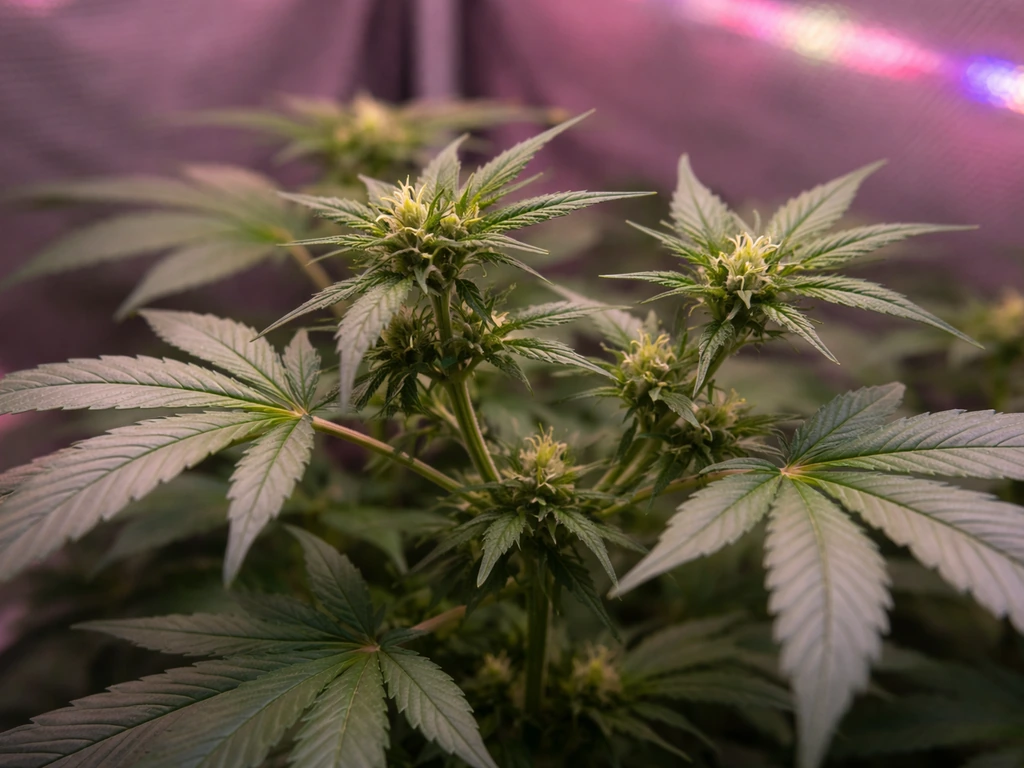
This is where pink light gets more nuanced. Flowering in many plants is triggered or influenced by photoperiod (day length) and light spectrum, particularly the red/far-red ratio. Pink lights that include far-red can be useful for initiating or supporting flowering in photoperiod-sensitive plants. Pink lights without far-red may delay or reduce flowering. If you're growing tomatoes, peppers, or flowering ornamentals under pink LEDs, check whether the fixture includes far-red diodes. High red ratios are generally better for fruiting phases, and some growers switch from a blue-heavy pink to a redder spectrum at this stage.
How to choose a pink or purple grow light (what to check before buying)
Ignore wattage as your primary metric. It tells you how much electricity the fixture uses, not how much usable light reaches your plants. Here's what actually matters: The UNH Extension fact sheet also notes that commercial fixtures can vary widely, so to reach the ideal DLI you often need to change mounting height and daily hours, as one tested LED would require far more hours if mounted farther away [Growing Seedlings Under Lights \[Fact Sheet\]](https://extension.unh.edu/resource/growing-seedlings-under-lights-fact-sheet).
- PPFD (µmol·m⁻²·s⁻¹): This is the light intensity delivered to the plant surface at a specific distance. Look for this number in the product specs, and check at what height it was measured. A PPFD of 200–400 µmol·m⁻²·s⁻¹ works for seedlings and low-light herbs; leafy greens want 250–450; fruiting plants often need 400–700 or higher.
- PPE (µmol/J): Photosynthetic photon efficacy measures how efficiently the fixture converts electricity into usable plant light. Higher is better. A good modern LED is 2.0–2.8 µmol/J or above.
- Red: Blue ratio: Look for the actual nanometer peaks and ratios. A 3:1 or 4:1 red-to-blue ratio suits most vegetative and seedling applications. Higher blue ratios are sometimes used for specific morphology outcomes.
- Far-red inclusion: Check whether the fixture lists 730 nm or 740 nm diodes. If it does, expect more natural plant architecture and potentially better flowering responses. If it doesn't, expect compact growth.
- DLI compatibility: Daily Light Integral (mol·m⁻²·day⁻¹) is what you're actually delivering over a full day. You can calculate it: DLI = PPFD × hours per day × 0.0036. Leafy greens typically target 12–17 DLI; fruiting crops want 20–30 or more.
- Avoid spec sheets that only show lumens or lux. Those are human-vision metrics and mean almost nothing for plant growth.
Setup basics: distance, timing, intensity, and avoiding heat problems
PPFD drops off quickly as you increase distance between the light and your plants. This is one of the most common reasons pink grow lights underperform: people mount them too high, see the glow, assume the plants are covered, and then wonder why growth is slow. For seedlings, start at 4 to 6 inches from the canopy if your fixture's PPFD at that distance is in the 200–400 range. For larger plants in vegetative growth, 12 to 18 inches is more typical, but always verify with the fixture's PPFD map, not by eye.
Photoperiod matters as much as intensity. Most leafy greens and seedlings do well with 14 to 16 hours of light per day. Fruiting plants and some flowering species need 12-hour cycles to trigger flowering. Longer photoperiods can compensate for lower intensity to hit your DLI target, but you can't run lights 24 hours indefinitely without causing issues; plants need a dark period for certain metabolic processes.
Heat is a real concern with lower-quality LED fixtures. While LEDs run cooler than HPS or fluorescent setups, cheap drivers and housings can still get hot enough to damage leaves at close range. Use a thermometer at canopy level and keep leaf-surface temperature below 82–85°F (28–29°C). If leaves closest to the light show bleaching, curling, or brown tips, back the light up before anything else.
Pink light vs full-spectrum white light: when each makes sense
| Scenario | Pink (Red+Blue) Light | Full-Spectrum / White Light |
|---|---|---|
| Seedlings and cuttings | Works well; compact growth, lower heat | Also works; more natural development |
| Leafy greens (lettuce, herbs) | Good fit; compactness is often a plus | Good fit; slightly more complete spectrum |
| Fruiting crops (tomatoes, peppers) | Adequate if far-red is included; check specs | Generally better; broader spectrum supports complex growth stages |
| Flowering ornamentals | Variable; far-red inclusion is critical | Better default choice; less guesswork |
| Visual monitoring of plant health | Difficult; pink tint distorts leaf color | Much easier to spot deficiencies and pests |
| Energy efficiency (watt-for-watt output) | Often slightly better PPE in budget range | Modern white LEDs are competitive |
| Mixed plant collections | Less versatile across species and stages | More forgiving across diverse plant needs |
The honest recommendation: if you're growing a single crop type in a controlled way, like a tray of lettuce or a batch of herb seedlings, a quality pink grow light with good PPFD specs will do the job and sometimes at a lower price point. If you're growing a mix of plants at different stages, or you're new to indoor growing and want to catch problems visually, full-spectrum white light is more forgiving and practical. For a quick guide to which light colors help plants grow, see what color light helps plants grow full-spectrum white light. It's worth noting that the white-vs-pink debate often produces similar yields when intensity and DLI are matched, which means the real differentiator is usually how easy the setup is to manage, not some inherent superiority of one spectrum.
Troubleshooting your pink light setup right now
If your plants aren't responding the way you expected, work through this checklist before blaming the spectrum:
- Check your mounting distance. Measure PPFD at canopy level if you have a meter, or use the manufacturer's PPFD map at the actual height you're running. Move the light closer if plants are stretching or growing slowly.
- Calculate your DLI. Multiply your PPFD by your daily light hours, then by 0.0036. Compare to the target for your crop. If it's below target, add hours or lower the fixture.
- Verify your photoperiod. Are you running the right hours for the growth stage? Seedlings and leafy greens need 14–16 hours. Photoperiod-sensitive flowering plants need a consistent 12-hour dark period.
- Check for heat stress at the canopy. Measure air temperature right at leaf level. If it's above 85°F (29°C), raise the light or improve airflow even if PPFD looks right.
- Look at your red: blue ratio and far-red presence. If plants are extremely compact, stunted, or slow to flower, check whether your fixture includes far-red diodes. If not, consider adding a supplemental far-red source or switching to a broader spectrum.
- Rule out other limiting factors. Pink light gets blamed when the real issue is underwatering, poor soil or growing medium, low nutrients, or root-bound containers. Spectrum is only one variable.
- If you're growing fruiting or flowering crops and they're thriving vegetatively but not transitioning, switch to a 12-hour photoperiod and confirm your fixture provides adequate red-dominant spectrum (660 nm) and some far-red.
- If visual assessment is a problem (you can't tell if leaves look healthy under the pink glow), use a white flashlight or switch off the grow light briefly to check plant color in natural or white light. This is a real, practical limitation of red+blue-only setups.
Pink grow lights are a legitimate tool, and the underlying science of red and blue wavelengths supporting photosynthesis and plant development is solid. But the color you see is just a visual artifact of the spectral recipe, not a guarantee of performance. Evaluate any grow light, pink, white, purple, or otherwise, on its PPFD output, PPE rating, and spectral distribution. Get those right for your specific crop and growth stage, and you'll get results. Skip that evaluation and just buy something that looks the part, and you'll be disappointed regardless of the color.
FAQ
If a pink grow light has the right “look,” how can I tell whether it’s actually giving enough intensity to grow plants?
Check the PPFD at plant height (or use the fixture’s PPFD map). Then confirm you can reach your target DLI for your crop using the photoperiod you plan to run. If the vendor only lists wattage or only shows a photos of the light’s glow, that’s a red flag.
Do pink lights work for flowering if my fixture does not list far-red diodes?
Often yes for basic growth, but far-red specifically affects the red-to-far-red ratio that plants use to judge “shade” and can influence flowering timing and stretch. If the product does not specify far-red output (or includes no 700 to 800 nm component), expect less predictable flowering than with a spectrum that includes far-red.
Is it better to use more blue in a pink light for seedlings?
Not always. Too much blue relative to red can over-constrain growth and lead to slow development or overly stiff plants. For seedlings, prioritize adequate PPFD and a red-dominant pink recipe (more red than blue) unless you have a proven reason to push compactness.
Why do plants sometimes look compact under pink light but still grow slowly?
Compactness can come from spectral cues (especially reduced far-red in many pink setups), but slow growth usually means intensity and DLI are too low, or your light is too far away. Verify canopy-level PPFD, adjust mounting height, and make sure your daily light duration matches the crop’s needs.
Do pink grow lights replace full-spectrum light for nutritional quality, not just yield?
They can influence nutrition and morphology because spectrum changes development and metabolism. If you need consistent leaf quality or higher variability reduction, consider adding green or far-red, or choose a spectrum closer to full-spectrum. At minimum, compare results by measuring outcomes you care about (biomass, leaf thickness, harvest timing).
What’s the difference between a “pink” LED and a true “red+blue” setup?
Many “pink” fixtures are red+blue without green or white, but the diode ratios and whether far-red is included can vary a lot. Look for actual wavelength-specific specs or spectral plots, not just the marketed color, and confirm the red and blue intensity balance.
Can I run a pink grow light 24/7 to compensate for lower intensity?
Generally no. Plants need a dark period for normal metabolic processes and stomatal regulation. If your DLI is low, increase photoperiod within typical ranges for your crop, but avoid continuous lighting that removes the dark cycle.
How close should I mount a pink grow light to avoid heat stress and light bleaching?
Start based on measured PPFD at canopy level, but also watch leaf temperature and visible stress. Use a thermometer at leaf height, and if you see bleaching, curling, or brown tips, raise the light and/or reduce intensity before troubleshooting spectrum.
Is wattage useless when comparing pink grow lights?
Wattage is not useless, but it is not the decision metric for plant growth. A low-watt fixture can outperform a high-watt one if it delivers higher PPFD where the plant is. Always compare PPFD, PPE if available, and spectral distribution.
Are pink lights a good choice if I’m growing multiple plants at different stages (seedlings and mature plants together)?
Usually they are less forgiving because most pink fixtures lack green and often lack far-red, which changes architecture and stage transitions. For mixed stages or a beginner setup, full-spectrum white or a fixture with adjustable spectrum and intensity is typically easier to manage and troubleshoot.
Next Articles
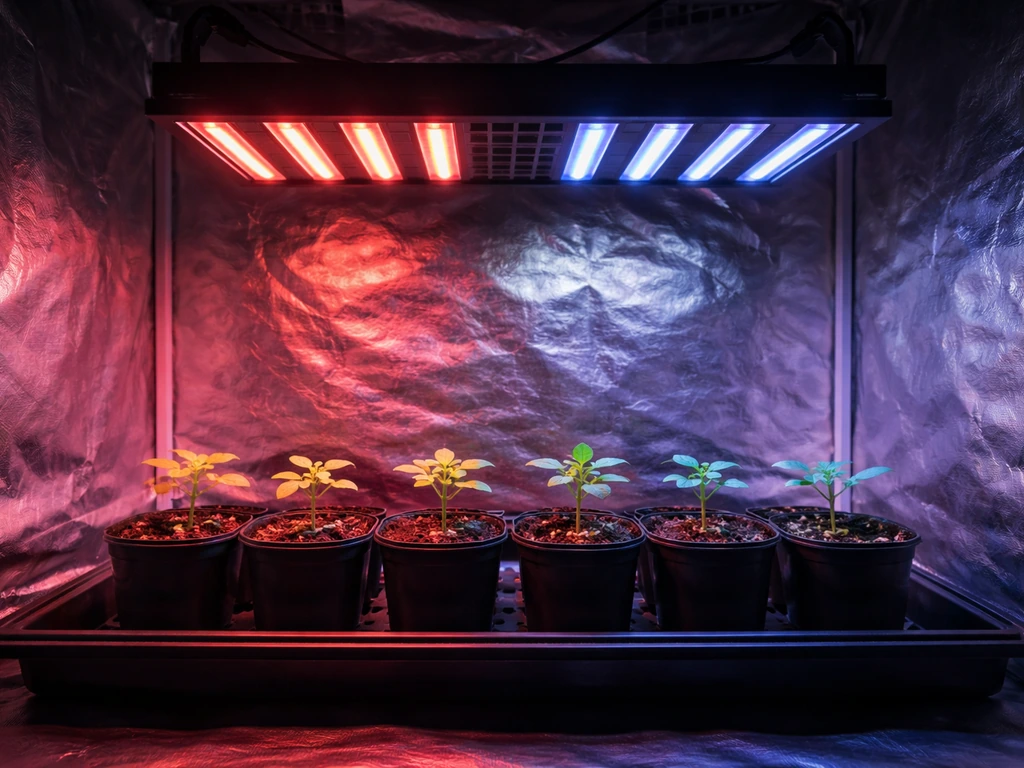
What Color Light Makes Plants Grow Faster? Complete Guide
Learn which light color speeds plant growth, why red, blue and full spectrum work, and how to set LED distance and timin
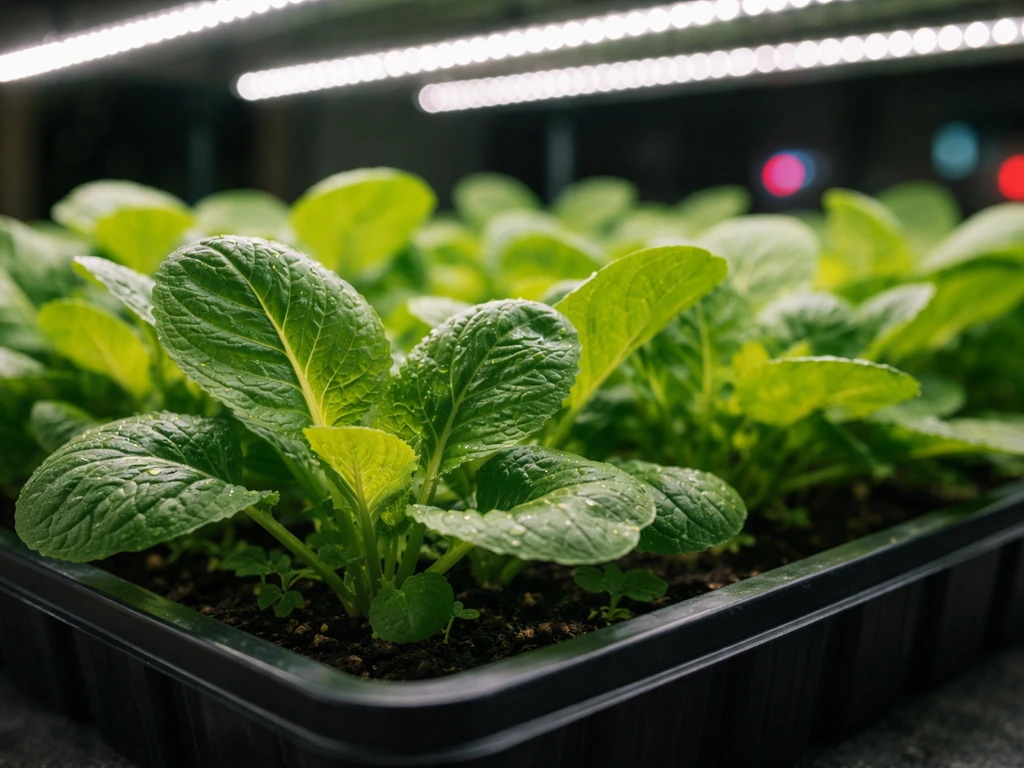
Does Green Light Help Plants Grow? What Actually Works
Explains whether green light boosts plant growth, when it helps versus red and blue, and how to choose LEDs and set inte
Does White Light Help Plants Grow? When It Works
Yes, white LED light helps plant growth when spectrum and intensity fit; learn CCT, placement, PPFD and fixes.