Yes, mushrooms (or more precisely, the fungi behind them) genuinely help plants grow, but the details matter a lot. The part that actually benefits your plants is not the mushroom cap you see above ground. It is the living fungal network underground, specifically mycorrhizal fungi, that form a direct working partnership with plant roots to deliver phosphorus, water, and other nutrients the plant cannot efficiently grab on its own.
Do Mushrooms Help Plants Grow? Science and How to Use
Marcus Holloway
29 May 2026
For orchids, the same mycorrhizal fungi idea applies, because these partnerships can improve nutrient uptake and help the root system establish. Whether you buy a bag of mycorrhizal inoculant, amend your beds with mushroom compost, or just let soil biology do its thing, the real mechanism is always the same: living fungal tissue connecting to living roots. Get that right and the benefits are real and measurable.
Get it wrong and you are just spending money on a bag of inert powder.
Mushrooms, mycelium, mycorrhizae: what you are actually talking about
When most gardeners ask whether mushrooms help plants grow, they are thinking about one of three different things, and the answer is different for each. Sorting them out first saves a lot of confusion later.
The mushroom cap itself, the thing you pick and eat, is just the fruiting body of a fungus. It is the equivalent of an apple on a tree. It produces spores, then it is done. Dropping mushrooms on your soil or burying them near roots does essentially nothing useful for plant growth. There is no active nutrient exchange happening. It is a piece of organic matter that will slowly decompose, nothing more.
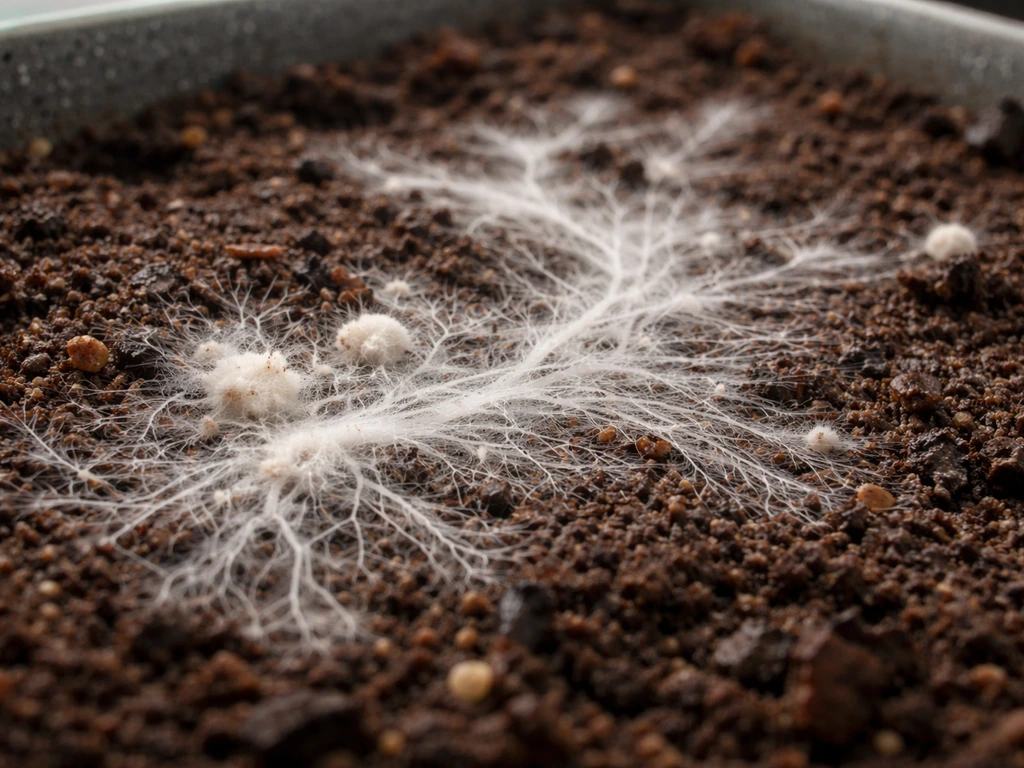
Mycelium is the actual body of the fungus: a sprawling network of thread-like structures called hyphae that lives in soil or wood. This is where the real biological action happens. When you see white fuzz in a bag of mushroom compost, that is mycelium. But mycelium alone does not automatically help plants. It needs to be the right type of fungus forming the right kind of relationship with the right kind of root.
Mycorrhizae are the specific fungal partnerships that actually benefit plants. The word literally means "fungus root." These are fungi that physically connect to plant root tissue and create a two-way exchange: the plant feeds the fungus sugars produced through photosynthesis, and the fungus dramatically expands the root system's reach into the soil, pulling in nutrients and water the roots could not access alone. This is the relationship worth understanding and cultivating, and it is the core of everything useful in this topic.
There are two main types. Arbuscular mycorrhizal fungi (AMF, also called endomycorrhizae) actually grow inside the root cells, forming tree-like structures called arbuscules inside the cortex tissue. These are the exchange points where nutrients and sugars are traded. They also form balloon-like vesicles for storage. This type of fungus works with the vast majority of garden plants: vegetables, herbs, flowers, grasses, and most fruit trees. Ectomycorrhizal fungi (ECM) wrap around the outside of roots forming a sheath called a mantle, and work primarily with trees like oaks, pines, beeches, and birches. If you are buying an inoculant, the label will tell you which type you are getting, and choosing the right one for your plant matters.
How fungi actually help plants: the real mechanisms
Phosphorus uptake is the biggest story
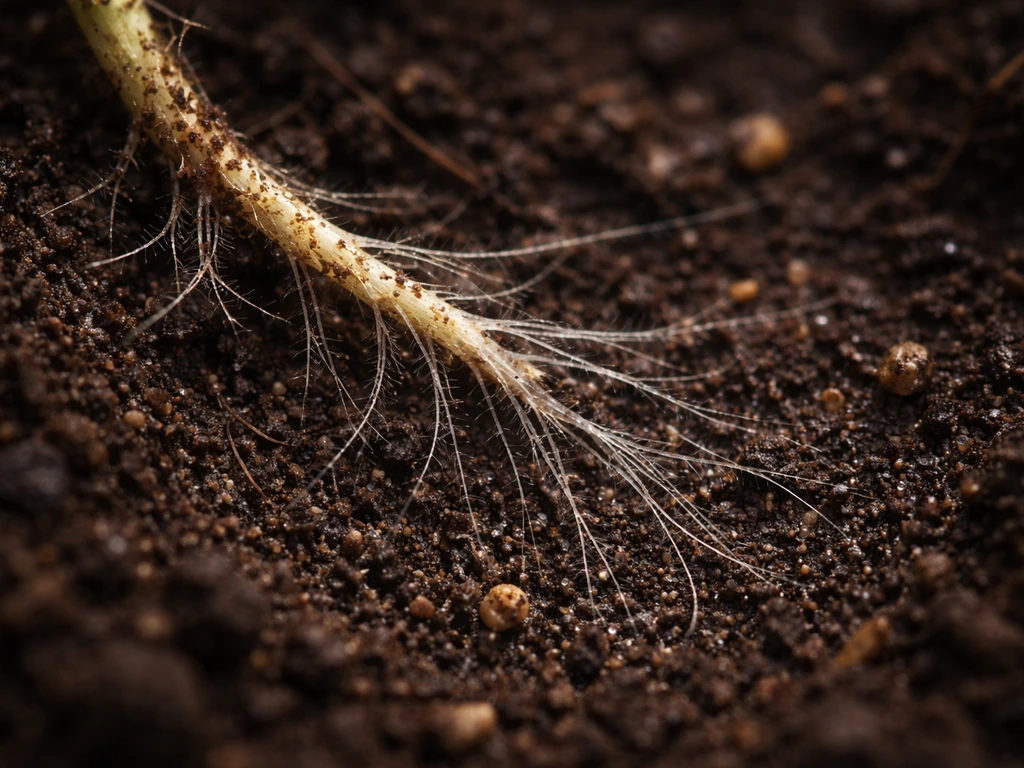
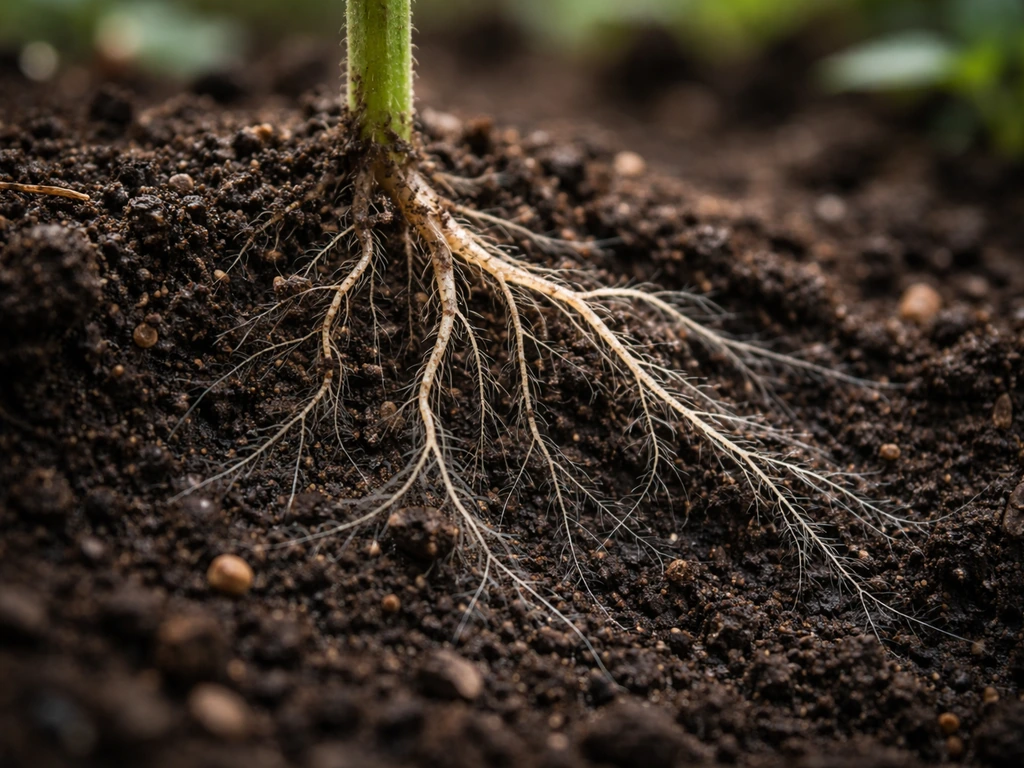
The single most well-documented benefit of mycorrhizal fungi is phosphorus delivery. Phosphorus in soil is largely insoluble, bound up in forms that plant roots simply cannot absorb on their own. Mycorrhizal hyphae, which are far thinner than even the finest root hairs, thread through tiny soil pores and release enzymes that unlock bound phosphorus and pull it back to the root.
Without this fungal partnership, a huge portion of soil phosphorus is just sitting there unavailable, which is exactly why University of Wisconsin Extension specifically flags that insoluble phosphorus cannot be accessed by roots without mycorrhizal help. Thousands of peer-reviewed studies across more than 4,000 research observations in the MycoDB database confirm this is one of the most consistent benefits fungi provide to plants.
Water and drought stress
The extraradical hyphae, meaning the fungal threads extending out into soil beyond the root zone, dramatically increase the volume of soil the plant can pull water from. This is especially meaningful during dry spells. Wisconsin Extension research notes that mycorrhizae help reduce drought stress, and this matches what you tend to see in the garden: well-colonized plants wilt later and recover faster than their non-colonized neighbors when water is short.
Soil structure and disease resistance
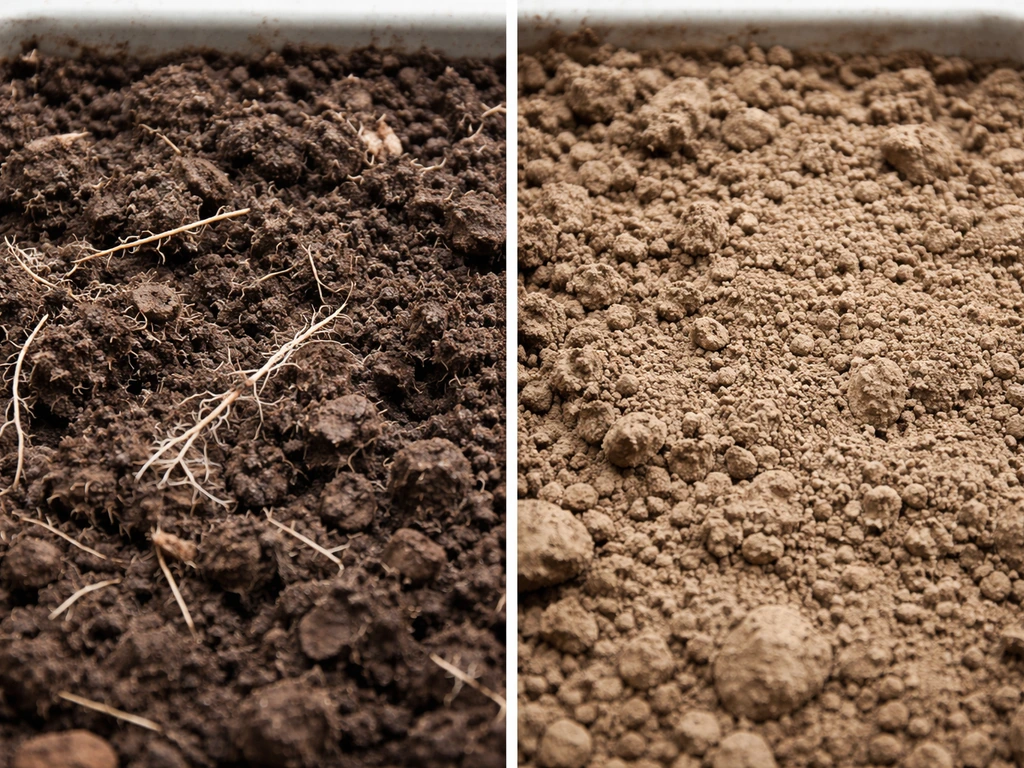
Fungal hyphae also produce compounds that help bind soil particles into aggregates, improving drainage, aeration, and overall soil structure over time. On the disease side, AMF have been shown to trigger what researchers call mycorrhiza-induced resistance, a systemic priming of the plant's own immune pathways that can reduce the severity of certain soil-borne pathogens. This is not the same as spraying a fungicide. It is more like the plant being in a better-prepared state. Multiple peer-reviewed reviews describe these biocontrol mechanisms as real but context-dependent. Do not think of it as a disease cure. Think of it as a resilience buffer.
When mushrooms and fungi will not help your plants
This is where a lot of gardeners get burned, spending money on products and seeing nothing. The reasons fungal amendments fail are well understood.
- High phosphorus soil: This is the biggest one. When soil has plenty of available phosphorus already, plants have no incentive to support the fungal partnership, so colonization drops dramatically. If you have been heavy-handed with fertilizer, especially soluble phosphate fertilizers, do not expect an inoculant to do much. Scientific research confirms that high soil P actively reduces mycorrhizal colonization.
- Wrong fungus for the plant: AMF species work with most vegetables and ornamentals. ECM species work with pines, oaks, and related trees. Matching matters. A product loaded with ectomycorrhizal spores will do nothing for your tomatoes.
- Plants that do not form mycorrhizal partnerships: Some plants are non-mycorrhizal by nature. Brassicas (cabbage, broccoli, kale, mustard), beets, and spinach do not form these associations at all. Applying inoculants to these crops is a waste.
- Dead or degraded inoculant: Fungal spores are living organisms. A bag stored improperly, exposed to heat, sunlight, or moisture, may contain dead or unviable spores by the time you apply it. AGTIV and other manufacturers specifically advise cool, dry, dark storage for this reason. Check the expiry date.
- Fungicide use close to inoculation: Many fungicides, especially systemic ones, can suppress or kill AMF. If you apply a fungicide within two to three weeks of inoculation, you may eliminate the fungi before they establish. There is a compatibility chart approach the industry uses, and timing is everything.
- No contact between inoculant and root: Inoculants poured on top of soil away from roots do not work. The spores must be in direct contact with the root zone at planting or transplanting time.
- Adding mushroom caps or decomposed mushroom matter expecting nutrient exchange: Fruiting bodies are not living mycorrhizal tissue. They decompose as organic matter, nothing more.
Choosing the right fungal product
There are three main categories of mushroom-related products you will encounter, and they work in very different ways. Here is a practical comparison to help you decide what you actually need.
| Product | What it contains | What it actually does | Best used for | Limitations |
|---|---|---|---|---|
| Mycorrhizal inoculant (granular, powder, or root dip) | Live fungal spores (AMF, ECM, or both) | Colonizes plant roots to improve nutrient/water uptake | New transplants, seedlings, bare-root planting | Fails in high-P soil; must contact roots; viability depends on storage |
| Mushroom compost | Spent substrate from mushroom farming (straw, wood chips, mycelium remnants) | Adds organic matter, improves soil structure, feeds soil biology | Amending beds, improving drainage and moisture retention | Not a live inoculant; does not directly colonize roots; can be high in salts if fresh |
| Compost tea with fungal biology | Water extract of compost, sometimes inoculated | Adds microbial diversity, feeds existing soil biology | Established beds where soil biology is the goal | Inconsistent results; pathogen risk if not properly processed; not a substitute for direct inoculation |
For most gardeners, a granular mycorrhizal inoculant applied at planting is the highest-value, most direct-impact choice. Mushroom compost is genuinely useful for building soil organic matter and supporting the broader microbial community, but it is a different tool. Compost tea is the most variable option and comes with food-safety caveats: University of Connecticut Extension specifically advises care around pathogen risk from improperly processed compost tea, especially near harvest on edible crops. I would prioritize the inoculant for new plants and the compost for long-term soil building.
When shopping for inoculants, look at the label carefully. Products list the species and propagule counts they contain. A root-dip product, for example, may list minimum spore densities per unit for multiple AMF and ECM species. More species diversity is generally better because different plants and soil conditions favor different fungi. But the most important thing is that the product contains viable live spores matched to your plant type.
How to apply it today: step by step
New transplants and seedlings (the best-case scenario)
- Check your soil phosphorus first if you can. A basic soil test from your county extension or a mail-in lab costs very little and tells you if your P levels are already high enough to suppress colonization.
- Choose the right inoculant for your plant. AMF (endomycorrhizal) products for vegetables, herbs, flowers, and most fruit. ECM products for pines, oaks, birch, and similar trees. Many all-purpose products contain both.
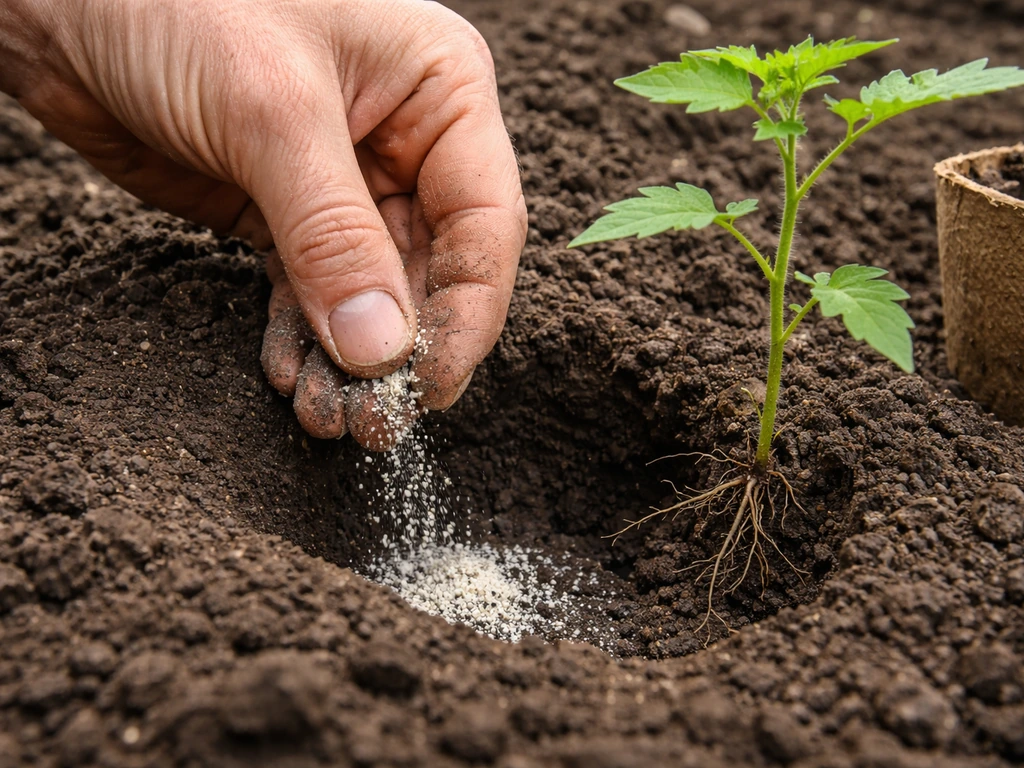
- Apply directly to the root zone at the moment of planting. For granular products, sprinkle according to the label into the planting hole before placing the root ball. For powder, coat the roots. For root dip, dip bare roots into the slurry just before planting.
- Do not over-apply phosphorus fertilizer at planting. Skip the high-P starter fertilizers. They will outcompete the fungi and prevent colonization.
- Water in gently after planting to settle soil around roots without washing the inoculant away.
- Avoid applying systemic fungicides for at least two to three weeks after inoculation to give the fungi time to establish.
Established plants in the ground
Getting inoculant to established plant roots is harder because you cannot place it directly on the root surface without disturbing the plant. The practical approach is to use a liquid or soluble inoculant product, water it deeply into the root zone, or work granular product into the top few inches of soil within the drip line during a light cultivation.
Some gardeners use a dibble or narrow trowel to make small holes near the root zone and pour granular product in before backfilling. This gets it close enough that new root growth will encounter it. Established trees and shrubs are tougher to inoculate effectively, so this is one situation where patience and consistent organic matter additions may matter more than inoculant alone.
Container plants
Containers are a mixed situation. The limited soil volume means any phosphorus you add through fertilizer will quickly accumulate to high levels, which suppresses mycorrhizal colonization. If you want fungal partnerships to work in containers, use a low-phosphorus potting mix (avoid mixes with heavy fertilizer charges already added), apply the inoculant at potting time directly to the root ball, and fertilize only with low-phosphorus or balanced formulations. The smaller the container and the more you fertilize, the less likely an inoculant is to produce results. For large containers, raised beds, and fabric pots with regular flushing, it works much better.
Adding mushroom compost to beds
- Use aged or processed mushroom compost, not fresh spent substrate, which can be high in soluble salts and may temporarily suppress plant growth.
- Work 2 to 3 inches of mushroom compost into the top 6 to 8 inches of existing beds, or use it as a surface mulch at 1 to 2 inches deep.
- Allow a few weeks before direct-seeding if the compost is fresh, as salt levels may inhibit germination.
- Do not use mushroom compost as a substitute for a mycorrhizal inoculant if root colonization is your goal. They serve different purposes.
What to expect and how to tell if it is working
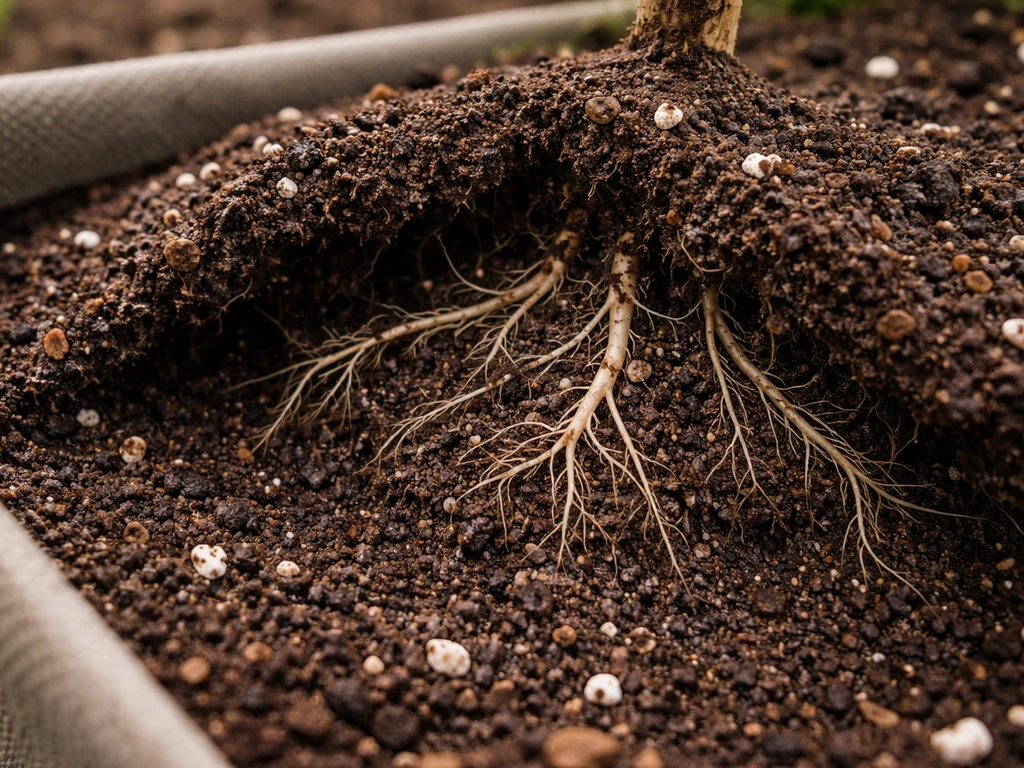
The honest answer on timeline is: do not expect a dramatic transformation in two weeks. Mycorrhizal colonization takes time to establish, and the benefits often show up gradually rather than as an obvious overnight change. That said, you can see meaningful differences within one growing season if conditions are right.
The most observable signs that colonization is working are indirect ones: stronger growth rate compared to non-inoculated control plants grown nearby under the same conditions, earlier and more robust flowering or fruiting, better recovery from transplant shock, and improved drought tolerance during dry spells. If you plant two identical seedlings side by side, give one the inoculant and hold the other as a control, and reduce phosphorus input for both, you will often see the inoculated plant pull ahead within 4 to 8 weeks.
If you want actual confirmation of root colonization, it requires a microscope and a staining process on root tissue samples. Penn State and Purdue Extension both describe the method: feeder roots are stained and examined under magnification for the presence of arbuscules and vesicles inside root cortex cells. This is not a practical tool for home gardeners, but it is worth knowing that even on well-colonized plants, not every root will show colonization. That is normal. AMF relationships are dynamic and patchy, not uniform across the entire root system.
One practical field check: if your plants are maintaining healthy color, strong growth, and are handling dry periods better than usual without extra fertilizer, the fungal relationship is likely doing its job. Peer-reviewed research across thousands of studies consistently shows improved plant biomass in colonized plants, but the strength of the effect varies widely depending on soil conditions, species, and nutrient availability.
Limitations, safety, and troubleshooting
Soil conditions that work against you
pH matters. Extreme soil pH (very acidic below 5.0 or very alkaline above 7.5) stresses most garden plants and can inhibit mycorrhizal establishment. AMF generally prefer a pH range of about 5.5 to 7.0. If your soil is significantly outside that range, fix the pH first. Lime for acidic soils, sulfur for alkaline ones, and then apply the inoculant.
Soil moisture at inoculation matters too. Research published in Scientific Reports found that pre-planting soil moisture conditions interact with compost additions to affect mycorrhizal formation. Bone-dry soil at inoculation can prevent spore germination. Overly waterlogged soil favors pathogens over fungi. Aim for moist but not saturated soil, the same conditions you would want for transplanting in general.
Overuse and fertilizer conflicts
More inoculant is not better. Once colonization is established, adding more product does not increase the benefit. The bigger risk is over-fertilizing with phosphorus, which actively dismantles the fungal partnership by removing the plant's incentive to maintain it. LebanonTurf notes that high levels of available soil phosphate can reduce root colonization by mycorrhizal fungi, so soluble phosphate should be avoided when applying inoculants high levels of available soil phosphate reduce root colonization by mycorrhizal fungi. If you are committed to using mycorrhizal inoculants, switch to low-phosphorus or phosphorus-free fertilizers, or use slow-release organic amendments instead of soluble synthetic fertilizers.
Safety notes for compost tea and mushroom compost
If you use compost tea, particularly home-brewed versions, treat it carefully on edible crops. University of Connecticut Extension advises managing pathogen risk by ensuring compost is properly processed before brewing, and avoiding applying tea directly to edible portions of crops, especially close to harvest. USDA research has tracked how temperature, nutrients, and aeration conditions can allow human pathogens to multiply in compost tea. This is not a reason to panic, but it is a reason to apply tea to soil, not foliage, and to wash all produce thoroughly.
For dry inoculant powders: the safety data sheets for some products include guidance about avoiding breathing the dust. This is standard precaution for any fine organic powder. Use a dust mask when applying granular or powder inoculants in dry conditions, especially in enclosed spaces.
What to do if your plants do not respond
If you have applied a mycorrhizal inoculant and see no improvement after a full growing season, run through this checklist. Did you use the right fungal type for your plant species? Is your soil phosphorus high? Did you apply fungicides near the time of inoculation? Is your plant a non-mycorrhizal species like a brassica? Was the inoculant fresh and properly stored? Are soil pH and moisture conditions within a reasonable range? Most failures trace back to one of these factors. Fix the underlying condition and try again at the next planting opportunity rather than simply adding more product.
It is also worth saying that mycorrhizal fungi are one piece of a larger soil biology picture. The bacteria that work alongside fungi, including phosphate-solubilizing bacteria, also contribute to plant nutrient availability. The interaction between fungi, bacteria, and other microorganisms is part of what makes healthy living soil so much more productive than sterile growing media. If you are interested in how the broader microbial community supports plant growth beyond just fungi, the relationships between bacteria and plants follow similar principles of nutrient exchange and symbiosis.
FAQ
If I sprinkle mushrooms or bury mushroom scraps near my plants, will that help them grow?
Usually no. The mushroom you see above ground is mainly for spore production, and burying fruiting bodies does not reliably create an active nutrient-for-root partnership. If you want the plant-facing benefit, use mycorrhizal inoculants or mushroom compost that has living biology that can establish, and place it where roots can contact it during new root growth.
How do I know whether my plants actually have mycorrhizae, without microscopy?
Look for indirect, consistent changes over the season: better growth compared with nearby non-inoculated plants under similar care, earlier flowering or fruiting, improved recovery after transplant, and less wilting during dry spells. Patchiness is normal, so not every root will show colonization, and you should judge by whole-plant performance rather than expecting uniform effects.
Can I use mycorrhizal inoculant on all plants?
Most garden plants benefit from arbuscular mycorrhizae, but not all. Brassicas (like cabbage, broccoli, kale) are commonly less responsive because they are often non-mycorrhizal or weakly mycorrhizal. Before buying, match the inoculant type (AMF versus ECM) to the plant, and expect reduced gains for low-responsiveness species.
Will high-phosphorus fertilizer cancel out the benefits?
It can. Excess phosphorus makes plants less dependent on fungal partners, which reduces colonization and can flatten the growth benefits. In practice, keep phosphorus inputs low when establishing inoculation, and if you fertilize, choose low-phosphorus or balanced formulations instead of frequent soluble high-P feeding.
What’s the best time to apply an inoculant, planting day or after?
For easiest success, apply at planting or during potting, when you can place it in the active root zone and when new roots are forming. Applying after roots are already fully established is harder because you cannot disturb the root surface much without stressing the plant, and the fungal symbiosis may take longer to re-establish.
Do containers work differently than beds?
Yes. In small soil volumes, phosphorus from fertilizers can accumulate quickly and suppress colonization, so inoculant results are less consistent if the mix already contains heavy fertilizer charges. Use a low-phosphorus potting mix, apply inoculant at potting time to the root ball or within the top root zone, and reduce overall fertilization frequency or choose low-P inputs.
Is compost tea a good substitute for mycorrhizal inoculant?
Not as a direct substitute. Compost tea is highly variable, and it primarily adds microbes and soluble compounds, not a targeted mycorrhizal partnership. If you want the specific phosphorus-delivery and root-connection effects, prioritize a mycorrhizal inoculant. If you use tea on edible crops, apply it to soil rather than foliage and follow food-safety caution, especially near harvest.
How long should I wait before concluding the inoculant failed?
Plan on at least several weeks and judge over a full growing season. Colonization takes time, and benefits are often gradual rather than immediate. If you see no meaningful improvement by the end of one growing season, then run a diagnostic checklist (wrong fungal type, high soil phosphorus, fungicide timing, pH or moisture extremes, stale or poorly stored product).
What soil pH and moisture ranges actually matter for success?
Extreme pH can inhibit establishment, very acidic (below about 5.0) or very alkaline (above about 7.5) being common problem zones. For AMF, aim roughly for pH in the mid range (around 5.5 to 7.0) if possible. Moisture also matters, bone-dry conditions can prevent spore germination, and waterlogged conditions can favor pathogens. Target moist but not saturated soil, similar to transplanting conditions.
Should I keep reapplying inoculant every season or use large amounts?
More is not better once colonization is underway. Reapplying can waste money, and the bigger risk is changing nutrition practices, especially adding too much phosphorus, which undermines the incentive for the plant to keep the partnership. If you reapply, do it strategically at establishment or when starting new beds or containers, not as a continuous heavy-dose program.
Are there safety or handling concerns when applying dry inoculant powders or granules?
Yes, mainly respiratory irritation risk from fine organic dust. If the product is a dry powder or you’re applying in dry conditions, use a dust mask and follow label guidance, especially in enclosed spaces. Also avoid applying when you would create unnecessary airborne dust around people and pets.
If I do see improvement, what changes are most likely from mycorrhizae rather than fertilizer or better watering?
Look for stress resilience rather than just greener leaves. Common mycorrhizal signatures include improved drought tolerance, faster transplant recovery, earlier and more consistent flowering or fruiting, and strong growth even when you hold phosphorus steady and do not increase fertilizer. If those improvements appear while nutrient input stays controlled, the fungi are more likely responsible.
Next Articles
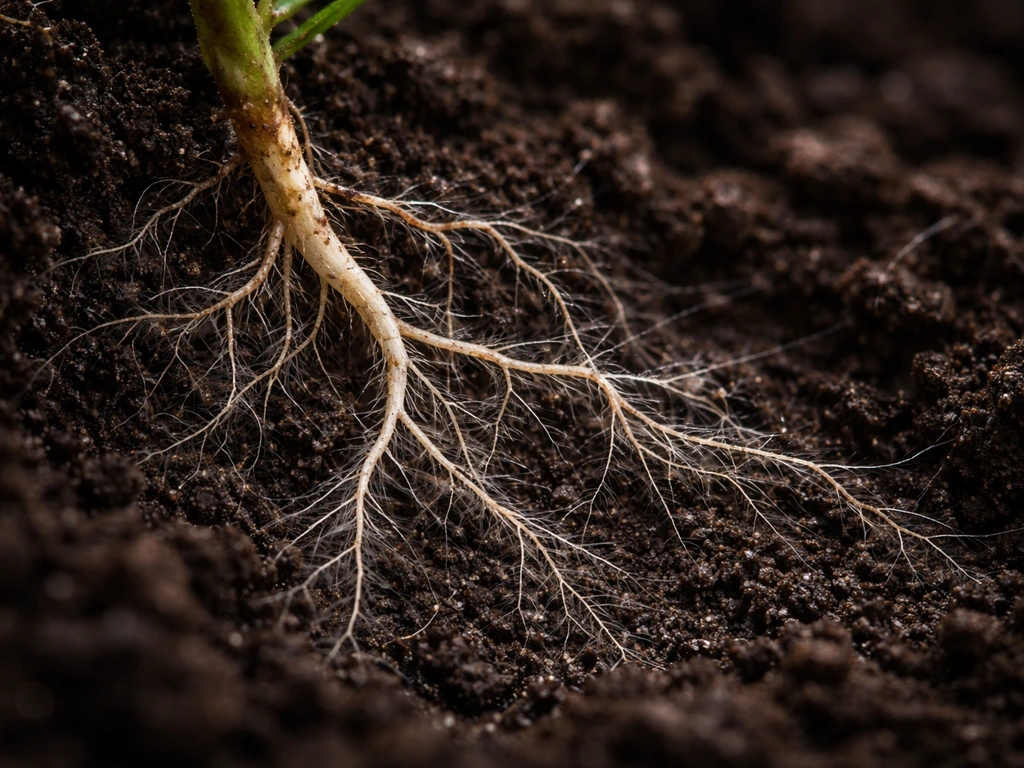
Does Fungi Help Plants Grow? How to Boost Health and Size
Yes. Learn how mycorrhizal fungi boost plant size and health by improving nutrients, drought tolerance, and resilience,
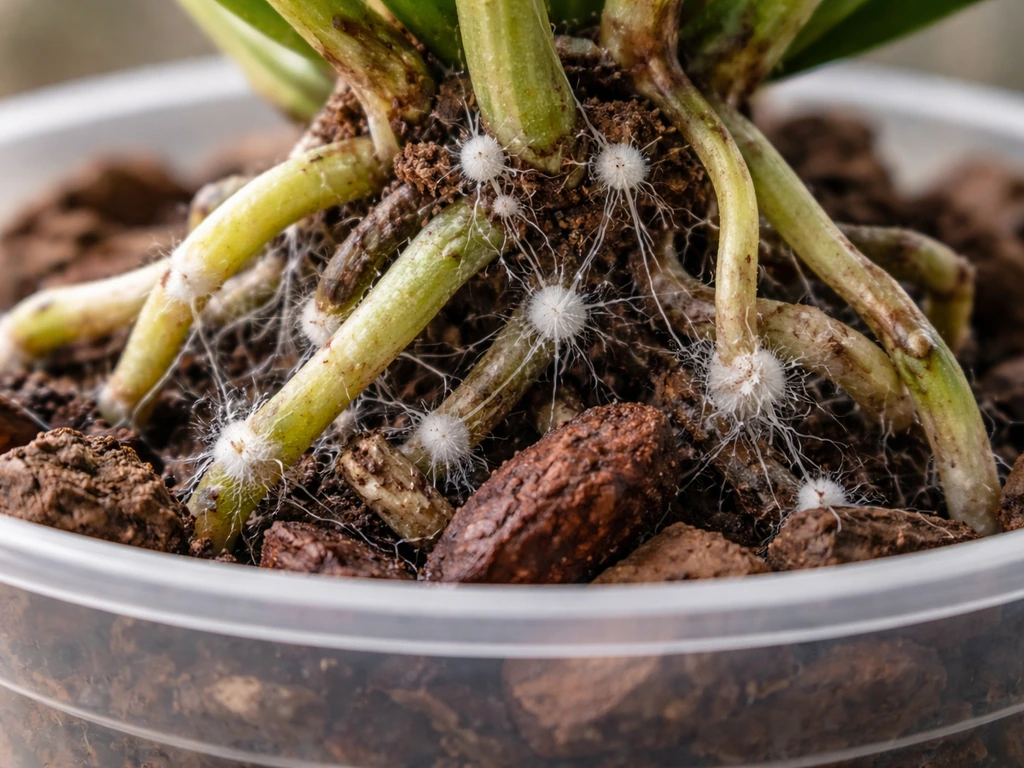
How Can Fungi Help an Orchid Grow: A Practical Guide
Learn which mycorrhizal fungi help orchids root, access nutrients, resist stress, and how to apply them safely today.
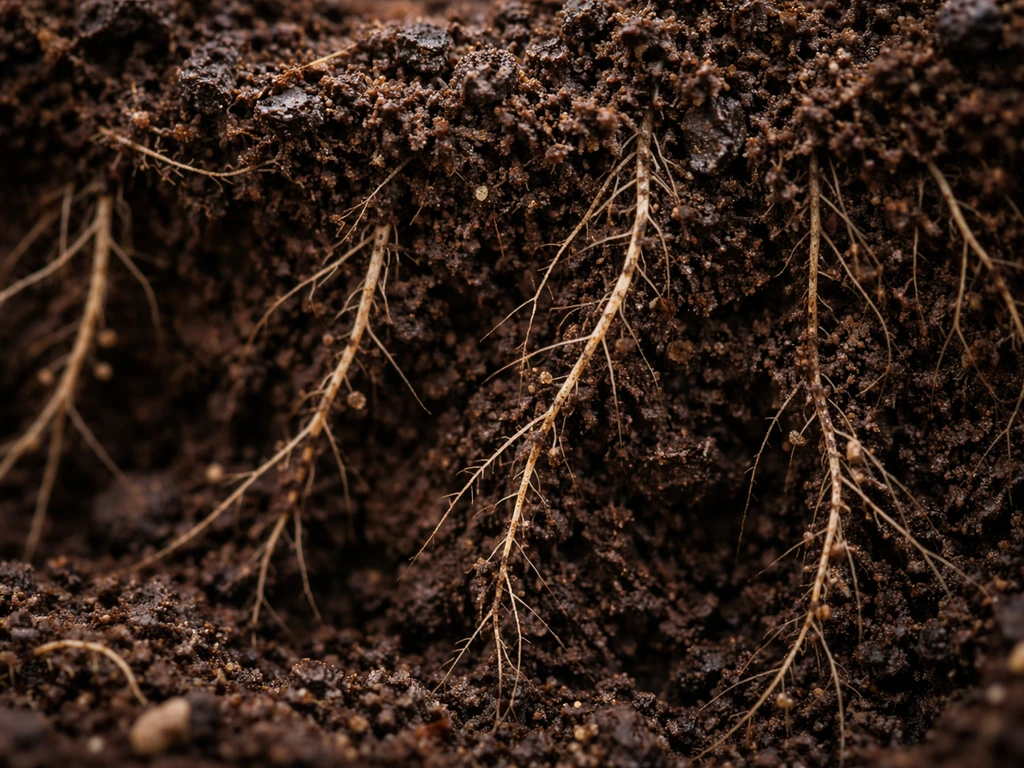
How Do Bacteria Help Plants Grow: Decomposers to Root Partners
Learn how soil bacteria decompose matter and boost root nutrient uptake, plus practical steps to improve plant health.