Dew can give plants a small, temporary moisture boost, but it won't replace watering and it won't meaningfully drive growth on its own. In most garden settings, a night's worth of dew deposits somewhere between 0.07 and 0.2 mm of water, which is a fraction of what plants actually need. That said, dew isn't meaningless either. In arid climates, it can be a legitimate supplemental water source, and some plants have evolved specifically to absorb moisture through their leaves. The honest answer is: dew helps a little under the right conditions, can hurt under the wrong ones, and should never factor into your core watering strategy.
Does Dew Help Plants Grow? Benefits, Limits, and Tips

Marcus Holloway
27 May 2026
What dew actually is and where it comes from
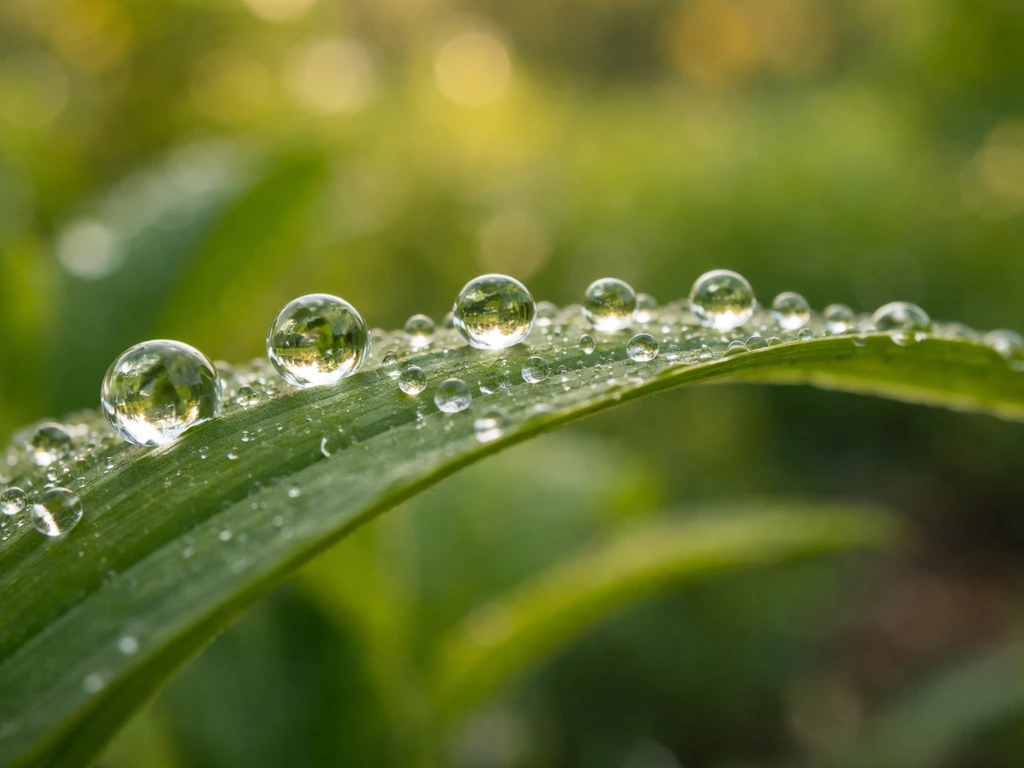
Dew forms when surfaces cool overnight to the dew point, which is the temperature at which water vapor in the air condenses into liquid. As the sun goes down and objects like leaves, grass blades, and soil radiate heat away, they can drop below the surrounding air temperature. When they do, moisture in the air condenses directly onto those surfaces. It's not falling from the sky the way rain does. It's being pulled out of the air by temperature physics.
This is different from fog drip or rainfall, which deposit far more water. The theoretical maximum dew yield is about 0.8 mm per night under ideal conditions, and in practice most nights produce much less. Field measurements from desert sites in both Israel and China have logged mean daily dew yields of around 0.07 to 0.2 mm, which is genuinely tiny. For comparison, a typical irrigation session applies 25 mm or more. Dew is thin, fleeting, and surface-bound, all of which matter when you're thinking about whether it actually helps a plant.
Does dew add usable water for plant growth?
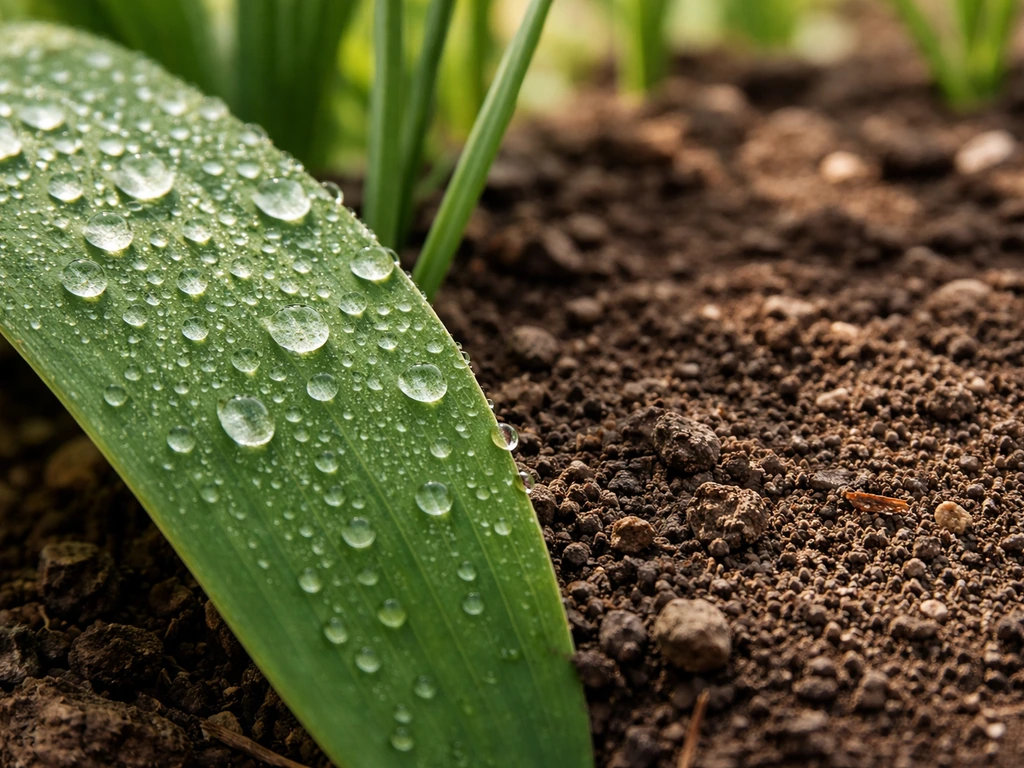
Here's where it gets interesting. Dew sits on leaf surfaces, not in the soil. For most plants growing in garden beds, the roots are what matter, and dew never reaches them directly. NOAA's water cycle framework distinguishes condensation like dew from precipitation specifically because dew doesn't infiltrate and percolate down to the root zone the way rain does. So from a soil-water accounting perspective, dew is essentially a separate input that mostly evaporates by mid-morning without contributing to root-zone moisture.
That said, foliar water absorption is a real biological process. Research shows that plant leaves can absorb water through their cuticle, trichomes (the tiny hair-like structures on leaf surfaces), and to a lesser degree through stomata. Studies using stable isotope tracers have confirmed that certain species, including desert-adapted plants, can take up dew water through their leaves and redistribute it internally. In one experiment, applying as little as 0.1 mm of water to a leaf surface was enough to trigger internal water movement in some species. But this capacity varies enormously by plant type and leaf structure. A thick-cuticled succulent behaves very differently from a thin-leafed ornamental.
There's also a secondary mechanism worth knowing about. Dew evaporation cools the leaf surface, which lowers the vapor pressure deficit around the leaf. This can temporarily reduce the rate at which the plant loses water through transpiration. Essentially, a dewy morning gives the plant a short rest from water stress. Research on Colocasia leaves has documented this exact effect, showing that dew changes leaf water balance through both direct absorption and this energy-balance pathway. It's a real benefit, but it's subtle and short-lived.
When dew can genuinely help
Dew matters most when rainfall is scarce and the air still carries enough humidity to condense at night. In arid and semi-arid regions, dew can be a meaningful water input that researchers actually factor into soil water balance equations alongside precipitation and irrigation. Studies from the Negev Desert report dew occurring on about 55% of nights, lasting an average of 7.6 hours. In that context, dew isn't trivial. It's a regular, predictable input that desert plants have adapted to use.
- Arid and semi-arid climates where rainfall is rare and nightly dew is consistent
- Plants with trichomes, waxy cuticles, or other structures adapted for foliar absorption (many succulents, desert shrubs, air plants)
- Seedlings and shallow-rooted plants where even surface moisture matters more
- Morning dew in cool seasons, when it lingers long enough for leaves to absorb some before evaporation
- Situations where dew supplements irrigation rather than replacing it
One fascinating case involves Populus euphratica, a desert poplar. Isotope tracer research showed that dew absorbed by its canopy was eventually redistributed to the root-zone soil through a process called hydraulic redistribution, where water moves from wetter to drier zones inside the plant. That's a plant using dew not just for leaf hydration but to prime its own root zone. Most garden plants don't do this, but it illustrates that dew-to-growth connections are real in the right species.
When dew can actually hurt your plants
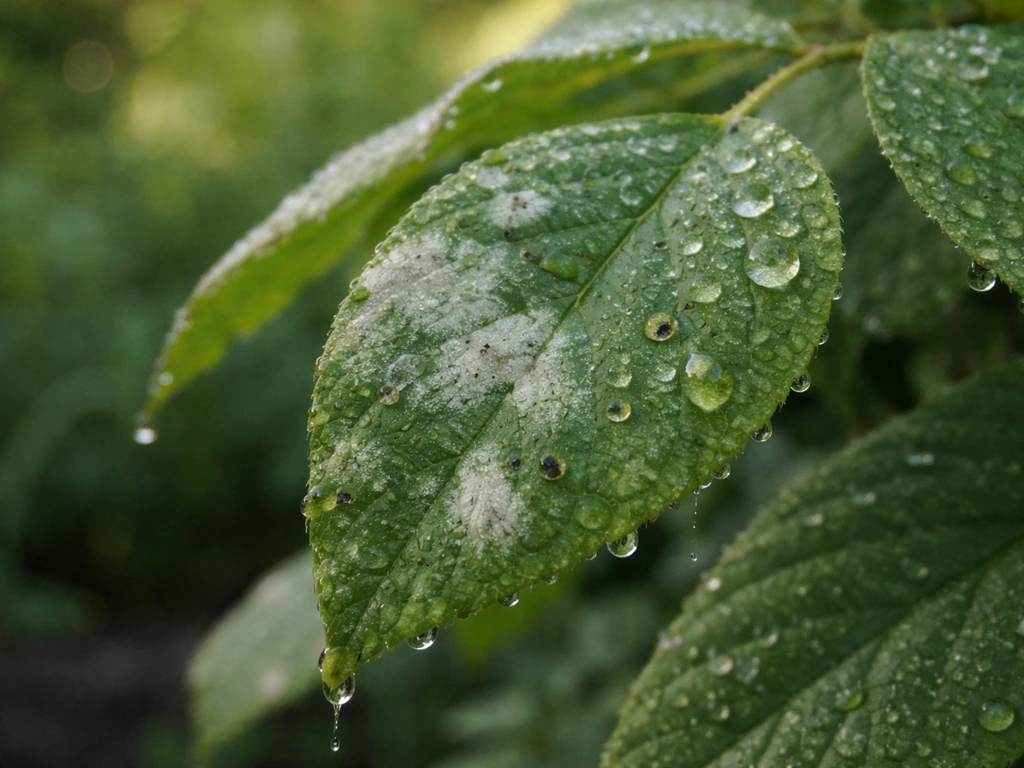
Prolonged leaf wetness is one of the primary risk factors for fungal disease in the garden, and dew is a major contributor to that wetness. Research from plant pathology going back decades has shown that infection rates for fungal pathogens increase significantly with longer leaf wetness duration. Some studies show blank" rel="noopener noreferrer">meaningful infection efficiency increases when leaf surfaces stay wet for 16 hours or more. Dew typically delivers 6 to 8 hours of wetness overnight, and if you then water in the morning while dew is still present, you extend that wet window considerably.
Disease models used by professionals (including powdery mildew models for grapes and blight prediction systems for other crops) explicitly use leaf wetness duration as a core input. The longer leaves stay wet, the higher the infection risk. This is why extension guidance from sources like Mississippi State University advises specifically against watering in the evening or early morning in ways that extend the leaf wetness period dew has already created. Fungal problems like gray mold, powdery mildew, and early blight all thrive in the window dew creates.
The risk isn't equally distributed. High-humidity climates where dew lingers well into mid-morning are worse than dry climates where dew burns off fast. Dense plantings where air circulation is poor are worse than open, airy gardens. If you're growing roses, tomatoes, cucumbers, or anything with a history of fungal issues, dew is something to manage, not celebrate.
Myths vs reality: can dew replace watering or nutrients?
No. However, plant evidence suggests that urine is not a reliable substitute for proper watering, and it can even increase the risk of leaf wetness and nutrient burn can urine help plants grow. Not even close. The numbers make this clear: dew yields 0.07 to 0.2 mm of water per night in most conditions. Even at the theoretical maximum of 0.8 mm, that's a tiny fraction of a typical plant's daily water needs, which range from several millimeters to over a centimeter depending on size, temperature, and sun exposure. For real growth, plants rely on water availability in the root zone, not on small surface deposits a tiny fraction of a typical plant's daily water needs. Dew has no nutrient content. It's essentially distilled water condensed from atmospheric moisture. It contributes nothing to nitrogen, phosphorus, potassium, or micronutrient budgets. In this sense, it's not comparable to rainwater either. Rainwater, especially after a storm, carries dissolved atmospheric gases and small amounts of nutrients. Dew is just water.
There's also a popular idea that plants somehow thrive from the purity of dew, which is a piece of gardening folklore with no real support. If you are wondering whether peeing on plants helps them grow, the same takeaway applies: it is not a reliable substitute for proper watering and nutrition watering and nutrients. A study on alpine grasslands under drought and heat stress found that dew contributed only about 3 to 14 percent of leaf water content under stress conditions, and importantly, the dew isotope signal did not transfer into leaf sugars, meaning the dew wasn't being used for photosynthesis or active metabolism in any measurable way. Dew helped a little with hydration at the margin. That's it.
| Water source | Typical daily yield | Reaches root zone? | Carries nutrients? | Disease risk? |
|---|---|---|---|---|
| Dew | 0.07–0.8 mm | Rarely, surface only | No | Yes, via leaf wetness |
| Rainwater | Variable, often 10–25+ mm | Yes, via infiltration | Small amounts (dissolved gases) | Low if drains well |
| Irrigation | Controlled, typically 15–30 mm | Yes, directly to roots | If fertilized | Low if timed well |
| Fog drip | Can reach 50 mm/day in coastal areas | Yes, more than dew | No | Moderate |
How to test if dew is helping your specific plants
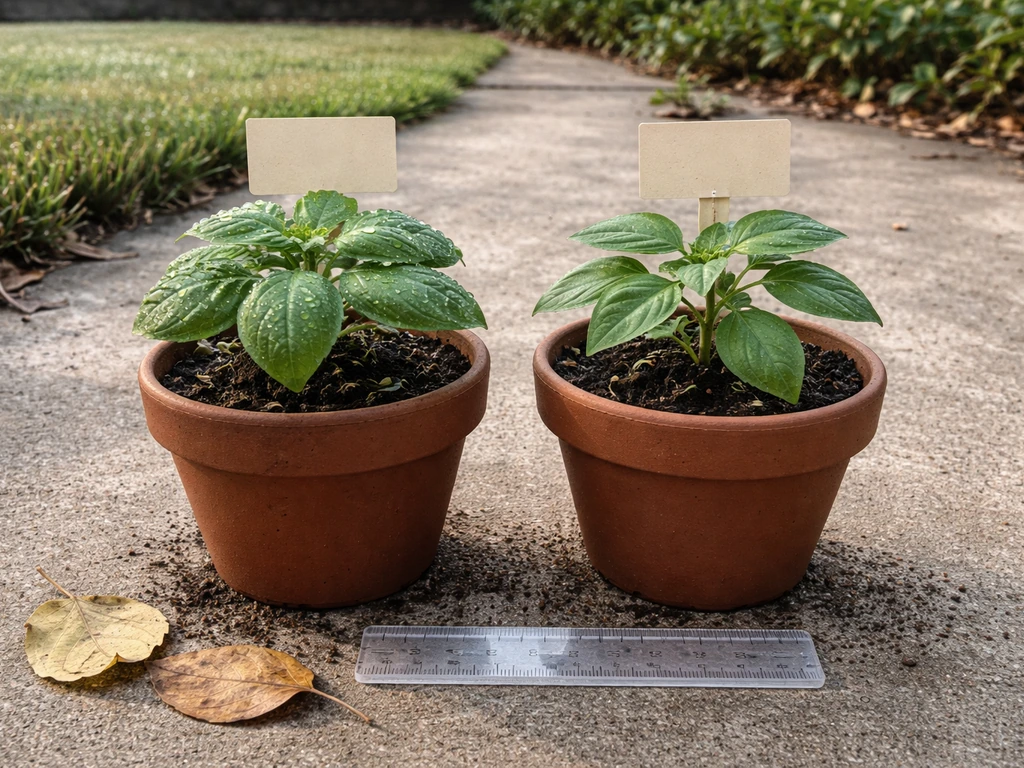
If you want to know whether dew is doing anything useful in your garden, you can run a simple observation-and-comparison setup without any special equipment. The goal is to separate what dew contributes from what your watering does, and to see whether your plants are actually absorbing it or just sitting wet.
- Check for dew presence: Go outside 30 to 60 minutes after sunrise on a clear, calm night. If leaves are visibly wet but it hasn't rained, that's dew. Note how long it takes to dry, typically by 9 to 10 a.m. on a sunny day, longer on overcast mornings.
- Track soil moisture independently: Use a simple soil moisture probe or a finger-test at 5 cm depth each morning before dew evaporates. If dew were penetrating to roots, you'd expect to see rising moisture readings over consecutive dewy nights without irrigation. You almost certainly won't.
- Create a simple comparison: Pick two similar plants in similar spots. Water one normally and skip a watering on the other during a stretch of consistently dewy nights. Check both for wilt or moisture stress daily. The un-watered plant will show stress within a day or two, confirming dew isn't compensating.
- Watch for disease signals: If you're getting consistent dew and notice powdery coating, gray fuzz, or dark spots developing on leaves, track whether it correlates with nights where dew lingered past 9 a.m. or where you watered in the evening.
- For arid-climate gardeners: If you're in a dry climate and trying to evaluate dew as a real input, set a simple rain gauge or shallow dish outside on a dewy night. The amount you collect by morning gives you a rough sense of the water on offer.
What actually moves the needle on plant growth
Dew is a background environmental condition, not a growth lever. If you want to actually improve how your plants grow, these are the things worth spending time on.
Water plants deeply and at the right time
Deep, infrequent watering encourages roots to grow down into the soil where moisture reserves last longer. Shallow, frequent surface watering (which dew mimics) keeps roots near the surface where they're vulnerable to heat and drought. Aim to wet the root zone to at least 15 to 20 cm, and water in the early morning so any splash on leaves dries during the day rather than sitting wet overnight. This also means you're not extending the leaf wetness window that dew already creates.
Mulch to hold moisture in the soil
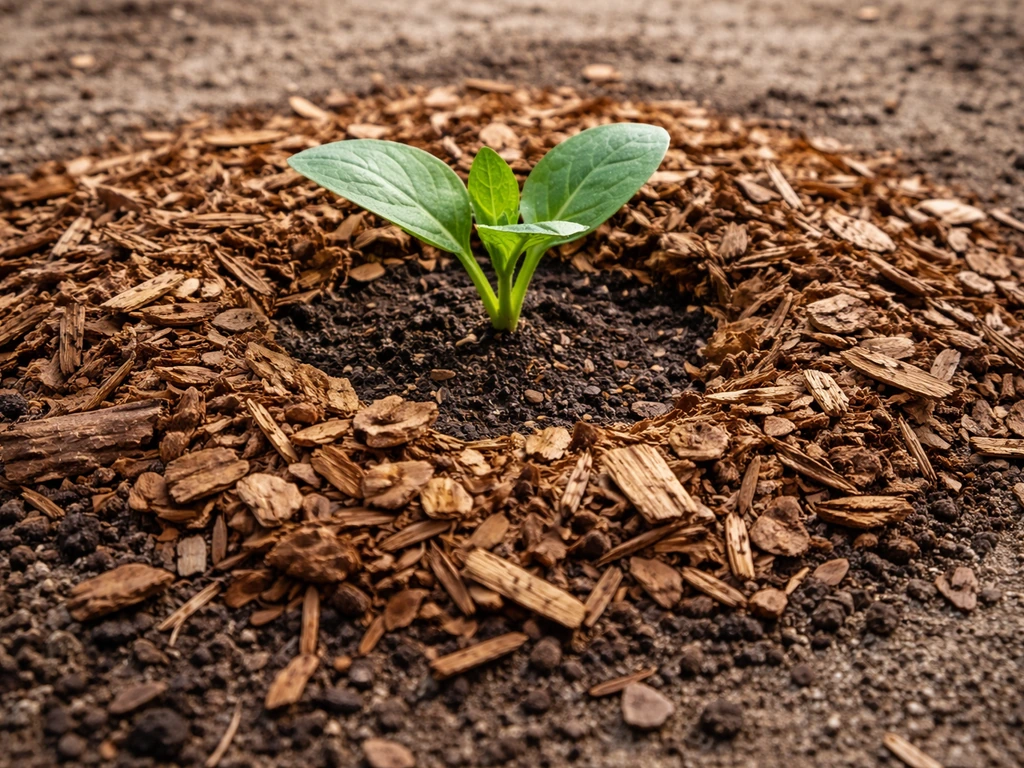
A 5 to 8 cm layer of organic mulch around your plants dramatically reduces evaporation from the soil surface, moderates soil temperature, and improves water retention between watering sessions. Mulch does in a sustained, reliable way what dew can only pretend to do: it keeps moisture available where plants need it. It also reduces the need to water as frequently, which in turn reduces disease risk.
Improve your soil's water-holding capacity
Sandy soil drains fast and stores little moisture. Clay soil holds water but can suffocate roots. Adding compost improves both: it increases water retention in sandy soils and improves drainage in clay. Healthy soil biology also makes water more available to roots through improved structure. No amount of dew at the surface compensates for poor soil that can't hold water through the day. Rainwater can help plants grow because it actually reaches the root zone with enough volume to support consistent uptake, unlike dew.
Time irrigation to avoid extending leaf wetness
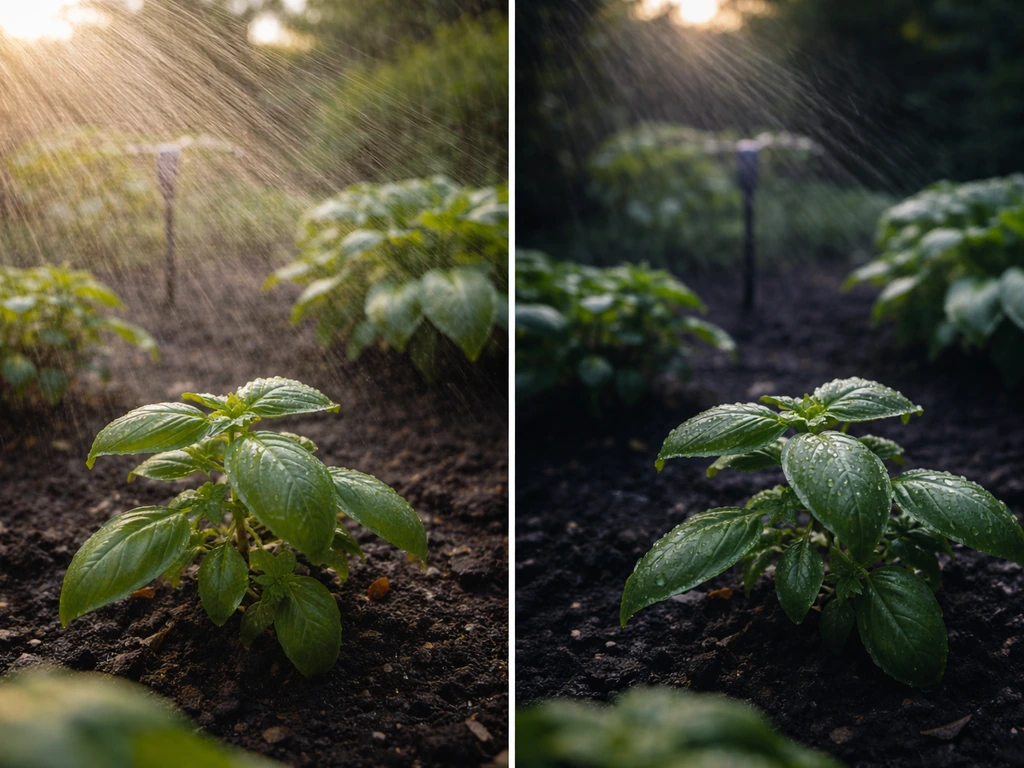
If you're using overhead irrigation or sprinklers, avoid running them in the evening. Evening watering adds hours to any leaf wetness dew creates overnight. Morning irrigation is better, but the ideal is drip irrigation or soaker hoses that deliver water directly to the root zone without wetting foliage at all. This gives you the water benefit without the disease risk.
Manage microclimates in your garden
Dew formation and duration depend heavily on airflow, shade, and radiant cooling. Dense plantings trap moisture and extend leaf wetness. Thinning plants to improve airflow lets dew dry faster, reducing fungal risk. If you're gardening in a hot, dry area and actually want to encourage dew, low-lying spots that cool quickly at night will collect more. These are the same spots where moisture-loving plants do well, and where dryland plants can sometimes supplement their water needs from night condensation.
Water quality and source is another angle worth considering. If you've been looking at dew in the context of whether different water sources affect plant growth, it connects naturally to questions about rainwater, which delivers more volume and some dissolved nutrients. Does banana water help plants grow? In most cases, it is unlikely to provide reliable nutrients in a form plants can actually use. The comparison between water types, including rainwater versus tap water versus condensation, gets into territory that's worth understanding if you're trying to optimize every input your garden receives.
FAQ
If dew is on my plants in the morning, can I skip watering that day?
Only if your goal is tiny edge-case hydration. For most gardens, dew is too small and too surface-bound to replace root-zone watering, so treat it as a bonus, not a schedule.
Does dew cooling reduce plant stress even if it also wets the leaves?
It can, but the effect is usually indirect and brief. Dew may temporarily reduce leaf water loss, but it still increases leaf wetness duration, which is where many fungal diseases start.
Are there certain plants that reliably absorb dew through their leaves?
Plants differ a lot. Leaf hairs, thick cuticles, and desert-adapted traits make foliar water uptake more likely, while many common garden vegetables and ornamentals rely mainly on root uptake.
How should I change my watering time if my area gets heavy dew?
Yes, but it should be mainly from your irrigation strategy, not dew. If you use overhead sprinklers, delaying watering to reduce overnight leaf wetness typically matters more than whether dew occurred.
What signs tell me dew is creating too much leaf wetness for my garden?
Watch for disease cues and wetness length. If leaves stay glossy wet past late morning, that typically signals higher risk than usual, even when dew alone feels harmless.
What practical steps reduce the harm from dew without sacrificing hydration?
In general, dew will dry faster with airflow and sun, so thinning, spacing, and pruning often reduce the “extended wet window” more effectively than trying to remove dew.
Does dew make fertilizer more effective or give plants nutrients?
Dew itself has no meaningful nutrients. If you’re fertilizing, do it based on plant needs and soil conditions, not on the presence of dew, since dew will not supply nitrogen, phosphorus, or potassium.
Can dew improve plant growth enough to show up at the end of the season?
Usually, no. Dew moisture is typically too limited for strong growth responses, and much of the water either evaporates from leaves or does not move deep enough to matter like rainfall does.
How can I tell whether dew is actually helping my specific plants?
Run a simple comparison: choose two similar beds (same plant, soil, and exposure), then water one normally and reduce watering in the other only when dew is present, for a short controlled period. Track soil moisture and leaf condition, not just surface wetness.
Is it better to water in the morning or at night when dew is common?
Avoid extending leaf wetness. If you must irrigate, aim for early morning and methods that target the root zone, so you do not add extra hours of wetness on top of dew.
Next Articles
Does Rain Water Help Plants Grow? Science and Tips
Yes, rain helps plants by improving soil moisture, structure, and nutrients. Learn when it works, risks, and how to use
Does Banana Water Help Plants Grow? What to Know Now
Does banana water help plants grow? Learn what it provides, when it helps a little, and better feeding options.
Does Peeing on Plants Help Them Grow? Myth vs Reality
Does peeing on plants help? Learn myth vs reality, safe dilution tips, salt burn risks, hygiene, and better alternatives