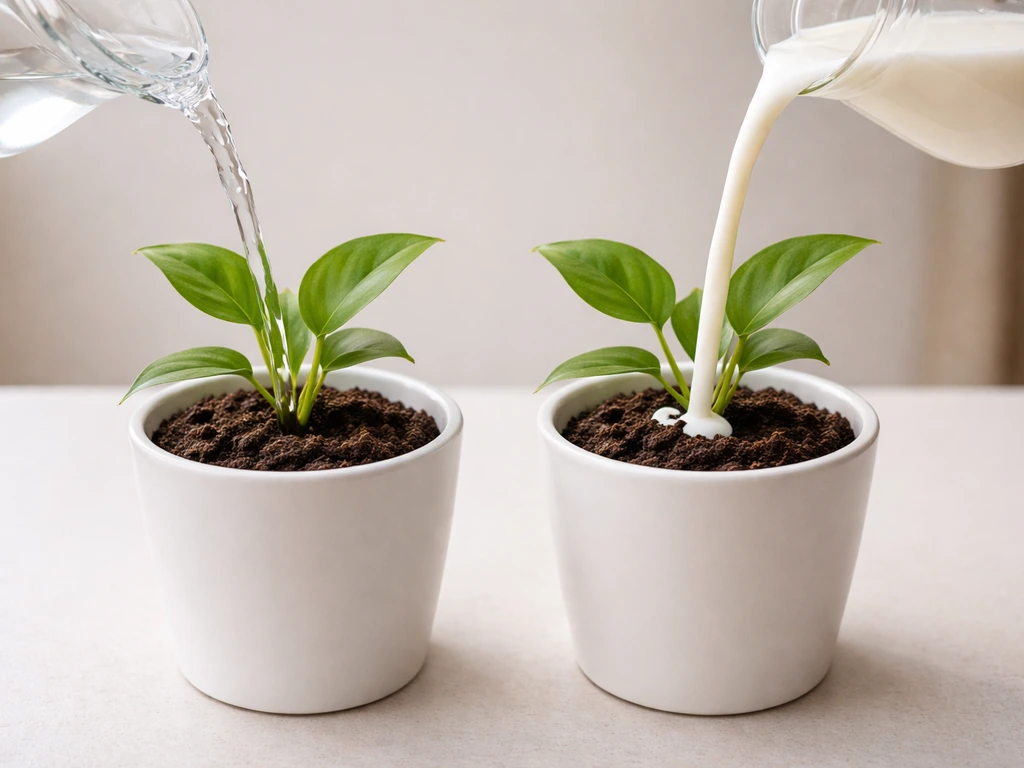
Does milk help plants grow?
The short answer: milk can have a minor, indirect effect on plant growth under the right conditions, but it is not a meaningful growth booster and it will not make your plants grow faster than plain water. It contains a few things plants can use, like calcium and trace proteins, but it also contains fats, sugars, and proteins that decompose in the soil and can cause more problems than they solve. If you are hoping milk is some kind of secret fertilizer that speeds up your garden, it is not. If you are asking because you want healthier, faster-growing plants today, there are much better places to put your energy.
Does milk make plants grow faster than water?
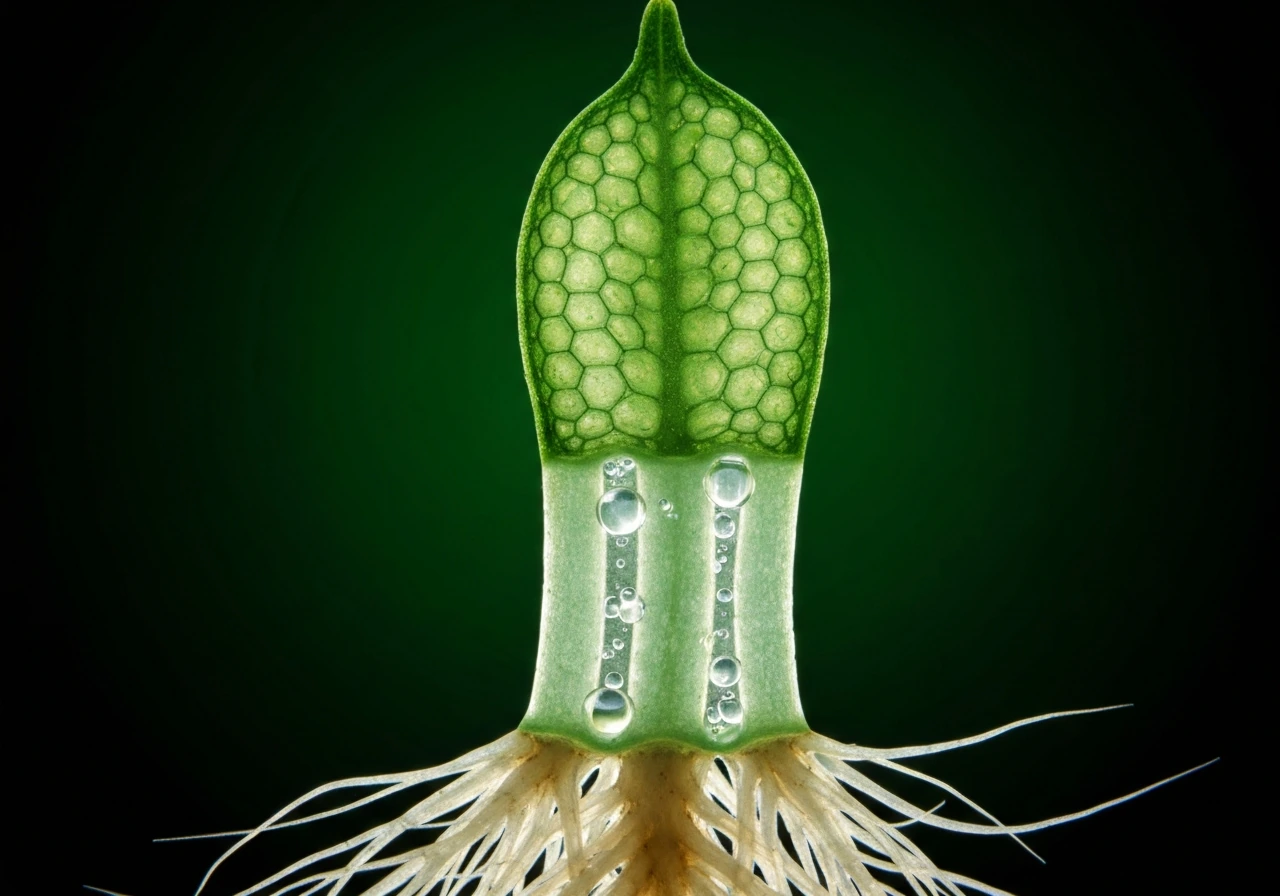
No, not in any reliable or meaningful way. Water is what plants actually move nutrients through, photosynthesize with, and use to maintain cell pressure. Replacing water with milk does not add anything a plant urgently needs, and watering with undiluted milk actively puts your soil at risk. Some small studies and informal garden experiments have looked at whether milk-watered plants outperform water-only plants, and the results are inconsistent at best. Any growth uptick people notice is almost certainly coming from the calcium in milk, not from milk itself being some special plant tonic.
The speed question matters here. Plants grow faster when their specific limiting factor is removed. If your soil is short on calcium, adding a calcium source (including milk, in theory) might improve growth. But calcium is cheap and easy to apply properly without the baggage milk brings. If calcium is not your limiting factor, milk does nothing for speed. Water, light, nitrogen, and overall soil biology are almost always the real growth bottlenecks, and milk addresses none of those directly.
What's actually in milk that could affect plants

Milk is roughly 87% water, which means most of what you are pouring on your plant is just water. The remaining 13% is where the conversation gets interesting, even if it does not get very exciting from a plant-growth standpoint.
- Calcium: Whole milk contains roughly 125 mg of calcium per 100 ml. Plants do use calcium as a secondary macronutrient for cell wall integrity and enzyme activation. Calcium deficiency causes tip burn and blossom end rot in tomatoes and peppers, so in a deficient soil, adding calcium helps. But a soil test and a targeted calcium amendment is a far more precise fix.
- Proteins and amino acids: Milk proteins like casein break down in the soil over time. Soil microbes can process these into nitrogen and amino acids that plants can eventually absorb. The key word is eventually. It is a slow, indirect pathway, and the decomposition process can go badly if conditions are wrong.
- Lactose: Milk sugar is not something plants can use directly. It can feed soil microbes, which sounds beneficial, but it also feeds the wrong microbes and pathogens if your soil is warm and wet.
- Fats: Whole milk fat in soil is basically just a problem. It can coat soil particles, reduce drainage, and create an anaerobic (low-oxygen) zone around roots.
- Potassium and phosphorus: Present in milk in small amounts, both are legitimate plant nutrients. But the quantities are low enough that treating milk as a potassium or phosphorus source is inefficient compared to any actual fertilizer.
The microbial angle is worth a closer look. Healthy soil is full of bacteria and fungi that break down organic matter into forms plants can uptake. Adding milk does feed some of those microbes. But it is not a targeted or balanced microbial amendment. The microbes most likely to thrive on milk sugars and fats are not always the ones most beneficial to plant roots, and you risk disrupting a soil biology that was already working fine.
The real risks of using milk on plants
This is where I would pump the brakes if a reader asked me whether to try milk in their garden. The downsides are real and can cause genuine harm to your plants or just make your garden a miserable place to be.
- Smell: Milk goes sour fast, especially in warm weather. Watering your garden with milk and then standing outside on a summer afternoon is not a pleasant experience. Your neighbors may have opinions.
- Mold and biofilm: The organic matter in milk creates an ideal surface for mold growth, both on soil and on plant leaves if used as a foliar spray at too high a concentration.
- Pest attraction: Sour milk residue on soil or leaves attracts flies, gnats, and other insects. Fungus gnats in particular love wet organic material, and they will lay eggs in your soil and damage roots.
- Root suffocation: Fat from whole milk can coat soil particles and reduce aeration and drainage. Plant roots need oxygen, and compacted or fat-coated soil restricts that.
- Salt buildup: If you water with milk repeatedly over time, the mineral content can accumulate and raise soil salinity, which stresses most plants.
- Pathogen risk: Warm, wet milk-enriched soil is a great medium for harmful pathogens like Pythium, a water mold that causes damping off and root rot.
If you are going to use milk at all, the one context where it has real extension-backed support is as a foliar spray to help prevent powdery mildew, not as a soil drench to boost growth. UF/IFAS Lake County Extension recommends a dilution of 1 part skim milk to 9 parts water as a prevention spray. Ohio State University Extension notes a 30 to 40% milk solution applied to plant surfaces as an organic powdery mildew option. These are disease management strategies, not growth strategies. The mechanism is likely related to milk proteins changing the leaf surface environment or triggering a mild immune response in the plant. Either way, it is a specific, narrow use case, not a general growing hack.
If you still want to experiment: how to do it without wrecking your garden
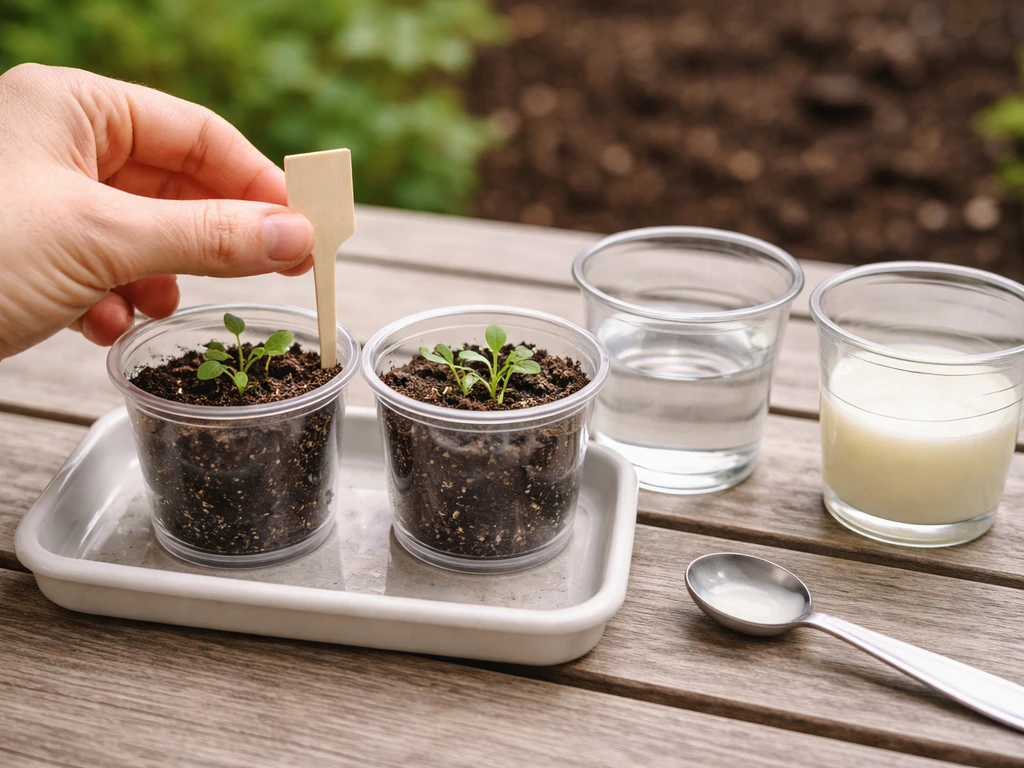
Look, I get it. Curiosity is part of gardening, and if you want to test whether milk does anything in your setup, here is how to do it in a way that will not damage your plants or your soil.
- Use skim milk only, not whole or 2%. Skim milk has no fat, which eliminates the soil drainage and aeration risk. It still has calcium, protein, and lactose, so if anything in milk is going to benefit your plants, skim milk gives you that without the fat downside.
- Dilute heavily. A ratio of 1 part skim milk to 9 parts water is a reasonable starting point, matching the lower end of what extension offices recommend for foliar applications.
- Apply to the soil, not the leaves, if testing for growth. Foliar milk applications are for disease prevention. If you are testing growth, apply at the root zone and keep it off foliage to reduce mold risk.
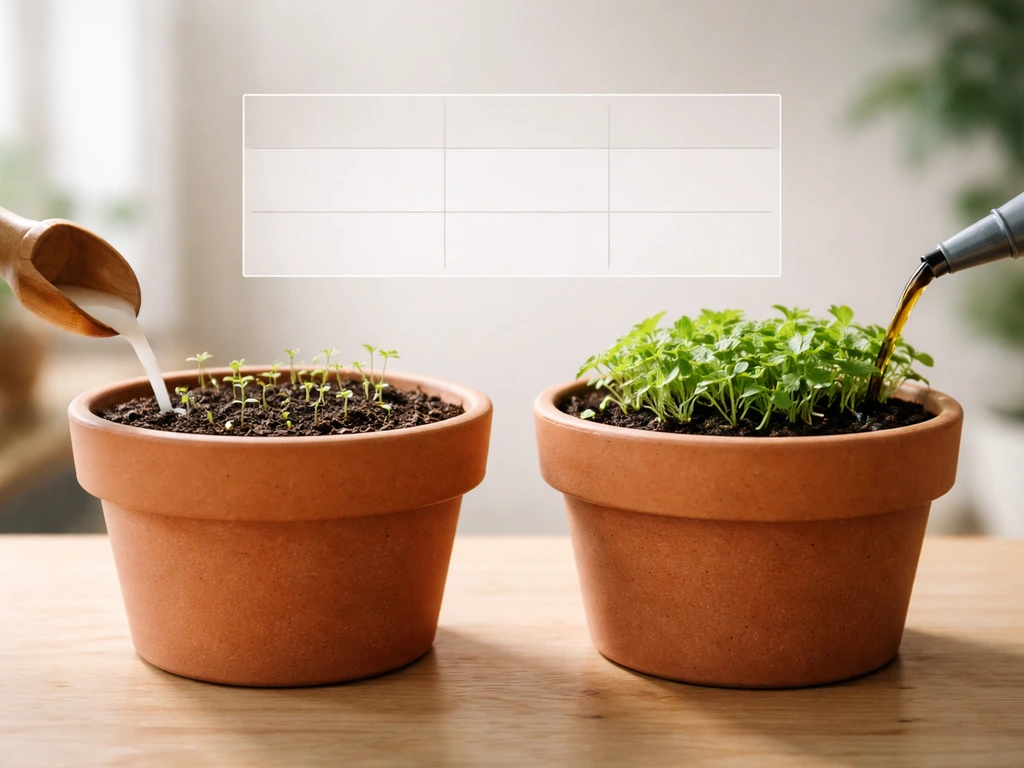
- Pick a control plant. Use two identical plants in identical conditions. Water one with your diluted milk solution and one with plain water. Keep all other variables the same. Measure height and count leaves weekly for 4 to 6 weeks.
- Do not apply more than once a week. Overdoing it accelerates the smell and pest problems. Less is more here.
- Stop immediately if you see mold, gnats spiking, or leaf yellowing. These are signs the milk is causing harm, not helping.
Be honest with yourself about what you are measuring. If you see a difference, it could be calcium, it could be a microbiome shift, or it could just be random variation between two plants. A casual garden experiment is fun, but it is not a controlled study. Do not conclude that milk is a growth booster from a single season's informal test.
What actually makes plants grow faster (backed by real science)
If faster, healthier growth is the goal, here is where to actually invest your time and money. Blossom-end rot is caused by calcium shortage in enlarging fruits, and contributing factors can include low soil pH and inconsistent watering, according to University of Maryland Extension blossom-end rot is caused by a calcium shortage in enlarging fruits. These are the levers that move the needle, in roughly descending order of impact for most home gardeners.
Start with a soil test
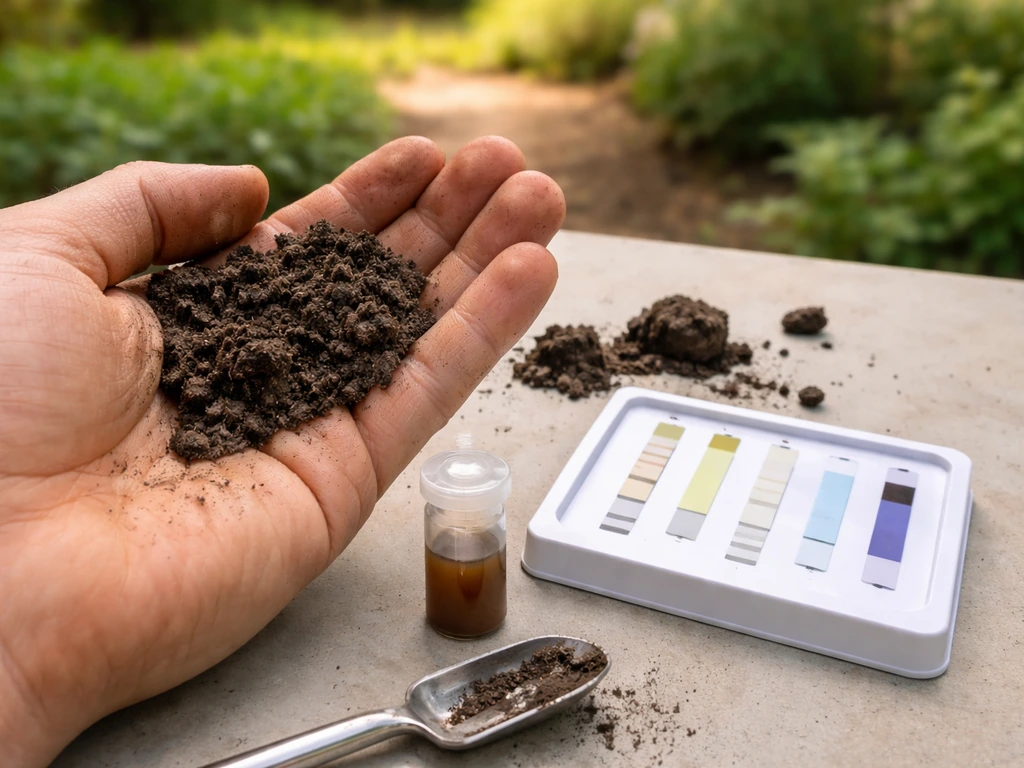
Most slow or struggling plant growth comes down to soil nutrient imbalances or pH being off. A basic soil test from your local extension office costs around $15 to $25 and tells you exactly what your soil is missing. Guessing with amendments like milk is a waste of time when a test can tell you precisely whether you need calcium, nitrogen, phosphorus, potassium, or a pH adjustment. Blossom end rot happens when developing fruit does not have enough calcium, as NC State Extension explains blank" rel="noopener noreferrer">Blossom End Rot of Tomato, Pepper, and Watermelon. If you want to use something that can urine help plants grow, focus on safe, balanced nutrients rather than risky household experiments. Pee can provide nitrogen to plants when used carefully, but it is not a reliable or risk-free substitute for proper soil nutrients can urine help plants grow.
Get nitrogen right
Nitrogen is the primary driver of vegetative growth. If your plants are growing slowly and their leaves are pale green or yellow, nitrogen is almost certainly part of the problem. A balanced slow-release fertilizer (something in the 10-10-10 range) or a nitrogen-rich amendment like blood meal or fish emulsion will do more for growth speed than any amount of milk.
Optimize light
Photosynthesis is the engine of plant growth, and light is the fuel. Most fruiting and flowering plants need 6 to 8 hours of direct sun minimum. If you are growing indoors or in a low-light situation, the right grow light spectrum matters: blue light (around 400 to 500 nm) drives vegetative growth, while red light (around 600 to 700 nm) supports flowering and fruiting. No soil amendment, including milk, compensates for insufficient light.
Water properly, not more
Overwatering is one of the most common ways gardeners slow down their own plants. Roots need oxygen as much as they need water, and consistently wet soil suffocates them. Deep, infrequent watering encourages roots to grow down into the soil profile, which makes plants more resilient and better able to uptake nutrients. Consistent moisture matters more than volume. If you are comparing milk to water as an irrigation fluid, plain water is always the right choice for this role, as the articles on how water and rainwater affect plant growth both reinforce. If you are comparing banana water to regular watering, it is still unlikely to act as a true growth booster compared with fixing the real limiting factors like light, nutrients, and proper watering milk to water. Dew can be another source of moisture for plants, but it does not meaningfully replace watering or address key nutrient needs does dew help plants grow. Rainwater can also affect how well plants grow, so it helps to understand the difference between rainwater and regular tap water does rain water help plants grow.
Add compost
Compost is the closest thing gardening has to a magic amendment. It improves soil structure, feeds beneficial microbes, adds slow-release nutrients, and buffers pH. A 2 to 3 inch layer of compost worked into your beds or used as a top dressing will do more for sustained plant growth than any liquid amendment. If you want to feed soil microbes (which is part of the appeal of milk), compost does it better, more safely, and without the smell.
Quick comparison: milk vs. science-backed amendments
| Amendment | Main benefit | Growth impact | Risk level | Recommendation |
|---|
| Diluted skim milk | Trace calcium, minor microbial feed | Minimal to none | Medium (odor, pests, mold) | Skip for growth; use only for powdery mildew prevention |
| Balanced slow-release fertilizer | N-P-K in correct ratios | High | Low if applied correctly | Use after soil test confirms needs |
| Compost (2-3 inch layer) | Soil structure, microbes, slow-release nutrients | High | Very low | Use freely in all garden beds |
| Blood meal / fish emulsion | Fast-acting nitrogen | High for vegetative growth | Low to medium (odor) | Use when nitrogen deficiency is confirmed |
| Lime or gypsum | Calcium and pH adjustment | High when deficiency exists | Low | Use if soil test shows calcium deficiency or low pH |
| Proper watering schedule | Oxygen and water balance at roots | High | None | Always prioritize over any liquid amendment |
The pattern here is clear: every amendment that reliably speeds plant growth works because it directly addresses something the plant needs, in a form the plant can use, without creating problems in the process. Milk fails that test on the last two counts. It is not the worst thing you could do to your garden, but it is a long way from the best, and given how easy and affordable the real solutions are, there is not much reason to reach for the milk jug.