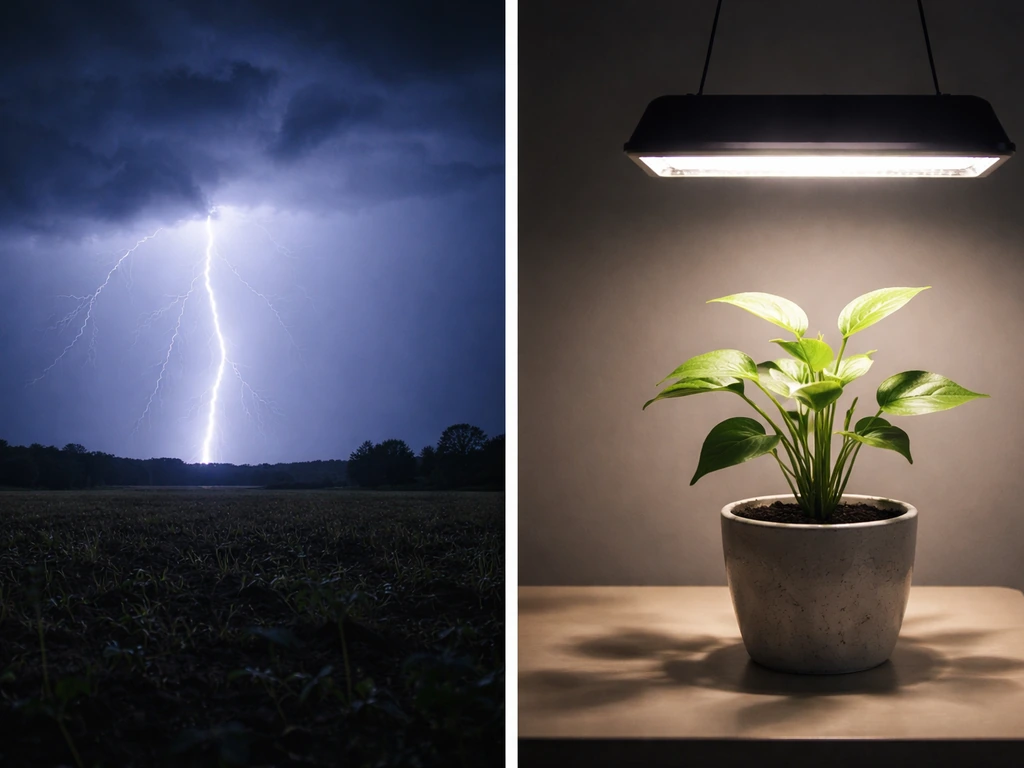
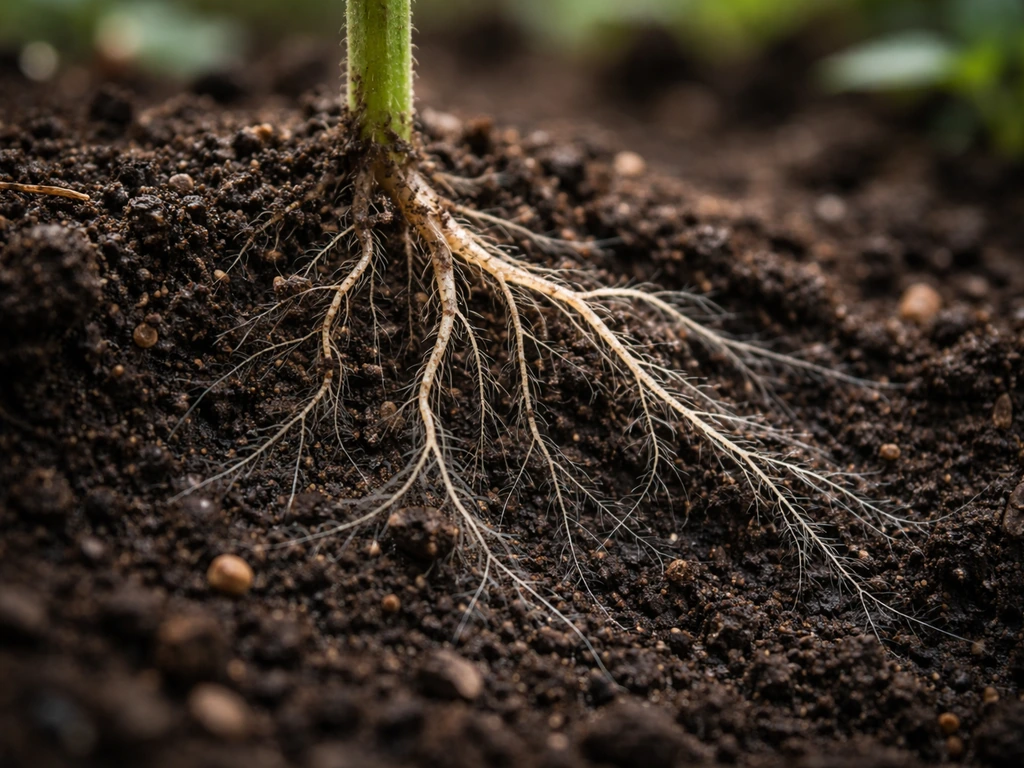
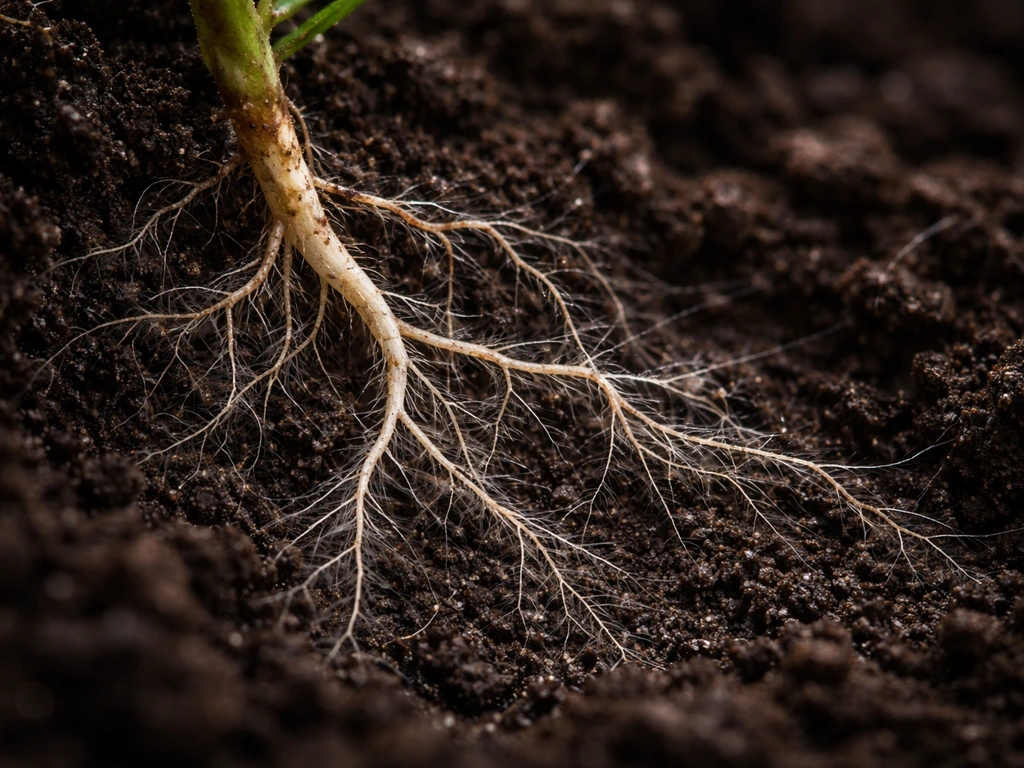
Real lightning vs. grow lighting: which one are you asking about?
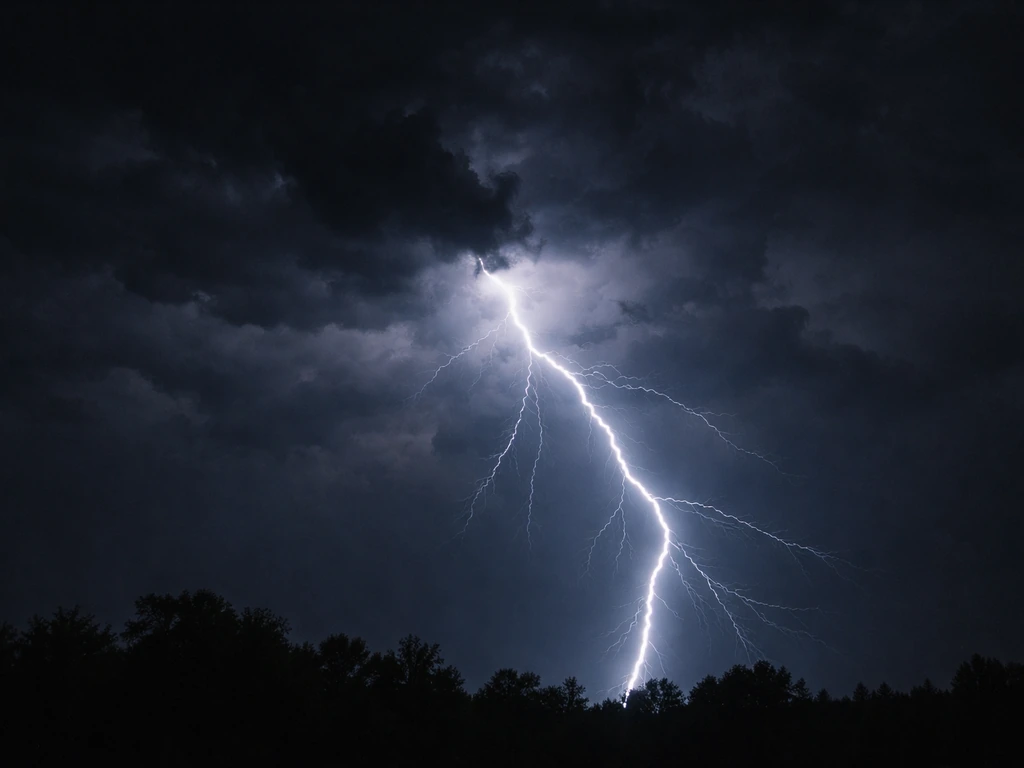
This question comes up a lot, and the confusion is understandable. 'Lightning' and 'lighting' look almost identical in a search bar, and plenty of curious gardeners have genuinely wondered whether thunderstorms do something magical for their plants. The short answer is that these are two very different phenomena with very different effects on plant growth.
Real lightning is an atmospheric electrical discharge. It's violent, unpredictable, and lasts milliseconds. Grow lighting, on the other hand, refers to artificial light sources (LEDs, fluorescents, HID lamps) used intentionally to supplement or replace sunlight for plants. When gardeners talk about 'lighting helping plants grow,' they almost always mean the second thing. But let's do justice to the real lightning question first, because there actually is some science there.
What plants actually need from light
Before diving into what lightning can or can't do, it helps to understand what plants are actually looking for when it comes to light. There are three things that matter most: intensity, spectrum, and photoperiod.
Light intensity
Plants need a sustained, adequate light intensity to drive photosynthesis efficiently. This is measured in micromoles of photons per square meter per second (µmol/m²/s), or more practically in foot-candles or lux for hobbyists. Most vegetable crops want somewhere between 400 and 700 µmol/m²/s during active growth. Too little and the plant stretches and starves. Too much and you risk bleaching or heat stress. The key word is sustained: a split-second flash of intense light does essentially nothing useful for photosynthesis.
Light spectrum
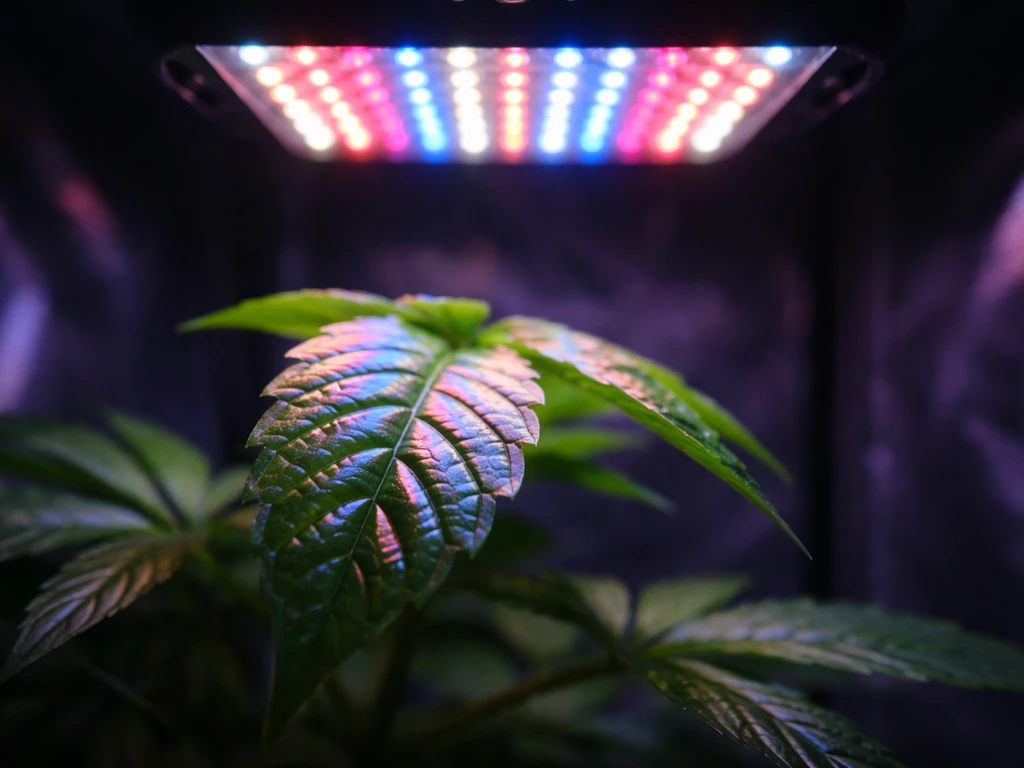
Plants are picky about which wavelengths they use. Chlorophyll absorbs most strongly in the red range (around 630 to 680 nm) and the blue range (around 430 to 450 nm). Blue light drives compact, leafy vegetative growth. Red light encourages flowering and fruiting. This is why full-spectrum grow lights that cover both ends of the visible spectrum outperform simple white bulbs for serious plant growth. Far-red light (around 700 to 750 nm) also plays a role in triggering flowering in some species through phytochrome signaling. Ultraviolet light has its own separate effects on plant chemistry, which is a topic worth exploring on its own. UV light can affect plant chemistry, but it is not something you should count on to boost overall growth like proper grow lighting does.
Photoperiod (day length)
Many plants time their flowering based on how many hours of darkness they receive, not just the total amount of light. Short-day plants like chrysanthemums and cannabis need long uninterrupted nights to flower. Long-day plants like lettuce and spinach flower when nights are short. Getting the photoperiod wrong, even with a great light setup, can stall or prevent flowering entirely. This is one of the most commonly overlooked variables in indoor growing.
What real lightning actually does to plants (and what it doesn't)
Here's where the myth meets the science. Real lightning does have a few legitimate interactions with plant biology, but most of them are either negligible at the garden scale or actively harmful.
The nitrogen fixation effect
This is the one genuine benefit that people point to, and it's real but massively overstated at the garden level. When a lightning bolt superheats the surrounding air to roughly 30,000 Kelvin, it breaks the triple bond in atmospheric nitrogen (N₂), allowing nitrogen to combine with oxygen and form nitrogen oxides (NOx), particularly NO and NO2. These compounds eventually dissolve in rainwater and fall to earth as nitrates, which plants can absorb through their roots.
NASA research estimates that lightning produces somewhere between 2 and 9 teragrams of nitrogen per year globally, with more recent modeling converging closer to 9 Tg N per year. To put that in perspective, one teragram is one million metric tons. So lightning is genuinely contributing to the global nitrogen cycle. But when you zoom in to your backyard or garden bed, the amount of nitrogen deposited from any single storm or even a whole season of storms is a tiny fraction of what plants need. It's not zero, but it's nowhere near enough to replace fertilization, and it's not something you can reliably harness or control.
The light flash: basically useless for photosynthesis
A lightning bolt is extraordinarily bright for an extraordinarily short time, typically 0.2 to 1 second total including multiple return strokes. Photosynthesis requires sustained light exposure to accumulate ATP and NADPH through the light-dependent reactions. A millisecond burst of intense light, even an intensely bright one, doesn't meaningfully charge up a plant's photosynthetic machinery. Think of it like trying to charge your phone by touching it to a live wire for a fraction of a second. The energy is there, but the duration isn't.
The real risks: damage and destruction
What lightning reliably does is cause damage. A direct strike can char, split, or kill trees instantly. Ground current from nearby strikes can kill shallow-rooted plants and soil microorganisms. Wildfires started by lightning kills entire ecosystems. Even the electromagnetic pulse from a nearby strike can disrupt sensitive electronic grow equipment. If you're hoping lightning 'helps' your garden, the odds are much better that a direct or nearby hit will set back rather than boost your plants.
When grow lighting genuinely makes a difference
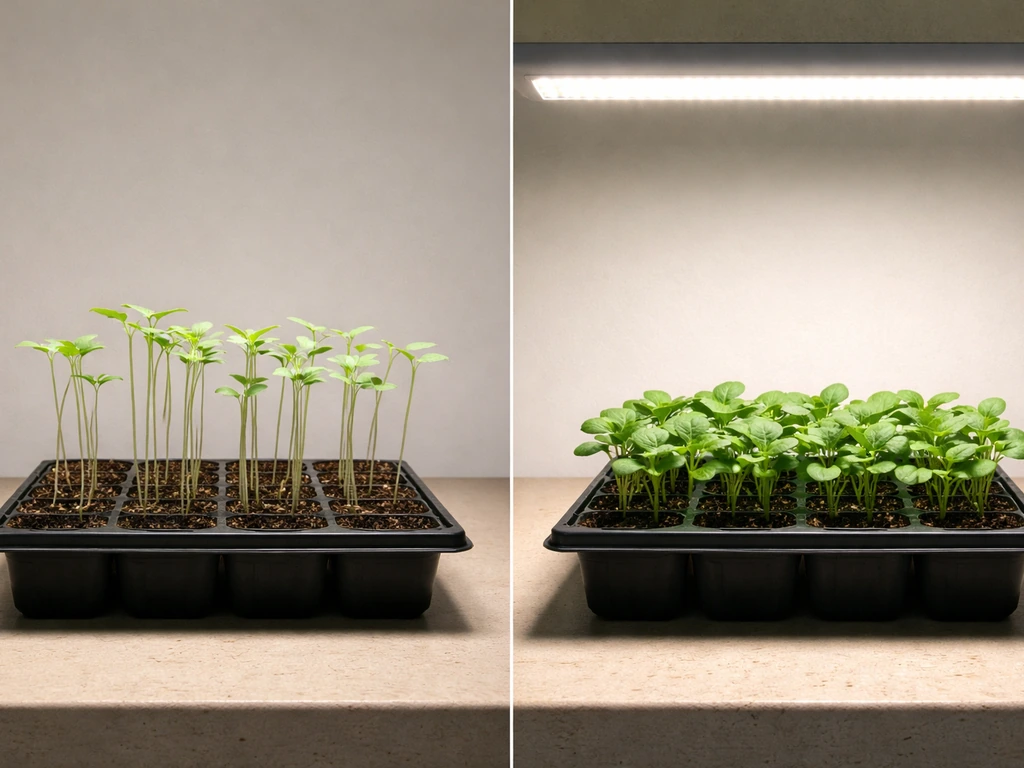
Now for the part that actually gives you something to act on. Grow lighting is one of the highest-leverage variables in indoor and supplemental gardening. Here's when it's worth investing in a proper setup.
Seed starting and seedlings
This is where grow lights pay for themselves fastest. Seedlings started on a windowsill in winter almost always get leggy because the light intensity is too low and the angle is too oblique. A modest LED or T5 fluorescent positioned 2 to 4 inches above seedlings (check your fixture's manufacturer specs) for 14 to 16 hours a day produces compact, strong transplants that outperform windowsill seedlings by a wide margin. Blue-dominant light (5000 to 6500K color temperature if using white LEDs) works best at this stage.
Indoor herbs and vegetables year-round
Basil, lettuce, spinach, and most culinary herbs will grow steadily under a full-spectrum LED at 200 to 400 µmol/m²/s for 14 to 16 hours daily. You don't need a commercial-grade fixture for a kitchen herb setup. A quality consumer LED grow panel or even a decent LED shop light at the right distance will do the job. The key is consistency: same light hours, same intensity, day after day.
Flowering and fruiting plants
For plants you want to flower or fruit indoors, you need both higher intensity (400 to 600+ µmol/m²/s) and attention to spectrum and photoperiod. Red-heavy or broad-spectrum full-cycle LEDs perform well here. For short-day plants, you'll need to provide 12 hours of uninterrupted darkness. For long-day plants, you can keep lights on for 16 to 18 hours and interrupt flowering if needed. This is also where understanding light spectrum connects directly to sunlight science: natural sunlight provides a full spectrum that shifts throughout the day, which is something the best modern LEDs try to replicate.
Comparing common grow light types
| Light Type | Best For | Energy Efficiency | Heat Output | Upfront Cost |
|---|
| T5 Fluorescent | Seedlings, leafy greens, low-light herbs | Moderate | Low | Low |
| Full-spectrum LED | All stages, herbs, vegetables, flowers | High | Low to moderate | Moderate to high |
| HID (MH/HPS) | Large flowering or fruiting plants | Moderate | High | Moderate |
| CMH/LEC | All stages, good spectrum quality | High | Moderate | High |
For most home gardeners starting out, a quality full-spectrum LED is the best all-around investment. It covers seedlings through flowering, runs cool enough to position close to plants, and has low operating costs over time. T5 fluorescents are still an excellent budget choice for seed starting specifically.
Positioning and photoperiod setup
Distance matters enormously. Light intensity follows the inverse square law: doubling your distance from a source reduces intensity to one quarter of what it was. Most LED grow lights designed for home use work best at 12 to 24 inches above the canopy for vegetative growth and 18 to 30 inches for seedlings to avoid bleaching. Always check the manufacturer's recommended distance and the fixture's PPFD chart if one is provided. Use a simple plug-in timer for photoperiod control so you're not relying on memory.
Troubleshooting light problems in your garden or grow space
Light issues show up in specific, recognizable ways. Here's how to read what your plants are telling you and what to do about it.
- Leggy, stretched stems reaching toward the light: intensity is too low or the light source is too far away. Move the light closer or upgrade to a higher-output fixture. This is the most common symptom in windowsill seedlings and under-lit grow spaces.
- Pale green or yellowing new growth (without nutrient deficiency signs): often points to insufficient light for active photosynthesis. Rule out nitrogen deficiency first by checking older leaves. If only new growth is pale and soil nutrition is adequate, increase light duration or intensity.
- Bleached or white patches on leaves, especially near the top of the canopy: too much light too close to the plant. Raise the light fixture or reduce intensity if your LED has a dimmer.
- Purple or reddish leaf undersides in seedlings: often a phosphorus uptake issue triggered by cold temperatures, but can also indicate the plant is stressed by an imbalanced spectrum with too much blue and not enough red at the seedling stage.
- Slow overall growth despite adequate watering and nutrients: check that your photoperiod is actually consistent. A light leak during the dark period can disrupt flowering cycles and general plant rhythms. Also verify your light is in the right spectrum range for the growth stage.
- Scorched leaf tips or edges combined with dry soil: check whether your light is generating heat close to the canopy, especially with HID fixtures. Raise the light and improve air circulation.
One thing I always recommend: get a cheap PAR meter app or an inexpensive quantum flux meter before assuming your light setup is adequate. Many fixtures that look bright to human eyes are actually delivering far less usable light to plants than you'd expect. Measuring actual PPFD at canopy level takes the guesswork out of positioning.
The bottom line: skip the lightning, invest in lighting
Real lightning has a minor, indirect, and completely uncontrollable effect on plant nitrogen availability at the global scale. At your garden scale, it contributes essentially nothing measurable and poses real damage risks. If your goal is to understand how sunlight helps plants grow, the key is the sustained light intensity and the right spectrum essentially nothing measurable. If you've heard that plants 'love' thunderstorms, what they're actually loving is the rain, the drop in temperature, and possibly a tiny trace of nitrogen in the rainwater. Not the bolts.
Grow lighting, on the other hand, is a genuine game-changer when used correctly. Matching spectrum to growth stage, setting the right photoperiod, and positioning your lights at the correct distance can transform struggling seedlings into productive plants. It's also the variable most indoor gardeners underestimate until they see the difference a proper setup makes. If you want to go deeper on how specific light wavelengths drive plant processes, the science of sunlight and plant photosynthesis, or the effects of UV and moonlight on plant biology, those are all threads worth pulling on separately as you build out your understanding of what really moves the needle for plant growth. If you're curious whether moonlight helps plants grow, it's worth looking at how moonlight intensity and spectrum differ from proper grow lighting UV and moonlight.