
GMOs do not meaningfully make plants grow faster in the way most gardeners imagine. The traits most commonly engineered into commercial crops, like insect resistance (Bt) and herbicide tolerance, are designed to reduce losses and simplify management, not to accelerate the plant's internal growth clock. Where GMO crops sometimes appear to grow better or produce more, it's usually because they've avoided damage that would have slowed them down, not because their cells are dividing faster or their photosynthesis is more efficient. If you're trying to get faster, bigger plants in your garden today, GMO seeds are almost certainly not the lever you're looking for.
Do GMOs Make Plants Grow Faster? What the Evidence Says

Marcus Holloway
27 May 2026
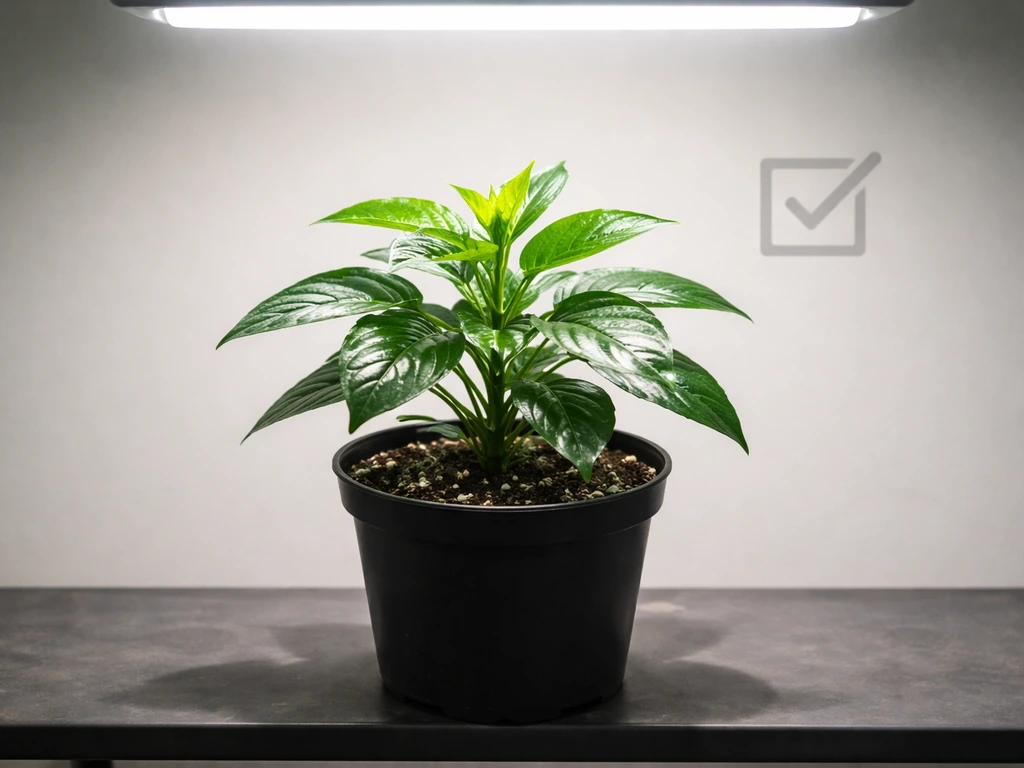
What GMO plants actually change (and what they don't)

Genetic modification, as the FDA defines it, involves copying one or more genes from an organism with a desired trait and inserting them into a plant cell in a lab. The resulting plant expresses that new trait alongside everything it already had. Think of it like adding a specific instruction to an already complete recipe, not rewriting the whole thing.
The traits that have actually made it to commercial scale are pretty narrow. According to the USDA's Economic Research Service, herbicide-tolerant (HT) crops and insect-resistant Bt crops are by far the most widely used engineered traits in U.S. production. Other traits exist, including virus resistance, drought tolerance, and enhanced nutritional profiles (like higher vitamin A or better oil composition), but they're far less common. What's notably absent from that list is anything like a "grow faster" gene, because plant growth rate is an extraordinarily complex trait governed by thousands of interacting genes, hormones, and environmental responses. No one has engineered a tomato to simply sprint through its lifecycle.
What GMOs do change is fairly specific: a Bt crop produces proteins toxic to certain insects, so the plant doesn't get chewed up. An HT crop survives a herbicide application that kills competing weeds. A virus-resistant squash doesn't get knocked flat by mosaic virus. These are real, practical advantages in large-scale farming. But none of them rewire the plant's fundamental growth machinery.
Faster growth vs. higher yield vs. fewer losses: they're not the same thing
This distinction matters a lot, and it's where most confusion about GMOs and growth comes from. These three things are often conflated, but they describe completely different outcomes:
| Outcome | What it means | Does GMO engineering target this? |
|---|---|---|
| Faster growth rate | Plant reaches maturity sooner; cells divide and biomass accumulates quicker | Rarely, and not in common commercial traits |
| Higher yield | More harvestable product per plant or per acre | Sometimes, but usually as a side effect of loss reduction |
| Reduced losses | Less damage from insects, weeds, or disease means the plant keeps what it would have grown anyway | Yes, this is the primary goal of Bt and HT traits |
The 2016 National Academies report on genetically engineered crops is pretty clear on this: insect-resistant GE crops generally decreased yield losses compared with non-Bt varieties, not intrinsic growth speed. The yield advantage, when it shows up, is largely about protecting what the plant was already going to produce. That's valuable in a farm context, but it's a very different thing from making a plant grow faster.
What the evidence actually shows: where growth looks faster (and where it doesn't)

Studies comparing Bt and non-Bt crops side by side repeatedly show that the engineered trait itself doesn't speed up growth. A field study comparing Bt and non-Bt maize lines found no differences in plant growth or mycorrhizal colonization between the two at 60, 90, or 130 days after sowing. Both types grew at essentially the same rate. Similarly, EFSA's guidance on evaluating GM crops emphasizes comparing GM plants against conventional counterparts across agronomic and phenotypic characteristics precisely because growth differences aren't assumed, they have to be measured and are typically minimal.
In some cases, Bt hybrids actually showed slight developmental delays. One Canadian field experiment found that certain Bt maize hybrids took 2 to 3 additional days to reach silking and maturity compared to their non-Bt near-isoline counterparts, and produced similar or up to 12% lower grain yields under those study conditions. That's not a knock against the technology broadly, but it does illustrate that the Bt trait itself isn't a growth accelerator.
There are situations where reduced pest damage does create a visible growth advantage. A study on Bt cotton found that Bt varieties showed higher boll retention and earlier boll opening compared to conventional near-isogenic lines, along with a shorter vegetative cycle. A study comparing boll distribution patterns in Bt and non-Bt cotton lines similarly reports Bt cultivars with higher boll retention and earlier boll opening along with a shorter vegetative cycle. But again, that effect is tied to avoiding damage, not to the plant inherently growing faster. In a low-pest environment, the advantage narrows or disappears. A separate study on Bt corn hybrids confirmed decreased whorl and ear damage versus non-Bt counterparts, which can protect ear development, but that's damage reduction doing the work, not a growth-rate gene.
Why your garden results vary so much: the real growth levers
Whether you're growing GMO or conventional varieties, the factors that actually control how fast your plants grow are the same: light, nutrients, water, temperature, soil biology, and stress levels. For example, CSU Extension notes that blank" rel="noopener noreferrer">high nitrogen levels can promote excessive vegetative growth at the expense of fruiting and advises on the timing of nitrogen side dressing for vegetable crops. Using hot water to speed up growth is usually ineffective and can even stress or damage plants, so focus on the usual growth levers instead. If you optimize those inputs, you can often speed up plant growth by supporting faster photosynthesis and healthier root development light, nutrients, water, temperature, and soil biology. These aren't just supporting players. They are the growth rate. The National Academies report even flags this directly, noting that research needs to isolate GE trait effects from environmental and genetic factors because those background conditions dominate the outcome.
- Light intensity and duration: Seedlings need 12 to 16 hours of quality light daily according to UMN Extension. Too little light is the single most common reason indoor seedlings grow slowly and stretch out leggy.
- Nitrogen timing: High nitrogen drives vegetative growth, but timing matters. CSU Extension notes that mis-timed or excess nitrogen can push leafy growth at the expense of fruiting. For leafy greens, side-dressing around 3 to 4 weeks after emergence is the target window.
- Soil temperature: Oklahoma State University Extension research shows that black plastic mulch warms the soil and promotes faster early-season growth, often leading to earlier harvest dates.
- Air temperature under row covers: USU Extension data shows that clear row covers can push air temperatures 25 to 30°F above outside ambient, dramatically accelerating warm-season crops in spring.
- Water consistency: Irregular watering stresses plants and pauses growth. Consistent moisture, not flooding, keeps metabolic processes running at full speed.
- Spacing and competition: Crowded plants compete for light and nutrients. Proper spacing lets each plant access its full share of both.
These factors affect every plant regardless of whether it's genetically engineered. A GMO corn hybrid sitting in compacted, nitrogen-poor soil under inadequate light will grow slower than a conventional open-pollinated variety in well-prepared, fertile, well-lit beds. Genetics sets the ceiling; environment determines how close you get to it.
Reality check: can you even use GMO seeds in a home garden?
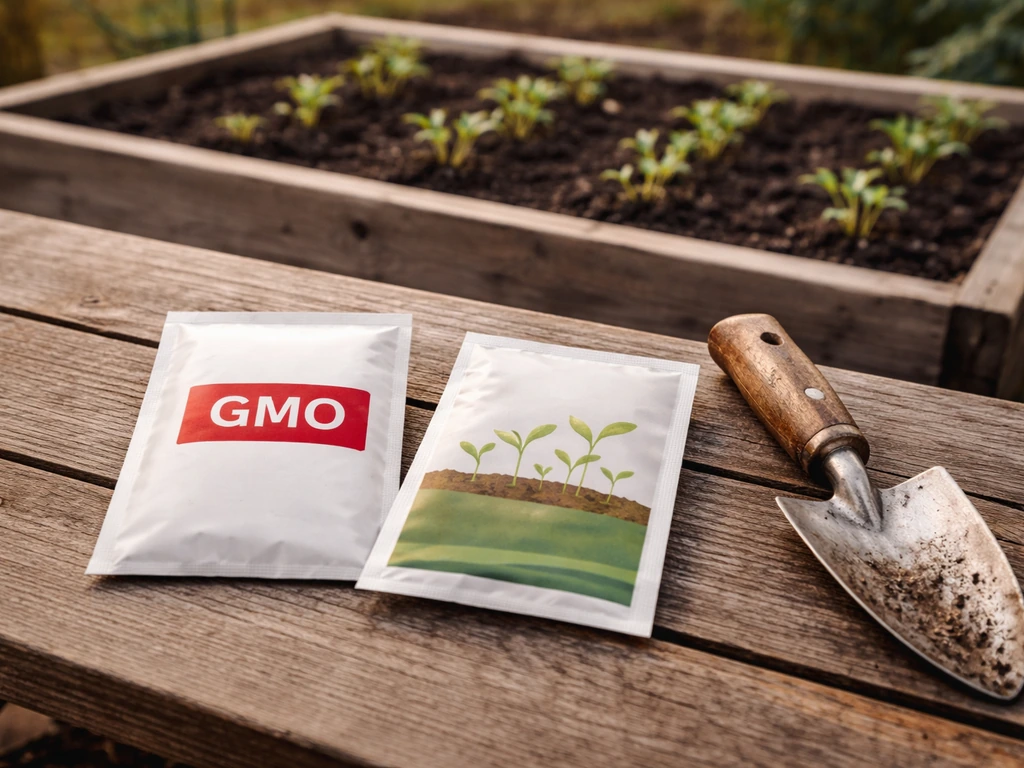
For most home gardeners, this is actually a moot point in practice. The GMO traits that exist at commercial scale, primarily Bt insect resistance and herbicide tolerance in corn, soybeans, cotton, canola, and a few others, are deployed in large-scale commodity agriculture. They're not showing up in the seed packets at your local garden center. If you're growing tomatoes, peppers, zucchini, basil, or most common vegetables, you're almost certainly not working with genetically engineered varieties. USDA AMS notes that certified organic planting stock is assured to be non-GE, which tells you something about where GE crops actually sit in the market: in commercial commodity channels, not the home garden aisle.
There are a few exceptions worth knowing. GE virus-resistant papaya (Rainbow and SunUp varieties) saved the Hawaiian papaya industry and is available. Some sweet corn varieties with biotech traits have made it to retail. But for the vast majority of what home gardeners grow, the GMO question is largely theoretical. You don't have the option to choose it even if you wanted to.
What to do instead if you want faster growth today
If faster plant growth is the goal, here's how I'd think about diagnosing and fixing the actual bottleneck, in rough order of impact for most home gardens.
- Fix the light first. If you're starting seeds indoors, get them under proper grow lights at 12 to 16 hours per day and position the lights close enough to prevent stretching. Weak light is the most overlooked growth limiter for indoor starts.
- Warm the soil for warm-season crops. Black plastic mulch laid a week or two before transplanting can push soil temperature up meaningfully and trigger noticeably faster establishment in tomatoes, peppers, and cucumbers.
- Get your nitrogen timing right. A soil test first, then targeted nitrogen side-dressing at the right window for your crop type. For most vegetables, that means a modest boost at transplant and another once active growth is established.
- Use row covers early in the season. Floating row covers and low tunnels trap warmth and protect transplants from late cold snaps, extending the effective growing season on both ends.
- Choose high-performance conventional or hybrid varieties. Modern plant breeding (non-GMO) has produced varieties with genuinely faster days-to-maturity, better disease resistance, and higher yield potential. A well-chosen variety from a reputable seed company will outperform a mediocre variety with any level of optimization.
- Start transplants instead of direct sowing where practical. Getting a 4 to 6 week head start indoors for crops like tomatoes, peppers, and brassicas effectively compresses the field-growing period.
- Eliminate stress: consistent watering, correct spacing, and early pest management keep the plant's energy directed at growth rather than recovery.
If you're also curious about what soil amendments, specific nutrients, or greenhouse environments do for plant growth speed, those angles are worth exploring too. The honest answer across all of them is similar: environment and management almost always do more work than genetics alone, GMO or otherwise.
The bottom line is this: GMOs are a real technology with real benefits in specific commercial contexts, but "making plants grow faster" is not what they were designed to do, and the evidence confirms they generally don't. The growth rate advantages that do show up are almost always downstream effects of reduced pest damage or weed competition, not changes to the plant's core biology. For a home gardener wanting faster results today, the science points clearly at light, soil nutrition, temperature management, and smart variety selection. Heat mats can raise soil temperature, which may help germination and early growth in cool conditions, but they are only one part of the light, nutrients, and temperature-balancing equation do heat mats help plants grow. Improving soil nutrition by feeding the right nutrients and supporting healthy soil biology can help plants reach faster, more vigorous growth. Those are the levers. Pull those first.
FAQ
If some people report GMO plants grow faster, what’s the most likely explanation?
Not usually. The engineered traits in common commercial crops are aimed at preventing losses, like keeping insects from feeding or reducing weed competition. If your plant looks like it is “growing faster,” it is typically because it is suffering less damage, not because its growth machinery is sped up. In many side-by-side comparisons, growth speed ends up similar between engineered and non-engineered varieties when plants face comparable conditions.
How can I tell whether a GMO advantage is yield-related or truly faster growth?
Look for the difference between “bigger output” and “faster development.” GM trait advantages often show up as fewer damaged tissues, less foliage loss, or better survival, which can increase final yield. True growth acceleration would show up as shorter time to key stages (like flowering or maturity) under the same environment, but that is not the usual pattern for the widely deployed GMO traits.
Do GMO growth effects depend on how many pests or stressors the plants experience?
Yes, visible growth changes can be subtle and depend on pest pressure and stress level. In a low-pest environment, Bt traits may offer little or no apparent growth benefit, because there is little damage to prevent. In high-stress settings, other factors like nutrient limits or heat stress can dominate, masking any minor differences from the trait.
Can GMO traits ever slow growth or development?
Possibly, but it is not because the GMO speeds up cell division. If a particular engineered line underperformed in a study, the cause could be background genetics, hybrid differences, or trade-offs that affect development timing. The practical takeaway is to compare the specific variety (and hybrid/near-isoline) and do it in your own conditions, rather than assuming a trait automatically helps growth rate.
Why can’t I easily find GMO seeds for my garden if they supposedly grow faster?
In most home gardening contexts, you cannot choose GMO varieties anyway. For many common vegetables, retail seeds are not engineered, and garden center options are typically conventional or organic-certified stock that is not GE. The “do GMOs make plants grow faster” question is mostly relevant to large-scale commodity crop systems, not typical home beds.
If GMOs do not speed growth, what actually determines how fast my plants grow?
Even if you did have a GMO variety, the biggest drivers of growth speed at home are the same: adequate light, correct soil fertility, appropriate watering, and temperature management. Poor light or nitrogen limitation will slow growth regardless of whether the seed is engineered. Think of genetics as setting a ceiling, while environment decides how close you get.
What’s a practical way to diagnose why my plants are not growing fast?
Start with the most common bottlenecks. For germination and early growth, soil and air temperature and light intensity matter most. For leafy or vegetative growth, nutrient availability, especially nitrogen and overall balanced fertility, and consistent moisture are key. Then address root-zone issues like compaction and drainage, since damaged roots can slow growth even when everything above ground looks fine.
Are heat mats a better option than GMO seeds for faster growth?
If you try to warm the root zone, do it in a targeted way. Heat mats can raise soil temperature and help germination in cool conditions, but they can also overheat the root zone or dry the medium if you do not manage moisture and ventilation. Use them as part of a broader temperature and light plan, not as a substitute for proper light and nutrition.
How can I speed up harvest time if GMO seeds are not the lever?
Because their traits are not “growth genes,” GMO crops are not a reliable shortcut to faster harvest at home. If you want earlier results, focus on variety selection matched to your season, starting seeds indoors when appropriate, and timing transplant dates. Those steps can change your calendar timeline far more than changing whether the plant is engineered.
If I still want to test this myself, how should I set up a fair comparison?
For most gardeners, the decision is simple: prioritize conventional or locally suited varieties and optimize environment first. If you are comparing engineered and non-engineered plants for curiosity, run a small side-by-side test using the same soil, container size, irrigation schedule, and placement, and measure at consistent intervals (for example, height and days to a defined stage). That controls for the biggest confounders that can otherwise create false impressions.
Next Articles
What Soil Makes Plants Grow Faster: The Fixes That Work
Discover which soil traits speed growth and how to test, amend, and fertilize for faster, healthier plants today

Does Hot Water Help Plants Grow Faster? Practical Guide
Find out if hot water helps plants grow faster, learn safe warm water ranges, and get step-by-step tips to avoid root sh

How Do Greenhouses Help Plants Grow: The Real Mechanisms
Learn how greenhouses boost growth by regulating light, temperature, humidity, airflow, and pests for faster, less-stres