
Yes, heat mats genuinely help plants grow under the right conditions, but the effect is specific: they warm the root zone, which speeds up germination and encourages cuttings to root faster. Greenhouses create a more stable, protected growing environment, which is why they often pair well with tools like bottom heat for seed starting greenhouses help plants grow. They are not a general plant-growth booster. Do note that greenhouses can raise temperatures and humidity, which may help plants establish and grow faster under the right conditions do greenhouses make plants grow faster. If your seeds are sitting in cold soil, a heat mat can be the difference between germination in 5 days and germination in 20, or no germination at all. But if your seedlings are already up and struggling because of poor light or overwatering, a heat mat won't fix that, and it might actually make things worse.
Do Heat Mats Help Plants Grow? When They Work and How
What heat mats actually do for plants
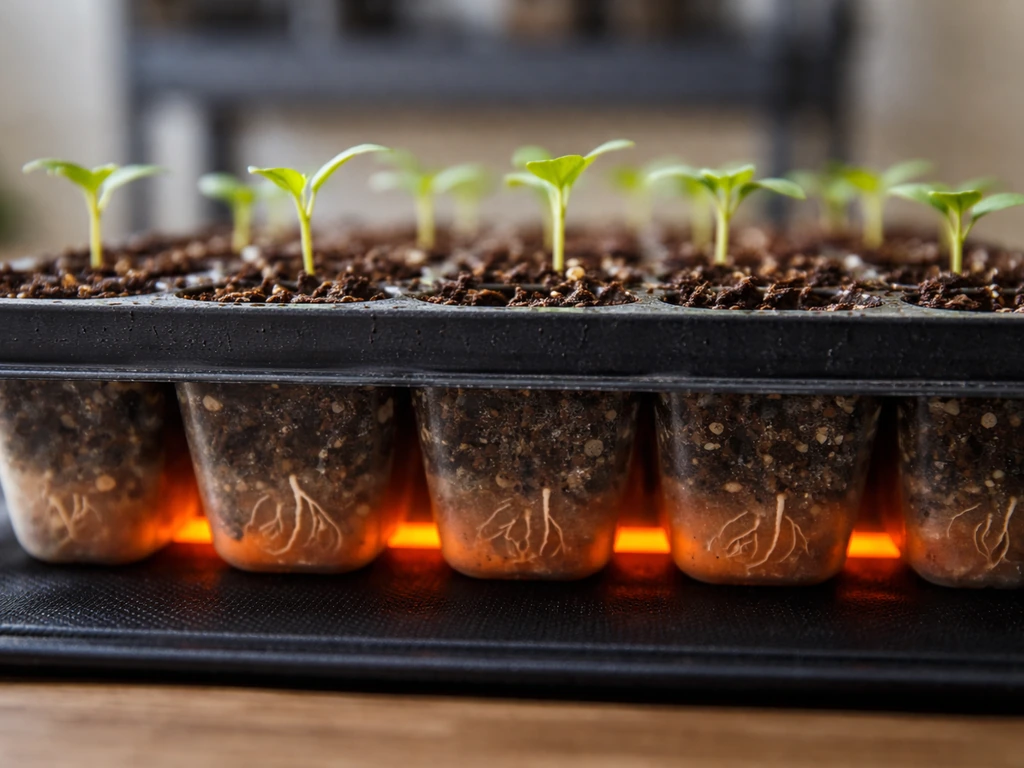
A heat mat does one thing well: it warms the growing medium from the bottom up. That's it. It does not heat the air around your plants, it does not provide light, and it has no effect on photosynthesis. Most consumer heat mats raise the root-zone temperature about 10 to 20°F above ambient air temperature. So if your room is 60°F, the soil in your tray might sit around 70 to 80°F, which is right in the sweet spot for most vegetable and flower seeds.
That root-zone warmth matters because nearly every biological process involved in germination and early root development is temperature-sensitive. Enzymes that break down seed coats, cell division in emerging radicles, and microbial activity in the rhizosphere all respond to soil temperature, not air temperature. This is why putting seeds in a warm room doesn't always work as well as putting them on a heat mat: the air might be warm, but the growing medium can stay several degrees cooler, especially in plastic trays sitting on a cold bench or concrete floor.
When heat mats help most
Seed starting and germination
This is where a heat mat earns its place in your setup. Most vegetable seeds have a specific optimum soil temperature for germination, and deviating from it slows things down or stops them entirely. Temperature control is what makes the difference between fast and slow germination, so the right bottom heat and setup matter most specific optimum soil temperature for germination. Tomatoes, for example, germinate best when root-zone temperatures sit between 70 and 80°F, with some guidance citing an ideal range of 77 to 86°F. Cucumbers want it even warmer: 75 to 85°F. Lettuce is more tolerant (40 to 80°F works, with 75°F being optimal), but cold-soil germination is still sluggish. If your indoor space runs below 65°F in late winter, a heat mat is genuinely useful.
The important thing to know is that you only need the heat mat until germination begins. University of Maine Cooperative Extension is clear on this point: once seedlings emerge, you can remove or turn off the mat and shift your attention to light and air temperature. Leaving seedlings on a heat mat indefinitely dries out the medium faster and offers no meaningful benefit once they're up and growing.
Rooting cuttings
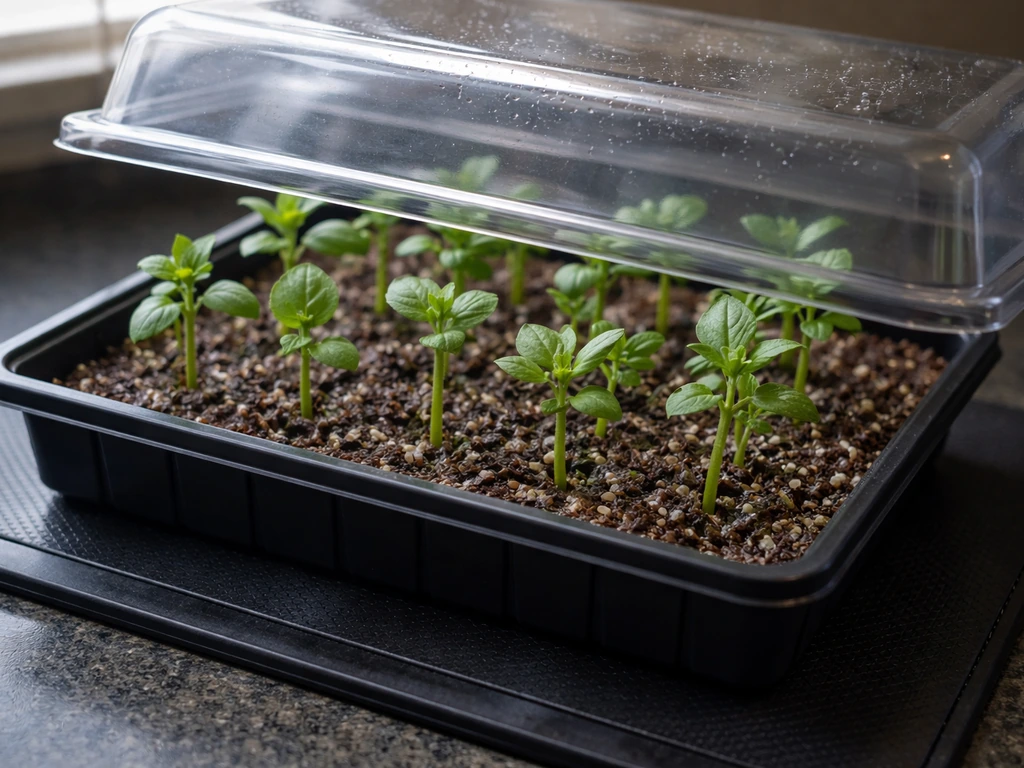
Bottom heat is also well-supported for propagating cuttings. NC State Extension notes that cuttings root faster under bottom heat and that disease losses can be reduced. WSU Extension recommends a medium temperature of 60 to 70°F for hardwood cuttings of difficult-to-root deciduous shrubs, with the medium temperature dropped to around 40°F after roots are visible (to satisfy any cold rest requirements those particular plants need). For general softwood and semi-hardwood cuttings, a rooting medium target in the 68 to 74°F range works well, and commercial propagation systems typically target 75 to 85°F for maximum speed. The air temperature around the cutting doesn't need to match the medium temperature when you're using bottom heat, which is a useful practical point: you don't need to heat your whole greenhouse.
When heat mats don't help, or actively hurt
Heat mats cause real problems when people use them past germination, crank them up without a thermostat, or fail to adjust their watering. Heat mats can also contribute to a common bottom-heat failure mode when moisture management is off, because added warmth can dry the soil out faster if seeds are left uncovered or containers are placed on a source of heat. Here are the main failure modes to watch for.
- Overheating: Without a thermostat, a heat mat can push root-zone temperatures above 90°F, which slows or halts germination and can damage tender roots. Most seeds have upper temperature limits as firm as their lower ones.
- Drying out the medium: Bottom heat accelerates moisture evaporation from the growing medium. Oregon State University Extension specifically flags this: adding heat (whether a mat or a warm location) dries soil out faster, which is one of the most common reasons heat mats seem to 'not work.' If seeds dry out even briefly after the germination process has started, you lose them.
- Damping off and rot: This sounds counterintuitive because warmth is supposed to prevent damping off, but the risk flips when warmth is combined with overwatering or poor drainage. Cold, wet media are the classic damping-off setup, but overly warm and wet conditions also favor pathogens. The fix is to keep moisture levels moderate: warm and moist, not warm and soggy.
- No benefit for established plants: Heat mats don't help mature plants that already have established root systems in a room-temperature environment. If your plant is struggling, the cause is almost certainly light, nutrients, watering, or soil quality, not root-zone temperature.
- Pest pressure: Consistently warm, moist growing media can attract fungus gnats and encourage their larvae. This is a secondary risk worth knowing about, especially if you're running multiple trays through a long indoor season.
How to use a heat mat correctly
Placement
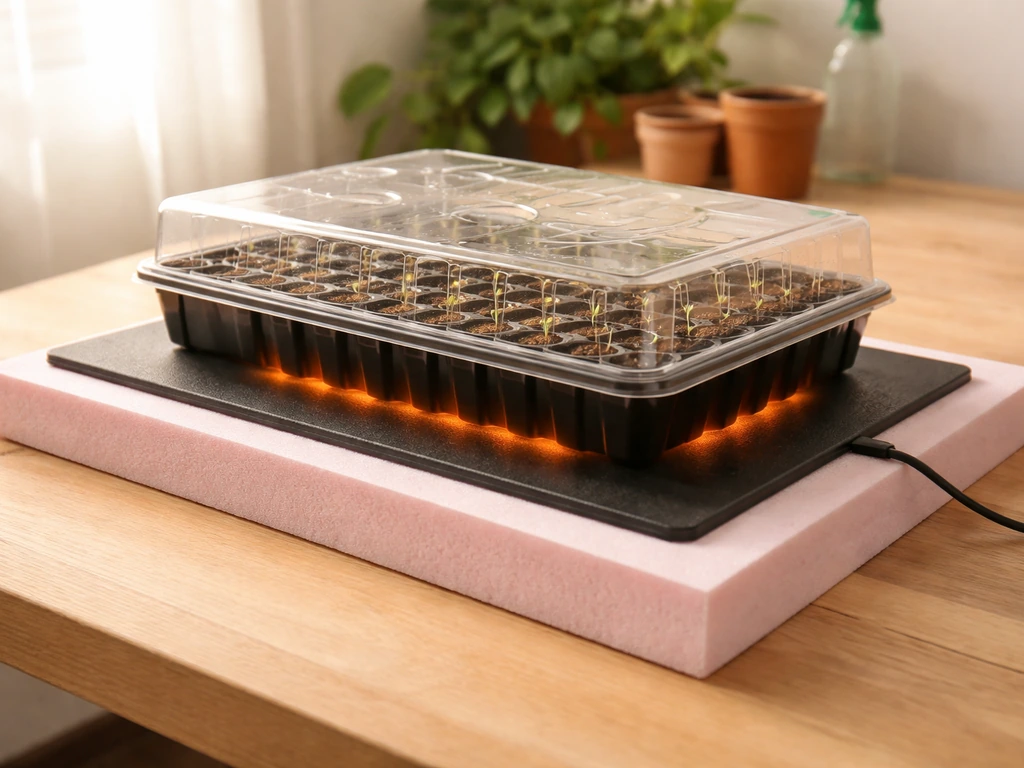
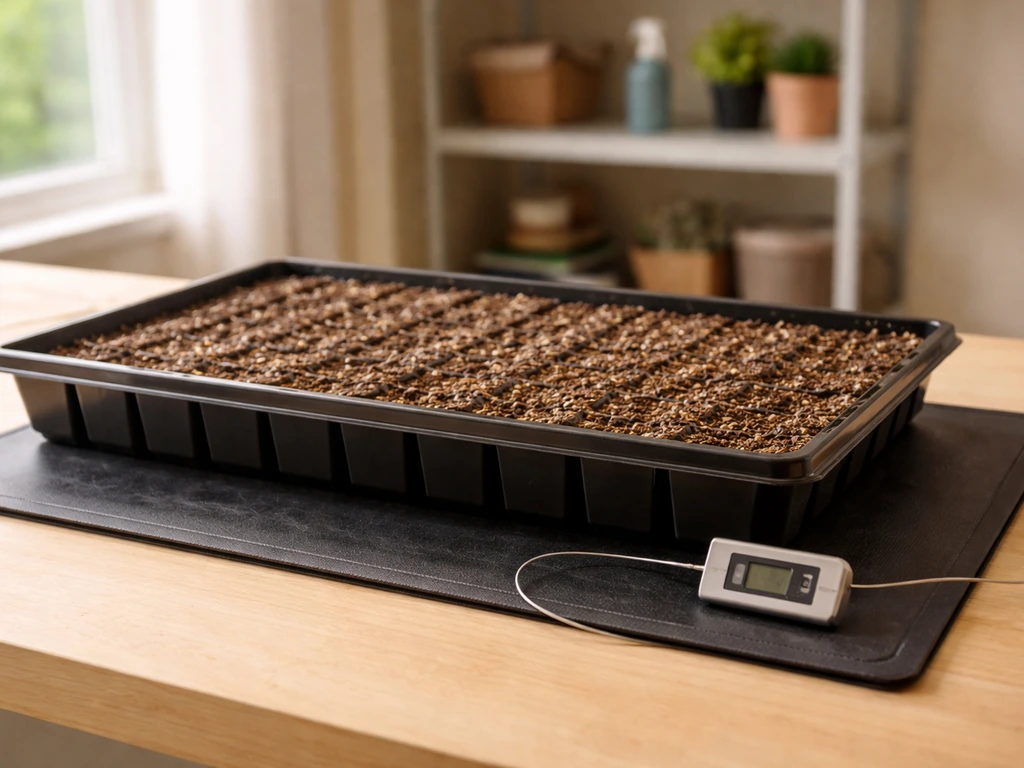
Place the heat mat on a flat, insulated surface. If you set it on a cold concrete floor or metal shelf, a significant portion of the heat escapes downward instead of warming your tray. A piece of rigid foam insulation or even a folded towel under the mat helps concentrate heat upward into the medium. Place your seed tray or propagation flat directly on top of the mat without a gap, since air space between the mat and tray reduces heat transfer.
Temperature targets by use case
| Use Case | Target Medium Temperature | Notes |
|---|---|---|
| Most vegetable seeds (general) | 65–75°F (18–24°C) | General workable range; some crops tolerate lower |
| Tomatoes | 70–80°F (21–27°C), ideally 77–86°F | Higher end speeds germination significantly |
| Cucumbers / melons | 75–85°F (24–29°C) | One of the most heat-demanding germination crops |
| Lettuce / cool-season crops | 65–75°F (18–24°C) | Can tolerate lower; avoid above 85°F |
| Softwood / semi-hardwood cuttings | 68–74°F (20–23°C) | Air temp can be cooler than medium |
| Hardwood cuttings (difficult species) | 60–70°F (15–21°C) | Lower to ~40°F after rooting for rest period |
| Commercial propagation (fast rooting) | 75–85°F (24–30°C) | Requires thermostat; monitor moisture closely |
Use a thermostat
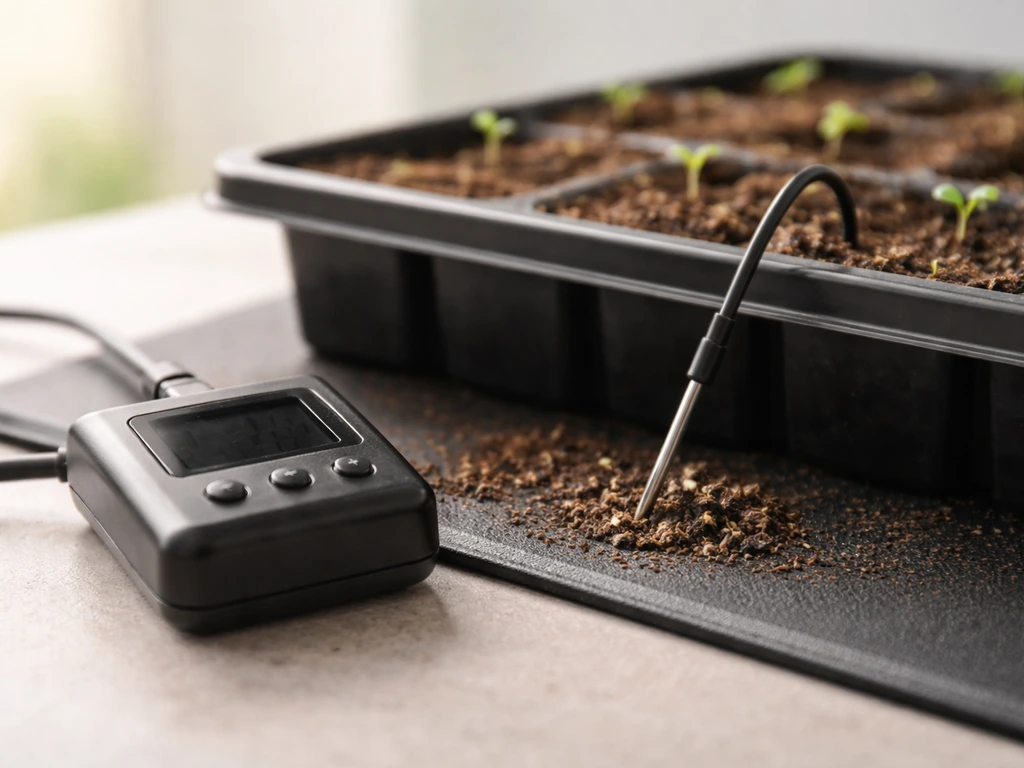
A thermostat with a probe that sits in the growing medium is the single most important upgrade you can make to a heat mat setup. Without one, you're guessing. Most basic mats warm by a fixed differential above ambient, which means if your room heats up during the day, so does your tray, potentially past safe limits. A digital thermostat keeps the medium in the 68 to 86°F range (a practical sweet spot backed by both extension guidance and manufacturer specs) regardless of room temperature swings. The AC Infinity mat, for instance, offers a controlled range of 32 to 122°F with up to 20°F above ambient, but you still want active feedback from a probe to keep things stable.
Watering adjustments
Bottom watering works better with heat mats than top watering. Set your tray in about half an inch of water for roughly 20 minutes and let the medium wick moisture up from below. This keeps the surface from getting waterlogged (which drives damping off) while ensuring the root zone stays consistently moist. Check medium moisture more frequently than you normally would, since bottom heat speeds evaporation.
Soil, light, and air: what has to work alongside the heat mat
A heat mat accelerates germination and rooting, but it can't carry the whole show. Some nutrients and growth-supporting chemicals, like appropriately diluted fertilizers and rooting hormones for cuttings, can also help plants speed up their growth when used correctly what chemicals help plants grow faster. Once seedlings emerge, light becomes the limiting factor almost immediately. Leggy, pale seedlings are not a heat-mat problem; they're a light problem. If you're growing indoors under natural window light, seedlings will stretch toward the window regardless of how warm their roots are. You need either a very bright south-facing window or a grow light within a few inches of the canopy to keep seedlings stocky and healthy.
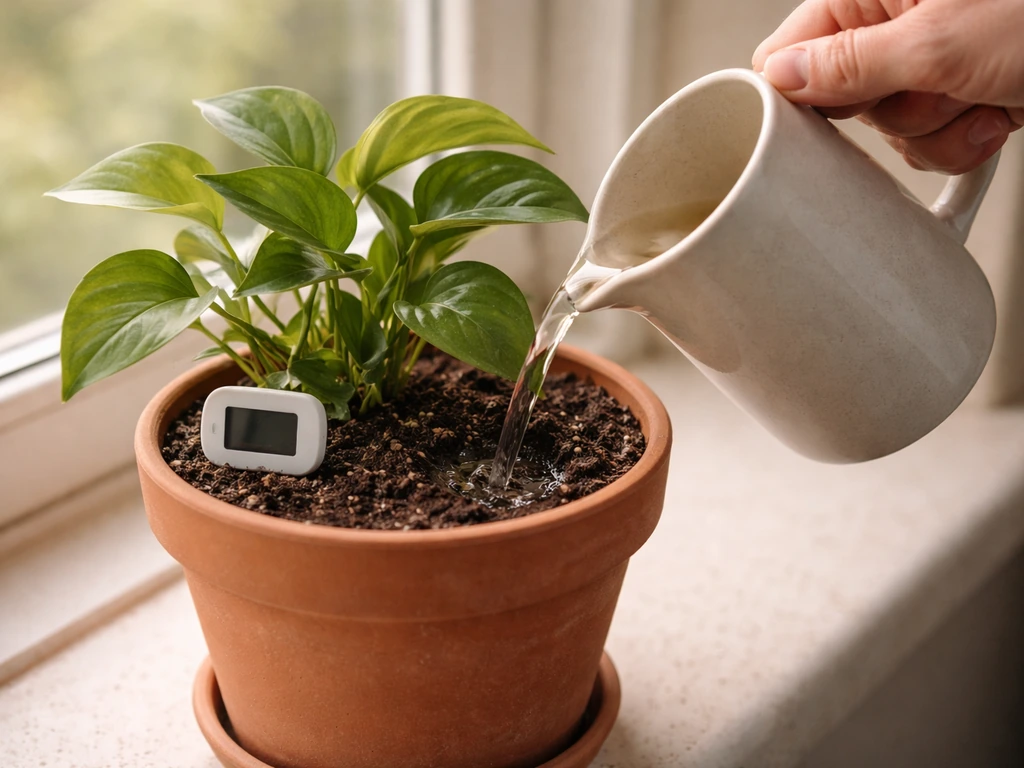
Soil or growing medium quality also matters more than most people expect. A fine-textured seed-starting mix with good drainage and low nutrient load is the right choice for germination and rooting (high-fertilizer mixes can damage tender seedlings). A fine-textured seed-starting mix with good drainage and low nutrient load is the right choice for germination and rooting, so if you're trying to push growth speed, start by matching your soil to what works best for fast plant growth like what soil makes plants grow faster. The relationship between soil quality, root-zone temperature, and nutrient uptake is real: even at perfect temperatures, roots can't absorb nutrients efficiently in a compacted or waterlogged medium. And watering temperature plays a minor but real role too: cold water poured onto a heat-mat-warmed tray can shock seedlings and temporarily lower medium temperature below the optimal zone.
Air temperature matters less than most gardeners think at the germination stage, which is why heat mats work even in cool spaces. But once seedlings are up, air temperature needs to be reasonable (above 60°F) for normal growth. Heat mats don't compensate for a cold, drafty growing space once plants are above ground.
Signs to watch for and how to troubleshoot
Slow or uneven germination
If germination is slow despite using a heat mat, check the medium temperature with a probe thermometer, not just the mat's setting. Hot spots and cold spots are common if the tray doesn't sit flat on the mat, or if some cells have significantly more or less medium than others. Uneven fill depth and tray warping are the usual culprits. Also check that the medium isn't too dry: heat mats can desiccate the top layer while the bottom stays moist, creating a moisture gradient that prevents germination near the surface.
Damping off (seedlings collapsing at the soil line)
Damping off is caused by fungal and oomycete pathogens, and warm, wet conditions in poorly ventilated setups are the trigger. Penn State Extension recommends keeping soil temperatures at 70 to 75°F specifically to reduce damping-off risk, but that only works if you also reduce overwatering, improve air circulation around seedlings, and give them adequate light. If you're seeing seedlings keel over at the base, the fix is to increase air movement (a small fan helps), water less frequently, and check that drainage is working. Adding more heat without addressing moisture and airflow will make damping off worse, not better.
Wilting or leaf stress
If seedlings are wilting even though the medium feels moist, overheating is the likely culprit. Root tissue stressed by excessive heat stops taking up water efficiently, which causes above-ground wilting that looks identical to drought stress. Pull the thermostat probe reading or use a soil thermometer: anything above 90°F at the root zone warrants immediate action. Turn off or dial back the mat.
Leggy, pale seedlings
This is almost never a heat problem. Leggy seedlings that are stretching and pale are not getting enough light. Turn off the heat mat (germination is done), move seedlings closer to a bright light source, and consider whether a grow light is needed. No amount of root-zone warmth compensates for insufficient light intensity at this stage.
Alternatives to heat mats if you don't have one today
If you need to start seeds or root cuttings right now without a heat mat, you have several practical options that work reasonably well.
- Top of the refrigerator: The motor vents warm air upward, making this one of the most consistently warm spots in many kitchens. University of Maine Cooperative Extension specifically recommends this. It's usually around 70 to 75°F, which is adequate for most vegetable seeds.
- Near a heat source: A spot near (not on top of) a radiator, wood stove, or warm appliance can provide enough ambient warmth to coax germination. Use a thermometer to check the actual medium temperature before committing your seeds.
- Insulating the tray: Placing seed trays on a folded newspaper, foam mat, or rubber shelf liner keeps them off cold surfaces and reduces heat loss from the bottom. Combined with a warm room, this can get you close to the lower end of germination temperature ranges.
- Enclosed space with a light bulb: An old germination-chamber trick: put seed trays inside a cardboard box or cooler with a low-wattage incandescent bulb for gentle warmth. Monitor temperature carefully; this can overheat quickly.
- Plastic dome covers: A humidity dome over a seed tray traps warmth from the medium itself and the ambient room, raising internal temperature by several degrees. This won't match a heat mat but reduces heat loss and keeps moisture in.
These alternatives are genuinely workable for many home gardeners, especially if your house stays above 65°F. The heat mat becomes much more valuable in cooler homes, basements, or garage setups where ambient temperatures regularly drop below 60°F. If you're in that situation and doing any serious seed starting or cutting propagation, a mat with a thermostat is worth the investment. Everything else in your setup: good light, the right growing medium, and correct watering, has to work alongside it.
FAQ
How long should I keep a heat mat on after seeds sprout?
Yes, but only at the stage that benefits from warmer roots. Use the mat until you see germination or root initiation, then remove it or turn it off to focus on light and normal air temperatures. Keeping it on after seedlings emerge often makes the top layer dry out faster and can raise disease risk if watering and airflow are not adjusted.
How can I tell what temperature my seedlings’ root zone actually is?
A probe thermometer is the right way to verify you are actually within the target soil temperature. Mat settings can be misleading because room temperature, tray material, and tray fill level change real root-zone temperatures, and uneven contact can create hot and cold spots across the tray.
Is it safe to run a heat mat without a thermostat?
Don’t leave it running without active control. Many basic mats warm by a fixed offset above ambient, so if your room heats up during the day the medium can overshoot safe ranges, which can cause wilting even if the soil feels moist.
Will a heat mat fix cold, drafty indoor temperatures for seedlings that have already emerged?
Usually no, heat mats are not designed to warm the air, so drafts and cool nights still affect seedling growth once they are above ground. If your seedlings are already up, you typically need to address the room temperature and airflow with better placement, insulation, or supplemental heat, not just more bottom warmth.
Should I water from the top or bottom when using a heat mat?
Bottom watering is generally better because it keeps the surface from staying waterlogged, which helps reduce damping-off risk. If you top-water on a heat-mat setup, the surface can stay wet longer, promoting fungal growth, and you may also cool the medium unevenly.
My seedlings are wilting, but the soil feels moist. Is it a heat mat problem?
Take the heat mat out of the equation for wilting diagnosis once germination is done. Pale, stretching seedlings are usually a light problem, not a root-zone temperature problem. First verify light intensity and distance, then only adjust the mat if your probe reading shows overheating.
What should I do if seedlings collapse at the stem base (damping-off) while using a heat mat?
Start by correcting medium and watering, not by raising mat temperature. If the base of seedlings is rotting or they collapse at the soil line, damping-off is likely, and the main levers are preventing overwatering, improving airflow, using a well-draining low-nutrient seed-starting mix, and keeping root-zone temperature from becoming excessive.
Does it matter what I put the heat mat on underneath?
Yes, but only if the mat is controlled and the tray makes full contact. If you place an uninsulated mat on a cold concrete floor or with gaps under the tray, you can lose much of the heat to the ground or end up with uneven temperatures across cells.
Can my soil mix make a heat mat less effective?
Yes for the medium. Use a fine-textured seed-starting mix with good drainage and low nutrient load, and avoid dense or water-holding mixes that can block oxygen to roots. High fertilizer mixes can harm tender seedlings, and compaction can prevent efficient nutrient uptake even if temperatures are perfect.
What are common reasons germination is slow even when I’m using a heat mat?
If germination stalls despite bottom heat, check the actual medium temperature with a probe and look for uneven fill depth across the tray, tray warping, or poor contact with the mat. Also check that the medium is not drying out near the surface and that seed depth and moisture level match the crop’s requirements.
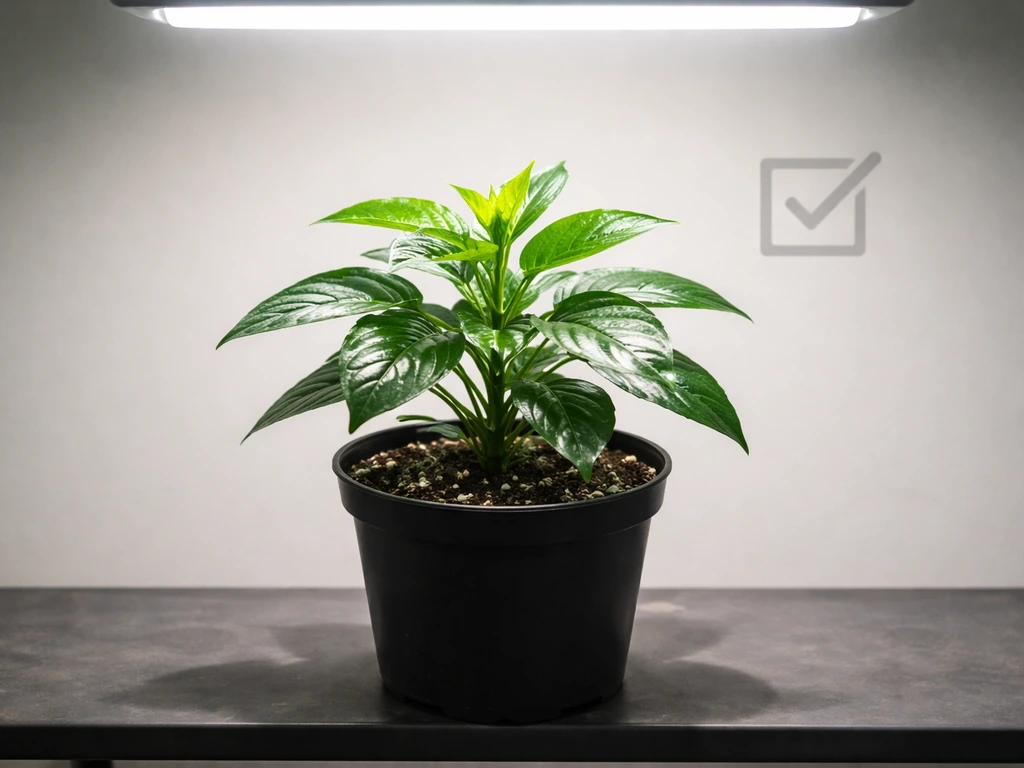
Myth vs evidence on whether GMOs speed plant growth, and how to boost faster growth using light, soil, and watering.
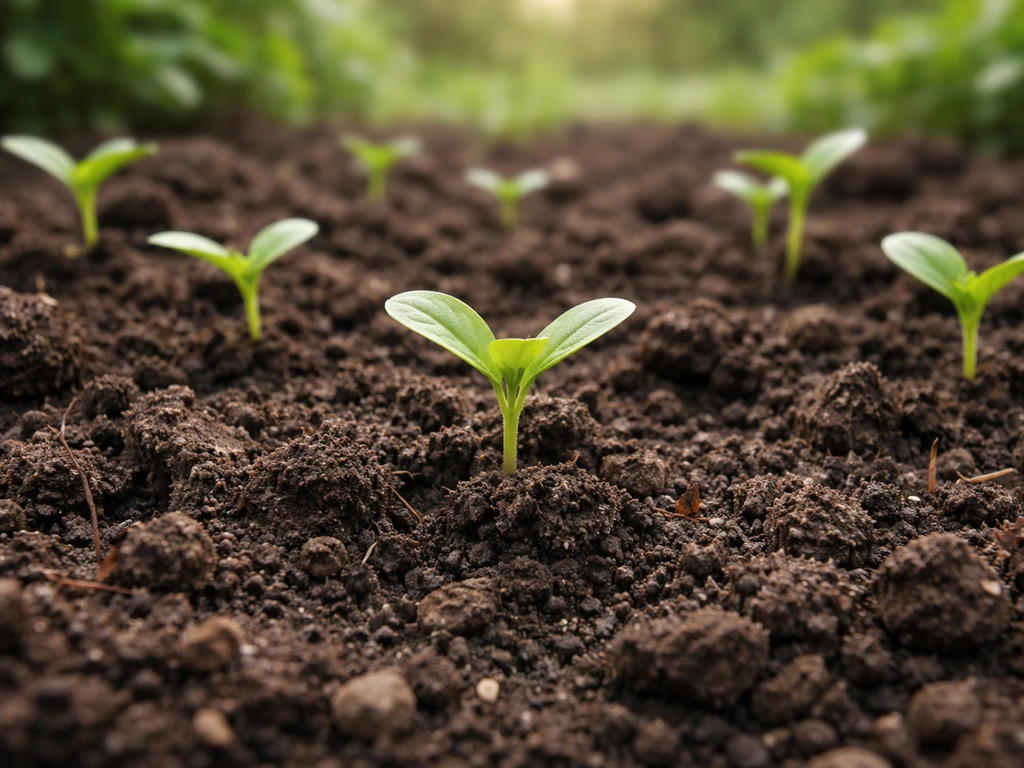
Discover which soil traits speed growth and how to test, amend, and fertilize for faster, healthier plants today
Find out if hot water helps plants grow faster, learn safe warm water ranges, and get step-by-step tips to avoid root sh