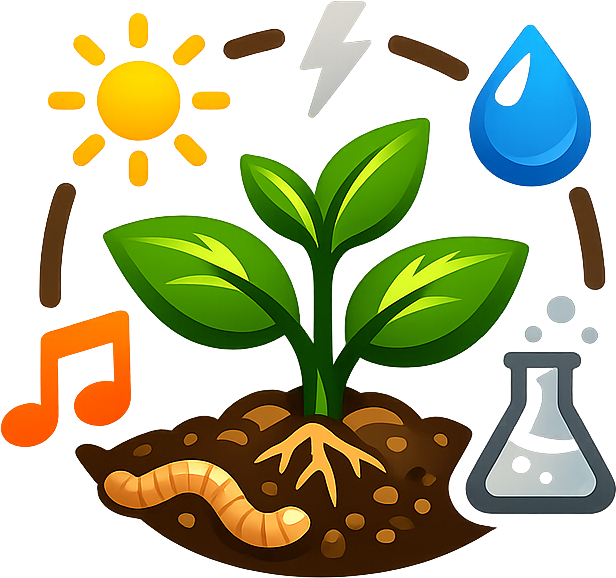
Magnets can produce small, measurable effects on plants under very specific lab conditions, but they are not a reliable growth hack for your garden. The honest answer is: if you place a refrigerator magnet near your tomatoes, you almost certainly will not see a difference. The research on magnetic fields and plant growth is real but messy, highly variable, and nowhere near ready to translate into a practical gardening tool. Your time and money are almost always better spent on soil quality, light, water, and nutrition.
Do Magnets Help Plants Grow Faster? Evidence and Tests

Marcus Holloway
7 Jun 2026
What the science actually says
There is genuine peer-reviewed research on magnetic fields and plants, and I want to be fair about that. Studies have looked at outcomes like seed germination speed, seedling root architecture, photosynthetic pigment levels, and biomass yield. Some of those studies do report positive effects. A 2015 review found that magnetic fields can modify seed germination and affect seedling development across many plant groups. A broader review published around 2020 catalogued potential agronomic benefits including increased germination rates, changes in root and shoot growth, higher chlorophyll content, and improved water and nutrient uptake.
Here is the catch: the results are all over the place. Whether you see an effect, and in which direction, depends on the type of field (static, pulsed, or extremely low-frequency), the field strength measured in millitesla, the exposure duration, the specific plant species and cultivar, the growth stage at exposure, and a pile of other experimental conditions. Peer-reviewed review literature reports that magnetic-field exposure has been studied across many outcomes, but results are highly variable by field type, strength, exposure duration, plant species or cultivar, and experimental conditions results are all over the place. Nature Index researchers who track this field describe it as an active research area where protocols still need standardization. That is science-speak for: we do not yet understand it well enough to give gardeners reliable instructions.
The proposed mechanisms are interesting even if unproven at a practical scale. Magnetic fields may influence ion transport across cell membranes, affect enzyme activity, alter water molecule clustering (which could change how roots absorb water), or interact with reactive oxygen species involved in plant stress responses. None of these mechanisms have been pinned down clearly enough to say: use this strength magnet for this many hours and your basil will grow 20% faster.
When magnets might actually do something
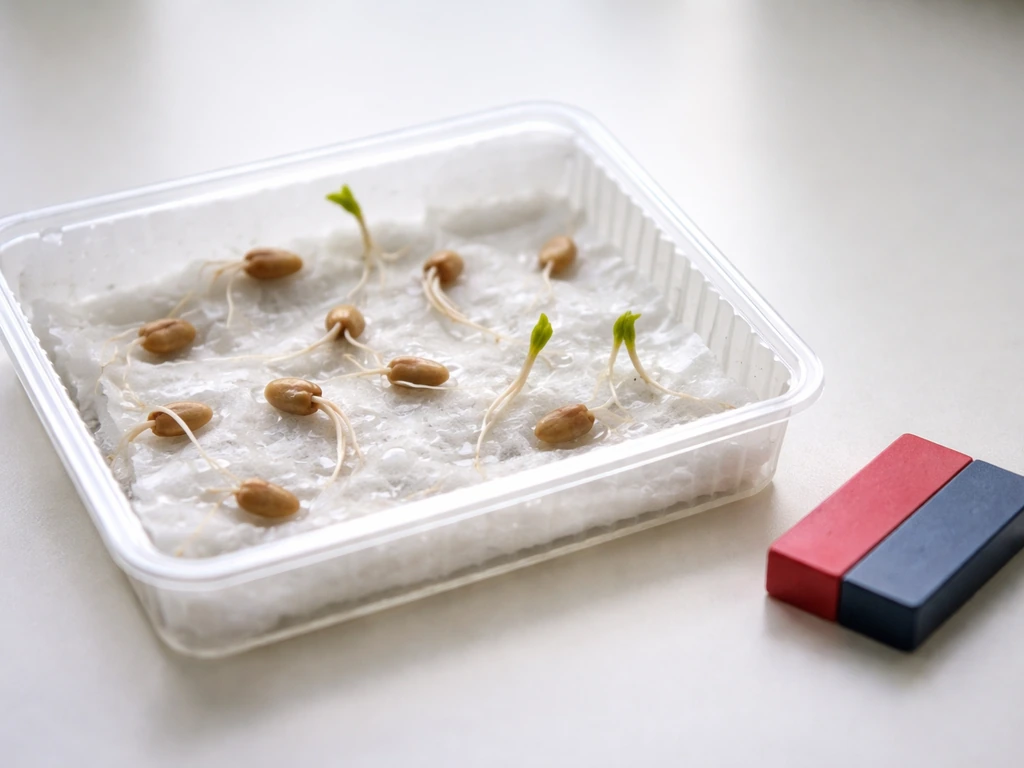
If there is a window of plausibility, it is probably at the seed germination stage. Multiple studies report that pre-soaking seeds in magnetized water or exposing seeds to magnetic fields before planting can speed up germination and improve early seedling vigor. The effect, when it shows up, tends to be modest, somewhere in the range of faster or more uniform sprouting rather than dramatically bigger plants. If you are starting seeds and want to experiment, that is the stage where you have the best shot at seeing something.
Beyond germination, some research points to potential improvements in root architecture and photosynthetic pigment content under controlled pulsed-field conditions. But the field strengths used in these studies are typically generated by specialized electromagnetic coils, not the kind of static magnet you can buy at a hardware store. Consumer-grade magnets produce weak, non-uniform fields that drop off sharply with distance. A typical refrigerator magnet sits at around 5 millitesla at its surface. Many of the studies reporting effects used fields in the range of 50 to 150 millitesla, applied in controlled, consistent ways. That gap matters.
Test it yourself at home
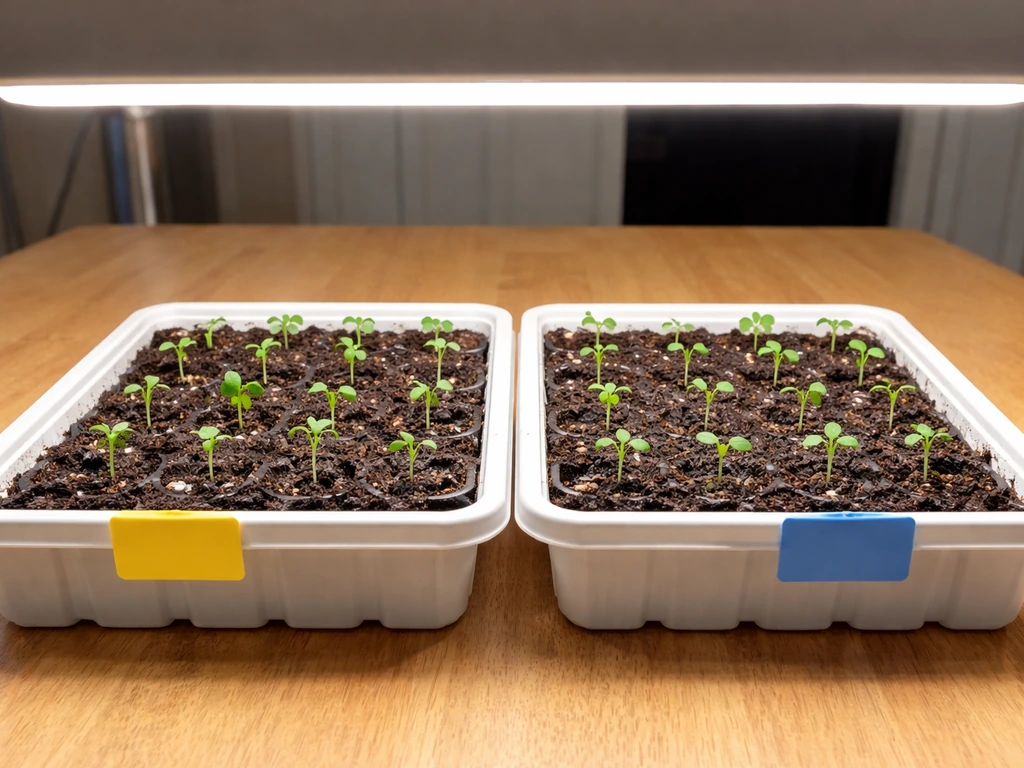
If you are curious and want to run your own experiment rather than take anyone's word for it, that is exactly the right instinct. Here is how to set up a simple, fair comparison.
- Choose one plant species and one seed variety. Consistency matters. Radishes or bean sprouts work well because they grow fast and show measurable changes within two to three weeks.
- Set up two identical groups: a control group (no magnet) and a treatment group (magnet placed near the seeds or seedlings). Use at least five plants per group to account for natural variation.
- Keep everything else identical: same potting mix from the same bag, same pot size, same watering schedule with the same measured volume, same light source and duration, and the same temperature. If any of those variables differ, your results are meaningless.
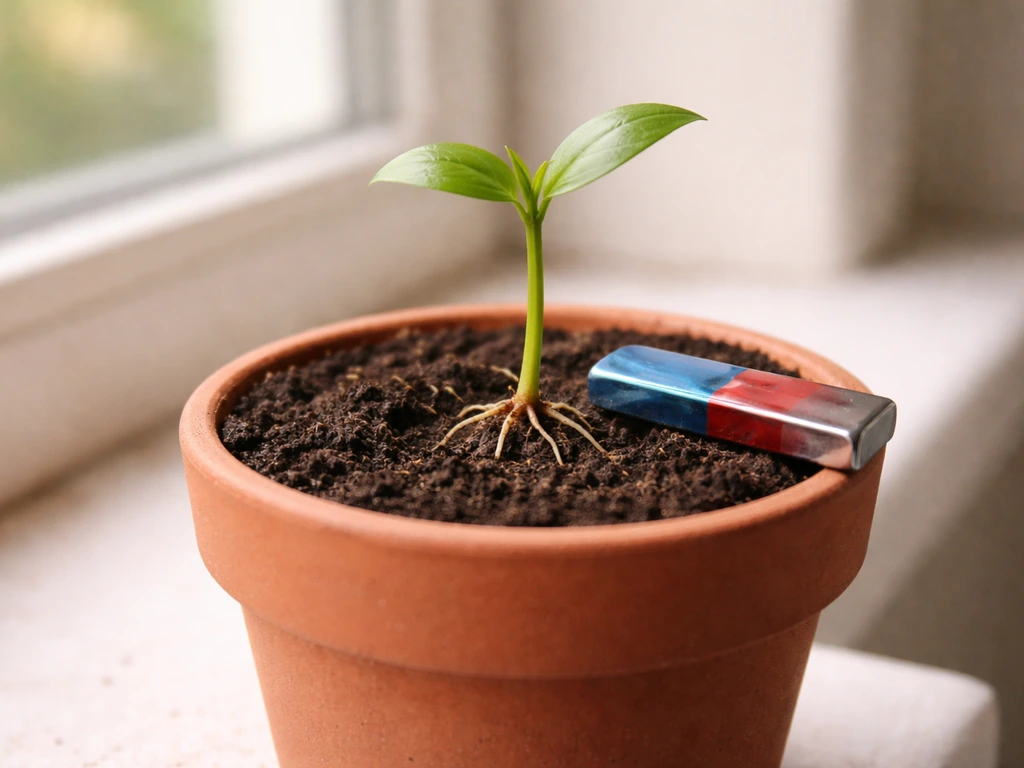
- For the magnet treatment, place a strong neodymium magnet (the strongest consumer-grade option available) as close to the soil surface as practical without disturbing roots. Note the magnet's approximate strength if you have a gaussmeter.
- Measure and record every three to four days: seedling height in millimeters, number of true leaves, leaf color on a simple scale (pale, medium, deep green), and any visible signs of stress or unusual growth.
- At the end of four to six weeks, compare germination rate, total height, leaf count, and overall plant health between the two groups.
- Take photos at each measurement point. Visual documentation often reveals subtle differences you might miss with numbers alone.
Be honest about your results. If you see a difference, ask whether it could be explained by something other than the magnet, like slightly different light angles across your windowsill or inconsistent watering. Running the experiment a second time to replicate your finding is the most important thing you can do. One trial with five plants is interesting. Two consistent trials start to mean something.
What actually moves the needle for plant growth
Before you spend much energy on magnet experiments, it is worth being clear-eyed about the factors that reliably and dramatically affect plant growth. These are the levers that researchers and experienced growers know work every time.
| Factor | Why it matters | What to optimize |
|---|---|---|
| Light spectrum and intensity | Drives photosynthesis directly. Plants use blue light (400-500nm) for vegetative growth and red light (600-700nm) for flowering and fruiting. | Maximize direct sunlight or use full-spectrum LEDs at the right intensity for your species. |
| Soil quality and pH | Determines nutrient availability and root health. Most vegetables prefer pH 6.0-7.0. Outside that range, nutrients lock up even if they are present. | Test soil pH, amend with lime or sulfur as needed, and add compost to improve structure. |
| Water management | Both overwatering and underwatering stress plants and reduce growth. Roots need oxygen as much as water. | Water deeply and less frequently. Check soil moisture at root depth, not just the surface. |
| Nutrients and fertilization | Nitrogen drives leaf and stem growth. Phosphorus supports root development and flowering. Potassium improves overall plant health and stress tolerance. | Use a balanced fertilizer matched to your plant's growth stage. Soil testing removes the guesswork. |
| Temperature and airflow | Each species has an optimal temperature range. Stagnant air encourages disease and can limit CO2 availability at leaf surfaces. | Keep plants in their preferred temperature zone and ensure gentle airflow around foliage. |
If any of these core factors are off, no amount of magnet exposure will compensate. A plant sitting in compacted, nutrient-depleted soil under dim light will not respond to a magnet. But fix the light, amend the soil, and get the watering right, and you will see dramatic improvement without any exotic interventions. If what you mean is speaking gently to plants, the evidence for better growth from “nice talking” is also limited, so focus on the basics first. The same principle applies to other creative gardening ideas, whether that is playing music for your plants, talking to them, or placing mirrors to redirect light. The fundamentals come first.
Potential downsides, myths to skip, and how to try magnets safely
First, the myths worth ignoring. You may see products marketed as 'magnetic plant energizers' or 'biomagnetic growth stimulators' for significant money. Given the state of the research, none of those claims have a solid enough evidence base to justify the price tag. The variability in even controlled academic studies means there is no consumer product that has cracked the code on reliable magnetic plant enhancement. You might have seen similar claims under names like “music helps plants grow” myths, but the key issue is still the same: evidence is inconsistent and instructions are not reliable magnetic plant enhancement.
Are magnets harmful to plants? At the field strengths available to home gardeners, there is no evidence of harm. Strong industrial electromagnets are a different story, but a neodymium magnet near your herb pot is unlikely to damage anything. The risk is not in the magnet itself but in getting distracted from the real work of tending soil health, managing water properly, and providing enough light.
If you do want to experiment safely, here are a few sensible boundaries to keep in mind.
- Focus magnet experiments on the seed germination stage, where the research is most consistent.
- Use a control group every time. Anecdotal single-plant observations are not informative.
- Do not spend money on specialized magnetic gardening products until the research matures significantly.
- Keep magnets away from any electronic sensors, moisture meters, or grow-light timers they could interfere with.
- Treat any results you get as personal curiosity data, not as proof of a universal effect.
The bottom line is this: magnets are a genuinely interesting frontier in plant science, and I would never tell a curious gardener to stop experimenting. But if you are trying to grow bigger tomatoes, healthier herbs, or a faster-blooming flower garden right now, the path there runs straight through your soil test, your light setup, and your watering habits. Touching plants is not a reliable way to make them grow, and it does not replace the bigger drivers like light, water, soil, and nutrition does touching plants help them grow. Get those right first, then play with magnets if the curiosity pulls you. Shaking plants is a different idea, and it is not a reliable way to boost growth compared with the basics like light, water, and nutrients. That is the honest, practical answer.
FAQ
If I try magnets, what kind of setup is most likely to show any effect?
If you want the best chance, focus on seed germination rather than mature plants, use consistent exposure times and distances, and test one magnet type and one distance only. Keep temperature, light intensity, soil mix, and watering identical, then compare magnet-exposed seeds against an identically handled control with the magnet removed.
Do refrigerator magnets actually reach the field strengths used in positive studies?
Usually not. A refrigerator magnet is around 5 millitesla at the surface and the field drops quickly with distance. Many studies that report changes use fields far higher (often tens to over 100 millitesla) with tightly controlled exposure, typically requiring specialized equipment.
How far from the plant or seeds should a magnet be?
There is no universal “correct distance” for consumer magnets. Field strength falls steeply as you move away, so choose a fixed distance that you can measure (for example, from magnet face to seed container) and keep it constant for every replicate. If you cannot keep distance consistent, the experiment becomes hard to interpret.
Should I use magnetized water, or magnet exposure directly on seeds?
Both show up in research, but the practical comparison is hard because “magnetized water” can vary a lot in how long water is exposed, flow rate, and field strength. If you test, use one method only, label exposure duration precisely, and run at least two rounds to see whether any difference is repeatable.
What would count as a meaningful result in my garden experiment?
Look for measurable endpoints you can score the same way each time, such as germination rate (how many sprout by a set day), days to first sprout, uniformity of emergence, or early seedling vigor (for example, root length on a fixed day). If you only eyeball “looks better,” you will likely miss small effects or mistake normal variation for a magnet impact.
Could differences I see be caused by other variables?
Yes. Common confounders include slightly different light angles on a windowsill, inconsistent watering from watering schedule or spillover, uneven soil depth, and seed lots with different viability. Use a randomized placement (switch positions between control and treated groups after each watering) to reduce bias.
How many plants or seeds do I need for a useful test?
More is better, but a practical minimum is to use enough replicates that one lucky cluster does not decide the outcome. Try multiple batches and target a few dozen seeds or several dozen seedlings per treatment when possible. The key is replication across time, not just a single small trial.
Can magnets help beyond early growth, like flowering or fruit size?
The strongest plausibility in the literature tends to be at the seed or early seedling stage, where modest germination or vigor shifts are sometimes reported under controlled conditions. Evidence for reliable improvements in later stages with consumer-style magnets is weak and inconsistent, so treat claims about bigger fruits as unproven.
Are magnets harmful to plants in home gardening conditions?
There is no good evidence that typical home magnets at consumer strengths harm plants. The bigger risk is opportunity cost, you might spend time and money on magnets while neglecting controllable drivers like adequate light, proper watering, soil fertility, and pest management.
Could magnets affect soil nutrients or watering in a way that matters?
Some proposed mechanisms involve ion transport and water interactions, but they are not established enough to predict a real-world nutrient or irrigation benefit. If you want to test this angle, measure outcomes you can verify, like leaf chlorophyll proxy (or simple tissue/soil tests) and consistent growth metrics, rather than assuming nutrient uptake changes.
Is it safe to experiment if I am using strong magnets or neodymium magnets?
Avoid strong magnets directly near electronics, and keep magnets away from pacemakers and magnetic storage media. For plants, strong neodymium magnets are still unlikely to “burn” a plant, but stronger magnets raise safety and handling issues, plus you may be tempted to create uneven exposure that makes results unreliable.
What should I do if my first magnet trial shows no difference?
Do not conclude magnets do nothing based on one batch. Repeat with a new seed lot or another planting date, keep the distance and exposure method identical, and verify your controls. If you still see no repeatable signal, switch effort back to the fundamentals that reliably move the needle.
Next Articles
Do Birds Help Plants Grow? Real Benefits in New Gardens
Learn how birds boost new gardens through seed dispersal, pollination, nutrients and pest effects, plus what to avoid an
Does Touching Plants Help Them Grow? What Actually Works
Does touching plants help them grow? Learn which gentle handling boosts health and which harms leaves, stems, pests, and
Does Music Help Plants Grow? Mythbusters-Style Test and Evidence
Mythbusters-style test on whether music boosts plant growth, what science says, and safer ways to improve yields.