
Forests regenerate through a combination of light availability, soil biology, moisture, and relief from competition. The fastest and most reliable recovery happens when you match your intervention to what the site actually needs: opening the canopy where seedlings are starved for light, protecting soil structure so water infiltrates instead of running off, reducing deer browse and invasive plants that outcompete tree seedlings, and choosing the right species for the conditions already present. Get those four things right and the forest does most of the heavy lifting itself.
What Helps Forests Grow and Regenerate: Practical Levers
Marcus Holloway
4 Jun 2026
How forests naturally bounce back (the succession basics)
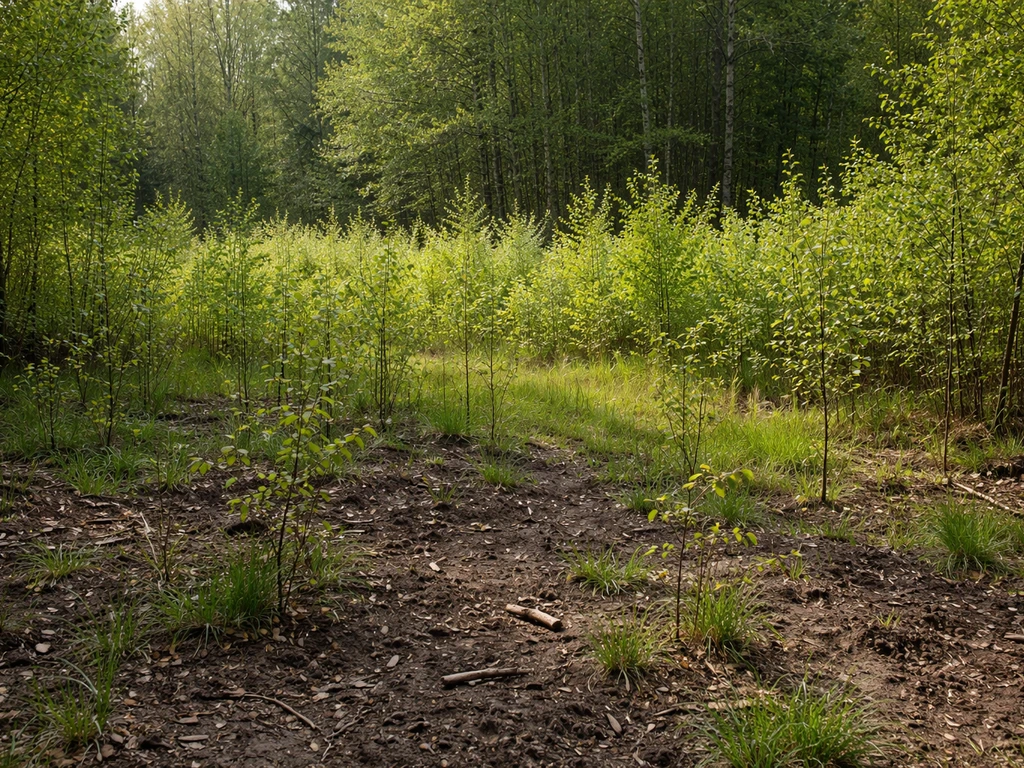
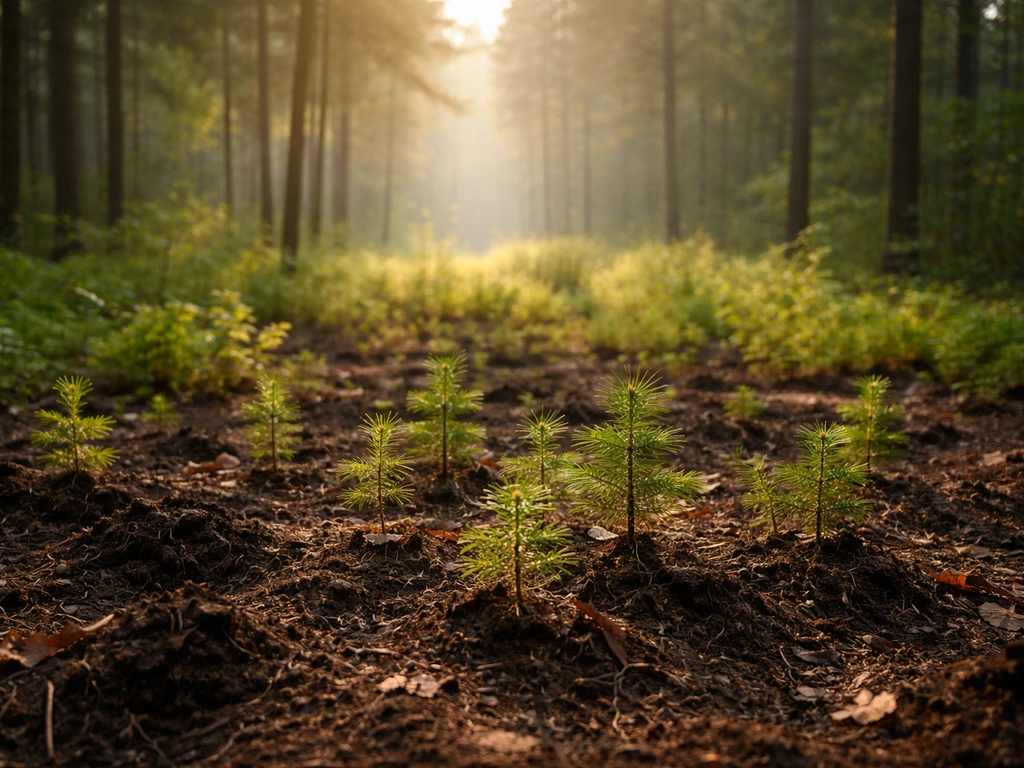
After any significant disturbance, a forest doesn't just sit there waiting for trees to arrive. Recovery kicks off almost immediately through several pathways working in parallel. Advance regeneration, meaning seedlings and saplings already present before the disturbance, can surge ahead once the canopy opens. Seeds already banked in the soil germinate when light and temperature conditions finally suit them. Adjacent stands drop seed across the site by wind, water, insects, and wildlife. Stumps and root systems resprout vegetatively, often growing faster in the first few years than any seedling could from scratch. In western Oregon, for example, this early-seral phase, when trees are establishing from seed or resprout, typically runs about 10 to 15 years before a recognizable young forest canopy closes in.
Ecologists call this progression succession, and it matters practically because it tells you what your site is already trying to do. Before you plant anything or buy a bag of fertilizer, it pays to read the land. Are there resprouts already coming up? Is there a seed source within a few hundred meters? Are seedlings present but just suppressed under shade? Answering these questions determines whether you need to intervene at all, or just get out of the way.
Light and canopy gaps: the trigger that everything else depends on
Light is the single most direct trigger for seedling growth in most forests. When a canopy gap opens, two things happen simultaneously: shade-intolerant species get the full sun they need to germinate and grow fast, and shade-tolerant species that were already suppressed under the old canopy get released and can finally put on height. Research on gap dynamics confirms that larger gaps tend to favor shade-intolerant species in the center, while smaller and edge gaps support a wider mix. What drives forest recovery at a landscape scale, though, isn't the size of any one gap so much as how frequently gaps are forming across the site.
In managed forests, selection cuts can create canopy openings of roughly 0.01 to 1.0 hectares specifically to regenerate a new cohort of seedlings underneath. You don't need a logging operation to apply this principle. On a small woodland, removing a suppressing overstory tree or group of trees over an area where you want new growth is exactly the same mechanism. The key is matching gap size to the shade tolerance of the species you want to regenerate. If you're trying to get oak or pine back, you generally need a larger opening. If you're working with maple or beech, a smaller release can be enough.
Soil health: the underground engine of forest regeneration
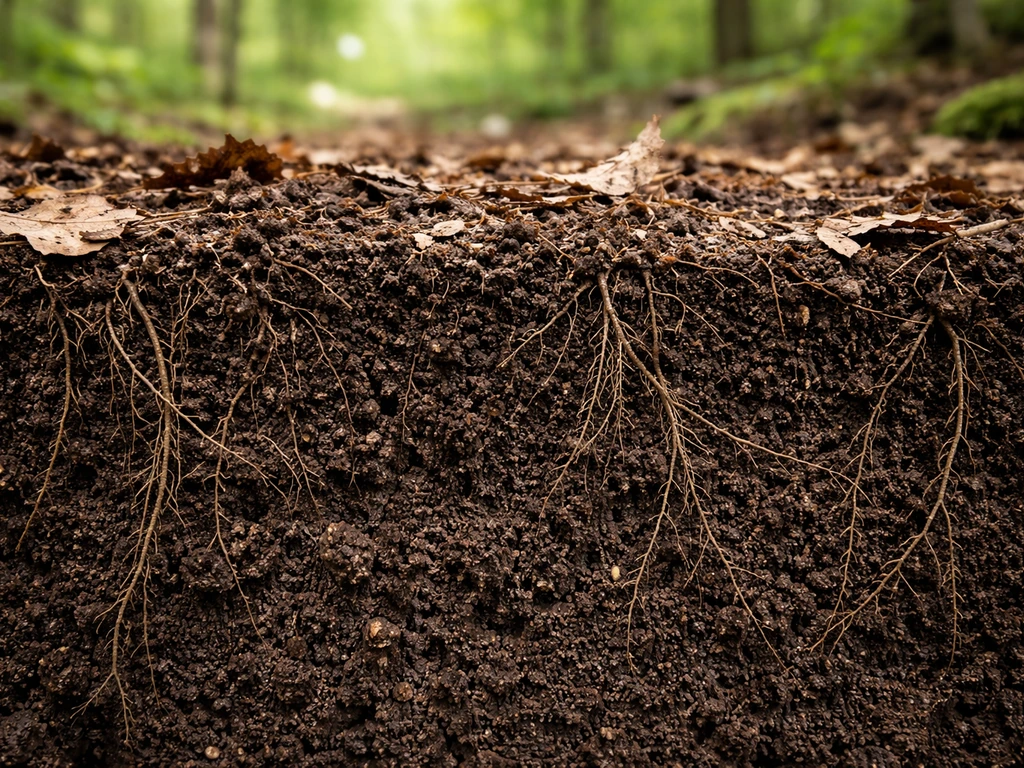
Healthy forest soil is not just a growing medium. It's a living system, and when it's working properly it does things no fertilizer application can replicate. Undisturbed forest soils with high organic matter content are porous, which means they capture and slowly release water, support vast fungal networks, and buffer the pH extremes that limit nutrient availability. Soil organic matter directly influences seedling emergence, and the microbial community, particularly mycorrhizal fungi, is critical for getting seedlings established and growing vigorously.
Soil pH matters more than most people realize. Research on loblolly pine found that as soil pH climbed from acidic toward neutral (around 6.8), ectomycorrhizal colonization dropped to about one-quarter of what it was under more acidic conditions, and seedling growth followed. Most forest trees evolved with ectomycorrhizal or arbuscular mycorrhizal partners at specific pH ranges. If your soil has been disturbed, limed for agriculture, or compacted, you may be disrupting the very partnerships that allow seedlings to access phosphorus and other nutrients they can't get on their own. In fact, low phosphorus supply has been shown to directly limit seedling establishment and early tree growth in forests where ectomycorrhizal trees dominate. Phosphorus in particular is a key nutrient that helps roots establish and supports early seedling growth.
The practical upshot: protect what's already in the soil. Avoid heavy equipment on wet soils, don't strip away the duff layer if you can help it, and if you're transplanting seedlings into degraded sites, adding a small amount of native forest soil to the planting hole can introduce the right microbial community and meaningfully improve outcomes. What helps roots grow is the same set of fundamentals forests use to keep seedlings alive: intact, living soil plus consistent moisture and protection from compaction and competition root dry weight. Soil disturbance experiments on black walnut found that while surface disturbance didn't increase seedling height, it did significantly boost root dry weight, suggesting belowground development responds to structure and microbial context in ways that aren't always visible above ground.
Water and moisture: what actually drives seedling survival through the seasons
Water availability is probably the most underrated factor in forest regeneration, especially in the first two years after planting or disturbance. Seedlings are almost entirely dependent on surface soil moisture for germination and early establishment, and severe drying events at ground level are one of the top killers of newly emerged seedlings. Studies reviewing ponderosa and lodgepole pine regeneration found that air temperature, soil temperature, precipitation, and moisture availability all directly control whether seedlings emerge and survive, and that as temperatures rise and moisture availability declines under climate change, these constraints get harder to manage. Those same temperature and moisture conditions also determine how fast growth proceeds, so if you're looking for what tick speed makes crops grow faster, focus on keeping the growing environment within the right ranges rather than chasing a single number.
Season matters a lot. Spring planting generally gives seedlings the longest window of adequate moisture before summer drought stress hits. Fall planting works well in climates where winters are mild and frost heave isn't a major issue, because roots can establish over winter while tops are dormant. The worst window in most temperate regions is late summer, when soil moisture is at its annual low and heat stress is highest. If you're doing any direct seeding or bare-root planting, time it to match natural seed dispersal periods for the species you're working with.
Soil compaction is the hidden enemy here. Harvesting equipment, heavy foot traffic, and vehicle ruts can reduce infiltration rates dramatically, turning a sponge-like forest soil into something closer to hardpan. Water that used to soak in now runs off, carrying away seeds, eroding seedbeds, and drying out the rooting zone faster. Protecting infiltration capacity, by keeping equipment off wet soils, using brush mats on travel corridors, and minimizing rutting, is one of the highest-return actions you can take before and during any forest operation.
Disturbance as a tool: thinning, fire, harvesting, and site prep done right
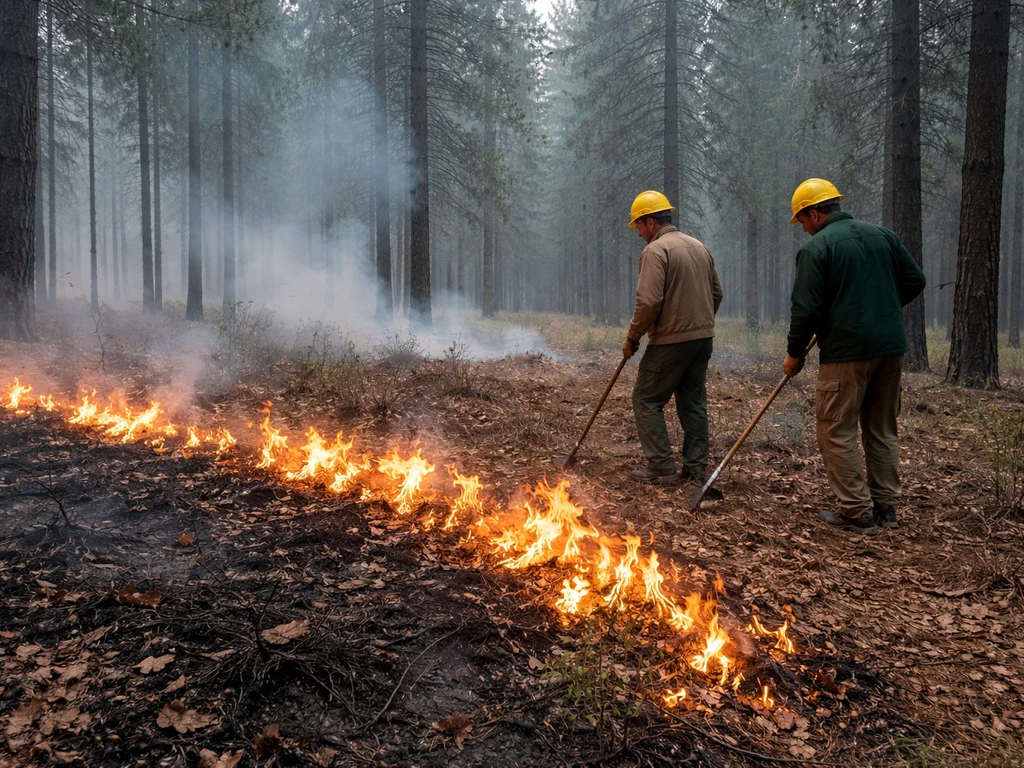
Not all disturbance is bad for forest regeneration. In fact, managed disturbance is often what triggers it. Silviculture is built around this idea: thinning, harvesting, planting, prescribed burning, and site preparation are all tools for controlling the establishment and growth conditions that determine what forest you'll have in 50 years. The question isn't whether to disturb but how much, when, and with what goal in mind.
Prescribed burning serves two purposes in regeneration work. It can reduce the accumulated fuel load that makes wildfire catastrophically destructive, and it can prepare a seedbed by removing competing vegetation and exposing mineral soil for seed contact. Mechanical treatment (cutting, crushing, or removing competing vegetation) can be used alone or alongside burning to alter fire behavior and reduce destructiveness when wildfire does occur. After a wildfire, prompt site preparation, something as simple as chaining to break up debris and press seeds into contact with soil, can meaningfully improve natural regeneration success.
One important caution: blank" rel="noopener noreferrer">seeding after wildfire is a common instinct but it carries real risks. The USDA NRCS cautions that reestablishing permanent vegetation after wildfire can provide long-term erosion control and help suppress weed invasion, but seeding can worsen weed spread if you do not pair it with complementary treatments blank" rel="noopener noreferrer">seeding after wildfire is a common instinct but it carries real risks. Broadcast seeding on burned sites can increase weed spread, degrade habitat, and actually impair forest regeneration if the wrong species or mix is used. If you're going to seed after a fire, combine it with mulching or contour felling of down wood to control erosion and keep seed in place, and make sure your seed mix won't set back native tree recovery.
Planting and assisted regeneration: seeds vs seedlings vs vegetative reproduction
Regeneration options exist on a spectrum from fully passive (letting the site do everything) to fully artificial (planting nursery-grown seedlings of selected species). Early farmers also improved crop growth by preparing the soil, controlling weeds, and supplying enough water during the most critical growing stages letting the site do everything. Most real-world projects sit somewhere in the middle, and choosing the right approach depends on what seed sources are available, how much site preparation you're willing to do, and how much time you have.
| Method | Best used when | Main advantage | Main risk |
|---|---|---|---|
| Passive natural regeneration | Seed sources are close, soil seed bank is intact, site conditions suit native species | Lowest cost, highest genetic diversity, species self-select for conditions | Slow, unpredictable species mix, may require decades |
| Assisted natural regeneration (scarification, gap creation) | Seedlings or seeds are present but suppressed or failing to establish | Faster than fully passive, still uses natural genetics | Requires correct diagnosis of limiting factor |
| Direct seeding | Large areas to cover, species with easy germination, cost constraints | Can cover area faster than planting | Both germination and establishment must succeed; higher failure rate than planting |
| Container or bare-root seedling planting | Seed sources are absent or too far away, specific species needed, fast establishment required | Most reliable establishment, species and provenance can be chosen | Higher cost, requires correct planting technique and timing |
| Vegetative regeneration (stump sprouts, root suckers) | Species that resprout reliably (aspen, cottonwood, oak, etc.) | Fastest early growth because established root system supports new shoots | Only works for species with sprouting ability; not suitable where roots are dead or removed |
A few species-specific notes worth keeping in mind. Cottonwood seeds lose viability within days under natural conditions if they dry out, making direct seeding impractical in most cases. Vegetative regeneration from stumps with an intact root system grows far faster than seedlings for this species. Oaks present a different challenge: they often regenerate adequately in terms of seedling numbers but struggle to get saplings past the browse line without deer protection. The USDA Reforestation Toolbox for hardwoods is a useful reference for species-specific planting guidance when you're committing to a planting program.
Species selection is where a lot of well-intentioned planting goes wrong. Matching species to site conditions, soil drainage, pH range, light availability, and regional climate is more important than planting the species you personally want to see there. A shade-intolerant species planted under a partial canopy will struggle no matter how carefully it's planted. Get the site-species match right first, then worry about technique.
What stops regeneration: weeds, deer, and pest pressure
In many temperate forests today, the single biggest reason natural regeneration fails isn't lack of seed or poor soil. It's deer browse combined with invasive plants. Research in mixed hardwood forests found that white-tailed deer browsing and invasive shrubs like Amur honeysuckle have interactive, compounding effects on native tree regeneration. Deer nip the terminal shoots of tree seedlings, suppressing height growth and keeping them in a browse trap for years. Invasive shrubs fill the understory gaps that should be allowing seedlings to establish, intercepting light and water before tree seedlings can access them.
High deer densities have been shown to reduce species diversity and alter composition in regenerating stands, with oak self-replacement being particularly sensitive. If you're in a region with deer pressure above roughly 15 to 20 deer per square mile, investing in physical protection (tube shelters, wire cages, or temporary exclusion fencing) around planted seedlings is almost always worth it. Studies using deer exclosures consistently show dramatically better regeneration inside the fence compared to outside.
Invasive plant control is site-specific but generally follows the same logic as weed management in any garden context: early intervention is far less work than trying to reclaim a site already overrun. Mechanical removal, targeted herbicide application, or repeated cutting before seed set are all viable depending on the species. The important thing is doing it before planting or seeding, not after, so your investment in regeneration isn't immediately swamped by competition. Pests and diseases (root rots, bark beetles, introduced pathogens like chestnut blight or sudden oak death) are harder to address directly, but site health, good soil biology, appropriate species diversity, and avoiding stress from compaction and moisture extremes are your best defenses.
What you can do today: a step-by-step regeneration plan
Here's a practical sequence you can start working through right now, regardless of whether you're dealing with a post-harvest site, a fire recovery area, or just a degraded woodland patch that hasn't been producing much new growth.
- Assess your seed sources: Walk the site and identify what's within 100 to 200 meters. What species are seeding? Are there advance regeneration seedlings already present? If yes, your job may be mostly to remove limiting factors rather than plant anything.
- Check your canopy: Is there enough light reaching the ground for the species you want? Measure or estimate canopy cover. If you're targeting shade-intolerant species, you likely need gaps of at least a quarter to half an acre. If you have shade-tolerant species with suppressed juveniles already there, a smaller opening or release cut may be enough.
- Evaluate soil compaction and structure: Walk the site after a rain and look for standing water or runoff on what should be absorbing soil. Probe soil with a penetrometer or even a stiff rod. If you're getting resistance in the top 6 to 8 inches, compaction is limiting root development and water infiltration.
- Test soil pH and organic matter: A basic soil test (available through most county extension offices for under $20) will tell you if pH is out of range for your target species and whether organic matter is severely depleted. Most forest trees want pH between 4.5 and 6.5.
- Control deer and invasive plants first: Before any seeding or planting, get a realistic picture of deer pressure and invasive species cover. If either is high, address them first or build protection into your planting plan. There's no point planting seedlings into an unprotected site with heavy deer browse.
- Choose your regeneration method to match the site: If seed sources are present and conditions are adequate, assist natural regeneration with scarification or gap creation. If you need to plant, choose species matched to your actual site conditions, not your wish list.
- Plant or seed at the right time: For most temperate regions, spring planting after last frost or fall planting before hard freeze gives the best establishment. Avoid late summer. If direct seeding, time it to match natural dispersal of your target species.
- Protect soil during any operations: Use brush mats on equipment travel corridors, avoid working on wet soils, and minimize the footprint of any mechanical work to protect the soil biology and infiltration capacity you're counting on.
- Monitor and adjust: Check seedling survival 30, 60, and 90 days after planting, and again after the first growing season. Look for browse damage, drought stress, competing vegetation overtopping seedlings, and signs of root rot or fungal issues. Adjust deer protection, watering, or weed control based on what you find.
- Think in successional stages: Forest regeneration isn't a single event. It's a process that unfolds over decades. Early-seral conditions that look messy and shrubby after a few years are normal and productive. Resist the urge to intervene again too quickly. Give each stage time to do its job before deciding the next management action.
One myth worth busting before you go: there's no fertilizer, amendment, or broadcast seed treatment that will substitute for getting the fundamentals right. The same logic applies here as with any plant growth question: light, soil biology, water, and freedom from competition are the real levers. That is why pesticides are sometimes used as a tool to reduce pest pressure so young plants can grow how do pesticides help crops grow. When people ask what helps corn grow, the answer usually comes down to the same basics: enough light, good soil health, consistent moisture, and protection from competition early on plant growth question. A helpful way to think about this is to focus on what farmers sow to make plants grow, because the same idea of giving plants the right growing conditions drives success. Everything else is secondary. A forest given adequate light, intact soil, consistent moisture, and protection from the things that kill seedlings will regenerate more reliably than one loaded with expensive inputs but missing any one of those four basics. Start there, observe carefully, and let the succession process tell you what it still needs.
FAQ
How can I tell whether a forest will naturally regenerate without planting?
Check for advance regeneration by looking for many seedlings or saplings already under the current canopy or along edges. If you also see fresh sprouts after disturbance and there are nearby seed-producing trees within a few hundred meters, the site is often already on a succession path and the best “intervention” is frequently removing the specific constraint (like deer browse or invasive understory) rather than adding seedlings.
Is it better to plant seedlings or rely on seed from nearby trees?
Use the site’s existing seed supply as your baseline. If you can identify a consistent seed source nearby and the site has workable light and moisture, natural recruitment or assisted natural regeneration (protecting and releasing seedlings) can be cheaper and more resilient. If seed source is distant, the soil is severely degraded, or competition pressure is extreme, planting often needs to be paired with intensive site preparation and control of browse and invasives.
What’s the most common mistake when trying to regenerate with canopy gaps?
People open the canopy but ignore gap size relative to the species’ shade tolerance and site hydrology. A gap that is too small may not release target seedlings, while a gap that is too large can dry the seedbed and favor weeds or shade-intolerant species you did not plan for. Aim for the release conditions your chosen species actually require, and monitor moisture response immediately after the opening.
If soil looks healthy, do I still need to worry about soil pH and nutrients?
Often you do, especially if the soil has been compacted, limed, or disturbed. Soil pH can shift mycorrhizal compatibility, which affects phosphorus uptake and early establishment even when the surface looks “fine.” A basic soil test for pH and available nutrients helps avoid spending money on planting or amendments that won’t restore the right microbial partnership.
Can I fix poor regeneration just by adding fertilizer or compost?
Usually not, because the limiting factor is often light, moisture availability, or competition rather than nutrient supply. Fertilizer may boost growth only after seedlings are already established and protected. If seedlings are failing to emerge or die within the first two years, prioritize canopy release, infiltration protection, and reducing deer browse and invasive cover before adding nutrients.
What does “protect the duff layer” mean in practice?
It means avoid stripping the organic layer that cushions seedlings, moderates temperature, and supports soil microbes. If you must prepare a seedbed, do it minimally, focusing on exposing mineral soil patches for seed contact without fully removing the litter across the whole area. The goal is to preserve infiltration and the fungal network while still enabling germination.
How do I choose a planting or seeding time window for my climate?
Use local moisture patterns rather than calendar dates alone. Spring planting generally offers the longest establishment window, while late summer is risky because surface soil moisture hits annual lows. If you do fall planting, ensure winters are mild enough to avoid major frost-related disruption, and plan for root establishment before the next drought period.
What equipment and traffic practices reduce compaction and runoff during operations?
Keep machinery off wet soils, plan travel lanes, and minimize the number of passes. Using brush mats on travel corridors can protect infiltration, and controlling rutting prevents water from channeling and drying the rooting zone. After operations, look for signs of surface crusting and increased runoff compared to nearby undisturbed areas.
How soon after wildfire should restoration start, and what should it focus on?
Act quickly on site preparation to improve seed-soil contact and reduce erosion, options like light chaining to break debris and press seed into contact can help. Avoid assuming that broadcasting seed is automatically beneficial, because it can spread weeds and derail native recovery if the seed mix, mulch, and erosion control are not designed together.
Are deer shelters always enough, or do I need fencing?
Shelters help, but it depends on deer density, species palatability, and how long terminals are vulnerable. For higher-pressure areas (roughly above 15 to 20 deer per square mile), temporary exclusion fencing around planting blocks often performs better and protects multiple seedlings simultaneously. Consider shelters for individual trees when fencing is impractical, but monitor browse pressure and replacement needs.
When invasive plants are present, do I control them before or after planting?
Control them before planting or seeding whenever possible, because early removal prevents invasives from intercepting light and moisture and from creating a persistent understory that seedlings cannot outcompete. If post-planting control is unavoidable, prioritize repeated actions before invasive seed set and match methods to the specific invader rather than using one-size-fits-all treatments.
What should I do about pests and diseases during regeneration?
Rather than trying to “treat your way out,” focus on reducing stressors that make trees vulnerable, especially compaction, moisture extremes, and poor site-species matching. Improving soil biology, using appropriate species diversity for the site, and maintaining the right light and moisture conditions are usually the most reliable disease-risk reducers during the vulnerable early years.
How can I tell whether water is the main bottleneck after planting?
Look for seedlings that establish briefly then collapse during dry spells, surface crusting that prevents infiltration, or soil that dries quickly compared to nearby undisturbed areas. In many failures, the issue is surface-level desiccation, so infiltration protection and mulching or micro-site moisture management can matter more than correcting nutrients.
Next Articles
How Do Pesticides Help Crops Grow? Practical Guide
Learn how pesticides improve growth by cutting pests, disease, weeds, and stress, plus timing and safe IPM tips.
What Helps Roots Grow: Fix Root Growth Fast
Learn what helps roots grow and how to boost root growth fast with better soil, watering, oxygen, nutrients, and temp.
What Tick Speed Makes Crops Grow Faster? Real-Time Levers
Learn which real timing levers drive faster plant growth: temperature, light cycles, watering and fertigation schedules,