Phosphorus is the nutrient most directly tied to root growth. It fuels cell division, powers energy transfer through ATP, and drives early root establishment in a way no other nutrient quite matches. If your seedlings are sitting still, your cuttings aren't rooting, or your transplants look sulky weeks after going in the ground, a phosphorus shortfall is the first thing worth checking. That said, phosphorus alone won't fix roots if your soil pH is off, your mix is waterlogged, or your soil temperature is too cold. Let's work through all of it.
What Nutrient Helps Roots Grow Faster and Stronger
Marcus Holloway
8 Jun 2026
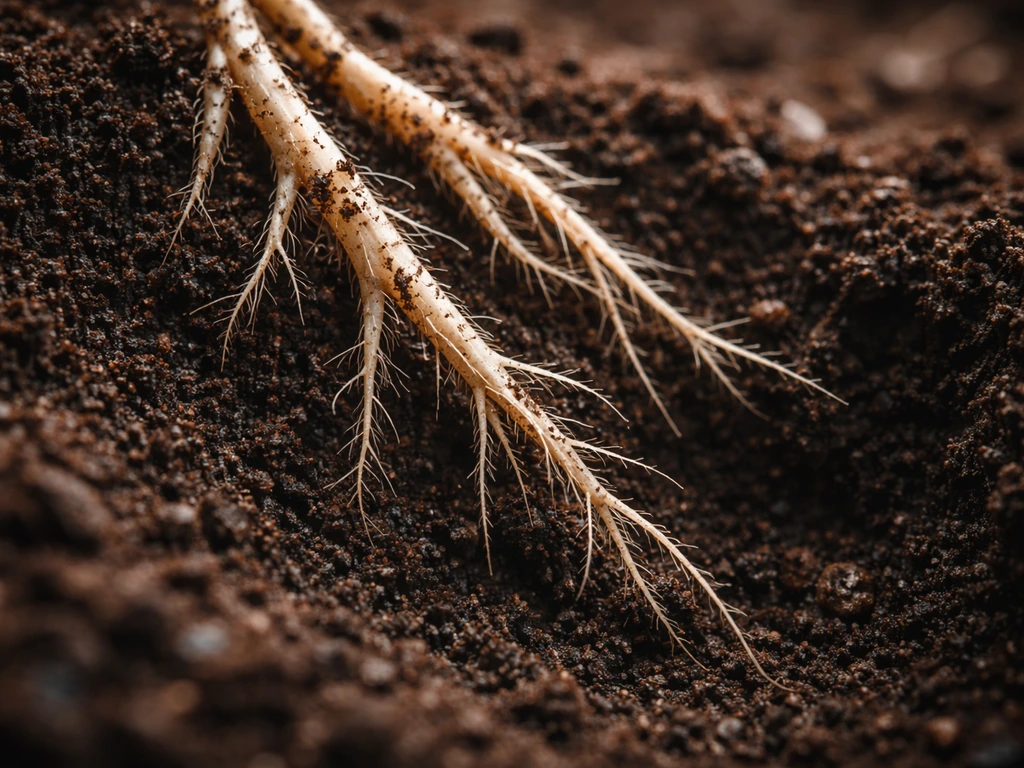
Why phosphorus is the root-growth nutrient
Every time a root cell divides and elongates, it burns ATP (adenosine triphosphate) for energy. Phosphorus is literally the backbone of ATP. Without enough of it, the whole rooting process slows to a crawl. Teagasc and Iowa State Extension both emphasize this connection: phosphorus drives root development, cell division, and early crop establishment more than any other macronutrient. It's also worth knowing that roots take up phosphorus mainly by diffusion and direct root interception, which means phosphorus needs to be close to developing roots to be useful, not broadcast far away from the planting zone.
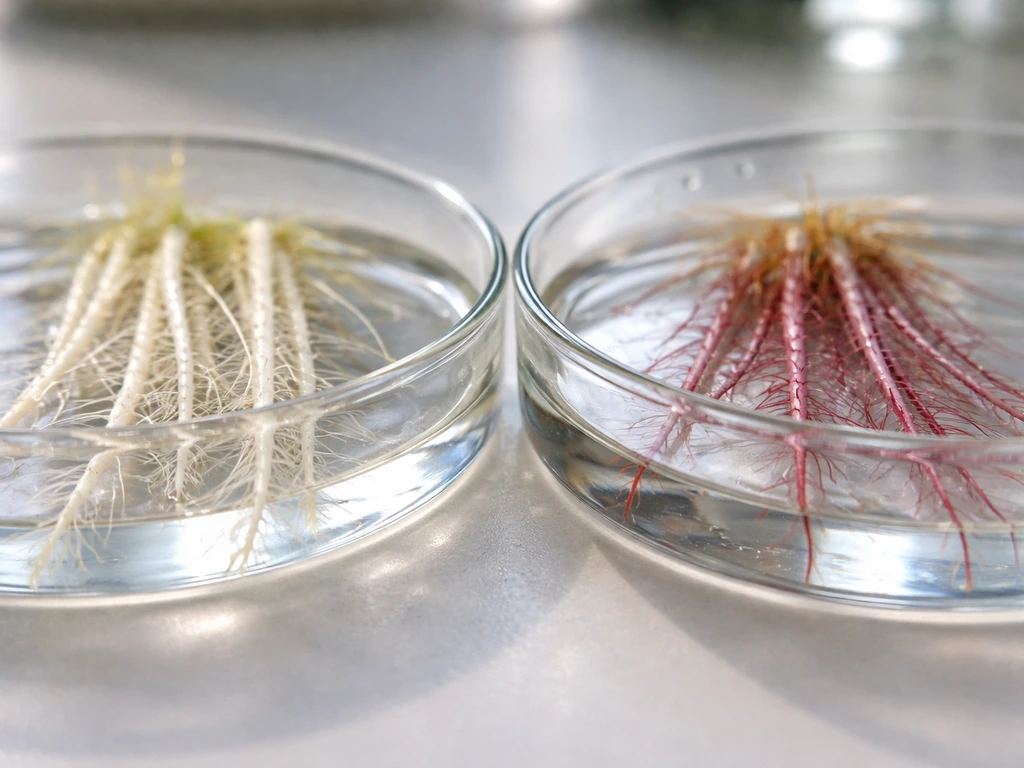
One of the clearest signs of phosphorus deficiency is a reddish or purplish tinge on leaves, especially older ones. That color comes from anthocyanin pigments accumulating when phosphorus is scarce. You might also see slow, stunted growth with no obvious explanation. Interestingly, phosphorus-deficient plants often push more energy into root growth relative to shoot growth as a survival response, so the above-ground plant looks worse than the roots suggest. But 'more root growth than expected' is not the same as healthy, functional roots, and overall plant performance suffers.
Other nutrients that support root development
Phosphorus gets top billing, but roots don't grow in a nutrient vacuum. Forest trees also rely on healthy soil moisture and a strong root-friendly rooting environment to grow and regenerate over time what helps forest to grow and regenerate. Several other nutrients play supporting roles that are easy to overlook.
Potassium
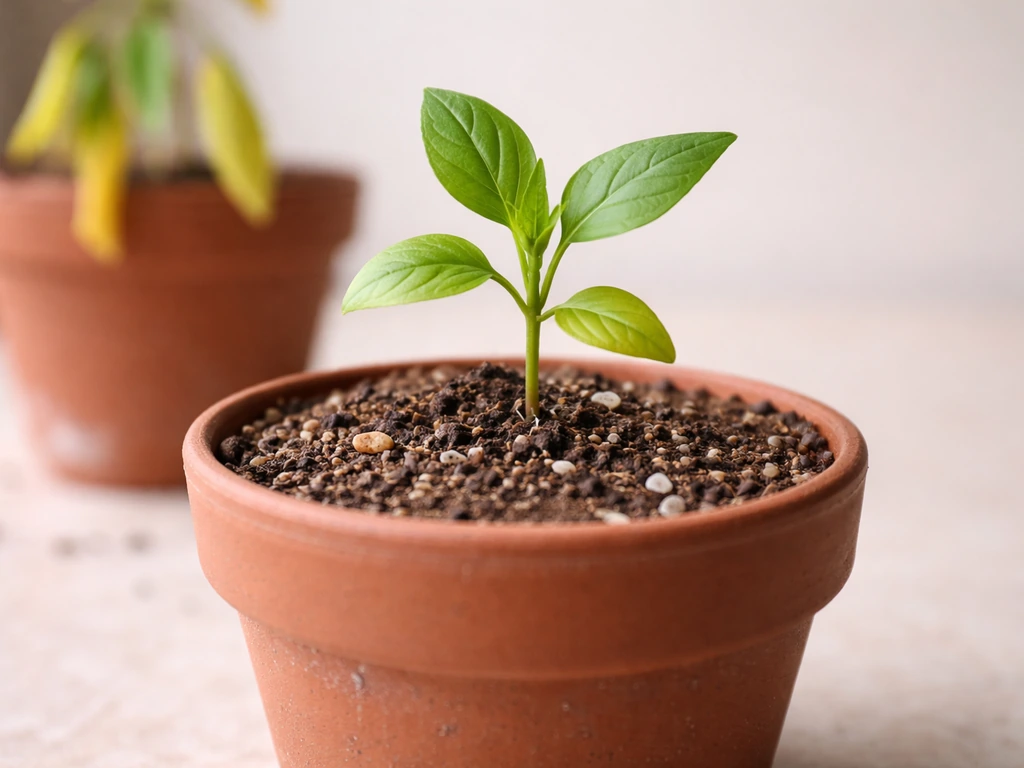
Potassium activates the enzymes involved in protein and starch metabolism and contributes to ATP production. University of Minnesota Extension research shows potassium deficiency can restrict root growth and limit how widely roots distribute through the soil. The symptom to watch for is yellowing or scorched-looking margins on older leaves, since potassium is mobile and moves from older tissue to younger tissue when supply runs low. Healthy potassium levels also improve disease resistance and help plants handle transplant stress.
Nitrogen (in moderation)
Nitrogen is the growth engine for shoots and leaves, but too much of it at the wrong time actively diverts energy away from root development. For seedlings and cuttings in the early rooting phase, you want low nitrogen. High nitrogen pushes lush top growth while roots lag behind. A small amount of nitrogen is needed for root function, but if you're choosing a fertilizer specifically to encourage rooting, nitrogen should not be the highest number on the label.
Calcium
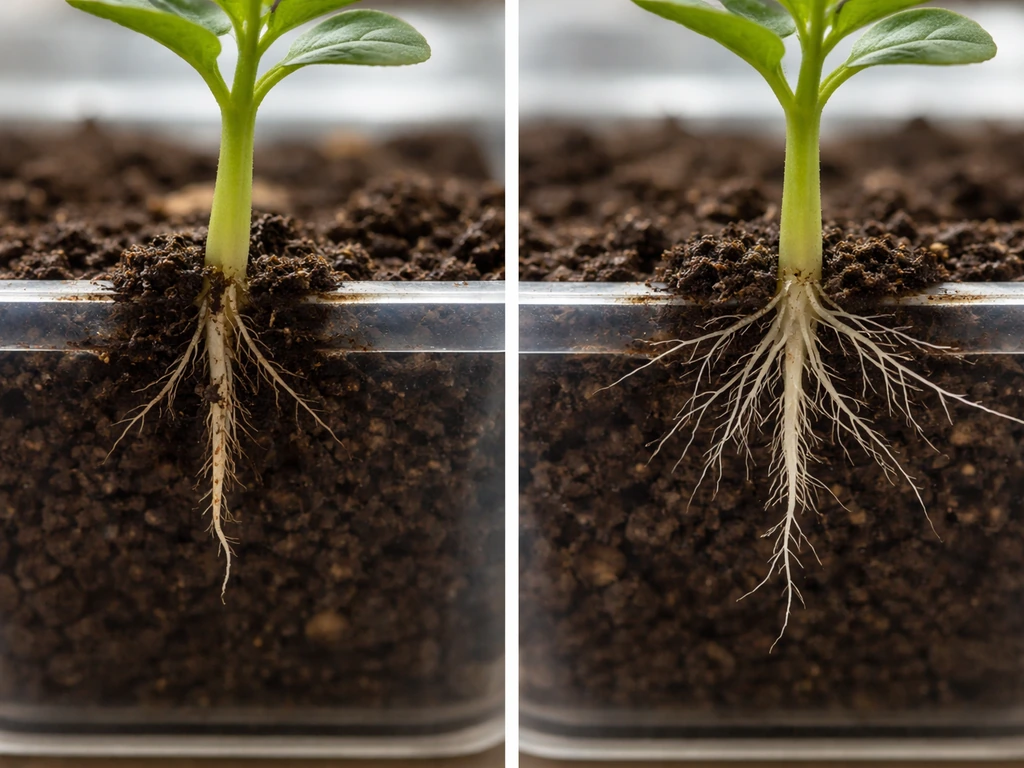
Calcium is critical for cell wall formation and membrane integrity. UF/IFAS describes calcium deficiency as causing restricted growth at the growing point of both shoots and roots. Because calcium is immobile in plant tissue, deficiency symptoms show up at the newest, youngest growth first. If root tips look stunted, distorted, or dead while the older parts of the root look fine, calcium is worth putting on your suspect list.
Micronutrients: boron and zinc
Boron and zinc are both immobile in plant tissue, so deficiency symptoms always appear at the youngest growth. Boron is particularly important for root tips: boron deficiency causes stunting and distortion at root growing points, and small lateral roots can die off entirely. Zinc deficiency also shows in the youngest tissue first. Neither of these nutrients needs to be added in large quantities, and oversupplying micronutrients can be toxic, so if you suspect a deficiency, a soil test before adding anything is the right move.
How to choose the right fertilizer or rooting product
When you pick up a bag or bottle of fertilizer, the three numbers on the label are the N-P-K ratio: nitrogen, phosphorus, and potassium, in that order. For rooting, you want the middle number (phosphorus) to be the highest. UC IPM states directly that phosphorus is the most important nutrient for root development, which is why it's the dominant number in starter fertilizer formulations. Common starter materials like MAP (11-52-0) or ammonium polyphosphate (10-34-0) reflect this clearly. A label like 5-15-5 or 10-52-10 is a reasonable rooting or starter fertilizer. A label like 20-5-5 is a nitrogen-heavy formula better suited to leafy growth.
If you're browsing products marketed specifically as 'rooting fertilizers' or 'starter fertilizers,' check the label rather than trusting the name. Some rooting products also contain rooting hormones (like IBA, indole-3-butyric acid), which stimulate root initiation in cuttings and are separate from nutrient content. Both have their place, but they do different things. For established seedlings and transplants, a phosphorus-forward fertilizer addresses the nutrition side. For cuttings where you need to trigger root formation in the first place, a rooting hormone product is the more targeted tool.
| Product Type | Best N-P-K Range | Best Use Case | Key Caution |
|---|---|---|---|
| Starter fertilizer (granular) | 10-20-10 or 11-52-0 | Seeds, transplant furrows | Keep away from direct seed contact to avoid burn |
| Liquid starter fertilizer | 5-15-5 or 10-34-0 | Transplant water, seedling drench | Dilute to half-rate; check EC to avoid salt buildup |
| All-purpose balanced fertilizer | 10-10-10 | General maintenance feeding | Not ideal for rooting phase specifically |
| High-nitrogen fertilizer | 20-5-5 or 30-0-0 | Leafy/vegetative growth | Avoid during rooting; pushes shoot over root growth |
| Rooting hormone powder/gel | N/A (not a fertilizer) | Cuttings root initiation | Separate from nutrient feeding; use both as needed |
When and how to apply it for seeds, cuttings, and transplants
Seeds and seedlings
For seeds, Penn State Extension describes starter fertilizer as a small amount placed near the seed to meet seedling demands until roots develop. The critical rule: placement matters more than quantity. Fertilizer placed too close to the seed causes burn from salt concentration. Penn State Extension also warns that placing too much fertilizer close to seed can injure seedlings, with symptoms like leaf tip burn. Wait until cotyledons (the first seed leaves) are fully expanded before introducing any liquid fertilizer, and when you do, use half the recommended rate. Utah State University Extension specifically warns against higher concentrations in irrigation water because root burn from salt buildup is a real and common problem with seedlings.
Cuttings
Cuttings don't have roots yet, so they can't absorb much from the growing medium at first. The priority during the first week or two is triggering root initiation (where rooting hormones help), keeping the cutting hydrated, and maintaining a humid environment. Once you start to see root development, you can introduce a very dilute phosphorus-forward liquid fertilizer, around half to quarter strength. Overfeeding cuttings before roots are established is a fast way to stress them.
Transplants
Transplants benefit most from phosphorus right at planting. Missouri Extension recommends using a water-soluble starter fertilizer mixed into transplant water at roughly two level tablespoons per gallon. This delivers phosphorus right to the root zone where young roots can intercept it immediately. Liquid delivery during transplanting is more effective than granular top-dressing at this stage because the roots need accessible nutrition now, not after the next rainfall breaks down a granule. After the plant settles in over one to two weeks, you can shift toward a more balanced maintenance fertilizer.
When adding phosphorus still won't fix your roots
Here's where I want to be honest with you: adding the right nutrient is often not the actual problem. I've seen plenty of gardeners chase phosphorus when their real issue was pH, waterlogging, or cold soil. If roots are stalling despite fertilizing, work through this list before adding anything else.
Soil pH is out of range
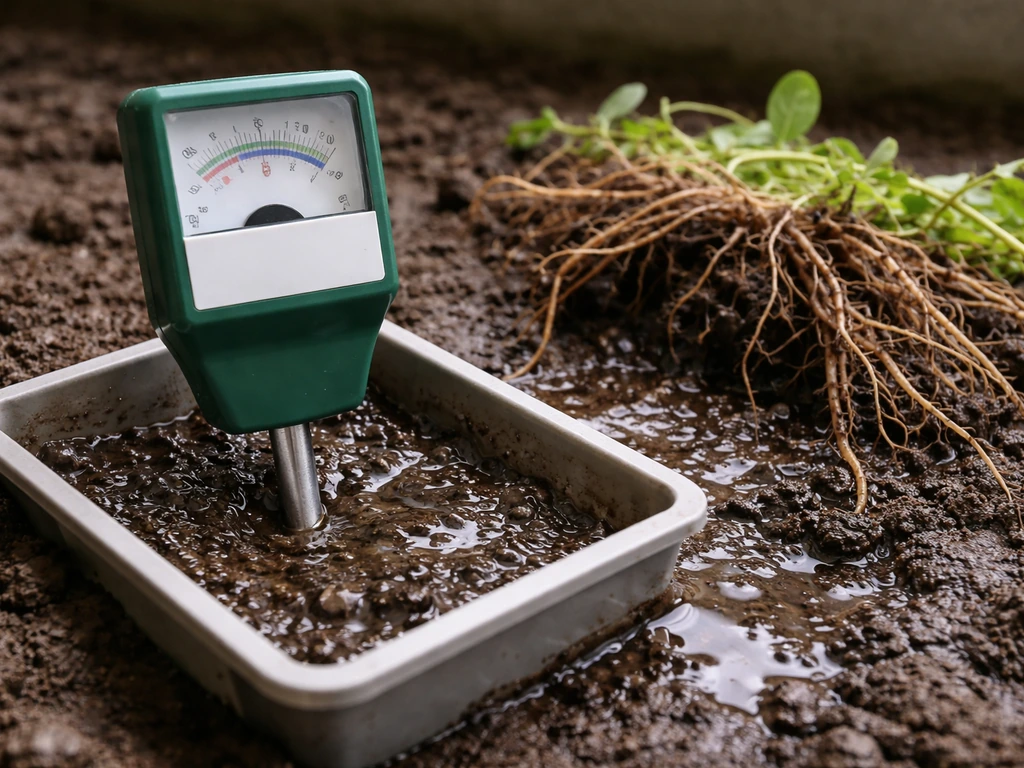
Nutrient availability, especially phosphorus, collapses outside the right pH range. Phosphorus becomes largely unavailable below pH 5.5 and above pH 7.5. Even if your soil is full of phosphorus, roots can't absorb it if pH is wrong. WVU Extension recommends targeting pH between 6 and 7 for most growing media. Test your pH first. A basic pH meter or test kit is a few dollars and gives you the single most useful data point you can have.
Overwatering and low soil oxygen
Roots breathe. When soil pores fill with water and stay saturated, oxygen disappears from the root zone, and root growth stops. Colorado State University Extension explains that low soil oxygen from overwatering or compaction leads to byproducts of anaerobic respiration building up in the root zone, reducing both water and nutrient uptake. If you're keeping the soil constantly moist 'for better nutrient access,' you may actually be suffocating the roots. Let the top inch or two dry out between waterings, especially for seedlings and young transplants.
Compacted or poorly draining media
Soil compaction crushes the pore spaces roots need to physically grow through and that provide air exchange. UMass Extension notes compaction decreases macropores, restricts rooting, and intensifies wet conditions. If you're using dense, heavy potting mix or garden soil in containers, or if your raised bed or in-ground soil feels like a brick, roots will struggle no matter how much fertilizer you add. Loosen compacted soil, add perlite or coarse grit to improve drainage, and avoid pressing soil too firmly around transplant roots.
Cold soil temperature
Root growth dramatically slows in cold soil, typically below about 50°F (10°C) for most vegetables and warm-season crops. Temperature is a major driver of how quickly crops grow, but the exact tick speed depends on species and local growing conditions 50°F. Nutrient uptake is tied to root metabolic activity, which slows with temperature. Planting out too early in spring, or watering with very cold water, can stall roots even in well-fertilized soil. Use a soil thermometer. If the soil isn't warm enough for the crop, waiting a week or two will do more than any fertilizer.
Transplant shock
Montana State Extension points out that transplant shock is primarily caused by compromised roots, not nutrition. When roots are torn, dried out, or tightly pot-bound going into the ground, the plant spends its first weeks just trying to re-establish, not actively growing. K-State Extension recommends gently loosening tightly wound root balls before planting. If roots are severely circling in the pot, carefully tease them free rather than planting them as-is. Feeding a stressed transplant with full-strength fertilizer at this point adds insult to injury.
Common mistakes and why more fertilizer usually makes things worse
The single most common mistake I see is adding more fertilizer when roots aren't growing. The instinct makes sense: roots aren't growing, they need nutrients, so add nutrients. But if the underlying problem is overwatering, pH, compaction, or transplant shock, adding fertilizer raises the salt concentration in the root zone, which pulls water out of root cells rather than into them. This is fertilizer burn, and it looks exactly like underwatering or nutrient deficiency: wilting, leaf tip burn, yellowing. Oregon State University Extension documents this pattern in newly planted seedlings, and it's especially common with liquid fertilizers applied at full strength.
WVU Extension provides a useful threshold: if you test the electrical conductivity (EC) of your growing media using a 1:2 substrate-to-water dilution, it should not exceed 1.7 millimhos per centimeter. Above that, salt stress is likely inhibiting roots. If you're already there, the answer is to leach (flush with plain water) rather than add more fertilizer. University of Nevada, Reno Extension recommends leaching salts below the root zone when salinity is the issue.
One more myth worth addressing here: no amount of talking to your plants, playing music for them, or other non-nutritive interventions will substitute for correct phosphorus availability and a functional root environment. These topics come up frequently, and while some acoustic and CO2 stimulation research is genuinely interesting, none of it overrides basic root nutrition and soil conditions. If you are wondering, do spore blossoms help crops grow, the same focus on root-friendly conditions and phosphorus availability still matters. Get the fundamentals right first.
Quick diagnostics: figure out what's actually stopping your roots today
If your roots are stalling, work through these steps in order before reaching for more fertilizer. If you still wonder what helps roots grow after running these diagnostics, start with phosphorus-forward nutrition and make sure pH, oxygen, and drainage are not blocking uptake.
- Check soil pH. Use a pH meter or test kit. Target 6.0 to 7.0 for most plants. If pH is outside this range, adjust before doing anything else. Lime raises pH; sulfur lowers it.
- Check moisture and drainage. Push a finger two inches into the soil or medium. If it feels wet, wait before watering again. If water pools on the surface for more than a few minutes after irrigation, drainage is the issue.
- Check for salt buildup (EC). If you've been fertilizing regularly, test EC if you have a meter. Above 1.7 millimhos per centimeter in a 1:2 dilution test, flush with plain water two to three times before feeding again.
- Check soil temperature. Use a cheap soil thermometer. Below 50°F for warm-season crops, roots won't grow well regardless of nutrition. Wait for the soil to warm, or use black plastic mulch to trap heat.
- Look at the roots themselves. If you can, gently unpot or probe around the root zone. Brown, mushy roots mean overwatering or root rot. White, firm root tips mean active growth is happening. Tightly circling roots mean the plant was pot-bound.
- Look at the leaves for deficiency symptoms. Reddish/purple tint plus slow growth: probable phosphorus deficiency. Scorched older leaf margins: probable potassium deficiency. Distorted or dead growing tips (youngest leaves): probable calcium, boron, or zinc deficiency.
- If pH, drainage, EC, and temperature all check out and you do suspect low phosphorus, apply a phosphorus-forward starter fertilizer as a liquid drench at half strength. Missouri Extension's two tablespoons per gallon rate is a safe starting point for most transplant situations. Wait one to two weeks and observe before adding more.
Root growth problems often have more to do with environment than nutrition, and diagnosing before you treat saves you from making a stalling root system worse. Get the soil conditions right, apply phosphorus in a form and placement that roots can actually access, and give the plant time to respond. If you are wondering what helps corn grow, start by getting the root zone conditions right before you increase fertilizer. That combination works far better than flooding roots with fertilizer and hoping for the best.
Pesticides can also help crops grow by controlling pests and reducing the damage that would otherwise slow plant development pesticides help crops grow. If you're interested in how these same principles apply to specific crops, the nutrient dynamics for corn or the broader mechanics of what helps roots grow are worth exploring alongside this foundation. The broader mechanics of what helps forest to grow and regenerate is also worth exploring alongside these fundamentals.
The nutrient dynamics and mechanics of what helps roots grow can vary by crop, but the same core principles apply. For corn specifically, focusing on what helps corn grow can guide your next steps once the basics are in place. If you want to go deeper, you can also explore what farmers sow to make plants grow and how it ties back to root-friendly nutrition and conditions.
FAQ
If my soil test shows phosphorus is high, should I still add more to help roots grow?
Usually no. If phosphorus is already adequate, the limiting factor is often availability (pH outside roughly 6 to 7), root-zone oxygen (overwatering or compaction), or cold soil. Extra P can raise salt levels and worsen transplant stress without improving uptake.
How do I tell the difference between phosphorus deficiency and nitrogen excess or general fertilizer burn?
Phosphorus shortage commonly shows reddish or purplish tones on older leaves plus stunting, while fertilizer burn often causes leaf tip or margin scorching along with wilting soon after application. Nitrogen excess typically drives fast, lush top growth while roots lag, especially when the fertilizer is high in the first number (N).
What’s the safest way to fertilize seedlings or cuttings if I’m not sure how strong the nutrients should be?
Use dilute solutions and increase only after you see root activity. For cuttings, start around half to quarter strength phosphorus-forward liquid only once you detect rooting, not in the first days. When in doubt, underfeed relative to overfeed, because salt stress can happen quickly.
Can phosphorus help roots in alkaline or very acidic soil, or will it still be locked up?
It can still be locked up if pH is outside the workable range. Phosphorus absorption drops when pH is very low (around below 5.5) or very high (around above 7.5). Fixing pH often improves rooting more reliably than changing fertilizer dose.
Should I use granular fertilizer or liquid starter fertilizer for transplanting?
At planting, liquid or water-soluble starter typically delivers phosphorus faster to the root zone than granules that must dissolve after watering or rainfall. Granules can work, but you need correct placement to avoid salt burn near roots.
How close is too close when placing fertilizer near seeds?
Too close can burn seeds and seedlings from salt concentration. A good rule is to place starter away from direct seed contact and keep it at “starter” amounts rather than full-strength fertilizer, especially before cotyledons fully expand.
If my cuttings are failing, is it ever a potassium or calcium issue instead of phosphorus?
Yes. Potassium affects root expansion and distribution, calcium is needed for cell wall and membrane integrity, and both deficiencies tend to show up in ways tied to tissue mobility (older leaves for potassium, newest growth for calcium). Still, if cuttings have not initiated roots, rooting hormone and proper humidity and hydration usually come first.
What EC level indicates I should leach instead of fertilizing further?
A common threshold cited for root-zone salt stress is EC above about 1.7 mS/cm measured with a 1:2 substrate-to-water dilution. If you’re above that, leaching with plain water is generally the next step to reduce salts rather than adding more nutrient.
My plant looks droopy after transplanting, could that mean it needs more phosphorus?
Not necessarily. Early droop is often transplant shock driven by damaged, dry, or pot-bound roots rather than missing phosphorus. In that case, focus on re-establishment conditions (moisture management, warmth, gentle handling) instead of applying full-strength fertilizer immediately.
If roots are stalling, what order should I troubleshoot in before buying a new fertilizer?
Start with pH, then root-zone oxygen (avoid constantly saturated soil), then compaction and drainage, then soil temperature. After the environment is right, confirm fertilizer formulation and placement, and only then consider boosting phosphorus. This prevents the common mistake of treating a non-nutrient problem with more salts.
Next Articles
What Did Early Farmers Do to Help Their Crops Grow
Discover what early farmers did for healthy crops: improve soil, manage water and light, weed and protect plants, rotate
What Helps Forests Grow and Regenerate: Practical Levers
Learn what helps forests regrow, from light and soil to water, disturbance, invasives, and practical regeneration steps.
How Do Pesticides Help Crops Grow? Practical Guide
Learn how pesticides improve growth by cutting pests, disease, weeds, and stress, plus timing and safe IPM tips.