Auxin is the hormone that tells plant cells where to grow, how fast to grow, and in which direction to grow. It's produced mainly in shoot tips and young leaves, then transported downward through the plant, controlling everything from how tall your plant gets to whether it sprouts roots from a cutting. Without auxin doing its job correctly, plants can't respond to light, can't anchor themselves into soil properly, and tend to either grow in all the wrong directions or stall out entirely.
How Does Auxin Help Plants Grow: Roots, Dominance, Bending

Marcus Holloway
15 Jun 2026
What auxin is and where plants make it
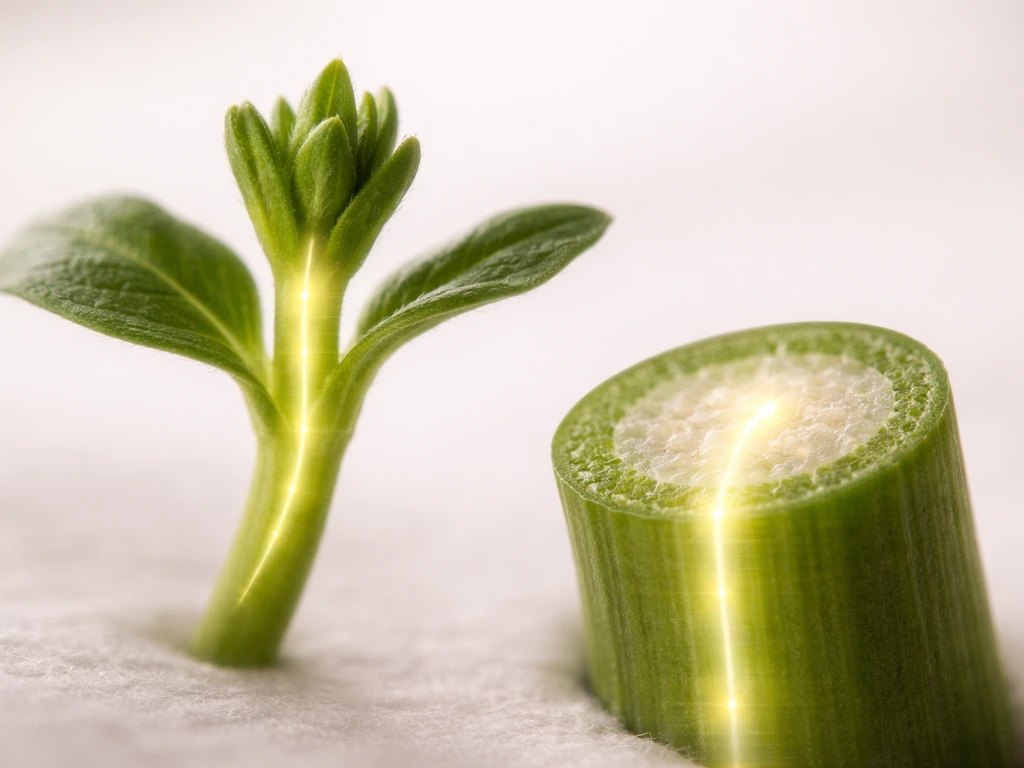
The most common natural auxin is indole-3-acetic acid, usually just called IAA. Plants also use related compounds like indole-3-butyric acid (IBA), which acts more as a stored or transport form that gets converted to active IAA where needed. Synthetic versions include NAA (1-naphthaleneacetic acid) and 2,4-D (2,4-dichlorophenoxyacetic acid), which you'll recognize from herbicide labels and rooting products.
Auxin is produced primarily at the shoot apex, but it's not quite as simple as 'the tip makes it and that's that.' Young expanding leaves and developing leaf primordia also contribute significantly to the auxin supply. From those source tissues, auxin moves downward through the plant in a very directional flow called polar auxin transport, carried by specific protein transporters called PIN proteins. That directionality is everything: it's what gives plants their sense of up and down and their ability to respond to light and gravity.
How auxin actually makes cells grow
When auxin arrives at a target cell, it triggers a cascade called the acid growth mechanism. Auxin activates H+-ATPase pumps in the plasma membrane, which push protons into the cell wall space (the apoplast), dropping the pH there to somewhere between 4.5 and 6. That acidic environment activates proteins called expansins, which physically loosen the cross-links in the cell wall. With a loosened wall, the cell can absorb more water and physically expand, which is what we see as growth. This is cell elongation, not cell division, and it's one of the fastest responses in plant biology.
At the molecular level, auxin binds to receptor proteins called TIR1/AFBs. When auxin locks onto these receptors, it triggers the breakdown of repressor proteins (Aux/IAA repressors) that were previously blocking the plant's growth genes. Once those repressors are cleared out, transcription factors called ARFs switch on dozens of genes involved in cell expansion, cell division, and tissue patterning. So auxin is essentially the key that unlocks the growth program, and different tissues respond differently depending on which genes they're carrying.
Auxin and plant architecture: why your plant grows the way it does
Apical dominance and branching
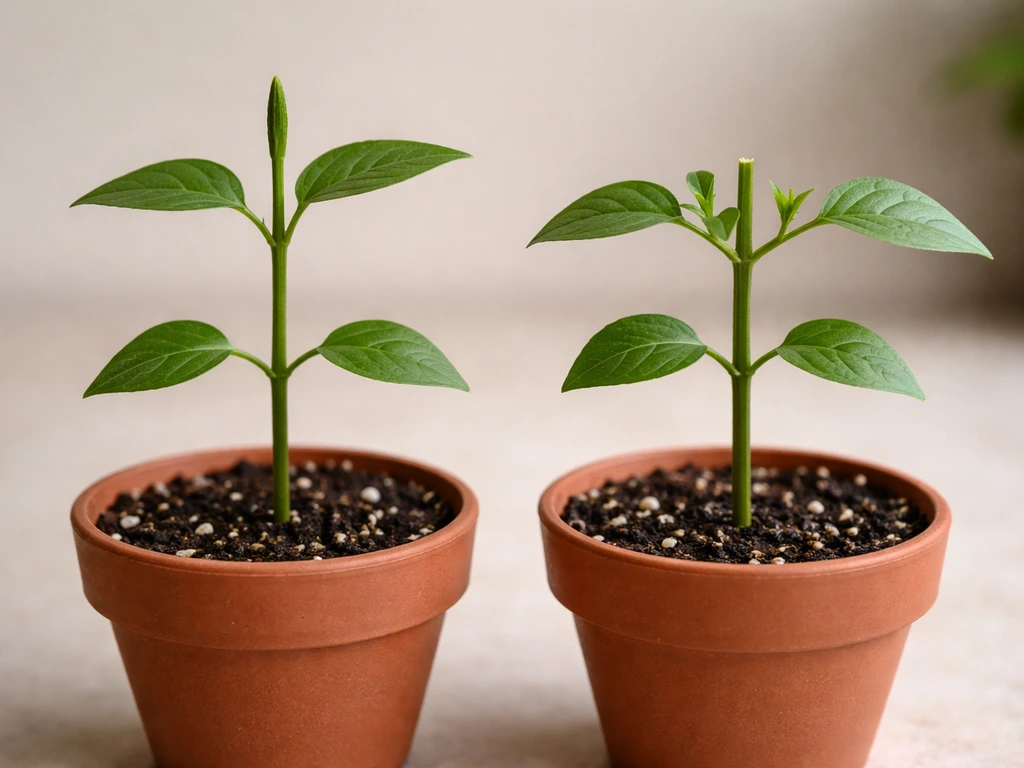
If you've ever wondered why a plant grows straight up instead of bushing out, that's apical dominance at work, and auxin is the key driver. Auxin flowing down from the shoot apex suppresses the axillary buds (the side buds sitting at each leaf node) from sprouting into branches. Cut the tip off, and those buds suddenly start growing. That's why pinching works in the garden: you remove the source of suppressive auxin, and the plant compensates by pushing out lateral branches.
The mechanism isn't quite as direct as auxin marching into each bud and shutting it down. Research shows auxin in the main stem works partly by controlling levels of other hormones, particularly cytokinin and strigolactone, which then relay signals into the buds. Cytokinin promotes bud outgrowth, and auxin from the apex suppresses cytokinin production, keeping the side buds dormant. When you remove the apex, cytokinin rises and buds break. It's a hormone balance, not a single on/off switch.
Root formation and root architecture
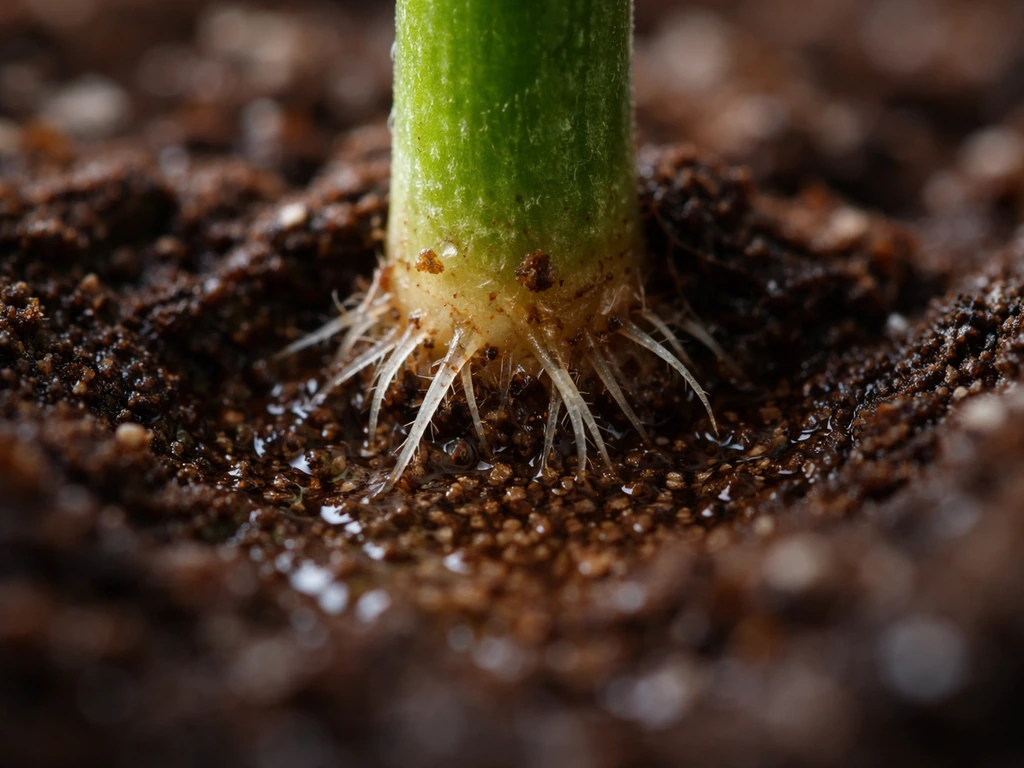
Auxin is the primary trigger for root initiation. It promotes the formation of both adventitious roots (the kind that form on stem cuttings) and lateral roots (the side branches off the main root). For lateral roots specifically, the process goes through distinct stages: pericycle cells in the root get primed by auxin signals, then specific auxin-responsive genes trigger cell divisions that form a lateral root primordium, which eventually pushes through the surrounding tissues and emerges. Auxin is involved at every one of those stages through different molecular modules.
The concentration of auxin matters enormously here. Roots are far more sensitive to auxin than shoots. A concentration that promotes root growth can actually inhibit or damage roots at higher doses, while the same high dose stimulates shoot elongation. This dose-response difference is why you need to follow rooting hormone instructions precisely: more is not better when it comes to roots.
How auxin steers growth direction: phototropism and gravitropism
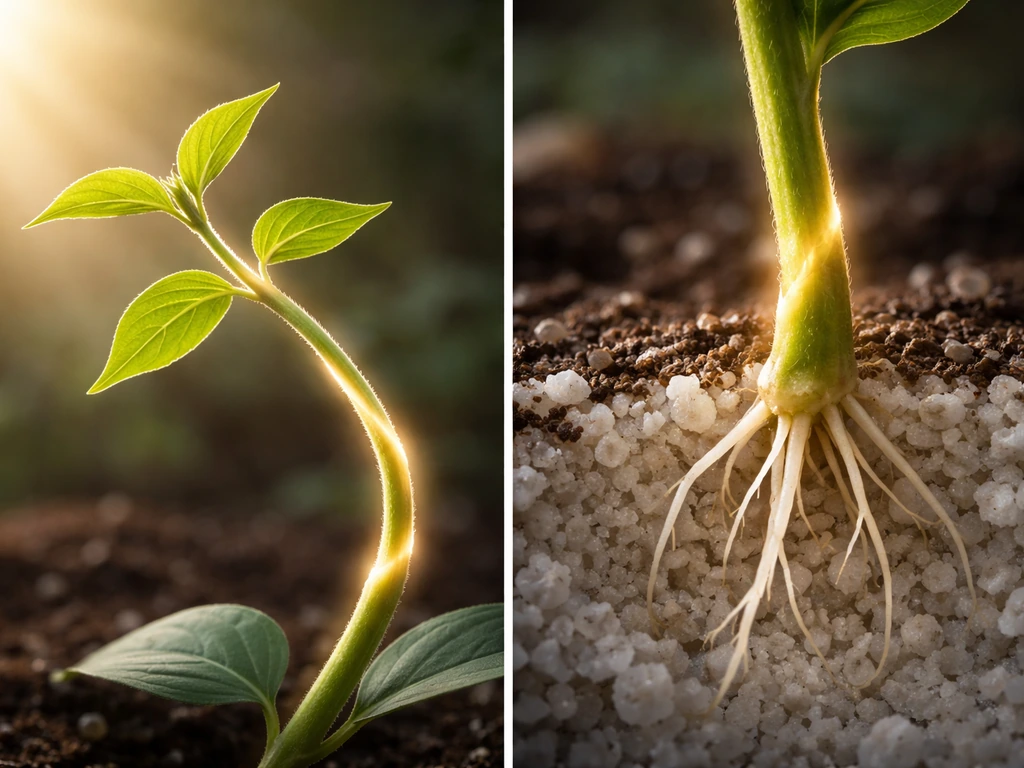
Plants bend toward light because auxin moves away from the lit side. When light hits a shoot from one direction, photoreceptors signal auxin to migrate laterally toward the shaded side. Cells on the shaded side get more auxin, elongate faster, and the shoot curves toward the light. This is phototropism, and it's entirely auxin-driven.
Gravitropism works on the same principle but uses gravity as the signal instead of light. In root cells that sense gravity (called statocytes), starch-filled organelles called statoliths settle to the bottom. That physical settling triggers relocalization of PIN3 and PIN7 transporters to the lower membrane of those cells, which redirects auxin flow toward the lower side of the root. Auxin then accumulates on the lower side, which inhibits growth there (remember, roots are sensitive to high auxin), so the upper side grows faster and the root bends downward. Shoots do the reverse: the lower side elongates more because shoots respond positively to auxin at those concentrations, bending the shoot upward.
In practice, this is why plant orientation matters. A plant tipped on its side will reorient its roots downward and its shoots upward within hours to days, driven entirely by this PIN-mediated auxin redistribution.
Signs that auxin signaling is off in your plants
Auxin problems rarely announce themselves with a label. If auxin signaling is disrupted, the plant may not grow well, so it's also helpful to focus on humus-rich soil to support steady root growth. They show up as patterns that look like general 'bad growing,' and you have to connect the dots. Because urea supplies a readily available source of nitrogen, it can support the overall growth processes plants need to build new leaves and roots when paired with proper light and watering. Here's what to watch for:
- Cuttings that refuse to root even in good conditions: this often points to low endogenous auxin in the cutting material, especially if you're using older, hardened wood that's less hormonally active
- Excessive branching or a bushy, sprawling plant when you want upright growth: could mean the shoot apex is damaged or missing, disrupting the natural auxin flow from the top
- Shoots that grow sideways or fail to orient upright: gravitropism relies on intact auxin transport, so severely waterlogged or compacted roots can disrupt the whole signaling chain
- Plants bending strongly toward one light source and not correcting: normal phototropism is fine, but if bending is extreme, it usually means uneven light, not a hormone problem
- Roots that are sparse and shallow with little branching: could indicate low auxin availability or, counterintuitively, excessive auxin if you've over-applied rooting products
- Yellow, stunted growth near the soil line with no new roots visible: check for compaction, overwatering, and root rot before assuming hormone issues
Before blaming auxin directly, always check the basics: light quality and consistency, root zone moisture and aeration, and whether the plant has been stressed by temperature extremes or nutrient deficiencies. Auxin signaling operates on top of general plant health. A stressed, nutrient-depleted plant isn't going to respond normally to its own hormones regardless of how much is present.
Working with auxin in the garden: rooting cuttings and growth regulators
Using rooting hormones effectively
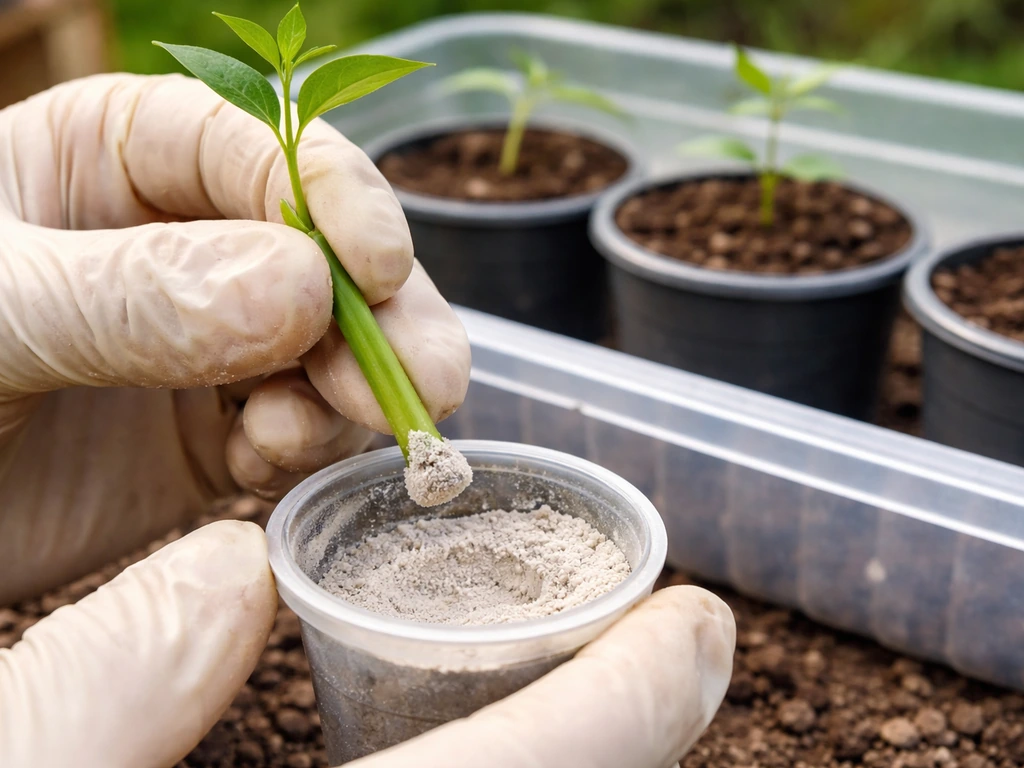
The most direct way gardeners work with auxin is through rooting hormone products, which typically use IBA as the active ingredient. IBA is a storage form of auxin that converts to the active IAA inside plant tissue, making it ideal for cuttings because it's stable and travels well into the cut stem. Products come in three main formats: powder (you dip the wet cutting base in, tap off excess), liquid solution (you dip or soak the base for a set time), and gel.
Concentration is the critical variable. For quick-dip applications, concentrations typically run from 500 to 10,000 ppm depending on the plant species and how woody the cutting is. Softwood cuttings from actively growing shoot tips generally need less (toward the 500 to 1,000 ppm range) while semi-hardwood or hardwood cuttings may need more. FAO vegetative propagation guidance references dilute solution approaches in the 20 to 200 ppm range for some applications. The point is: match the concentration to the material and always read the product label.
A few practical tips that genuinely improve results: take cuttings in the morning when plants are hydrated, use a clean sharp blade (a crushed stem uptakes auxin poorly), and don't apply rooting hormone to dried-out cuttings. The hormone needs a pathway into living tissue. Also, IBA products can cause eye irritation, so wear gloves and safety glasses when handling concentrated solutions.
Synthetic auxins and what to watch out for
Synthetic auxins like 2,4-D and NAA are widely used in agriculture, but their roles differ from IBA-based rooting products. 2,4-D at low doses mimics auxin and can be used as a plant growth regulator, but at higher doses it's a selective herbicide that kills broadleaf plants by overstimulating growth to a lethal degree. NAA is used in some commercial rooting products and fruit-thinning applications. These aren't products most home gardeners need to reach for; standard IBA-based rooting powders and solutions handle the vast majority of propagation needs safely and effectively.
Pinching and pruning as auxin management
You don't always need a bottle of hormone to work with auxin. Pinching out growing tips removes the auxin source and releases lateral buds, creating bushier plants. Pruning back hard encourages adventitious root formation when you're propagating, because you're generating fresh wound tissue with active auxin responses. Timing matters: plants in active vegetative growth have higher auxin activity at shoot tips than dormant or flowering plants, which is why propagation success rates are higher with spring or early summer cuttings.
Auxin doesn't work alone: the hormone balancing act
Understanding auxin gets a lot easier once you stop thinking of it as a single 'grow more' signal and start thinking of it as one voice in a hormonal conversation. The final growth outcome in any tissue is the product of how auxin, cytokinin, gibberellins, and ethylene are all interacting at the same time. Protein also supports plant growth by providing building blocks for new tissues and enzymes protein supports plant growth. Ammonia can help plants grow by providing nitrogen, which supports amino acids, chlorophyll, and overall growth.
| Hormone | Relationship with Auxin | Practical Effect |
|---|---|---|
| Cytokinin | Antagonistic in branching and root formation | High cytokinin promotes bud outgrowth and inhibits root formation, counteracting auxin's suppression |
| Gibberellins | Cooperative in stem elongation and hook formation | GAs promote cell expansion alongside auxin; together they control internode length and seedling development |
| Ethylene | Complex: auxin induces ethylene, and ethylene can redirect auxin distribution | At high levels, ethylene inhibits elongation and modifies auxin-driven responses like hook formation |
| Strigolactone | Works downstream of auxin in branching control | Suppresses bud outgrowth; auxin from the apex promotes strigolactone production to reinforce apical dominance |
A practical example: when you decapitate a plant to encourage branching, auxin drops, cytokinin rises, and strigolactone production falls. All three shifts together release axillary buds. Just reducing auxin alone wouldn't be enough. This is why applying rooting hormone to cuttings that are under severe water stress or nutrient deficiency rarely works well: the other hormonal signals in the plant are in a stress configuration that overrides what you're trying to do with the auxin.
The same interplay shows up in root architecture, which is closely connected to topics like soil quality and what's in the root zone. Healthy soil quality supports root development by improving nutrient availability and aeration, which helps plants use their growth signals effectively. Just as worm castings and humus influence how roots explore soil by affecting the nutrient and microbial environment, auxin and cytokinin are working in real time to decide where new lateral roots form and how deep the root system goes. Healthy roots need both the right hormonal signals and the right physical conditions to actually follow through on those signals. Sulfur also supports healthy plant growth by contributing to amino acids and enzymes needed for strong development.
What this means for you as a gardener
Auxin is one of the few plant hormones you can actually influence with simple, low-cost actions: pinching tips to encourage branching, applying IBA rooting hormone to cuttings, managing light direction to control phototropic responses, and choosing the right cutting material at the right time of year. Plowing can also improve growth by loosening soil so roots get better oxygen and water, which helps plants use their hormones effectively applying IBA rooting hormone to cuttings. You don't need to understand every molecular step to get practical results, but knowing that auxin controls direction, root initiation, and lateral branching suppression gives you a real framework for troubleshooting instead of just guessing.
If your cuttings aren't rooting, check the cutting health, timing, and whether you're using fresh rooting hormone at the right concentration before assuming something is wrong at the hormonal level. If your plant is growing lopsided, check the light source first. If branching is sparse, consider whether the apex is intact and whether there's too much apical dominance at play. Auxin is doing its job in almost every case: the question is whether the conditions around it are letting that job translate into the growth you actually want.
FAQ
Why does auxin sometimes cause no rooting even when the concentration looks correct?
Auxin only works if the cutting has living, hydrated tissue to take it up. If the cut dries out, the wound seals too quickly, or the base was cut with a crushed blade, the transport pathway into the stem is reduced, so you can apply the “right” auxin dose and still get little or no roots.
Is more rooting hormone always better for stem cuttings?
No. Higher auxin levels can shift the outcome from beneficial signaling to inhibition, especially for root-forming tissues. This is why label rates matter, because roots are typically far more sensitive to auxin than shoots.
How do I know whether my problem is auxin deficiency versus a light, water, or nutrient issue?
Watch the pattern. Light problems often create lopsided growth toward a light source, while water stress shows wilting or slow recovery regardless of rooting hormone use. Nutrient deficiency usually reduces overall vigor, so hormone-driven effects look weak. If the plant is stressed, auxin signals may be present but the growth machinery cannot respond normally.
What’s the safest way to handle and store IBA rooting products at home?
Use gloves and eye protection for concentrated solutions, and keep the product tightly sealed and out of high heat. Degraded or contaminated formulations can give inconsistent results, which can look like “auxin isn’t working” when the actual issue is product quality or storage.
Can IBA-based rooting products still work if the cutting is kept too wet or too dry?
Yes, but only within a narrow range. Too wet can reduce oxygen at the cutting base, promoting rot instead of root primordia formation. Too dry prevents auxin uptake and damages the living tissue needed to initiate roots.
Should I apply rooting hormone directly to fully healed callus or only to fresh cut surfaces?
For best results, apply to a fresh, living wound surface. If you wait too long, the base may over-callus, limiting auxin-responsive cell divisions. A quick recut (clean, sharp) can restore access to responsive tissue before dipping or soaking.
Why does pinching improve branching, but sometimes my plant still stays sparse?
Pinching removes the auxin source at the apex, but bud outgrowth also depends on the plant’s overall hormonal balance and resources. If the plant lacks sufficient light, is nutrient-starved, or is drought-stressed, lateral buds may not have enough energy to break and grow even after auxin suppression is reduced.
How quickly do plants reorient after being tipped over?
Typically within hours to days. The mechanism is auxin redistribution via PIN transporters, which can respond relatively fast, but the exact timing depends on species, temperature, and whether the plant is healthy enough for rapid growth changes.
Why does phototropism differ between shoots and roots, and what should I do with that in gardening?
Shoots tend to elongate more on the shaded side because their response to auxin at those concentrations promotes bending toward light. Roots bend downward because high auxin can inhibit root elongation on the lower side. Practically, keep root zones evenly supported and avoid letting roots dry or become oxygen-deprived, since their auxin sensitivity means conditions strongly affect direction and vigor.
Does auxin control cell division or only elongation?
It does both, depending on context. The classic acid growth mechanism describes rapid elongation, but auxin signaling can also activate gene programs that support cell division and tissue patterning, such as during lateral root initiation.
If a plant looks generally unhealthy, is it worth troubleshooting auxin-related steps first?
Usually no. Before changing hormones or cutting methods, verify fundamentals: stable lighting, appropriate watering with aerated soil, and balanced nutrition. Auxin signaling rides on top of plant health, so stress can override the hormonal “instructions” even when auxin is present.
Next Articles

How Does Urea Help Plants Grow and How to Use It
Learn how urea boosts plant growth by fueling nitrogen uptake, plus safe application timing, rates, and burn prevention.

How Do Worm Castings Help Plants Grow? Benefits and Use
Learn how worm castings boost plant growth with better soil, microbes, nutrients, plus exact application steps and tips.
How Does Sulfur Help Plants Grow? Fix Deficiency Fast
Learn how sulfur boosts growth, spot sulfur deficiency, then choose and apply the right sulfur product safely and fast.