Sulfur helps plants grow by building the proteins and enzymes that make every other growth process possible. It is a structural component of two essential amino acids, cysteine and methionine, which means that without enough sulfur, plants cannot assemble the proteins they need for cell division, photosynthesis support, and nutrient uptake. Think of sulfur as the behind-the-scenes construction worker: not as flashy as nitrogen, but absolutely necessary for the building to hold together.
How Does Sulfur Help Plants Grow? Fix Deficiency Fast

Marcus Holloway
8 Jun 2026
How sulfur actually works inside a plant

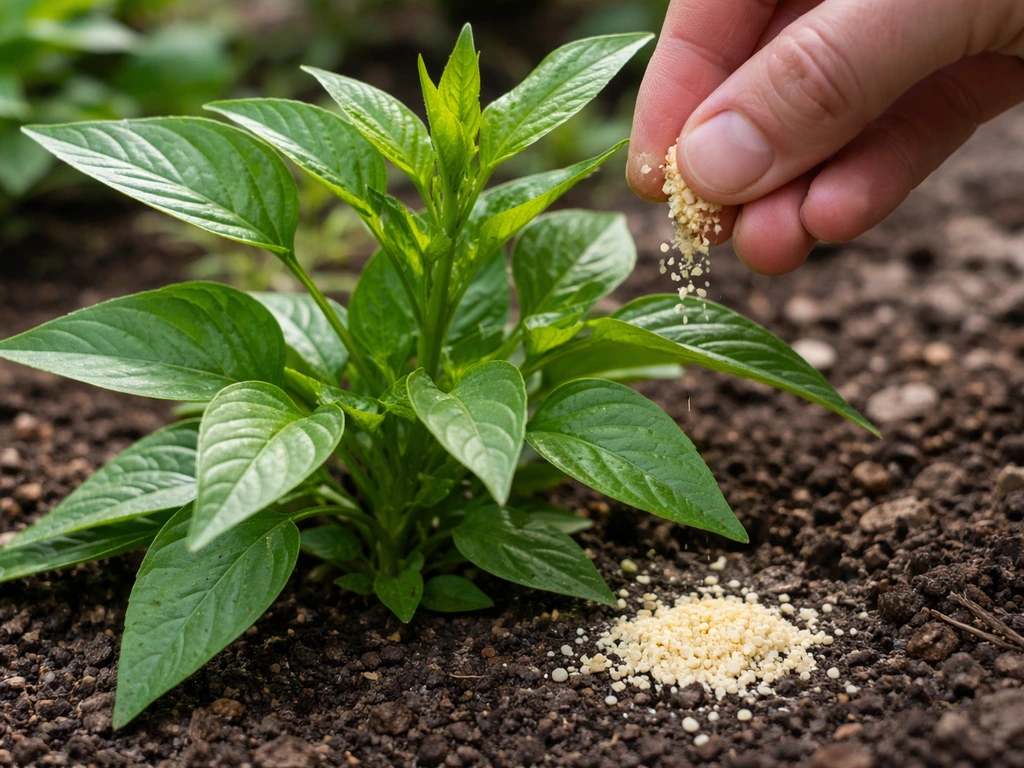
Plants pull sulfur out of the soil almost exclusively as sulfate (SO4). Once inside the roots, that sulfate gets reduced and incorporated into cysteine, which is the gateway sulfur-containing amino acid. From cysteine, the plant can then synthesize methionine and dozens of other sulfur-dependent compounds. Cysteine is particularly important because the disulfide bonds it forms give proteins their three-dimensional shape, which determines whether an enzyme actually works. Methionine handles methyl-group transfers that influence everything from gene expression to chlorophyll production pathways.
This is why sulfur deficiency hits harder than most gardeners expect. It is not just one process that slows down; it is a cascade. Protein synthesis stalls, enzyme activity drops, chlorophyll-related nutrition gets constrained, and root development weakens. The plant is not missing a single vitamin; it is missing a core building material. Nitrogen gets all the credit for plant growth, but without adequate sulfur, even a well-fed plant cannot fully use the nitrogen it has.
It is worth noting that magnesium is the nutrient actually embedded in the chlorophyll molecule itself, so sulfur does not directly build chlorophyll the way magnesium does. But sulfur is essential for the enzyme systems and amino acid framework that support chlorophyll synthesis and photosynthesis, so a sulfur-deficient plant will still show pale, unproductive leaves even if magnesium levels are fine.
Signs your plants are running low on sulfur
The single most useful diagnostic clue for sulfur deficiency is where the yellowing starts. Because sulfur is relatively immobile inside the plant, it cannot be pulled from older leaves and redistributed to new growth the way nitrogen can. blank" rel="noopener noreferrer">So sulfur deficiency shows up first on the youngest, uppermost leaves. The tips and new growth go pale green to yellow while older leaves stay comparatively green. If you see the opposite, yellowing starting on lower older leaves while younger leaves look fine, that points much more strongly toward nitrogen deficiency. The Penn State Plant Science fact sheet notes that sulfur deficiency can be distinguished from nitrogen deficiency because older leaves do not show the same chlorosis pattern seen with nitrogen, and sulfur symptoms first appear in younger leaves blank" rel="noopener noreferrer">If you see the opposite, yellowing starting on lower older leaves while younger leaves look fine, that points much more strongly toward nitrogen deficiency..
Beyond leaf color, sulfur-deficient plants tend to be stunted overall, with reduced vigor that can look like a general nutrition problem. Some crops, especially brassicas and onions, may also show reduced pungency or weaker flavor, since glucosinolates and thiosulfinates (the compounds responsible for that sharp bite) are sulfur-dependent molecules.
Before assuming sulfur is the culprit, do an actual soil test. Most university extension lab tests will measure sulfur alongside the standard macro and micronutrients. A basic pH test alone will not tell you enough. If your soil pH is above 7.5 or if you are farming on very sandy, low-organic-matter ground that gets a lot of rainfall, sulfur leaching is a real possibility. Conversely, if your soil has historically received sulfur-containing fertilizers or is near industrial areas, deficiency is unlikely even if the plant looks off.
Quick at-home checklist before you buy anything

- Compare the yellow leaves: are they new growth (top of plant) or old growth (bottom of plant)? New growth yellowing points to sulfur.
- Check whether the yellowing is uniform across the young leaf or starts at the midrib with striping between veins, which would suggest iron or manganese instead.
- Look at recent fertilizer and amendment history. Have you been using urea or ammonium nitrate without any sulfate-containing products? Sulfur input may simply be missing.
- Order a standard soil test from your local extension service or a reputable mail-in lab. Request that sulfur be included; some basic panels omit it.
- Note your soil type. Sandy soils in high-rainfall regions lose sulfate fastest through leaching.
Fast vs slow: your options for adding sulfur to soil
This is where most gardeners get confused, because the two main sulfur product categories work on completely different timescales. Sulfate-based products (gypsum, potassium sulfate, ammonium sulfate) supply sulfur in a form plants can absorb almost immediately. Elemental sulfur, on the other hand, has to be oxidized by soil bacteria before it becomes available as sulfate, and that process can take weeks to months depending on soil temperature, moisture, and microbial activity.
If your plants are showing active deficiency symptoms right now and you need a fix within a few weeks, reach for a sulfate-based product. If your goal is to lower soil pH over a season (more on that below) or to build background sulfur levels in a sandy soil before next season, elemental sulfur is a cost-effective and long-lasting choice.
Choosing the right sulfur source
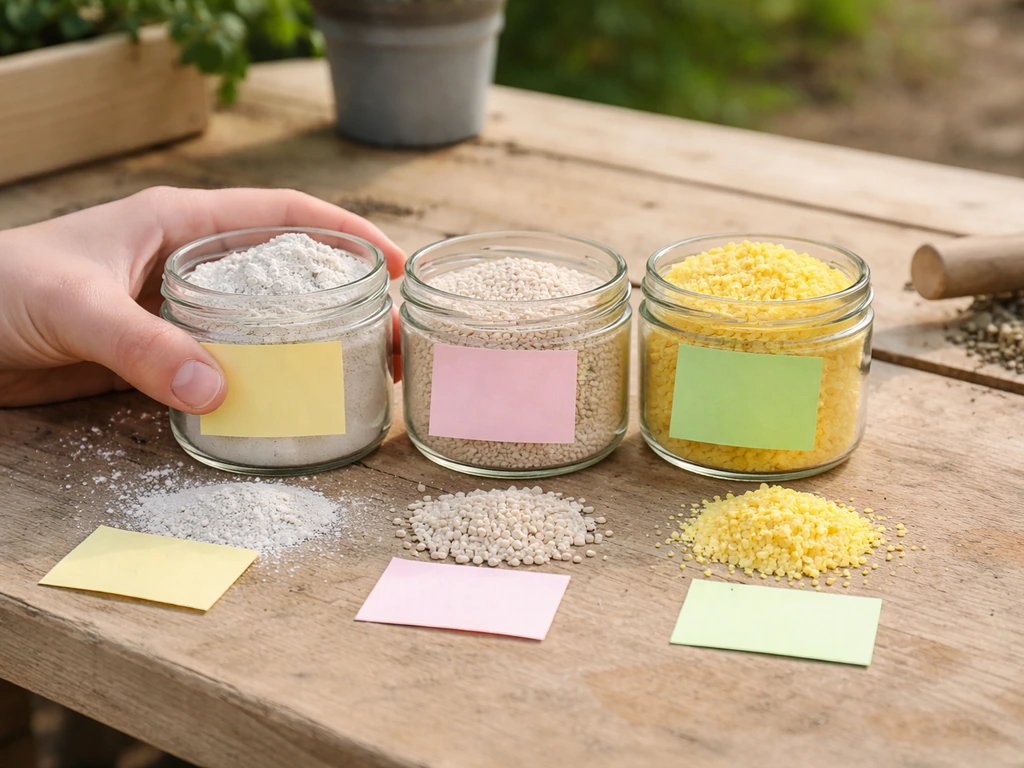
| Product | Sulfur form | Speed of availability | Also supplies | Best use case |
|---|---|---|---|---|
| Elemental sulfur (flowers of sulfur, prilled) | Elemental S | Slow (weeks to months) | Nothing else | Lowering pH, building long-term reserves |
| Gypsum (calcium sulfate) | Sulfate | Fast (days to weeks) | Calcium | Quick deficiency fix, improving clay soil structure |
| Potassium sulfate (sulfate of potash) | Sulfate | Fast | Potassium | Deficiency correction when K is also needed |
| Ammonium sulfate | Sulfate | Fast | Nitrogen (21% N) | Deficiency fix when N is also needed; acidifying |
| Epsom salt (magnesium sulfate) | Sulfate | Fast | Magnesium | Only useful if Mg is also deficient; often overused |
Gypsum is my go-to recommendation for most home gardeners dealing with a confirmed sulfur deficiency. It provides plant-available calcium sulfate, does not shift soil pH significantly, and also helps break up compacted clay. Ammonium sulfate is excellent if your plants need both nitrogen and sulfur, which is a common combination when growing heavy feeders like brassicas or corn. Because ammonium sulfate delivers both nitrogen and sulfur, it can support strong growth when plants need extra sulfur for proteins and enzymes. Elemental sulfur is the right choice when you specifically want to acidify alkaline soil, but go in with realistic expectations about timing.
One word on Epsom salt: it supplies magnesium sulfate, so it does provide sulfur in a quickly available form. But if your soil magnesium is already adequate, which it often is, regular Epsom salt applications can push magnesium into excess and create antagonism with calcium and potassium uptake. Use it only if a soil test confirms you need both sulfur and magnesium.
How much sulfur to use and how often
Sulfur is one of those nutrients where more is not better. Excess sulfate can contribute to soil salinity, and too much elemental sulfur can drop pH below the range your plants tolerate. Here are practical starting ranges based on common soil conditions and goals.
| Goal | Product | Typical rate | Frequency |
|---|---|---|---|
| Correct active deficiency | Gypsum | 10 to 20 lbs per 1,000 sq ft | Once; retest after one season |
| Correct active deficiency | Ammonium sulfate | 5 to 10 lbs per 1,000 sq ft | Once or split into two applications |
| Lower pH by approximately 1 unit | Elemental sulfur | 1 to 2 lbs per 100 sq ft in sandy soil; 3 to 4 lbs per 100 sq ft in clay | Once; retest soil pH in 3 to 6 months |
| Maintenance in sandy soil | Gypsum or potassium sulfate | 5 to 10 lbs per 1,000 sq ft | Annually before spring planting |
| Foliar spot treatment | Potassium sulfate solution (1%) | Spray to runoff on leaves | Every 2 to 3 weeks until improvement |
For most vegetable gardens, a soil test showing less than 10 ppm sulfur warrants treatment. Between 10 and 20 ppm is borderline and worth monitoring. Above 20 ppm is generally adequate for most crops. Always match your application rate to your soil test results rather than defaulting to the maximum; over-application is genuinely easy with sulfur products. If you apply ammonium sulfate, account for the nitrogen it delivers so you do not accidentally burn or over-stimulate your plants.
Soil pH and when sulfur helps vs when it causes problems
Elemental sulfur lowers soil pH, which is both its biggest benefit and its biggest risk. If your soil is alkaline (pH above 7.0 to 7.5), adding elemental sulfur is a legitimate and effective tool for bringing it into a range where phosphorus, iron, manganese, and zinc become more plant-available. Blueberries, for example, need a pH around 4.5 to 5.5, and elemental sulfur is the standard approach for achieving that in neutral or alkaline soils.
But if your soil is already at a good pH (6.0 to 7.0 for most vegetables), adding elemental sulfur can push it too low, which ties up calcium and magnesium, suppresses beneficial soil microbes, and actually makes some nutrients less available. In that case, use a sulfate-based product like gypsum, which delivers sulfur without meaningfully changing pH.
Sulfur also interacts with nitrogen. The two nutrients work together closely in protein synthesis, and the ideal N:S ratio in plant tissue is roughly 15:1. If you are pushing heavy nitrogen applications (which many gardeners do with urea or synthetic fertilizers) without any sulfate input, you can create a functional sulfur deficiency even if soil sulfur levels are technically borderline adequate. This is increasingly common as cleaner industrial emissions mean atmospheric sulfur deposition has dropped significantly over the past few decades. In many regions, crops that once got a free boost of sulfur from acid rain are now running short.
In high-rainfall climates or irrigated sandy soils, sulfate leaches below the root zone quickly. That is when annual sulfur inputs become genuinely necessary rather than optional. Heavy clay soils hold sulfate better, but they can also have pH-related availability issues that need addressing differently.
What different plants actually need
Brassicas (cabbage, broccoli, kale, Brussels sprouts)
Brassicas are heavy sulfur feeders and are the crop group most noticeably affected by sulfur deficiency. They rely on sulfur-containing glucosinolates not just for flavor but as part of their natural pest resistance mechanisms. Sulfur-deficient brassicas tend to look pale and stunted, and they taste bland. If you grow any brassicas, treat sulfur as a regular season input rather than an emergency fix. Side-dressing with gypsum or ammonium sulfate at transplant and again at heading works well. Gypsum at 10 lbs per 1,000 sq ft at planting is a solid starting point on most soils.
Other vegetable crops (tomatoes, peppers, onions, garlic)
Tomatoes and peppers benefit from sulfur as part of their overall protein and enzyme demands but are less dramatically affected than brassicas in mildly deficient soils. Onions and garlic, like brassicas, produce sulfur-containing compounds (thiosulfinates) that give them their pungency, so low sulfur means weak-flavored bulbs. For these alliums, sulfur application at planting in sandy or low-organic soils is a good practice. Ammonium sulfate works well as a combined N and S source at planting for most vegetables, as long as you are not also over-applying nitrogen from other sources.
Lawns and turf
Lawns have moderate sulfur needs, and most conventional lawn fertilizer programs supply enough sulfur through ammonium sulfate or sulfate-containing slow-release granules. Where turf sulfur deficiency does become relevant is on high-sand golf greens, newly established lawns on stripped topsoil, or lawns that have been on a strict urea-only program for years. The symptom pattern is the same: younger growth shows pale yellowing while older grass blades stay comparatively green. If you want to use elemental sulfur on a lawn to modestly lower pH and favor grass over moss or clover, apply no more than 5 lbs per 1,000 sq ft and retest pH after three months before adding more.
Putting it all together: your next steps
If you are seeing young-leaf yellowing and stunted growth, get a soil test before spending money on amendments. If the test confirms low sulfur (under 10 ppm) and your soil pH is already reasonable, gypsum is your fastest, safest fix. If pH is high (above 7.0 to 7.5) and you need to acidify, elemental sulfur is the tool, but give it a full growing season to work and retest before adding more. If you are growing brassicas or alliums, treat sulfur as a standard seasonal input, not an optional extra. And if you are pushing heavy nitrogen fertilizers, make sure at least some of that nitrogen is coming from ammonium sulfate rather than pure urea, so you are covering both nutrients simultaneously.
Sulfur rarely gets the credit it deserves in home gardening circles, probably because its effects are less dramatic and immediate than nitrogen responses. But for protein formation, enzyme function, and crop quality, especially in sulfur-hungry crops like brassicas, it is one of those nutrients where a single well-timed application can visibly transform how your plants perform. For plant growth, fertile soil supports strong sulfur availability, helping plants build proteins and keep enzymes and chlorophyll functioning properly sulfur-hungry crops like brassicas. Auxin is a key plant hormone that helps coordinate growth, so getting the right nutrition supports auxin-driven development. To improve plant growth, consistent sulfur availability helps plants build proteins and enzymes, keeping development and yield on track how does plowing help plants grow better. The science is solid; you just need to match the right product to the right situation. Humus supports plant growth by improving soil structure and feeding the biological processes that release nutrients match the right product to the right situation. Worm castings can also be a helpful way to add nutrients and beneficial soil biology that support healthy plant growth worm castings help plants grow.
FAQ
How can I tell sulfur deficiency from nitrogen deficiency when both can cause yellowing?
Use the leaf-age pattern. Sulfur deficiency usually starts on the newest upper leaves because sulfate cannot move to regrowth. Nitrogen deficiency more often begins on older, lower leaves because nitrogen can be remobilized. If you want extra confirmation, compare the overall plant form, sulfur issues tend to look more uniformly stunted with weaker vigor, while nitrogen often shows a stronger “growth pause” after older leaves fade first.
Can I fix sulfur deficiency with foliar sprays instead of soil amendments?
Foliar sulfur can help temporarily because sulfate can be absorbed through leaves, but it rarely replaces correcting the root-zone supply. If soil sulfate is low or leaching is ongoing, foliar feeding may green up leaves for a short time while new growth still flags. For quickest results, treat the root cause with a sulfate-based product, then optionally use a light foliar application as a bridge.
What N:S ratio should I aim for, and does it mean I should stop adding nitrogen?
A useful target is about 15:1 nitrogen to sulfur in plant tissue. In practice, it does not mean stopping nitrogen, it means balancing nitrogen sources so sulfur keeps up. If you are using urea or other nitrogen that does not supply sulfur, your plants can behave as if sulfur is missing even when soil sulfur reads “okay,” so add a sulfur-bearing nitrogen source like ammonium sulfate when appropriate.
Why do my plants look sulfur-deficient even though a soil test says sulfur is borderline or normal?
Soil tests measure what is present, but not always what is available during your growing conditions. Two common causes are rapid sulfate leaching in sandy or high-rain situations, and nutrient imbalance where heavy urea-based nitrogen drives high demand. Another possibility is timing, elemental sulfur may not mineralize quickly enough to meet current uptake needs.
How long should elemental sulfur take to work, and what should I expect during the wait?
Elemental sulfur typically needs weeks to months to oxidize to sulfate, so you will not see immediate recovery of new growth. During the transition, symptoms may persist because the plant still cannot access sulfur in usable form. Plan to recheck soil pH and, if possible, soil sulfate availability before assuming elemental sulfur is failing.
Is gypsum always the best sulfur option, even if my pH is high?
Gypsum is often a good “safe sulfur” choice because it adds sulfur without meaningfully shifting pH. However, if your pH is very alkaline and you need significant acidification, gypsum alone will not solve the pH-driven availability problems for micronutrients like iron or zinc. In that case, use elemental sulfur for pH reduction and gypsum or another sulfate source depending on your sulfur level and timing.
Can too much sulfur cause problems, and what would those problems look like?
Yes. Excess sulfate can contribute to soil salinity and stress roots, and high applications of elemental sulfur can push pH too low. Practical signs include poor growth despite “feeding,” leaf scorch or browning under stress, and nutrient lockups like reduced calcium or magnesium uptake when pH drops too far. If you have applied sulfur aggressively, re-test pH and consider pausing further sulfur inputs.
Should I worry about burning plants when using ammonium sulfate?
It can happen, mainly if concentrated fertilizer contacts roots or if you over-apply nitrogen along with sulfur. Use label rates, place fertilizer appropriately (side-dress, then water in), and avoid applying right before extreme heat or drought. A soil test plus a plan that accounts for the nitrogen you are supplying helps prevent over-stimulation or salt stress.
How often should I add sulfur for brassicas and onions?
For heavy feeders, treat sulfur as a routine seasonal input rather than a one-time rescue. A common approach is split timing, one dose at transplanting or early growth, then a second dose around heading or when plants ramp up protein and growth. Re-test soil if you have repeated deficiencies, sandy soils may need more frequent or smaller split applications.
Will sulfur help lawns, or is the symptom pattern sometimes caused by something else?
Sulfur deficiency in lawns follows the same age pattern, pale yellowing on younger growth while older blades stay greener. But turf color can also reflect iron issues, compaction, drought, or mowing stress. If you want to avoid guesswork, do a soil pH test and a nutrient test before applying elemental sulfur, especially because changing pH can alter micronutrient availability and influence moss or clover competition.
Next Articles
How Fertile Soil Helps Plants Grow: Key Mechanisms
Learn how fertile soil boosts growth via nutrients, structure, water balance, microbes, and quick testing for better gar
How Does Protein Help Plants Grow? Nitrogen Explained
How plants use nitrogen to build amino acids and proteins for growth, with fixes for yellow leaves and nitrogen myths.
How Does Humus Help Plants Grow? Benefits and How to Add It
Humus boosts soil structure, moisture, nutrients, and microbes, improving roots and plant resilience plus how to add it.